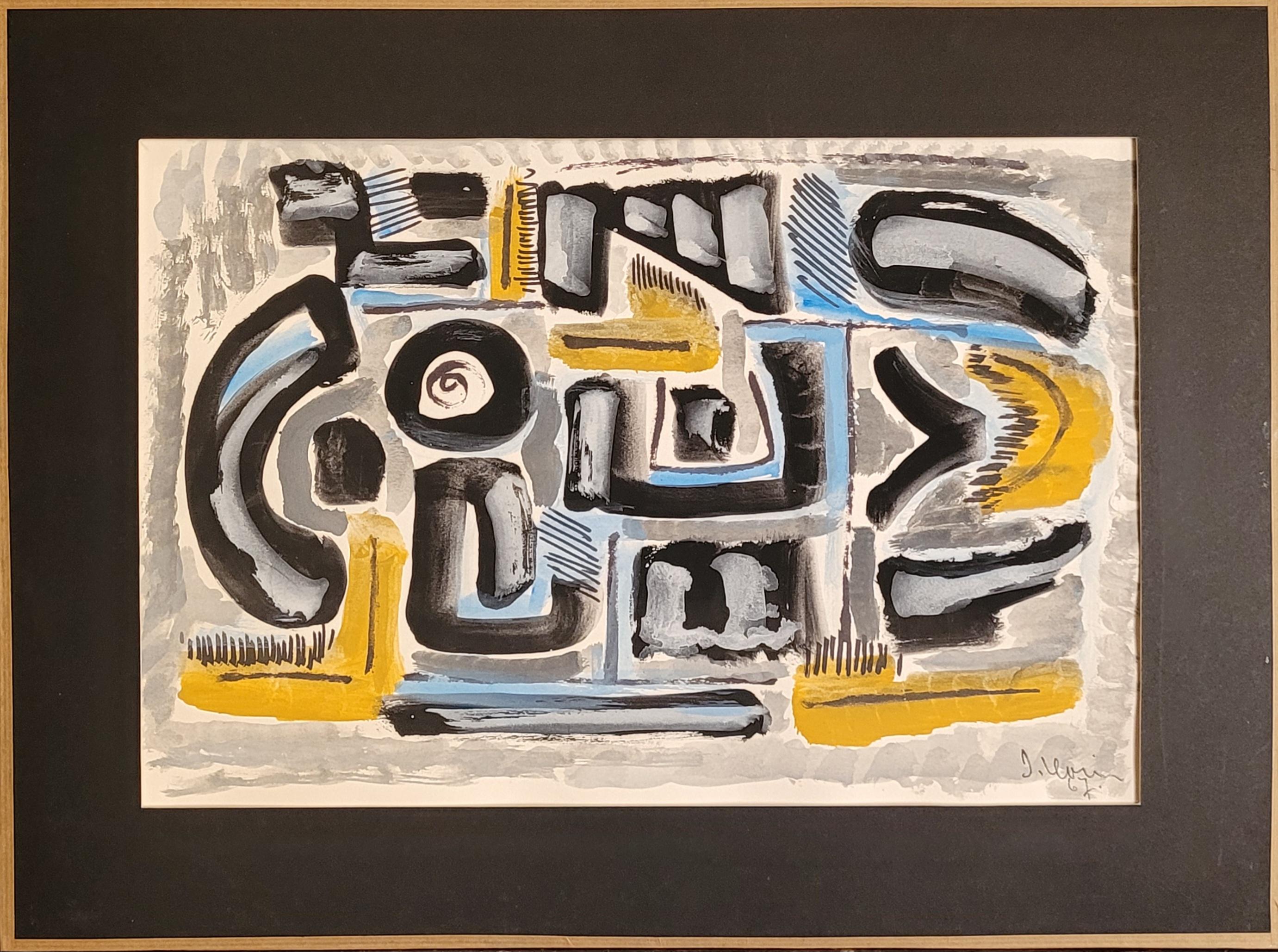
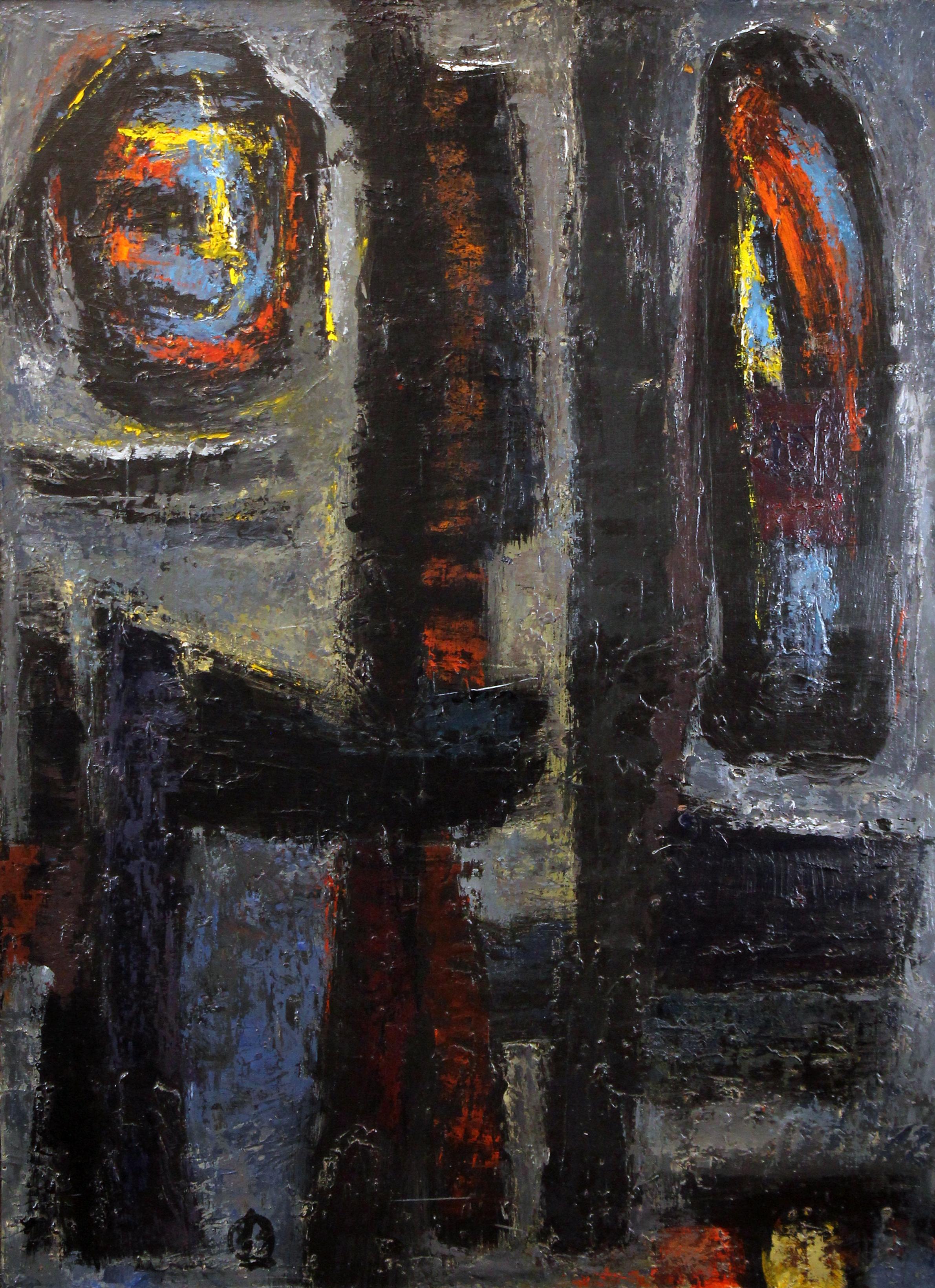
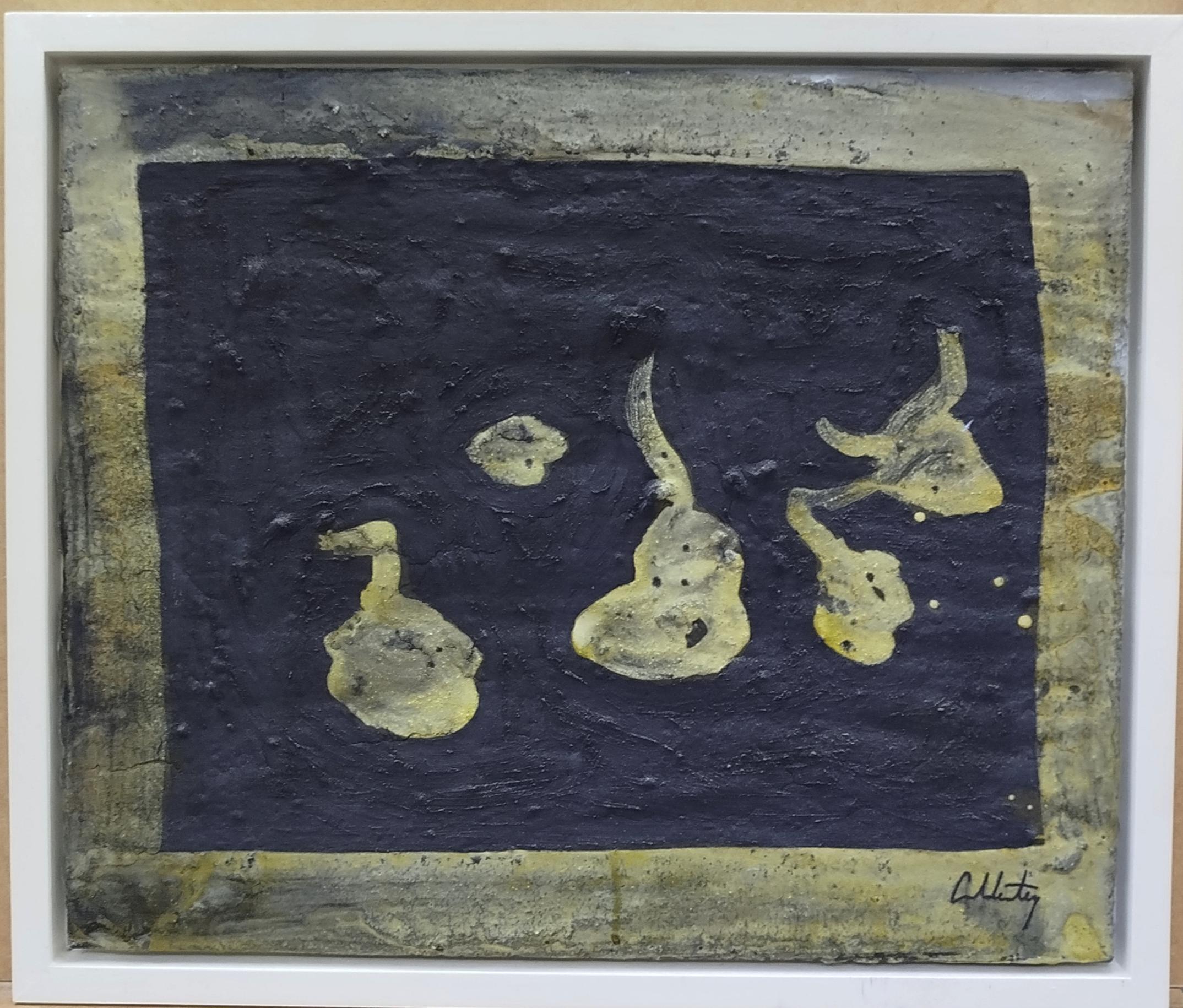
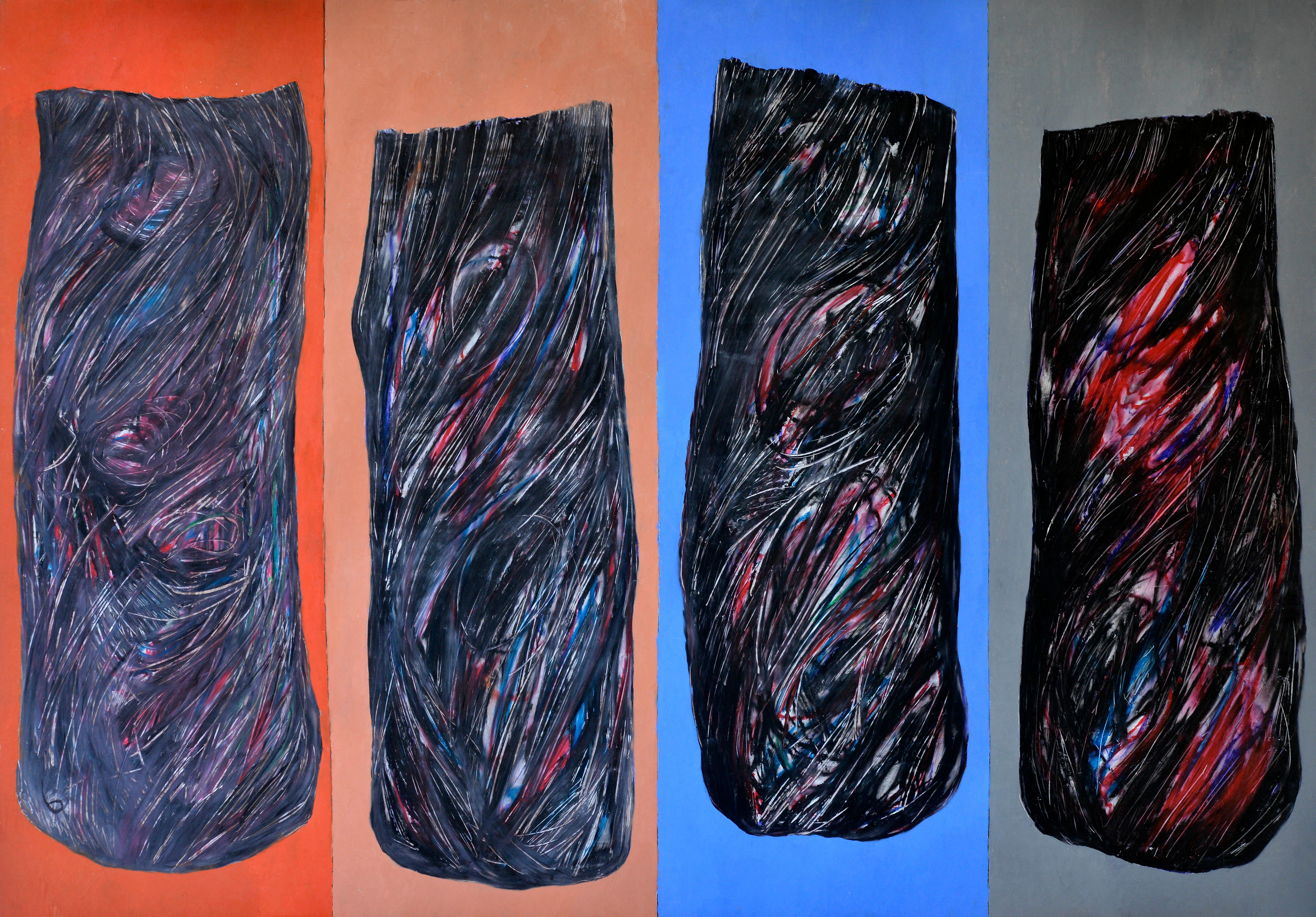
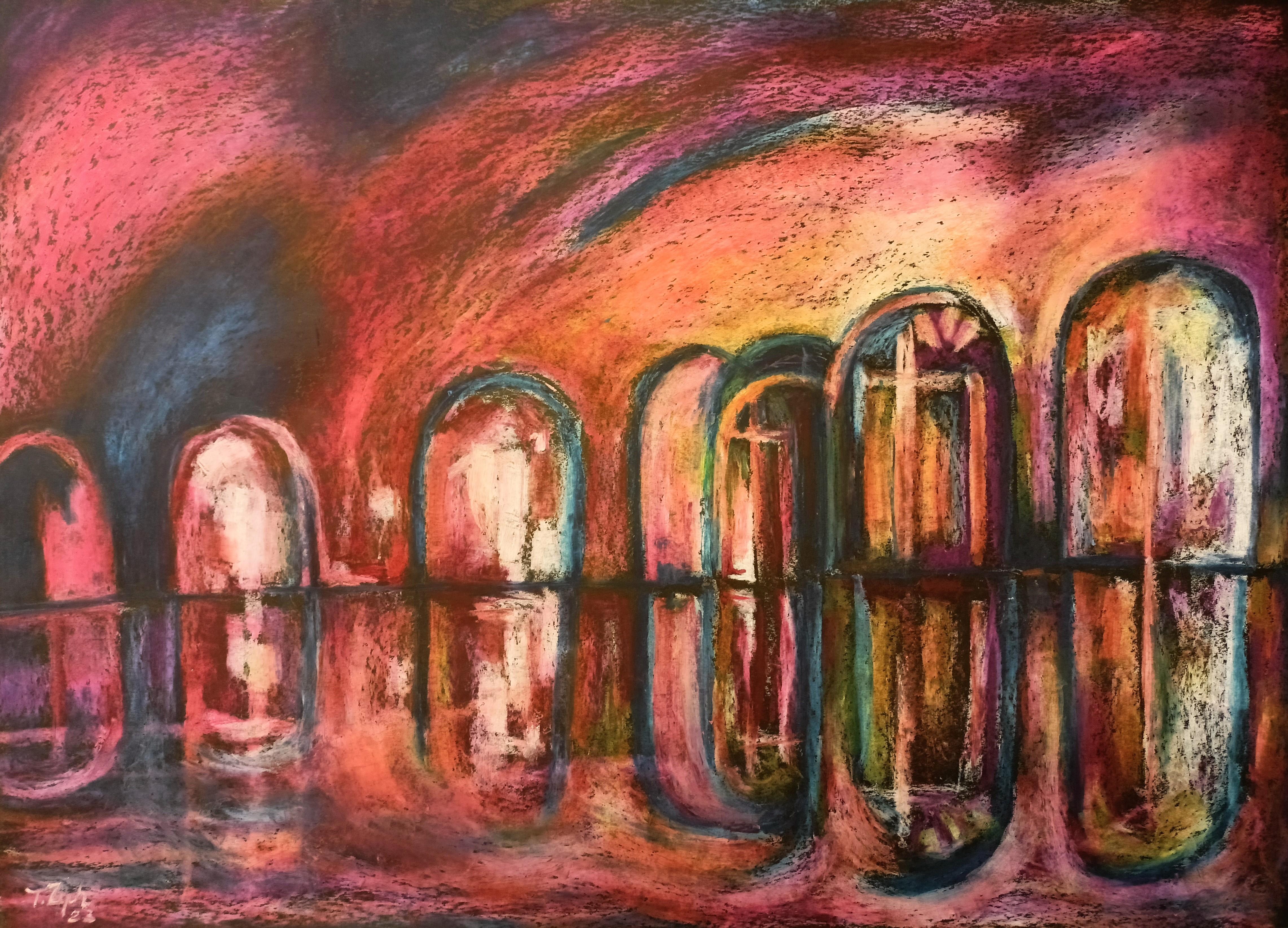
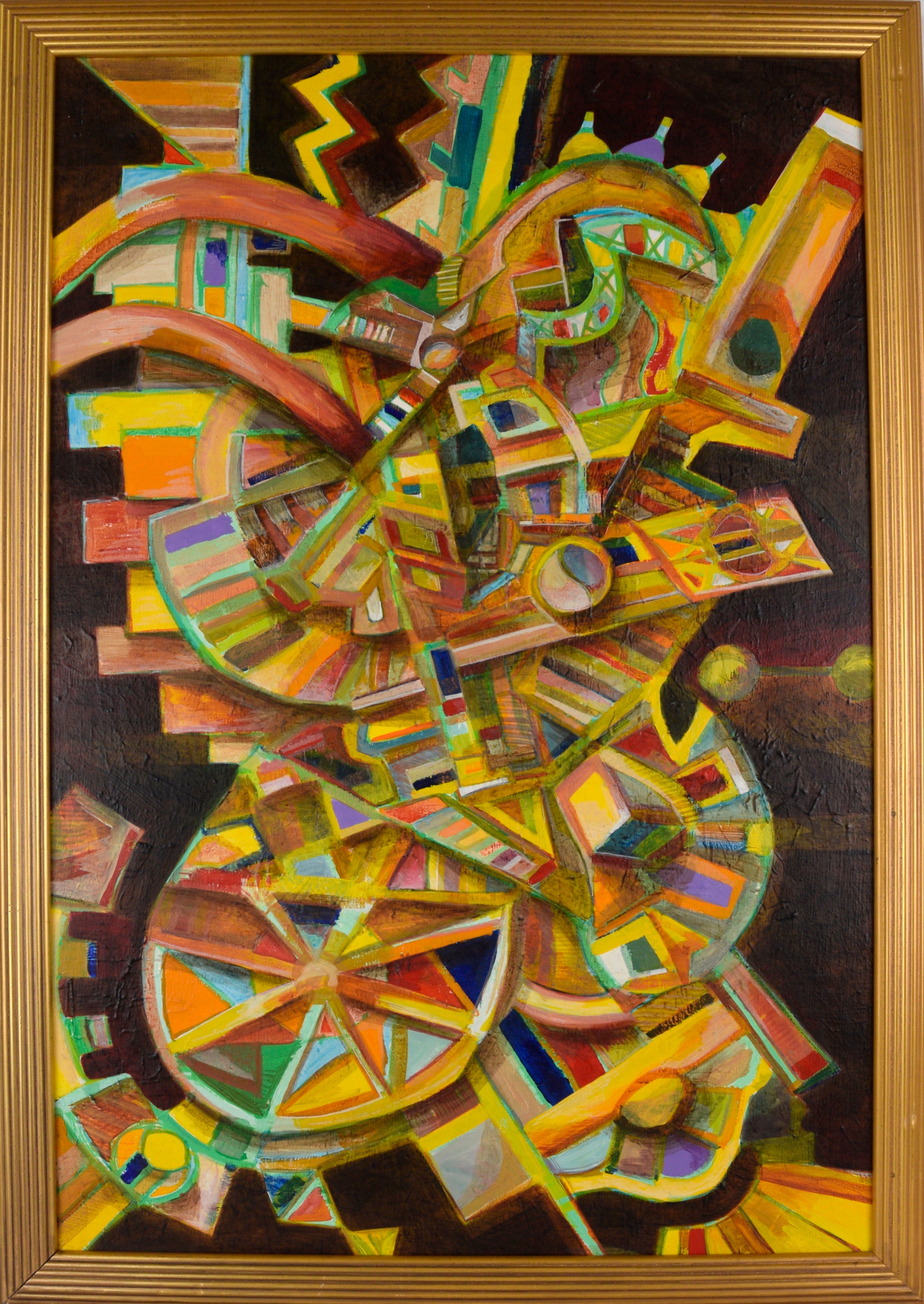
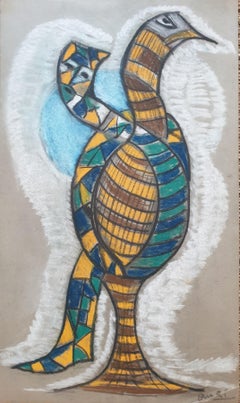
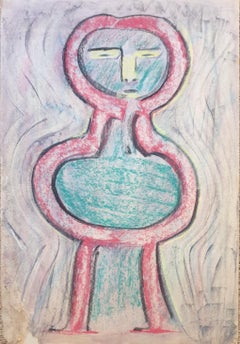
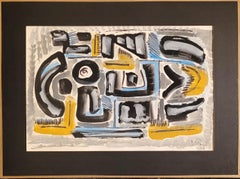
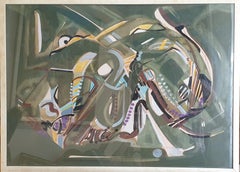
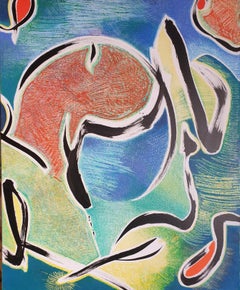
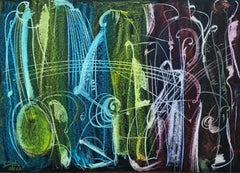
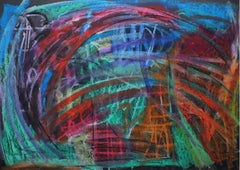
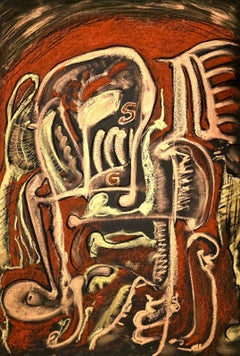
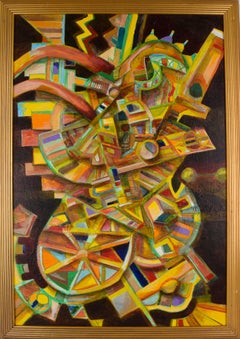
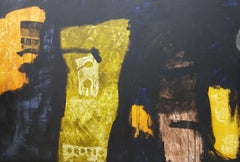
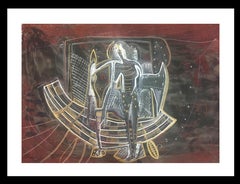
Abstract expressionist, pastel on black paper by English artist John McQuirk. Signed bottom right.
McQuirk's work is an example of outsider art or art brut.
Born in 1933, the artist was heavily influenced by his upbringing as an orphan in a Catholic children's home. His early life was one filled with horror, chaos and confusion. Priests, nuns, orphans are transmuted into children's symbols: scarecrows, phantoms and dolls, set about with rainbows, black night skies. At times he transforms the Catholic iconography which oppressed him into his own illuminated language of signs and totems.
His work reflects big city life with its madness, its graffiti and aggression. He works in pastel and using spontaneous gestures shows us a world full of vulnerable people symbolised by putty like forms who are to be shaped and impressed with the rigours and stresses of everyday life.
McQuirk has been exhibited in the V and A in London, the 'Musée de la Création Franche' near Bordeaux and forms part of the De Stadshof Collection now on loan to the Dr. Guislain Museum in Ghent, Belgium.
McQuirk’s biography in his own words, in 1995: “Born 1933, mother Annie Quirk, barmaid, and father an old traditional copper plate printer. At the age of two, along with my brother and sister, I was dispatched to a Catholic orphanage, owing to the dramatic dismissal of my father from his job and he became an alcoholic, left my mother who found it impossible to look after the children. At the age of fifteen, together with my brother and sister (…) met at my mother’s flat (…). There was a strange feeling of disunity amongst us. Having been separated for so many years, we were like strangers. I stayed for a year (…) but decided to leave and explore the world on my own. During the years that followed, I took on numerous occupations – i.e. messenger boy, trainee designer, textile worker, packer, salesman, factory hand, builder’s labourer, painting white lines on the highways of England, bingo caller, etc. All through the vast multiples of jobs I had a pencil in hand, drawing and scribbling images that were never ‘right’. (…) I am now a ‘recluse’ in my workroom and draw every day.” Extract from a typed letter, 1995, to Stichting De Stadshof.
A interview with McQuirk published in the publication 'Raw Vision' in 2000 revealed the following about him :
John McQuirk can talk. Not for him the tongue-tied introversion of the self-conscious artist or the mute autism of the affected recluse. It's my third visit to his cramped attic workroom ('studio' sounds too grand for the cluttered space) in a quiet backwater near London's Victoria.
While his wife Maureen serves me with a mug of coffee, McQuirk sits hunched on his stool, rolling himself a cigarette and delving into a fund of anecdotes from his itinerant years as labourer, door-to-door salesman and fairground barker.
I had already seen and marvelled at McQuirk's uniquely radiant paintings on board and canvas and the dense charcoal drawings on paper. I had learned that he would not or could not explain the details of the crowded spirit-world evoked by the pictures, except to say that the wellspring from which these visions poured was not his experiences on the road, colourful though they had been, but an overwhelming memory of childhood.
John McQuirk now lives and works in London.