Michael Heizer
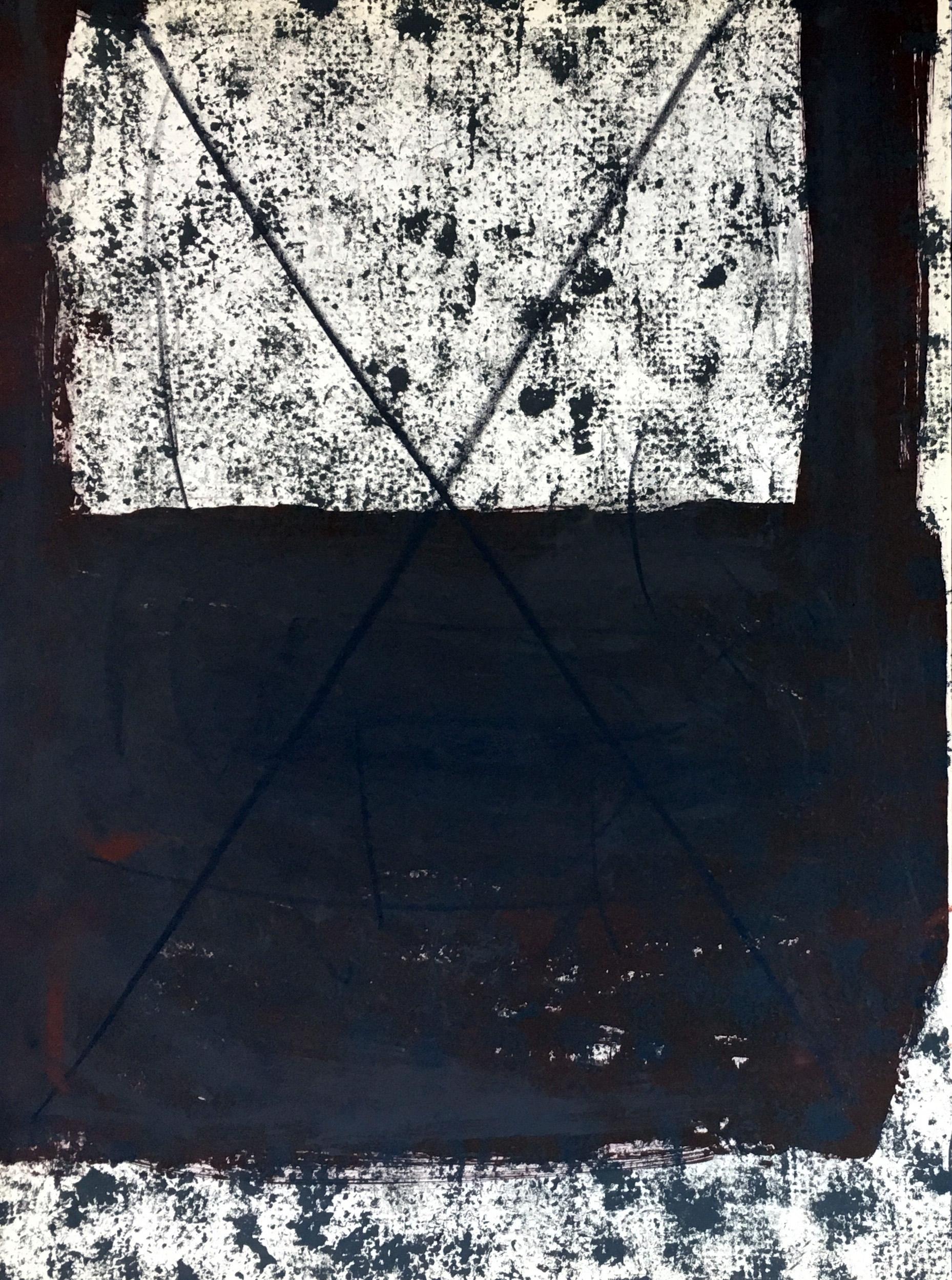
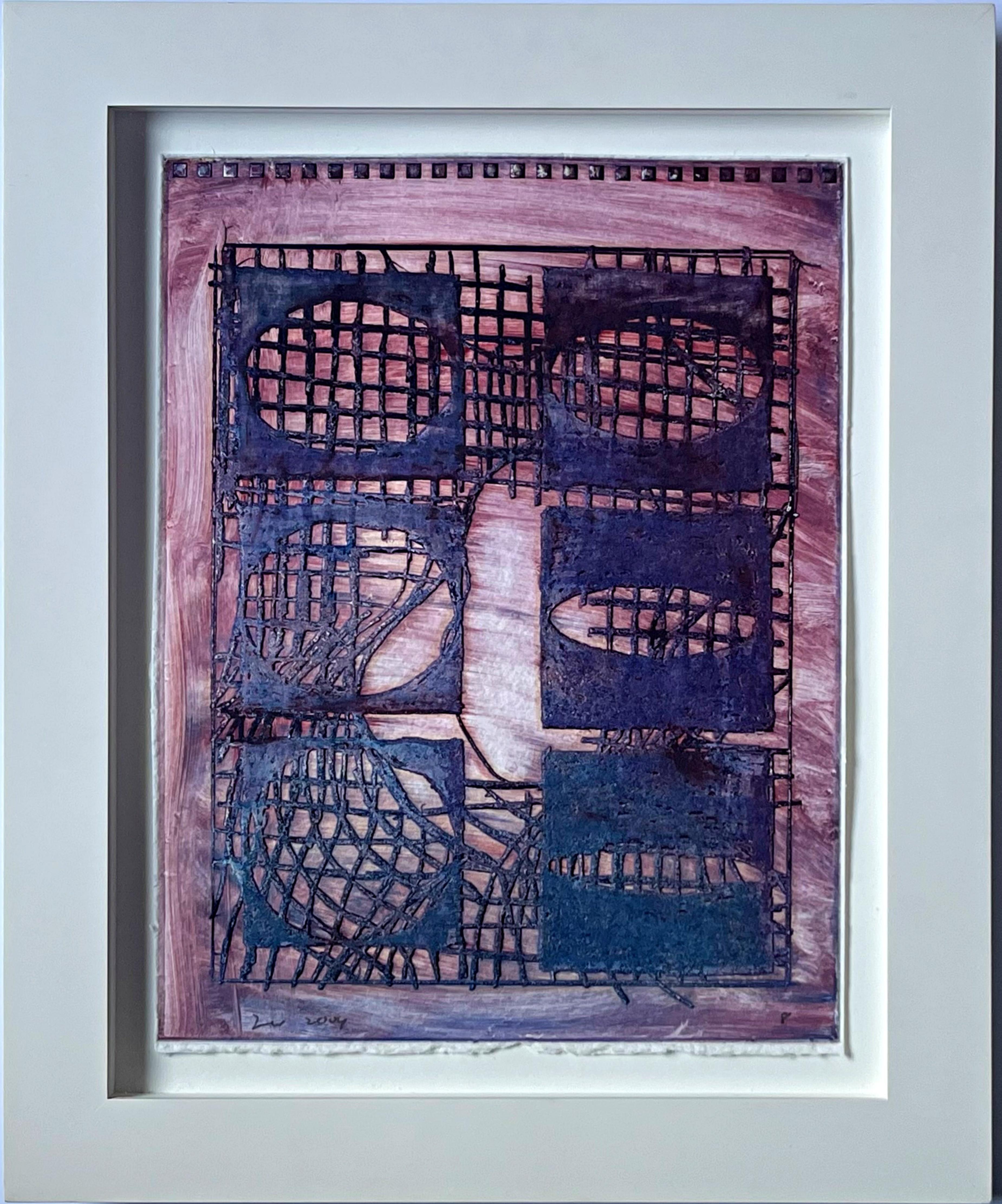
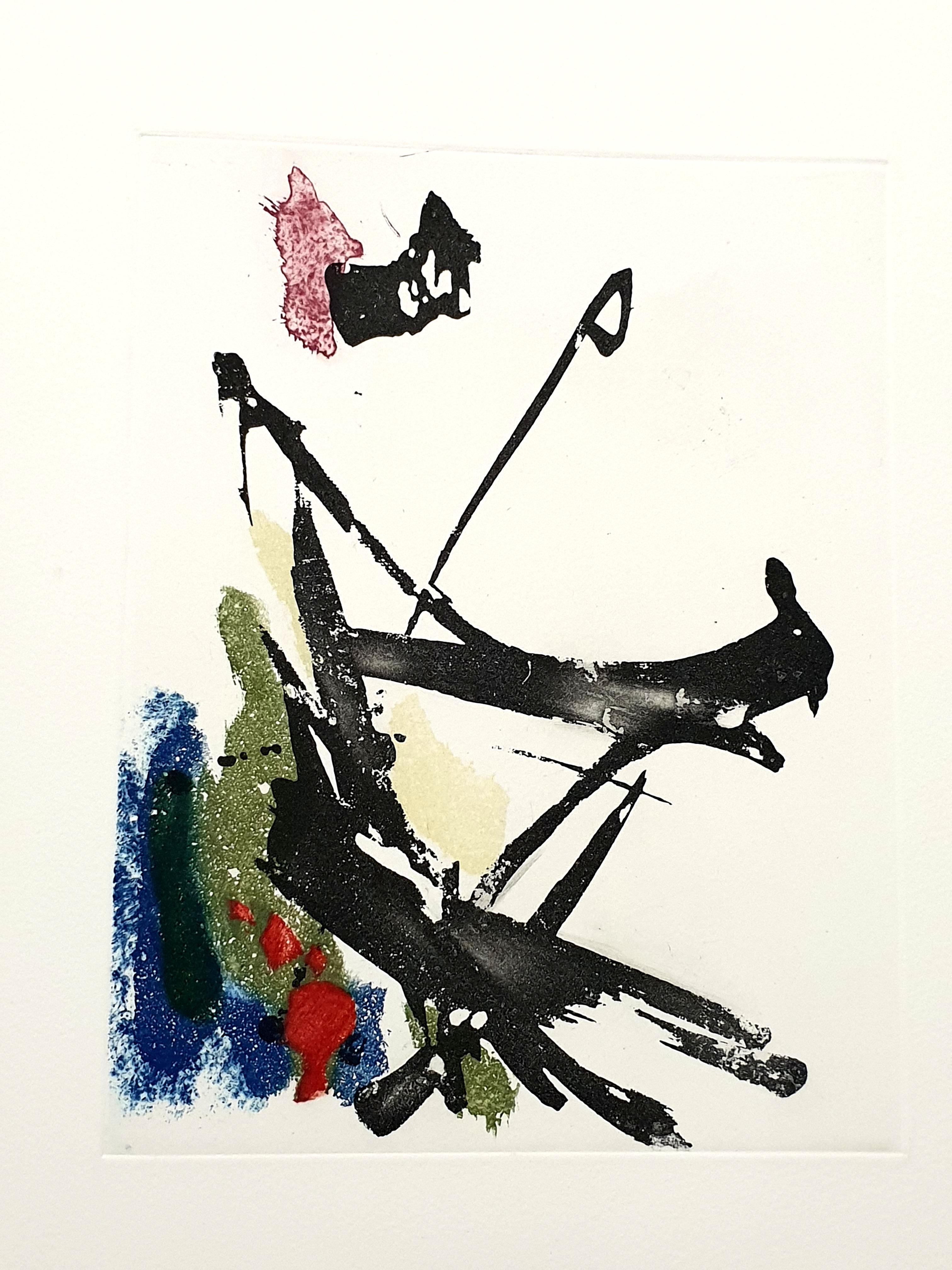
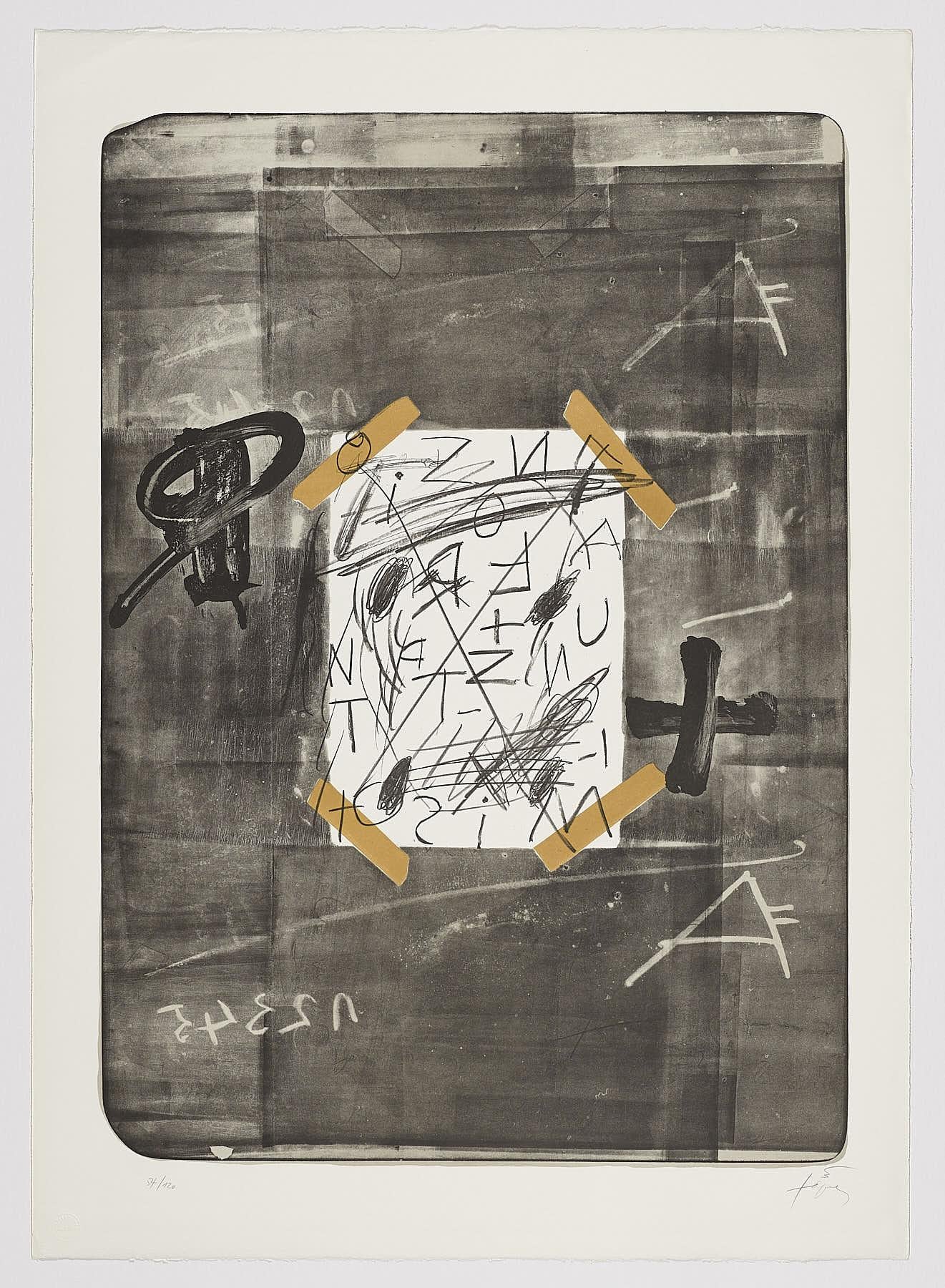
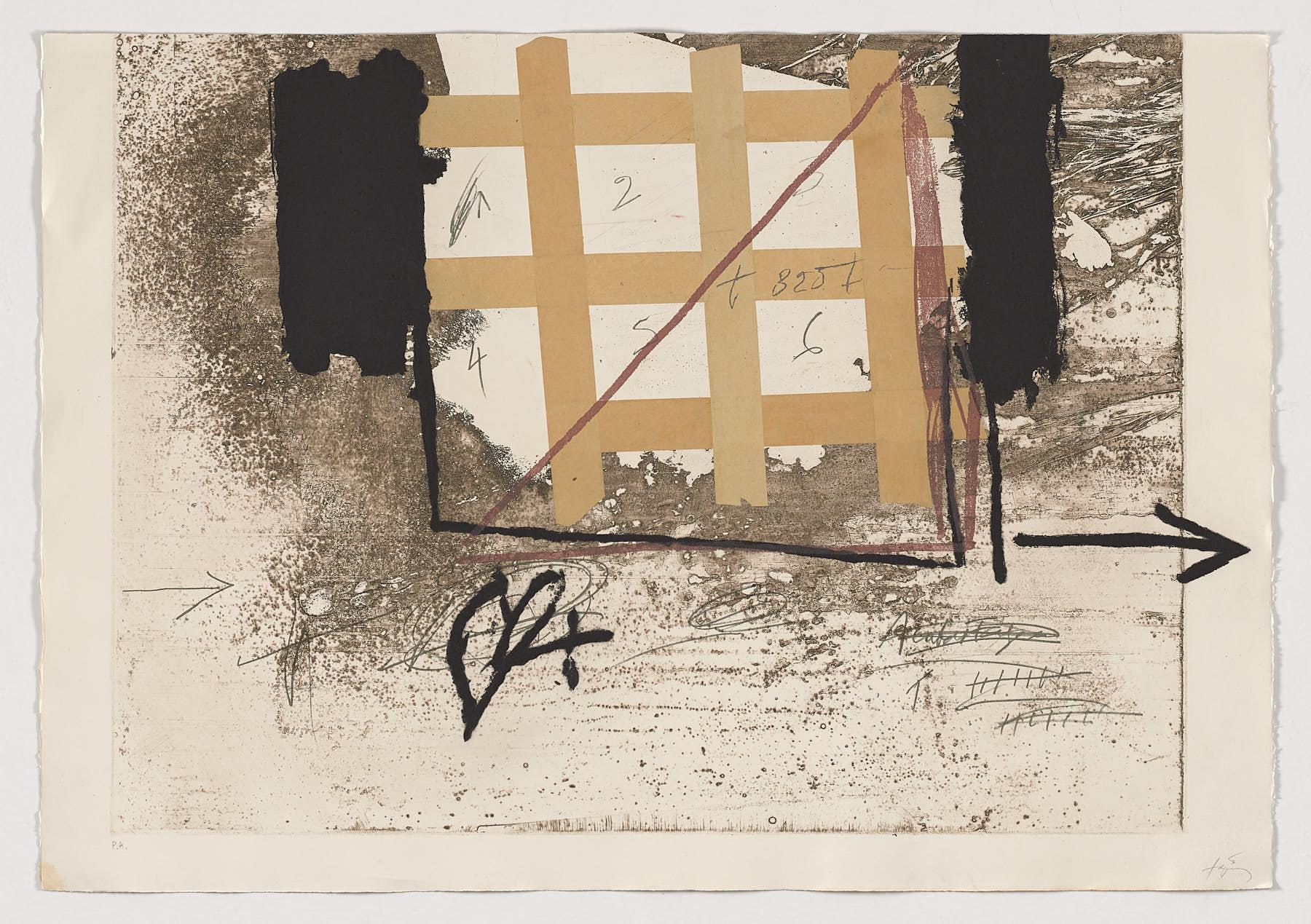
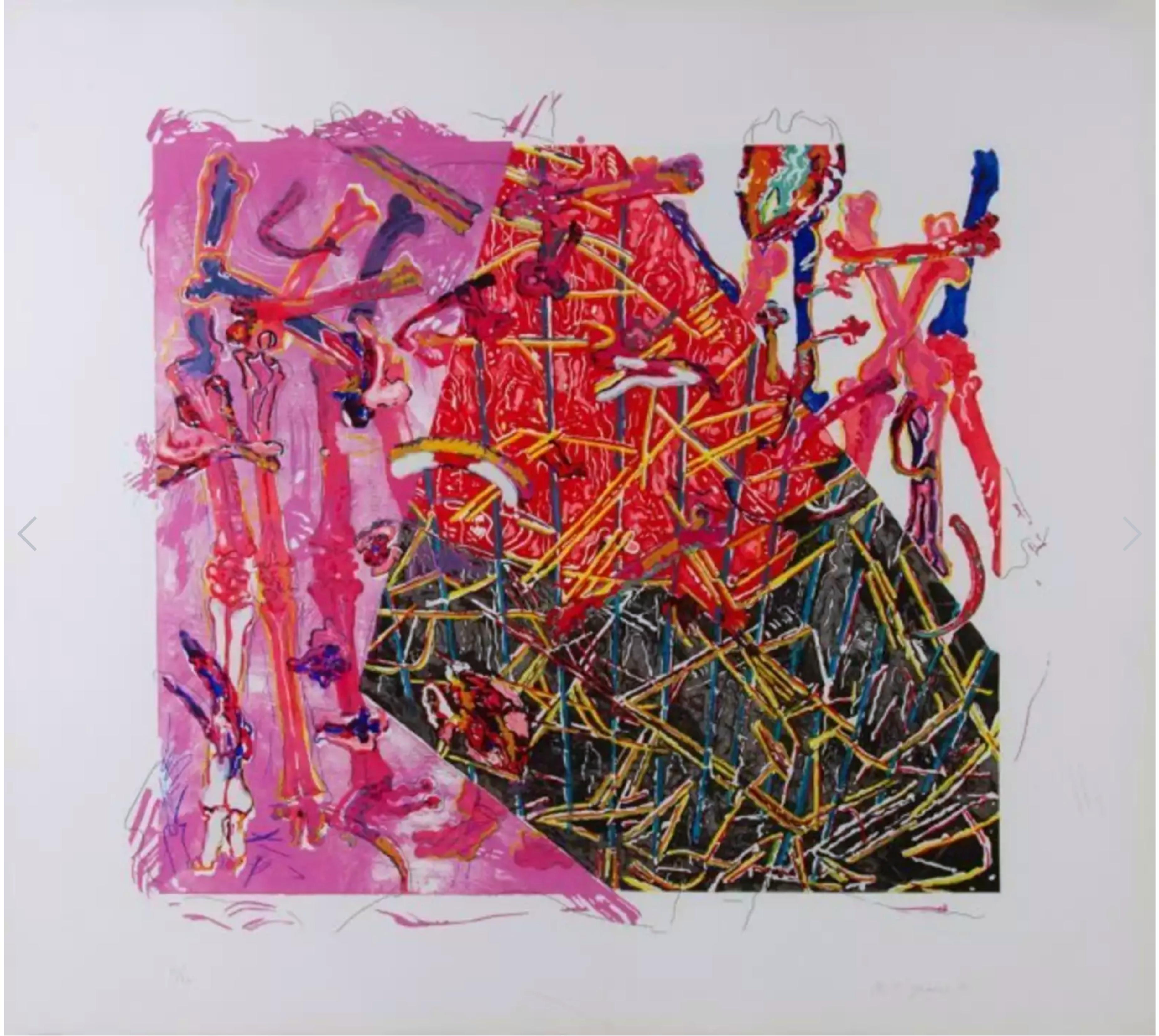
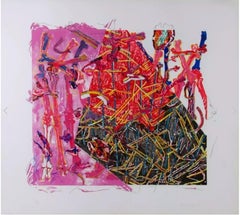
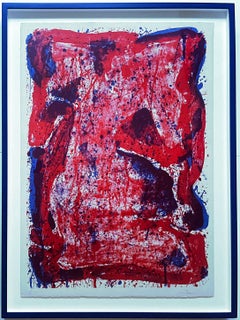
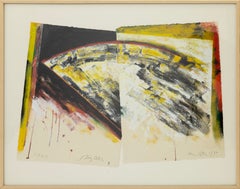
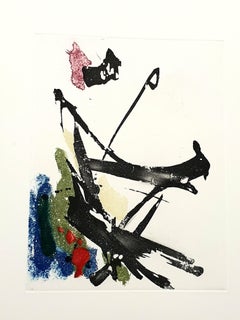
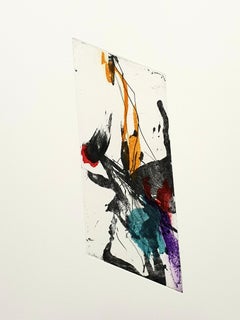
III-8 (two pages), 1983
Monoprint on two individual sheets of white handmade TGL paper, hand colored with colored pencils, paint sticks, and liquid and spray acrylic paints
Hand-signed by artist, Signed Heizer and dated and inscribed in pencil lower left of left panel; chop mark lower left of left panel
Provenance: De-accessioned from corporate art collection
Tyler Graphics Catalogue Raisonne, 1974-5, Plate 228: MH50, p. 156
Michael Heizer is represented by Gagosian Gallery
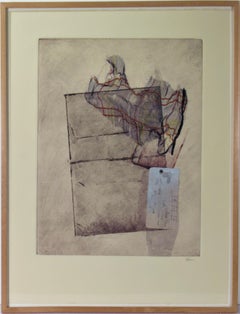
Two stunning works on paper with extensive hand painting were created by Michael Heizer at Tyler Graphics in the early 1980s. They were created as one composition - to be exhibited together- according to the Tyler Graphics catalogue raisonne, which also states: "During and after printing, the artist hand-colored the panels with colored pencils, Paintstiks, and liquid and spray acrylic paints." The panels are floated and framed together in the original vintage frame. These sculptural studies are very desirable works and a must-have for true Heizer fans. Hand signed and dated, with personal inscription Bears Tyler Graphics chop mark.
Measurements framed:
37.5" inches (vertical) x 57.75" (horizontal) x 1" (depth)
Each sheet (without frame) measures is 25.25 inches x 23.25 inches
Published by: Tyler Graphics, Ltd., Mt. Kisco, New York
Tyler Graphics Catalogue Raisonne, 1974-5, Plate 228: MH50, p. 156
De-accessioned from corporate art collection; hence museum quality handmade wood frame
As long as you’re going to make a sculpture, why not make one that competes with a 747, or the Empire State Building, or the Golden Gate Bridge?
—Michael Heizer
Michael Heizer Biography
In his monumental excavations, site-specific constructions, geometric paintings, and drawings, Michael Heizer explores the relationship between positive and negative space. Examining the profound effects of form and scale, his works evoke the simultaneous feelings of awe and dread that constitute the sublime.
When Heizer was twelve years old, his parents permitted him to take a year off school to accompany his father, a renowned field archeologist, on a dig in Mexico. As his father researched the rock sources of ancient monuments, Heizer made site drawings, an exercise that he has continued to expand upon throughout his career. In the mid-1960s he left his studies at the San Francisco Art Institute and headed to New York, where he supported himself by painting apartments, including the loft of Walter De Maria, with whom he developed a close, lasting friendship. During this time Heizer began to work on shaped canvases that he called “negative paintings.”
In the winter of 1967 Heizer made a trip to the Sierra Nevada mountains, where he dug two large pits in the woods, lining one with plywood and the other with sheet metal. He declared this work to be “ultra-modern art,” and it was a turning point in his practice. Heizer further manipulated the landscape in Double Negative (1969), a pair of cuts fifty feet deep in facing cliff edges of Mormon Mesa in Nevada, made by removing 240,000 tons of sandstone and rhyolite.
In the 1970s Heizer continued to seek out ideal terrains for his work, compiling real estate files for property in six western states and buying remote land as raw material. In 1970 he began City, a project in the Nevada desert that he has been working on for more than forty years, and is inspired by Native American traditions of mound building and the pre-Colombian ritual cities of Central and South America. Using materials primarily mined from the surrounding land, City merges Heizer’s interests in ancient civilization with his singular ability to work with immense variations in scale, perspective, and viewpoint.
Simultaneous to the construction of City, Heizer has developed several major bodies of work, including shaped canvases featuring screen-printed colors and “negative wall sculptures” composed of rocks and boulders set into rectangular niches. In 2012 the Los Angeles County Museum of Art installed Levitated Mass (2012), a 340-ton granite boulder perched over a narrow outdoor passageway. In 2015 Heizer debuted the Altar series (2015) at Gagosian, West 24th Street, New York, large steel sculptures that allude to a wide range of pictographic influences, from ancient rock carvings and hieroglyphs to cattle-branding symbols. By unifying the images and architecture of different cultures and eras, Heizer strives to create art that could outlast many generations as he probes the effects of scale and symbolism on perception.
-courtesy of Gagosian Gallery