Want more images or videos?
Request additional images or videos from the seller
1 of 8

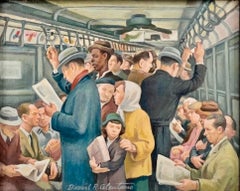
Daniel Ralph Celentano
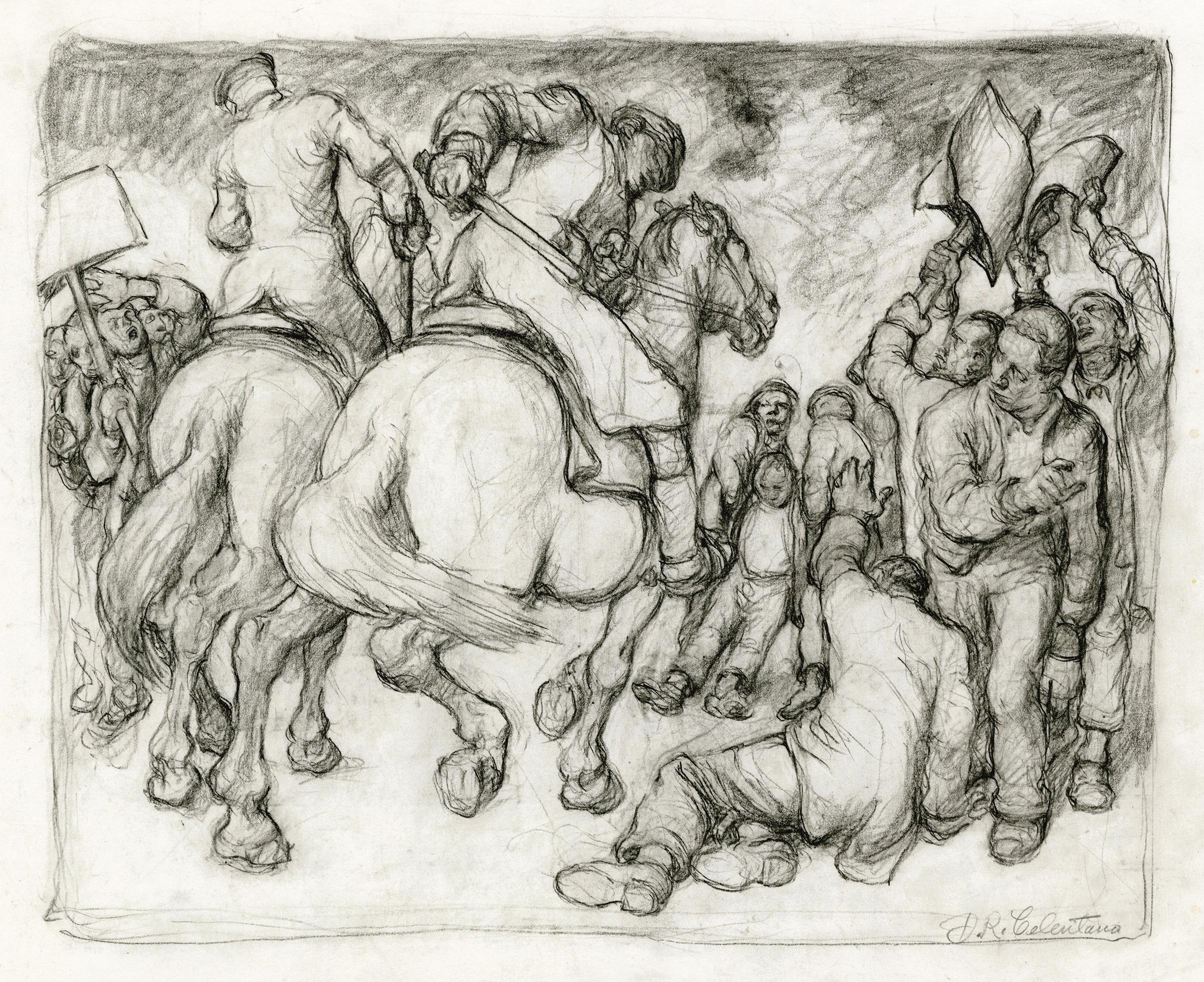
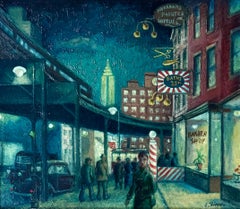
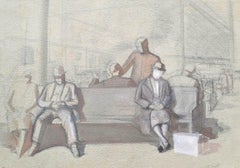
NYC Subway Mid 20th Century American Scene Social Realism WPA Modern 1930s

$5,500
£4,144.81
€4,843.30
CA$7,804.91
A$7,828.64
CHF 4,541.05
MX$95,563.55
NOK 52,598.24
SEK 53,830.76
DKK 36,203.57

About the Item

NYC Subway Riders Mid 20th Century American Scene Social Realism WPA Modern 1930s Daniel Celentano (1902 - 1980) Subway Scene, 1930s 8 x 9 inches Ink and wash on paper Singed lower right Provenance: Janet Marquesee Fine Art BIO Daniel Celentano at the age of twelve was Thomas Hart Benton's first and youngest student. Celentano often focused on the Italian neighborhood of New York City where he was born and raised as the subject matter of his drawings, paintings and murals. He enjoyed an active career, exhibiting at all the major museums as an accomplished American Scene painter during the WPA and WWII era. His first one-man show was held in 1939 at the Walker Art Galleries. the start of WWII, Celentano went to work at the Grumman Aircraft Plant, where he executed a mural on The Story of Flight.

More From This Seller

View All
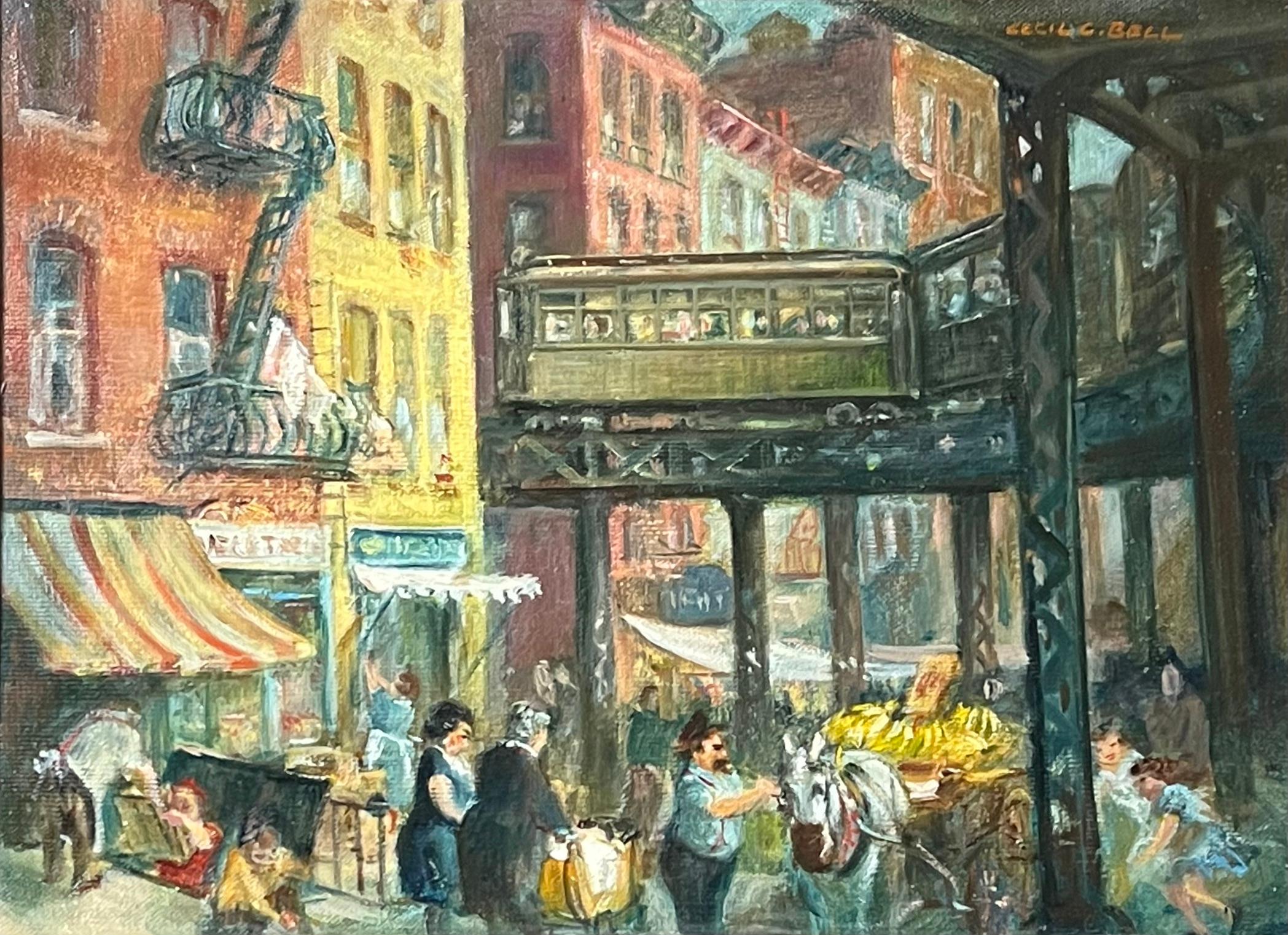
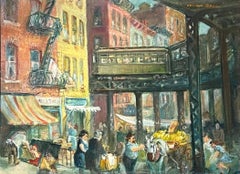
NYC EL American Scene Social Realism Mid 20th Century Modern WPA Era Figurative

NYC EL American Scene Social Realism Mid 20th Century Modern WPA Era Figurative

By Cecil Crosley Bell

Located in New York, NY

NYC EL American Scene Social Realism Mid 20th Century Modern WPA Era Figurative Cecil Bell (1906 – 1970) Street Life Under the EL 22 x 30 inches Oil on canvas, c. 1930s Signed upper...

Category

1930s American Realist Landscape Paintings

Materials

Canvas, Oil

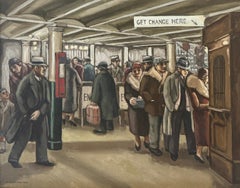
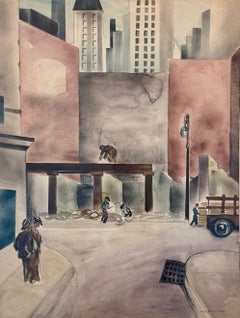
American Modernism WPA Mid 20th Century Realism NYC Street Scene Cityscape

American Modernism WPA Mid 20th Century Realism NYC Street Scene Cityscape

By Max Arthur Cohn

Located in New York, NY

American Modernism WPA Mid 20th Century Realism NYC Street Scene Cityscape Max Arthur Cohn (1903 - 1998) "New York Street Scene" Watercolor on paper, c. 1930s Sight: 21 x 16 inches...

Category

1930s American Modern Figurative Paintings

Materials

Paper, Watercolor

You May Also Like

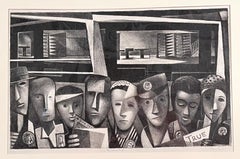
SUBWAY SHIFT - THE SECOND FRONT

SUBWAY SHIFT - THE SECOND FRONT

By Benton Murdoch Spruance

Located in Portland, ME

Spruance, Benton (American 1904-1967). SUBWAY SHIFT - THE SECOND FRONT. Fine and Looney 223. Lithograph, 1943. Fine and Looney cite two editions, one of 35 and one of 30, this being ...

Category

1940s Figurative Prints

Materials

Lithograph

Waiting for the Train - Mid 20th Century Pencil & Wash

Waiting for the Train - Mid 20th Century Pencil & Wash

By Gordon Scott

Located in London, GB

Gordon Noel Scott A.R.C.A 1914 - 2016 Waiting for the Train Pencil and wash on Paper Image size: 10 3/4 x 14 3/4 inches Modern contemporary style fr...

Category

20th Century Figurative Drawings and Watercolors

Materials

Watercolor, Pencil

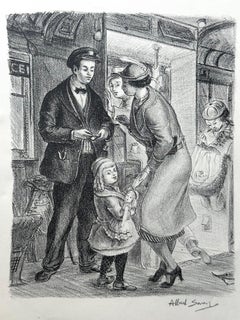
WPA Era Subway Scene Mother & Child

WPA Era Subway Scene Mother & Child

Located in Wilton Manors, FL

Beautiful WPA era NYC subway scene by American artist, Albert Sway (b.1913). ca. 1935. Lithograph on paper, image measures 9.75 x 7.75 inches. Full sheet measuring 12.5 x 9.5 inche...

Category

1930s American Realist Figurative Prints

Materials

Paper, Ink

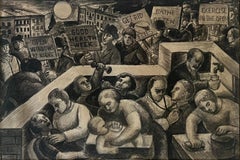
Getting Ready for the Revolution - Learning How to Ride in the Subway

Getting Ready for the Revolution - Learning How to Ride in the Subway

By Adolf Arthur Dehn

Located in Fairlawn, OH

Getting Ready for the Revolution - Learning How to Ride in the Subway Litho crayons on illustrator’s board, c. 1932 Signed: Adolf Dehn (VED) lower right corner (signed by Virginia Dehn, the artist’s widow) Tilted along the upper edge of the recto in pencil by the artist Verso inscriptions: “VF 3168.D” in a circle, also annotated in red pencil “32” in a circle and “699 Provenance: Mary Ryan Gallery, exhibition entitled Adolf Dehn Lithographs, 1927-1940, Nov. 16 to Dec. 12, 1982. The original exhibition notice us affixed to the backing board of the frame Note: A drawing intended or used in the publication Vanity Fair, for whom Dehn worked in the mid 1920’s to the 1930’s. Adolf Dehn, American Watercolorist and Printmaker, 1895-1968 Adolf Dehn was an artist who achieved extraordinary artistic heights, but in a very particular artistic sphere—not so much in oil painting as in watercolor and lithography. Long recognized as a master by serious print collectors, he is gradually gaining recognition as a notable and influential figure in the overall history of American art. In the 19th century, with the invention of the rotary press, which made possible enormous print runs, and the development of the popular, mass-market magazines, newspaper and magazine illustration developed into an artistic realm of its own, often surprisingly divorced from the world of museums and art exhibitions, and today remains surprisingly overlooked by most art historians. Dehn in many regards was an outgrowth of this world, although in an unusual way, since as a young man he produced most of his illustrative work not for popular magazines, such as The Saturday Evening Post, but rather for radical journals, such as The Masses or The Liberator, or artistic “little magazines” such as The Dial. This background established the foundation of his outlook, and led later to his unique and distinctive contribution to American graphic art. If there’s a distinctive quality to his work, it was his skill in introducing unusual tonal and textural effects into his work, particularly in printmaking but also in watercolor. Jackson Pollock seems to have been one of many notable artists who were influenced by his techniques. Early Years, 1895-1922 For an artist largely remembered for scenes of Vienna and Paris, Adolf Dehn’s background was a surprising one. Born in Waterville, Minnesota, on November 22, 1895, Dehn was the descendent of farmers who had emigrated from Germany and homesteaded in the region, initially in a one-room log cabin with a dirt floor. Adolf’s father, Arthur Clark Dehn, was a hunter and trapper who took pride that he had no boss but himself, and who had little use for art. Indeed, during Adolf’s boyhood the walls of his bedroom and the space under his bed were filled with the pelts of mink, muskrats and skunks that his father had killed, skinned and stretched on drying boards. It was Adolf’s mother, Emilie Haas Dehn, a faithful member of the German Lutheran Evangelical Church, who encouraged his interest in art, which became apparent early in childhood. Both parents were ardent socialists, and supporters of Eugene Debs...

Category

1930s American Modern Figurative Drawings and Watercolors
Materials

Oil Crayon