Want more images or videos?
Request additional images or videos from the seller
1 of 3

Eugène Berman 1
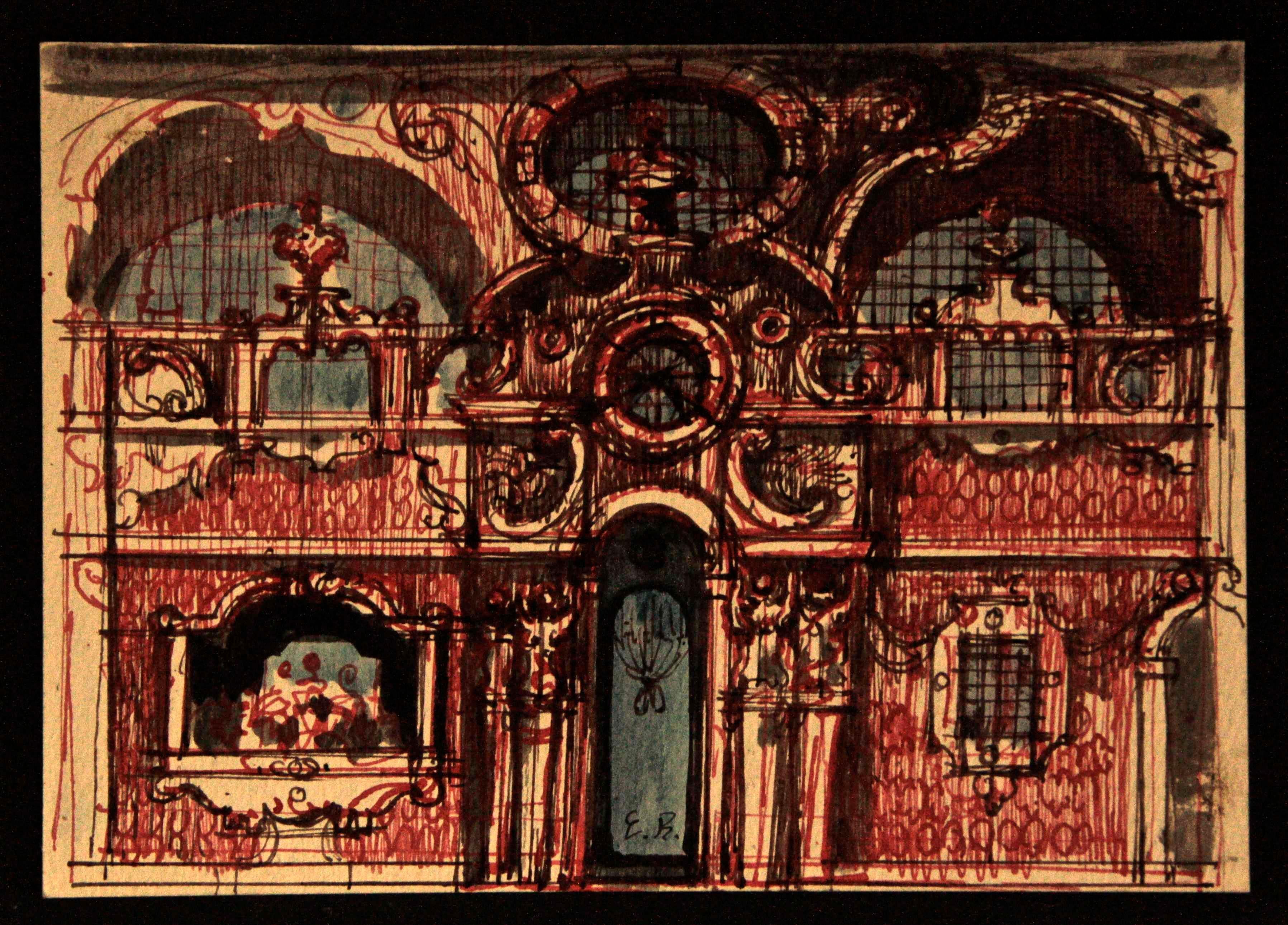
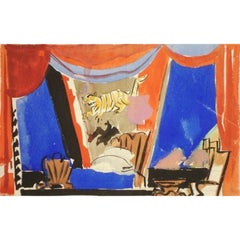
Theatrical Scene - Ink Drawing by Eugène Berman - Mid-20th Century

Mid-20th Century

$588.70
£435.74
€500VAT Included
CA$820.14
A$834.16
CHF 476.99
MX$10,089.83
NOK 5,588.68
SEK 5,587.34
DKK 3,812.54

About the Item

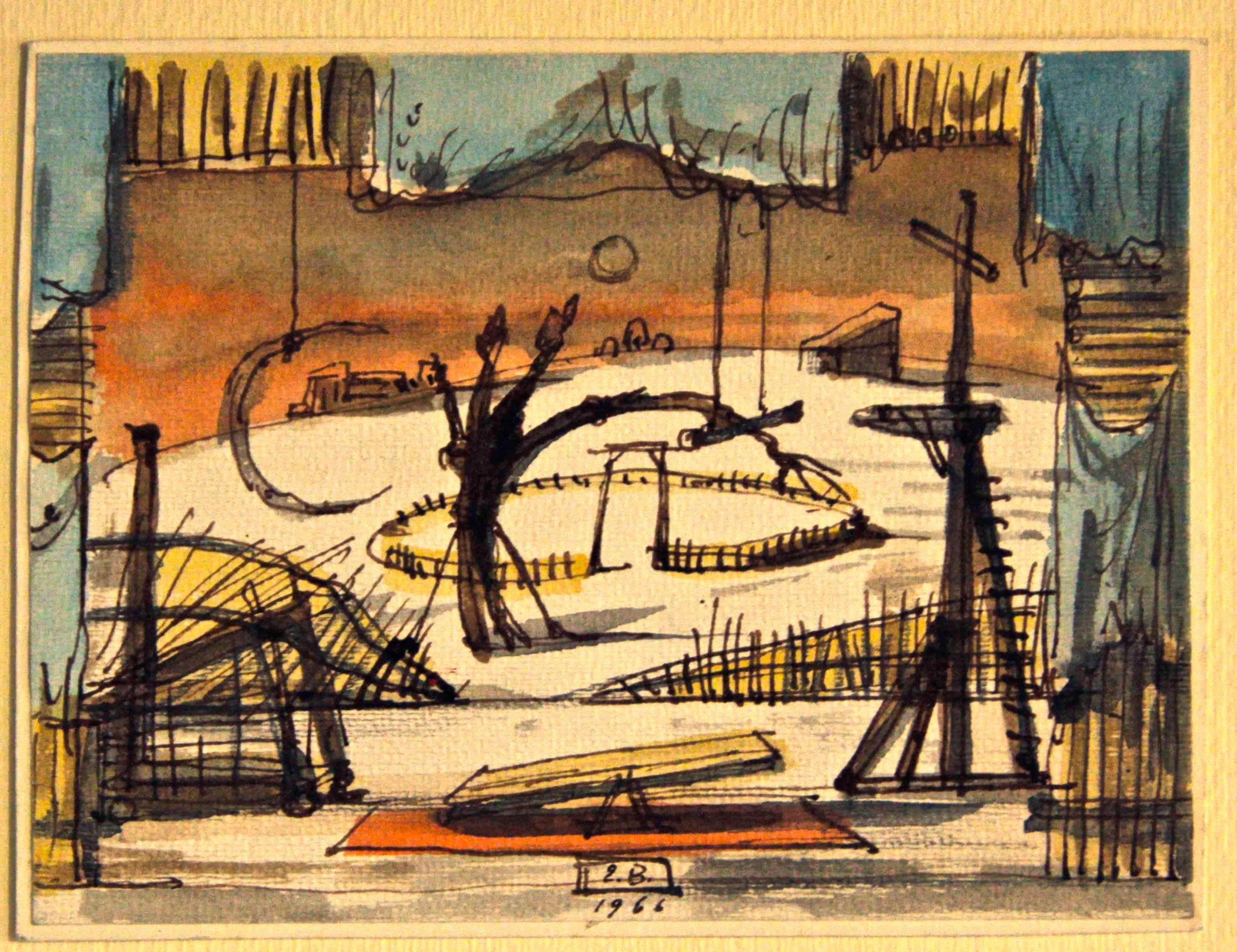
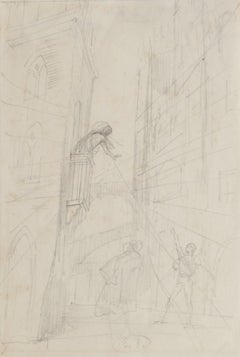
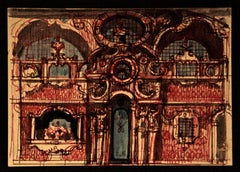
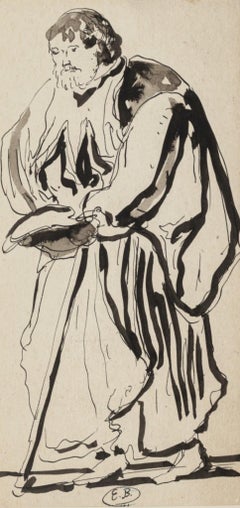
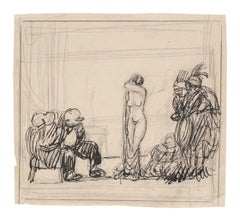
Theatrical Scene is an original monogrammed drawing in China Ink, realized by Russian scenographer Eugène Berman, hand-signed. Image Dimension: 25 x 35 cm In very good conditions. The artwork represents a theatrical scene. Hand-signed "E.B", on the bottom center. Eugène Berman (Saint Petersburg, 1899 – Rome, 1972) was a Russian painter and theater and opera scenographer. His work earned the name of "Neo-Romantic" for the melancholy and the introspective features. Berman might have taken inspiration from Pablo Picasso's artworks, especially from the Blue Period paintings.
  • Creator:
  • Creation Year:
    Mid-20th Century
  • Dimensions:
    Height: 9.85 in (25 cm)Width: 13.78 in (35 cm)Depth: 0.04 in (1 mm)
  • Medium:
  • Movement & Style:
  • Period:
  • Framing:
    Framing Options Available
  • Condition:
    Insurance may be requested by customers as additional service, contact us for more information.
  • Gallery Location:
    Roma, IT
  • Reference Number:
    Seller: M-1104051stDibs: LU65037196702

More From This Seller

View All
Theatrical Figure - Ink and Watercolor Drawing by Eugène Berman - 1950s

Theatrical Figure - Ink and Watercolor Drawing by Eugène Berman - 1950s

By Eugène Berman 1

Located in Roma, IT

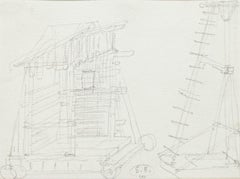
Theatrical Figure is an original monogrammed drawing in pencil, watercolor and in China ink on paper, realized by Russian scenographer Eugène Berman. Image Dimension: 35 x 25 cm Ima...

Category

1950s Modern Figurative Drawings and Watercolors

Materials

Pencil, Ink, Watercolor

Satiric Scene for l’Asino - Pencil and Ink by G. Galantara - Early 20th Century

Satiric Scene for l’Asino - Pencil and Ink by G. Galantara - Early 20th Century

By Gabriele Galantara

Located in Roma, IT

Satiric Scene For l’asino is an original drawing in pencil and china ink realized by Gabriele Galantara. The state of preservation of the artwork is good and aged with some folding....

Category

Early 20th Century Modern Figurative Drawings and Watercolors

Materials

Ink, Pencil

You May Also Like

Theater study

Theater study

By Guglielmo Innocenti

Located in Genève, GE

Works on paper

Category

20th Century Italian School Figurative Drawings and Watercolors

Materials

Crayon

Theater Sketch 2

Theater Sketch 2

By Alexander Oscar Levy

Located in Buffalo, NY

Alexander O. Levy was a painter, illustrator, printmaker and designer who was born in 1881 in Bonn, Germany. He died in 1946 in Buffalo, New York. At age three, he was brought to ...

Category

1930s Art Deco Figurative Drawings and Watercolors

Materials

Archival Paper, Charcoal, Gouache

Scenography contract opera theater. * 1930s, paper, mixed technique, 15x24cm

Scenography contract opera theater. * 1930s, paper, mixed technique, 15x24cm

By Romans Suta

Located in Riga, LV

Romans Suta Born on April 28, 1896 in the vicinity of Cesis (Latvia), died on July 14, 1944 in Tbilisi (Georgia), rehabilitated posthumously. Painter, graphic artist, decorative a...

Category

1930s Abstract Interior Drawings and Watercolors

Materials

Paper

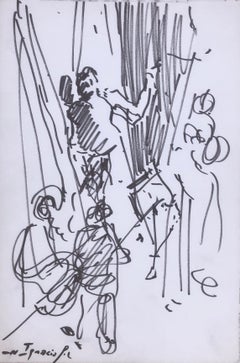
Spanish Expressionist Marker Drawing of Ballet Dancers and Theater Scene

Spanish Expressionist Marker Drawing of Ballet Dancers and Theater Scene

By Ignacio Gil Sala

Located in Sitges, Barcelona

Spanish Expressionist Marker Drawing of Ballet Dancers and Theater Scene Artist: Ignacio Gil Sala (1913–2003) Title: Untitled (Ballet and Theater Sketches) Date: circa 1985 Medium: ...

Category

1980s Expressionist Figurative Drawings and Watercolors

Materials

Permanent Marker

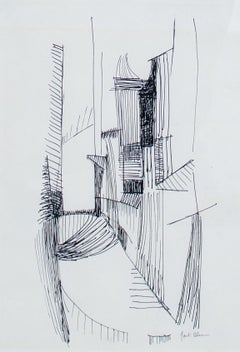
1960s Illegibly signed surrealist ink drawing

1960s Illegibly signed surrealist ink drawing

Located in New York, NY

Unknown Artist Untitled, c. 1960s Ink on paper Sight size: 10 x 7 in. Framed: 15 1/4 x 12 1/4 in. Signed illegibly lower right: Jack Bl...?

Category

1960s Surrealist Abstract Drawings and Watercolors

Materials

Paper, Ink

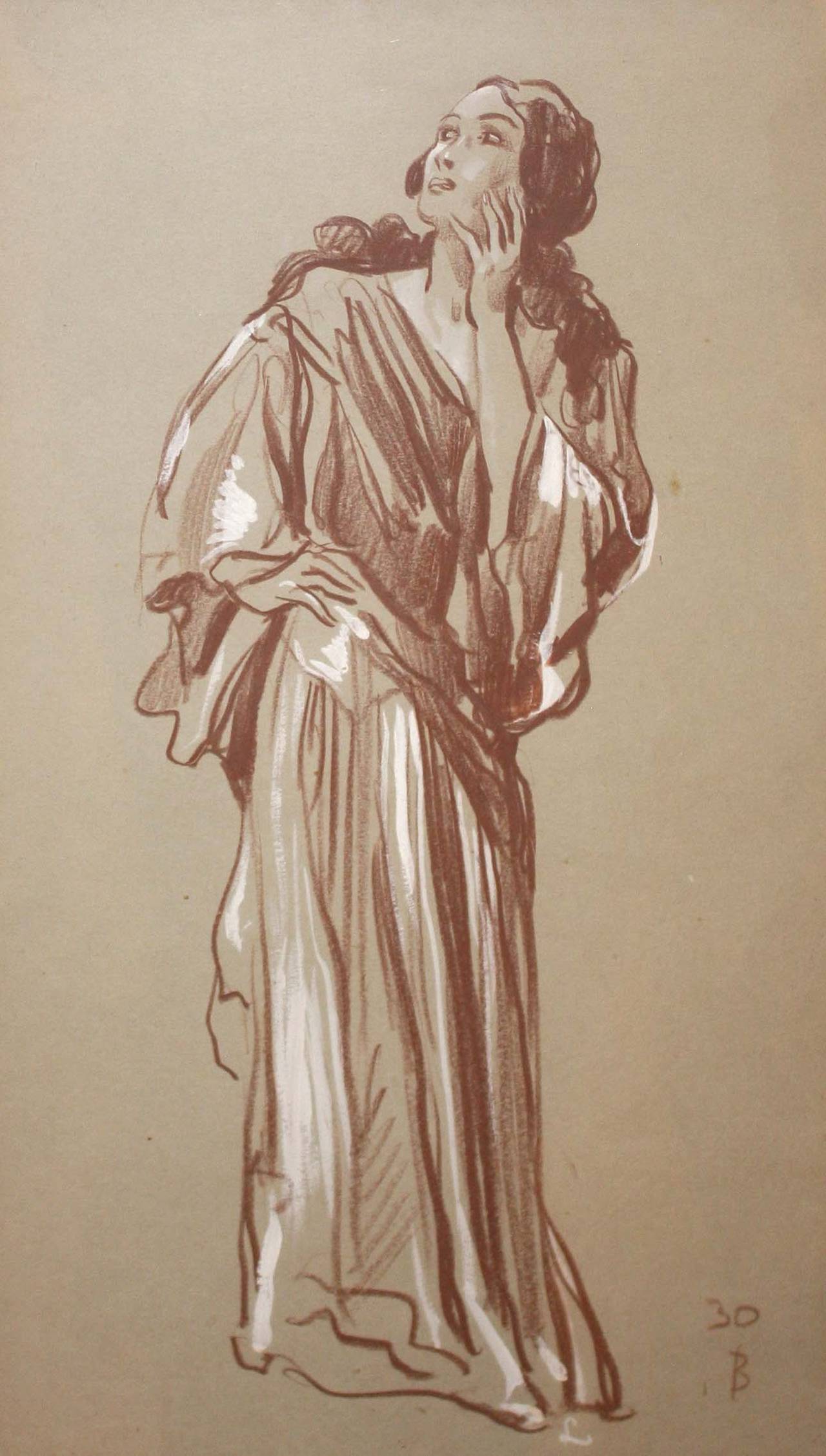
Italian Scene, Pen and Ink with Wash Painting by Reginald Brill, 1950s circa

Italian Scene, Pen and Ink with Wash Painting by Reginald Brill, 1950s circa

By Reginald Brill

Located in Kingsclere, GB

Italian Scene, Pen and Ink with Wash Painting by Reginald Brill, 1950s circa Additional information: Medium: Pen and ink with wash 33 x 48.3 cm 13 x 19 in Reginald " Reggie" Brill was a versastile 20th century artist and teacher. Brill was born in London in 1902 and spent his early childhood there and in Yorkshire. By the time of the First World War, at the age of 13, he was living in lodgings in London, working in a City office and attending St Martins School of Art in the evenings. Considering his lack of education, winning a scholarship to The Slade (now part of University College London) in 1921 where he studied under Henry Tonks for three years, was a huge achievement. On leaving The Slade he found patronage in Lincolnshire, but by the time of the General Strike (1926) he had returned to London and was working on Lansbury's Labour Weekly. He married Rosalie, also an artist, and in 1927 won the Prix de Rome in Decorative Painting. Following two years at The British School in Rome, Brill went to teach at Blackheath School of Art. During 1930 he spent three months painting in Egypt and it was there that he met Col. T G Gayer-Anderson, one of the twin brothers who were to bequeath The Little Hall in Lavenham as a hostel for art students. It was there that Brill retired to act as warden, thus continuing his nurturing of art students until his death in 1972. Brill took up his appointment at The School of Art, Kingston upon Thames in January 1934. It was situated in the Technical Institute (Kingston Hall Road) and Brill found it bohemian and disorganised. He proceeded to inject enthusiasm, order and discipline. Within 5 years of his appointment a purpose-built School of Art was opened in Knights Park. It remained open throughout the war and by 1945 there was a waiting list for places. Under the skilled and totally dedicated direction of Brill, Kingston School of Art became established with national reputation for excellence. In 1961 Sir Charles Wheeler opened the new building at Knights Park. Costing £100,000, this more than doubled the size of the Art School. Brill, was a well-known figure in Kingston. His eloquence made him popular as a guest speaker and his promotion of Art and Design stretched well beyond the doors of Knights Park. Apart from establishing two of the main buildings which makeup what is now known as the Faculty of Design, one of the most visible local contributions he made was the setting up of a topographical collection of paintings depicting Kingston, which has since become known as The Brill Collection at Kingston Museum. Brill gained huge respect and admiration from the hundreds of pupils who studied at Kingston during his 30-year leadership. He published two books, Modern Painting 1946 and Art as a Career 1962, both bearing a strong educational angle. He regularly exhibited along with leading artists of his era at The Royal Academy, both his paintings and his acutely observed drawings. All the while he was a prolific artist, although reading his diaries, intensely self-critical. His perfectionism, acute powers of observation and relentless research can be seen in his drawings, which via the media and methods he explored throughout his life reflect mid 20th century British Art at its most typical. His major series of work, known as 'The Martyrdom of Man', was carried on in parallel to his career as a teacher. These paintings reflect his care for fellow man and depict people at work, e.g., The Operation, The Jury, Linemen, Waiting Room and Rest, which recently sold at Sotheby’s and was specially restored for The Brill Retrospective. His smaller works also play with the theme of everyday events and communication amongst people, such as The Bull Ring and Market Place paintings. Brill's name is associated particularly with human figure compositions, but he also worked on landscapes, portraits and details of plants, animals, interiors etc. As one would expect he moved from one media to another, and his unusual hand painted and cut paper mosaics...

Category

20th Century Landscape Paintings
Materials

Pen