Want more images or videos?
Request additional images or videos from the seller
1 of 14

William C. Grauer
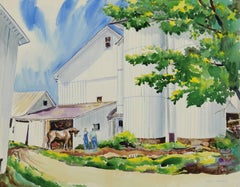
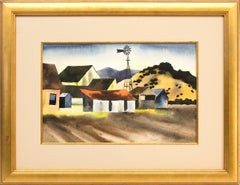
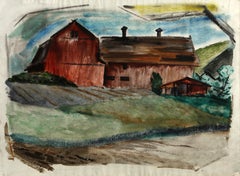
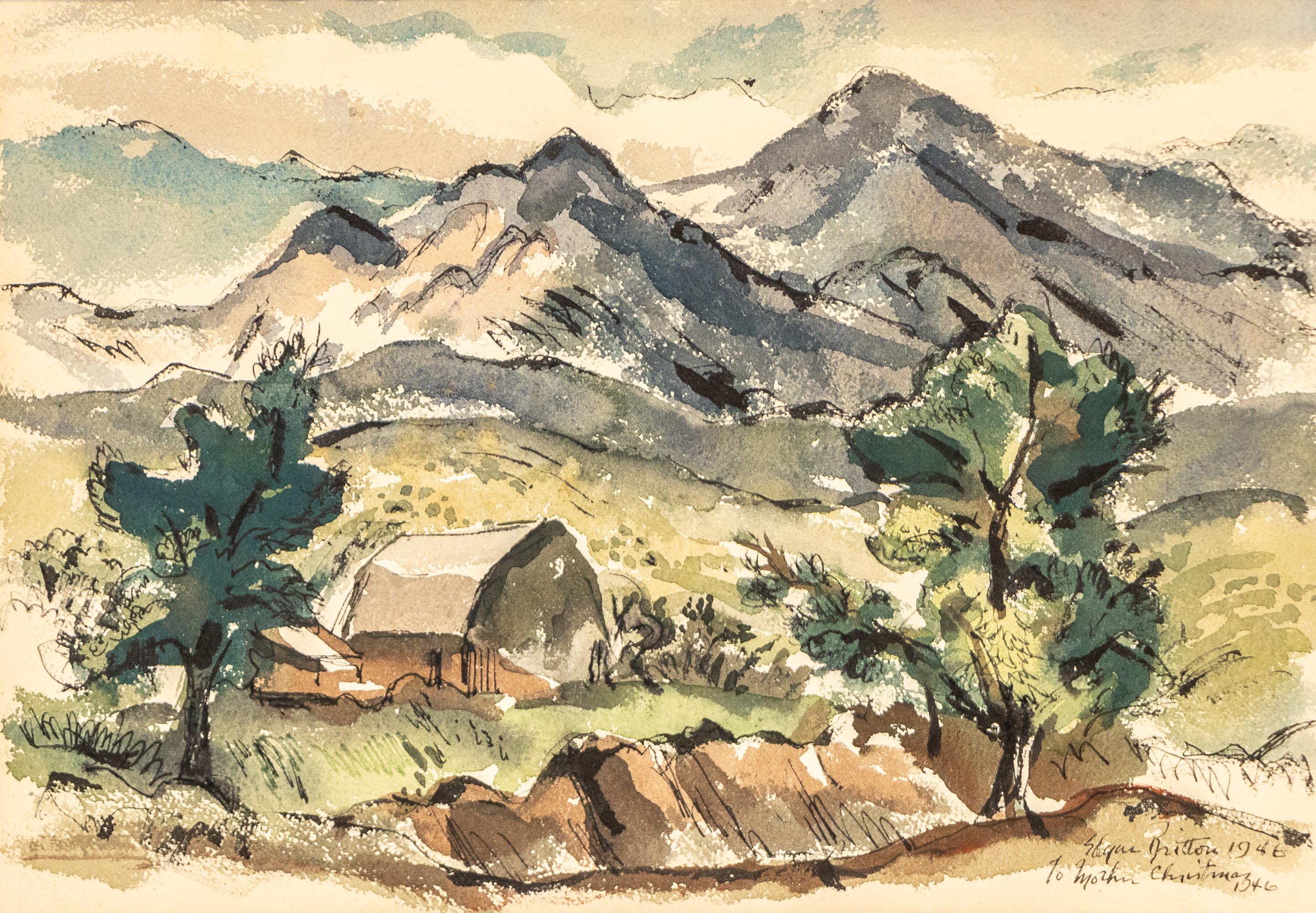
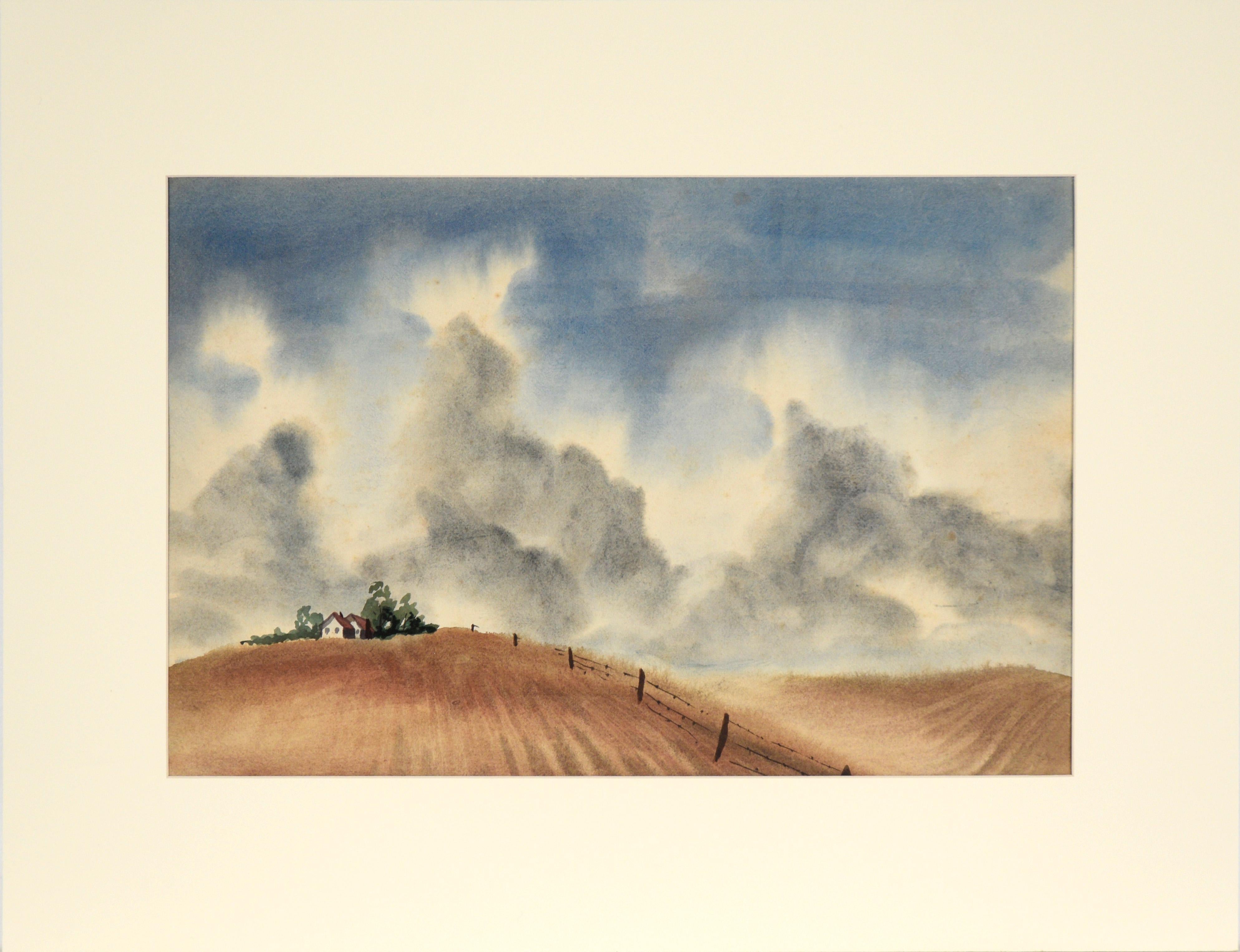
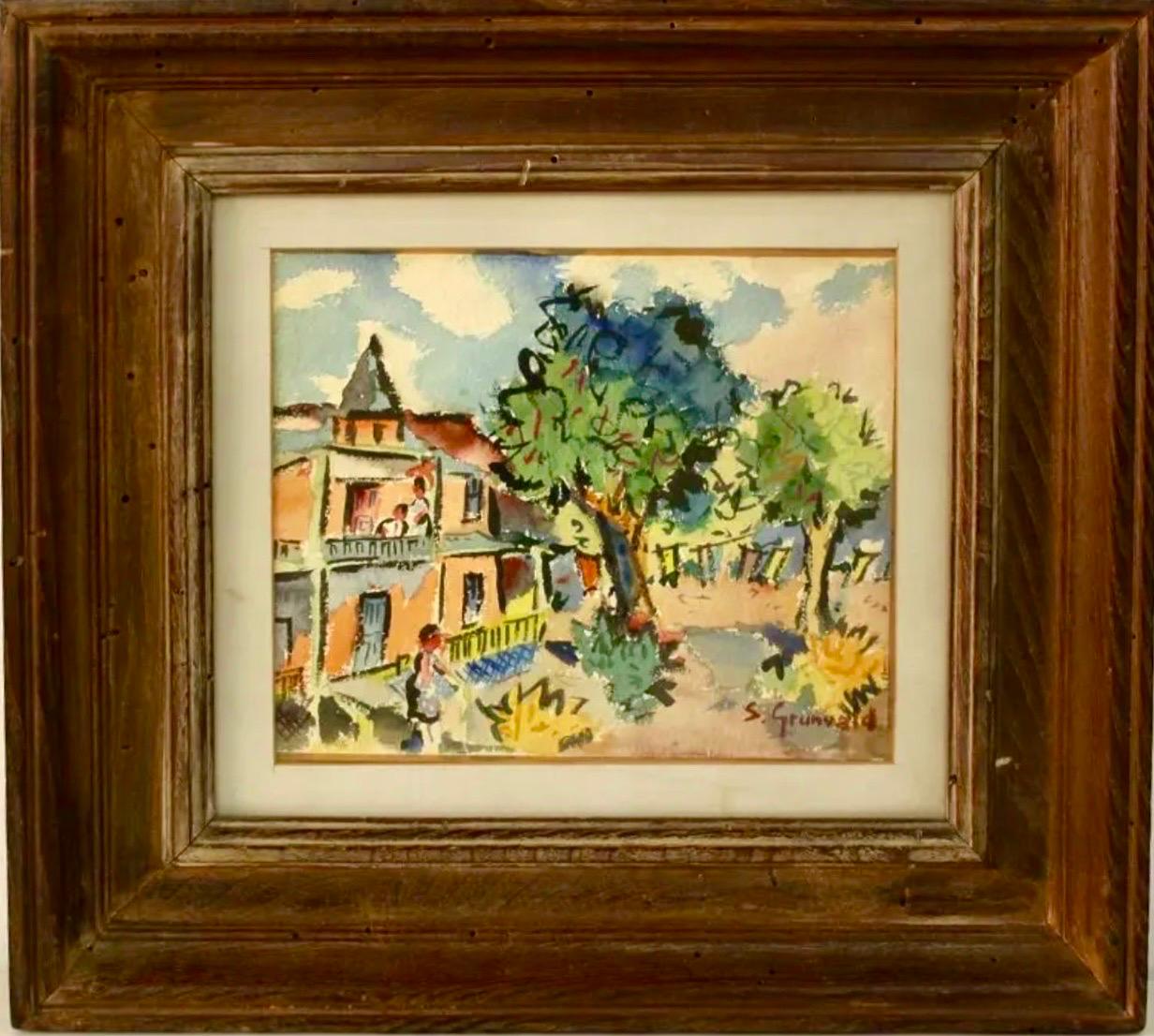
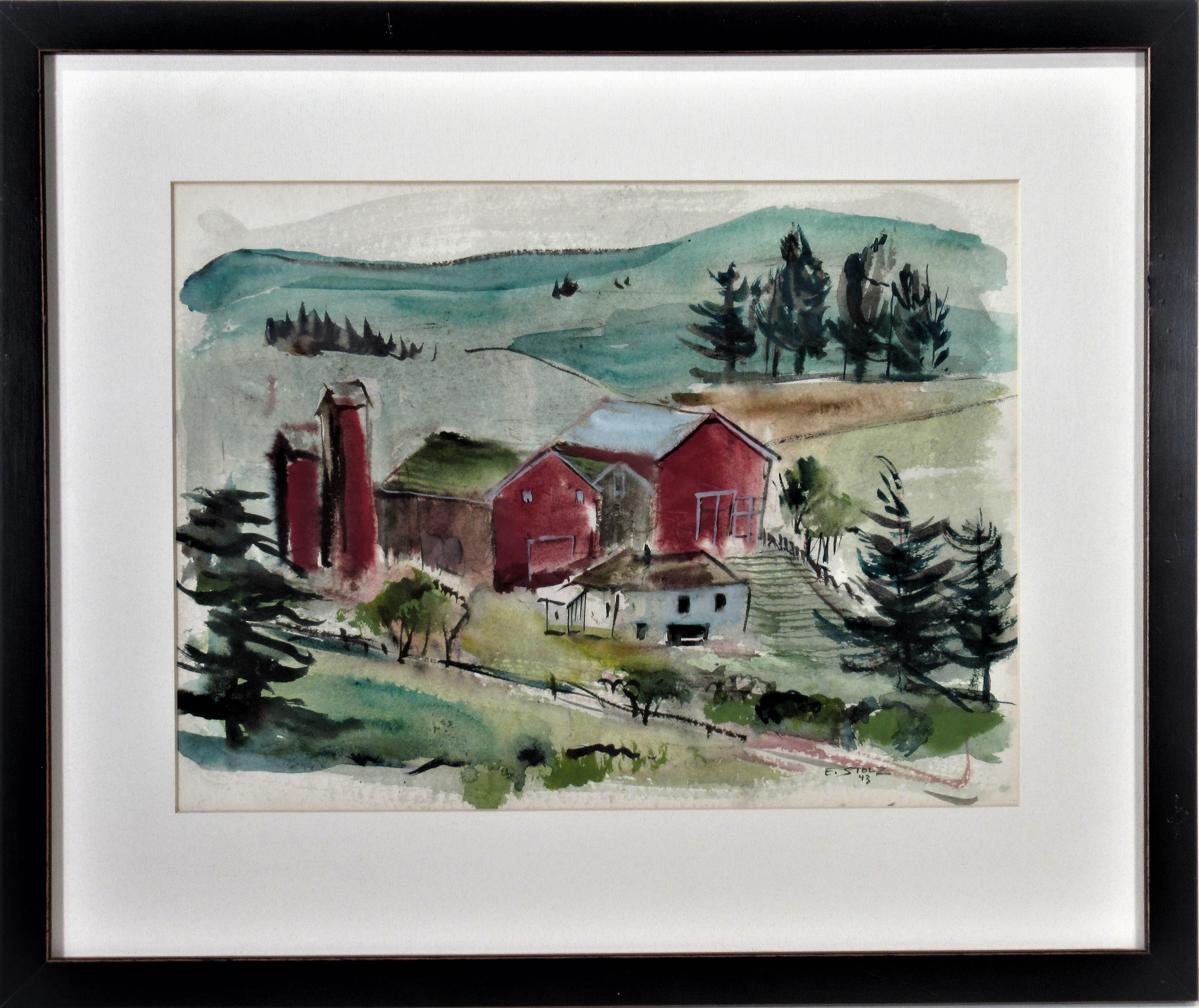
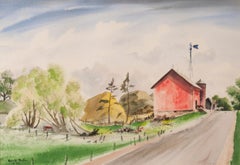
Untitled (Amish Farm) Watercolor, American Modern, Circa 1940, Signed

c. 1940

$4,500
£3,391.13
€3,966.03
CA$6,367.59
A$6,461.94
CHF 3,725.17
MX$78,242.82
NOK 43,237.47
SEK 43,699.92
DKK 29,648.60

About the Item

Untitled (Amish Farm) Watercolor, c. 1940 Signed by the artist lower right: Wm C Grauer (see photo) A masterpiece Modernist American watercolor. Condition: Excellent Sheet/Image size: 19 5/8 x 26 3/8 inches Provenance: Estate of the Artist By descent to his daugher Gretchen William C. Grauer (1895–1985) William C. Grauer was an American painter, muralist, educator, and one of the leading figures in the development of modern art in Cleveland during the twentieth century. Born in Philadelphia on December 2, 1895, he studied at the Pennsylvania Museum School of Industrial Art before serving in France during World War I. In 1927 he settled in Cleveland, where he established a distinguished career as both an artist and teacher. Together with his wife, the artist Natalie Eynon Grauer, he became an influential force in the region's cultural life. Grauer and Eynon founded the art department at Cleveland College of Western Reserve University and helped shape generations of artists through their teaching and advocacy. Grauer achieved recognition as a landscape painter and muralist whose work evolved from Regionalist and American Scene subjects toward a more abstract style in his later years. His paintings frequently depicted the industrial and rural landscapes of Ohio and West Virginia, rendered with a strong sense of design and color. Throughout his career he exhibited widely and became a familiar presence in the annual May Show exhibitions at the Cleveland Museum of Art, participating in fifty-five editions of the exhibition over nearly six decades. In 1932 Grauer was commissioned to paint murals for the historic President's Cottage at The Greenbrier in White Sulphur Springs, West Virginia. The success of this project led Grauer and Natalie Eynon to establish the Greenbrier Art Colony, also known as the Old White Art Colony, School and Gallery, which operated during the summers from 1934 to 1940. The colony attracted students from across the region and became one of the most important seasonal art schools in Appalachia. Grauer also created murals for the West Virginia exhibits at the Century of Progress Exposition in Chicago (1933) and the New York World's Fair (1939). Several surviving murals at The Greenbrier depict scenes from the history of White Sulphur Springs, including nineteenth-century resort life, Virginia Reel dances, and Civil War subjects associated with the resort's past. Grauer's work is represented in numerous public collections. Holdings include the Smithsonian American Art Museum, which owns Brick Kilns (ca. 1927–1929), and the Cleveland Museum of Art, which holds paintings including Ohio Landscape (1937) and Prairie (1956). Murals removed from Cleveland's historic Schofield Building are preserved by the Western Reserve Historical Society. His paintings also entered many private and institutional collections throughout Ohio and West Virginia. Grauer retired from Western Reserve University in 1966 but continued painting and teaching privately. He died on April 6, 1985, leaving a legacy as a painter, muralist, educator, and founder of the Greenbrier Art Colony, an institution that played a significant role in the cultural life of Appalachia and the American Midwest. Grauer's association with the Greenbrier Art Colony is widely regarded as one of his most significant historical achievements. Founded with his wife, Natalie Eynon Grauer, in the mid-1930s at The Greenbrier resort in White Sulphur Springs, West Virginia, the colony became an important center for artistic instruction and cultural exchange in Appalachia. Through the summer school and its exhibitions, Grauer helped connect the modernist traditions emerging in Cleveland with the artistic life of West Virginia, creating a regional network that influenced generations of artists and students. The Greenbrier Art Colony remains an important chapter in the history of American regional art education and is central to Grauer's legacy as both an artist and teacher.
  • Creator:
    William C. Grauer (1896, American)
  • Creation Year:
    c. 1940
  • Dimensions:
    Height: 19.63 in (49.87 cm)Width: 26.38 in (67.01 cm)
  • Medium:
  • Movement & Style:
  • Period:
  • Condition:
  • Gallery Location:
    Fairlawn, OH
  • Reference Number:
    Seller: FA74781stDibs: LU14018176002

More From This Seller

View All
Horses Leaving the Barn, American Realist Watercolor, Signed, 1940

Horses Leaving the Barn, American Realist Watercolor, Signed, 1940

By Adolf Dehn

Located in Fairlawn, OH

Horses Leaving the Barn Watercolor on paper, 1940 Signed and dated lower left corner (see photo) Condition: Excellent Image: 14 1/2 x 21” Frame: 25” x 31” Provenance; Associated American Artists, New York (see photo of label) Mamdouha and Elmer Holmes Bobst Displayed in an original wormy chestnut frame with OP3 Acrylic. Most probably from the AAA Dehn watercolor exhibition of 1940. Vintage original framing chosen by the artist. Note: Elmer Holmes Bobst (1884–1978) was an American businessman and philanthropist who worked in the pharmaceutical industry. His wife, Mamdouha, was also well known philanthropist. Bobst was born in Lititz, Pennsylvania. He aspired to become a doctor, but instead, he taught himself pharmacology. After his wife Ethel composed his interview letter, he became manager and treasurer of the Hoffman-LaRoche Chemical Works by 1920. When Bobst retired from the company in 1944, he was one of the nation's highest paid corporate executives. In 1945 he took charge of the ailing William Warner Company (later Warner–Lambert) and he remained board chairman until his retirement. Bobst had close connections to President Dwight Eisenhower, but was also a close friend of President Richard Nixon. Note: In 1940, the year of this watercolor, Dehn and Elizabeth Timmerman visited Waterville, MN on their way to Colorado Sprint, Colorado where Dehn was to teach lithography and watercolor. This watercolor is obviously a view of the area around Waterville. Adolf Dehn, American Watercolorist and Printmaker, 1895-1968 Adolf Dehn was an artist who achieved extraordinary artistic heights, but in a very particular artistic sphere—not so much in oil painting as in watercolor and lithography. Long recognized as a master by serious print collectors, he is gradually gaining recognition as a notable and influential figure in the overall history of American art. In the 19th century, with the invention of the rotary press, which made possible enormous print runs, and the development of the popular, mass-market magazines, newspaper and magazine illustration developed into an artistic realm of its own, often surprisingly divorced from the world of museums and art exhibitions, and today remains surprisingly overlooked by most art historians. Dehn in many regards was an outgrowth of this world, although in an unusual way, since as a young man he produced most of his illustrative work not for popular magazines, such as The Saturday Evening Post, but rather for radical journals, such as The Masses or The Liberator, or artistic “little magazines” such as The Dial. This background established the foundation of his outlook, and led later to his unique and distinctive contribution to American graphic art. If there’s a distinctive quality to his work, it was his skill in introducing unusual tonal and textural effects into his work, particularly in printmaking but also in watercolor. Jackson Pollock seems to have been one of many notable artists who were influenced by his techniques. Early Years, 1895-1922 For an artist largely remembered for scenes of Vienna and Paris, Adolf Dehn’s background was a surprising one. Born in Waterville, Minnesota, on November 22, 1895, Dehn was the descendent of farmers who had emigrated from Germany and homesteaded in the region, initially in a one-room log cabin with a dirt floor. Adolf’s father, Arthur Clark Dehn, was a hunter and trapper who took pride that he had no boss but himself, and who had little use for art. Indeed, during Adolf’s boyhood the walls of his bedroom and the space under his bed were filled with the pelts of mink, muskrats and skunks that his father had killed, skinned and stretched on drying boards. It was Adolf’s mother, Emilie Haas Dehn, a faithful member of the German Lutheran Evangelical Church, who encouraged his interest in art, which became apparent early in childhood. Both parents were ardent socialists, and supporters of Eugene Debs...

Category

1940s American Realist Landscape Drawings and Watercolors

Materials

Watercolor

untitled (The White Barn with Farmers and Horse)

untitled (The White Barn with Farmers and Horse)

By William Grauer

Located in Fairlawn, OH

untitled (The White Barn with Farmers and Horse) Watercolor, c. 1950 Signed by the artist in ink lower right: Wm. C. Grauer Numbered in pencil verso: 152 Provenance: Estate of the Ar...

Category

1950s American Realist Landscape Drawings and Watercolors

Materials

Watercolor

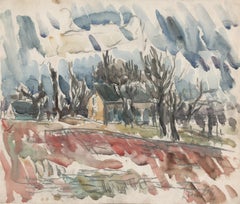
Landscape with buildings and trees

Landscape with buildings and trees

By Leon Kelly

Located in Fairlawn, OH

Landscape with buildings and trees Watercolor on paper, c. 1930's Signed in pencil lower right (see photo) Provenance: Estate of the artist Condition: Excellent Sheet size: 9 3/8 x 1...

Category

1930s American Modern Landscape Drawings and Watercolors

Materials

Watercolor

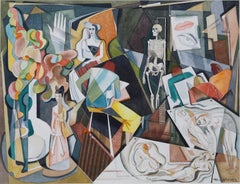
The Model Watercolor on Paper, American Modern, Circa 1930, Framed

The Model Watercolor on Paper, American Modern, Circa 1930, Framed

By William C. Grauer

Located in Fairlawn, OH

The Model Watercolor on paper, c. 1930 signed lower right (see photo) Condition: Excellent A few bits of adhesive residue verso Colors fresh and unfaded Housed in a Marin style meta...

Category

1930s American Modern Interior Drawings and Watercolors

Materials

Watercolor

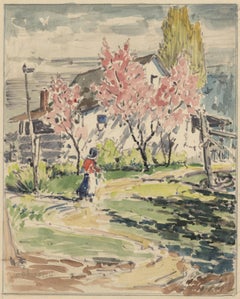
Spring Landscape with house and figure

Spring Landscape with house and figure

By Louis Oscar Griffith

Located in Fairlawn, OH

Spring Landscape with house and figure A preliminary watercolor for a color aquatint, illustrated on line, title unknown Signed lower left in block letters (see photo) Watercolor and...

Category

1920s American Impressionist Landscape Drawings and Watercolors

Materials

Watercolor

You May Also Like

Samuel Bolton Colburn American Modernist Farm Landscape, c. 1930s

Samuel Bolton Colburn American Modernist Farm Landscape, c. 1930s

By Samuel Bolton Colburn

Located in Denver, CO

xecuted during the 1930s, this watercolor by Samuel Bolton Colburn captures the enduring character of the American rural landscape through a distinctly modernist lens. Barns, cultiva...

Category

1930s American Modern Landscape Drawings and Watercolors

Materials

Watercolor

Charles Ragland Bunnell WPA 1940s Figurative Village Landscape Mountains

Charles Ragland Bunnell WPA 1940s Figurative Village Landscape Mountains

By Charles Ragland Bunnell

Located in Denver, CO

A compelling 1940s WPA-era modernist watercolor by Charles Ragland Bunnell depicting a figurative village landscape set against mountainous terrain, where clustered houses, small hum...

Category

1940s American Modern Figurative Drawings and Watercolors

Materials

Watercolor

Serene Farm in Watercolors

Serene Farm in Watercolors

By Stephane Magnard

Located in Houston, TX

Madagascan watercolor farm scene by French artist Stephane Magnard, circa 1950. Original artwork on paper displayed on a white mat with a gold border. Archival plastic sleeve and C...

Category

1950s Landscape Drawings and Watercolors

Materials

Paper, Watercolor

Countryside - Original Watercolor on Paper by Pierre Segogne - 1950s

Countryside - Original Watercolor on Paper by Pierre Segogne - 1950s

By Pierre Segogne

Located in Roma, IT

Countryside is an original artwork, realized by Pierre Segogne in the 1950s. Hand-signed on lower right margin. Mixed colored watercolor on paper. This beautiful artwork represe...

Category

1950s Modern Landscape Drawings and Watercolors

Materials

Watercolor

Red Barn, Watercolor by Chris Ritter

Red Barn, Watercolor by Chris Ritter

By Chris Ritter

Located in Long Island City, NY

This unique work is a watercolor by American artist Chris Ritter. The painting depicts a landscape of rolling green hills with a red barn centered in the ...

Category

1960s Landscape Drawings and Watercolors

Materials

Watercolor

Watercolor Country Landscape, C. 1950

Watercolor Country Landscape, C. 1950

Located in Houston, TX

This lovely watercolor, circa 1950, combines soft colors and impressionistic brushstrokes to provide a peaceful view of the rolling countryside. The emerald green line of trees leads...

Category

1950s Landscape Drawings and Watercolors

Materials

Watercolor, Paper