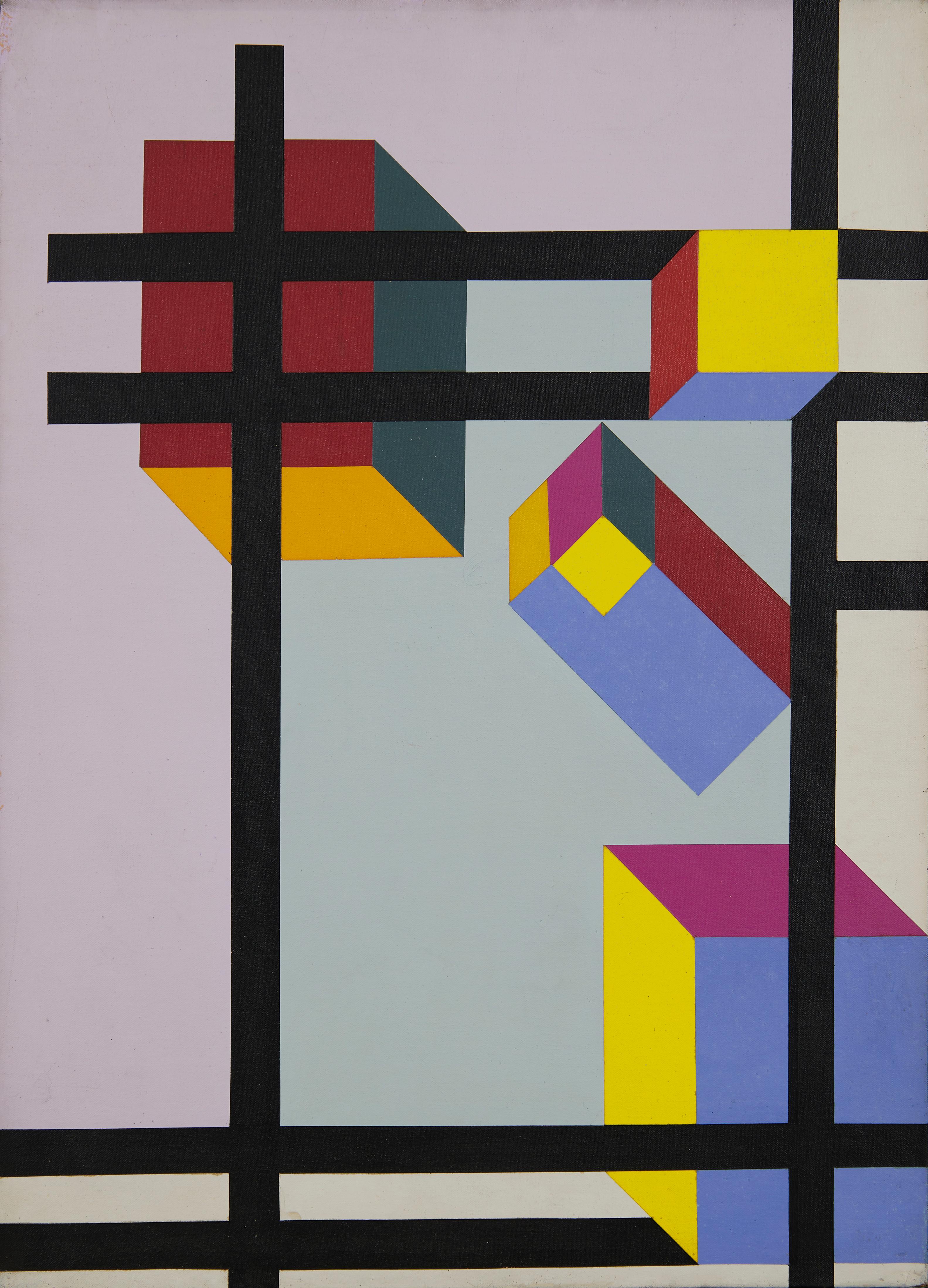
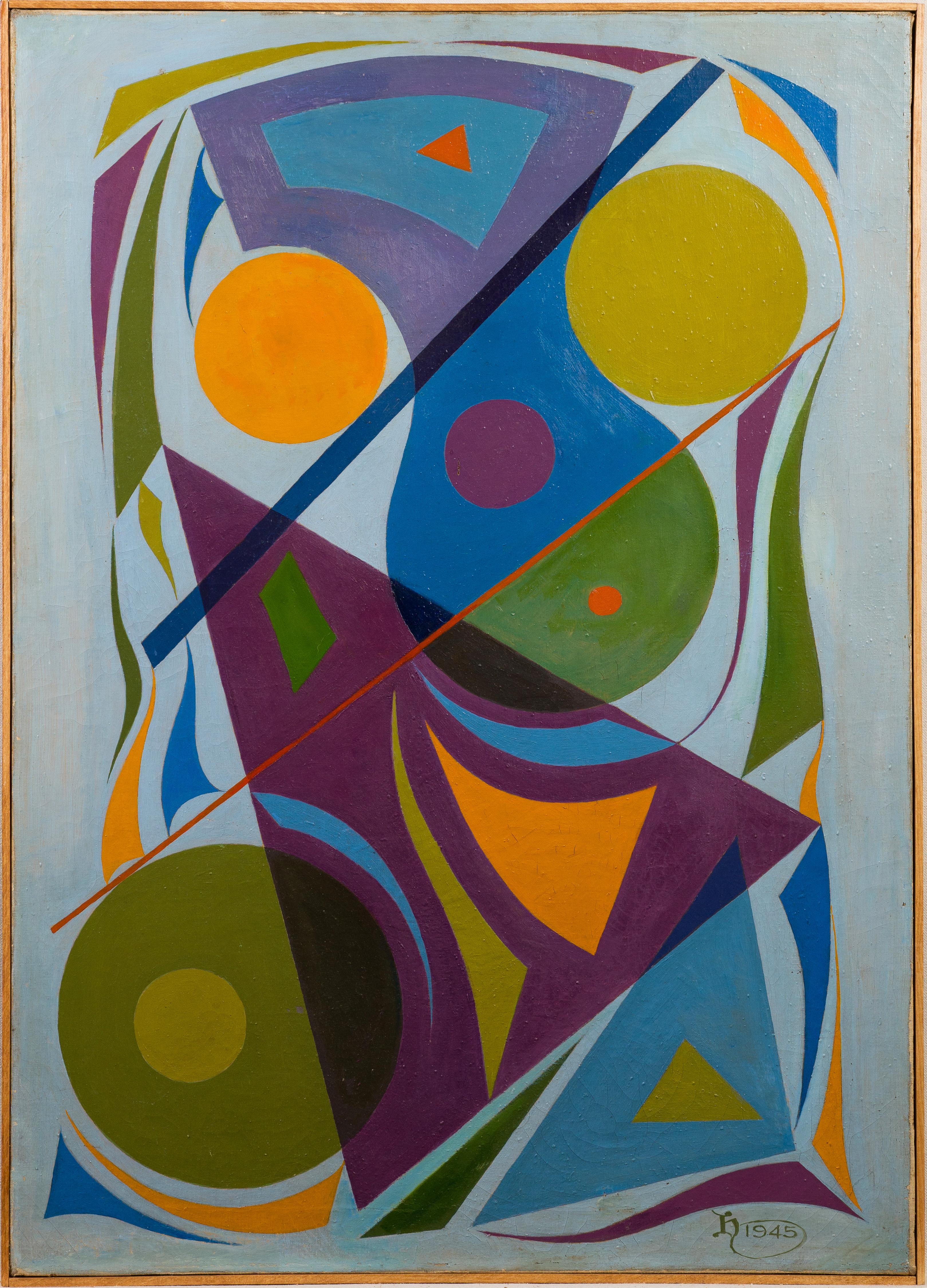
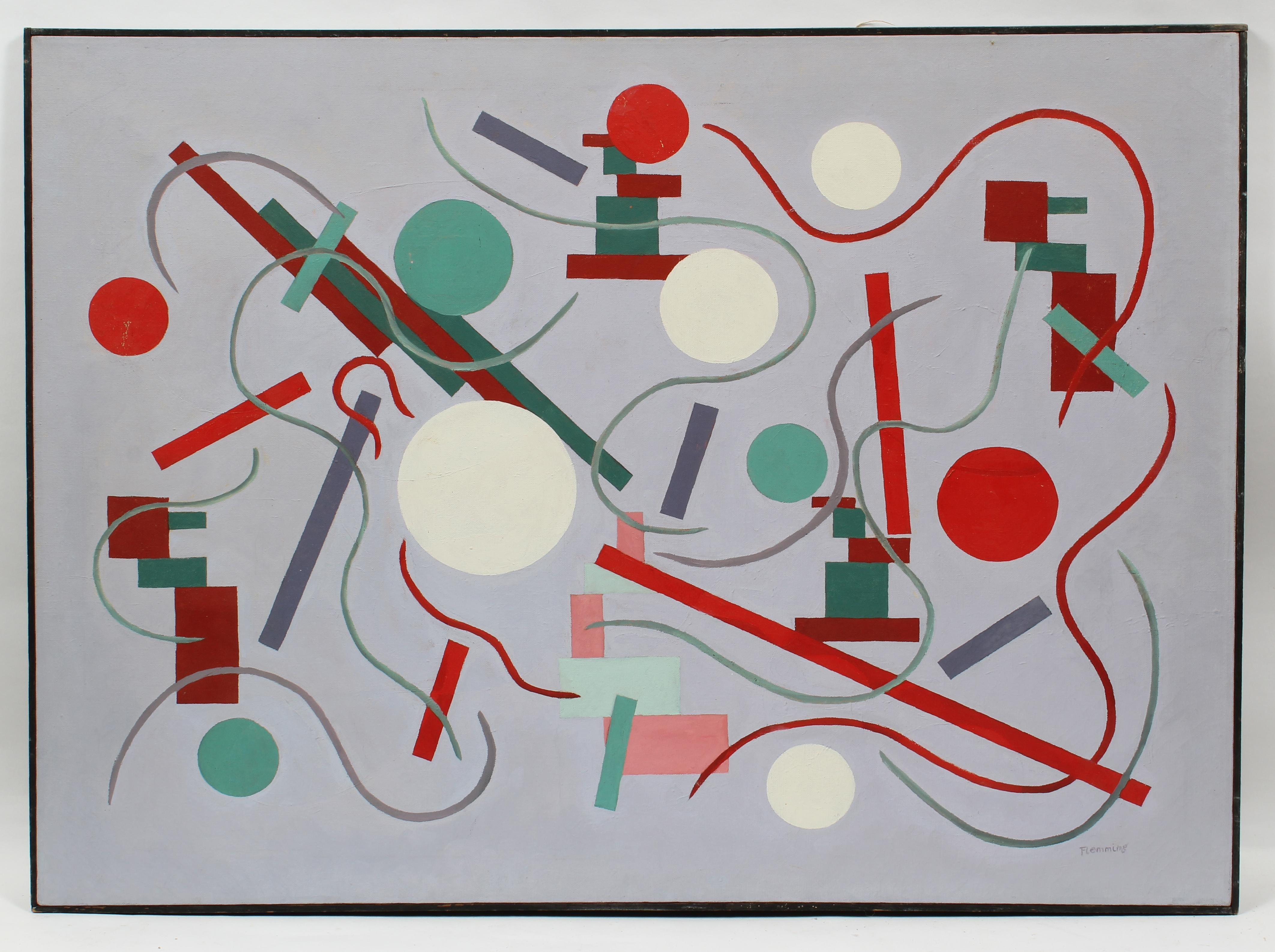
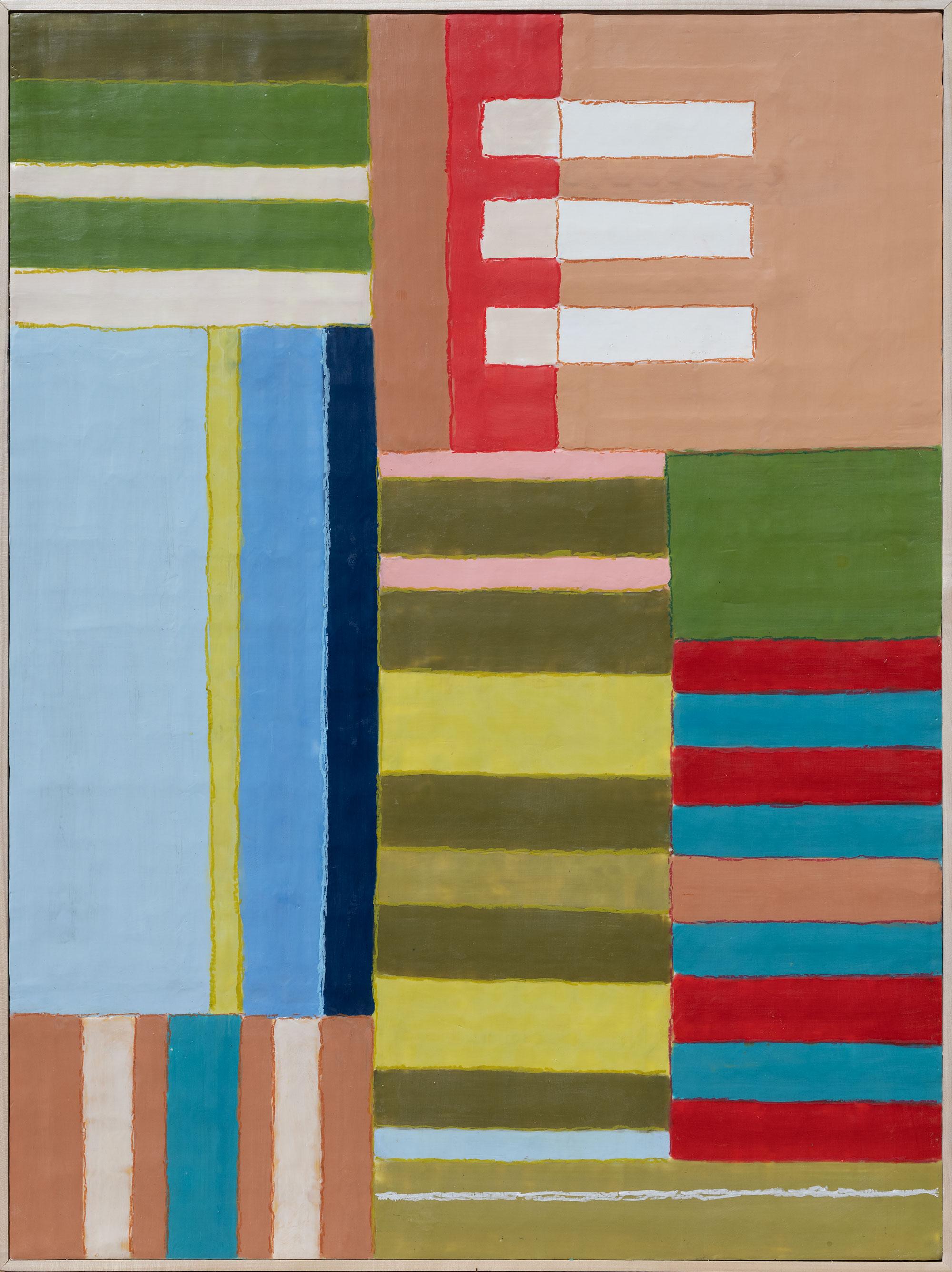
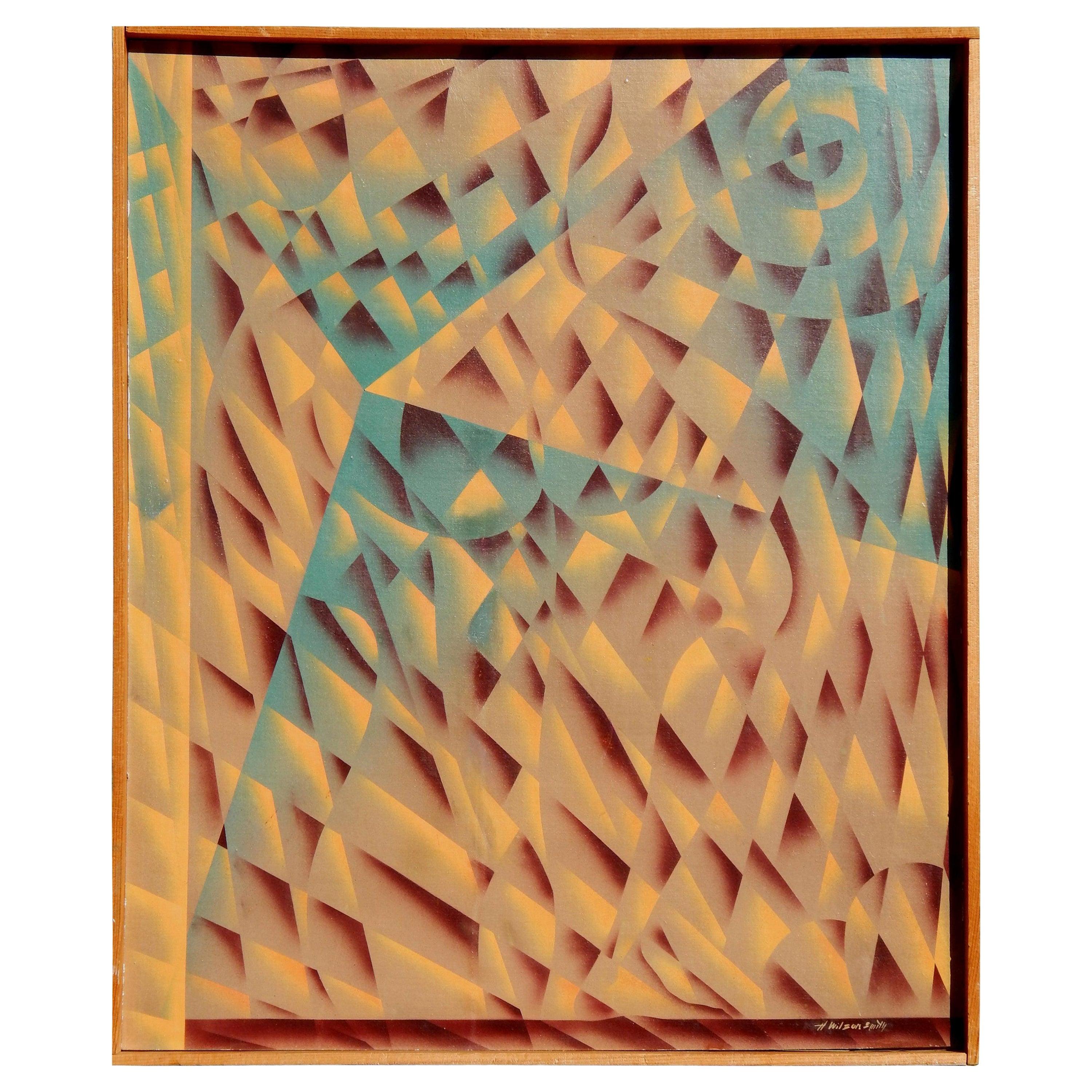
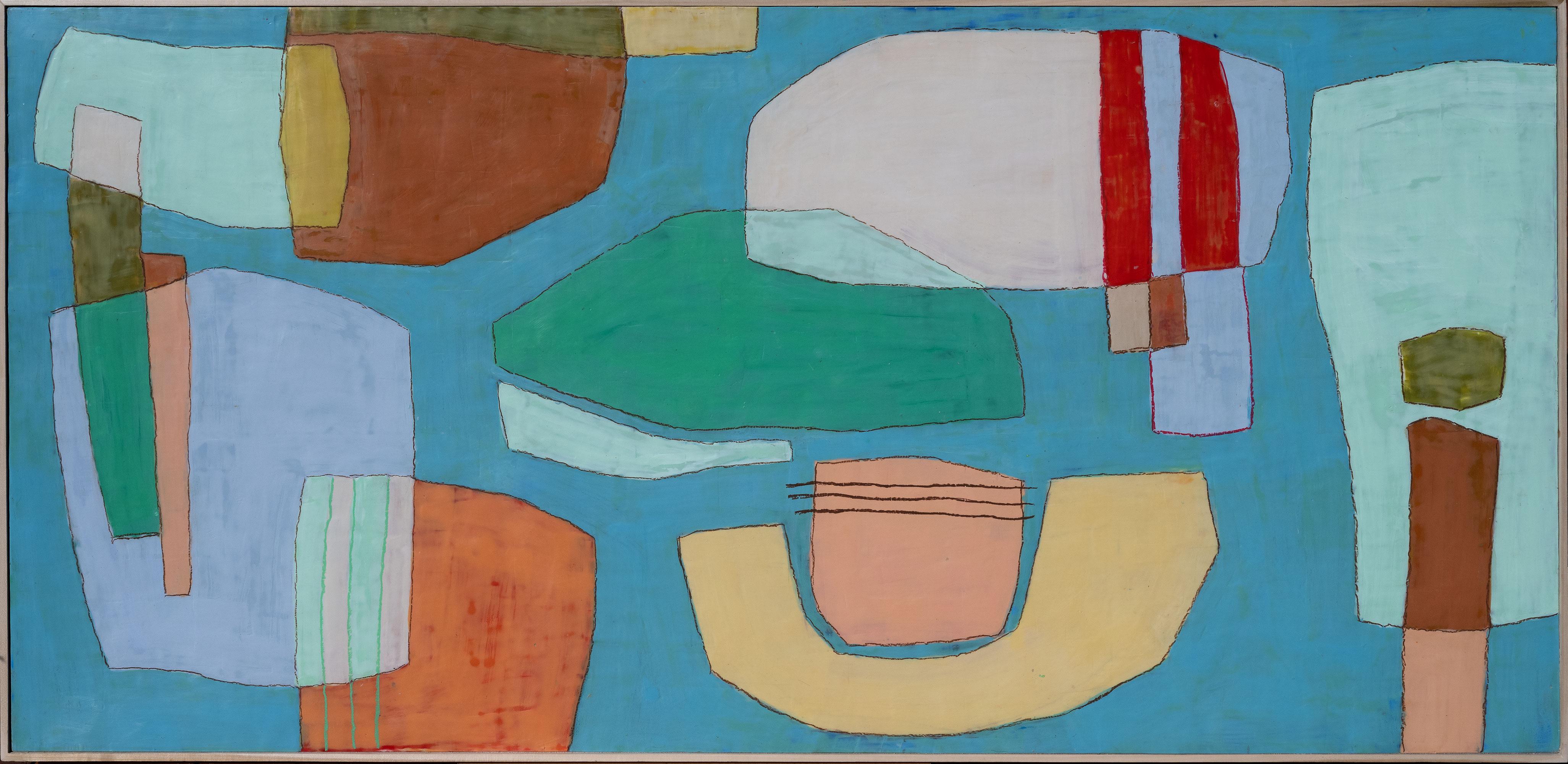
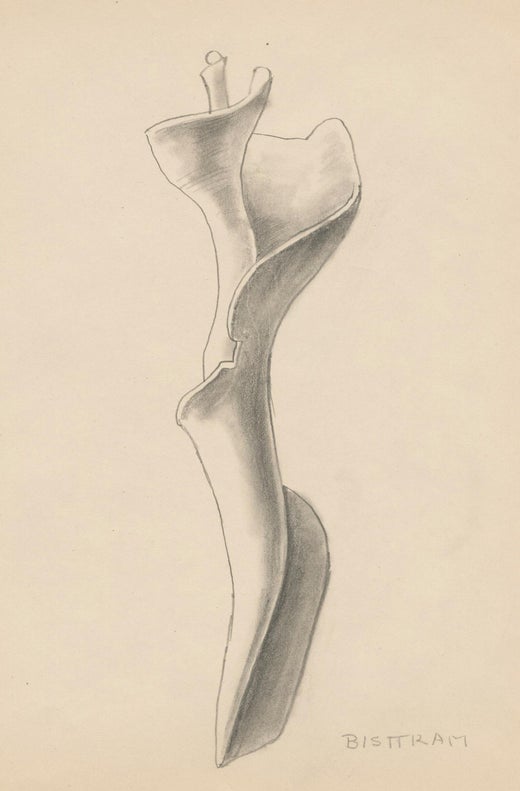
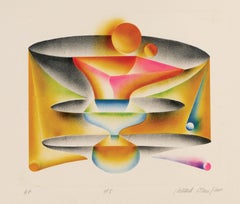
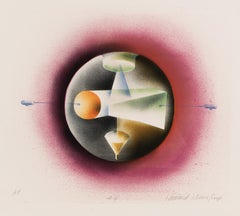
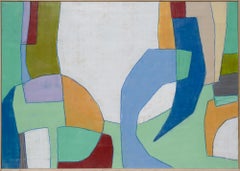
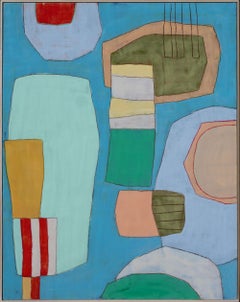
A unique, beautifully composed, large-scale geometric abstraction encaustic, with fresh colors, on fibrous buff, wove paper; the image extending to the sheet edges, in excellent condition. Signed and dated '39, lower left; estate stamped lower right, verso. The artist’s delicately stippled rendering in contrasting values produces the effect of shimmering color.
Image size/sheet size 12 3/8 x 9 inches (314 x 229 mm). Archivally matted to museum standards, unframed.
THE ENCAUSTIC MEDIUM
Dating to ancient Greece, encaustic painting is one of the oldest and most enduring painting techniques. Pigments are suspended in molten beeswax and fused to the support through repeated applications of heat, producing a surface of exceptional permanence and subtle luminosity. Unlike oil paint, encaustic resists yellowing and moisture while allowing artists to build delicate layers of color with remarkable depth and clarity. When polished, the wax develops a soft, radiant sheen that enhances both the color and tactile presence of the work.
ABOUT THIS WORK
Among Emil Bisttram's most elusive and intellectually ambitious works are the intimate geometric encaustics he produced between 1936 and 1947. Unlike his paintings exhibited throughout his lifetime, these highly personal compositions remained largely unseen, shared only privately with close friends and collectors during his later years. Today, they are recognized as a remarkable and independent body of work that reveals the philosophical foundations of one of America's foremost pioneers of non-objective painting.
Executed in the demanding encaustic medium, this exceptional composition demonstrates a level of precision and refinement seldom encountered within the series. Carefully balanced circles, triangles, squares, and rectangles are organized into a harmonious visual structure whose symbolism recalls both sacred geometry and the meditative traditions that informed Bisttram's lifelong search for universal order. Rather than functioning as purely formal abstraction, these geometric relationships become a visual language through which the artist explores the correspondence between the material and spiritual worlds.
Distinguished by its unusually large scale, impeccable craftsmanship, and luminous wax surface, the present work ranks among the finest examples of Bisttram's encaustic paintings to appear on the market. Its architectural clarity and remarkable state of preservation reveal the artist at the height of his technical and philosophical maturity, transforming geometry into a contemplative expression of balance, unity, and transcendence.
More than a study in abstraction, this painting represents an intimate statement of Bisttram's conviction that art could serve as a vehicle for higher consciousness—a visual meditation whose quiet power continues to resonate more than eight decades after its creation.
ABOUT THE ARTIST
Emil James Bisttram (1895–1976) was one of the foremost pioneers of American non-objective painting and a leading force in the development of modern art in the Southwest. A painter, teacher, and theorist, he sought to unite geometry, color, and universal symbolism into a visual language capable of expressing spiritual realities beyond the material world. His work occupies a central place in the history of American abstraction and remains among the most distinctive expressions of Transcendental art.
Born in Hungary, Bisttram immigrated to New York as a child and studied at the National Academy of Design and the Cooper Union before furthering his education at the Art Students League and in Europe. In 1930 he settled permanently in Taos, New Mexico, where the landscape, Native American cultures, and the region's spiritual traditions profoundly shaped his artistic vision. While deeply respectful of Indigenous philosophies, Bisttram believed they preserved a harmony between humanity and the cosmos that modern Western civilization had largely forgotten.
In 1938 Bisttram joined Raymond Jonson in founding the Transcendental Painting Group, whose members sought to move beyond representation toward imagery that conveyed universal order and inner experience. Rejecting abstraction as an end in itself, the group viewed non-objective painting as a means of exploring higher states of consciousness and the unseen structures underlying the physical world. Although the group formally disbanded after only a few years, its influence established New Mexico as an important center of American modernism.
Throughout his career Bisttram worked in a variety of media, but his intimate encaustic paintings occupy a singular position within his oeuvre. Executed primarily between 1936 and 1947, these meticulously crafted geometric compositions were never publicly exhibited during his lifetime and were shown only privately in his later years. Their circles, triangles, squares, and precisely balanced fields of color function less as formal exercises than as meditative diagrams of spiritual order—personal mandalas through which Bisttram explored the relationship between material existence and transcendent reality. Today these rare works are increasingly recognized as among the artist's most personal and philosophically profound achievements.
Bisttram remained an influential teacher and advocate for the arts throughout his life. In 1952 he co-founded the Taos Art Association, helping to establish Taos as one of the country's leading artistic communities. His many honors included the Grand Prize for Painting at the New Mexico State Fair in 1959. In 1975, the State of New Mexico proclaimed April 7, his birthday, as "Emil Bisttram Day" in recognition of his extraordinary cultural contributions.
His work is represented in the permanent collections of the Addison Gallery of American Art, the Art Institute of Chicago, the Hirshhorn Museum and Sculpture Garden, the Joslyn Art Museum, the Los Angeles County Museum of Art, the Metropolitan Museum of Art, the Smithsonian American Art Museum, the Whitney Museum of American Art, and numerous other public and private collections.