Want more images or videos?
Request additional images or videos from the seller
1 of 5

Matthias Alfen
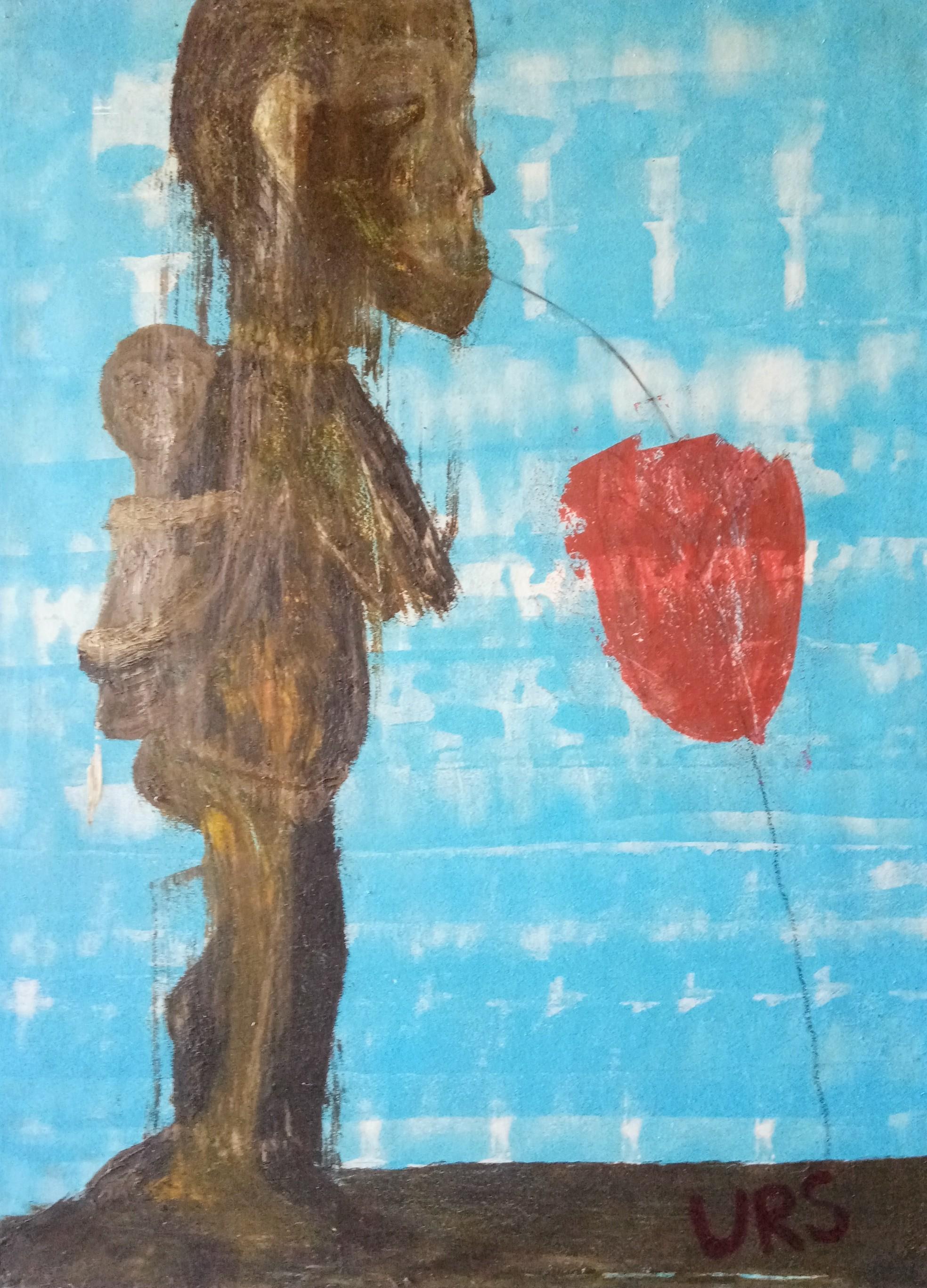
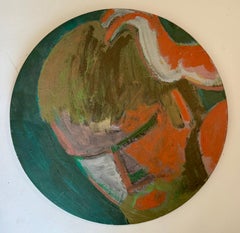
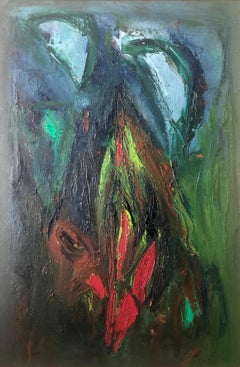
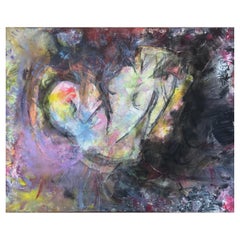
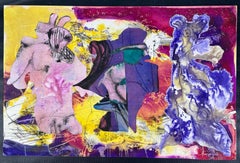
Matthias Alfen German Sculptor Modern Expressionist Painting Psychogram

$1,200
£896.99
€1,046.66
CA$1,685.04
A$1,714.05
CHF 978.74
MX$20,732.32
NOK 11,412.68
SEK 11,587.54
DKK 7,824.55

About the Item

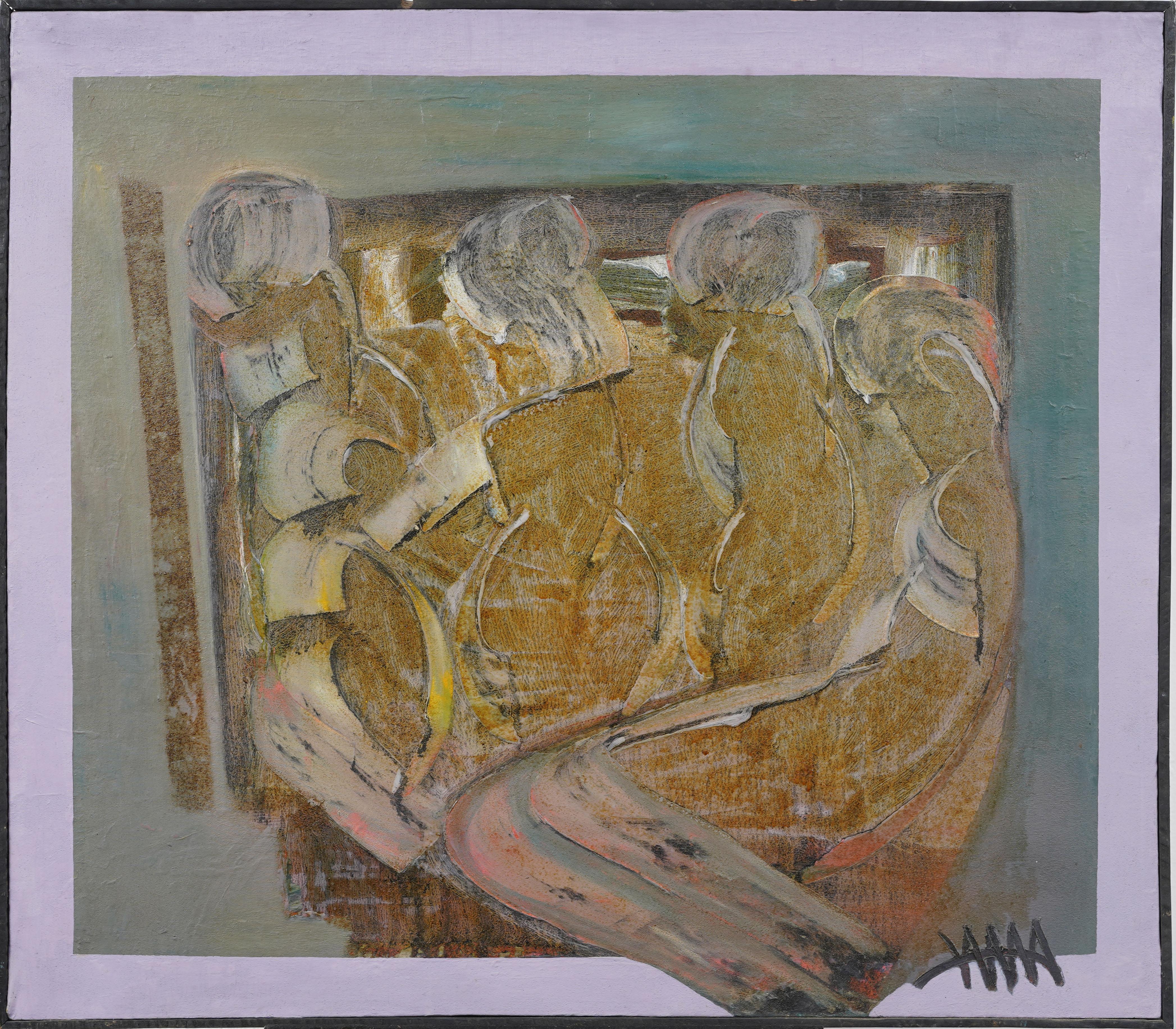
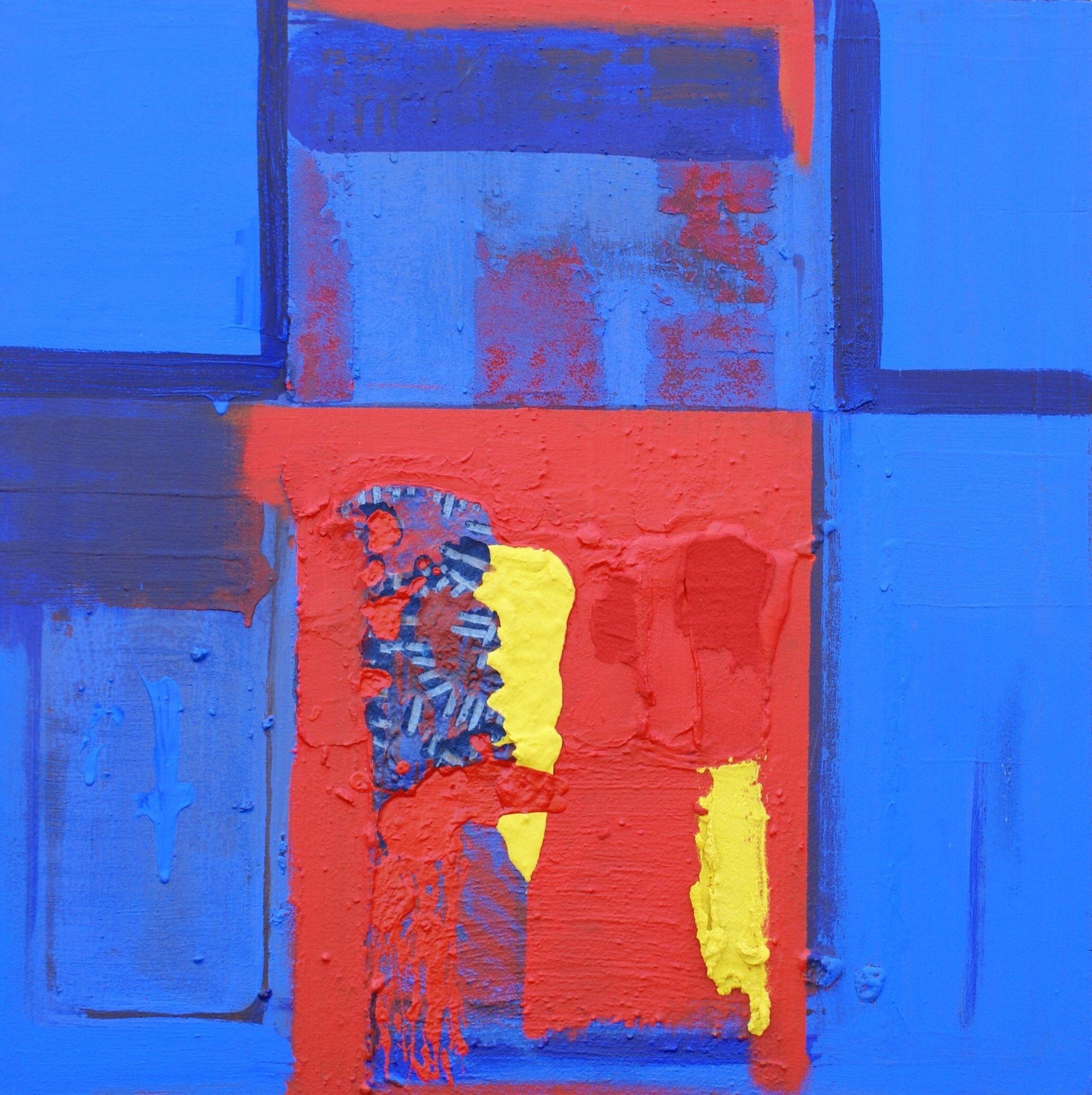
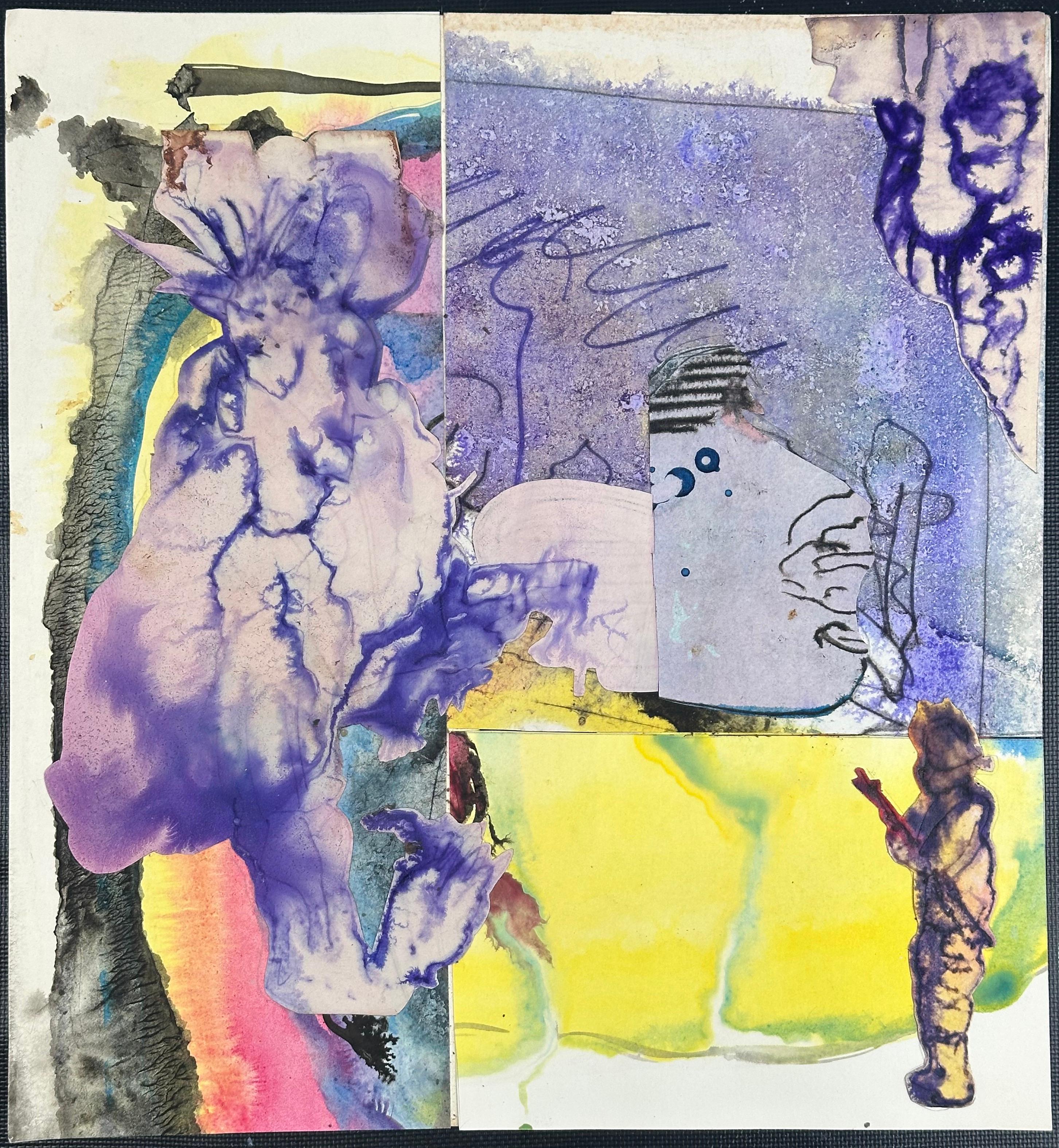
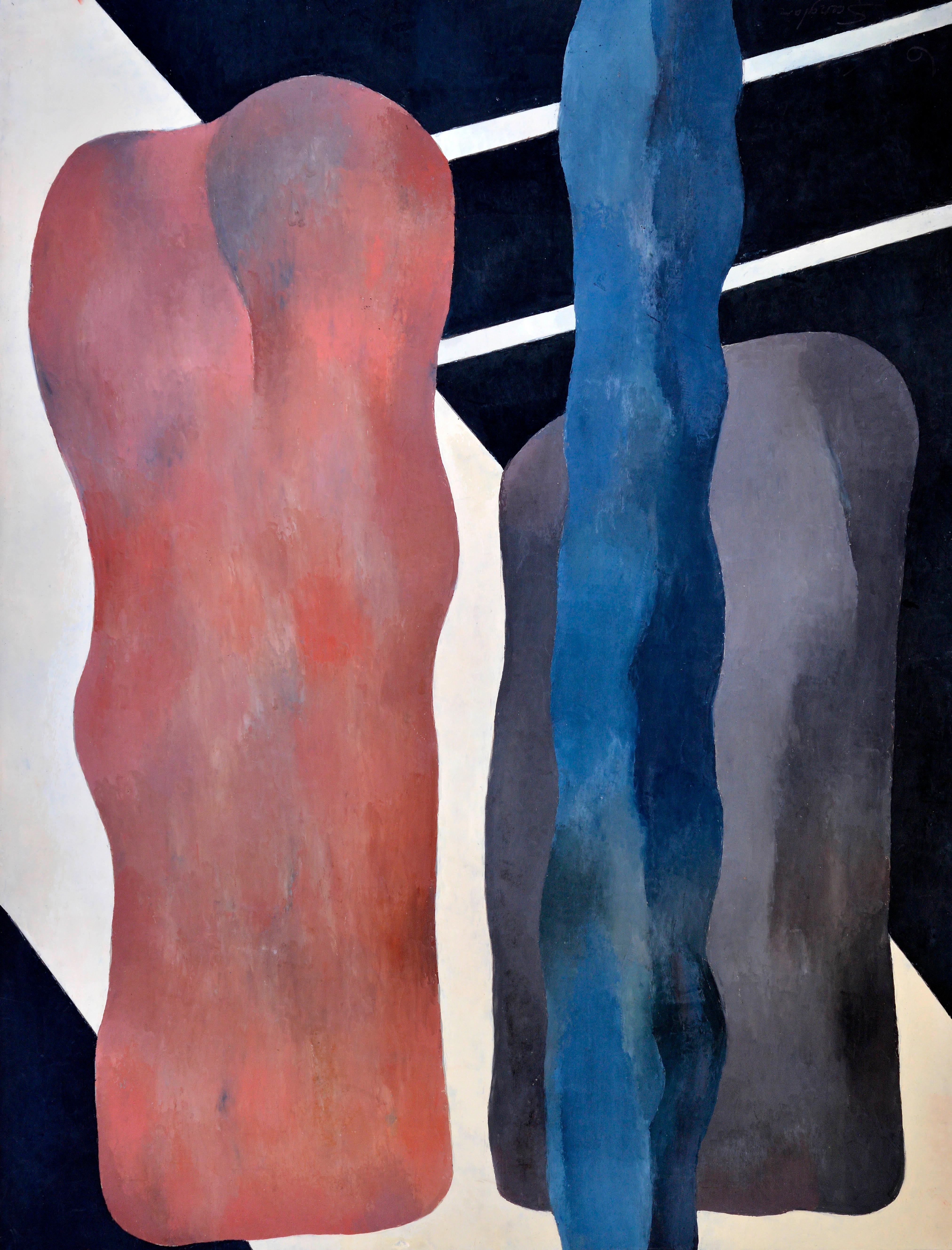
Matthias Alfen’s series of Janus figures are an innovation in figural art predicated on the advances made by the Futurist sculptor and painter Umberto Boccioni and the Modernist Alberto Giacometti. The qualities of chance and spontaneity, necessarily excluded in the sculptural work, are clearly evident in his drawings and paintings. “Psychograms” of unchoreographed hand movements display wide variation, repeatedly playing through one form after another. In the end, this multitude of variation serves to enhance the logic, consistency, and seductively rich appearance of Alfen’s designed sculptural works. Represented by Gallery Schuckin in New York, Paris, France, and Moscow, Russia. Matthias Alfen’s was strongly influenced by his family’s experience during World War II. His grandfather Klemens Alfen (1894-1955) was an accomplished painter and photographer, recognized for his landscape photography and for his technique (Special Honors for Excellence in Photo-Print Technology, 1932). He enjoyed the friendship and support of many in the artistic community, a community largely influenced by its German Jewish members. Having lost his entire circle of friends under Nazi oppression. Klemens, although not Jewish, also suffered under the Nazis for refusing to join them and struggling in post-war Germany, which had nothing to offer an artist like him, Klemens took his own life. At around the age of 16 he worked for some weeks as an assistant at his uncle’s art studio. Fritz Koenig (probably best known for his large metallic sculpture The Sphere, originally situated between the world Twin Towers, now at the September 11 Memorial. The lofty studio and prestige of the sculptor gave the young Alfen a vision for his own future. The only person besides his parents who supported his early artistic endeavors was his godfather, Fritz Schumm, who bought the young artist art supplies and purchased several of his early works. So, in spite his grandfather and uncle being serious and accomplished artists, Alfen had to forge his path alone, relying on his own strength and sense of destiny. After finishing high school in 1984, Alfen enrolled in the Master school for stone carvers in his hometown of Aschaffenburg. The school principal Professor Rager was a tough but caring teacher and helped Alfen learn how to execute ideas in stone. A six-month internship at the foundry Grundhöfer, Niedernberg followed. Leaving the quaint, idyllic town of Aschaffenburg (birthplace of fine arts legends Matthias Grünewald (1470-1528) and German expressionist painter Ernst Ludwig Kirchner (1880-1938) Alfen’s next destination was the Berlin Art Academy (Hochschule der Künste). At that time, West Berlin was still an island surrounded by communist East Germany, the wall containing it creating an outsider ambiance that attracted artists and musicians such as David Bowie and Joseph Beuys. Professor Dietmar Lemcke [Born 1930] approved a school grant to fund the building of one of Alfen’s early large sculptures (Kreisornament, 1990). Even as a student, the young artist had a promising start, with a solo show at the House am Lützowplatz and at the gallery Noé. Alfen’s work had begun to be recognized by the arts establishment: Professor Dr. Kurt Grützmacher praised his work in the essay ‘Dialogue Between Form and Space; Commentary on Sculptures by Matthias Alfen’ and art critic and Professor Dr. Hermann Wiesler discussed his sculpture in Bilderleben II Texte zur modernen Kunst, Kunst und Künstler 1992-1999. the City of Soest, Westphalia invited him to be their artist-in-residence for the year 1992-1993. For one year the city offered him a beautiful house with a studio and an elaborate exhibit of his art with a publication including text by art critic Hermann Wiesler. During this year the local newspapers gave almost constant updates on the artist’s progress and a special report on TV placed Alfen in the ranks of other well-known artists from Soest such as Wilhelm Morgner (1891-1917) and Paula Modersohn-Becker (1876-1907). Galerie Clasing in Münster put on a solo exhibit of Alfen‘s work and eventually, the city commissioned him to create a large bronze sculpture to be placed in the center of town. In 1994 he was awarded the Lee Krasner-Jackson Pollock grant out of New York. It was finally time to make the move. With a large container of artwork, Alfen moved to the United States and settled in suburban Connecticut. He began to explore the human body as a mobile sculptural structure; a different but complementary perspective to his study of anatomy for figure drawing at the art academy. In 2003 Alfen was included in an art show at the Garth Clark Gallery on 57th Street and was reviewed as follows by Ken Johnson in the New York Times. “Matthias Alfen makes finely modeled and glazed works in which multiple faces -- alternately convex and concave -- are weirdly conjoined.” Robbin Zella director and curator at the Housatonic Museum of Art took interest in his work and put on an extensive solo show at the museum in 2005. Art critic Donald Kuspit praised Alfen’s work and described its impact. He notes, “Alfen’s figures suggest the inevitability of insanity in a violent world. His heads protest it even as they embody it. They are a major contribution to--a brilliant extension of--the “art of the scream”, as German Expressionism was called when it emerged at the troubled beginning of the twentieth century.” Judy Kim at that time curator of the Brooklyn Museum of Art also acknowledged Alfens work: “How do we decipher this enigmatic work that is both so simple and still such a puzzle? Formally it embodies and expresses duality and oneness; it is literally a figure that is divided yet one. The title and the physical pose of the work seem to suggest a man caught in a balletic stumble—seemingly in a futile yet instinctive attempt to break a fall, a fall that was perhaps not inevitable but impossible to stop once set in motion. And what of the curves? Do they signify the inner contradictions, conflicts, or struggles within oneself? Or, are they simply a convention created by Alfen to convey and accentuate the movement of a rotating body as it falls through the air? As with all great works of art, falling man succeeds in deeply engaging a viewer and evoking more questions than answers.” Select solo exhibitions Galerie Noe, (Berlin, Germany); Gallery of the City of Soest (Stadtgalerie, Germany); Galerie Clasing, (Münster, Germany); Galerie Bremer, (Berlin, Germany); Neue Kunst Galerie, (Ried, Germany); Housatonic Museum of Art, (Bridgeport, Connecticut); Shchukin Gallery, (New York, NY).
  • Creator:
    Matthias Alfen (1965)
  • Dimensions:
    Height: 11.75 in (29.85 cm)Width: 9 in (22.86 cm)
  • Medium:
  • Movement & Style:
  • Period:
  • Condition:
    minor wear, please see photos.
  • Gallery Location:
    Surfside, FL
  • Reference Number:
    1stDibs: LU38218473342

More From This Seller

View All
Mod Abstract Expressionist Modernist Oil Painting Edward Avedisian Color Figure

Mod Abstract Expressionist Modernist Oil Painting Edward Avedisian Color Figure

By Edward Avedisian

Located in Surfside, FL

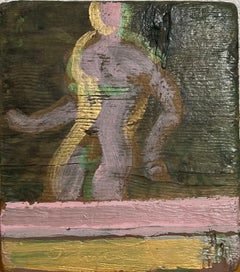
Edward Avedisian ( 1936-2007 ) 8 X 9 Oil paint on wood plank panel with gold and purple figure This is not signed on front. It bears his name verso. Provenance: Hudson, N.Y. estate ...

Category

1960s Abstract Expressionist Landscape Paintings

Materials

Oil, Wood Panel

American Modernist Abstract Expressionist Oil Painting Carving William Pellicone

American Modernist Abstract Expressionist Oil Painting Carving William Pellicone

Located in Surfside, FL

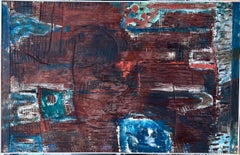
William Pellicone (American 1915-2004) Mixed media, pyrography, oil on wood carving painting. Dated 1958 Title - Enthymeme #14. Oil painting on carved and burnt distressed wood panel. Inscribed verso Enthymeme Wm. Pellicone #14, 9-4-58. Label on reverse with a typed definition for Enthymeme. Dimensions: 27 inches high, 42.5 inches wide. Metal wrap frame. Provenance: from a Shelter Island NY home that was designed by architect Henry J. Gazon - A.I.A. built in 1959. William Pellicone (1915-2004) was an American painter known for his abstract compositions and use of vibrant colors. He was born in New York City and studied at the Art Students League and the Brooklyn Museum Art School. Pellicone's early work was influenced by the Social Realist movement of the 1930s and 1940s, with his paintings often featuring realistic depictions of urban scenes and working-class people. However, in the 1950s he shifted towards abstraction, exploring the interplay of color and form. Pellicone's mature style was characterized by his use of vibrant, saturated colors, often applied in thick layers of paint. His paintings often featured geometric shapes and organic forms, with a strong sense of movement and energy. In addition to his painting, Pellicone was also a respected teacher and arts administrator. He taught at the New York Institute of Technology and the State University of New York, and served as the director of the Islip Art Museum on Long Island. Pellicone's artwork was exhibited widely during his lifetime, and he was the recipient of numerous awards and honors, including a National Endowment for the Arts grant in 1977. Today, his paintings can be found in the collections of museums and galleries around the world, including the Smithsonian American Art Museum in Washington, D.C. and the Metropolitan Museum of Art in New York. William Pellicone (Born 1915) is active/lives in New York. William Pellicone is known for Abstract expressionist, landscape and non-objective art. An American artist, sculptor, architect. He exhibited at Pennsylvania Academy Fine Arts, Philadelphia. A son of Italian immigrants from Calabria, William Pellicone Was a self-taught American Modernist who received scholarships to Temple University, the Pennsylvania Academy of Art and Philadelphia's famed Barnes Foundation. He was a friend of Edward Hopper and others of that Milieu. He was a merchant marine during World War II and a four-year farmer in Pennsylvania for New York City, where he became known for his works done with paint and fire. The work drew attention from both "Life" and "Look" magazine. With time William's style changed to more Surrealist, fantastic realism subjects. This piece has a brutalist, Arte Povera, art brut feel to it. He work is associated with Modernism and Surrealism. He was included in the show with catalogue Gene Swenson : Retrospective for a Critic. Artists included: James Rosenquist, Arman (Armand Fernandez), Stuart Davis, Robert Indiana, Roy Lichtenstein, Alain Jacquet, Ellsworth Kelly, Agnes Martin, Andre Masson, Henri Matisse, Peter Max, Robert Motherwell, Claes Oldenburg, George Ortman, Kenneth Patchen, William Pellicone, Larry Poons, Joseph Raffaele, Robert Rauschenberg, Ad Reinhardt, James Rosenquist, Frank Stella, Cy Twombly, Andy Warhol, Tom Wesselmann, Jim Dine, Jasper Johns and Paul Thek...

Category

1950s Abstract Expressionist Abstract Paintings

Materials

Wood, Oil

Large German Neo Figuarist Abstract Expressionist Oil Painting Werner Liebmann

Large German Neo Figuarist Abstract Expressionist Oil Painting Werner Liebmann

Located in Surfside, FL

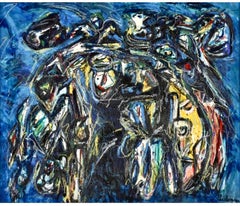
WERNER LIEBMANN (German b. 1951) "Elf Köpfe Bei Nacht," Oil on canvas, signed L/R, "Liebmann;" 29 1/4'' x 35 1/2'', framed 31'' x 37''. Werner Liebmann (born 1951) is a German painter and graphic artist . Werner Liebmann was born in Königsthal in Thuringia. Born in Königsthal from 1969 to 1973 he studied chemistry at the Martin Luther University in Halle (Saale) . From 1973 to 1976 he worked as a project engineer. He was active as a chemist until he opted for an artistic career and studied painting at the University of Art and Design in Halle. A master student of Bernhard Heisig, he graduated at the College of Fine Arts Leipzig. Since then, he has been a freelance artist, as well as a professor at the College of Fine Arts in Dresden and currently at the Art school Berlin – Weissensee. His works were represented at numerous group exhibitions and solo exhibitions in Halle, Hamburg, Berlin, Düsseldorf and further cities, mostly in Germany. Influenced by the Neo Figuraist artists of the Junge Wilde painters. In 1978, the Junge Wilde painting style arose in the German-speaking world in opposition to established avant garde, minimal art and conceptual art. It was linked to the similar Transavanguardia movement in Italy, USA (neo-expressionism) and France (Figuration Libre). The Junge Wilde painted their expressive paintings in bright, intense colors and with quick, broad brushstrokes very much influenced by Professor at the Academy of Art in Berlin, Karl Horst Hödicke (b:1938). They were sometimes called the Neue Wilde. Berlin: Luciano Castelli...

Category

Late 20th Century Neo-Expressionist Abstract Paintings

Materials

Canvas, Oil

Large Colorful MCM Abstract Expressionist Oil Painting Modernist Ralph Rosenborg

Large Colorful MCM Abstract Expressionist Oil Painting Modernist Ralph Rosenborg

By Ralph Rosenborg

Located in Surfside, FL

Ralph Rosenborg (American, 1913-1992) Mountain Weed with Two Clouds, oil on jute canvas, canvas is hand signed recto and verso, artists label and Snyder Fine Art gallery label, The p...

Category

1960s Abstract Expressionist Abstract Paintings

Materials

Canvas, Jute, Oil

Large  Figurative Abstract Expressionist Textured Painting Adolf Benca

Large Figurative Abstract Expressionist Textured Painting Adolf Benca

Located in Surfside, FL

Abstract oil painting on stretched canvas featuring figures against a dark brown background. Signed upper left. Adolf Benca was born in Bratislava, Slovakia in 1959. He immigrated to the United States in 1969 and he studied at the Cooper Union for the Advancement of Science and Art, and received a Master's of Fine Art from the Columbia University College. Adolf Benca (born 1959, in Bratislava, Czechoslovakia), is an American Post war/ Contemporary painter of Slovakian origin. Benca was born on 16 May 1959, in Bratislava, Czechoslovakia. He was the older of two children, the younger being his sister Lubica. His family immigrated to the United States when he was ten years old, in 1969. From 1969 to 1973 he attended the Elementary Private School in Chicago. He attended Grayslake High School in Illinois between 1973 and 1977. He became interested in art very early in his life, attending several art schools in Chicago while he was an elementary student. In 1966, while he was still living in Czechoslovakia, he was already illustrating children's books. In 1968, a year prior to his family emigrating from Czechoslovakia, because of Russian occupation of Bratislava, his family moved to Vienna, where young Benca became interested in philosophy and started painting mythological themes and subjects. He participated in a few young artist programs in 1970 and 1971. Adolf Benca studied and graduated from several universities. From 1977 to 1981 he studied at The Cooper Union for the Advancement of Science and Art, art school in New York, where he received his B.F.A. (Bachelor of Fine Arts) degree. For the next four years (1982–1985) he studied at the Columbia University College of Physicians and Surgeons, graduating at 1987, receiving the title of Master of Fine Arts (M.F.A.). From 1987 to 1988 he studied the human anatomy at the University of Bologna in Italy where he received the title "Doctor honoris causa" (Dr.h.c.) in the area of anatomy. At University Johns Hopkins in Baltimore, Maryland he received the title "Doctor honoris causa" in the area of philosophy. As he was receiving his titles and studied, Benca continued to paint and exhibit his works in many galleries around the world, many of his paintings ending up in private collections. In 1985 he became a member of the Swizzero di Roma. In 1987 he became a member of the French Academy in Rome. In 1988 he became a member of the American Academy in Rome. In 1994 he became a member of the Swedish Institute in Rome. In 2000 he became a member of the Academy of Arts in Berlin. After "the Fall of the Iron Curtain" he decided to continue his career in Central and Eastern Europe. In 2002 he started his work in Prague, and was awarded the award of the "Masaryk Academy". In 2012 Adolf Benca and the "Bratislava's ship company" a.d. (Bratislavská lodná spoločnosť a. s ) have founded the company "Adolf Benca Académia s.r.o.". He was included in Bomb Magazine Painters & Writers No. 4 Along with William Wegman, David Salle, Nancy Spero, Francesco Clemente, Julian Schnabel, Pat Steir, and more. His works can be found all over the world, in private collections, as well as exhibits at museums, such as "Metropolitan Museum" and "Museum of Modern Art" in New York. Select Museums Museum of Modern Art, New York, NY – MoMA Metropolitan Museum of Art, New York, NY National Art Gallery, Washington, D.C. Fred Jones Jr. Museum of Art, The University of Oklahoma High Museum of Art Atlanta Musei Vatican, Vatican, Rome Williams College Museum of Art, Williamstown, Massachusetts Arkansas Arts Center Foundation Collection, Little Rock, Arkansas Henry Art Gallery at the University of Washington, Seattle Contemporary Art Museum, Tel Aviv Art Museum, Hong Kong Floating Galleries of the Slovakia, Bratislava National Gallery of the Slovakia, Bratislava Select group exhibitions Matica Slovenska, "Cultural Revolutions", Martin, Slovakia United Nations, Artists From Slovakia Arkansas Arts Center Foundation Collection Achim Moeller Fine Art...

Category

20th Century Abstract Paintings
Materials

Canvas, Oil

You May Also Like

Austrian Contemporary Art by Brigitte Thonhauser-Merk - Relationships

Austrian Contemporary Art by Brigitte Thonhauser-Merk - Relationships

By Brigitte Thonhauser-Merk

Located in Paris, IDF

Acrylic on canvas, Framed 85 x 125 x 7 cm Brigitte Thonhauser-Merk was born on February 18, 1943 in Vienna / Austria and lives in Perchtoldsdorf, a village located in the vineyards surrounding the capital. Her acrylic paintings are regularly exhibited at the Art Up Deco Gallery and at the Salons des Artistes Indépendants at the Grand Palais as well as at the "Salon d'Art Contemporain" at the Carrousel du Louvre in Paris and Honfleur. Other exhibitions follow in Florence / Italy, where she won the "Premio Firenze 2008" prize, in Mannheim and Leipzig in Germany. She received several medals and consecrations from the National Federations of French Culture...

Category

2010s Abstract Abstract Paintings

Materials

Canvas, Acrylic