Want more images or videos?
Request additional images or videos from the seller
1 of 14

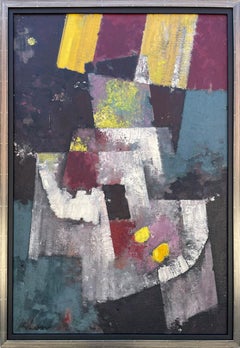
O. Louis Guglielmi
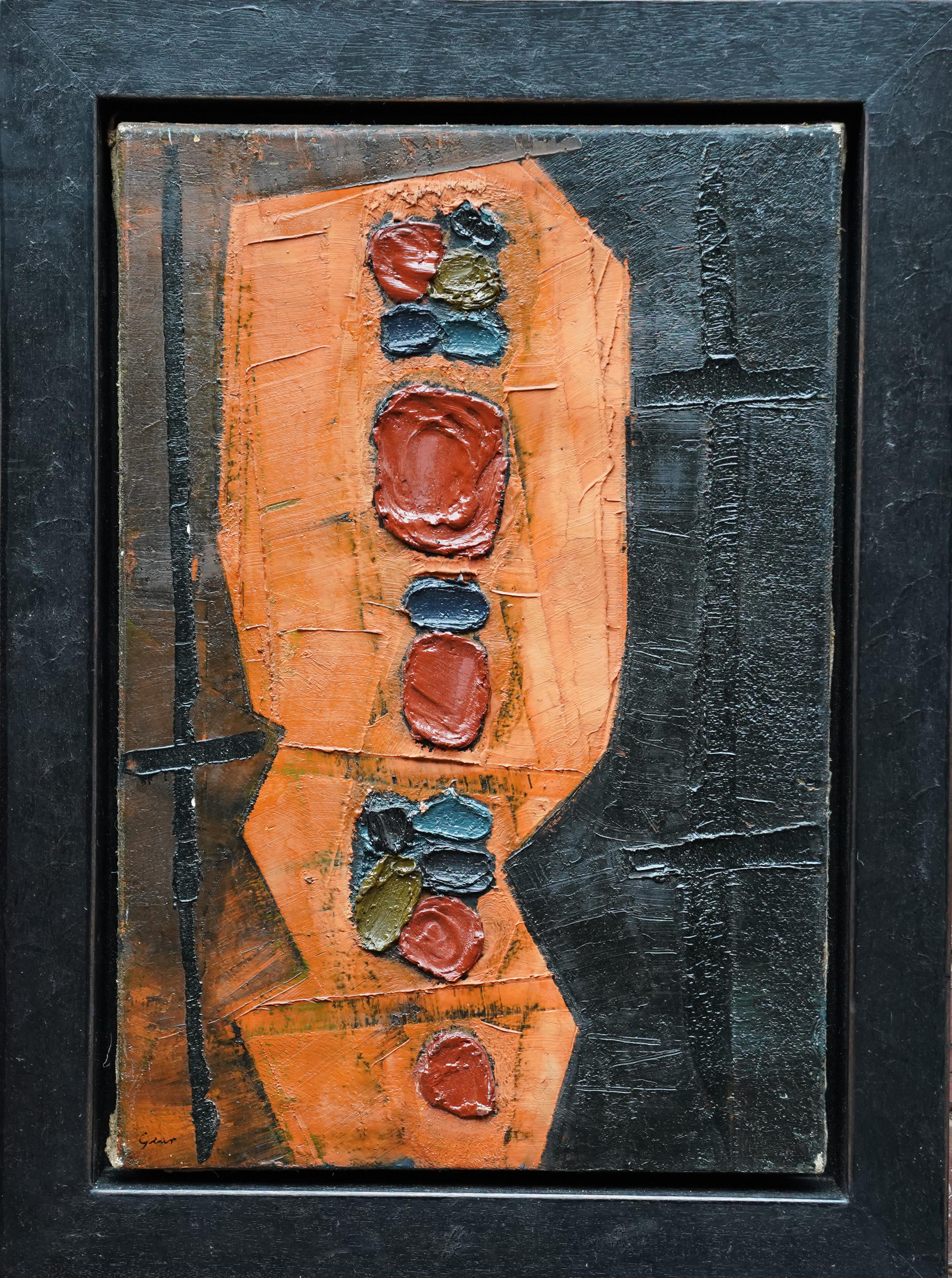
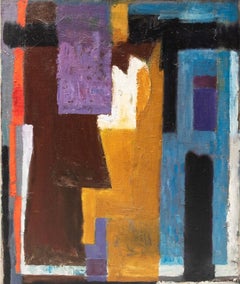
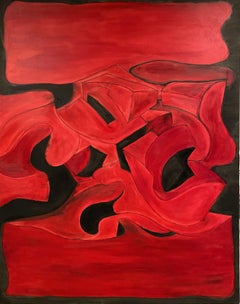
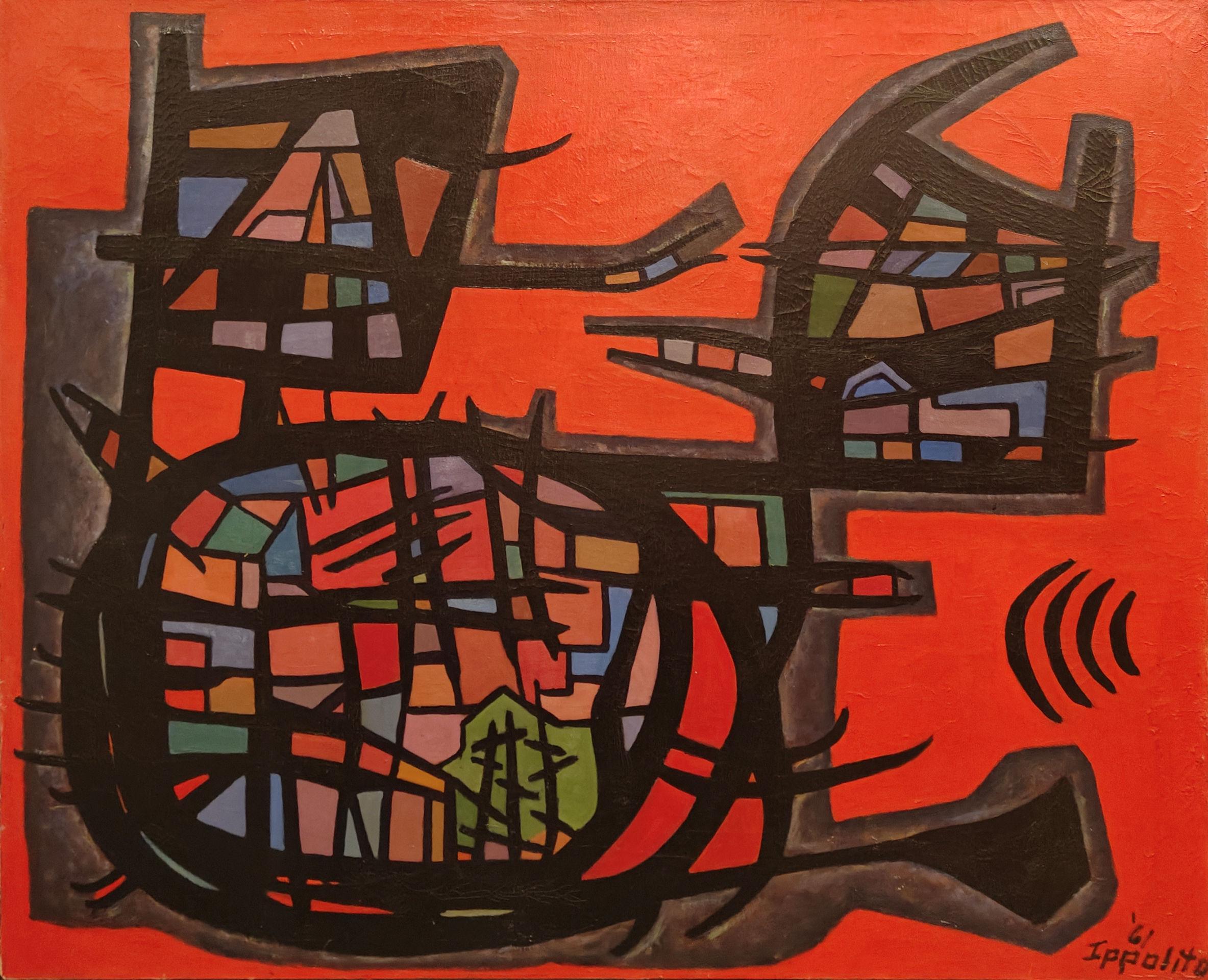
Red to Black, 1954 Abstract Oil Mid-20th Century Modern Non-Objective. Published

1954

$29,000
£21,918.93
€25,638.44
CA$41,177.61
A$41,891.88
CHF 24,071.67
MX$503,753.11
NOK 281,032.63
SEK 282,715.02
DKK 191,660.65

About the Item

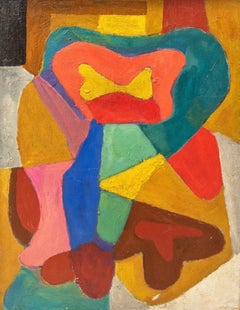
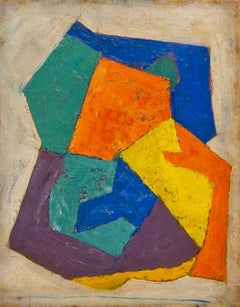
Red to Black, 1954 Abstract Oil Mid-20th Century Modern Non-Objective. Published. Signed and dated upper left. 40 1/4 x 18 1/2 inches oil on canvas. Provenance: Estate of O. Louis Guglielmi. Robert Schoelopf Gallery. Andrew Crispo Gallery. Published in the artist's monograph as seen in the attached photos. BIO Painter O. Louis Guglielmi moved stylistically from a symbolic Social Realism, Precisionism, and Surrealism, ultimately to abstraction, but his subject matter, when it existed, dealt with society's underdogs. He had experienced slum living as a youth, moving from place to place because of his violinist father's need to find employment. Though Guglielmi was born in 1906 in Cairo, Egypt, his Italian parents moved the family to Italy. In 1914, they were living in New York City in Harlem's Italian slum. Guglielmi was involved in the political and artistic protests of the trial, conviction as anarchist bombers, and execution of Sacco and Vanzetti in 1927. He painted a picture that excoriated the tenement living conditions of many Americans, "One Third of a Nation." It was such a strong statement that the State Department cancelled an international tour of American modern art. He was a teenage art student at the National Academy of Design in New York City and the Beaux Arts Institute from 1920 to 1925. During this time, he worked as a commercial artist, painted murals and was awarded a Tiffany Foundation fellowship. Guglielmi painted Precisionist stylized architectural motifs through 1933. He then moved toward a moody Magic Realism and Surrealism under the influence of Italian painter Giorgio de Chirico. During the Depression years of 1934 to 1939, Guglielmi found employment with the Federal government's artist relief programs, the WPA and Public Works Administration. His social and political awareness impelled him, in 1938, to warn that the Spanish Civil War might lead to greater destruction. His painting, "Mental Geography," depicted the Brooklyn Bridge destroyed, prophetically symbolizing, in its way, United States involvement and casualties in the coming war. In 1945, after serving three years in the army in World War II, Guglielmi turned toward more formal, Stuart Davis-like abstractions. This is particularly interesting, considering that his experience in the War might have sent him in any of several artistic and philosophical directions. Guglielmi might have emerged from widespread wartime suffering with an enhanced concern for the plight of humanity he had already evidenced in his earlier work. But what he actually did, stylistically speaking, was avoid humanity and the world through his decision to paint abstractly, perhaps overwhelmed by his experiences, immersing himself solely in the safer, less troubling realm of aesthetic manipulation. At the end, Guglielmi was painting completely abstract works. He was a prize-winning artist who exhibited his paintings in many major exhibitions. Before his death in 1956 at age fifty, Louis Guglielmi taught at Louisiana State University and the New School for Social Research in New York City. His work is in the collections of the Metropolitan Museum of Art, Museum of Modern Art and Whitney Museum of American Art in New York City, as well as the National Museum of American Art, Smithsonian Institution, Washington, D.C. and the Newark Museum in New Jersey.
  • Creator:
    O. Louis Guglielmi (1906-1956, American)
  • Creation Year:
    1954
  • Dimensions:
    Height: 48 in (121.92 cm)Width: 26 in (66.04 cm)Depth: 2 in (5.08 cm)
  • Medium:
  • Movement & Style:
  • Period:
  • Condition:
  • Gallery Location:
    New York, NY
  • Reference Number:
    1stDibs: LU1156210612412

More From This Seller

View All

You May Also Like

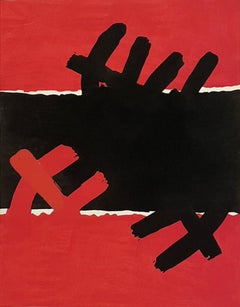
Red with Black, Painting, Oil on Canvas

Red with Black, Painting, Oil on Canvas

By Julius Babilonia

Located in Yardley, PA

I create a version of entertainment or Architectural fiction by communicating my interpretation of the shapes, colors and movement of natures impacted by the ongoing man made environ...

Category

2010s Abstract Abstract Paintings

Materials

Oil

By the Dawn's Early Light, mid-century abstract black, red, yellow oil painting

By the Dawn's Early Light, mid-century abstract black, red, yellow oil painting

By Charles Green Shaw

Located in Beachwood, OH

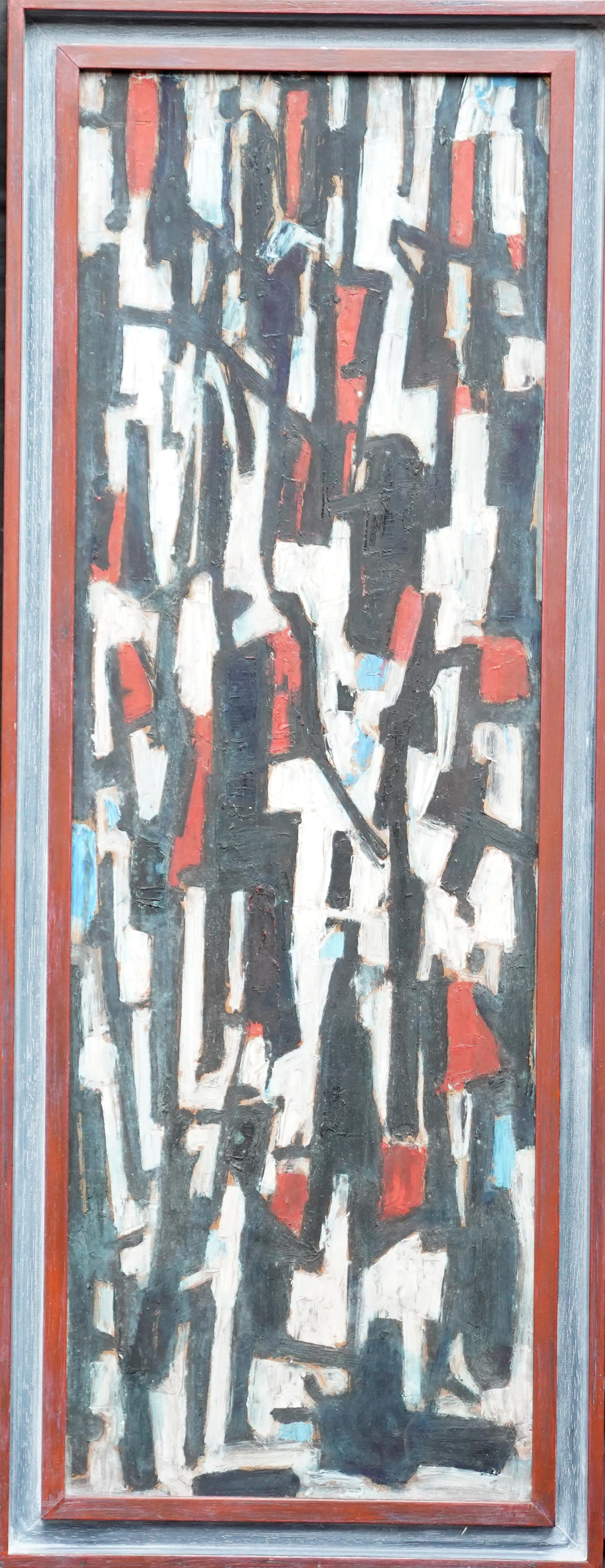
Charles Green Shaw (American, 1892-1974) By the Dawn's Early Light, 1955 Oil on masonite Signed lower left, dated and titled verso 35.5 x 23.75 inches 38 x 26.25 inches, framed Provenance: The estate of the artist to Charles H. Carpenter Charles Green Shaw, born into a wealthy New York family, began painting when he was in his mid-thirties. A 1914 graduate of Yale, Shaw also completed a year of architectural studies at Columbia University. During the 1920s Shaw enjoyed a successful career as a freelance writer for The New Yorker, Smart Set and Vanity Fair, chronicling the life of the theater and café society. In addition to penning insightful articles, Shaw was a poet, novelist and journalist. In 1927 he began to take a serious interest in art and attended Thomas Hart Benton's class at the Art Students League briefly in New York. He also studied privately with George Luks, who became a good friend. Once he had dedicated himself to non-traditional painting, Shaw's writing ability made him a potent defender of abstract art. After initial study with Benton and Luks, Shaw continued his artistic education in Paris by visiting numerous museums and galleries. From 1930 to 1932 Shaw's paintings evolved from a style imitative of Cubism to one directly inspired by it, though simplified and more purely geometric. Returning to the United States in 1933, Shaw began a series of abstracted cityscapes of skyscrapers he called Manhattan Motifs which evolved into his most famous works, the shaped canvases he called Plastic Polygons. The 1930s were productive years for Shaw. He showed his paintings in numerous group exhibitions, both in New York and abroad, and was also given several one-man exhibitions. Shaw had his first one-man exhibition at the Valentine Dudensing Gallery in New York in 1934, which included 25 Manhattan Motif paintings and 8 abstract works. In the spring of 1935 Shaw was introduced to Albert Gallatin and George L.K. Morris. Gallatin was so impressed with Shaw's work, he broke a policy against solo exhibitions at his museum, the Gallery of Living Art, and offered Shaw an exhibition there. In the summer of 1935 Shaw traveled to Paris with Gallatin and Morris who provided introductions to many great painters. Shaw regularly spent time with John Ferren and Jean Hélion. The following year Gallatin organized an exhibition called Five Contemporary American Concretionists at the Reinhardt Gallery that included Shaw, Ferren, and Morris, Alexander Calder, and Charles Biederman...

Category

1950s Abstract Abstract Paintings
Materials

Oil

red composition, 1958 - Oil on canvas, cm. 126x166

red composition, 1958 - Oil on canvas, cm. 126x166

By Pierre Jourda

Located in Nice, FR

A great abstract composition by the well known french painter Pierre Jourda, (1931-2007), painted in 1958. An important dimension, it is not framed. Pierre Jourda À Paris, il décou...

Category

1950s Abstract Abstract Paintings
Materials

Oil