Want more images or videos?
Request additional images or videos from the seller
1 of 13

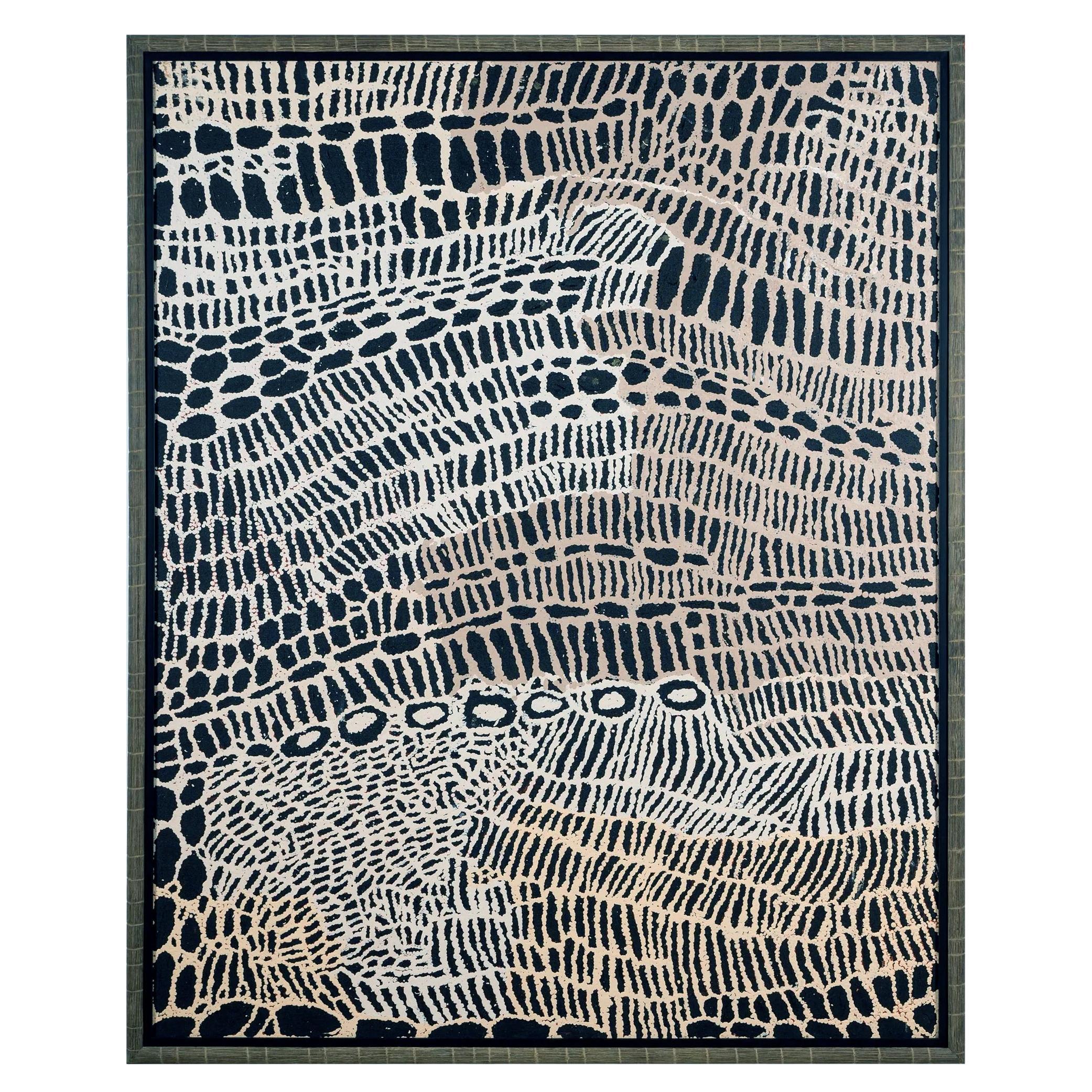
Rover Thomas Joolama
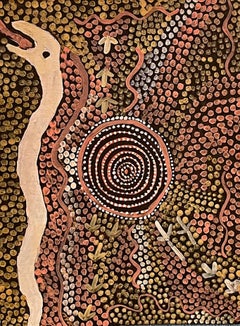
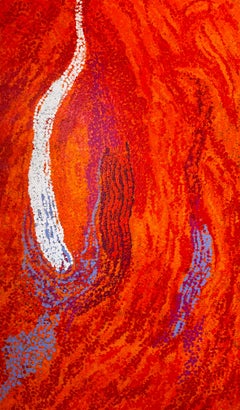
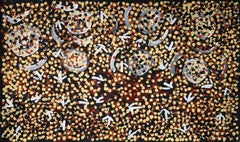
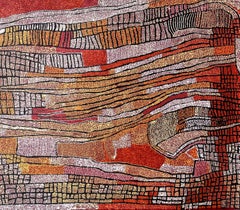
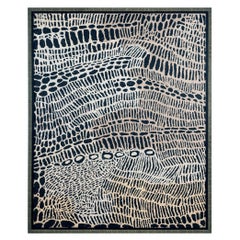
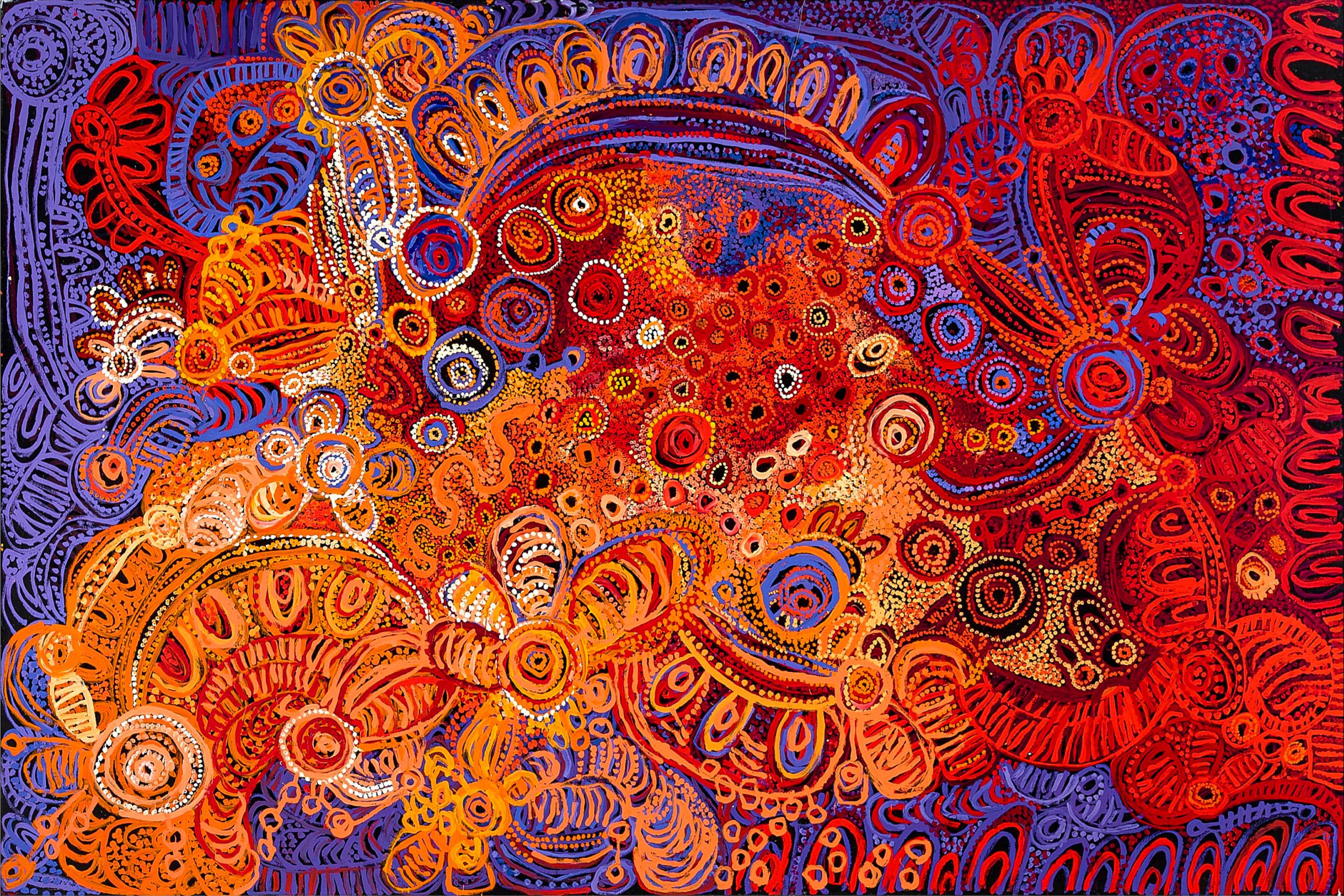
Wing Viga Country Painting by Rover Thomas, Contemporary Aboriginal Art, 1989

1989

$570,000
£429,479.02
€502,010.99
CA$807,176.81
A$822,022.27
CHF 471,875.29
MX$9,919,186.91
NOK 5,468,798.98
SEK 5,543,921.10
DKK 3,753,243.98

About the Item

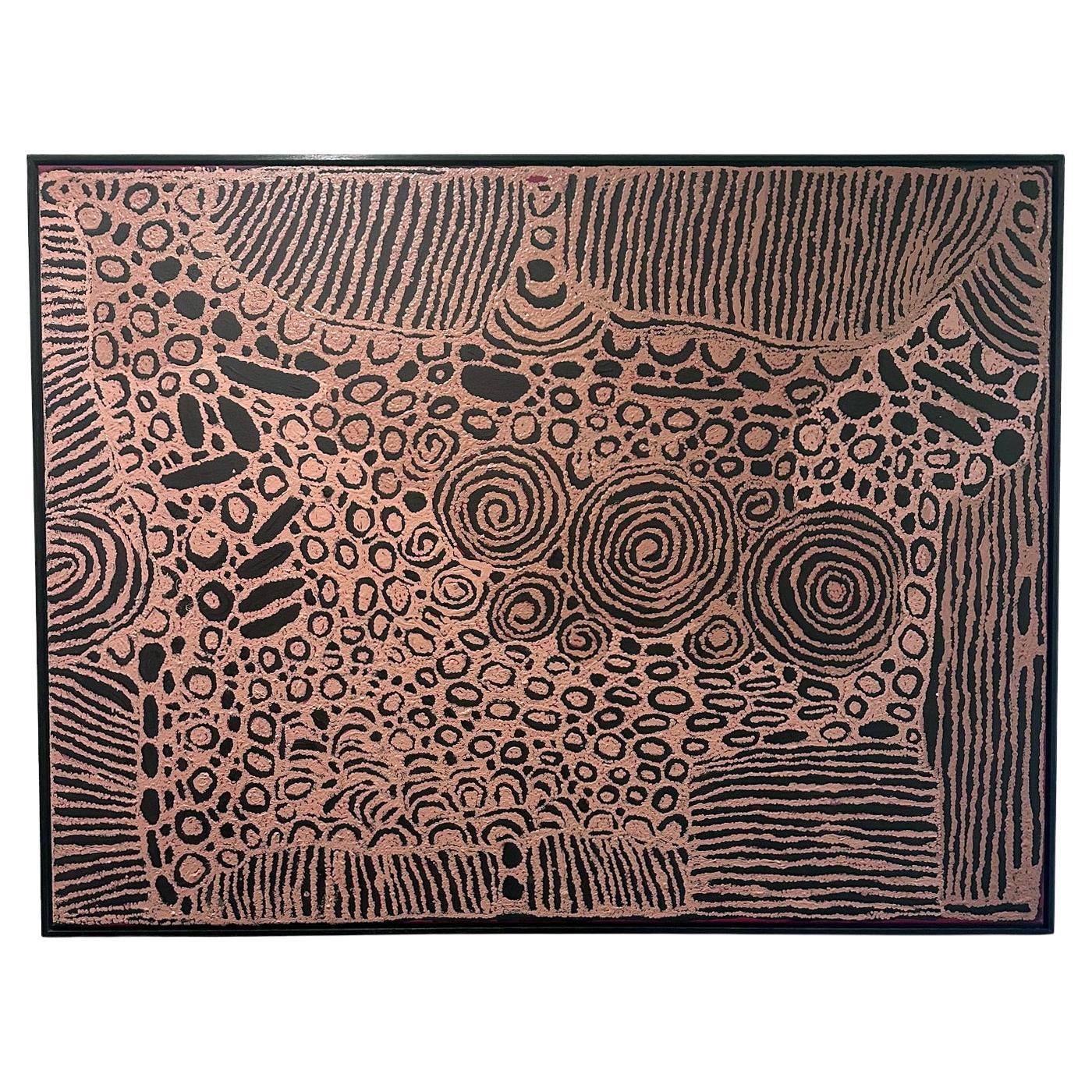
Rover Joolama Thomas' distinctive style helped shape contemporary Aboriginal art. His paintings, deeply connected to traditional lore and culture, played a vital role in preserving the heritage of the Gija people while revolutionizing perceptions of Indigenous artistry. Rover Thomas grew up immersed in the traditions and knowledge of his ancestors. His art was influenced by the oral storytelling and mythology of his totemic ancestry. Through his paintings, he explored themes of cultural change, displacement, conflict with white settlers, and the resilience of his people. He began painting later in life, with his artistic journey starting in 1980 after a vision inspired him to create paintings for the Krill Krill ceremony. His initial works were painted on wooden boards and were integral to the ceremony, featuring sacred symbols essential to its execution. Over time, his style developed into a distinctive representation of the landscape as both a physical place and a spiritual realm. His works, often portraying aerial, map-like perspectives adorned with symbolic imagery, reflected his deep connection to the land. In the early years, Thomas sourced pigments directly from the land, resulting in richly textured, luminous finishes. However, these early works exhibited stability issues, as the pigments would often lift from the surface. This was later resolved with the introduction of water-soluble pigments, which improved adhesion and durability, allowing him to achieve the earthy ochre tones and matte finishes he desired. His artistic breakthrough occurred in the 1980s, when his paintings gained national and international recognition. His deceptively simple yet profoundly powerful works brought a modernist, abstract sensibility to Aboriginal art, reinterpreting the traditional storytelling techniques of the Kimberley region. "Dreamtime story of the Kangaroo, feeding on grass near Ruby Plains station (Wing Viga) where he made his home at a cave called Budal-bung." Rover Thomas Provenance - Waringari Aboriginal Art, Kununurra (WA) - Deutscher Gertrude Street "Turkey Creek“, 1989 - Melbourne Private Collection - Exhibition "Australian Modern“, Fondazione Mudima, Milan 2002 - Sydney Private Collection - Mossgreen Auctions 2006, lot 104 - Lauraine Digins Fine Art, Melbourne Unsigned, inscribed to the verso.
  • Creator:
    Rover Thomas Joolama (1926 - 1998, Australian)
  • Creation Year:
    1989
  • Dimensions:
    Height: 59.06 in (150 cm)Width: 19.69 in (50 cm)Depth: 1.19 in (3 cm)
  • Medium:
  • Movement & Style:
  • Period:
  • Condition:
  • Gallery Location:
    Miami, FL
  • Reference Number:
    1stDibs: LU13617801132

More From This Seller

View All
Aboriginal Painting, Contemporary Acrylic on Linen, 2010+, Unframed

Aboriginal Painting, Contemporary Acrylic on Linen, 2010+, Unframed

By Michael Nelson Tjakamarra

Located in Miami, FL

Michael Nelson Tjakamarra (also cited as: Michael Nelson Jagamarra, or Jakamara) is a Senior Warlpiri Tribesman and an Elder of the Papunya Community in central Australia. Born c. 1949 at Pikilyi, Vaughan Springs west of Yuendumu in the Northern Territory, he grew up ‘in the bush’. His father was an important tribal elder and medicine man at Yuendumu. It was therefore automatic that he would grow up with the traditional values and knowledge that now influences his paintings. Michael lived at Haasts Bluff until his parents took him to Yuendumu for European education at the mission school. He left school at thirteen, after initiation, and worked at buffalo shooting, driving trucks, droving cattle and in the army, before returning to Yuendumu and then to Papunya to settle in 1976. He worked for a time in the Government store and for the Council. Michael learned to paint at Papunya by observing the senior men such as Billy Stockman and Old Mick Tjakamarra. Although he was tutored by his uncle, Jack Tjupurrula, Michael developed his own style and began painting earnestly from 1983. Michael is known as master desert painter for his depiction of several Dreamings in one painting. For him the understanding of the Dreaming stories that go with his paintings is all important – without the stories his paintings would ‘mean nothing’ as far as he is concerned. His Dreamings include the Possum, Snake, Two Kangaroos, Rock Wallaby, Bush Banana, Honey Ant and Yam. In 1984 Michael won the National Aboriginal Art Award with his painting ‘Three Dreamings’. His reputation as a painter rose rapidly after this. He exhibited his work in the 1986 Biennale of Sydney and featured in ‘The State of the Art’, a British art documentary. In 1987 Michael had been asked to paint a major work (27’long) to decorate the foyer of Sydney’s Opera House and he chose to paint his ‘Possum Dreaming’ story. A great highlight in Michael’s career was in 1988 when he was commissioned to design a 196 sq-metre mosaic in the main forecourt of Australia’s new Parliament House in Canberra. The work was based on his ‘Kangaroo and Emu’ dreaming. Michael was presented to Her Majesty, Queen Elizabeth 11...

Category

2010s Contemporary Abstract Paintings

Materials

Linen, Acrylic

Aboriginal painting on canvas board by Johnny Warangkula

Aboriginal painting on canvas board by Johnny Warangkula

By Johnny Warangkula Tjupurrula

Located in Miami, FL

Johnny Warangkula Tjupurrula 1925 - 2001 Born : Mintjilpirri, Kintore, NT Language group : Pintupi/Warlpiri Community : Papunya, NT Johnny Warangkula Tjupurrula was born in 1925 at ...

Category

1970s Abstract Abstract Paintings

Materials

Cotton Canvas, Polymer

Tjintjintjin Painting, Contemporary Acrylic on Linen Canvas, 2010+

Tjintjintjin Painting, Contemporary Acrylic on Linen Canvas, 2010+

By Walangkura Napanangka

Located in Miami, FL

As one of the last generation to remember a childhood lived in the desert hunting and gathering with her family, Walangkura Napanangka's paintings recall the stories of country and the location of specific sites in her traditional homeland west of the salt lake of Karrkurutinjinya (Lake Macdonald). Born around 1946, at Tjitururrnga west of Kintore, in the remote and arid country between the Northern Territory and Western Australia, she lived with her father Rantji Tjapangati and mother Inyuwa Nampitjinpa and later, while still a teenager, travelled by foot with her family over the hundreds of kilometres from their remote desert home eventually joining Uta Uta Tjangala's group as they walked in to the settlements of Haasts Bluff and then Papunya. The lure of settlement life with its promise of plentiful food and water belied the harsh conversion they would make to an alien lifestyle with its many problems and unfamiliar demands. The upheaval however, was ameliorated to some degree by the proximity of her immediate family including her mother Inyuwa, adoptive father Tutuma Tjapangati, and sister Pirrmangka Napanangka (now deceased) all of whom became artists. Relocated to the community of Kintore in 1981 when the outstation movement began, Walangkura participated in the historic women's collaborative painting project (1994) that was initiated by the older women as a means of re-affirming their own spiritual and ancestral roots. It was a time of specifically female singing, ceremony and painting, away from the gaze of outsiders and men folk. The huge and colourful canvases that emerged from the women's camp were 'alive with the ritual excitement and narrative intensity of the occasion' (Johnson 2000: 197). Within a year, Papunya Tula Artists, now established at Kintore, had taken on many of these women as full-time artists, revitalising the company after the deaths of many of the original 'painting men'. While individual women forged their own stylistic trajectory, these paintings were immediately distinguishable from the men's more cerebral and symmetrical style. They radiated an exuberant and vibrant energy, the felt heart-beat of women's affinity to country and spirit. Walangkura's early works, created from 1996 onward, are characterized by masses of small markings and motifs covering large areas of canvas. Her favorite colour, a deep sandy orange predominates, accentuated against more somber blacks and reds and dusky greens or yellows. More recent works show a gestural quality though still tightly packed with an intensity of geometric line work representing sandhills. In a sense this provides a strong visual and contextual link to the men's linear style as exemplified by the works of George Tjungurrayi...

Category

2010s Contemporary Abstract Paintings

Materials

Linen, Cotton Canvas, Acrylic

Ngayuku Kgura (My Country) Acrylic Painting on Linen, Contemporary Art

Ngayuku Kgura (My Country) Acrylic Painting on Linen, Contemporary Art

By Yannima Tommy Watson

Located in Miami, FL

Yannima Tommy Watson is a Pitjantjatjara artist born around the 1930s, in the bush some 44km west of the small isolated community of Irrunytju. Not yet very well known to the French public, despite his participation in the architectural project of the Musée du Quai Branly, Tommy Watson is nevertheless often considered the greatest living Aboriginal artist. Like many aborigines of his generation, he lived a traditional, nomadic or semi-nomadic life before his contact with Western civilization; then he will occupy the only jobs that the Aborigines find: herdsmen (until Yuendumu), laborers for the construction of infrastructures in the desert. Throughout this period he became familiar with his "country", a harsh region, and deepened his knowledge, both profane and sacred, relating to Dreams and Dreamtimes, to the connections between sacred sites and the Ancestors. He will even work in Papunya, where the artistic movement started. But the Pijantjarra are intransigent with tradition…no question at this time of revealing the motives and the secret stories. The North of South Australia, the region where he is from, was touched by the pictorial movement only at the very beginning of the 2000s. In 2001, Tommy began his career as an artist in Irrunytju (Wingellina). He is a young artist… He learns by observing other painters and draws on the experiences of a long life and on the exceptional knowledge he has stored up. But quickly he will find his way, a radically new style where color plays a major role. Very quickly, the iconography now well known by the artists of Yuendumu, or the Western Desert, Balgo or Lajamanu disappeared. The symbols are no longer there. As Rover Thomas, Emily Kame or Paddy Bedford had done before him, this is a real artistic revolution. For Tommy, it is not a question of describing his Dream (Caterpillar), the routes taken by the Ancestors. He concentrates on a site, a story, sometimes very profane, the memory of a meeting, of a hunting party, tries to condense his memories, the information of which he is the depositary, to add a poetic touch to it, sometimes melancholy, and this gives a painting with a very abstract aspect. It is a painting where the emotion is very present, undoubtedly less cerebral than the art of the neighbors of the north the Pintupi, like Ronnie Tjampitjinpa, George...

Category

2010s Contemporary Abstract Paintings

Materials

Linen, Cotton Canvas, Acrylic

You May Also Like

Australian Aboriginal Painting "Piari" by Ningie Nangala

Australian Aboriginal Painting "Piari" by Ningie Nangala

Located in Atlanta, GA

An aboriginal contemporary painting by Australian artist Ningie Nangala (born 1938-). The colorful canvas depicts the artist's ancestral country called...

Category

1990s Australian Modern Paintings

Materials

Canvas, Acrylic

Large Stunning Australian Aboriginal Painting by Naata Nungurrayi

Large Stunning Australian Aboriginal Painting by Naata Nungurrayi

By Naata Nungurrayi

Located in Atlanta, GA

A large and stunning contemporary abstract painting by celebrated Australian Aboriginal artist Naata Nungurrayi (1932-2021), stretched and ready for display. A rare masterpiece of the museum quality dating from the peak of the artist's creative output in 2003. The canvas is singular in both the impressive size and tine quality, and it comes with full provenance and step by step photos (100 in total) recording the creation of this significant piece of work. The artist used fine dots as the sole element to compose a complex dreamtime landscape where Women's Ceremony took place in her ancestral time. The place is located at Marrapinti and its surrounds, where many water soakage holes were located. Dots in brilliant shifting and contrasting colors form ceremonial Tingari symbols performed by the women, black crawling tracks that may be associated with a site called Karilywarra (two carpet snakes) and mesmerizing Tali (sandhill) movements surrounding the canvas. The work is of the signature style of the artist, singular and easily recognizable. The fine quality of this work is exemplary. Medium: acrylic on Belgium Linen Cat no. NN200315 Provenance: Yanda Aboriginal Art, NT. The painting comes with a COA letter and an artist biograph issued by Yanda Aboriginal Art and a presentation album with 100 photos that documented the entire process of the creation of this large work of art. The edge of the painting bears name of the artist as well as the stamp of the gallery as shown. Reference and further reading: For a relevant work by the artist, See Plate 88 and Page 220-222 in the book "Past and Present Together: Fifty Years of Papunya Tula Artists" by Meyers and Skerritt. Another similar work is illustrated on plate 13 in "Pintupi" by Hamiltons. Artist's biography: Naata Nungurrayi (1932-2021) is an Australian Aboriginal artist who was born at the site of Kumil, west of the Pollock Hills in Western Australia. She is from the Pintupi group from Kintore, Northern Territory and is one of the senior elders of the Kintore women artist movement. Naata is the sister of George Tjungurrayi and Nancy Nungurrayi, and her son is Kenny Williams Tjampitjinpa...

Category

21st Century and Contemporary Australian Modern Paintings

Materials

Canvas

Australian Aboriginal Painting Tjukurla Country Nyurapayia Nampitjinpa

Australian Aboriginal Painting Tjukurla Country Nyurapayia Nampitjinpa

Located in Atlanta, GA

A stunning abstract painting by Australian Aboriginal artist Nyurapayia Nampitjinpa (also known as Mrs. Bennett; 1935-2013). Entitled "Tjukurla Country", this work was acrylic on Be...

Category

Early 2000s Australian Modern Contemporary Art

Materials

Canvas, Acrylic