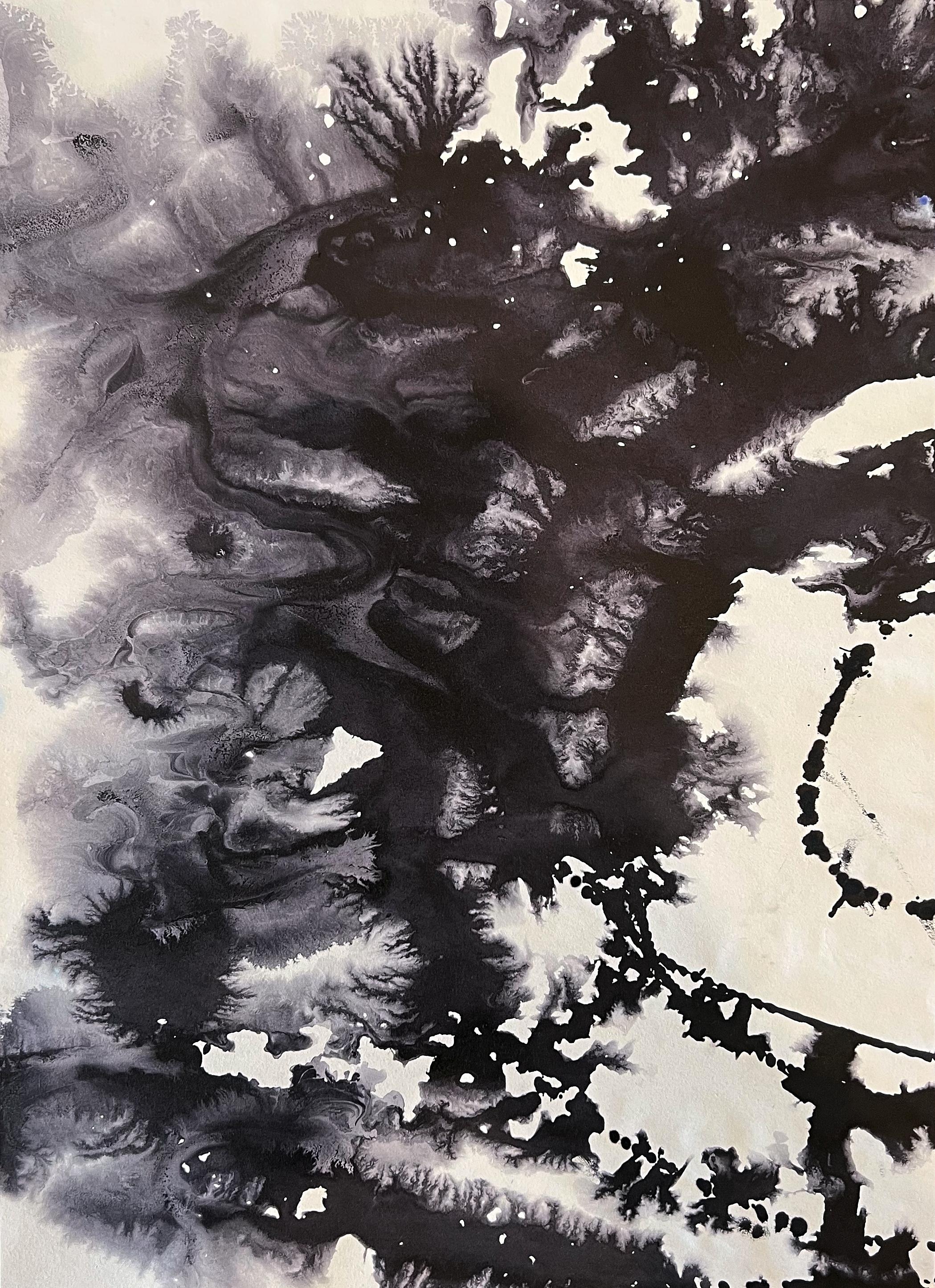
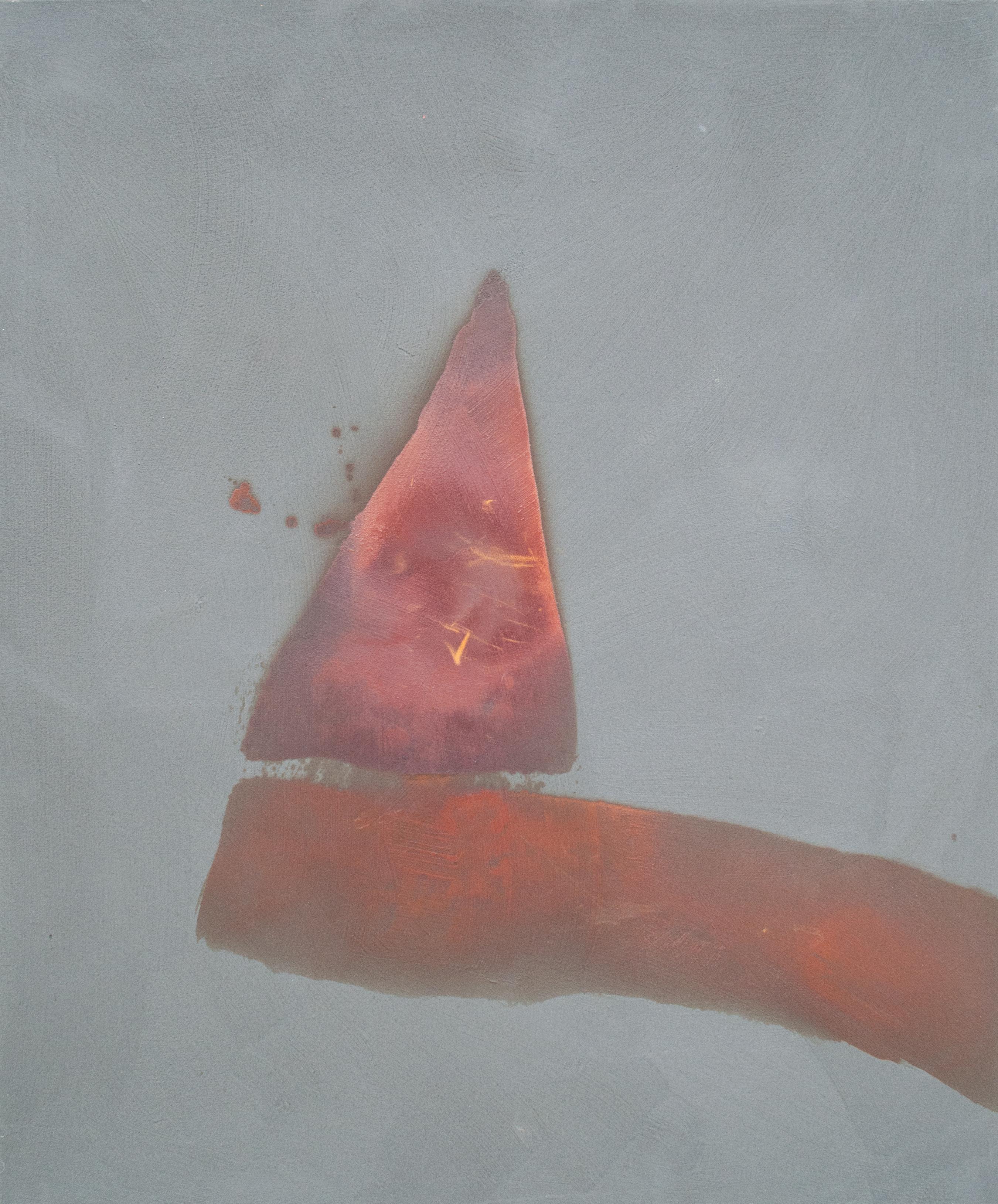
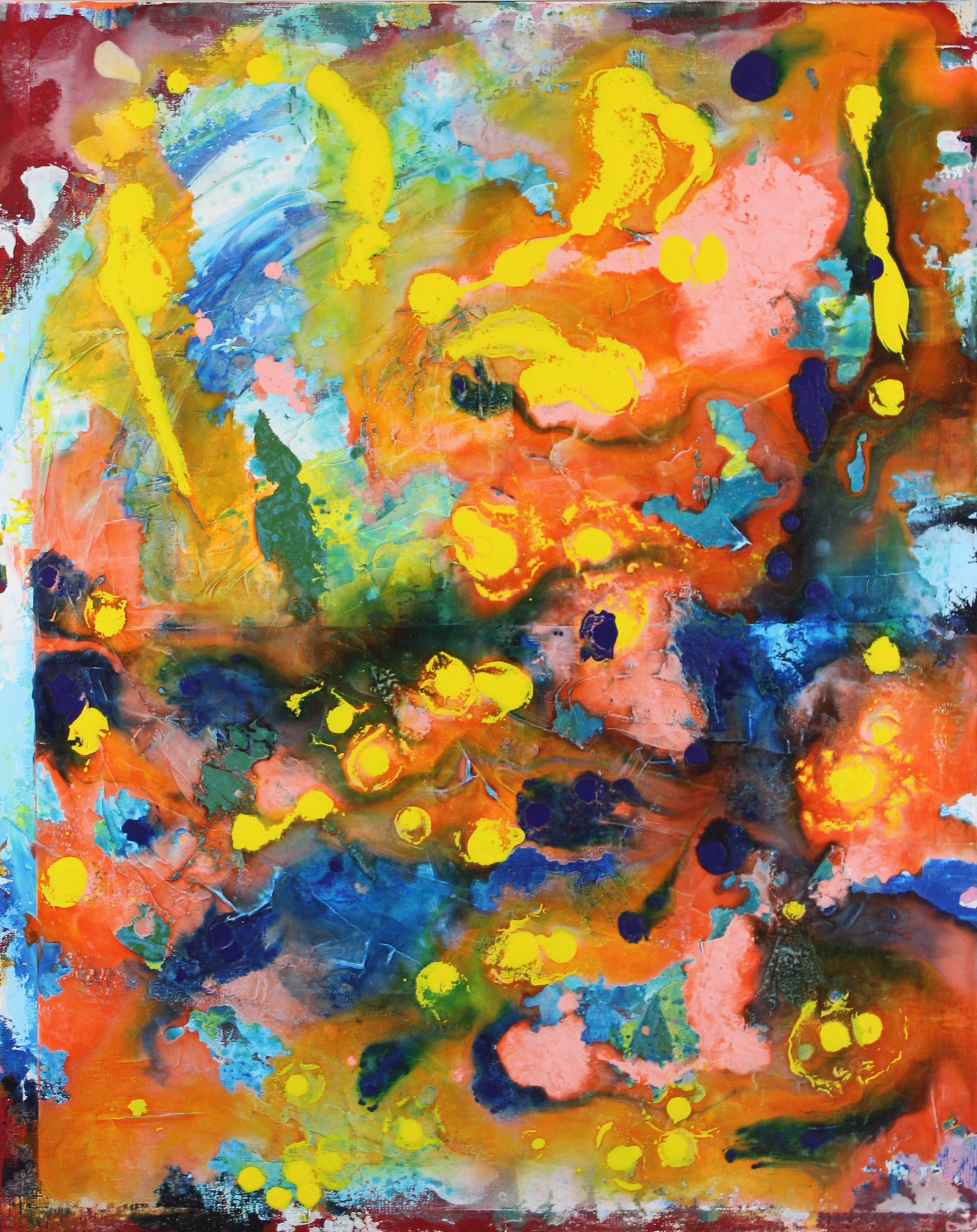
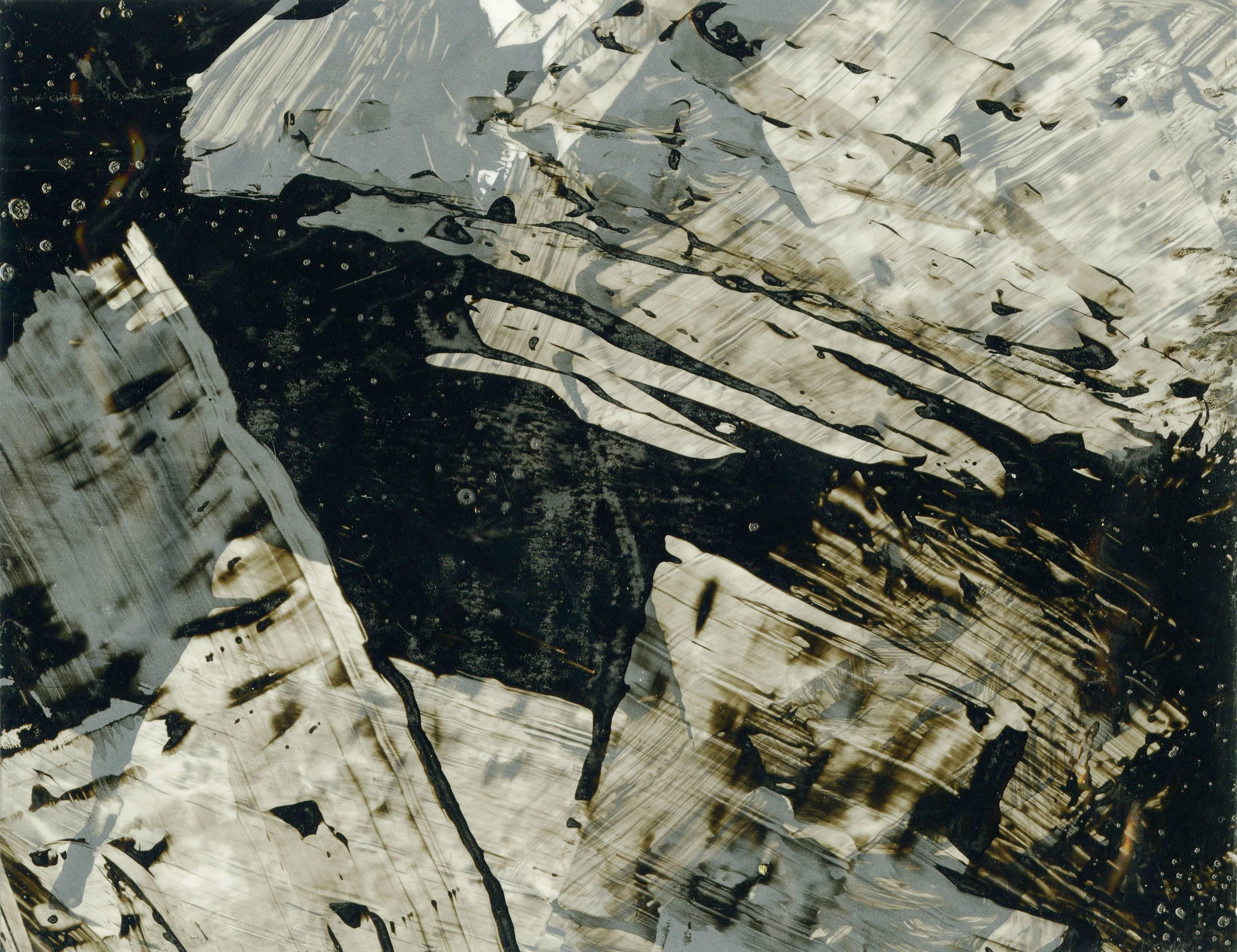
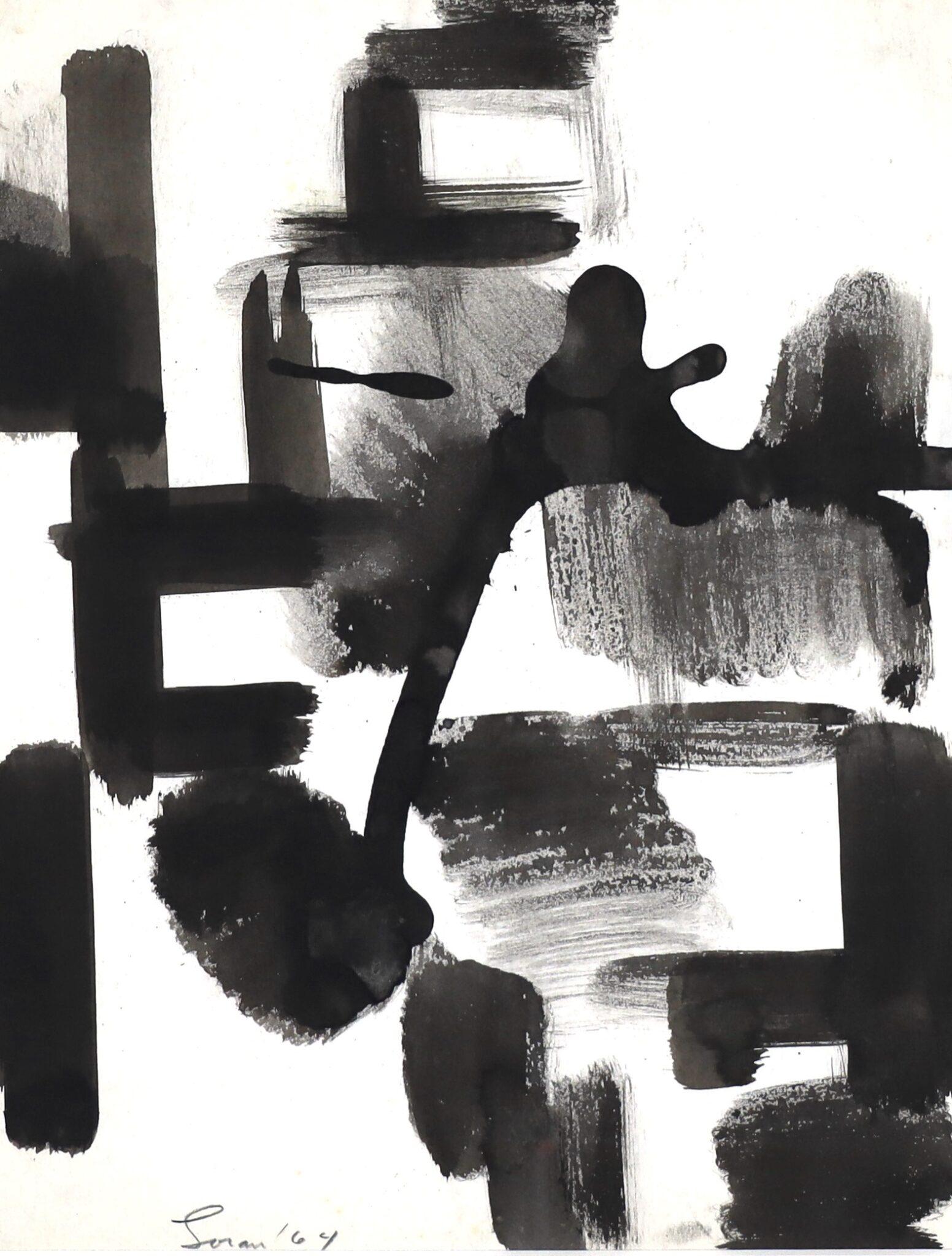

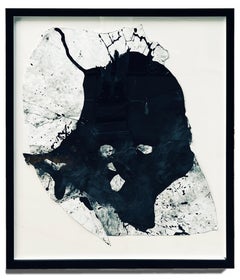
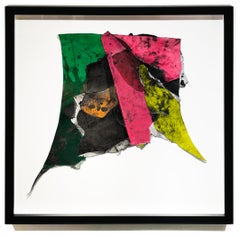
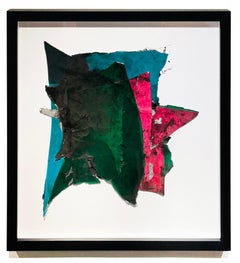
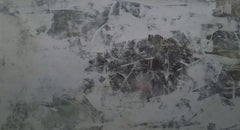
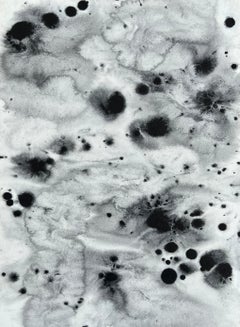
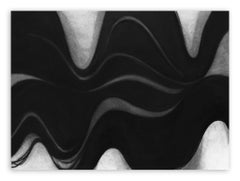
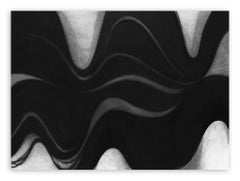
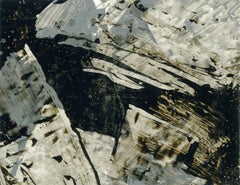
Combining fractions of abstracted drawings into one, Kimler creates a whole new abstracted form. With expressive pours of black paint and brushwork in charcoal and graphite, Kimler's collaged drawing exhibits a combination of minimalism and abstract expressionism. This work is unframed. Contact gallery for framing options.
This work unfolds around the logic of the smudge, the mark that exceeds intention and refuses containment. Paint and charcoal spread across collaged paper not as gestures of expression alone, but as residues, traces that linger after action. The dark form feels less drawn than impressed, as if it has seeped into the surface rather than landed on it.
The stain operates here as a force: invasive, persistent, impossible to fully isolate. It bleeds into the fractures of the collage, occupying tears, seams, and edges, collapsing the distinction between figure and ground. What might initially read as a central mass becomes unstable, punctured by voids and apertures that suggest erosion as much as presence.
In keeping with Kimler’s broader practice, the image resists cleanliness or resolution. The surface records accumulation, of pressure, of repetition, of matter pressed too long against itself. The work proposes that marks do not simply describe form, but testify to contact: to what cannot be wiped away, only spread, absorbed, and endured.
Wesley Kimler
Mirrors of Apprehension Before the Fallen Sun
acrylic, graphite, charcoal on Stonehenge
58h x 88.50w in
147.32h x 224.79w cm
WYK022
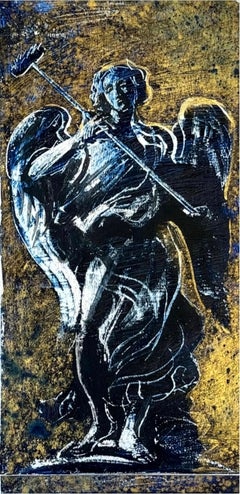
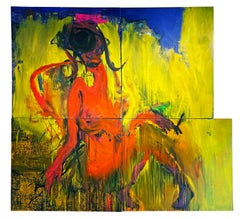
Wesley Kimler (born 1953) an American artist based in Chicago, Illinois, is known for his colossal paintings, up to 15 feet high and 27 feet wide. According to critic Kevin Nance, these are "expressive, gestural, hybrid paintings that combine abstract and figurative elements in a way that's theatrical and beautiful, sometimes grotesque and surreal, and always powerfully evocative."
Wesley Kimler was born in Billings, Montana. His family moved to California in 1959, where Kimler lived until he left home at the age of 14. Thereafter, he lived in San Francisco, Taos, New Mexico (where he studied music), Vancouver, British Columbia, Canada, and Afghanistan. In that country, the then 20-year-old Kimler lived in Herat, Kandahar and Kabul, working as an agent for a dealer in traditional carpets.
Kimler first began to paint at the age of 21, studying one year at the Laguna Gloria School of Art in Austin, Texas and 2 years at the Minneapolis College of Art and Design.
The artist first showed in the mid 1980s at Frumkin-Struve (later simply Struve) Gallery in Chicago.
In addition to the Struve Gallery exhibitions in 1985, 86, 87 and 90, other notable shows by Kimler include those at Barbara Kornblatt Gallery in Washington, DC in 1986, LA Louver Gallery in Los Angeles in 1987 and 1990, Paula Anglim in San Francisco in 1990, "The Real Deal" with artists Ed Paschke and Tony Fitzpatrick in 1994, a Museum of Contemporary Art Chicago solo exhibition in 1995, as well as inclusion in "Art in Chicago, 1945-1995" exhibition at the latter institution in 1996. Kimler's work was recently featured in the group show "The Long Dream" at the Museum of Contemporary Art, MCA Chicago in 2020.
Kimler's art has been acquired by many institutions including the Metropolitan Museum of Art in New York, the Berkeley Art Museum in Berkeley, California, the Norton Museum of Art in West Palm Beach, Florida, the Weisman Art Museum in Minneapolis, Minnesota, and in Chicago's Block Museum, Smart Museum, Aon Tower and Museum of Contemporary Art, as well as in numerous private collections.
Lisa Wainwright, a professor of art history and dean of graduate studies at the School of the Art Institute of Chicago, has said of Kimler's art: "It's heroic, moral painting. He lives and breathes his art in the way the great painters did."