Video Loading
Want more images or videos?
Request additional images or videos from the seller
1 of 12

André Chaumière
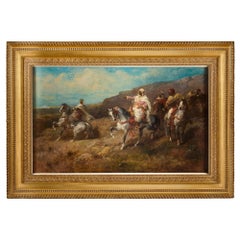
Orientalist: "Arabian Horseman" dated 1903 André Chaumière

$25,125
$33,50025% Off
£18,996
£25,32825% Off
€22,167.07
€29,556.0925% Off
CA$35,751.64
CA$47,668.8625% Off
A$36,268.76
A$48,358.3425% Off
CHF 20,707.53
CHF 27,610.0425% Off
MX$439,157.97
MX$585,543.9525% Off
NOK 243,778.26
NOK 325,037.6825% Off
SEK 242,969.20
SEK 323,958.9425% Off
DKK 165,758.67
DKK 221,011.5625% Off

About the Item

"Fantasia of Arabian Horseman" dated 1903 André Chaumière (French, XlX-XX) Oil on canvas Handcrafted original wood frame with bronze applique 20 3/4 x 12 3/4 (28 1/2 x 20 frame) inches. This fantastic painting of Arabian Horseman is encased in its original, period wood frame. The borders are highlighted by bronze applique featuring floral and meandering foliate designs much like Art Nouveau jewelry pieces of the period. The frame was most certainly handmade by an Arab master craftsman at the turn of the previous century. The generous use of the magenta, purples and lilac colors shows the painter to be on the cutting of artistry and technology since the color was fairly new to the painters of the late 19th century. Little is known about the life of the painter André Chaumière, other than he was active at the end of the 19th century and the beginning of the Twentieth century. His work was focused on North African subjects and its likely he lived for some time in French Algeria. Though there had been prior interest in the 17th century with the “Orient.” It was with Napoleon Bonaparte’s expedition to Egypt in 1798 that the cultural madness for all things Oriental was borne. The Orient in this case is generally referred to as primarily North African though the areas of East Asia and the Asian Pacific, such as India, Polynesia, and other “exotic” locales are often referred to as well. However, it is with Tunisia, Egypt, Morocco, etc., with its mysterious secrets, beauty, rich colors and eroticism (titillatingly strange sexual mores) within the atmospherics of scorching, arid sunlight that inebriated the European imagination like no other. It was the French military conquest of Algeria 1830 that more formerly indicates the beginning of this artistic movement and of the apparition of the term Orientalism. With the development of steam-powered seafaring ships, an interconnected railway system, painters, sculptors, and ceramists join militaries and salesmen in discovering yet unknown countries. Riding camels and wearing turbans, French artists, writers, poets, and journalists explored the countries of the Orient sending back wondrous pictures and the tales of authoritarian rulers in sumptuous silks, young female slaves in their harems, and inscrutable warriors to an insatiable base of consumers throughout Europe. Some of the 19th centuries greatest artists such as Eugene Delacroix, Eugène Fromentin and Jean-Léon Gerome, among others, explored fascinating new artistic themes that exploded the boundaries of what previously been politely accepted in artistic circles. To the French, Orientalism became especially en vogue during the Second Empire; the reign of Emperor Napoleon III. People from all quarters, aristocrats as much as the bourgeoisie, began their artistic and literally quests into exoticism. The public fascination for the rich Orientalist imagery lasted well into the 20th century based not academic style of the Orientalist artists but mostly the exotic fantasias of the art that captivated the public’s imagination.
  • Creator:
    André Chaumière (1870 - 1925, French)
  • Dimensions:
    Height: 20 in (50.8 cm)Width: 28.5 in (72.39 cm)
  • Medium:
  • Movement & Style:
  • Period:
  • Condition:
    The painting is in very fine condition as is the original, hand-carved frame which features bronze applique adornments.
  • Gallery Location:
    SANTA FE, NM
  • Reference Number:
    1stDibs: LU1408216223252

More From This Seller

View All
Orientalist Painting “Tuareg Rider in the Desert, 1908” Paul Jouve (1878-1973)

Orientalist Painting “Tuareg Rider in the Desert, 1908” Paul Jouve (1878-1973)

By Paul Jouve

Located in SANTA FE, NM

“Tuareg Rider in the Desert, 1908” Paul Jouve (1878-1973) Oil on panel, signed lower right. 21 ¾ × 17 1/2 ( 27 ½ × 24 frame) inches Paul Jouve’s work has been celebrated and collect...

Category

Early 1900s Art Nouveau Animal Paintings

Materials

Oil, Wood Panel

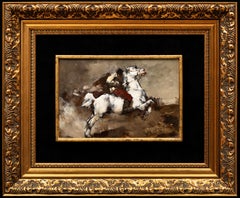
Galloping Horse and Rider Alessio Issupoff (1889 Russia-1957 Rome)

Galloping Horse and Rider Alessio Issupoff (1889 Russia-1957 Rome)

Located in SANTA FE, NM

"Galloping Horse and Rider" Alessio Issupoff (1889 Russia-1957 Rome) Oil on wood panel Signed lower right 5 1/2 x8 1/2 (13 1/2 x 16 1/2 frame) inches This is such a stunning little jewel, it's almost hard to believe. Alessio Issupoff dedicated his whole life to art and was shaped by his years at the Moscow School of Painting, and later absorbed a great deal from Impressionism and the work of the Italian Renaissance masters. But he kept his distinctive style and remained true to the idea that excited the generation of painters of the turn of the 20th century — “the embodiment of the great beauty of everything alive.” Alexei Vladimirovich Isupov, known by his Italianized name Alessio Issupoff, was born in Vyatka (now Kirov) on March 10, 1889. The son of an icon carver and gilder, he learned to paint from the artisan painters who worked with his father. Wanting to give expression to his own artistic creativity, the young Alexei did not take up his father's trade but left Vyatka for Moscow where he attended the School of Painting, Sculpture and Architecture. His mentor was the painter Apollinary Mikhailovich Vasnetsov, brother of Viktor, who introduced him to the Moscow artistic milieu and helped him find work. By studying and visiting museums, Issupoff formed his own aesthetic “taste” by modifying it on contemporary Russian and French Renaissance art...

Category

1920s Animal Paintings

Materials

Wood Panel, Oil

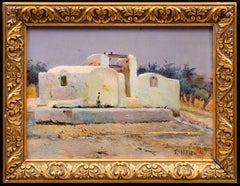
"The White House in Morocco, 1901" E. Baily Hilda (Austrian, 1855-1955)

"The White House in Morocco, 1901" E. Baily Hilda (Austrian, 1855-1955)

Located in SANTA FE, NM

"The White in Morocco, 1901" E. Baily Hilda (Austrian, 1855-1955) Oil on panel Signed and dedicated lower right, "To my cousin Louis, affectionate memory" 15 x 12 inches frame size ...

Category

Early 1900s Landscape Paintings

Materials

Oil, Panel

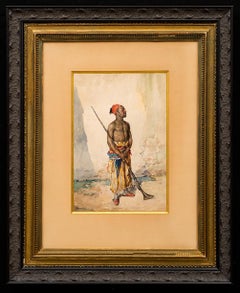
Orientalist "Moorish Soldier Holding a Rifle" Manuel Garcia Hispaleto

Orientalist "Moorish Soldier Holding a Rifle" Manuel Garcia Hispaleto

Located in SANTA FE, NM

"Moorish Soldier Holding a Rifle" Manuel Garcia Hispaleto (Spanish, 1836-1898) Watercolor on paper Signed lower left "MGHispaleto" Original wood frame with gilded stucco 18 3/4 x 12 1/2 (33 1/2 x 26 frame) inches Manuel García Hispaleto, originally Manuel García y Martínez (22 November 1836, Seville -26 December 1898, Madrid) was a Spanish painter known for portraits and costumbrista (genre) scenes. His brother, Rafael García...

Category

1850s Realist Portrait Paintings

Materials

Watercolor, Handmade Paper

You May Also Like

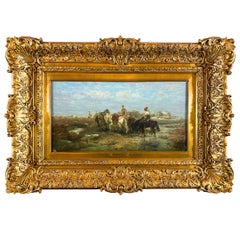
Arab Horsemen 19th Century Antique Landscape orientalist Oil Painting on Canvas

Arab Horsemen 19th Century Antique Landscape orientalist Oil Painting on Canvas

By Adolf Schreyer

Located in Jacksonville, FL

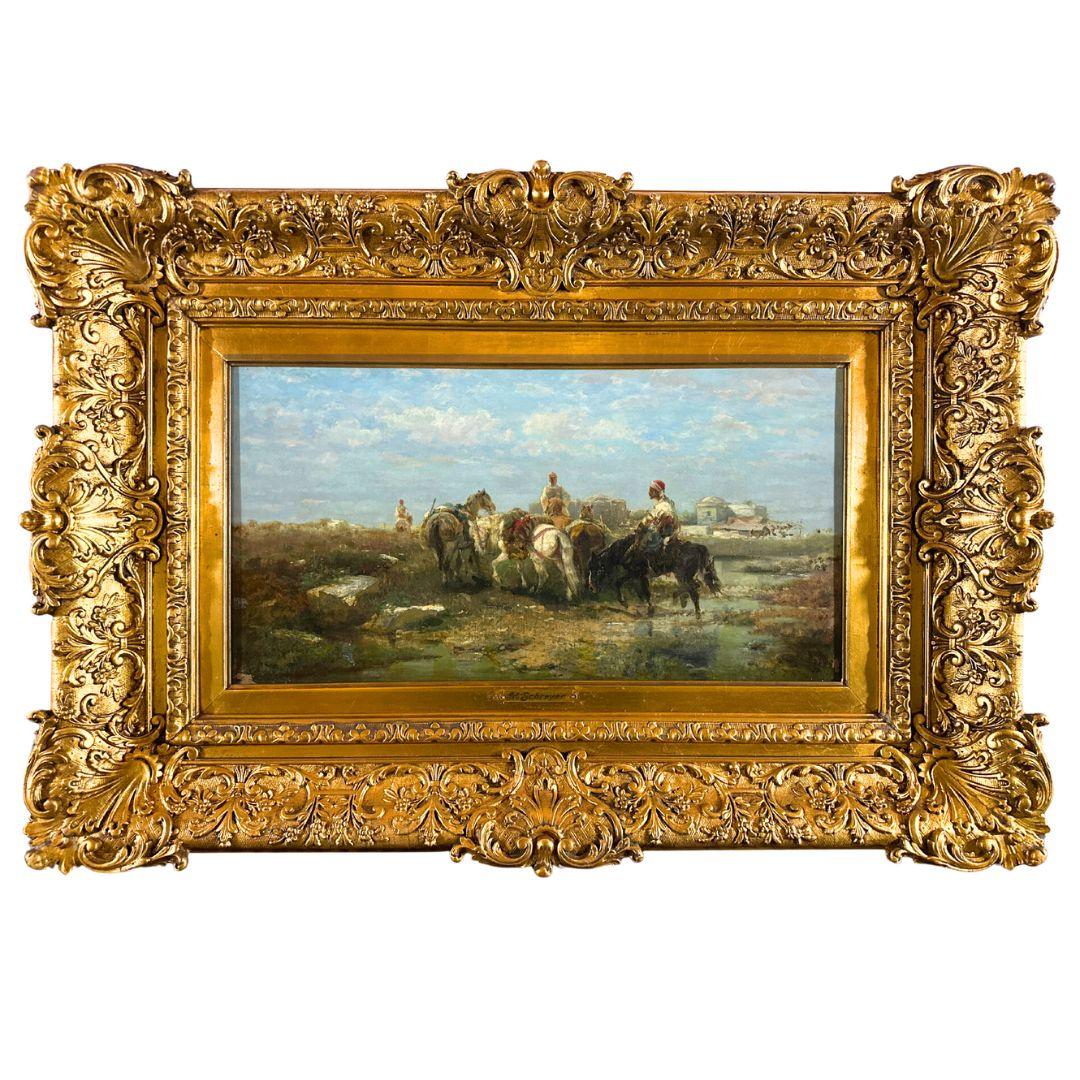
Notes: This painting was reviewed via digital photographs by Max and Dr. Christoph Andreas who confirmed it authenticity. They commented that the painting would benefit from removal of the discolored varnish. Provenance: Provenance: Christie's New York, 19th Century European Paintings, Drawings, Watercolors, and Sculpture, February 23, 1989, Lot 125. Private Collection, Boston MA, Skinner Auction, Nov 2021 Arab Horsemen" by Adolf Schreyer captures the grace and power of Arab horsemen in a vibrant Middle Eastern setting. Schreyer, a renowned artist of the 19th century, adeptly portrays equestrian scenes with exceptional skill and detail. The painting showcases a group of horsemen galloping through a desert landscape, evoking a sense of freedom and adventure. Schreyer's meticulous attention to detail brings the scene to life, with sunlight reflecting off the horses' coats and dust rising beneath their hooves. Beyond its visual appeal, the artwork holds cultural significance, bridging the gap between cultures and inviting appreciation of Arabian heritage. Schreyer's experiences in North Africa, Turkey, and Syria inform his captivating depictions. "Arab Horsemen" is highly regarded in both America and France, where Schreyer's works found admiration among collectors and his association with the Barbizon School solidified his reputation. Owning this artwork not only adds beauty but also connects to a pivotal period in art history, showcasing Schreyer's artistic brilliance and cross-cultural appreciation. Experience the timeless allure of "Arab Horsemen" and embrace the spirit of the Middle East. Frame Size: Width: 36″ x Hight: 24.75″ Frame Thickness: 6.50″ Picture Size: Width: 24″ x 12.75″ Description: Introducing “Arab Horsemen” by Adolf Schreyer: A Captivating Blend of Artistry and Cultural Significance Capture the essence of the vibrant Middle Eastern culture with “Arab Horsemen,” a masterpiece by the renowned artist Adolf Schreyer. This captivating painting takes you on a journey through time, allowing you to witness the grace, power, and elegance of Arab horsemen in their natural element. Adolf Schreyer, a celebrated artist of the 19th century, gained immense popularity and admiration for his exceptional ability to depict equestrian scenes with unparalleled skill and detail. Born in Frankfurt, Germany in 1828, Schreyer developed a profound fascination for the Orientalist movement, which celebrated the exoticism and allure of the Middle East. “Arab Horsemen” exemplifies Schreyer’s signature style, highlighting his mastery of capturing the energy and spirit of his subjects. The painting portrays a group of Arab horsemen galloping across a vast desert landscape, their silhouettes evoking a sense of freedom and adventure. Schreyer’s meticulous attention to detail is evident in every brushstroke, as he adeptly captures the shimmering sunlight bouncing off the horses’ coats and the billowing dust beneath their hooves. What sets Schreyer apart is his ability to transcend mere representation and infuse his artworks with a profound cultural significance. His depictions of Arab horsemen are not only visually stunning but also serve as a bridge between cultures, inviting viewers to explore and appreciate the richness of Arabian heritage. The artist’s fascination with the Middle East stems from his experiences traveling through North Africa, Turkey, and Syria, immersing himself in the sights, sounds, and traditions of these enchanting lands. “Arab Horsemen” holds a special place in the hearts of art enthusiasts in both America and France. Schreyer’s works found great admiration and recognition in these countries during his lifetime and continue to captivate audiences to this day. In America, his paintings were sought after by collectors who were drawn to the romanticism and exoticism of the Orient. In France, Schreyer’s association with the Barbizon School, a group of artists who favored realistic depictions of rural life, further solidified his reputation as a respected painter. Owning a piece by Adolf Schreyer, especially “Arab Horsemen,” is not merely acquiring a beautiful artwork but also an opportunity to possess a tangible link to a pivotal period in art history. Schreyer’s ability to seamlessly blend artistic brilliance with cross-cultural appreciation makes this painting an invaluable addition to any collection. Experience the timeless allure of “Arab Horsemen” and let the spirit of the Middle East gallop into your life. Collections holding paintings by Adolf Schreyer include the Collections: Schwerin Gallery Count Mensdorff-Pouilly Collection Raven Gallery, Berlin Rockefeller Family Collection Vanderbilt Family Collection John Jacob Astor Collection William Backhouse Astor, Sr. Collection August Belmont Collection William Walters Collection...

Category

19th Century Academic Landscape Paintings
Materials

Canvas, Oil

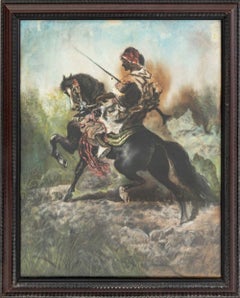
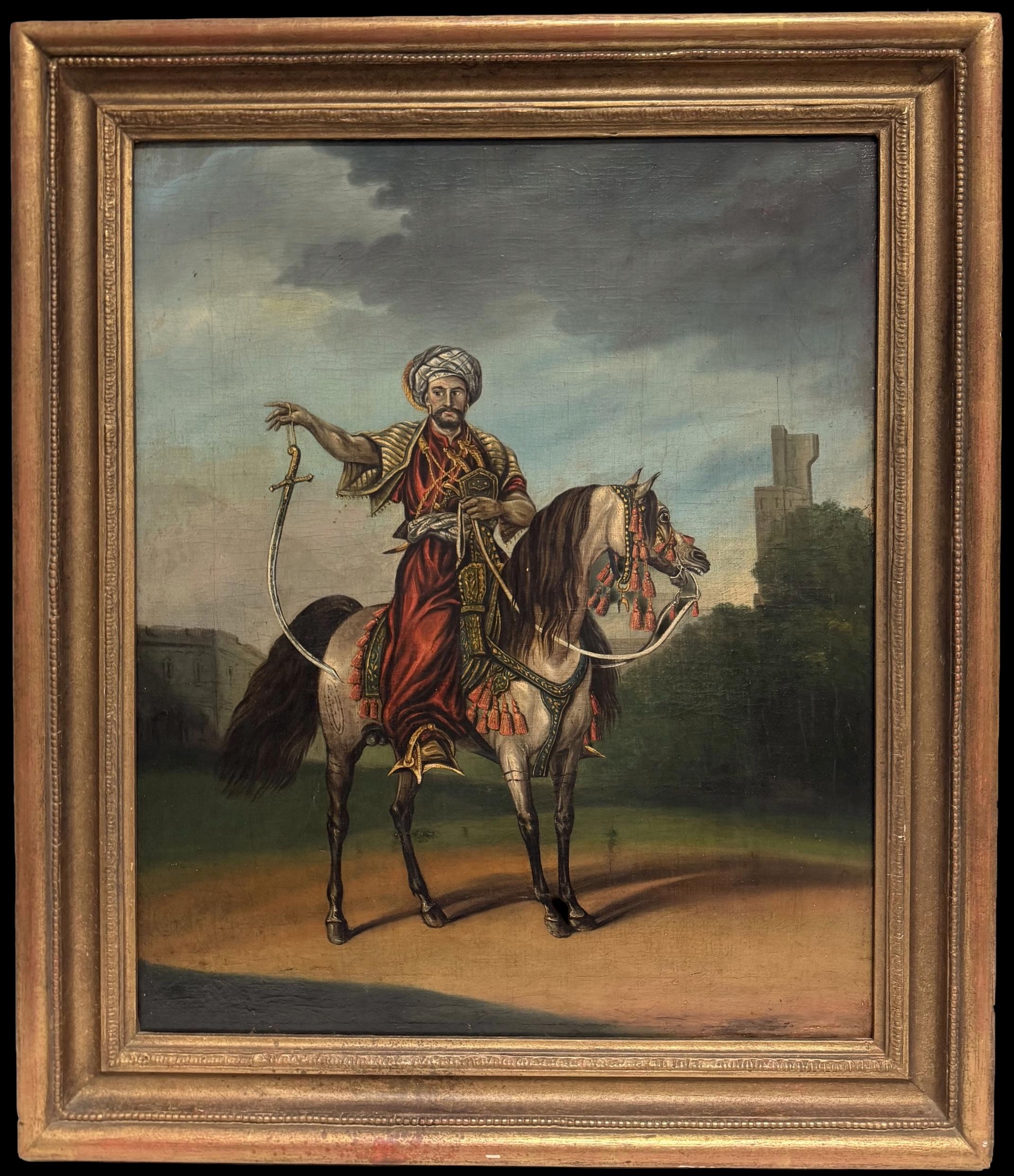
French School, Arabic Horseman, 19th C.

French School, Arabic Horseman, 19th C.

Located in Astoria, NY

French School, Arabic Horseman, Chalk Pastel on Paper Laid to Canvas, 19th century, paper labels to reverse, wood frame. Image: 19.5" H x 15.25" W; frame: 23" H x 18.5" W. Provenance...

Category

19th Century French School Figurative Drawings and Watercolors

Materials

Canvas, Paper, Pastel

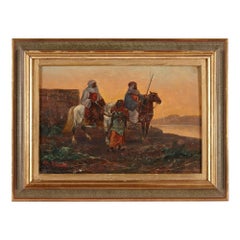
Orientalist Oil Painting with Equestrian Subject

Orientalist Oil Painting with Equestrian Subject

Located in London, GB

Orientalist oil painting with Equestrian subject Continental, Early 20th century Canvas size: Height 21cm, width 32cm Framed size: Height 30cm, width 40cm, depth 3cm Drawing upon a ...

Category

Early 20th Century Figurative Paintings

Materials

Oil, Panel

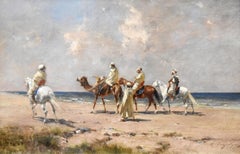
Passage Along the Shore, 19th Century Orientalist Oil Painting, Framed, Signed

Passage Along the Shore, 19th Century Orientalist Oil Painting, Framed, Signed

By Victor Pierre Huguet

Located in New York, NY

Passage Along the Shore by Victor Pierre Huguet (1835-1902) Oil on canvas 15 x 23 inches unframed (38.1 x 58.42 cm) 21 x 29 inches framed (53.34 x 73.66 cm) Signed on bottom right Description: In this piece, Victor Pierre Huguet depicts five men traveling...

Category

19th Century Landscape Paintings

Materials

Oil

Antique French Orientalist Oil Painting by Pavy

Antique French Orientalist Oil Painting by Pavy

By Eugène Pavy

Located in London, GB

Antique French Orientalist oil painting by Pavy French, 1884 Panel: Height 53cm, width 65cm Frame: Height 74cm, width 84cm, depth 8cm This striking 19th-century Orientalist paintin...

Category

1880s Victorian Figurative Paintings

Materials

Oil, Panel