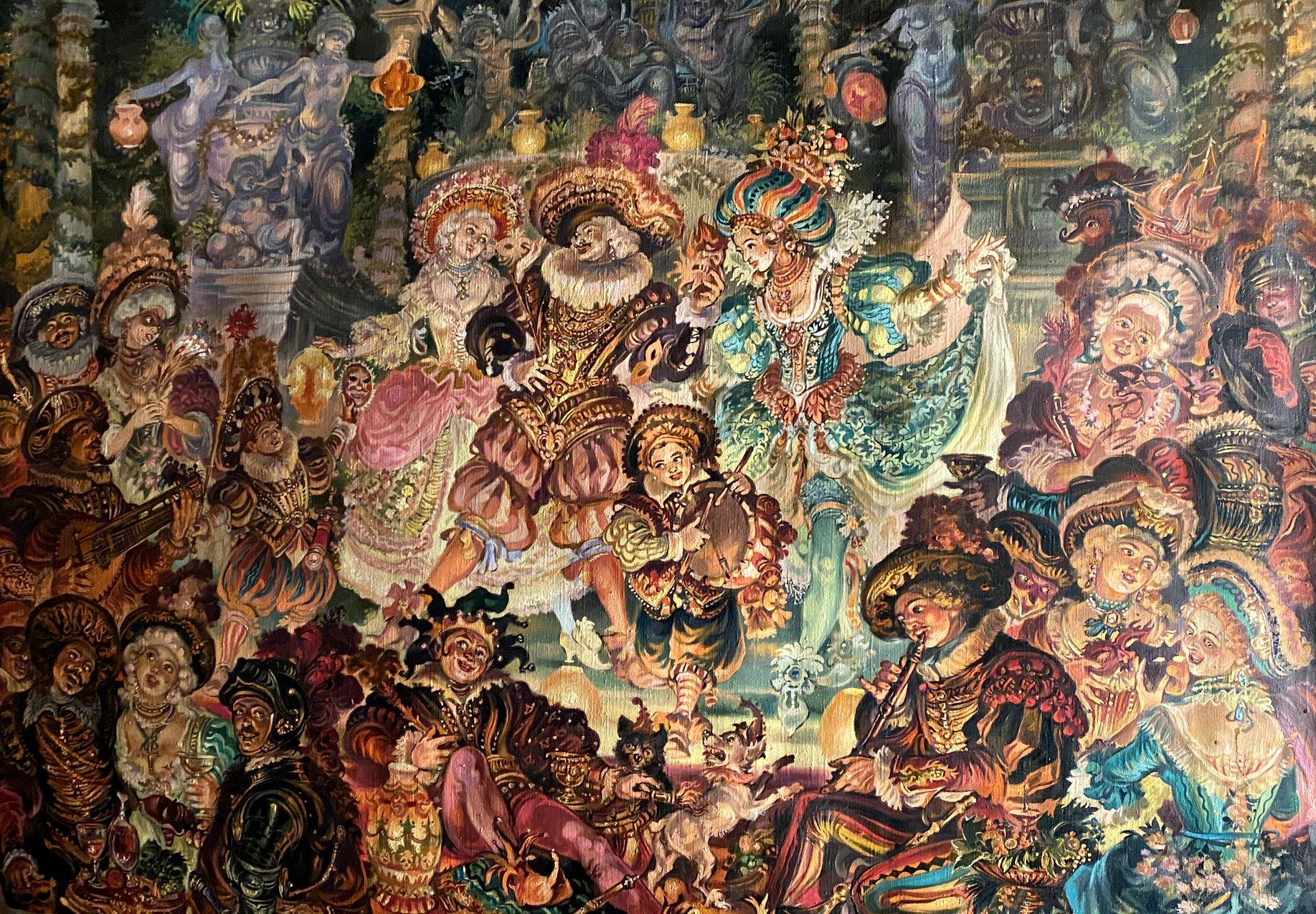
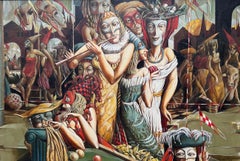
Andrew Karoly (Hungarian-American, 1893-1978)/
Louis Szántó (Hungarian-American, 1889-1965)
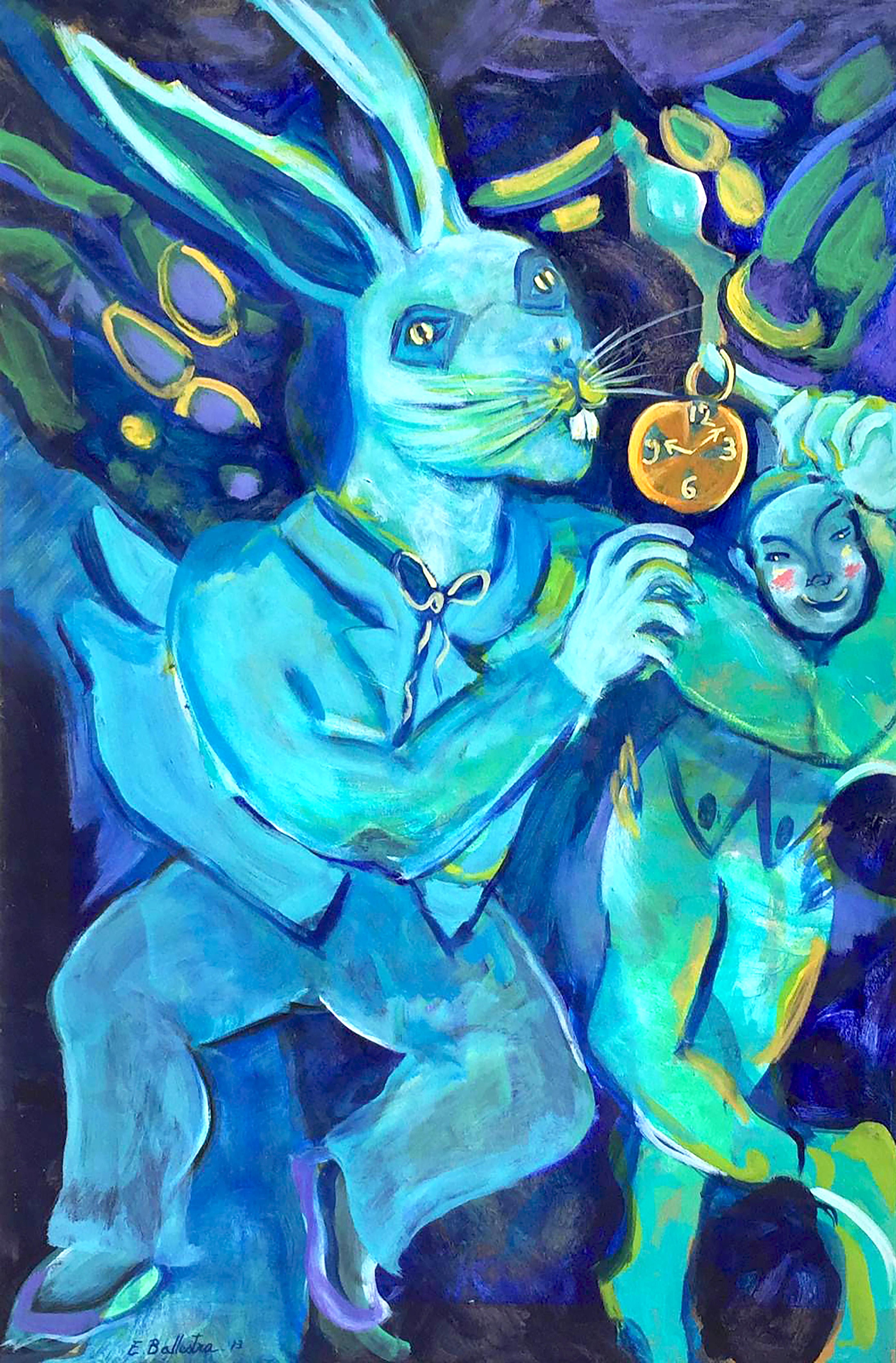
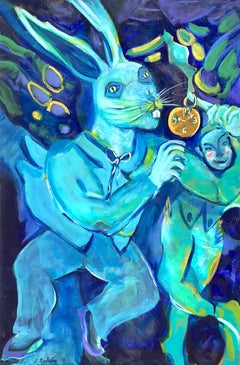
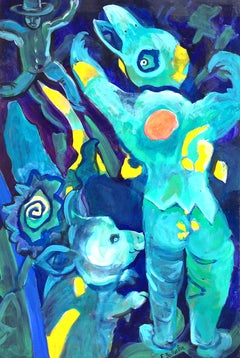
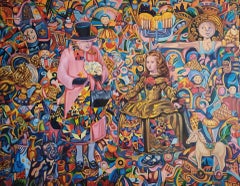
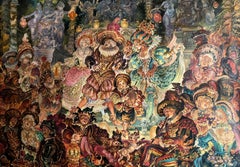
Alice in Wonderland, 1960
Oil on canvas
Signed and dated lower right
87 x 72 inches
Provenance: Purchased and given to the Bertram Woods Branch of the Shaker Heights Public Library by the Society Bank (now Key Bank)
The muralists Louis P. Szántó and Andrew B. Karoly were based in New York, however, during the 1950s and early ‘60s they worked extensively in Cleveland, painting more than 30 murals for area businesses. They painted murals for at least a dozen bank branches for their biggest Cleveland client, the Society for Savings.
Andrew B. Karoly was born in Veranno, Hungary and studied art in Budapest before the outbreak of World War One. After the War ended in 1918 he began to produce paintings and etchings of scenes in Italy, Germany and particularly, France. Before coming to the United States, he studied at the University of Art and Architecture in Budapest and at the Art Academy in Munich and traveled through Italy, Spain, Germany, France, Belgium, and Holland, gathering material for his paintings and etchings.
It is believed Karoly came to live in New York around 1920 and worked during the years of the Great Depression (1930-1939). During the 1930s, Karoly worked art projects commissioned by W.P.A (Works Progress Administration), including several large, public murals. He produced murals for the 1933 Century of Progress Exposition in Chicago and for Bellevue Hospital in New York. At this time he often collaborated with Hungarian/American painter and etcher, Louis Szanto. Today the etchings and paintings of Andrew B. Karoly are included in many American collections, including the San Jose Museum of Art, Delaware Art Museum, National Gallery of Art, Syracuse University Art Museum, The Jewish Museum, Wichita Art Museum, and the Georgetown University Library Art Collection.
A Hungarian born painter and etcher of figure studies, landscape and marine views, Louis Szántó studied art in both Vienna and Budapest before the outbreak of World War One. He served with the Austrian Army from 1914 to 1918.
After the war Louis Szántó developed an international reputation for both his paintings and etchings. He worked and traveled throughout the Baltic States, Italy, France and Holland and exhibited his art in many major centers, including New York and Chicago. In the early years of the Great Depression (c. 1930), Szántó moved to the United States where he worked on art projects commissioned by the Works Progress Administration (W.P.A.). During the 1930's he created many American views and often worked in collaboration with the artist, Andrew Karoly. His work was part of the painting event in the art competition at the 1936 Summer Olympics. His works are included in the National Portrait Gallery, owned by the Iowa State Historical Museum.