Bernard Krigstein (American, 1919-1990)
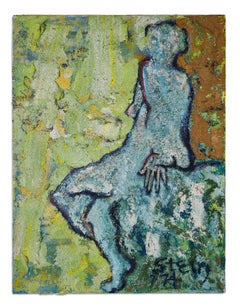
"Tolly No. 6" 1975
Oil paint on canvas, stretcher bars
The artist signed the bottom left of the painting.
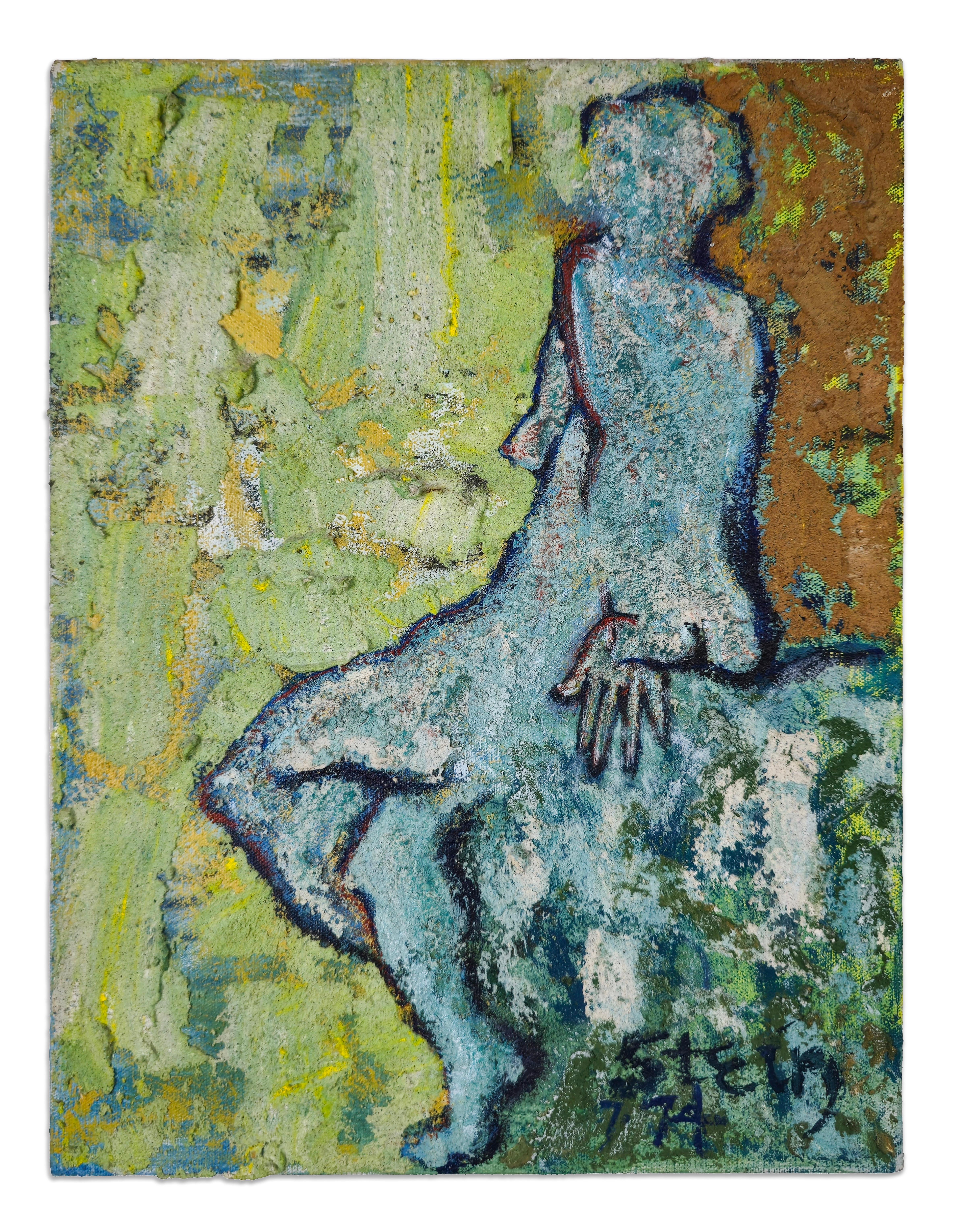
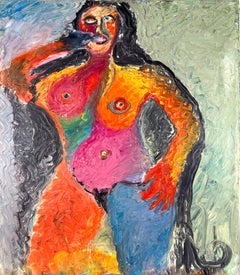
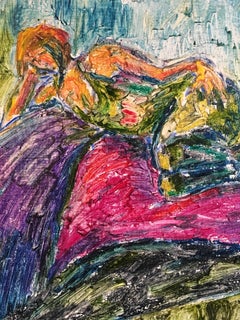
"Tolly No. 6" is a commanding figurative painting by Bernard Krigstein, created in 1975 at a mature moment in the artist’s career. The work presents a seated nude rendered with expressive intensity, where bold, saturated color and vigorous brushwork give the figure both physical weight and psychological gravity.
Krigstein constructs the composition through layered strokes of electric blues, reds, and greens, allowing color to function as structure rather than ornament. The figure’s posture is relaxed yet confrontational, grounded by firmly planted feet and an unwavering gaze. Surrounding space dissolves into painterly abstraction, reinforcing the sense that the subject emerges from, and is inseparable from, the emotional field of the canvas.
Bernard Krigstein (1919–1990)
Bernard Krigstein was an influential American artist and illustrator best known for his groundbreaking contributions to mid-20th-century comic art and visual storytelling. Active during the Golden and Silver Ages of comics, Krigstein pushed the medium beyond pulp entertainment, introducing sophisticated pacing, psychological depth, and cinematic composition that reshaped narrative illustration.
After studying at the High School of Music & Art and the Art Students League in New York, Krigstein worked across multiple creative fields, including comics, fine art, illustration, and teaching. He is most celebrated for his work with EC Comics in the 1950s, particularly on titles such as Shock SuspenStories, Crime SuspenStories, and Weird Science. His story “Master Race” is widely regarded as one of the most important and formally innovative comics ever produced, noted for its fragmented layouts, emotional intensity, and moral gravity.
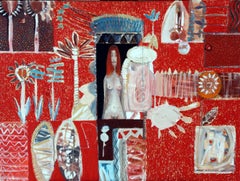
Beyond comics, Krigstein maintained a rigorous fine art practice, producing paintings and mixed-media works that reflect his interest in modernism, abstraction, and expressive form. His studio works often explore movement, psychological tension, and structure, bridging the worlds of illustration and contemporary art.
Krigstein later taught at institutions including Pratt Institute, influencing generations of artists through his emphasis on composition, visual rhythm, and intellectual rigor. Today, his work is held in major museum collections and is increasingly recognized by collectors and scholars for its lasting impact on both comics and modern visual culture.