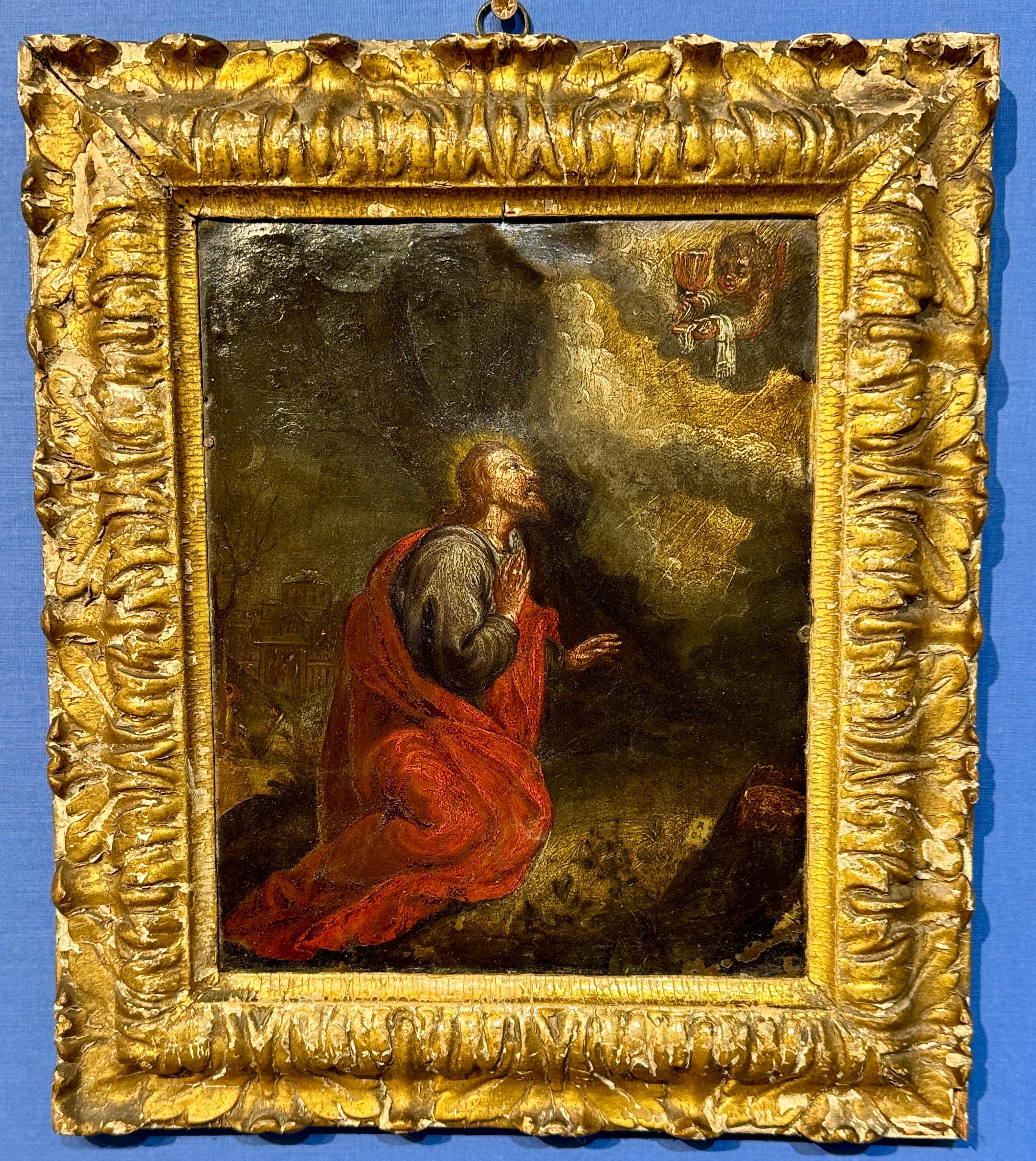
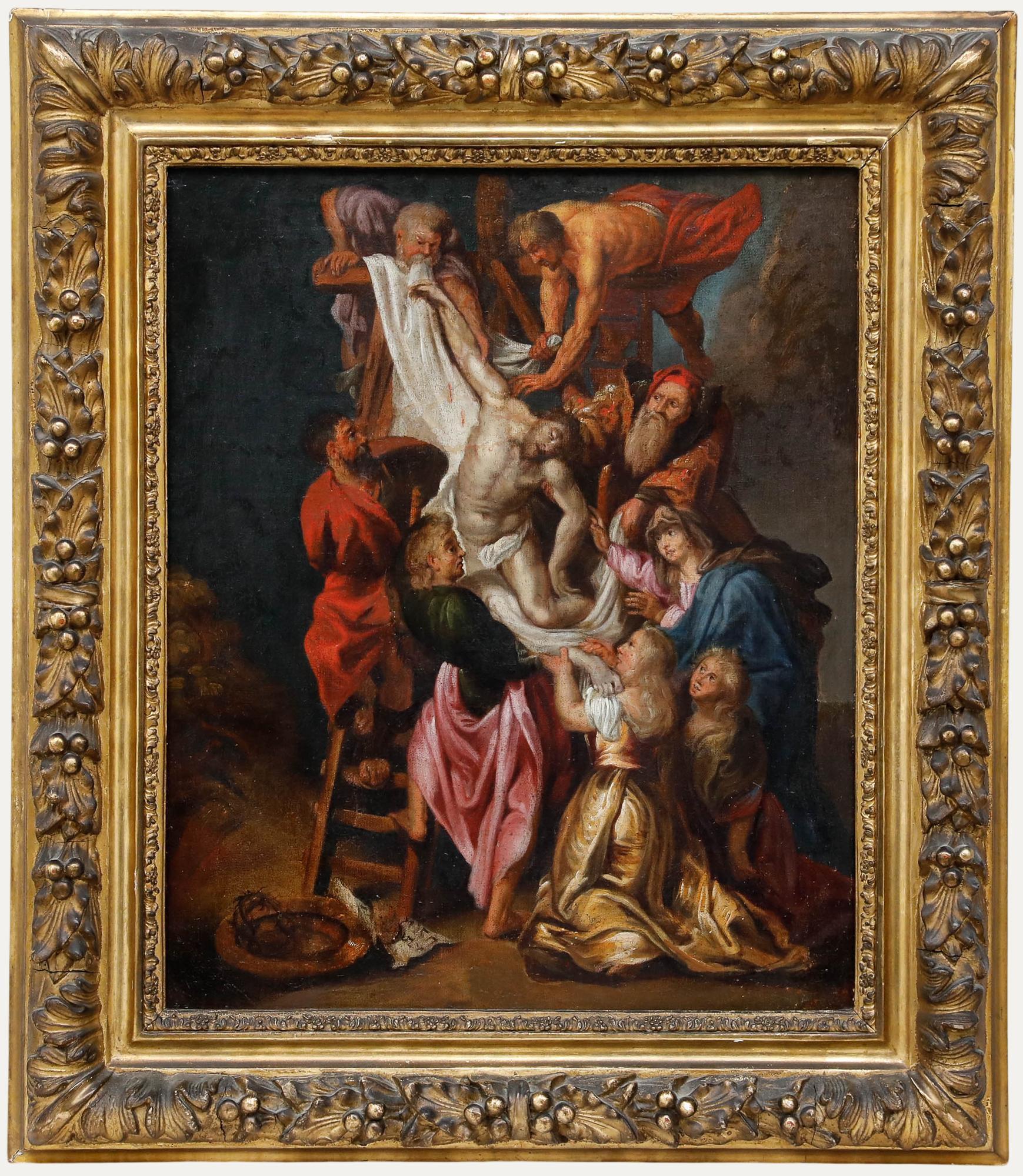

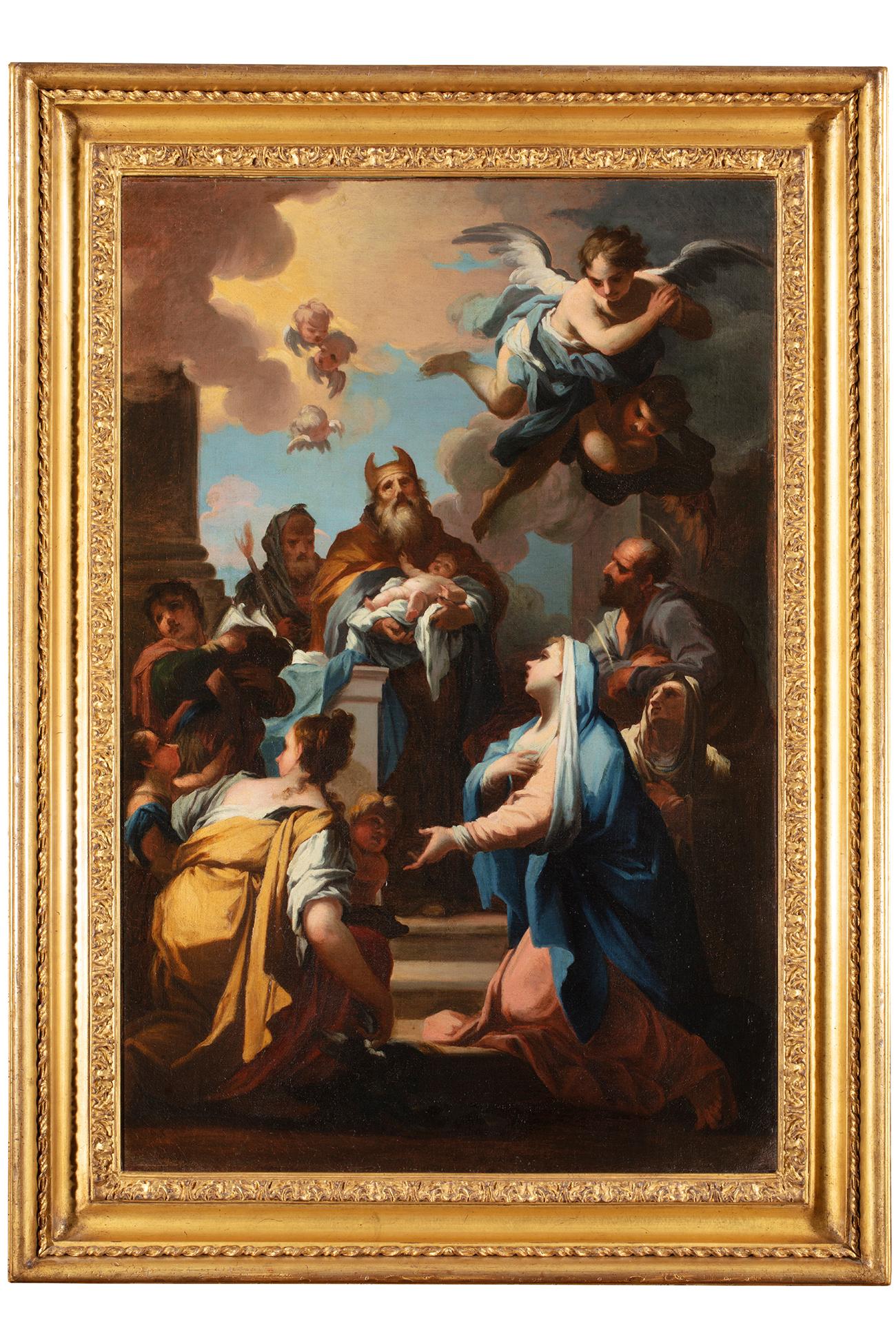
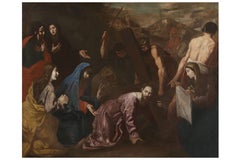
This painting by Carlo Francesco Nuvolone, the great Lombard master of the mid-seventeenth century, is striking for its dazzling composition and the brilliant colors of Christ's tunic. While the composition is still very much inspired by the great Lombard painters who preceded him, Christ's face reveals the influence of Guido Reni, who earned Nuvolone the nickname "Guido of Lombardy".
1. Carlo Francesco Nuvolone
Carlo Francesco Nuvolone was born in Milan into a family of artists. He first studied with his father, Panfilo Nuvolone, a painter from Cremona who painted many religious works in a late Mannerist style, as well as still lifes.
After being trained by his father, Carlo Francesco studied from 1625 at the Accademia Ambrosiana in Milan, where he was a pupil of Giovanni Battista Crespi, known as "Il Cerano" (1573 - 1632). In Il Cerano's studio, he met Pier Francesco Mazzuccheli, known as "Il Morazzone" (1573 - 1626) and Giulio Cesare Procaccini (1574 - 1625), from whom he learned the delicate work of light and shadow and the careful study of facial expressions. He also befriended Daniele Crespi (1598 - 1630), a painter of his generation who died in the plague epidemic of 1630. Alongside these Lombard painters, all of whom died rather early in Nuvolone's life, the influence of Guido Reni (1575 - 1642) from Bologna was also decisive.
Nuvolone soon became a more renowned artist than his father, and is now considered one of Lombardy's leading painters of the mid-17th century, both for his religious works and his portraits. A painting in the Pinacoteca di Brera in Milan (traditionally dated 1649 - 10th picture in the Gallery) shows him with his family including his brother Giuseppe, who was also a painter and who assisted him in the production of this painting, and bears witness to his success.
2. Description of the painting and comparison with other artworks by the painter
Nuvolone's image synthesizes the third, fourth and fifth Stations of the Cross: Christ falls for the first time under the weight of the cross, as he meets his mother, while Simon of Cyrene is summoned to help him. To our knowledge, this painting is the only representation of this theme in Nuvolone's work.
This painting, with its almost square dimensions (128 x 116 cm), has a compositional power that is unusual for the artist. It is structured by the shape of the cross, which delimits four autonomous spaces of unequal dimensions. In the largest of these, corresponding to the lower left-hand corner, the vivid colors of Christ's tunic are displayed: blue and orange, a color combination frequently found in the painter's work, whose glazed treatment lends a great deal of transparency and fluidity.
Two groups of four figures, each with interlocking faces, oppose each other on the upper level. In the upper left-hand corner, cast into the shadows, three men - a soldier, a Jew from Jerusalem, and a young man whose face is only sparingly sketched directly onto the brown preparation of the canvas – are represented behind an executioner dressed in a striped smock who, with his right hand, is holding the rope tied around Christ's neck.
The vigorous workmanship of this group of men is reminiscent of the artist's early works. The executioner and the glare of the soldier's helmet at his side evocate the Martyrdom of a Saint in the Louvre (11th picture in the Gallery).
In the lower right-hand corner, a group of four women in delicate colors stands in contrast to this violent group of men emerging from the shadows. In the foreground, the Virgin Mary is depicted in a pamoison, her hands reaching out for an ultimate protection. With great delicacy, a young blonde woman, probably Marie-Magdeleine, leans towards her in a gesture of comfort. Behind a third veiled woman with a compassionate gaze, a very slightly sketched female face appears, like a counterpart to the young man depicted behind the group of the three main male faces.
This group of four women, clearly different in style from the group of male heads, is painted over a section that had been left in reserve and which also includes the head of Christ. It is likely that the painter made a compositional change, to which we will return later, adding this group at a later stage, which would explain the difference in scale between these four heads and that of Christ. It should also be noted that Nuvolone had initially painted a shorter crossbeam, and it is easy to see that this was enlarged after the group of four women in our painting had been completed, partially hiding the Virgin's hands.
A halo remains between the landscape in the background and the group of four women. The rationale for the persistence of this halo is perhaps both symbolic and psychological: as Christ's vision blurs, as if in a daze, his field of vision narrows, and only the loving vision of his mother remains.
The central axis superimposes the head of Christ, already resting on the crosspiece as if anticipating the crucifixion, onto that of Simon of Cyrene, depicted as an elderly man who may evoke the traditional images of Saint Joseph. The opposition between the two hands, Simon de Cyrène's wrinkled hand supporting the top of the crossbeam and the Christ's clenched hand gripping the crossbeam, seems to us to be one of the most remarkable part of this painting.
3. Guido Reni's influence
The face of Christ is one of the most moving elements of this painting. This face appears to us to be strongly influenced by Guido Reni's Christic works, of which the Fitzwilliam Museum's Ecce Homo (circa 1639 - 12th picture in the Gallery) is one of the finest examples.
4. A composition of complex genesis
To explain the compositional evolution of our painting, and particularly the lengthening of the crossbeam, we thought it would be interesting to compare it with a small panel painted by Il Morazzone around 1610-1617 for the Rosary chapel in the church of San Vittore in Varese: Christ and Saint Veronica (last picture in the Gallery.
Looking at Morazzone's painting, it seems interesting to formulate the following hypothesis, which could explain the chaotic layout of this composition. Nuvolone, inspired by Morazzone's composition, would have initially left in reserve a sinuous shape which a character (probably St. Veronica or the Virgin) was to occupy. As in Morazzone's painting, this character was to hide the bottom of the cross, which would therefore have been left unpainted.
In the end, this character was not painted, and the project changed, leading to the installation of a group of four women, which, as we have seen, echoes with to the group of four male figures. Once in place, the artist had to lengthen the cross arm, which was now standing in front of the four women, partially concealing the Virgin's hands.
5. Framing
We are presenting this painting in a very sober 18th century Italian moulded frame in carved and gilded wood.