John R. Grabach
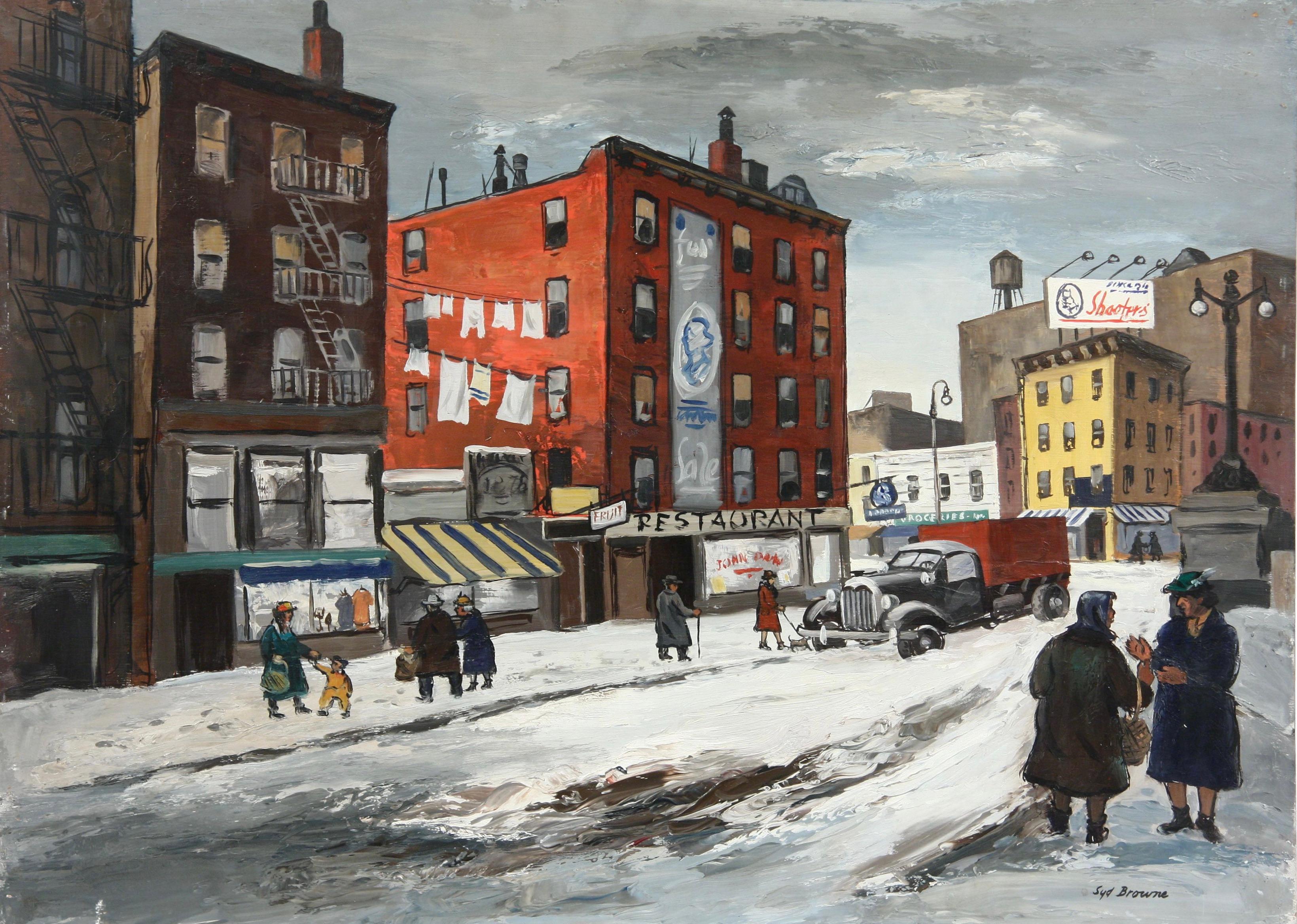
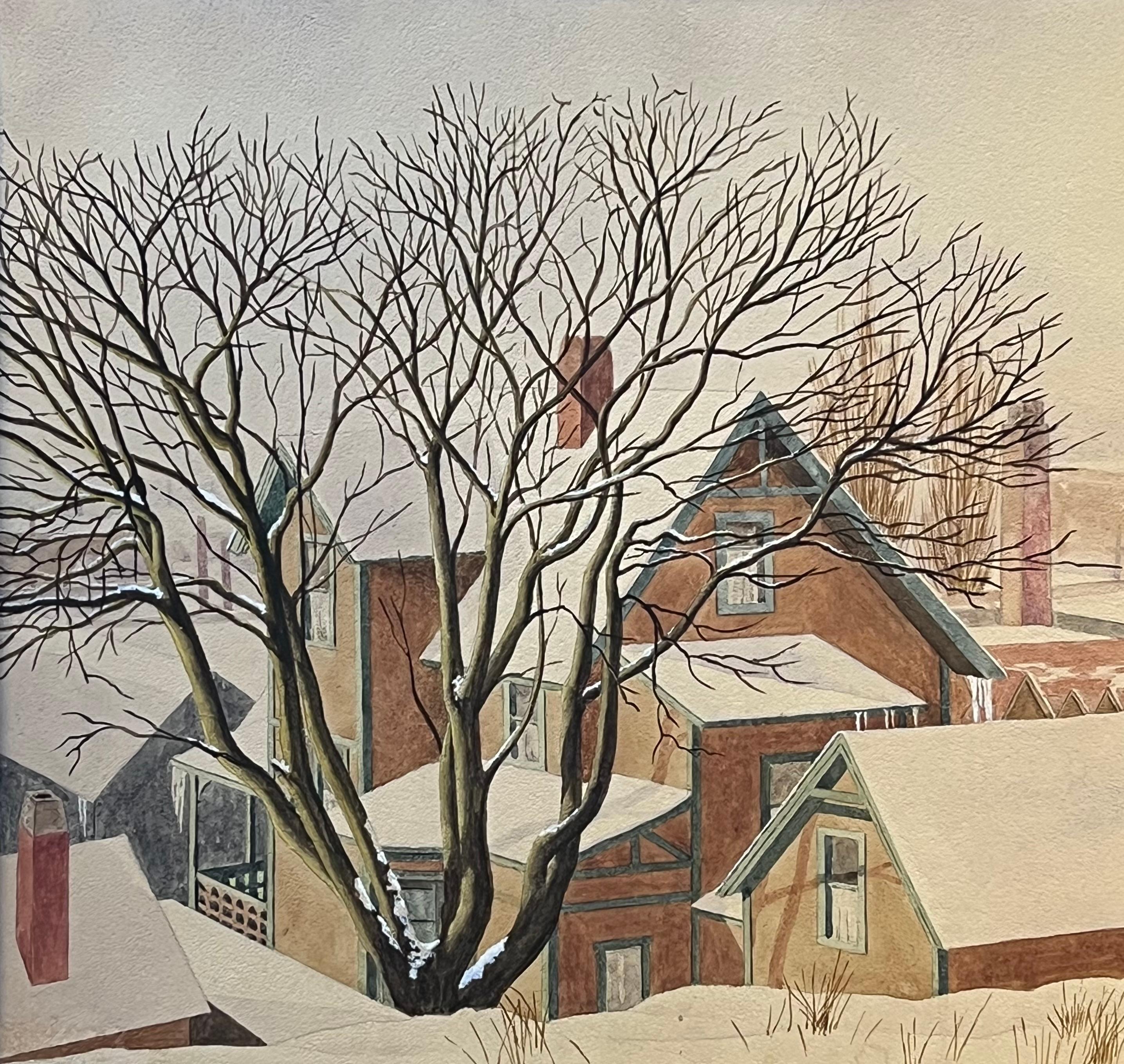
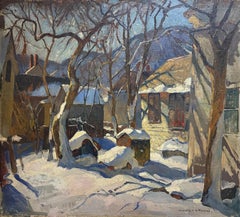
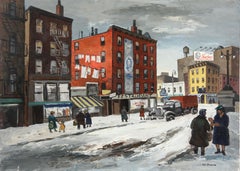
February Snow (Newark Neighborhood)
Signed lower left
Oil on canvas
30 x 36 inches
Provenance
Private Collection, Florida
John R. Grabach (1886–1981) was a prominent American painter, teacher, and author whose work stands as a defining contribution to the Newark School of painters. Born in Massachusetts, he moved at a young age with his widowed mother to Newark, New Jersey, where he would spend most of his life and develop a deep connection to the city’s working-class communities. Early in his career, Grabach worked as a die-cutter for a silverware firm, while also producing refined designs for sterling hollowware, Art Deco glass, United States postage stamps, and commercial greeting cards. His formal artistic training took place at the Art Students League of New York, where he studied under influential instructors including George Bridgman, Frank DuMond, Kenyon Cox, and H. August Schwabe.
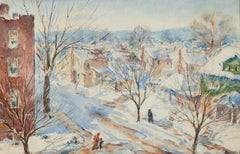
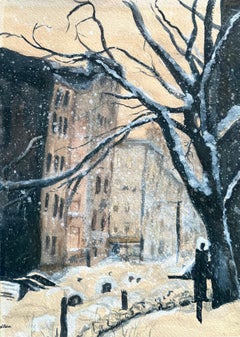
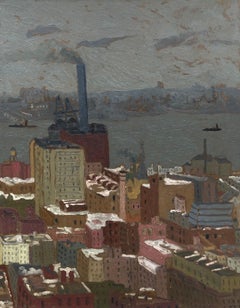
As a painter, Grabach became closely associated with the gritty realism of the Ashcan School, producing powerful depictions of urban life in Newark and New York. Like his contemporary George Bellows, he focused on the vitality and dignity of everyday experience, portraying dockworkers, laborers, and intimate interior scenes with a keen sensitivity to mood and expression. His compositions, often complex and emotionally charged, elevate seemingly ordinary moments—such as figures gathered over a simple meal—into compelling visual narratives. Over the course of several decades, from the 1920s through the 1960s, Grabach exhibited widely in major galleries and institutions across the United States, earning recognition for his distinctly American subject matter and painterly strength.
In addition to his studio practice, Grabach was a deeply committed educator, teaching for many years at the Newark School of Industrial Design, where he influenced a generation of artists, including Henry Gasser. His instructional legacy was further cemented through his widely read book, How to Draw the Human Figure, which became a standard reference for students of figure drawing. In 1980, he was honored with a rare retrospective exhibition at the Smithsonian Institution while still living—an acknowledgment of his enduring impact on American art. Today, his work is held in numerous important public collections, including the Art Institute of Chicago, the Corcoran Gallery of Art, and the Philadelphia Art Alliance, affirming his place as a significant interpreter of early twentieth-century urban life.