Marcus Bowcott is a Vancouver-based painter and sculptor whose four-decade practice interrogates the uneasy coexistence of industrial civilization and the natural world. Working across canvas and monumental sculpture, he brings an unsentimental wit to the contradictions embedded in consumer culture: the machine aesthetics we normalize, the landscapes we quietly surrender, the ecological costs we prefer not to name.
Bowcott's formation was rigorous and transatlantic.
He completed foundational studies at the Ontario College of Art in the late 1970s before earning an MA from the School of Painting at the Royal College of Art, London, in 1984. His early paintings engaged the established tensions of figuration and landscape, concerns that gradually migrated toward the machinery of modern life. Mechanized recreation, industrial sprawl, the slow structural transformation of the built environment at the expense of the natural one.
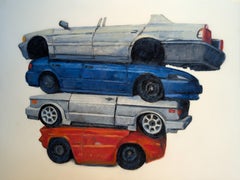
That sustained inquiry reached its most commanding expression in Trans Am Rapture, a 33-foot public sculpture created in collaboration with his longtime partner, sculptor Helene Aspinall. Five salvaged and crushed consumer vehicles, artifacts of mobility, aspiration, and obsolescence, are stacked in precarious succession atop a 150-year-old old-growth cedar trunk, the whole composition hovering between monument and ruin. First installed as part of the Vancouver Biennale, the work entered the City of Vancouver's permanent civic collection following a $250,000 donation from philanthropist Chip Wilson and his wife Shannon. It remains one of the most recognized works of public sculpture in the city.
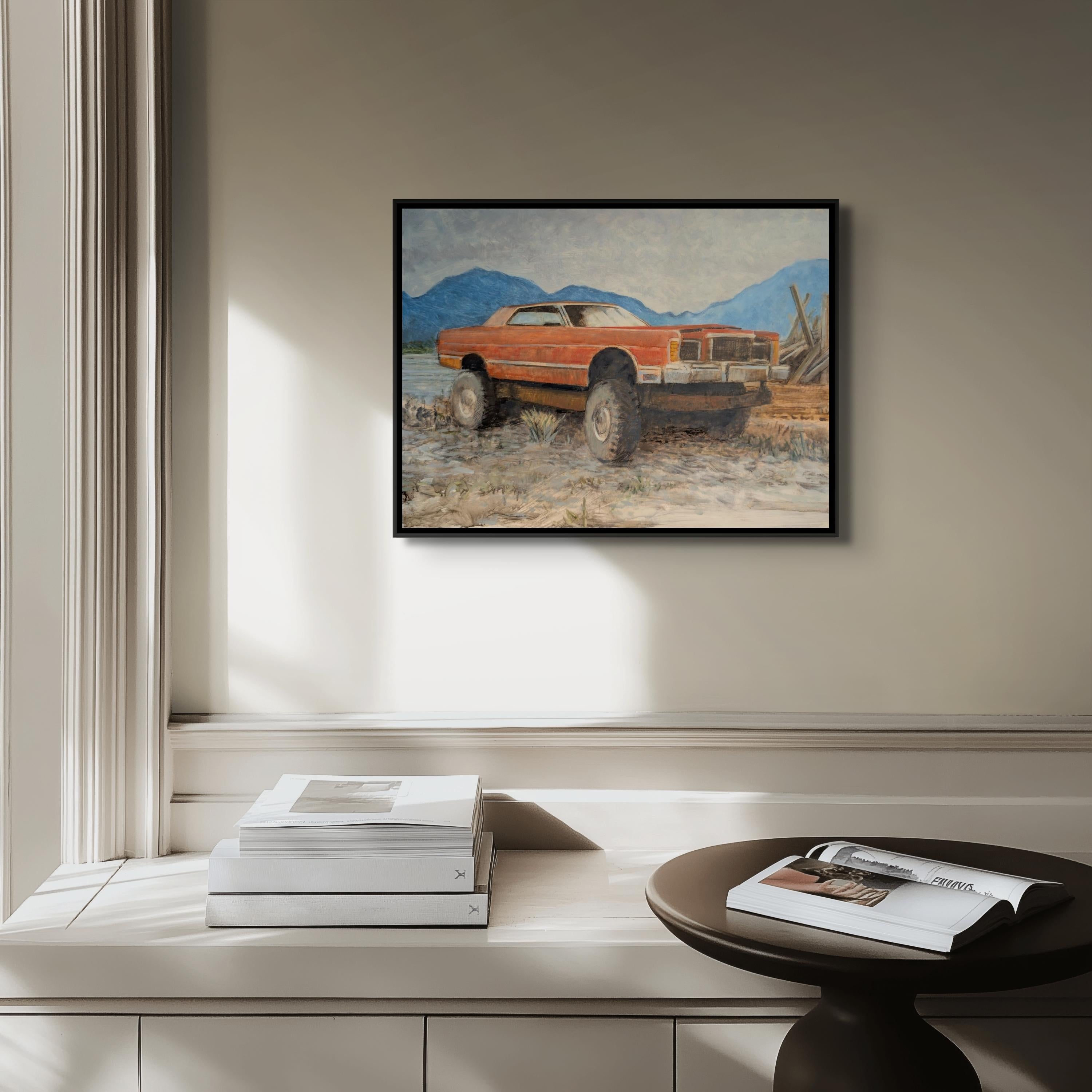
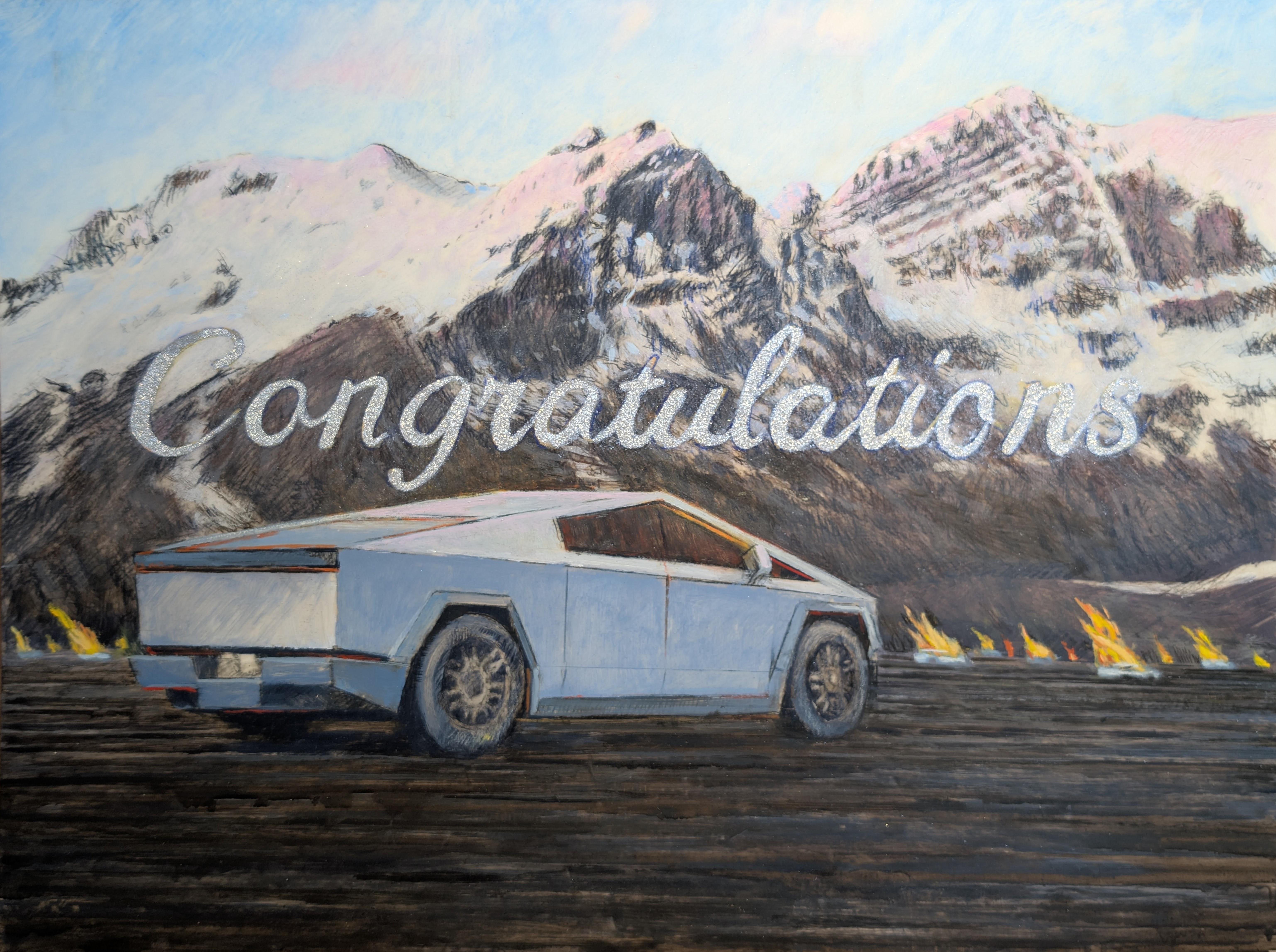
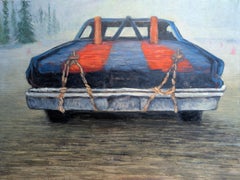
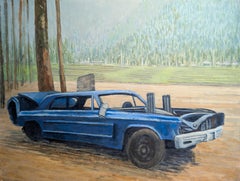
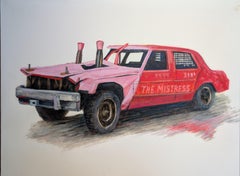
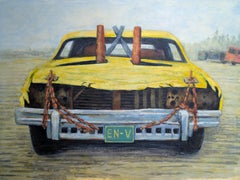
The automobile continues to occupy the centre of Bowcott's studio practice. His ongoing series of demolition derby car paintings pursues the same territory in an intimate register, rendering named and battle-worn vehicles in oil on Mylar mounted to board. Isolated against spare, near-empty grounds, each car is treated less as object than as portrait — a study in aspiration, obsolescence, and the particular vernacular theatre of destruction that demolition derby represents. The material choice is deliberate: Mylar's synthetic, non-absorbent surface lends the oil a luminous density entirely in keeping with subjects that are themselves hybrids of glamour and ruin. Each work is a unique, original painting. Framing is included; collectors are invited to select their preferred frame, with a two-week lead time for preparation and delivery. At the artist's request, glazing is not included as standard and is available upon request at an additional cost.
Alongside his studio and public practice, Bowcott served for 35 years as a professor of Drawing, Painting, and Colour at universities across the Vancouver region. His pedagogy turned on a precise question: how do human perceptual systems, vision, balance, proprioception, shape the formal conventions we take for granted in composition and design. It was teaching that reinforced rather than diverged from his practice. Both proceed from the same commitment to looking carefully at what we have built, and what we have lost in the building.
Bowcott lives and works in North Vancouver, British Columbia, where the Pacific Northwest rainforest and the Salish Sea remain constant presences in his work. This work is signed by the artist on the reverse.