Want more images or videos?
Request additional images or videos from the seller
1 of 8

Norman Rockwell
Blackstone Cigars

Circa 1921

$698,500
£530,648.37
€618,973.99
CA$1,000,575.06
A$1,015,051.02
CHF 577,352.20
MX$12,331,823.33
NOK 6,790,094.16
SEK 6,813,630.61
DKK 4,627,960.03

About the Item

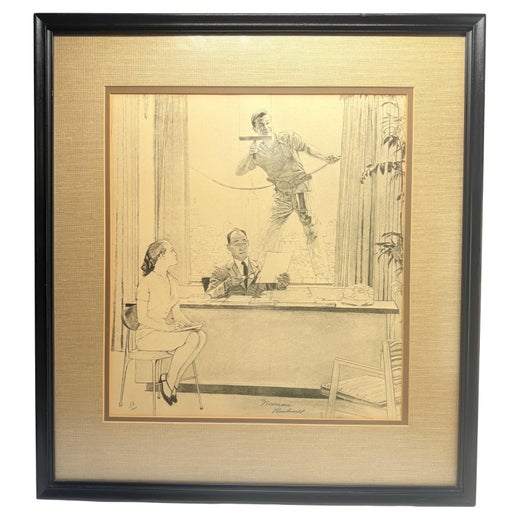
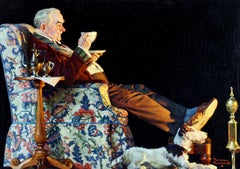
A charming relic of a bygone era, this rare oil is the work of the inimitable American illustrator, Norman Rockwell. The iconic artist’s ability to render the details and nuances of everyday life is on full display in this original advertisement, which features a businessman enjoying a Blackstone cigar while dictating to his secretary. Executed by Rockwell in 1921, the work was a special commission for a billboard campaign by the American cigar manufacturer Waitt & Bond. They were so pleased with the work that the company commissioned two additional billboard designs from Rockwell, a hunting scene in 1922 and a fishing scene in 1923. Rockwell's ability to capture the character of the nation was prized not only by magazine art editors but also by advertisers. Nearly all major companies of the day called upon Rockwell for his outstanding compositions, including Jell-O, Coca-Cola, General Motors, Ford, Post Cereals, and the U.S. Army, while his works continued to grace the covers of publications such as Literary Digest, Life, Country Gentleman, Look and the iconic Saturday Evening Post. Taken together, his many paintings capture the essence of the American spirit. “I paint life as I would like it to be,” Rockwell once said. Nostalgic and idealistic, his paintings evoke the hopes and aspirations of the entire nation. As filmmaker Steven Spielberg once said, “Rockwell painted the American dream – better than anyone.” Norman Rockwell led a very long and incredibly successful career as an artist. His first commission was painted when he was only 16 years old, and his irresistible paintings of American life made him the foremost American illustrator of the 20th century. While history was in the making all around him, Rockwell chose to fill his canvases with the small details and nuances of ordinary people in everyday life. His distinguished career earned him the Presidential Medal of Freedom in 1977, the highest honor bestowed upon an American civilian. Circa 1921 Canvas: 16 3/4" high x 36 3/4" wide Frame: 22 7/8" high x 43" wide
  • Creator:
    Norman Rockwell (1894 - 1978, American)
  • Creation Year:
    Circa 1921
  • Dimensions:
    Height: 22.88 in (58.12 cm)Width: 43 in (109.22 cm)
  • Medium:
  • Period:
  • Condition:
  • Gallery Location:
    New Orleans, LA
  • Reference Number:
    Seller: 31-37821stDibs: LU1868771162

More From This Seller

View All
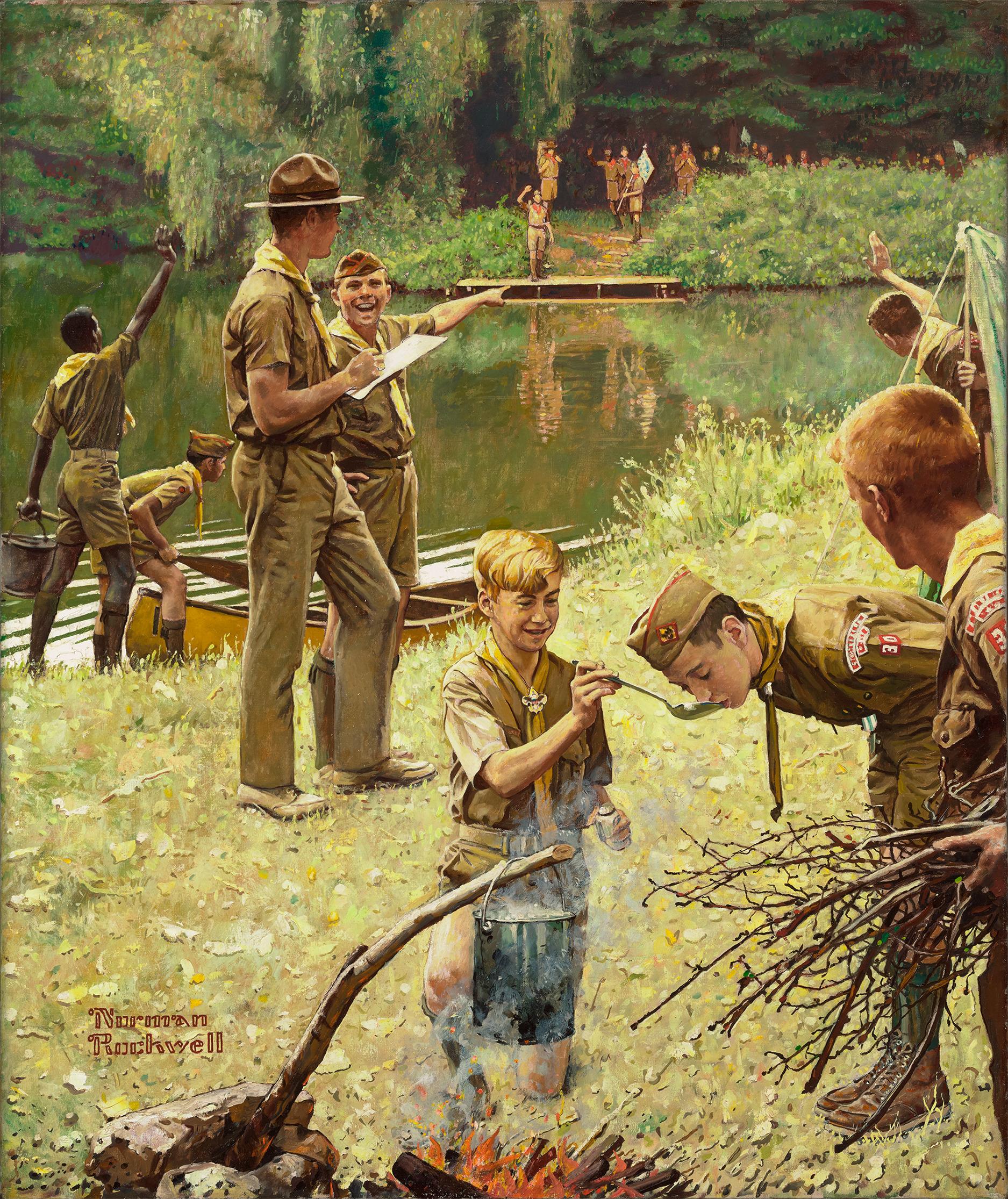
Come and Get It! by Norman Rockwell

Come and Get It! by Norman Rockwell

By Norman Rockwell

Located in New Orleans, LA

Norman Rockwell 1894-1978 American Come and Get It! Signed "Norman Rockwell" (lower left) Oil on canvas Norman Rockwell's decades-long collaboration with the Boy Scouts of Americ...

Category

20th Century Figurative Paintings

Materials

Canvas, Oil

Tender Years: Moth Holes by Norman Rockwell

Tender Years: Moth Holes by Norman Rockwell

By Norman Rockwell

Located in New Orleans, LA

Norman Rockwell 1894-1978 American Tender Years: Moth Holes Signed "Norman Rockwell" (lower right) Oil on canvas From Norman Rockwell's acclaimed Four Seasons calendar series for...

Category

20th Century Figurative Paintings

Materials

Canvas, Oil

Casablanca Declaration By Marcia Gaylor

Casablanca Declaration By Marcia Gaylor

Located in New Orleans, LA

Marcia Gaylor b.1947 American Casablanca Declaration Signed "M. Gaylor" (lower left) Oil on canvas In her original oil on canvas titled Casablanca Declaration, American historica...

Category

21st Century and Contemporary Figurative Paintings

Materials

Canvas, Oil

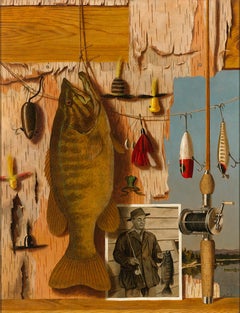
The Bass Season by John Atherton

The Bass Season by John Atherton

Located in New Orleans, LA

John Atherton 1900-1952 American The Bass Season Saturday Evening Post cover, June 29, 1946 Signed "Atherton" (lower right) Inscribed "The Bass Season opens in the east July 1st /...

Category

20th Century American Modern Still-life Paintings

Materials

Canvas, Oil

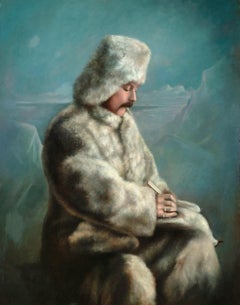
Portrait Of Dr. Frederick A. Cook By Albert Operti

Portrait Of Dr. Frederick A. Cook By Albert Operti

Located in New Orleans, LA

Albert Ludwig Operti 1852-1927 Italian-American Portrait of Dr. Frederick Albert Cook Oil on canvas This highly rare portrait of the important Polar explorer, Dr. Frederick Albert Cook, is the work of American artist Albert Ludwig Operti. Renowned in the late 19th and early 20th centuries for his paintings of exploration, namely Arctic scenes, Operti was the only artist to accompany Robert Peary...

Category

20th Century Realist Portrait Paintings

Materials

Canvas, Oil

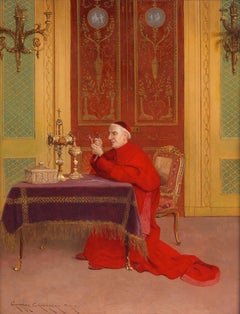
The Connoisseur By Georges Croegaert

The Connoisseur By Georges Croegaert

By Georges Croegaert

Located in New Orleans, LA

Georges Croegaert 1848-1923 Belgian The Connoisseur Signed "Georges Croegaert Paris" (lower right) Oil on panel A Cardinal peers through a magnifying glass at gilded treasures in...

Category

19th Century Academic Figurative Paintings

Materials

Oil, Panel

You May Also Like

Maxwell House Coffee Illustration

Maxwell House Coffee Illustration

By Norman Rockwell

Located in Fort Washington, PA

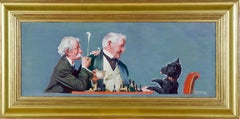
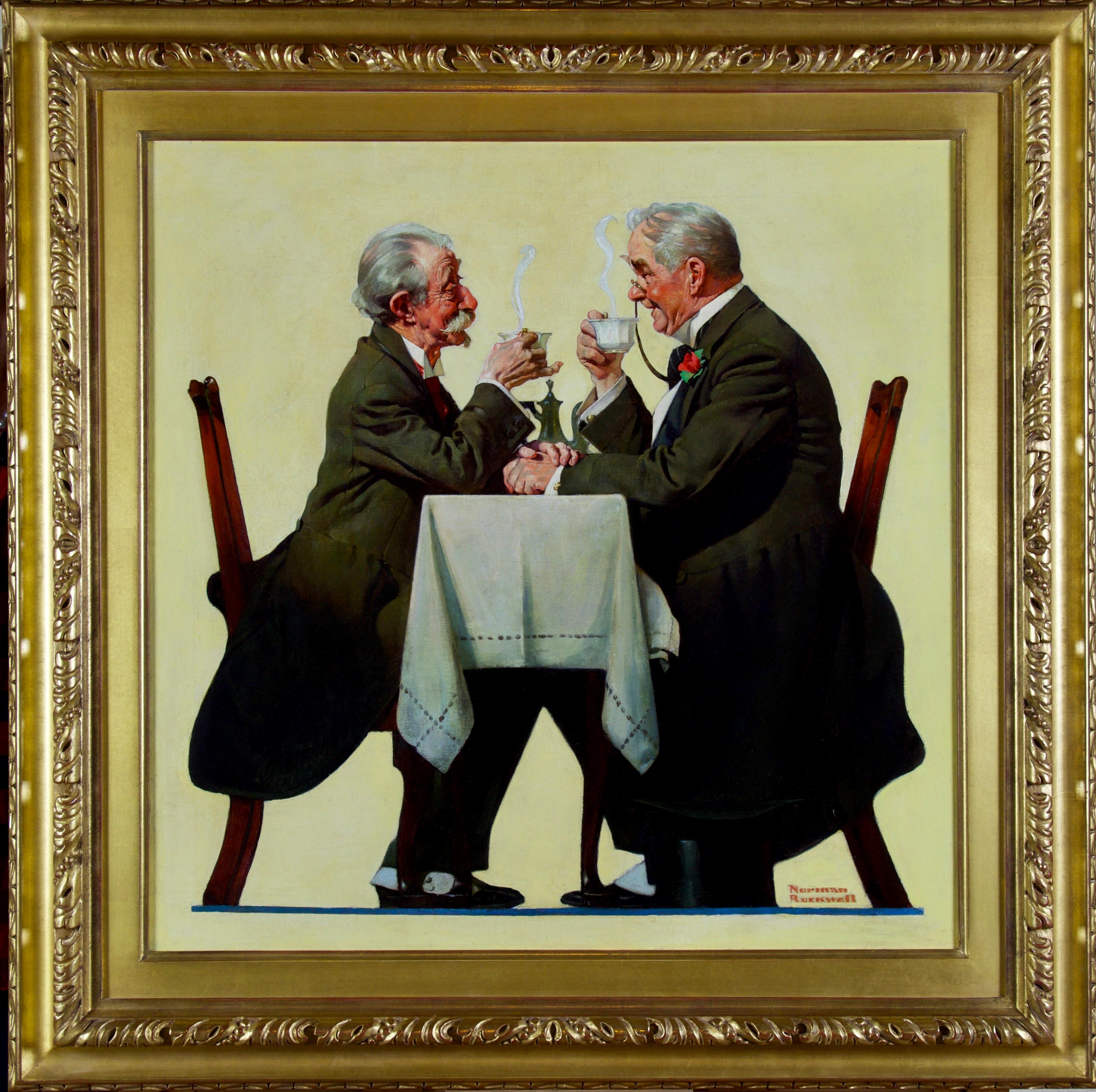
Signed by Artist Lower Right Maxwell House Coffee Illustration Few artists have ever pulled on our nation's heartstrings, particularly in reference to family and generations, as adeptly as Norman Rockwell. From his earliest advertisements to his patriotic World War II subjects, Rockwell's virtuoso was in his ability to capture the essence of American culture and a view of a more innocent time in our country's history. Rockwell states: "I was showing the America I knew and observed to others who might not have noticed. And perhaps, therefore, this is one function of the illustrator. He can show what has become so familiar that it is no longer noticed. The illustrator thus becomes a chronicler of his time." (as quoted in Norman Rockwell: A Definitive Catalogue, Stockbridge, Massachusetts, 1986, p. xii) Recognizing the need for reminiscence from young and old alike, Rockwell effectively captures a timeless scene: Here, two old friends gingerly and jovially play a game of chess, sipping coffee as they wait for their furry friend to make the next move. The work is executed in Rockwell's signature descriptive style of finely drawn, clear realism with a wealth of fascinating detail. In discussing his career, Rockwell commented, "I was showing the America I knew and observed to others who might not have noticed. And perhaps, therefore, this is one function of the illustrator. He can show what has become so familiar that it is no longer noticed. The illustrator thus becomes a chronicler of his time." (as quoted in Norman Rockwell: A Definitive Catalogue, Stockbridge, Massachusetts, 1986, p. xii) Rockwell seemingly utilizes one of his favorite models in the present work-James K. Van Brunt. The artist recalled his initial meeting with Van Brunt in 1924 in New Rochelle, New York: "I remember it was June and it was terribly hot. I was working in my underwear and not getting along too well because my brushes were slippery with perspiration. Suddenly the downstairs door banged and I heard someone come up the stairs treading on each step with a loud, deliberate thump...A tiny old man with a knobby nose, an immense, drooping mustache, and round, heavy-lidded eyes stamped bellicosely into the studio. 'James K. Van Brunt, sir,' he said, saluting me and bowing all at once. 'Five feet two inches tall, sir. The exact height of Napoleon Bonaparte!' And he pushed out his thin little chest, which was encased in a fawn colored vest. 'I have fought the Confederate Army at Antietam, Fredericksburg, and in the Wilderness,' he said. 'I have battled the nations of the Sioux under Dull Knife, Crazy Horse and Sitting Bull. I have fought the Spaniards, sir, in Cuba.' And he rapped his cane on the floor and looked at me very belligerently. Then, having ascertained that I wasn't going to contradict him, he took off his gloves and his wide brimmed hat, laid them on a chair, and patted his mustache. 'This mustache, sir,' he said, 'is eight full inches wide from tip to tip. The ladies, sir, make much of it.' And he winked at me and walked over to my mirror to stare at his mustache." (My Adventures as an Illustrator, New York, 1994, p. 206) Van Brunt was a consummate professional as a model, carefully practicing his poses in the mirror in advance of a session and, at times, inspiring the idea for the cover illustration. Rockwell stated that he used to suggest a cover almost every time they saw one another and referred to the day when Van Brunt first showed up at his studio as "one of the luckiest days of my life." (My Adventures as an Illustrator, p. 206) James K. Van Brunt appeared in ten Post covers by Rockwell, as well as countless other paintings used as advertisements, such as the present work. Given Van Brunt's distinctive visage with his mustache, the editor at the Post, George Horace Lorimer, complained. "Rockwell recalled, 'Mr. Lorimer said to me, 'I think you're using that man too much. Everybody's beginning to notice it. Maybe you'd better stop for a while. That mustache of his is too identifiable.' Rockwell informed Van Brunt of the problem, 'If you take off your mustache I can use you again...Otherwise I just can't.' Two weeks later Van...

Category

1920s Figurative Paintings
Materials

Oil

Couple's 25th Wedding Anniversary

Couple's 25th Wedding Anniversary

By Norman Rockwell

Located in Fort Washington, PA

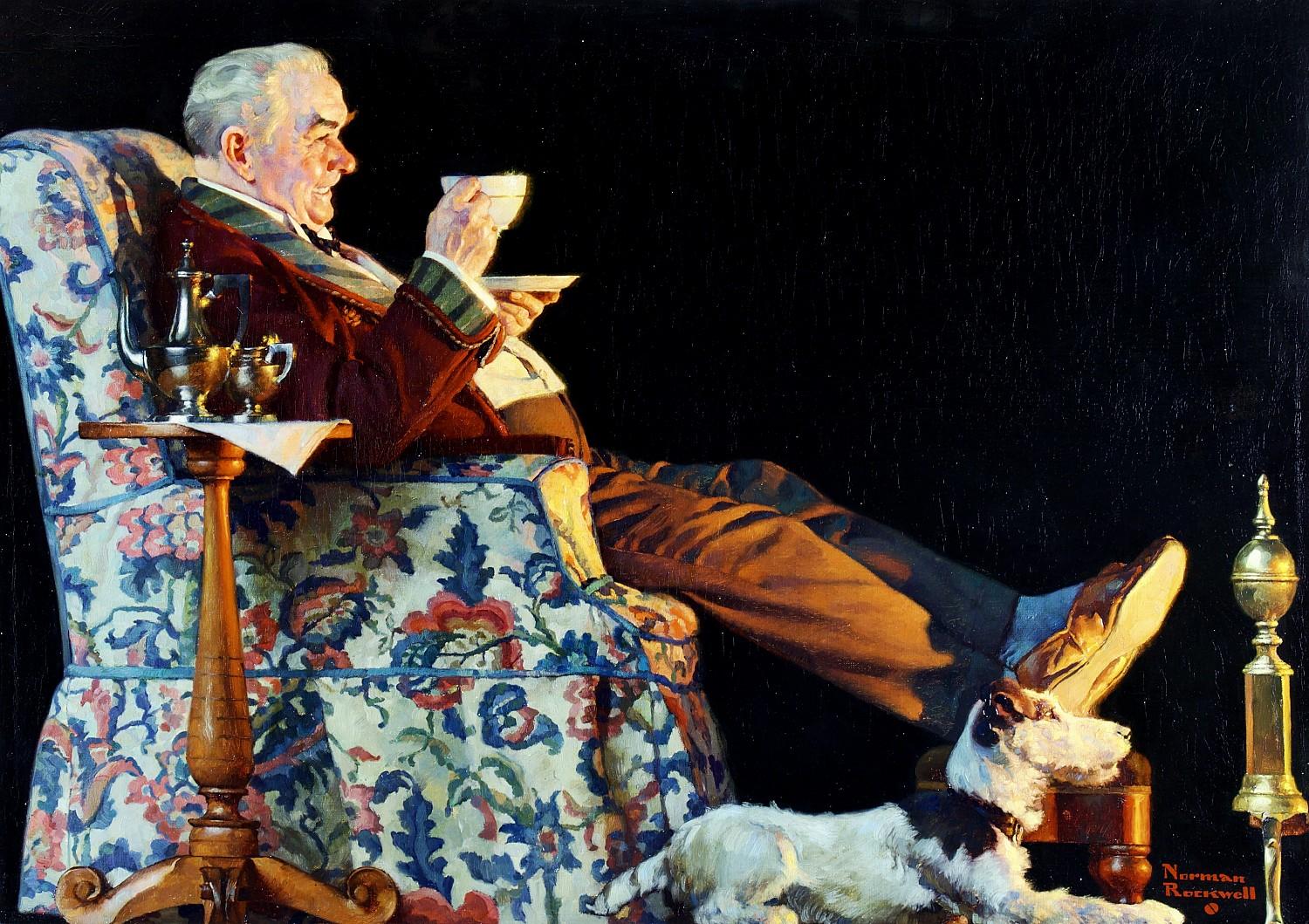
Signed by artist lower left corner. Literature: Laurie Norton Moffatt, Norman Rockwell: A Definitive Catalogue, Stockbridge, Massachusetts, 1986, vol. I, no. A242, p. 362, illustrated Notes: Painted circa 1925. A letter from Norman Rockwell to the Graham family discussing the painting accompanies the lot.In April 1921, Dodge Brothers entered into a burgeoning partnership with the Graham Brothers, an Evansville, Indiana family-run, truck manufacturing business, headed by three siblings, Joseph B., Robert C. and Ray A. Graham. By 1920, their company was building complete truck and bus bodies with various engines which, in April 1921 caught the attention of Dodge’s president, Frederick J. Haynes. Haynes saw the Graham product as a way to get Dodge into the heavy truck business without compromising their own car production. The two companies agreed to have Graham Brothers build trucks solely with Dodge engines and drive trains, and sell them exclusively through Dodge dealerships nationwide. The partnership resulted in a new name, Graham Brothers, Inc., a company relocation to Detroit, and the opening of numerous factories nationwide over the next several years. In 1925, Joseph, Robert and Ray were appointed Dodge directors and executives, and were among the largest stockholders of the company. By 1926, Graham Brothers, Inc. was the largest exclusive truck manufacturer in the world. In later years, the brothers went on to build the Graham-Paige Motors Corporation, further expanding their success in the automotive business.Around 1925, the current painting was commissioned from Normal Rockwell...

Category

1920s Figurative Paintings
Materials

Oil

102 Favorite Paintings by Norman Rockwell

102 Favorite Paintings by Norman Rockwell

Located in Bradenton, FL

102 Favorite Paintings by Norman Rockwell with an introduction by Christopher Finch. Hardcover book with dustjacket published in 1978 by Crown Publishers, Inc. of New York. Printed a...

Category

Vintage 1970s Japanese Books

Materials

Paper

Secrets, oil painting on canvas after Norman Rockwell

Secrets, oil painting on canvas after Norman Rockwell

By Norman Rockwell

Located in Gavere, BE

Secrets, oil painting on canvas after Norman Rockwell The original painting was used for the cover of a 1942 Saturday Evening Post. Hand-painted edition after the Painting of Secre...

Category

1990s Other Art Style Figurative Paintings
Materials

Canvas, Oil