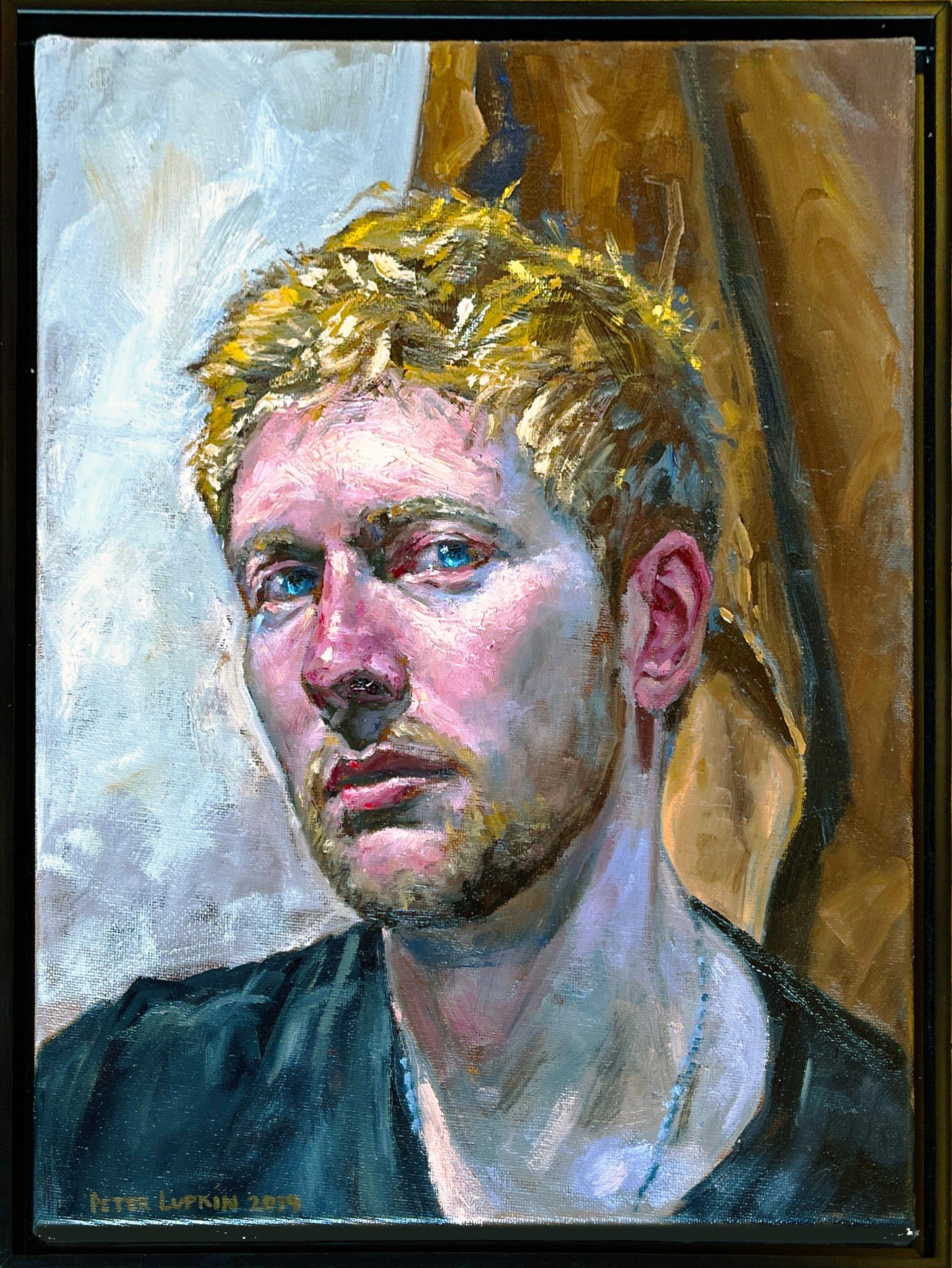
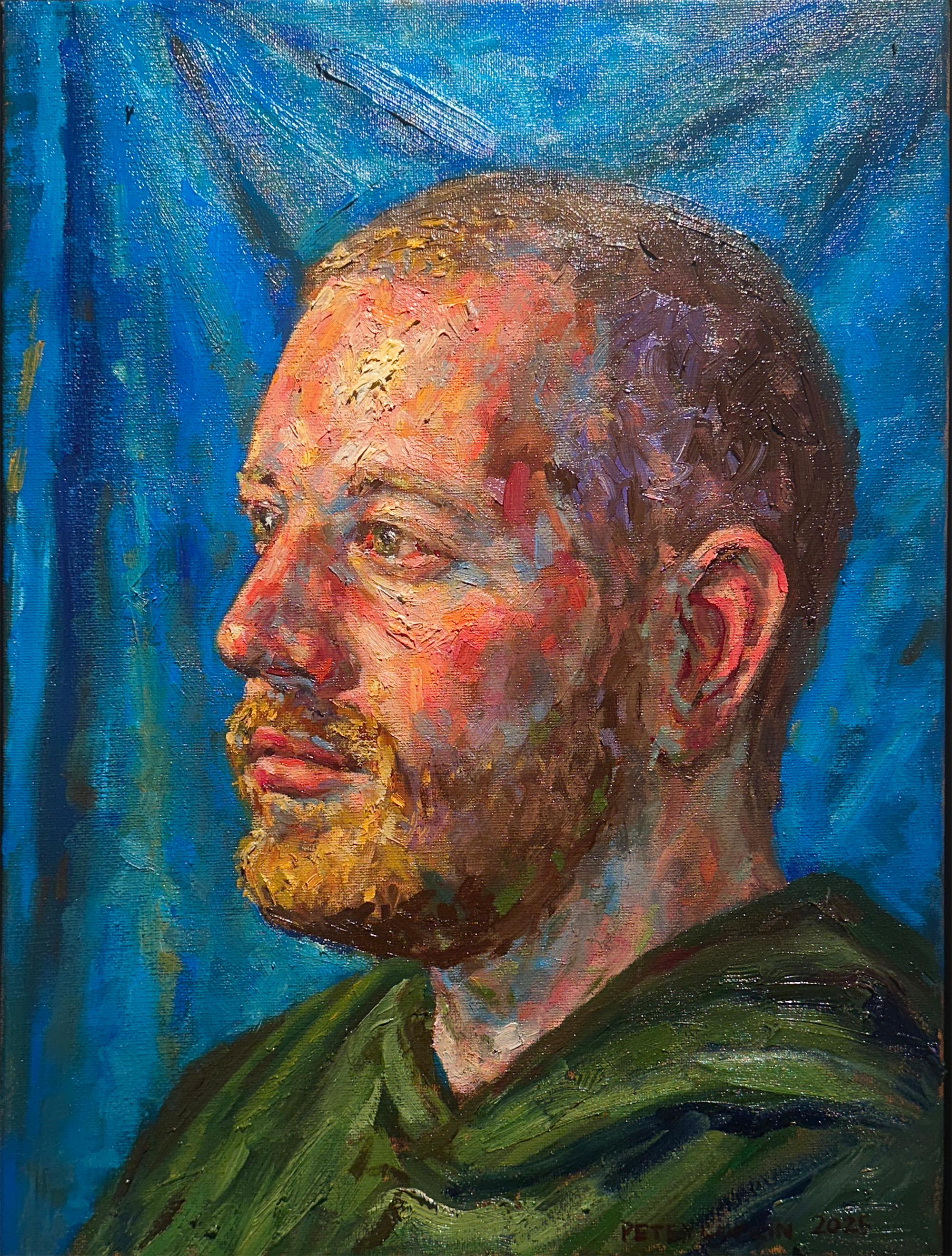
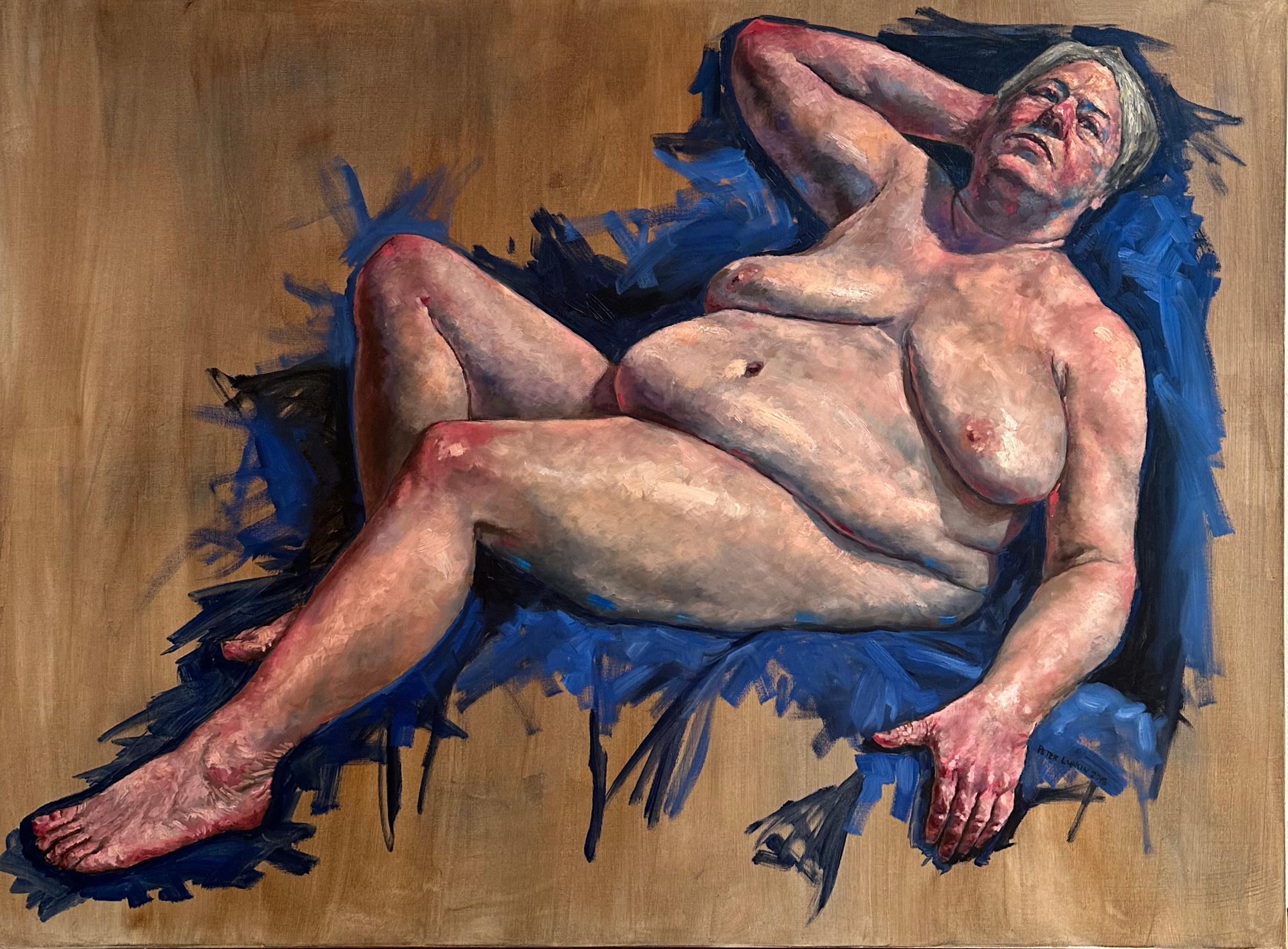
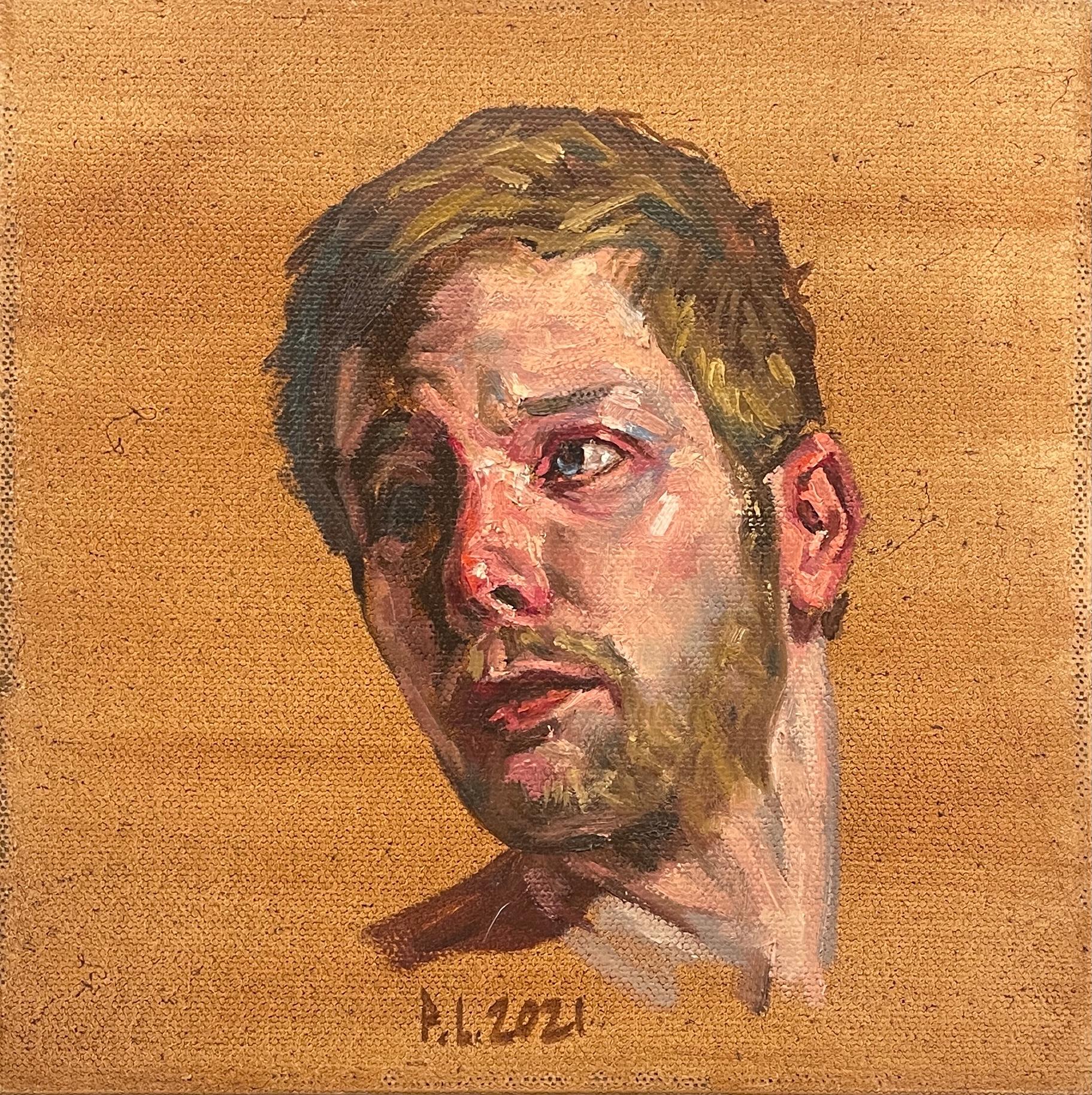
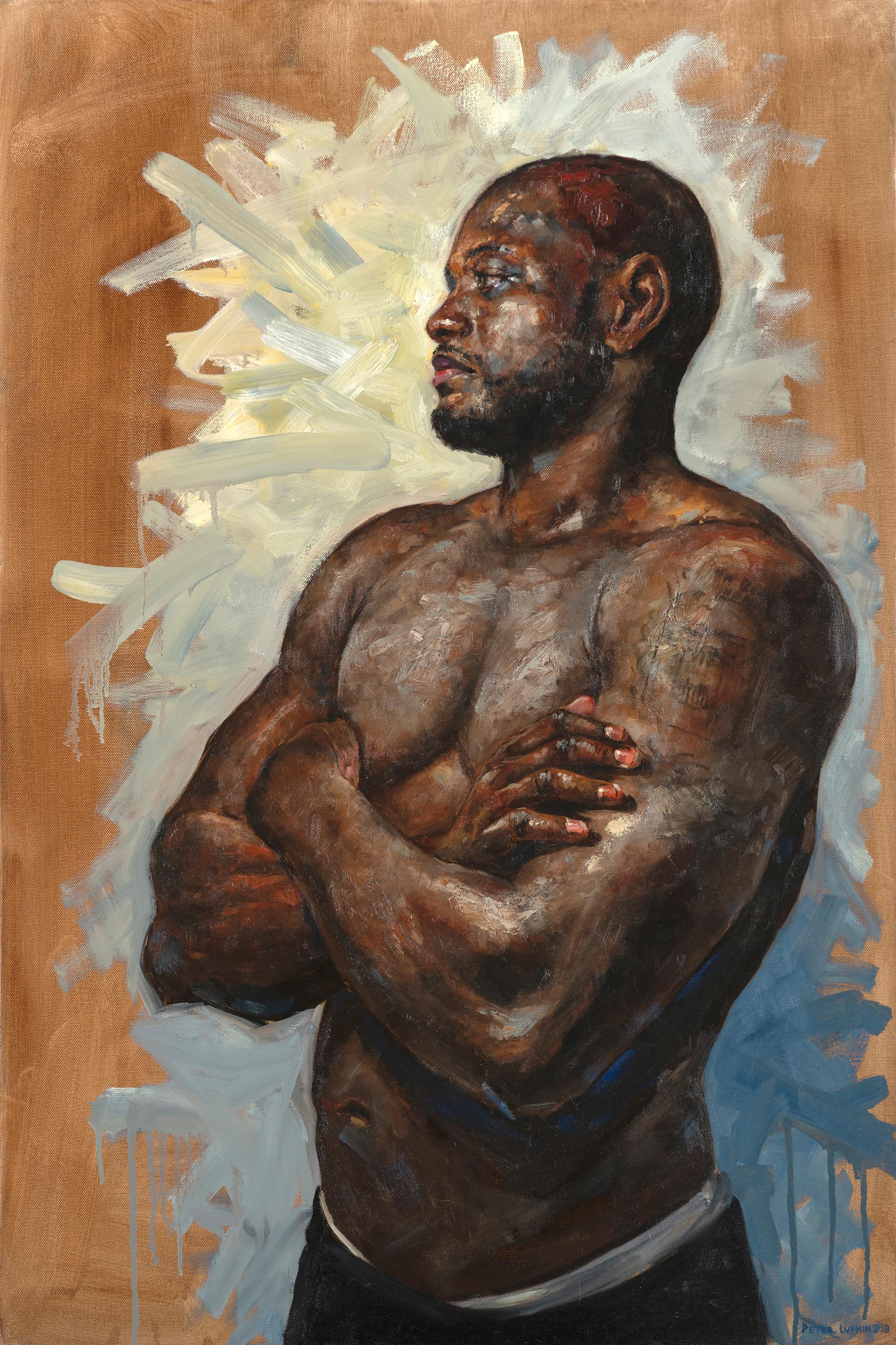
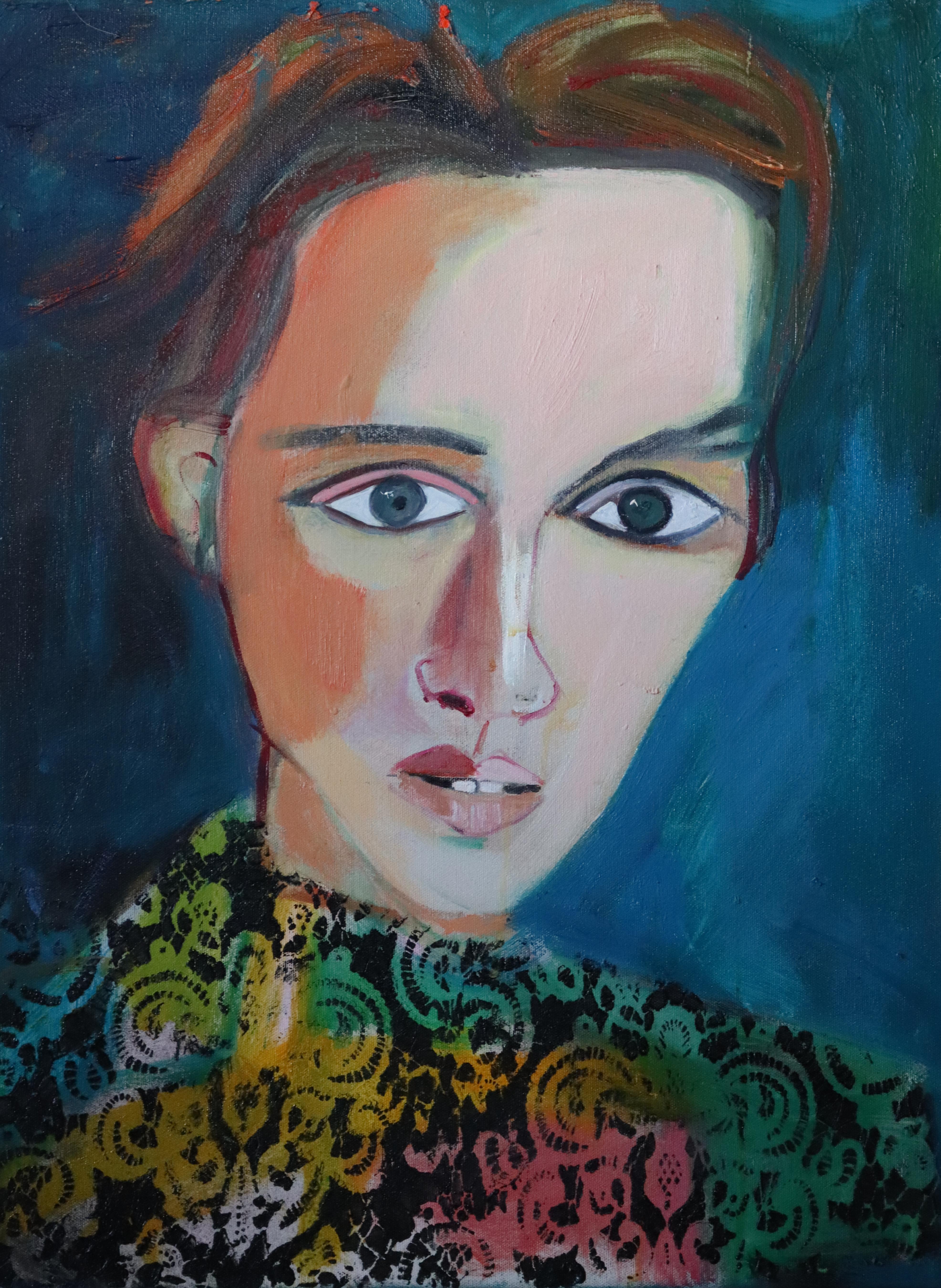
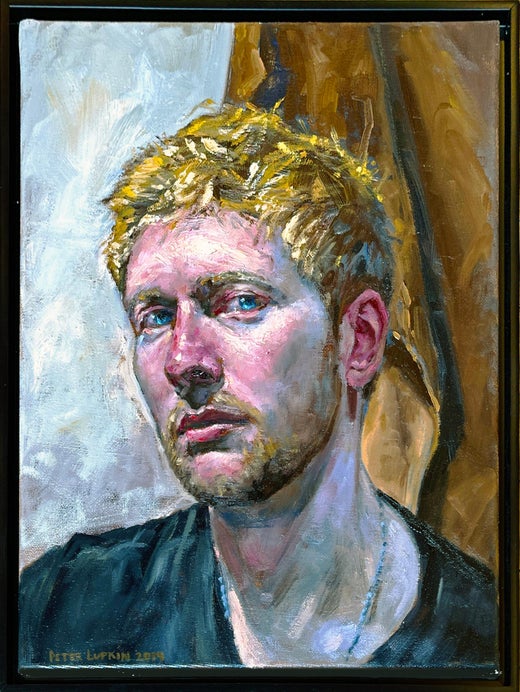
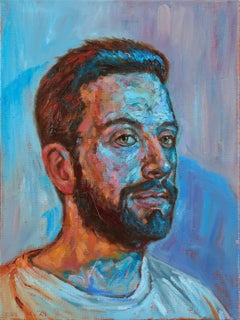
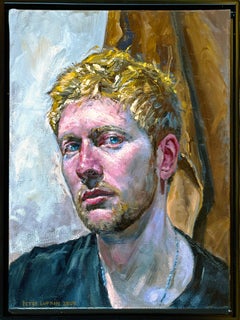
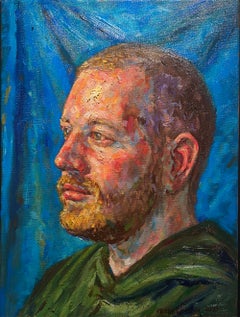
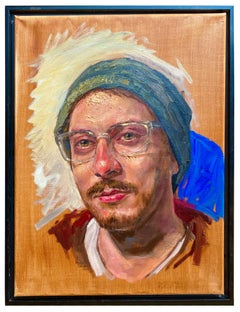
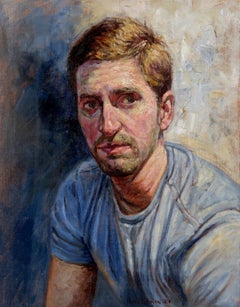
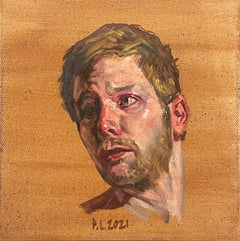
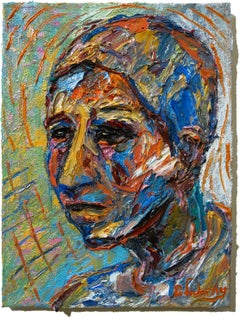
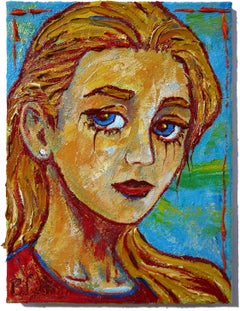
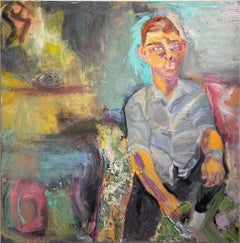
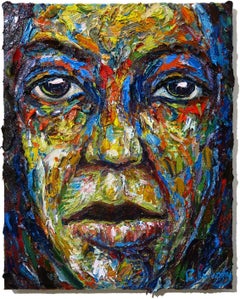
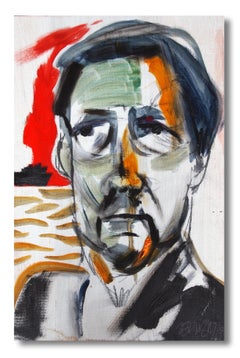
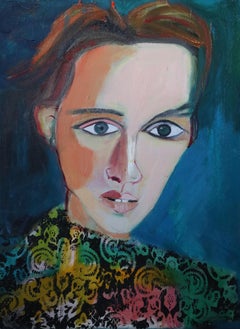
This oil painting captures a direct, intimate presence through bold, emotive color and textured brushwork. Warm reds, pinks, and ochres pulse across the face, interrupted by deep blues that carve shadow and structure, giving the portrait a sense of inner tension and depth. The frontal gaze feels steady yet vulnerable, as if the subject is quietly holding their ground. The softened, monochromatic background amplifies the emotional weight of the figure, allowing the layered paint and subtle shifts in expression to convey resilience, introspection, and lived experience.
Breaking
Introductory Essay for the Exhibition Catalog:
Drifting is a motorsport in which drivers intentionally make their cars slide sideways through a turn by breaking the rear wheels loose from the pavement. Instead of slowing down to regain traction, the driver controls the skid using throttle, steering, and balance. The goal is not speed, but style: the angle of the slide, the smoothness of the motion, the precision of the driving line, and—when two cars drift together—how closely they can maintain their sideways dance without touching. Rooted in Japanese car culture and now practiced worldwide, drifting is a community-driven, largely self-funded pursuit where most participants receive no money. They build, break, and rebuild their own cars for the love of the craft, the thrill of the challenge, and the bonds formed along the way.
It is within this world that Peter Lupkin created Breaking. The exhibition’s title refers not only to the technical moment when a car “breaks” traction and enters the drift, but also to Team Breaking, the Fort Wayne–based drifting group that welcomed Lupkin into their inner circle. Their garages, late-night gatherings, shared meals, and relentless tinkering became the foundation for this body of work. Lupkin did not observe from the sidelines—he immersed himself, riding along in passenger seats, sitting on concrete floors, and absorbing the rhythms and rituals that define this tight-knit community.
This embedded approach aligns with what Lupkin calls “Gonzo Portraiture,” inspired by the immersive journalism of Hunter S. Thompson. Rather than depict drifting from the perspective of an outsider, Lupkin paints from within the ecosystem of Team Breaking. This perspective allows him to capture the side of drifting that rarely appears in media: not the smoke-filled spectacle, but the human moments that shape the culture—the fatigue after a long day at the track, the camaraderie of shared food, the quiet concentration of a late-night repair, or the tenderness of a teammate cradling a stray cat.
Painterly texture plays a central role. Lupkin’s expressive brushwork—charged with electric blues, bruised reds, and luminous flesh tones—echoes the physicality of drifting itself. Helmets recur as symbols of identity, protection, and transformation. Materials from the racetrack—tire dust, chain-link impressions, automotive paint—embed the environment directly into the paintings, reinforcing the connection between subject and setting.
While the content is contemporary, echoes of art history appear throughout. Lupkin’s figures are arranged with the reverence of classical portraiture: hints of halos, triangular compositions, and devotional lighting elevate his subjects beyond stereotype. These are not caricatures of “car guys,” but individuals rendered with dignity, complexity, and empathy.
What emerges is a portrait of drifting not as adrenaline-driven spectacle but as community. Despite the appearance of being a solitary sport, drifting relies on collaboration: friends sourcing parts, hands helping with repairs, collective knowledge freely shared, meals and stories exchanged long into the night. Lupkin captures that interdependence with sincerity and affection.
In Breaking, losing traction becomes a metaphor for the delicate balance between chaos and control, individuality and belonging. Lupkin invites viewers to look past the noise and smoke and see the humanity behind the sport—the friendships, frustrations, humor, and unexpected tenderness that animate the world of Team Breaking.
Ultimately, Breaking is not about cars. It is about people, connection, devotion, and the stories that emerge when individuals gather around a shared passion and build a culture of their own.
Peter Lupkin
@jonxxlewis
oil on canvas
16h x 12w in
17.25h x 13.25w x 2d in (framed)
40.64h x 30.48w cm
PLU090
Peter Lupkin’s artwork is rooted in a sustained inquiry into perception, memory, and the emotional resonance of form. His compositions unfold slowly, favoring nuance over declaration, and reward close looking through subtle variations in surface, rhythm, and spatial balance. Rather than depicting fixed narratives, Lupkin creates open fields of experience where structure and intuition coexist, allowing meaning to remain fluid and personal.
Across his body of work, restraint becomes a generative force. Quiet gestures, layered elements, and carefully calibrated tensions invite contemplation, suggesting states of transition rather than resolution. The work often feels suspended in time—hovering between presence and absence—encouraging viewers to project their own memories and associations into the visual space. In this way, Lupkin’s art functions less as an object to be read and more as an encounter to be felt, emphasizing attentiveness, stillness, and the power of subtle transformation.