Want more images or videos?
Request additional images or videos from the seller
1 of 10

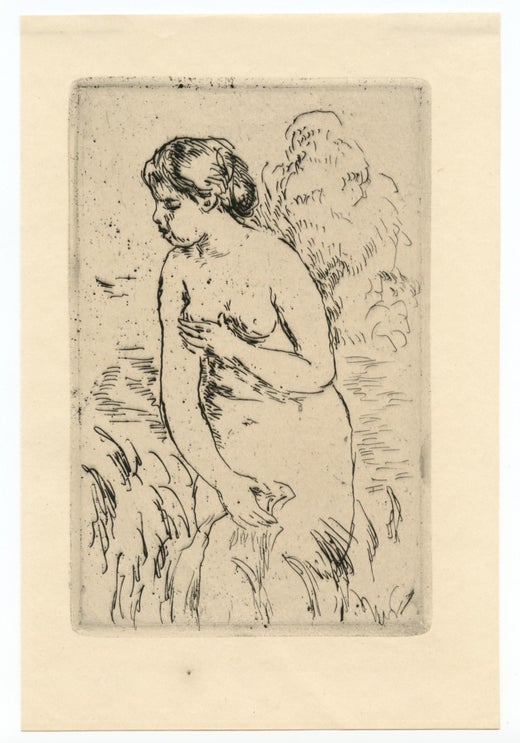
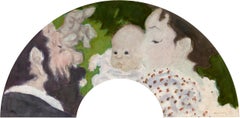
Pierre-Auguste Renoir
Portrait De Coco Et Fleurs By Pierre-Auguste Renoir

Circa 1905

$985,000List Price

You May Also Like

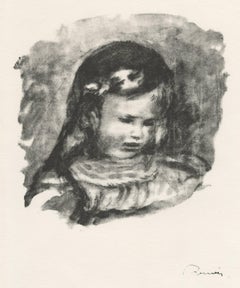
Claude Renoir, la Tete Baisee (Claude Renoir, Head Lowered)

Claude Renoir, la Tete Baisee (Claude Renoir, Head Lowered)

By Pierre-Auguste Renoir

Located in Fairlawn, OH

Claude Renoir, la Tete Baisee (Claude Renoir, Head Lowered) Lithograph, 1904 Edition 1,000, this one of 950 on wove paper with the stamp signature (there were also 50 impressions pri...

Category

Early 1900s Impressionist Figurative Prints

Materials

Lithograph

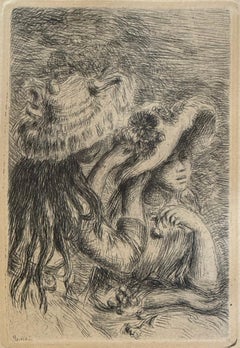
“Le Chapeau Epingle”

Pierre-Auguste Renoir“Le Chapeau Epingle”, 1884

$1,560Sale Price|20% Off

H 4.75 in W 3.25 in D 2 in

“Le Chapeau Epingle”

By Pierre-Auguste Renoir

Located in Southampton, NY

Original etching and drypoint on wove paper. This is the third version and the second edition printed in 1921 of Le Chapeau Epingle. Condition is very good...

Category

1880s Impressionist Figurative Prints

Materials

Archival Paper, Etching

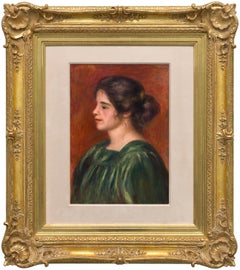
Buste de femme au corsage vert - Impressionist Portrait Painting, 1908

Buste de femme au corsage vert - Impressionist Portrait Painting, 1908

By Pierre-Auguste Renoir

Located in Palm Desert, CA

Rendered with the soft luminosity and intimate charm that define Pierre-Auguste Renoir’s late portraiture, 'Buste de femme au corsage vert' depicts Gabrielle Renard — the artist’s be...

Category

Early 20th Century Impressionist Portrait Paintings

Materials

Canvas, Oil

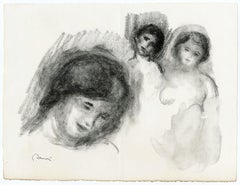
La Pierre aux Trois Croquis

La Pierre aux Trois Croquis

By Pierre-Auguste Renoir

Located in Fairlawn, OH

La Pierre aux Trois Croquis From: Douze lithographies originales de Pierre-Auguste Renoir Publisher: Ambrose Vollard Edition: 950 (signed in the stone) on wove paper as here (see pho...

Category

Early 1900s Impressionist Prints and Multiples

Materials

Lithograph

Pierre-Auguste Renoir, L'Enfant au Biscuit

Pierre-Auguste Renoir, L'Enfant au Biscuit

By Pierre-Auguste Renoir

Located in Chatsworth, CA

This piece is an original lithograph by Pierre-Auguste Renoir, done in 1899. This piece was created for the unpublished "L'album d'estampes de la Galerie Vollard". It is a rare tri...

Category

1890s Impressionist Portrait Prints

Materials

Lithograph

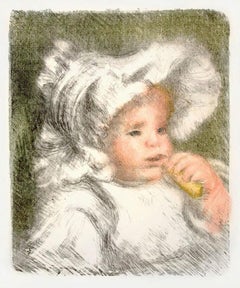
L'efant aux biscuit (Child with Cookie)

L'efant aux biscuit (Child with Cookie)

By Pierre-Auguste Renoir

Located in Palo Alto, CA

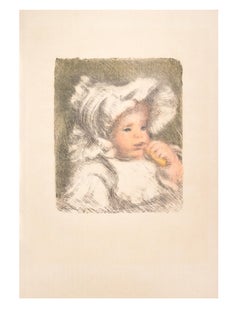
An intimate portrait of his second son, Jean Renoir (1894 – 1979), evokes a childlike sentiment and love that Renoir had for his children. Most likely no more than age 3, Jean is shown here with a cookie, beneath a frilly bonnet characteristic of late 19th century French society. His pink, rosy cheeks are defined with rich, glowing hues that contrast from the pale yellow and grey background in which he rests. Jean was also featured in a family portrait of the Renoirs, titled La Famille de l’Artiste (1896). Created in 1899, this Color Lithograph on Cream Laid Paper is from the edition of 100, from the unpublishedL’Album d’estampes originales de la Galerie Vollard; printed by Auguste Clot, Paris. Catalogue Raisonné: It is fully documented and referenced in the below catalogue raisonnés and texts (copies will be enclosed as added documentation with the invoices that will accompany the final sale of the work): 1. Delteil, Loys. Pierre-Auguste Renoir, l’œuvre grave...

Category

1890s Modern Portrait Prints

Materials

Lithograph

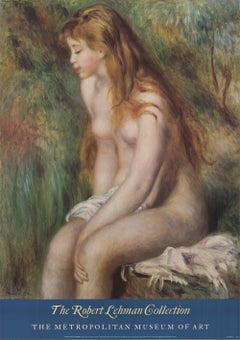
1987 After Pierre-Auguste Renoir 'Young Girl bathing' Impressionism Pastel

1987 After Pierre-Auguste Renoir 'Young Girl bathing' Impressionism Pastel

By Pierre-Auguste Renoir

Located in Brooklyn, NY

Paper Size: 34 x 24 inches ( 86.36 x 60.96 cm ) Image Size: 30 x 24 inches ( 76.2 x 60.96 cm ) Framed: No Condition: B: Very Good Condition, with signs of handling or age Addit...

Category

1980s Prints and Multiples

Materials

Offset

Trois Esquisses de maternite (Three Studies of Maternity)

Trois Esquisses de maternite (Three Studies of Maternity)

By Pierre Auguste Renoir

Located in Fairlawn, OH

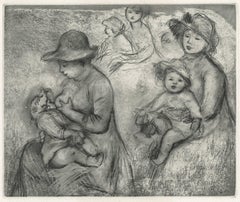
After Pierre Auguste Renoir (1841-1919) Trois Esquisses de maternite (Three Studies of Maternity) Heliogravure with etching on velin paper, 1893 Unsigned as issued Edition 1000, ther...

Category

1890s Impressionist Figurative Prints

Materials

Etching

Pierre-Auguste Renoir "Buste de femme au corsage vert"

Pierre-Auguste Renoir "Buste de femme au corsage vert"

By Pierre Auguste Renoir

Located in Los Angeles, CA

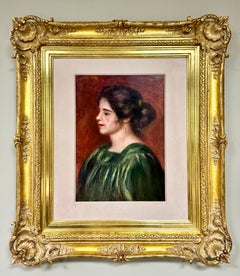
Pierre-Auguste Renoir 1841-1919 (France) "Buste de femme au corsage vert" (Gabrielle). 1908 Oil on canvas Size 49.30 x 35.30 cm (19 x 14 in.) Framed 33.75 x 30 x 2.75" Signed upp...

Category

Early 19th Century Impressionist Portrait Paintings

Materials

Canvas, Oil

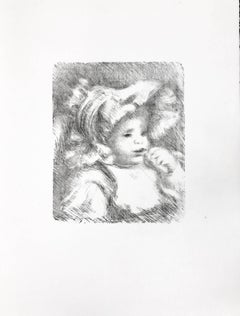
L'Enfant au Biscuit (Jean Renoir)  - Lithograph by Pierre Auguste Renoir - 1899

L'Enfant au Biscuit (Jean Renoir) - Lithograph by Pierre Auguste Renoir - 1899

By Pierre Auguste Renoir

Located in Roma, IT

Edition of 100 prints, not signed. One of the most celebrated graphic works of Renoir, showing his son, the future Director Jean Renoir. Belogs to the suite “L’Album d’estampes orig...

Category

1890s Impressionist Figurative Prints

Materials

Lithograph

More From This Seller

View All
Femme au corsage blanc, Jeanne Samary by Pierre-Auguste Renoir

Femme au corsage blanc, Jeanne Samary by Pierre-Auguste Renoir

By Pierre-Auguste Renoir

Located in New Orleans, LA

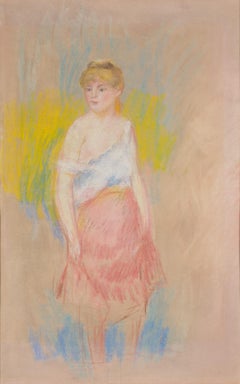
Pierre-Auguste Renoir 1841-1919 French Femme au corsage blanc, Jeanne Samary (Woman in a white blouse, Jeanne Samary Initialed "AR" (lower right) Pastel on paper Among Renoir's most famous works are those that capture the ladies of his inner circle in his signature style. This vibrant pastel from 1879 depicts the young Jeanne Samary, Renoir’s favorite subject and most important muse at the height of his career. Compared to his 4,000 paintings, the artist made exceptionally few pastels—only about 150 total—making this luminous work an extraordinary Renoir rarity. Samary was one of the most captivating figures of late 19th-century Paris. An iconic actress at the Comédie-Française, her fame rivaled that of the great Sarah Bernhardt. Beginning in 1876, Renoir created dozens of portraits of Samary, and she also appeared in all three of the artist’s most important paintings from this pivotal period—Bal du moulin de la Galette (1876), La balançoire (1876) and The Luncheon of the Boating Party (1880–81). Renoir’s close friend and biographer, Georges Rivière, noted that “no portrait ever gave Renoir greater satisfaction than the ones he made of Samary.” This magnificent pastel perfectly embodies this bond between Renoir and Samary. Vivid and spontaneous, the work captures an intimate moment, with Samary’s blouse delicately falling over her shoulder. Renoir typically reserved pastel for his portraits of friends and family, as it allowed him to capture their true essence with speed and ease. The year this pastel was created, 1879, was also one of the most important years of Renoir’s career. He entered the prestigious Salon of 1879, where four of his portraits were accepted, including a full-length masterpiece of Jeanne Samary. This pastel stands as a testament to this pivotal chapter for Renoir, portraying the muse who shaped his groundbreaking vision. Renoir’s portraits of Jeanne Samary are exceptionally scarce, with most already held in prestigious museum collections, including the State Hermitage Museum in St. Petersburg and the National Gallery of Art in Washington, D.C. Similar pastels of Samary have commanded millions at auction—among some of the highest prices for Renoir’s works on paper. Importantly, the artist’s pastels are getting recent museum attention, with the major 2025-2026 exhibition organized by the Musée d’Orsay and the Morgan Library, Renoir Drawings...

Category

19th Century Impressionist Figurative Drawings and Watercolors

Materials

Paper, Pastel

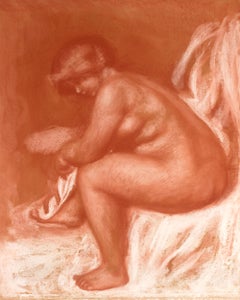
Après le bain (After the bath)

Après le bain (After the bath)

By Pierre Auguste Renoir

Located in New Orleans, LA

For Pierre-Auguste Renoir, Impressionism's pre-eminent figure painter, depicting the nude was an exercise in bringing the canvas to life. He once said, “I look at a nude, I see myriads of minuscule shades. I have to find those which will make the flesh on my canvas come to life and resonate.” This compelling portrait by Renoir entitled Après le bain presents the nude figure of a woman in a serene, private moment, absorbed in the task of drying herself after a bath. The artist’s mastery of light and shading is incredible, achieving a sense of vitality in this otherwise ordinary scene. Renoir is celebrated for his figural work, especially his Rubenesque female nudes, however, it was not until the artist was in his forties that he depicted the nude with any frequency. In 1881, Renoir traveled to Italy, where he studied the works of the Renaissance masters and the ancient art of Pompeii and Rome. Upon his return to France, the nude became his favored subject, and he used the motif to combine the spontaneity of Impressionism with the solid modeling of classical painting. Renoir’s medium here, sanguine, a reddish-brown chalk, was used extensively in the Renaissance by Leonardo (who employed it in his sketches for the Last Supper), Michelangelo and Raphael. Its warm hue lends itself well to depicting flesh, and the chalk drawing allows for a greater focus on line, form and texture in a departure from the aspects of color and light that so often preoccupied the Impressionists. Après le bain conveys the impression of arrested motion with perfect naturalness, deftly capturing the moment before the elegant lines of the sitter's form change position. The sitter is almost certainly Gabrielle Renard, the nanny to Renoir’s children and a frequent model for the artist. Gabrielle was the cousin of Renoir’s wife, Aline, and came to Montmartre to work for the family at the age of 16. She developed a strong bond with the family and became a favorite subject for Renoir, appearing in several of his most important works, including his 1911 Gabrielle with a Rose (Musée d'Orsay). When Renoir began to suffer from severe rheumatoid arthritis that would eventually leave him unable to walk and scarcely able to grasp a paintbrush, it was Gabrielle that would assist the artist by positioning the paintbrush between his crippled fingers. Born in Limoges, France in 1841, Renoir began his career as an apprentice to a painter of porcelain wares. He later moved to Paris at the age of 21, enrolling at the prestigious École des Beaux-Arts. It was here, while studying under Charles Gleyre, that Renoir attained a tremendous appreciation for the academic style of painting, a quality that would last throughout his career. This was also when he met Claude Monet and several other classmates, with whom he would later form the Impressionists. Working closely with Monet, Renoir began experimenting with the portrayal of light and its effect on his canvases. The youngest member of the Impressionist movement, an astute Renoir recognized how a subject was constantly changing due to the dynamic effects of light on color. Relying heavily upon his academic training that focused on composition, lines and descriptive details, Renoir distinguished himself among his contemporaries. His intuitive use of color and expansive brushstroke, along with acute attention to his subject, have placed him among the finest painters in history. This work is accompanied by a certificate of authenticity and will be included in the forthcoming catalogue raisonné of the work of Pierre-Auguste Renoir from the Wildenstein Plattner Institute. Circa 1898 Canvas: 43 1/2" high x 35 1/2" wide Frame: 57 3/4" high x 49 1/4" wide Provenance: Galerie Durand-Ruel, Paris (acquired from the artist on January 25, 1899) J. Pereire Collection, France (1966) Sam Salz, New York (before 1981) Claus Virch, Paris French Compagny, Inc., New York Larry Silverstein, New York (circa January 1987) Le Clos de Sierne Gallery, Geneva Galerie Heyram, Paris (October 1987) Francis Gross M.S. Rau, New Orleans Literature: B. Schneider, Renoir, Berlin, 1957, p. 95 (illustrated in color, p. 83) M. Gauthier, Renoir, Paris, 1958, p. 83 (illustrated in color; erroneously dated '1916' and titled 'Woman in her toilet') F. Fosca, Renoir, L'homme et son obra, Paris, 1961, p. 280 (illustrated, p. 95; erroneously dated 'about 1890' and titled 'After the Bath...

Category

19th Century Impressionist Nude Paintings

Materials

Canvas, Paper, Chalk

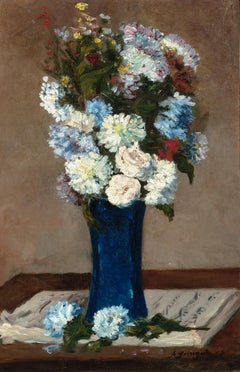
Fleurs Dans Un Vase Avec Partition Musicale By Paul Gauguin

Fleurs Dans Un Vase Avec Partition Musicale By Paul Gauguin

By Paul Gauguin

Located in New Orleans, LA

Paul Gauguin 1848-1903 French Fleurs dans un vase avec partition musicale (Flowers in vase with musical score) Signed “P. Gauguin 74/76” (lower right) Oil on canvas Early works b...

Category

19th Century Post-Impressionist Still-life Paintings

Materials

Oil, Canvas

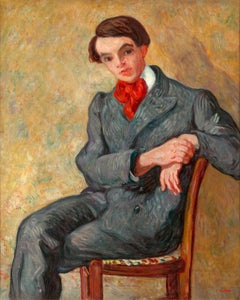
Portrait of Pierre Renoir by Louis Valtat

Portrait of Pierre Renoir by Louis Valtat

By Louis Valtat

Located in New Orleans, LA

Louis Valtat 1869-1952 French Portrait of Pierre Renoir Signed "L. Valtat" (lower right) Oil on canvas This vibrant painting by Louis Valtat depicts the famed Renoir's eldest son...

Category

Early 20th Century Post-Impressionist Portrait Paintings

Materials

Canvas, Oil

La Famille by Pierre Bonnard

La Famille by Pierre Bonnard

By Pierre Bonnard

Located in New Orleans, LA

Pierre Bonnard 1867-1947 French La famille (The Family) Signed "Bonnard" (lower right) Gouache, watercolor and pencil on paper Among Pierre Bonnard’s most unique artworks, this f...

Category

Late 19th Century Post-Impressionist Figurative Paintings

Materials

Paper, Watercolor, Gouache, Pencil