Serge de Vries, Dutch artist
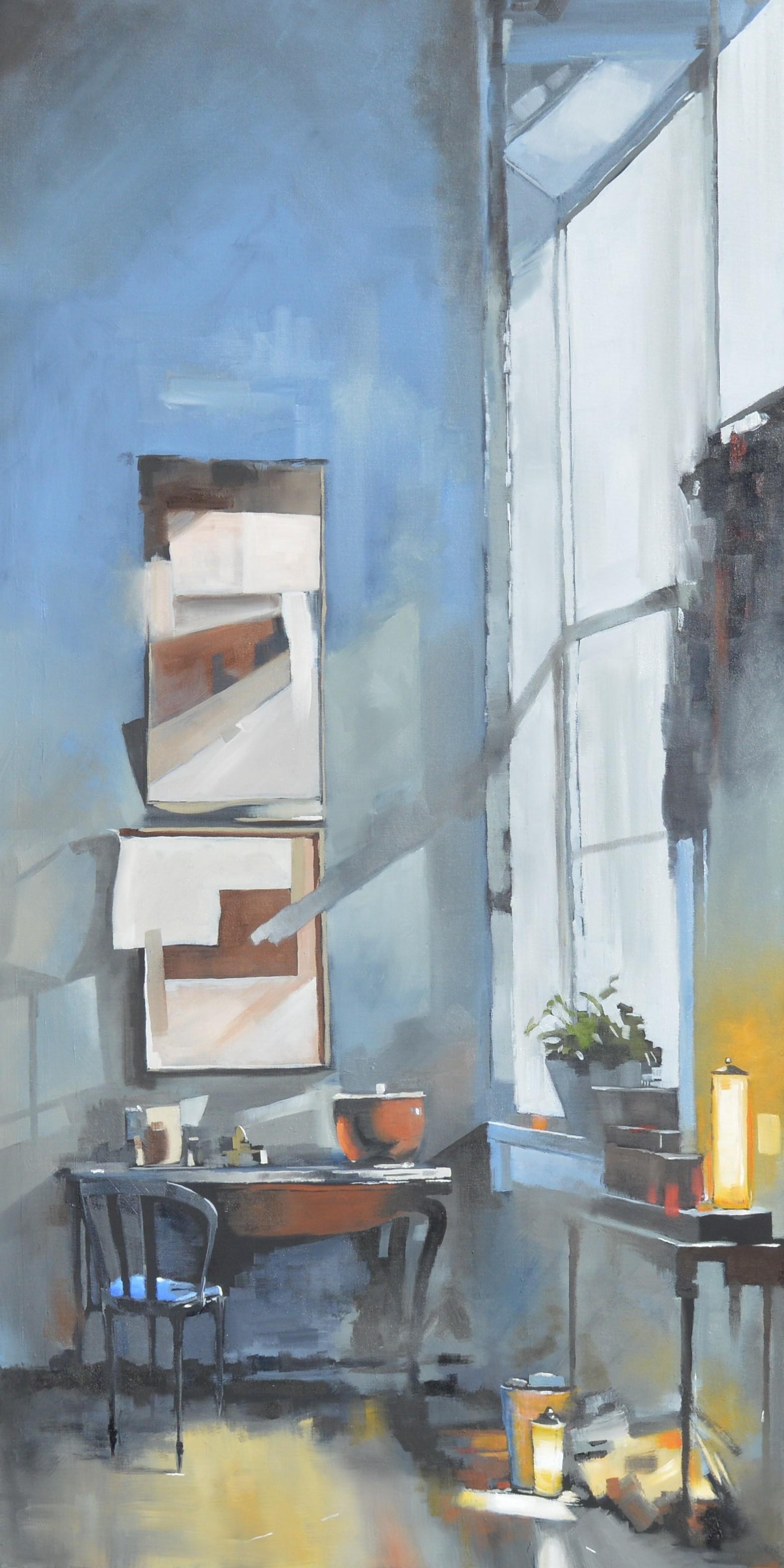
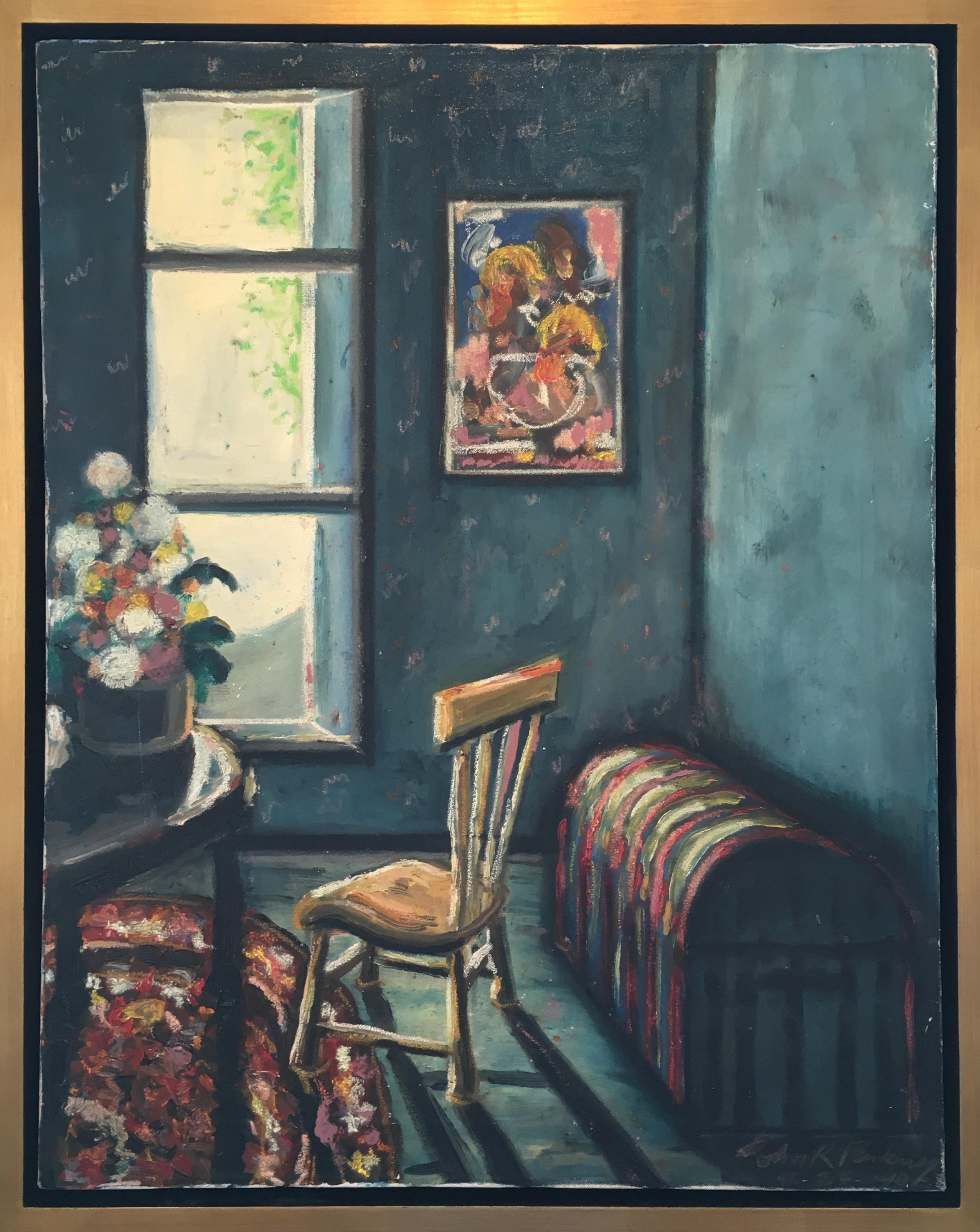
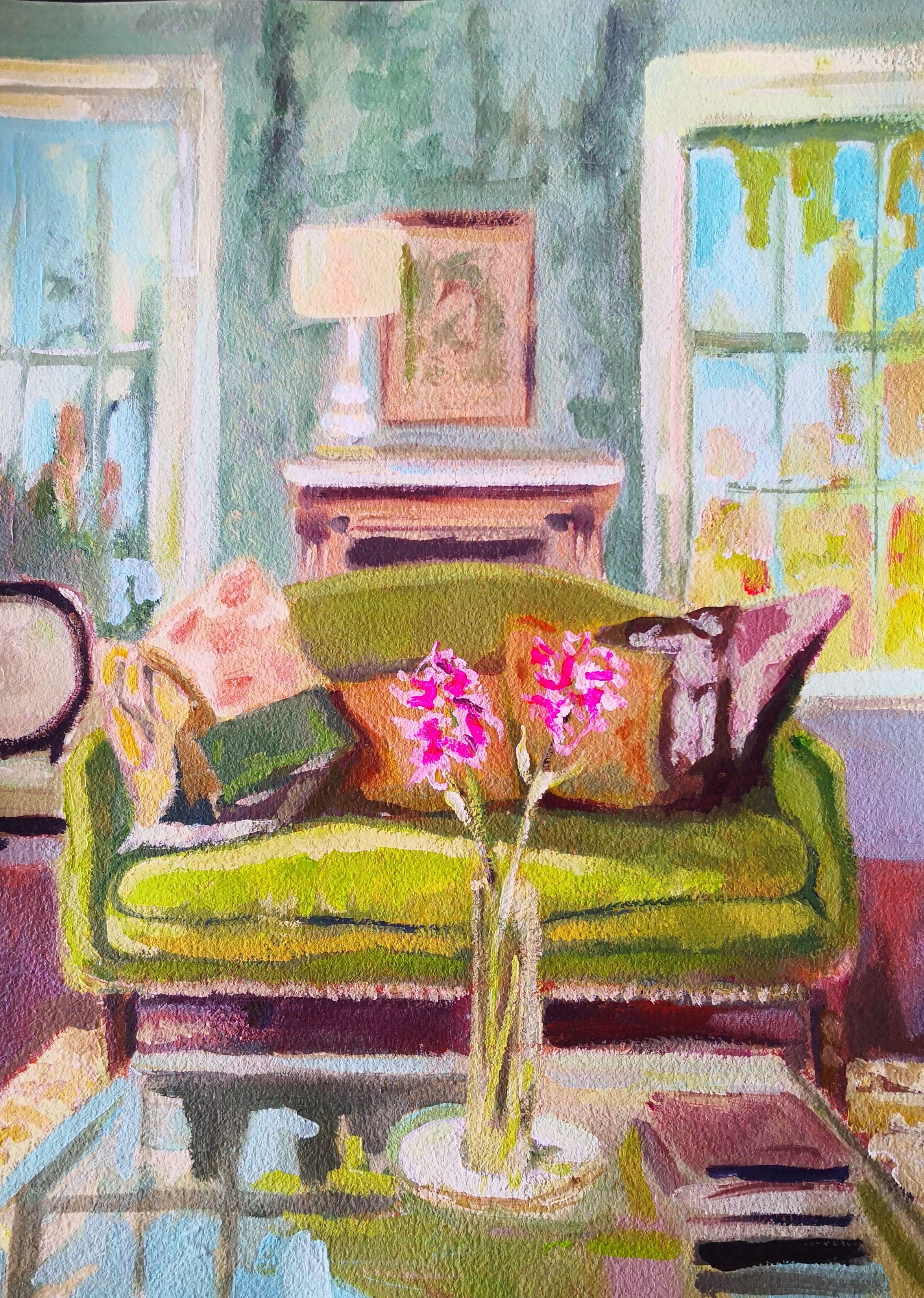
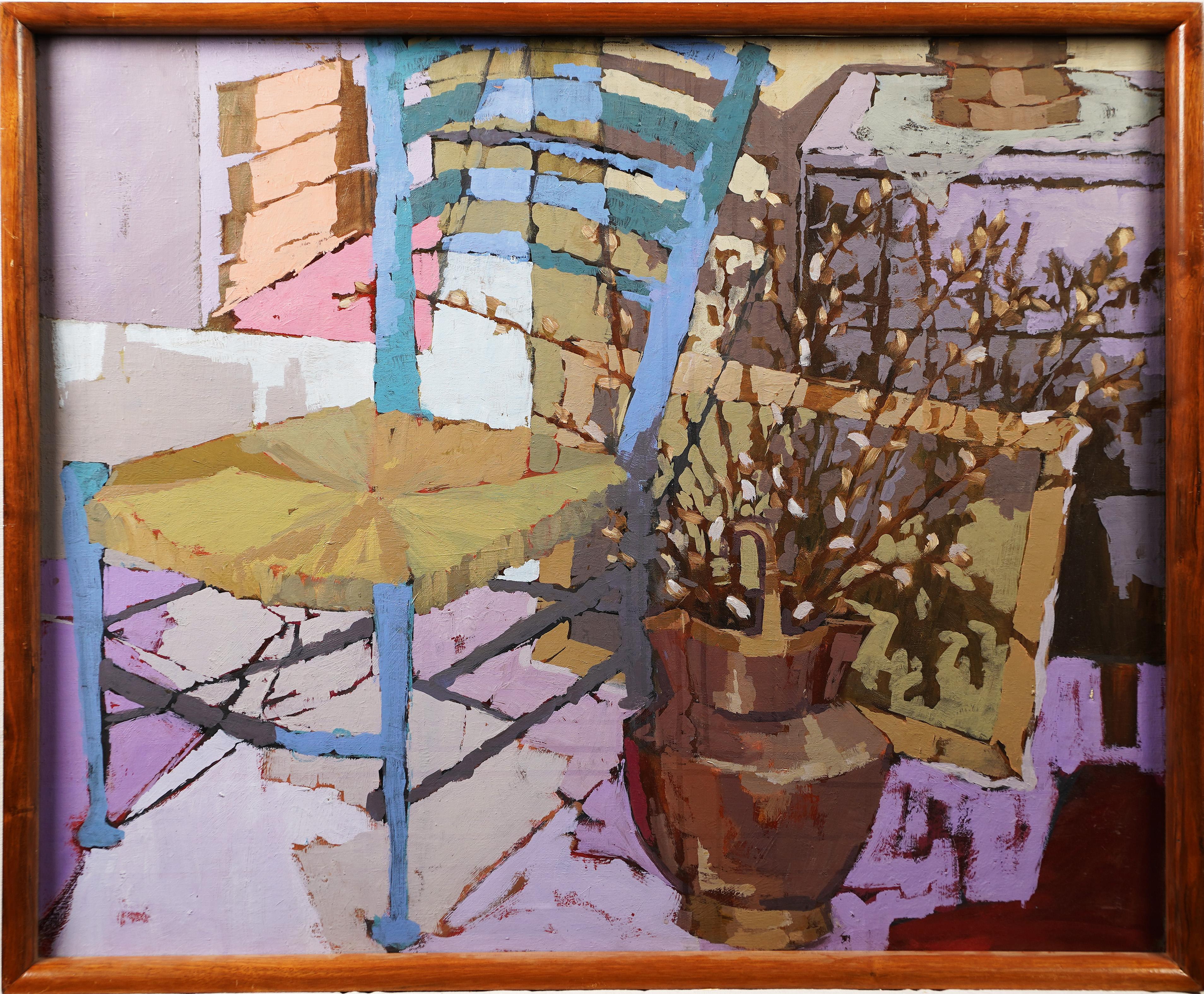
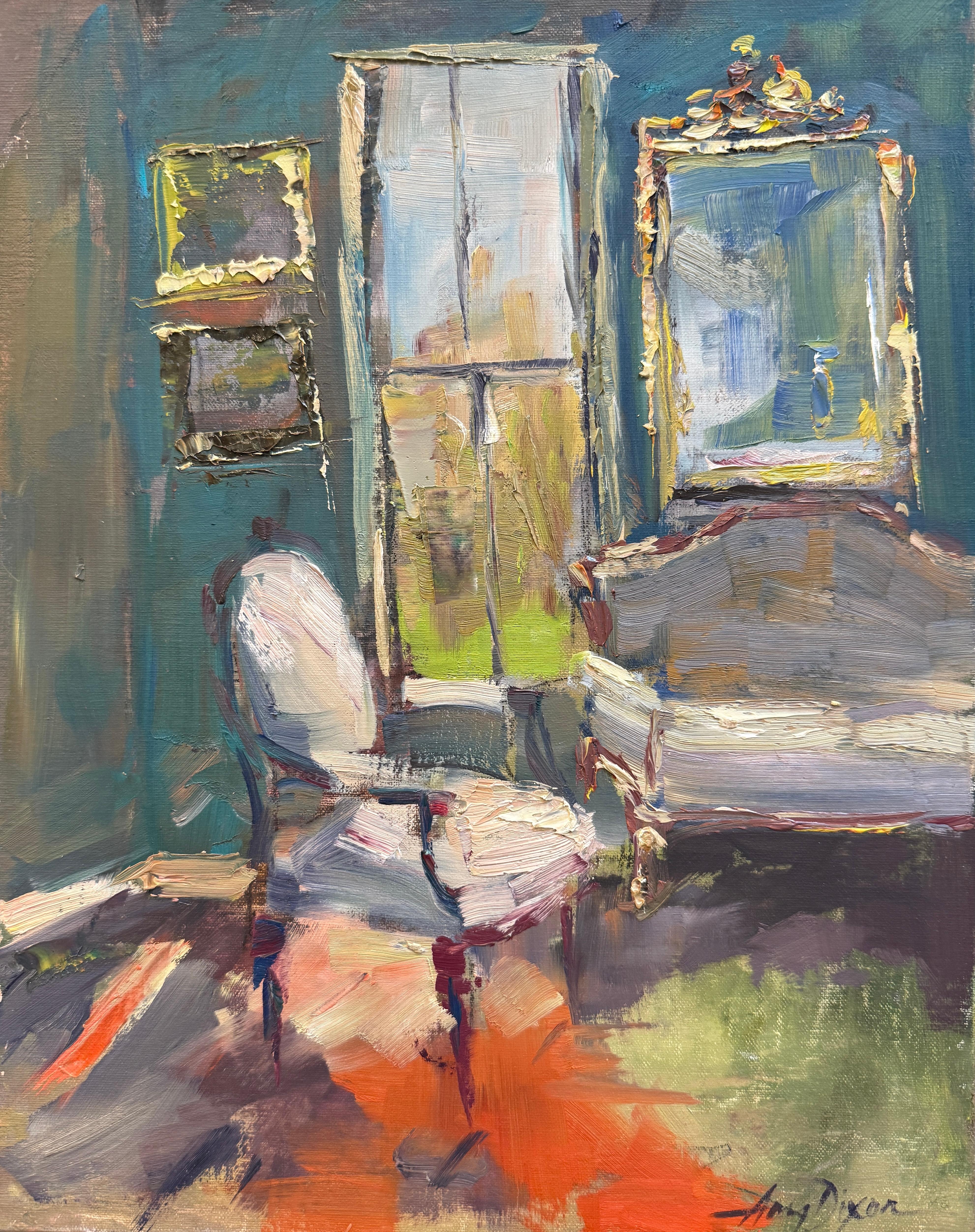
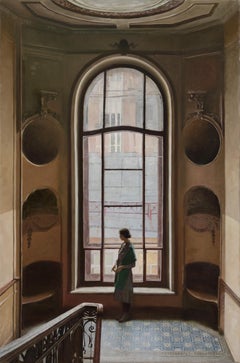
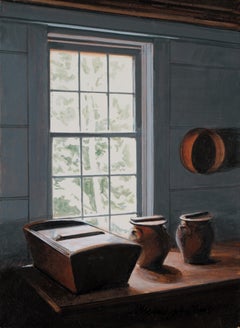
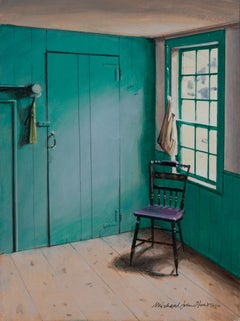
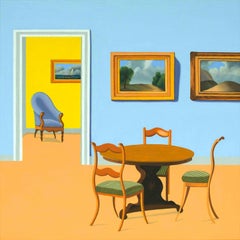
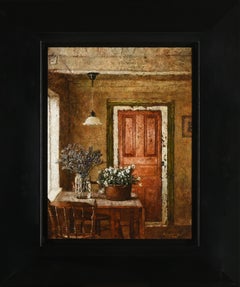
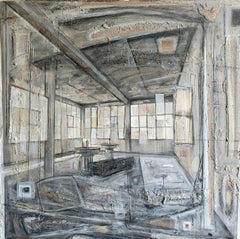
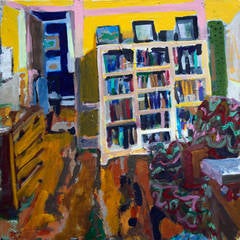
Interior with secretary Desk
90 x 70 cm
Oil on canvas
A jug, a sugar bowl, a tea bag – these are objects that we hold carelessly every day, but Dutch fine painter Serge de Vries invites us to really see them. With full attention, because that is what it is all about.
Serge de Vries, Dutch artist
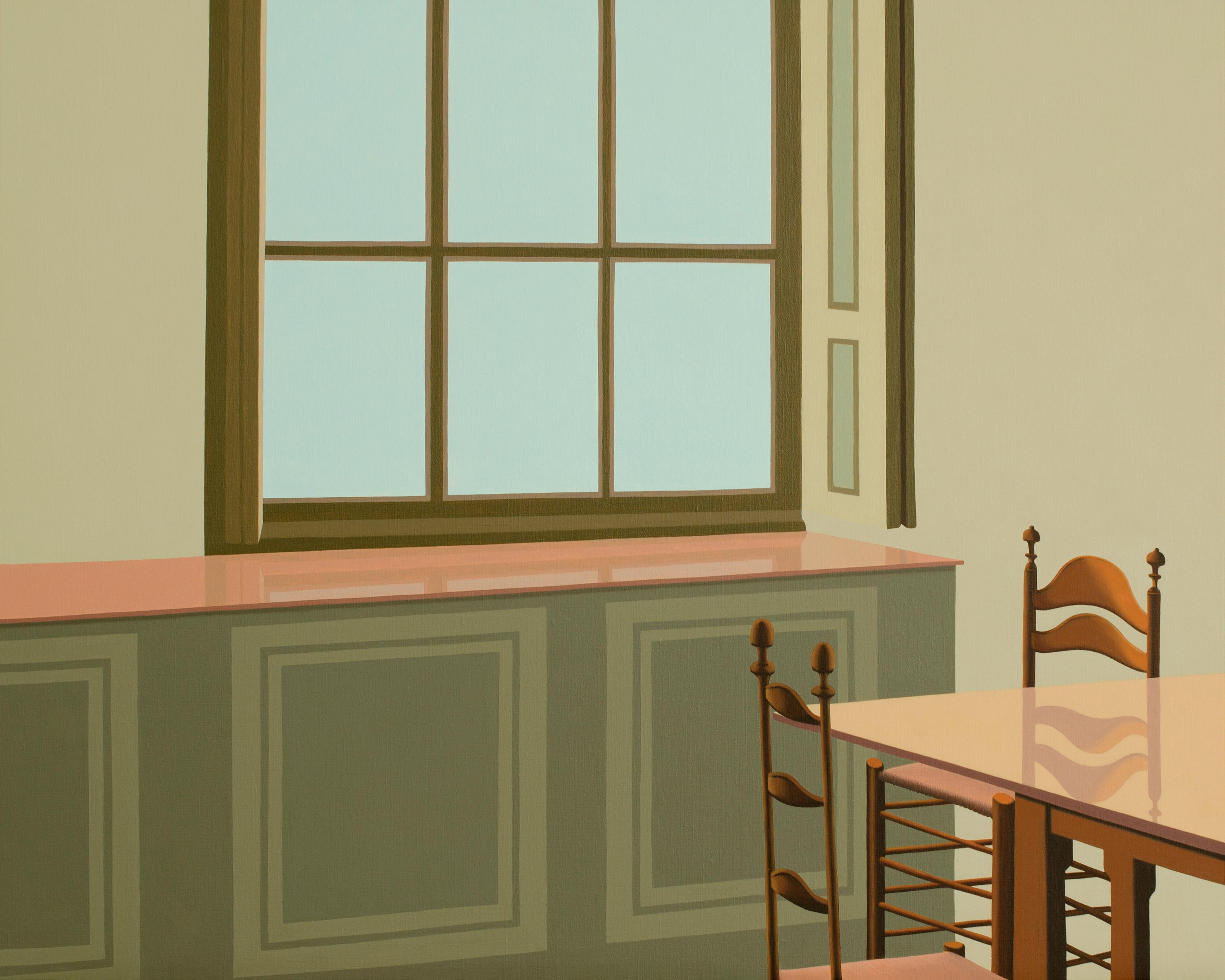
During his studies at the Utrecht art academy in the Netherlands, Serge de Vries was told that he was not allowed to paint ‘too beautifully’. ‘During assessments, I was often criticized: ‘Your work is too aesthetic.” It was the nineties, a time when realism did not prevail at the academy. At the time, abstraction and conceptual art dominated.’ After graduating in 1995, the Apeldoorn artist began to develop his own realistic style. ‘I started with a mix of abstraction and realism. In my abstract paint splashes you could sometimes recognise an object, almost hidden. Gradually I started to work more realistically. Ultimately, I want to depict reality as accurately as possible – that’s my goal.’
Lonely objects
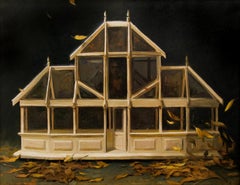
Serge de Vries regularly paints a single object against an empty background, detached from its everyday context. ‘That started as an exercise,’ he explains. ‘I thought: if I want to learn to paint realistically, I’d better start with one thing at a time, one object at a time: an apple, a lemon. That’s how I learned to really paint them.’
Spaces and landscapes
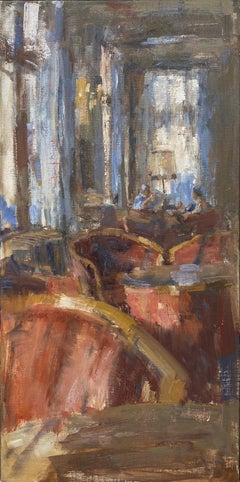
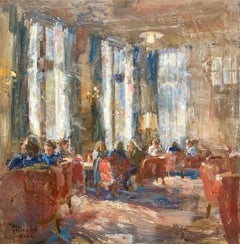
In addition to everyday objects, Serge also paints spaces and landscapes. ‘I’m increasingly fascinated by atmosphere. It’s not just the incidence of light that fascinates me, but also the question: what would it be like in that place? Is it warm, cold, pleasant or uncomfortable? I want to capture that feeling.’ Yet he remains true to his love of simplicity. ‘So much can happen in a single object.’
Playing with light and focus
Serge de Vries knows exactly how to bring a painted object or interior to life. An important element in this is the highlight, the point where the light is reflected most strongly. ‘The highlight is the whitest part of the painting. I paint that last; it is the finishing touch.’ He also chooses to ‘focus’ certain parts of the painting, like a camera does. ‘I make less important parts softer and vaguer, while I work out the most important parts sharply.’
Complementary colours
‘My colour palette is very simple: white and the primary colours red, yellow and blue. It continues to amaze me that you can mix all the others from those three colours. Isn’t that amazing?’ Before Serge starts painting, he first mixes the most important colours of the painting; those shapes are shortcuts. He uses these shortcuts to mix the intermediate colours. ‘The colour of the object itself is purer than that of the shadow and the background, which I weaken by adding a complementary colour.’ The alternation of contrasting colours and almost pure colours creates depth.
Precision and looseness
Another technique that Serge de Vries uses is the alternation between precision and looseness. ‘If I were to paint an entire painting loosely, that wouldn’t work. But I do apply this technique to a fragment or section. The alternation between precise and loose brushstrokes gives the painting liveliness and playfulness. ‘They are my signature.’
Real perfection
‘Sometimes I think: if I tried less hard, people probably wouldn’t even notice,’ he says. ‘But I don’t. What matters to me is finding the right tone, mixing the right colours and achieving the right proportions, so that it looks just like the real thing: I have to believe in what I see on the canvas.’ And so that the viewer looks at the everyday world with new eyes. ‘And with attention, because that’s what it’s all about.’