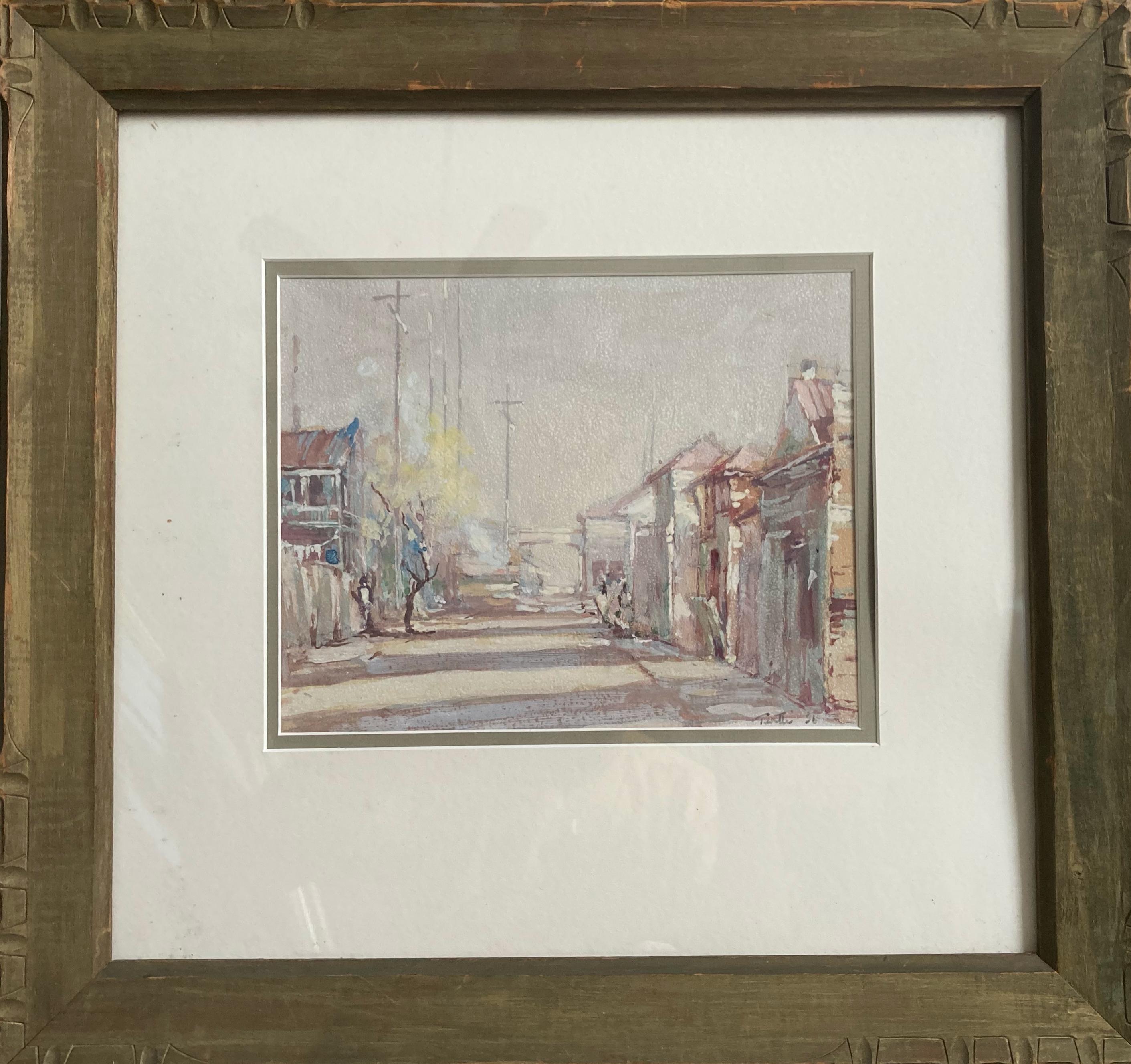
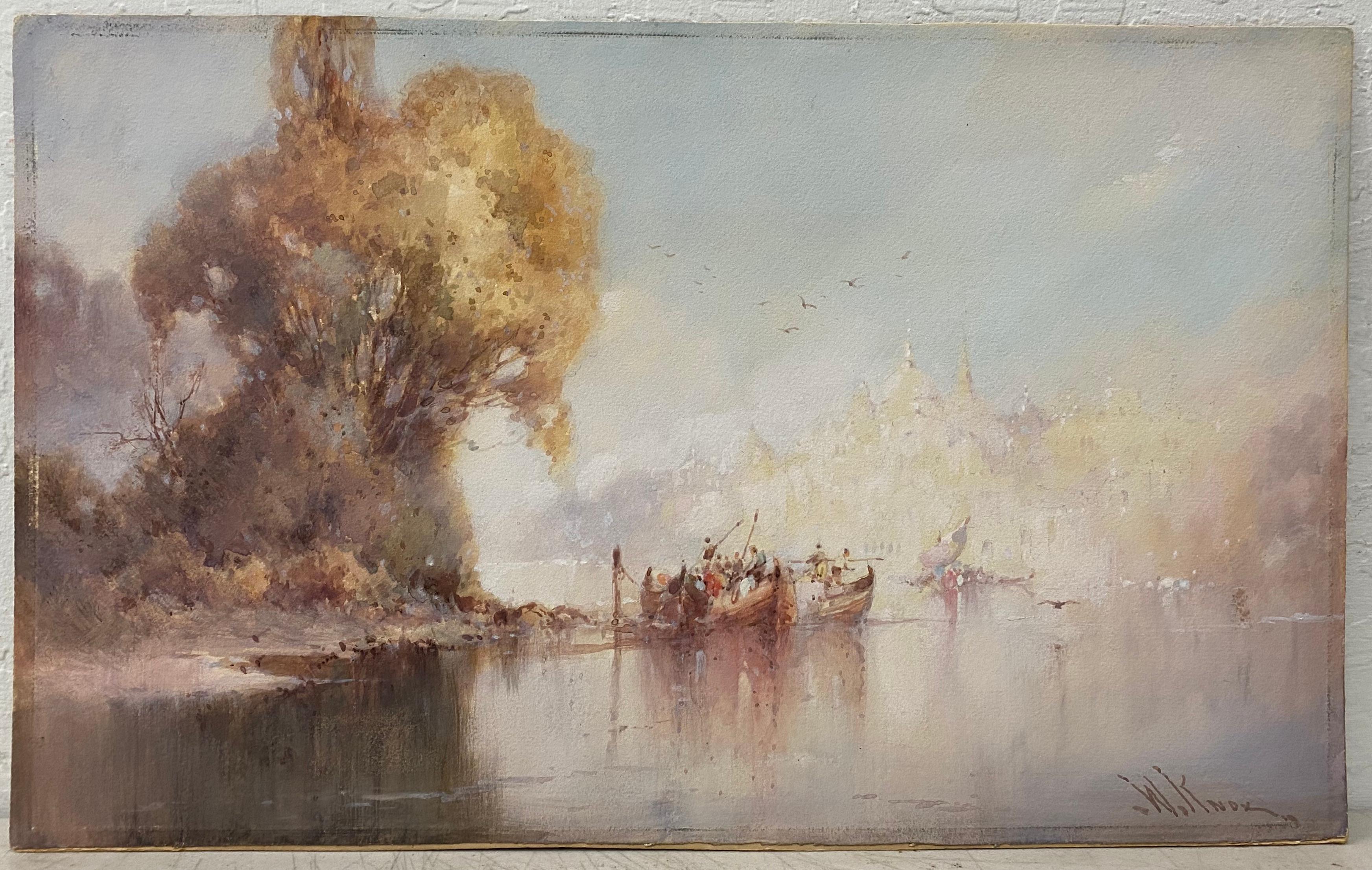
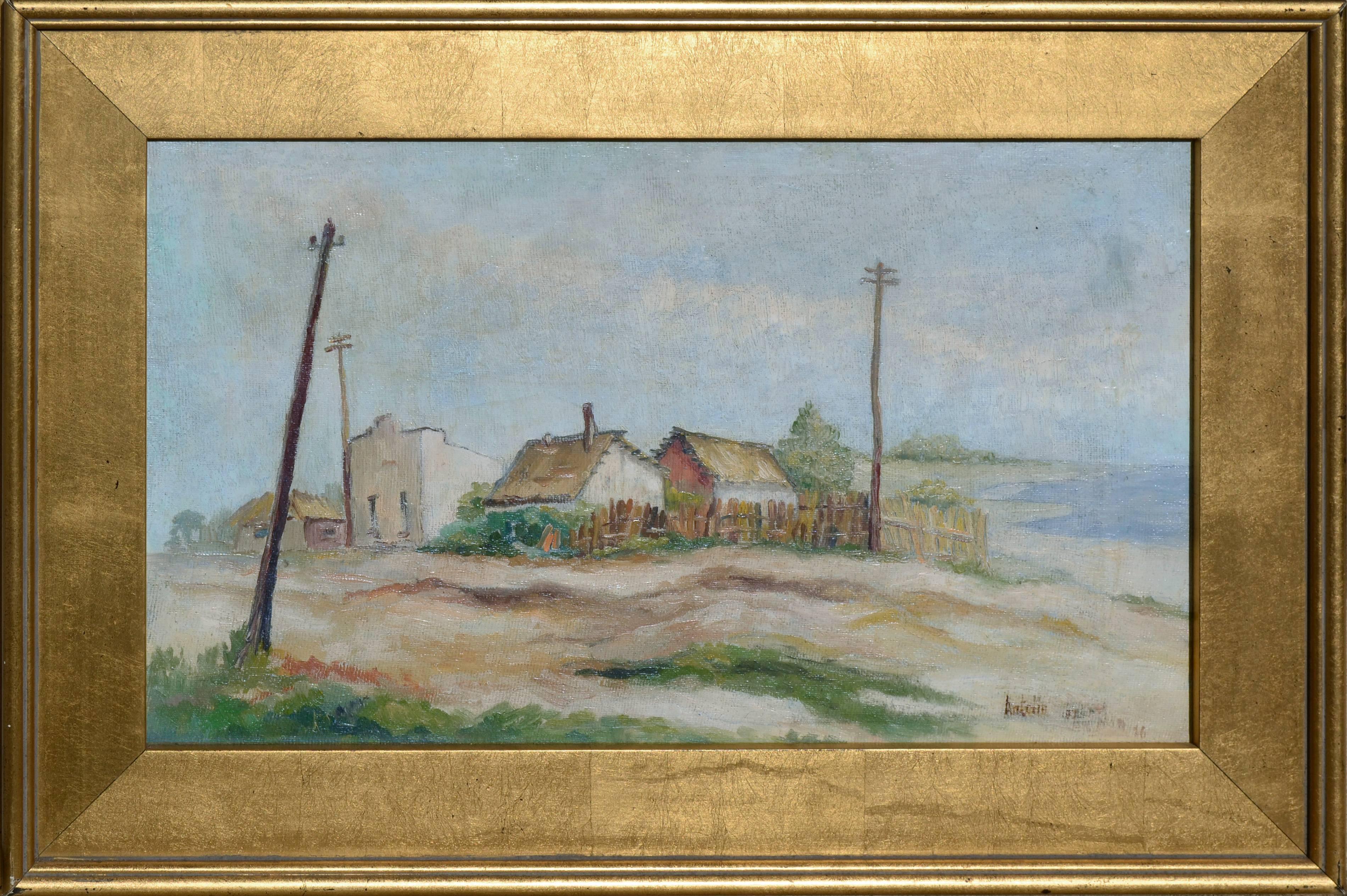
Want more images or videos?
Request additional images or videos from the seller
1 of 7

Tyrus Wong
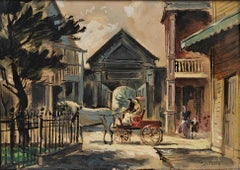
"Original set illustration from "Gone With The Wind" Tyrus Wong, Hollywood, Film

1939

$3,000
£2,243.24
€2,619.97
CA$4,215
A$4,268.97
CHF 2,452.31
MX$51,766.79
NOK 28,446.49
SEK 28,955.25
DKK 19,587.06

About the Item

Tyrus Wong Original set illustration from "Gone With The Wind", 1939 Signed lower right Oil on panel 6 x 8 3/4 inches Tyrus Wong’s life embodies a remarkable journey of perseverance, talent, and artistic achievement. Born in China, he immigrated to the United States at the age of nine after being separated from his mother, whom he would never see again. Reunited with his father in Sacramento, Wong later relocated to Los Angeles, where the two lived in modest circumstances within a boarding house in Chinatown. His father nurtured his artistic abilities by encouraging him to practice Chinese calligraphy and helping him secure small painting jobs in the neighborhood. Recognizing his exceptional talent, one of Wong’s teachers recommended him for a summer scholarship at the Otis Art Institute. He became the youngest recipient of the award and later earned a full scholarship, offsetting tuition costs through work performed on campus. After completing his studies in 1930, Wong supported himself through a variety of artistic jobs, including creating advertisements and working at the popular Dragon’s Den restaurant in Chinatown. During the Great Depression, he found employment through the Federal Art Project, producing paintings for government-sponsored programs. His career took a pivotal turn when he joined Walt Disney Studios. There, his atmospheric pastel studies for Bambi impressed Walt Disney and helped shape the film’s distinctive visual style. Wong’s contributions to the film’s backgrounds were instrumental to its success, earning him posthumous recognition as a Disney Legend in 2001. Following labor disputes at Disney, he left the studio before Bambi was released and continued his career at Warner Bros. and Republic Studios, creating concept art for films including Rebel Without a Cause, Around the World in 80 Days, Sands of Iwo Jima, and The Wild Bunch. He retired from the film industry in 1968. Alongside his Hollywood career, Wong remained deeply involved in Southern California’s art community. He exhibited regularly in galleries and museums and participated in artist-run initiatives such as Eleven Associated, a cooperative gallery active during the early 1950s. Best known for his watercolor paintings and ceramics, Wong developed a unique artistic language that blended traditional Chinese brush techniques with modern American aesthetics. Influenced by his teacher Stanton Macdonald-Wright, he combined expressive calligraphic brushwork with depictions of nature and movement. His artistic versatility extended beyond fine art into commercial design, where he created popular Christmas card imagery and dinnerware patterns for Winfield Pottery that were sold nationwide. Wong’s extraordinary story is chronicled in the documentary Tyrus, directed by Pamela Tom. The film also highlights the broader contributions of Chinese and Japanese American artists working in Los Angeles during the 1930s and 1940s. These histories were previously explored by writer and curator Lisa See in her book On Gold Mountain, which recounts many aspects of Wong’s early life and artistic development in Chinatown.
  • Creator:
    Tyrus Wong (1910 - 2016, Chinese, American)
  • Creation Year:
    1939
  • Dimensions:
    Height: 8.5 in (21.59 cm)Width: 11 in (27.94 cm)
  • Medium:
  • Movement & Style:
  • Period:
  • Condition:
  • Gallery Location:
    New York, NY
  • Reference Number:
    1stDibs: LU1841218120782

More From This Seller

View All
"Original set illustration from "Gone With The Wind" Tyrus Wong, Hollywood, Film

"Original set illustration from "Gone With The Wind" Tyrus Wong, Hollywood, Film

Located in New York, NY

Tyrus Wong Original set illustration from "Gone With The Wind", 1939 Signed lower right Oil on panel 6 x 8 3/4 inches Tyrus Wong’s life embodies a remarkable journey of perseverance, talent, and artistic achievement. Born in China, he immigrated to the United States at the age of nine after being separated from his mother, whom he would never see again. Reunited with his father in Sacramento, Wong later relocated to Los Angeles, where the two lived in modest circumstances within a boarding house in Chinatown. His father nurtured his artistic abilities by encouraging him to practice Chinese calligraphy and helping him secure small painting jobs in the neighborhood. Recognizing his exceptional talent, one of Wong’s teachers recommended him for a summer scholarship at the Otis Art Institute. He became the youngest recipient of the award and later earned a full scholarship, offsetting tuition costs through work performed on campus. After completing his studies in 1930, Wong supported himself through a variety of artistic jobs, including creating advertisements and working at the popular Dragon’s Den restaurant in Chinatown. During the Great Depression, he found employment through the Federal Art Project, producing paintings for government-sponsored programs. His career took a pivotal turn when he joined Walt Disney Studios. There, his atmospheric pastel studies for Bambi impressed Walt Disney and helped shape the film’s distinctive visual style. Wong’s contributions to the film’s backgrounds were instrumental to its success, earning him posthumous recognition as a Disney Legend in 2001. Following labor disputes at Disney, he left the studio before Bambi was released and continued his career at Warner Bros. and Republic Studios, creating concept art for films including Rebel Without a Cause, Around the World in 80 Days, Sands of Iwo Jima, and The Wild Bunch. He retired from the film industry in 1968. Alongside his Hollywood career, Wong remained deeply involved in Southern California’s art community. He exhibited regularly in galleries and museums and participated in artist-run initiatives such as Eleven Associated, a cooperative gallery active during the early 1950s. Best known for his watercolor paintings and ceramics, Wong developed a unique artistic language that blended traditional Chinese brush techniques with modern American aesthetics. Influenced by his teacher Stanton Macdonald-Wright, he combined expressive calligraphic brushwork with depictions of nature and movement. His artistic versatility extended beyond fine art into commercial design, where he created popular Christmas card imagery and dinnerware patterns for Winfield Pottery...

Category

1930s Academic Figurative Paintings

Materials

Oil, Panel

"Saratoga, " John Francis Murphy, Hudson River School, Tonalism

"Saratoga, " John Francis Murphy, Hudson River School, Tonalism

By John Francis Murphy

Located in New York, NY

John Francis Murphy (1853 - 1921) Saratoga, 1876 Graphite on paper Sight 8 3/4 x 10 1/2 inches Titled and dated to lower right Provenance: Babcock Galleries, New York Spanierman Gallery, New York In his lifetime, John Francis Murphy (1853-1921) was known as “the American Corot.” He was renowned for his small, intimate views of nature, especially barren fields and farms, bare trees, and lonely marshland. More than a century later, the power of Murphy’s landscapes has not waned. One contemporary critic wrote, “It was Murphy’s unique accomplishment to achieve an absolute realism without a loss of that mystic, indefinable quality which transfigures realism.” John Francis Murphy was born at Oswego, NY in 1853 but his family moved to Chicago in 1868 where he worked painting theater sets. Murphy was basically a self-taught artist; his only formal training was a few weeks of instruction at the Chicago Academy of Design. In 1875, Murphy moved from Chicago to New York, eventually rooming with the painters Dennis Bunker and Bruce Crane above a bakery shop. Murphy’s early work was typical of the Hudson River school but he soon fell under the sway of the loose brushwork and moody style of French Barbizon painting...

Category

1870s Tonalist Landscape Drawings and Watercolors

Materials

Paper, Pencil

"New York Harbor Nocturne" Leon Dolice, Mid-Century New York Nocturnal Landscape

"New York Harbor Nocturne" Leon Dolice, Mid-Century New York Nocturnal Landscape

By Leon Dolice

Located in New York, NY

Leon Dolice New York Harbor Nocturne, circa 1930-40 Signed lower right Pastel on paper 12 x 19 inches The romantic backdrop of Vienna at the turn of the century had a life-long inf...

Category

1930s American Modern Figurative Drawings and Watercolors

Materials

Paper, Pastel

"A Bit of Stonington" John Marin, American Modernism, Maine Landscape

"A Bit of Stonington" John Marin, American Modernism, Maine Landscape

By John Marin

Located in New York, NY

John Marin A Bit of Stonington, 1926 Signed and dated lower right, inscribed and dated on the reverse Watercolor and charcoal on paper 13 3/4 x 17 inches Provenance The Downtown Gal...

Category

1920s American Modern Landscape Drawings and Watercolors

Materials

Paper, Charcoal, Watercolor

"Night Stroll" Amy Londoner, Ashcan School, Figurative Nocturne

"Night Stroll" Amy Londoner, Ashcan School, Figurative Nocturne

By Amy Londoner

Located in New York, NY

Amy Londoner Beach at Atlantic City, circa 1922 Signed lower right Pastel on paper Sight 23 x 18 inches Amy Londoner (April 12, 1875 – 1951) was an American painter who exhibited at the 1913 Armory Show. One of the first students of the Henri School of Art in 1909. Prior to the Armory Show of 1913, Amy Londoner and her classmates studied with "Ashcan" painter Robert Henri at the Henri School of Art in New York, N.Y. One notable oil painting, 'The Vase', was painted by both Henri and Londoner. Londoner was born in Lexington, Missouri on April 12, 1875. Her parents were Moses and Rebecca Londoner, who moved to Leadville, Colorado, by 1880. In 1899, Amy took responsibility for her father who had come to Los Angeles from Leadville and had mental issues. By 1900, Amy was living with her parents and sister, Blanche, in the vicinity of Leadville, Denver, Colorado. While little was written about her early life, Denver City directories indicated that nineteenth-century members of the family were merchants, with family ties to New York, N.Y. The family had a male servant. Londoner traveled with her mother to England in 1907 then shortly later, both returned to New York in 1909. Londoner was 34 years old at the time, and, according to standards of the day, should have married and raised a family long before. Instead, she enrolled as one of the first students at the Henri School of Art in 1909. At the Henri School, Londoner established friendships with Carl Sprinchorn (1887-1971), a young Swedish immigrant, and Edith Reynolds (1883-1964), daughter of wealthy industrialist family from Wilkes-Barre, PA. Londoner's correspondence, which often included references to Blanche, listed the sisters' primary address as the Hotel Endicott at 81st Street and Columbus Avenue, NYC. Other correspondence also reached Londoner in the city via Mrs. Theodore Bernstein at 252 West 74th Street; 102 West 73rd Street; and the Independent School of Art at 1947 Broadway. In 1911, Londoner vacationed at the Hotel Trexler in Atlantic City, NJ. As indicated by an undated photograph, Londoner also spent time with Edith Reynolds and Robert Henri at 'The Pines', the Reynolds family estate in Bear Creek, PA. Through her connections with the Henri School, Londoner entered progressive social and professional circles. Henri's admonition, phrased in the vocabulary of his historical time period, that one must become a "man" first and an artist second, attracted both male and female students to classes where development of unique personal styles, tailored to convey individual insights and experiences, was prized above the mastery of standardized, technical skill. Far from being dilettantes, women students at the Henri School were daring individuals willing to challenge tradition. As noted by former student Helen Appleton Read, "it was a mark of defiance,to join the radical Henri group." As Henri offered educational alternatives for women artists, he initiated exhibition opportunities for them as well. Troubled by the exclusion of work by younger artists from annual exhibitions at the National Academy of Design, Henri was instrumental in organizing the no-jury, no-prize Exhibition of Independent Artists in 1910. About half of the 103 artists included in the exhibition were or had been Henri students, while twenty of the twenty-six women exhibiting had studied with Henri. Among the exhibition's 631 pieces, nine were by Amy Londoner, including the notorious 'Lady with a Headache'. Similarly, fourteen of Henri's women students exhibited in the groundbreaking Armory Show of 1913, forming about eight percent of the American exhibitors and one-third of American women exhibitors. Of the nine documented works submitted by Londoner, five were rejected, while four pastels of Atlantic City beach scenes, including 'The Beach Umbrellas' now in the Remington Collection, were displayed. Following Henri's example, Londoner served as an art instructor for younger students at the Modern School, whose only requirement was to genuinely draw what they pleased. The work of dancer Isadora Duncan, another artist devoted to the ideals of a liberal education, was also lauded by the Modern School. Henri, who long admired Duncan and invited members of her troupe to model for his classes, wrote an appreciation of her for the Modern School journal in 1915. She was also the subject of Londoner's pastel Isadora Duncan and the Children: Praise Ye the Lord with Dance. In 1914, Londoner traveled to France to spend summer abroad, living at 99 rue Notre Dames des Champs, Paris, France. As the tenets of European modernism spread throughout the United States, Londoner showed regularly at venues which a new generation of artists considered increasingly passe, including the annual Society of Independent Artists' exhibitions between 1918 and 1934, and the Salons of America exhibition in 1922. Londoner also exhibited at the Morton Gallery, Opportunity Gallery, Leonard Clayton Gallery and Brownell-Lambertson Galleries in NYC. Her painting of a 'Blond Girl' was one of two works included in the College Art Associations Traveling Exhibition of 1929, which toured colleges across the country to broad acclaim. Londoner later in life suffered from illnesses then suffered a stroke which resulted in medical bills significantly mounting over the years that her old friends from the Henri School, including Carl Sprinchorn, Florence Dreyfous, Florence Barley, and Josephine Nivison Hopper, scrambled to raise funds and find suitable long-term care facilities for Londoner. Londoner later joined Reynolds in Bear Creek, PA. Always known for her keen wit, Londoner retained her humor and concern for her works even during her illness, noting that "if anything happens to the Endicott, I guess they will just throw them out." Sprinchorn and Reynolds, however, did not allow this to happen. In 1960, Londoner's paintings 'Amsterdam Avenue at 74th Street' and 'The Builders' were loaned by Reynolds to a show commemorating the Fiftieth Anniversary of the Exhibition of Independent Artists in 1910, presented at the Delaware Art Center, Wilmington, DE. In the late 80's, Francis William Remington, 'Bill Remington', of Bear Creek Village PA, along with his neighbor and artist Frances Anstett Brennan, both had profound admiration for Amy Londoner's art work and accomplishments as a woman who played a significant role in the Ashcan movement. Remington acquired a significant number of Londoner's artwork along with Frances Anstett Brenan that later was part of an exhibition of Londoner's artwork in April 15 of 2007, at the Hope Horn...

Category

1910s Ashcan School Figurative Paintings
Materials

Paper, Pastel

"Coastal Scene with Boats" Edmund Darch Lewis, Marine Scene, Sailing, Sea

"Coastal Scene with Boats" Edmund Darch Lewis, Marine Scene, Sailing, Sea

By Edmund Darch Lewis

Located in New York, NY

Edmund Darch Lewis Coastal Scene with Boats Signed lower right Watercolor on paper 9 x 20 inches Edmund Darch Lewis was one of the most popular of the Philadelphia landscape painte...

Category

1870s Tonalist Figurative Drawings and Watercolors

Materials

Paper, Watercolor

You May Also Like

Gloucester, Impressionist Watercolor by Eve Nethercott

Gloucester, Impressionist Watercolor by Eve Nethercott

By Eve Nethercott

Located in Long Island City, NY

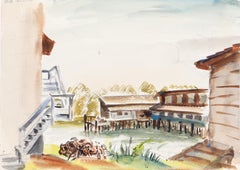
Eve Nethercott, American (1925 - 2015) - Gloucester (P5.10), Year: 1948, Medium: Watercolor on Paper, Size: 11 x 15 in. (27.94 x 38.1 cm), Description: Looking out over the s...

Category

1940s Impressionist Landscape Drawings and Watercolors

Materials

Watercolor

Flea Market, Impressionist Watercolor by Eve Nethercott

Flea Market, Impressionist Watercolor by Eve Nethercott

By Eve Nethercott

Located in Long Island City, NY

Eve Nethercott, American (1925 - 2015) - Flea Market (P2.46), Year: 1961, Medium: Watercolor on Paper, Image Size: 14 x 21 inches, Size: 15 x 22.5 in. (38.1 x 57.15 cm), Desc...

Category

1960s Impressionist Landscape Drawings and Watercolors

Materials

Watercolor

Turn of the Century Figurative Landscape

Turn of the Century Figurative Landscape

Located in Soquel, CA

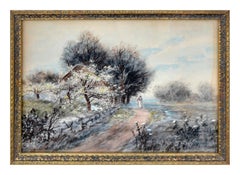
Beautiful turn of the century figurative landscape by F.S. Mediary (American, Late 19th Century/Early 20th Century). Presented in a giltwood frame. Signed "F.S. Mediary" lower right....

Category

1890s American Impressionist Landscape Drawings and Watercolors

Materials

Paper, Watercolor

Mid-Century California Mission Landscape Watercolor

Mid-Century California Mission Landscape Watercolor

Located in Soquel, CA

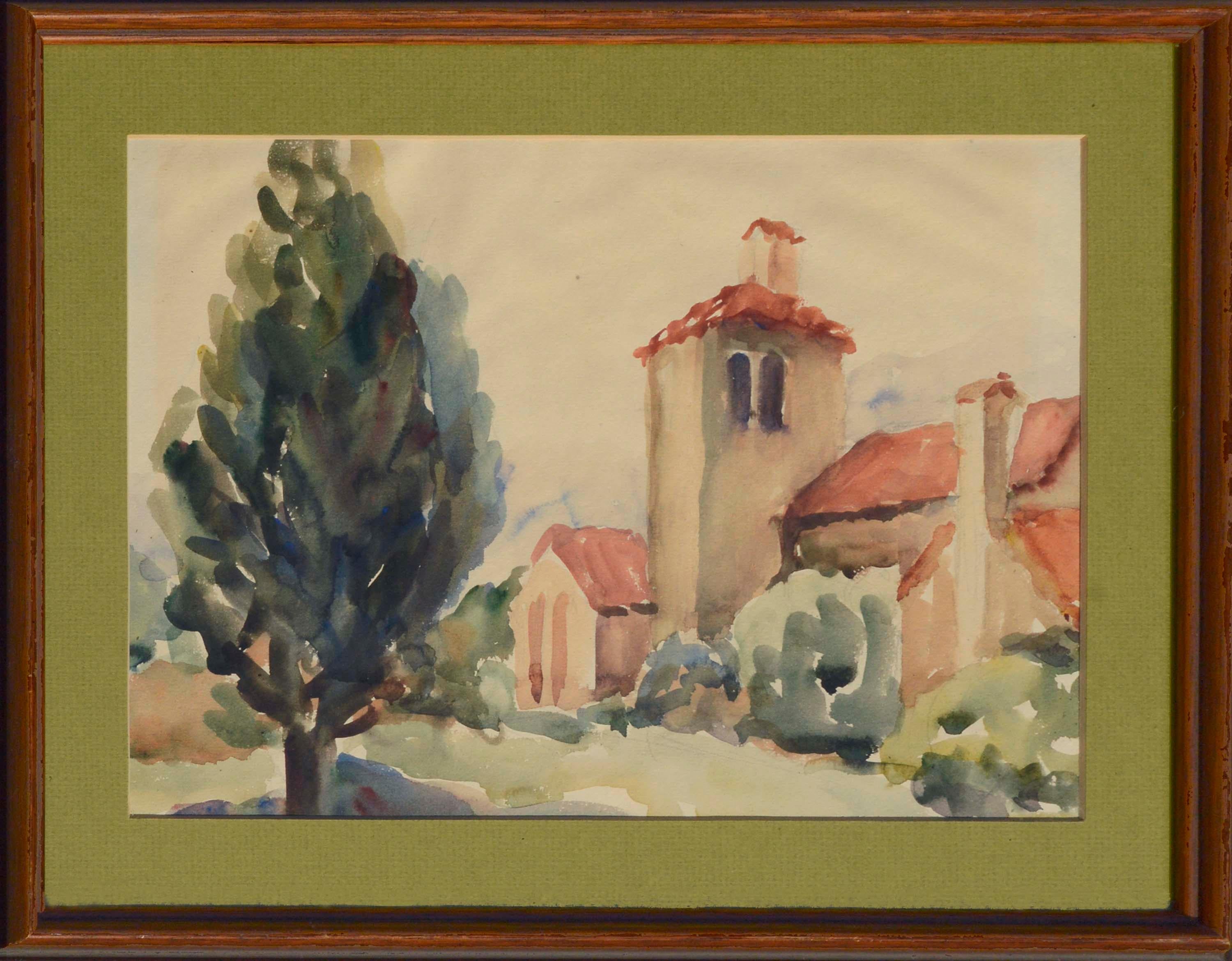
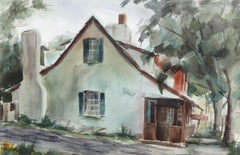
Beautiful mid-century watercolor landscape of a California mission with a tree in the foreground by an unknown artist (American, 20th century). Unsi...

Category

Mid-20th Century American Impressionist Landscape Drawings and Watercolors

Materials

Paper, Watercolor

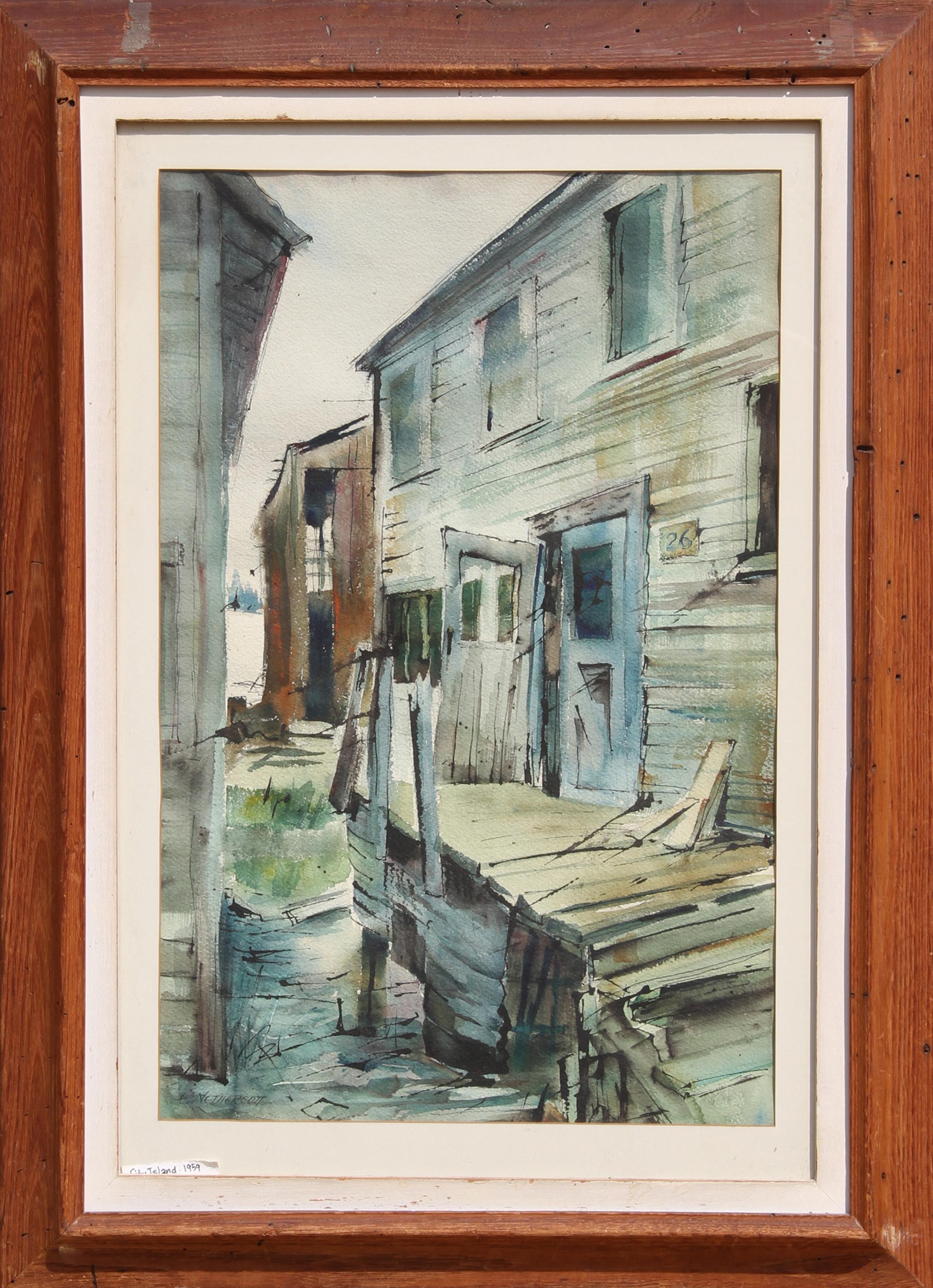
City Island, Impressionist Watercolor by Eve Nethercott

City Island, Impressionist Watercolor by Eve Nethercott

By Eve Nethercott

Located in Long Island City, NY

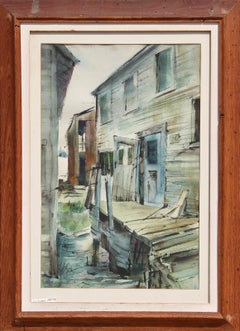
Eve Nethercott, American (1925 - 2015) - City Island, Year: 1959, Medium: Watercolor, Size: 20.5 in. x 13.5 in. (52.07 cm x 34.29 cm), Description: Eve Nethercott's rendering o...

Category

1950s Impressionist Landscape Drawings and Watercolors

Materials

Watercolor