Want more images or videos?
Request additional images or videos from the seller
1 of 13

Unknown
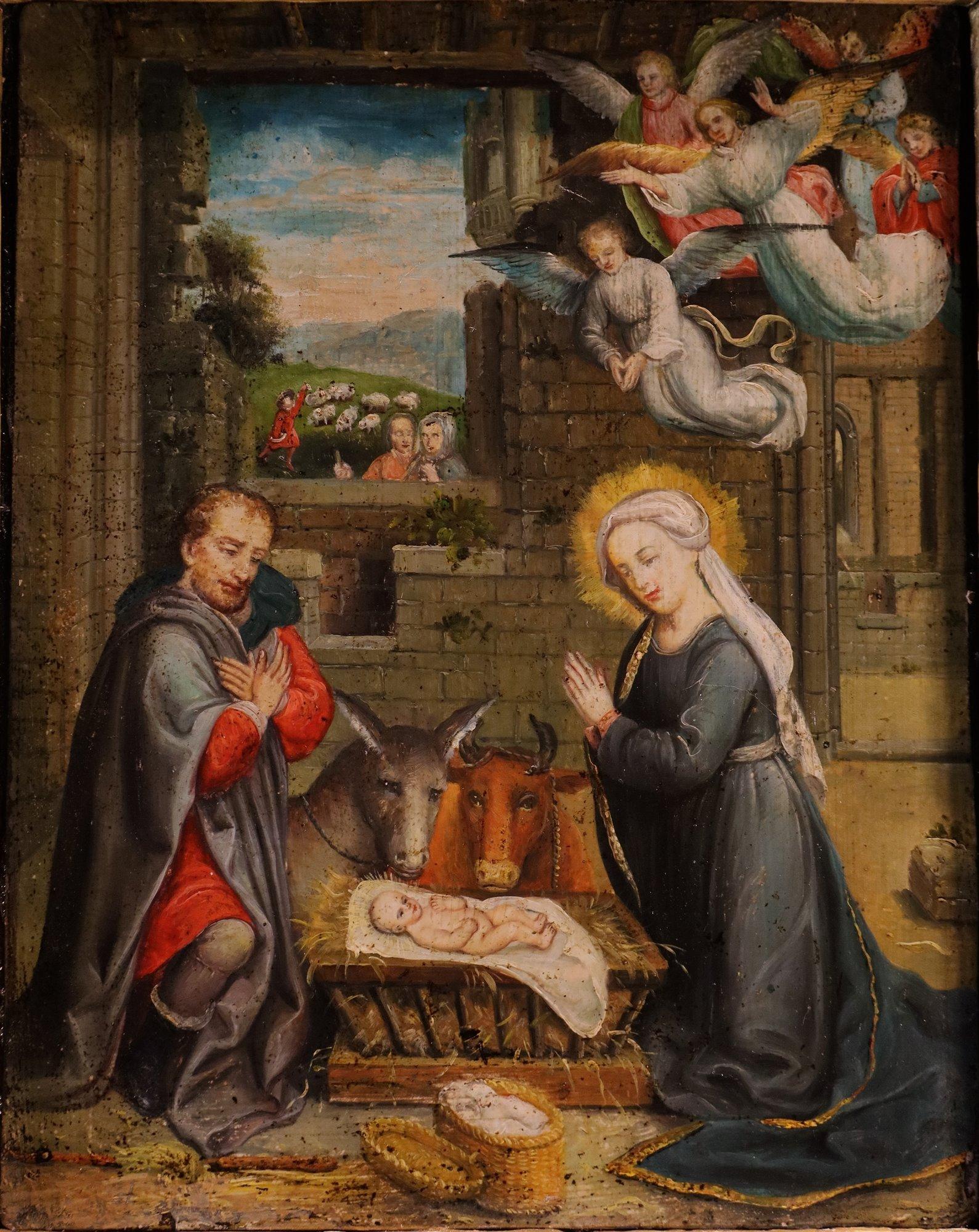
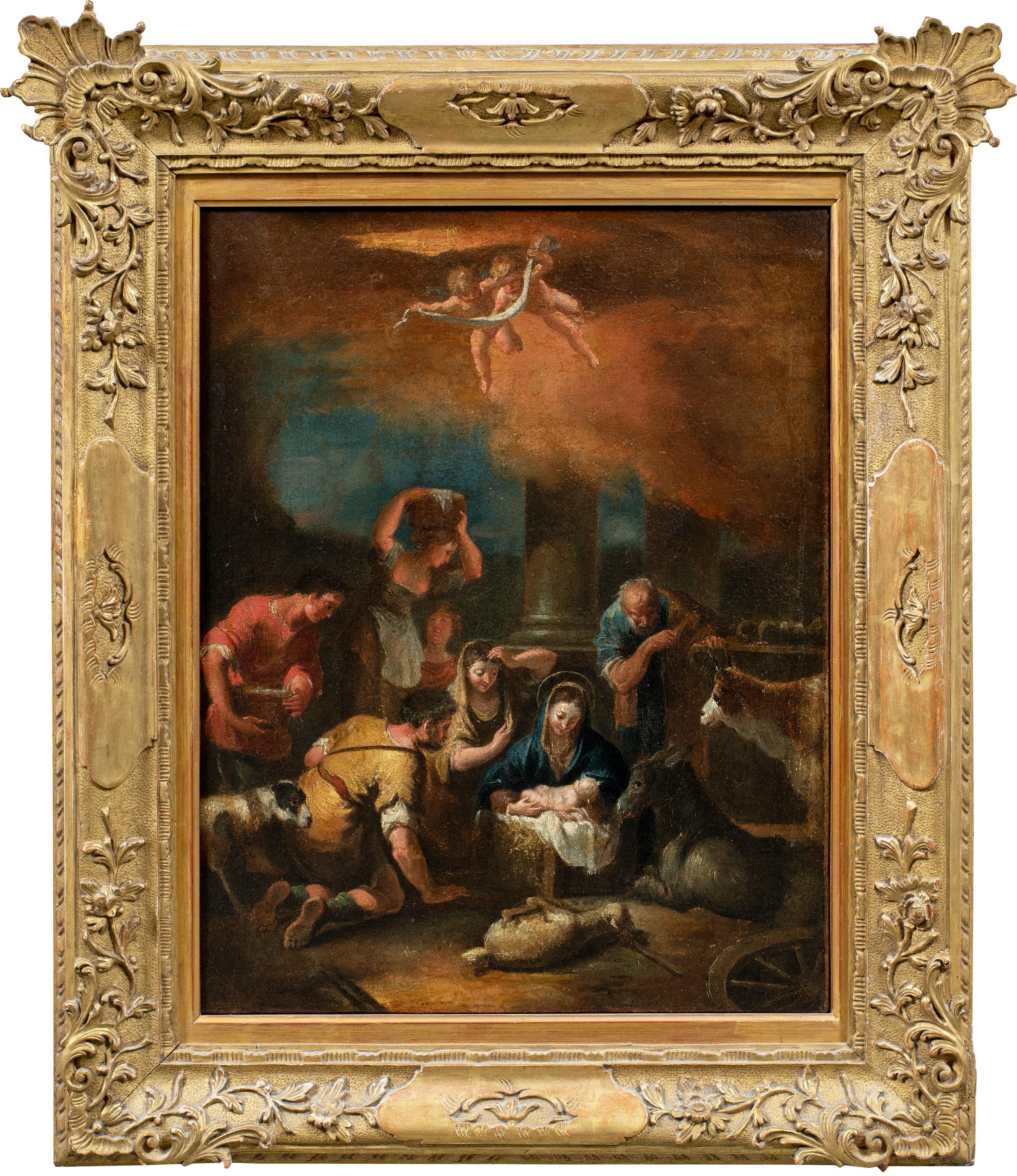
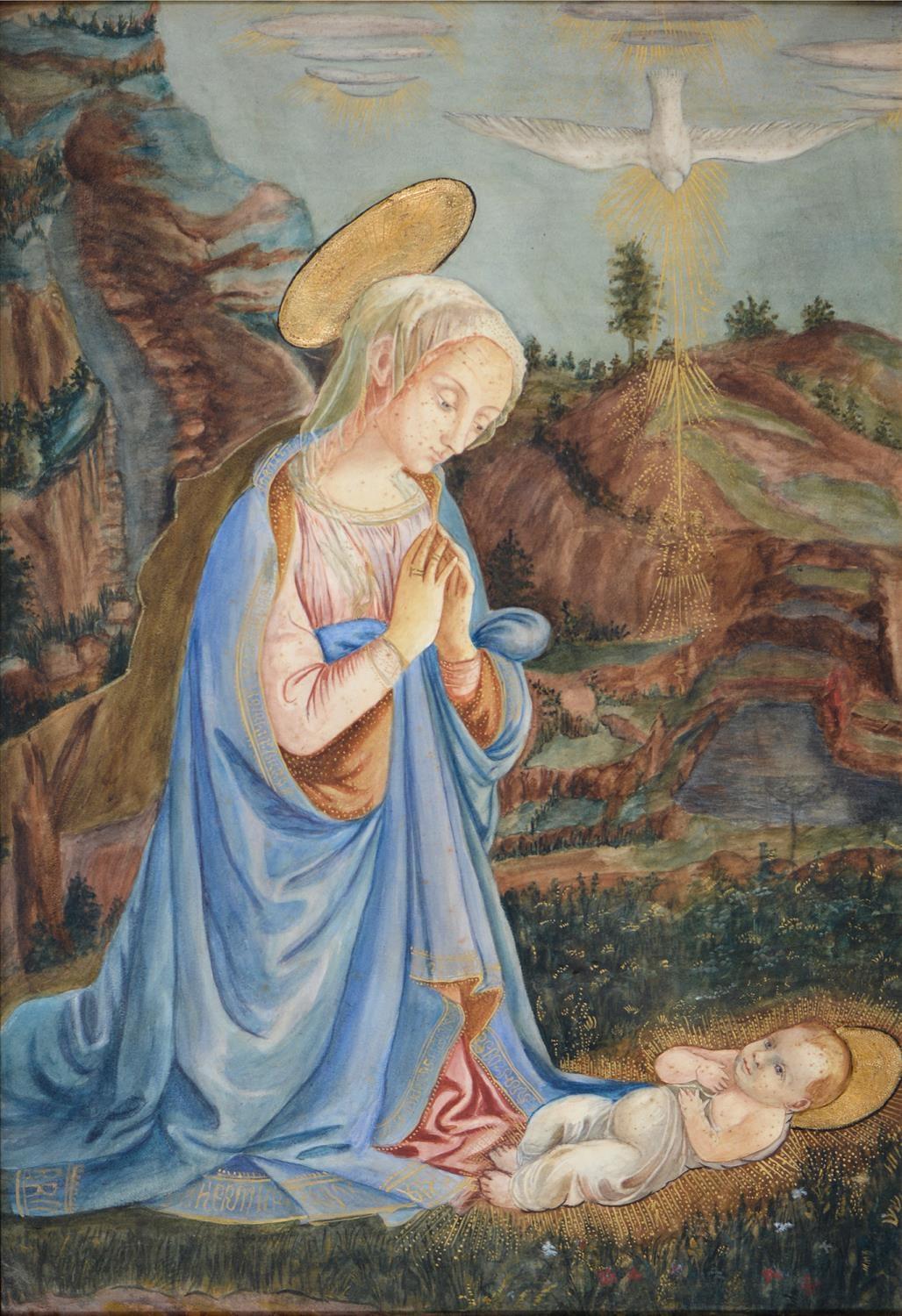
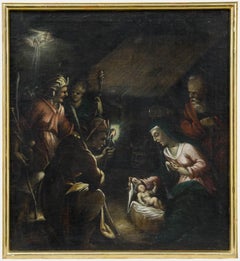
Adoration of the Shepherds by a follower of Denys Calvaert

1600s

$4,180.87
$5,226.3820% Off
£3,104.39
£3,880.7120% Off
€3,555VAT Included
€4,44420% Off
CA$5,867.50
CA$7,334.7820% Off
A$5,947.89
A$7,435.2820% Off
CHF 3,382.99
CHF 4,228.9720% Off
MX$72,402.66
MX$90,508.4120% Off
NOK 39,679.15
NOK 49,601.7220% Off
SEK 39,776.12
SEK 49,722.9520% Off
DKK 27,105.11
DKK 33,883.2920% Off

About the Item

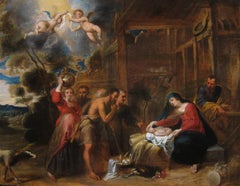
Unknown Italo-Flemish Artist (active circa 1600) Adoration of the Shepherds oil on copper unframed: 32 × 25.5 cm (12.6 × 10 in) framed: 43 × 37 cm (16.9 × 14.6 in) Provenance: Acquired by the previous owner’s father, London art trade in 1948. Essay: Adoration of the Shepherds is a superb example of an Italo-Flemish work at the transition from the late Renaissance to the Baroque. The unknown artist was evidently well-trained, possessing both technical virtuosity and a cosmopolitan visual vocabulary. The painting’s high level of finish, jewel-like coloration, and harmonious composition suggest it was created by someone in the circle of accomplished Flemish painters who had assimilated Italian artistic currents around 1600. The artist most likely belonged to a generation of Flemish or Dutch masters who traveled in Italy or trained under Italian-influenced mentors, and who produced cabinet pictures for discerning patrons. Around 1600, a distinctive artistic synthesis emerged as Flemish painters absorbed Italian influences during their travels and studies. Many talented Flemish artists journeyed to Italy to learn from Renaissance and early Baroque masters, then returned home with new ideas in composition, coloring, and figure style. They merged the dramatic lighting, bold compositions, and rich coloration of Italian art with the meticulous realism and precise detail characteristic of Northern painting. This Italo-Flemish blend coincided with the dawn of the Baroque era in Northern Europe, especially in the Spanish Netherlands (Flanders), where Catholic Counter-Reformation patronage demanded emotive religious imagery. The cross-cultural exchange proved immensely influential in shaping early Baroque painting in the North. This painting is executed on a copper panel, a support that gained popularity among elite workshops in the late 16th and early 17th centuries. Oil on copper was prized for the unique qualities it lent to paintings, especially small-scale works. Key characteristics of this medium include an exceptionally smooth surface that allows razor-sharp details and delicate brushwork; jewel-like luminosity thanks to the slightly reflective metal ground; and long-term stability, as copper does not warp or degrade. These qualities made it ideal for collectors’ cabinet pictures, and the present work’s small format reflects this intended purpose. The composition centers on the Christ Child, who lies glowing in a manger amid the ruins of a rustic stable. The infant emits a gentle radiance in the darkness, serving as a spiritual light source. The Virgin Mary is shown kneeling in reverence with hands extended toward her child, her face tenderly illuminated. Saint Joseph stands or kneels behind her, humbly observing the miracle. On the left side, three shepherds gather in adoration, their faces filled with awe. One kneels closest to the infant and offers a lamb, symbolizing Christ’s future sacrifice. Above, a host of angels hovers in the night sky. Despite the small size of the copper panel, the artist includes multiple figures in layered depth, showcasing a complex narrative within a confined space. The overall mood is one of intimate reverence and tender wonder. The composition is carefully structured around the infant, with figures forming a pyramid and the angels completing a circular rhythm in the upper register. While we do not know the painter’s name, the work’s refined style invites comparison to artists such as Denys Calvaert or early Rubens, who bridged northern and southern traditions. Like many in that circle, this painter combined devotional subject matter with theatricality and craft. This exquisite oil on copper, with its enduring colors and intricate detail, stands as a testament to the skill of its creator and the cross-pollination of artistic traditions that defined its era.
  • Creation Year:
    1600s
  • Dimensions:
    Height: 12.6 in (32 cm)Width: 10.04 in (25.5 cm)
  • Medium:
  • Movement & Style:
  • Period:
  • Condition:
    Recently restored. Small retouching in some areas, the colors are bright and clear. please contact us for UV images.
  • Gallery Location:
    Stockholm, SE
  • Reference Number:
    1stDibs: LU1445217303882

More From This Seller

View All
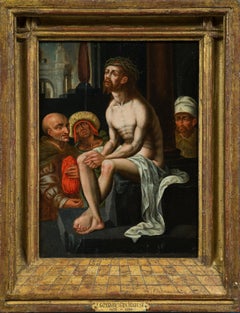
Old Master Painting Called Christ at the Column

Old Master Painting Called Christ at the Column

Located in Stockholm, SE

Follower of Gerard Seghers (1591-1651) Christ at the Column oil on wood panel c. 1700s unframed 19.5 × 14 cm Provenance: Originally in the collection of Dr. Axel Munthe (1857–1949), the renowned Swedish physician and author celebrated for his philanthropic work and for founding Villa San Michele...

Category

18th Century Old Masters Figurative Paintings

Materials

Oil, Wood Panel

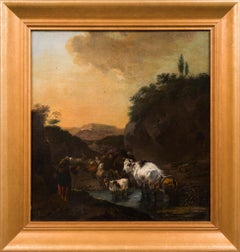
Shepherd with Sheep, Cows and a Goat in a Landscape by Jan Frans Soolmaker

Shepherd with Sheep, Cows and a Goat in a Landscape by Jan Frans Soolmaker

Located in Stockholm, SE

This painting depicts a pastoral scene that is attributed to the artist Jan Frans Soolmaker, an artist known for his Italianate landscapes and scenes that often feature equestrian and Arcadian elements. The painting is not signed but is attributed to Soolmaker, relating it to a known signed work by the artist that was sold at Sotheby’s London in 1999. The scene is suffused with the warm glow of a setting or rising sun, casting a soft light that is characteristic of Soolmaker’s landscapes. It shows a shepherd guiding a group of cattle across a shallow stream, with the animals taking center stage in the composition. The animals are rendered with careful attention to their forms and the play of light on their bodies, which is a hallmark of Soolmaker's work. The landscape is composed of a rocky terrain with trees and shrubbery, creating a sense of depth and natural beauty that invites the viewer to explore the scene further. The background suggests a vast, open landscape with distant mountains, which adds to the Italianate feel of the painting. The sky is dramatic, with clouds catching the light of the sun, contributing to the overall serene yet dynamic atmosphere of the work. The provenance of the painting is notable, having been in the possession of significant historical figures such as Swedish Prince Fredrik Adolf, and later The collection of Pär Ulmgren, The collection of Gösta Stenman, and Engineer and politician Gustaf Henry Hansson. Potential buyers have the option of choosing between a newly made gold frame or an older brown frame, which allows for personalization in how the work is presented. Soolmaker’s work is often compared to that of Dutch painter Nicolaes Berchem, whose style he emulated. Soolmaker's landscapes reflect a similar sensitivity to light and composition, making his works sought after for their beauty and historical significance. Despite the smaller body of work left by Soolmaker, due to his short career, his paintings are valued for their craftsmanship and the legacy of the artist’s brief but impactful contribution to the Dutch Italianate landscape genre. Information: Jan Frans Soolmaker (Flanders 1635‑1685) Shepherd with Sheep...

Category

17th Century Old Masters Animal Paintings
Materials

Canvas, Oil

You May Also Like

Frans Wouters, Adoration of The Herders, Christmas Scene, Christ, Flemish School

Frans Wouters, Adoration of The Herders, Christmas Scene, Christ, Flemish School

Located in Greven, DE

Frans Wouters was a Flemish Baroque painter who mainly created smaller cabinet pieces. He was initially apprenticed to Pieter van Avont in Antwerp, but then moved to Rubens‘ worksho...

Category

17th Century Baroque Figurative Paintings

Materials

Oak, Oil

The adoration of the shepherds

The adoration of the shepherds

Located in Paris, IDF

Félix COTTRAU (Paris, 1799 - Paris, 1852) The adoration of the shepherds Oil on canvas Signed and dated lower right 100.5 x 76 cm 1842 Exhibition: Paris Salon of 1842 under number...

Category

Mid-19th Century French School Figurative Paintings

Materials

Oil

Nativity Jesus David Paint 16/17th Century Oil on copper Old master Flemish Art

Nativity Jesus David Paint 16/17th Century Oil on copper Old master Flemish Art

Located in Riva del Garda, IT

The Nativity of Jesus Flemish school, late 16th/early 17th century Gerard David (Oudewater, c. 1460 - Bruges, 1523) Follower of Oil on copper 30 x 25 cm. - In frame 47 x 42 c...

Category

16th Century Old Masters Portrait Paintings

Materials

Oil

17th Century Flemish School Adoration of the Magi Oil on Canvas

17th Century Flemish School Adoration of the Magi Oil on Canvas

Located in Sant Celoni, ES

"17th Century Flemish School Old Master Adoration of the Magi." Oil on canvas. Previously relined. Unsigned. Artwork: 81 × 61 cm (31.9 × 24 in.). 88 × 69 cm (34.6 × 27.2 in.). (Fra...

Category

17th Century Old Masters Figurative Paintings

Materials

Oil, Canvas

Adoration Magi Jan Van Der Straet Paint Oil on canvas Old master 16th Century

Adoration Magi Jan Van Der Straet Paint Oil on canvas Old master 16th Century

Located in Riva del Garda, IT

Jan Van der Straet, known as Giovanni Stradano (Bruges 1523 - Florence 1605), Workshop of The Adoration of the Magi late 16th century - early 17th century oil painting on canvas Mea...

Category

16th Century Old Masters Paintings

Materials

Oil