Want more images or videos?
Request additional images or videos from the seller
1 of 7

Unknown
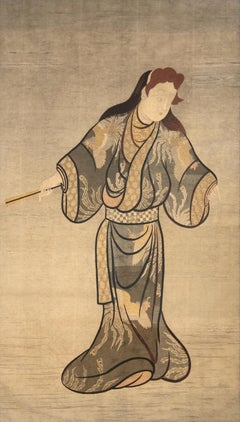
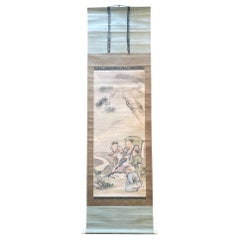
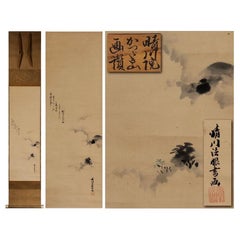
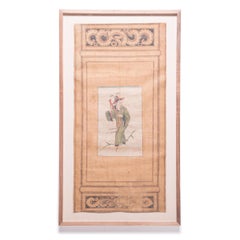
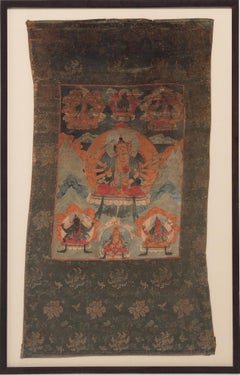
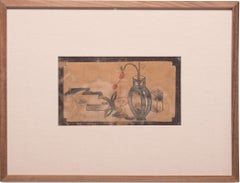
Japanese Hanging Scroll of the Goddess of Mercy, c. 1800

c. 1800

$2,580List Price

You May Also Like

Lovely Japanese 18th-19th Century Edo or Meiji Scroll Painting Japan

Lovely Japanese 18th-19th Century Edo or Meiji Scroll Painting Japan

Located in Amsterdam, Noord Holland

Maruyama–Shijo style painting C0ndition; Good but some stains. Overall dimensions: width of about 28.2 cm and Length of about 173.8 cm Painting width of about 25.5 cm × leng...

Category

Antique 19th Century Japanese Meiji Paintings and Screens

Materials

Bronze

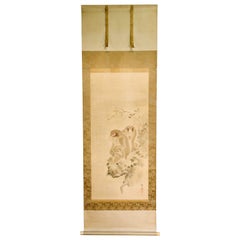
Japanese Silk Scroll Painting of Moneys Edo Period Mori Tetsuzan

Japanese Silk Scroll Painting of Moneys Edo Period Mori Tetsuzan

Located in Atlanta, GA

A Japanese mounted vertical hanging scroll painting by Mori Tetsuzan (Japanese, 1775-1841) circa 19th century Edo period. The watercolor and ink on silk ...

Category

Antique 19th Century Japanese Japonisme Paintings and Screens

Materials

Silk, Paper

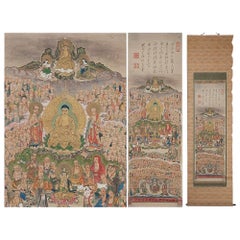
Lovely circa 1900 C-Scroll Woodblock Japan Handcolored Buddhist 500

Lovely circa 1900 C-Scroll Woodblock Japan Handcolored Buddhist 500

Located in Amsterdam, Noord Holland

A handcolored woodblock print on silk hanging Measures: Axis ... vertical 155cm, horizontal 42cm in ... vertical 90.5cm, horizontal 28.5cm.

Category

Antique 19th Century Japanese Meiji Paintings and Screens

Materials

Fabric

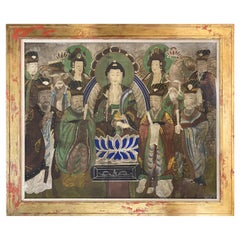
18th/19th Century  Korean Buddhist T’aenghwa Painted Scroll or Banner in Frame

18th/19th Century Korean Buddhist T’aenghwa Painted Scroll or Banner in Frame

Located in Milford, NH

A fine Korean Buddhist T’aenghwa scroll painting, similar to the Tibetan Thangka paintings. The Korean name taenghwa is very similar to the Tibetan word thangka and the period of pop...

Category

Antique 18th Century Korean Paintings

Materials

Canvas

Japanese Silk Scroll by Haruki Nanmei Edo Period

Japanese Silk Scroll by Haruki Nanmei Edo Period

Located in Atlanta, GA

A Japanese hanging silk scroll by late Edo period painter Haruki Nanmei (1795-1878). The gouache painting was in the tradition of Kano school and depicts an old scholar dressed in lo...

Category

Antique 19th Century Japanese Edo Paintings and Screens

Materials

Silk, Paper

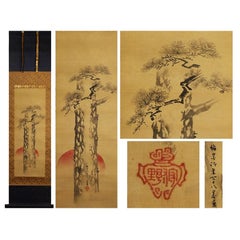
Antique Japanese 18th c Edo Scroll [Kano Baisho Nihonga Landscape Painting

Antique Japanese 18th c Edo Scroll [Kano Baisho Nihonga Landscape Painting

Located in Amsterdam, Noord Holland

This is a ``Rising Sun and Pine Tree'' drawn by Kano Baisho. It is an item with a solemn taste and presence, and I think it would be a good idea to display it at New Year's, the fir...

Category

Antique 18th Century Edo Paintings

Materials

Silk

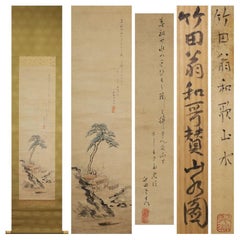
Japanese Nihonga Painting 18/19th c Edo Scroll Tanomura Chikuden Self Portrait

Japanese Nihonga Painting 18/19th c Edo Scroll Tanomura Chikuden Self Portrait

Located in Amsterdam, Noord Holland

Tanomura Takeda's handwritten self-portrait hymn "Painted Landscape" with himself working in a hut Takeda Tanomura and depicts fields and mountains in spring,   and is accompanied by a self-written waka poem that is thought to be about the scene. [Tanomura Takeda] A painter from Takeda Village, Naoniri District, Bungo Province (present-day Takeda City). His family was born as the second son of Ken'an, who had been a samurai physician in the Oka domain for generations. He first studied medicine, but preferred learning over medicine, and studied Chinese studies under Kimizan Karahashi, a He also learned painting techniques from Buncho Tani, and after returning to Japan, he served as the president of a domain school. He resigned his post in 1812 and traveled between Keihan and Osaka, where he interacted with Raizanyo, Shinozaki Kotake, Urakami Gyokudo, Okada Yonezanjin, Unka Shonin, Aoki Mokubei...

Category

Antique 18th Century Edo Paintings

Materials

Silk

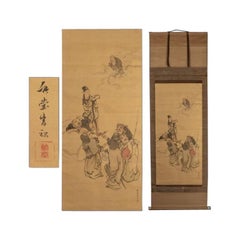
Lovely Japanese 18th-19th Century Edo or Meiji Scroll Painting Seven Lucky God

Lovely Japanese 18th-19th Century Edo or Meiji Scroll Painting Seven Lucky God

Located in Amsterdam, Noord Holland

Interesting and finely painted Japanese painting. Provenance: From an old family from Kyoto. width of about 62.0 cm axial destination width of about 67.8 cm × length of about 1...

Category

20th Century Japanese Meiji Paintings and Screens

Materials

Bronze

Lovely Japanese 18/19th c Edo Scroll Kano Osanobu Nihonga Painting Mountain

Lovely Japanese 18/19th c Edo Scroll Kano Osanobu Nihonga Painting Mountain

Located in Amsterdam, Noord Holland

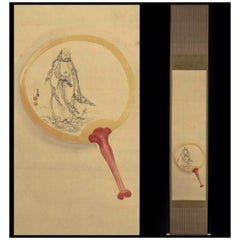
Kano Osanobu (狩野養信) Osanobu Kano (born August 18, 1796; died June 12, 1846) was the ninth painter of the Kobikicho Kano School in the Edo period. His common name was Shozaburo. His father was Naganobu KANO, and Tadanobu KANO was his son. His Go (pen name) was Osanobu Seisenin, Kaishinsai, and Gyokusen. Brief Personal History He was born the eldest son of Naganobu ISENIN during the Edo period. He was first sent to serve at Edo Castle at the age of 15, and it appears that he was apparently pushed by his father to perform various public tasks for the Kanon School. He kept a diary for 36 years, starting from the day before he first went into service at Edo Castle until the day before he died. The diary is entitles "Official Service Diary" (it consists of 52 volumes that are maintained at the Tokyo National Museum, and 4 volumes that are separately maintained at the different families), and have become the focus of a lot of attention in recent years for the detailed information they present on the daily life and work of a prestigious official painter. The reading of the characters of his name was originally "Takenobu"; however, with the birth of the first son of the Shongun Ieyoshi TOKUGAWA in 1813, whose name was Takechiyo, having a sylable with the same pronunciation of "Take"was deemed to be inappropriate, and was therefore changed to "Osanobu". Because Takenobu died the following year, after which he was referred to as Gyokujuin, Osanobu changed his pen name Gyokusen he had used until that point to Seisenin, in order to avoid using the same Chinese charcter pronounced alike. In 1819, he attained the second highest rank for a Buddhist priest, Hogen, and assumed the role of head of the family after his father passed away in 1828. In 1834 he attained the highest rank for a Buddhist priest, Hoin. He oversaw the rennovation of the wall paintings of Nishinomaru Palace of Edo Castle from 1838 to 1839, and Honmaru Palace of it from 1844 to 1846. It is thought that Osanobu later died due to the fatigue...

Category

Antique 18th Century Edo Paintings
Materials

Silk

More From This Seller

View All
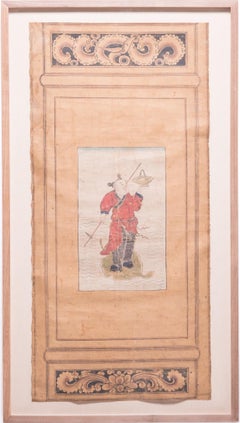
Chinese Mythical Immortal Screen Painting, c. 1850

Chinese Mythical Immortal Screen Painting, c. 1850

Located in Chicago, IL

Since the 12th century, people in China have used folding screens and doors to partition and decorate their homes - the vivid scenes backing the screens added life and color to a room. This 19th-century painting is delicately brushed of gouache and ink on fabric and was originally part of a set of eight backing a wooden screen in northern China. The figure depicted is one of the mythical Eight Immortals of Taoism. Said to have attained immortality through their studies of the natural world, each of the Eight Immortals represents a different condition in life and together they impart a blessing of prosperity and longevity. Depicted here is immortal Lan Caihe, the patron saint of florists and gardeners. Standing atop a lotus leaf in open water, they hold a gardening hoe in one hand and a basket for flowers...

Category

Mid-19th Century Qing Figurative Paintings

Materials

Fabric, Ink, Pigment

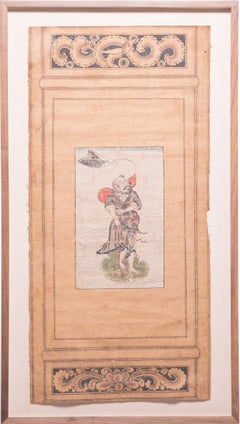
Chinese Mythical Immortal Screen Painting, c. 1850

Chinese Mythical Immortal Screen Painting, c. 1850

Located in Chicago, IL

Since the 12th century, people in China have used folding screens and doors to partition and decorate their homes - the vivid scenes backing the screens added life and color to a roo...

Category

Mid-19th Century Figurative Paintings

Materials

Fabric, Ink, Pigment

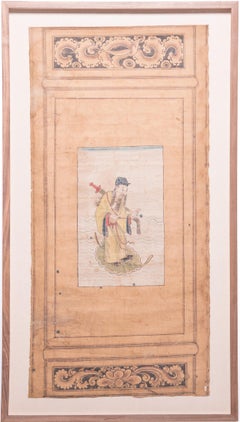
Chinese Mythical Immortal Screen Painting, c. 1850

Chinese Mythical Immortal Screen Painting, c. 1850

Located in Chicago, IL

Since the 12th century, people in China have used folding screens and doors to partition and decorate their homes - the vivid scenes backing the screens added life and color to a roo...

Category

Mid-19th Century Figurative Paintings

Materials

Fabric, Ink, Pigment

Chinese Mythical Immortal Screen Painting, c. 1850

Chinese Mythical Immortal Screen Painting, c. 1850

Located in Chicago, IL

Since the 12th century, people in China have used folding screens and doors to partition and decorate their homes - the vivid scenes backing the screens added life and color to a roo...

Category

Mid-19th Century Figurative Paintings

Materials

Fabric, Ink, Pigment

Tibetan Thangka of Chenresi, c. 1800

Tibetan Thangka of Chenresi, c. 1800

Located in Chicago, IL

In Buddhist Tibet, patrons and monks commissioned thangka art, or sacred painting, to focus their meditations and prayers. Painted with blue, orange, and r...

Category

Early 19th Century Figurative Paintings

Materials

Fabric, Silk, Pigment