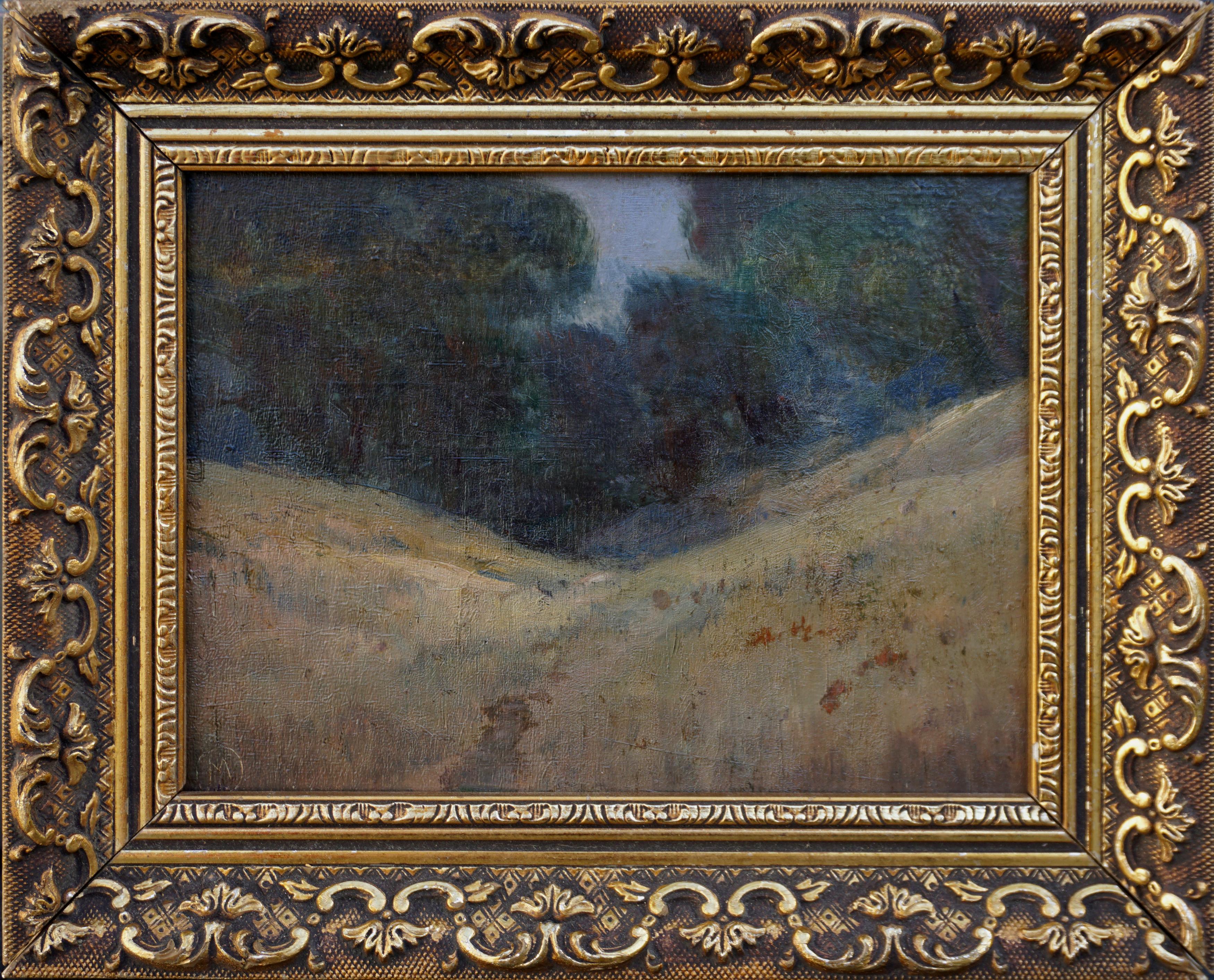
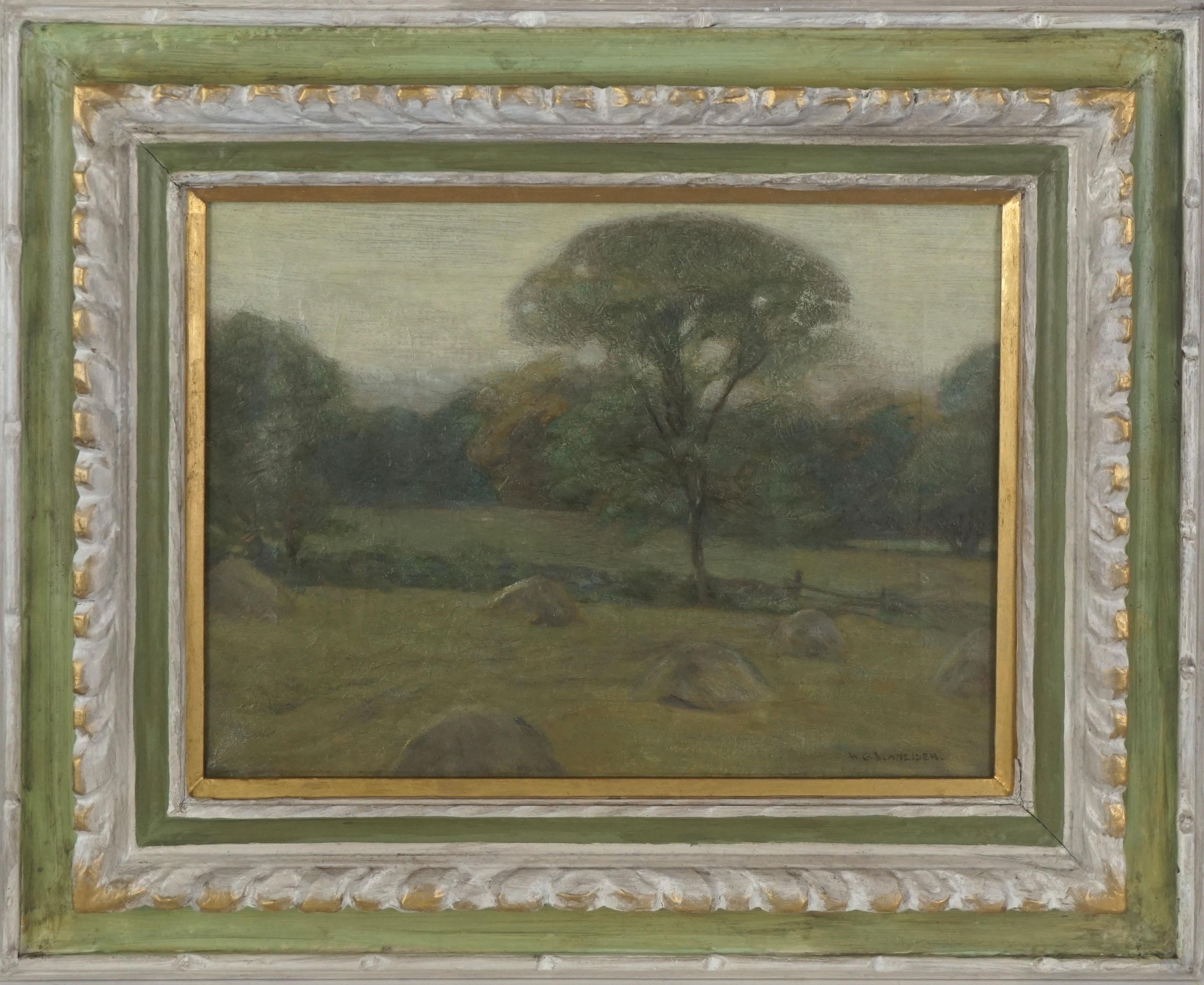
William Keith
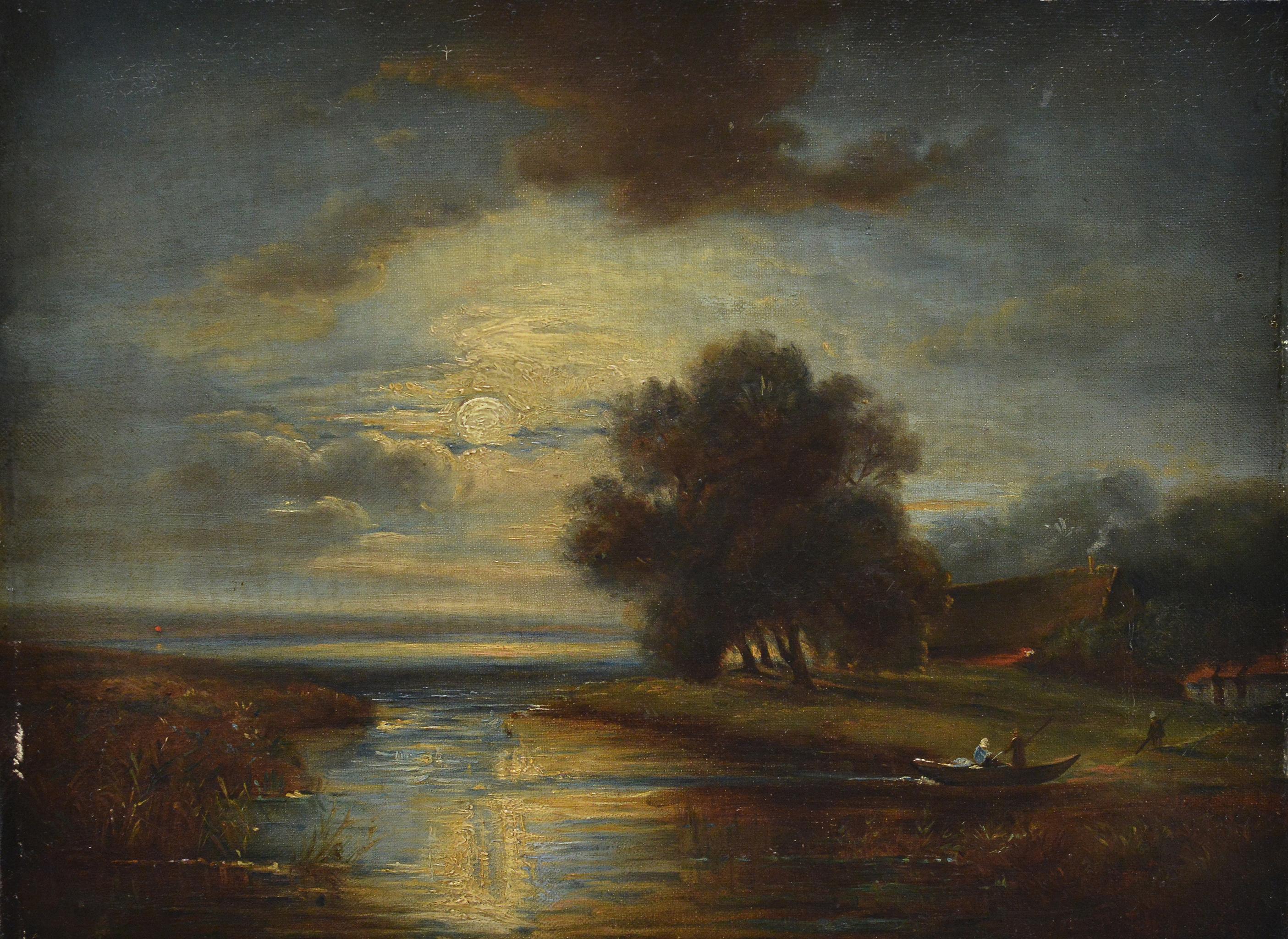
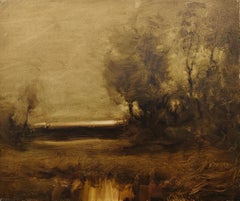
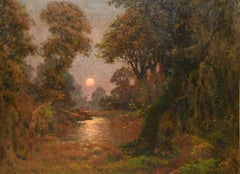
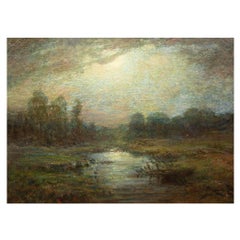
The Oaks by Moonlight, California, circa 1870
Signed lower right
Oil on canvas
23 x 28 inches
Provenance
Kennedy Galleries, Inc., New York
Private Collection (acquired from the above in 1989)
Private Collection, Hudson, New York
Born in Aberdeen, Scotland, in 1838, William Keith emerged as one of the most important painters of the American West during the late nineteenth century. His family immigrated to New York in 1850, where he began his career as an apprentice wood engraver and later worked for the publishing firm Harper Brothers. During his early years he traveled widely, spending time in both California and Britain before ultimately settling in San Francisco in 1859.
In California, Keith initially earned his living as an engraver, but his growing interest in art led him to study painting under Samuel Brookes and watercolor techniques with his wife, Elizabeth Emerson Keith. Encouraged by commissions to depict landscapes of the Pacific Northwest, he abandoned engraving in 1868 and devoted himself entirely to painting. The following year he traveled to Düsseldorf, Germany, where he studied with prominent landscape painters Albert Flamm and Andreas Achenbach. Although trained within the German tradition, Keith was increasingly drawn to the atmospheric and poetic qualities of the French Barbizon School, an influence that would remain central throughout his career.
After returning to California in 1872, Keith became a prominent figure in San Francisco’s cultural life through the Bohemian Club. That same year he met the naturalist John Muir, beginning a lifelong friendship that inspired numerous expeditions into the Sierra Nevada and Yosemite. These journeys provided the subject matter for many of Keith’s celebrated mountain landscapes, including a series of monumental canvases that established his reputation as one of California’s leading landscape painters.
Following the death of his first wife in 1882, Keith married Mary McHenry, one of California’s earliest female law graduates. The couple spent several years in Munich, where Keith expanded his artistic training, particularly in portraiture. Upon returning to California, he divided his time between Berkeley and a San Francisco studio, which was tragically destroyed in the 1906 earthquake and fire, reportedly taking thousands of paintings with it.
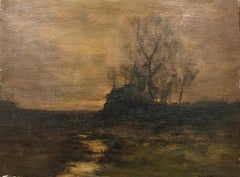
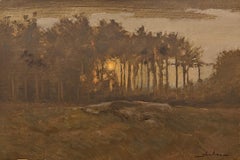
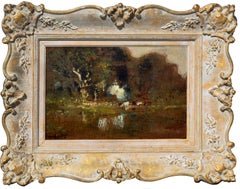
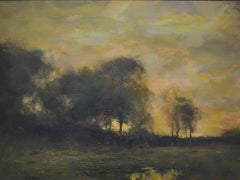
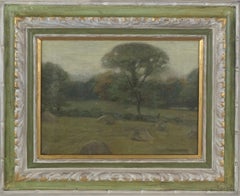
Throughout the 1880s and 1890s, Keith’s work evolved from detailed landscape representation toward a more expressive and atmospheric style. His travels to Alaska and Europe encouraged a greater emphasis on mood, imagination, and spiritual interpretation. Influenced in part by fellow painter George Inness, Keith embraced the ideals of Tonalism, creating increasingly intimate landscapes characterized by subdued color, soft light, and a contemplative mood. These later works sought to reveal the spiritual essence of nature rather than simply record its appearance.
Widely exhibited and highly acclaimed during his lifetime, Keith showed his work at major museums, international expositions, and leading galleries in both the United States and Europe. His achievements were recognized with numerous awards, and his stature was further affirmed when an entire gallery was devoted to his paintings at the Panama-Pacific International Exposition, cementing his legacy as one of the foremost interpreters of the American landscape.