ANTONIO REYNA
Spanish, 1859 - 1937
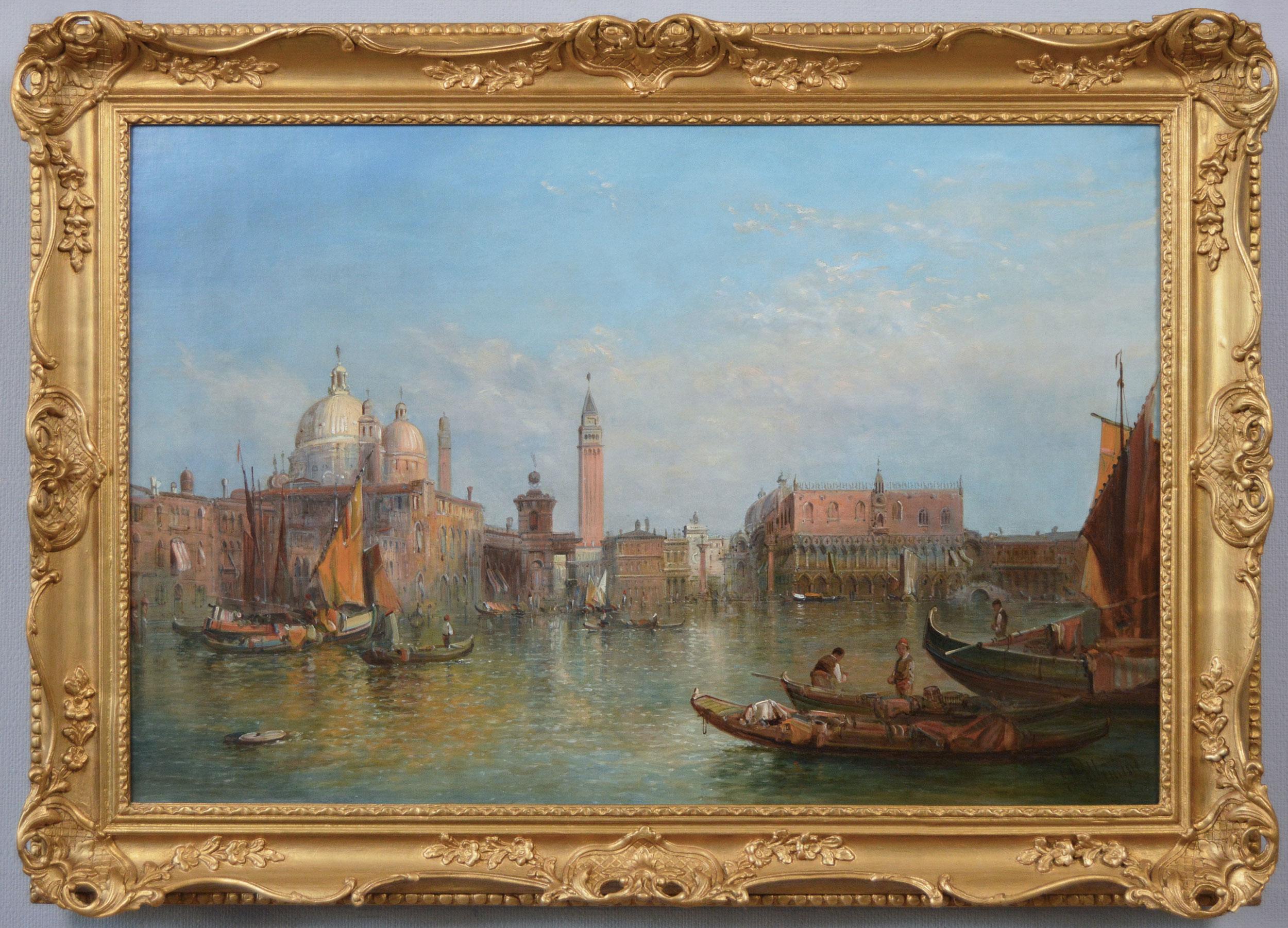
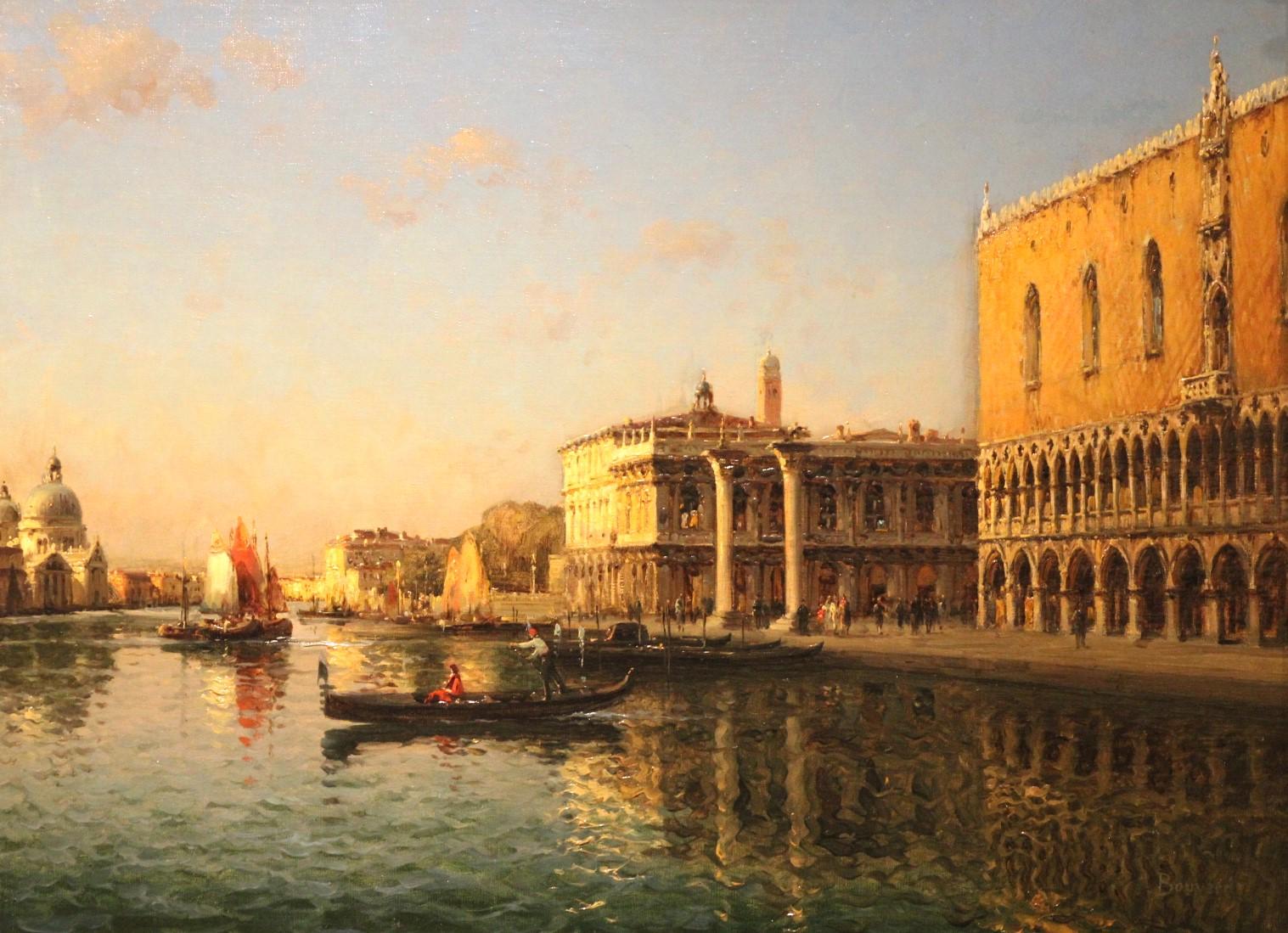
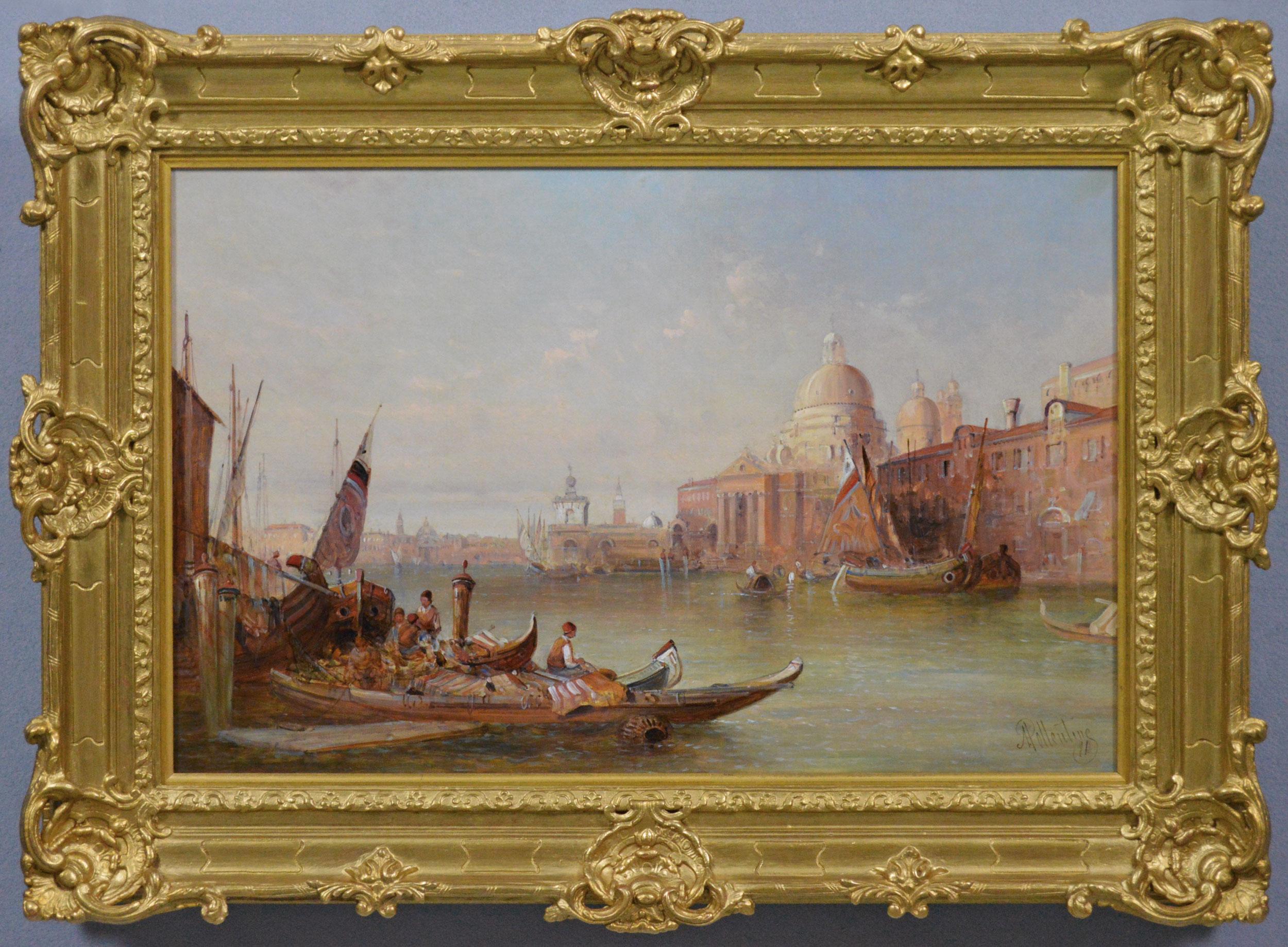
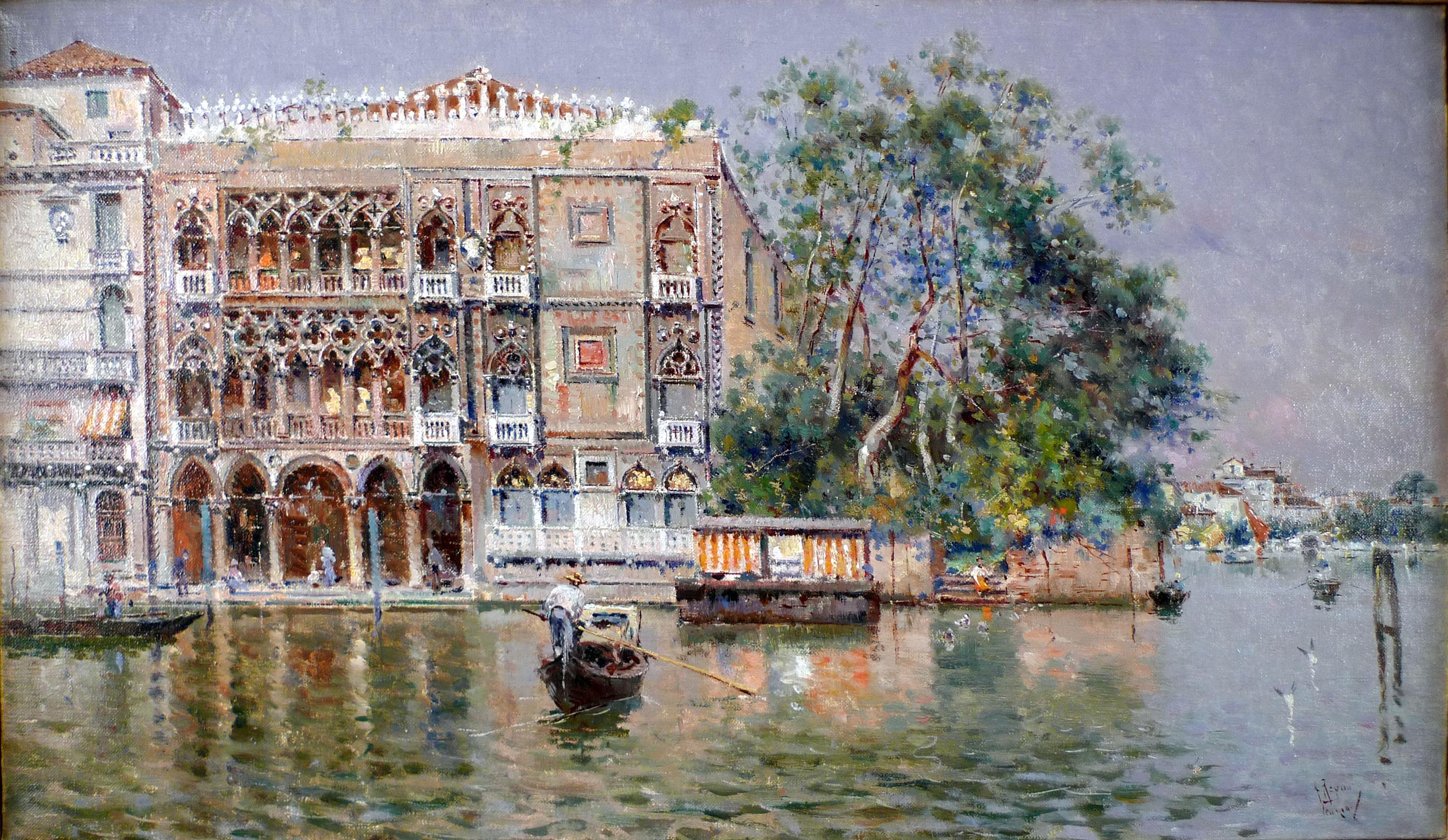
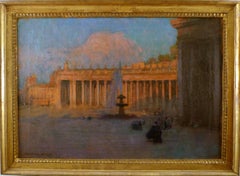
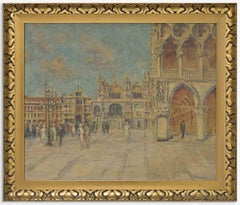
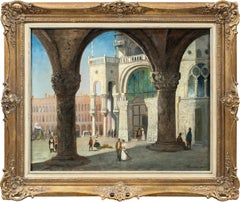
SAINT MARKS SQUARE
signed and located "A. Reyna / Venezia" (lower right)
oil on canvas
15-1/2 x 21-3/8 inches (39 x 54 cm.)
framed: 25-1/4 x 31-1/4 inches (64 x 79 cm.)
PROVENANCE
Galería Blanchard, Madrid
Private Collection, Madrid
Antonio Reyna Manescau (5 December 1859 - 3 February 1937), was a Spanish painter that developed most of his career in Italy. A member of the Málaga School of Painting, he studied under Bernardo Ferrándiz and alongside Moreno Carbonero. He moved to Italy in his early 20's, where he was further influenced by Italian and Spanish expatriate artists, and where he lived for the rest of his life.
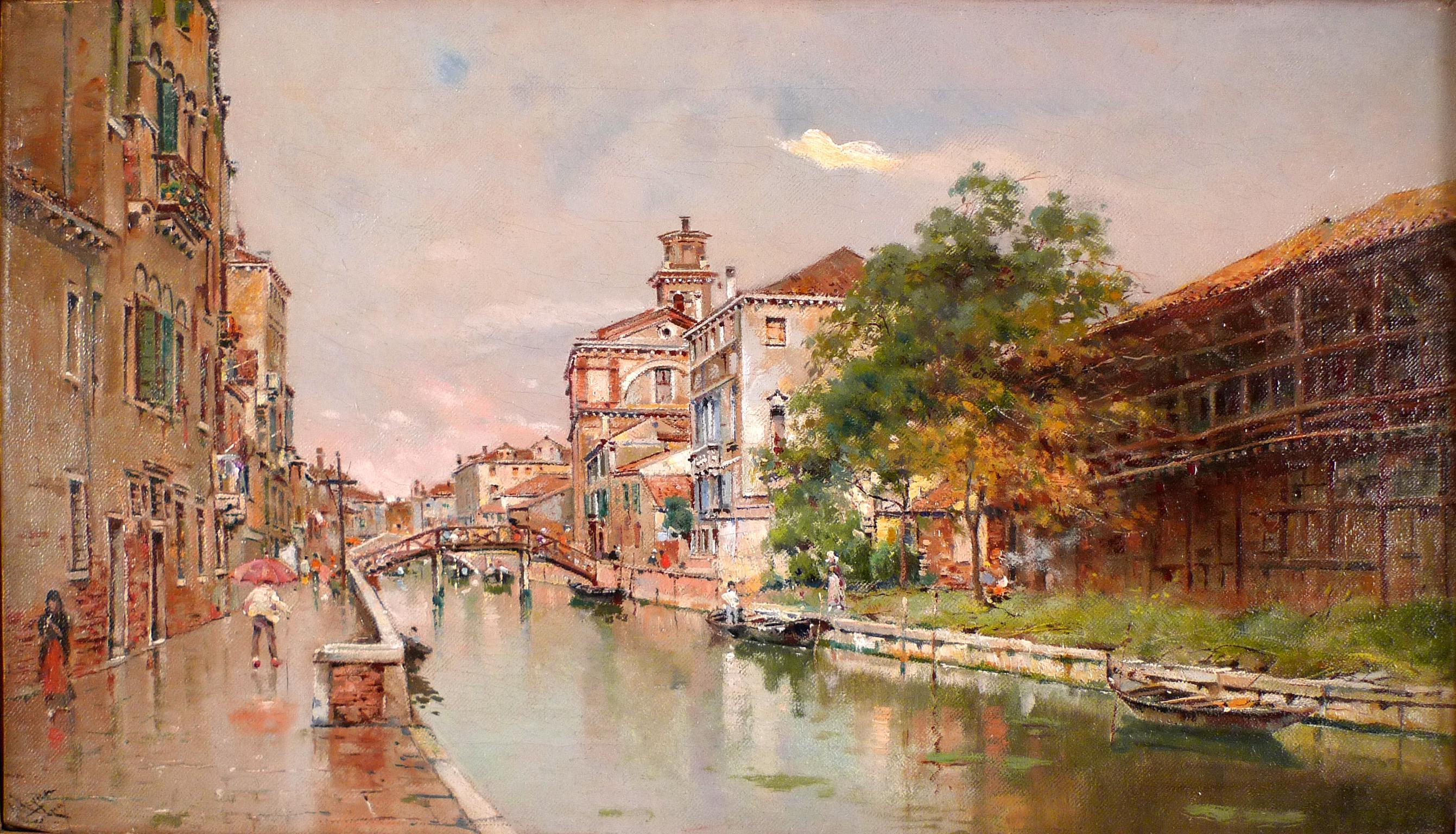
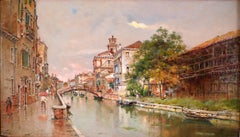
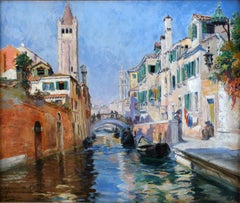
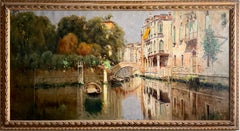
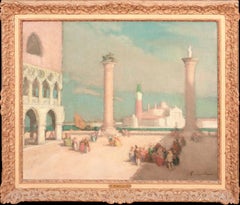
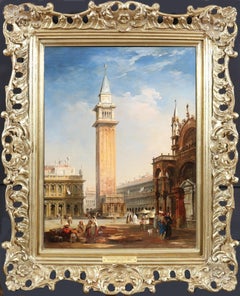
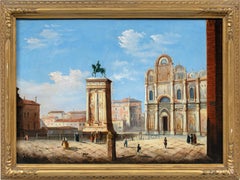
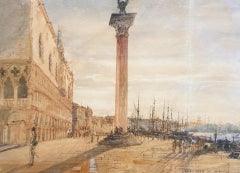
After his first visit to Venice in 1885, he specialized in landscape painting. He is widely known for the preciosity of his Venetian vedutas, the importance he places in the accurate depiction of architectural detail and his mastery of color. Among his most important works are his numerous views of the Venetian canals and Piazza San Marco.
Born in the town of Coín (Málaga), he was one of ten children (six of which died in childhood) of Francisco Reyna Zayas (1825-1892) and Matilde Manescau y Otsman (1823-1910). His parents enjoyed a good social standing, being his uncle José Reyna Zayas mayor of Coín while Antonio was a child
Being still a little boy Antonio showed a great ability for drawing. Although he continued living in Coín for the rest of his childhood, he began his artistic training at the School of Fine Arts in Malaga, where he was taught by Joaquín Martínez de la Vega, first, and then by Bernardo Ferrándiz, founder of the Málaga School of Painting. He studied alongside future master José Moreno Carbonero, who was just a year older than him. From a young age he exhibited his works regularly, standing out in the local artistic environment for his use of colors, the attractiveness of his compositions and the agility of his brushwork. In 1880, at age 20, he sold his first important work for the town hall of Coín.
Grand Canal and Piazza San Marco. Private collection.
In 1882 he received a scholarship from the Provincial Council to further his art studies in Italy. He moved to Rome (where he was to live until his death), and in 1885 visited Venice; from that year on, Venetian landscapes, showing landmarks like the Grand Canal and Piazza San Marco but also less known quarters of the city, are ubiquitous in his work. Venice was at that time an artistic hub for Spanish painters, thanks in part to Fortuny's widow residing there, and also because of the Venetian production of Villegas Cordero and Martín Rico, whose preciosity in the depiction of the landscape was adopted by Reyna Manescau.
Although his scholarship was supposed to finish in 1886, he was captivated by Italy and remained there. In Rome he frequently visited the workshop of Villegas Cordero, like so many other Spaniards, and under his influence he produced some oriental paintings. At the same time, as a member of the Spanish colony, he was a regular in tertulias in the Café El Greco. In 1889 he married the opera singer Beatriz Mililotti Desantis, then 20, and settled to live in Rome.
Canal in Venice. Museum of Fine Arts, Boston.
Influenced by classical antiquity, by the mid 1880s he painted his lost masterwork Floralia, a classical scene that represents the annual festival celebrated in honor of the mythical goddess
Reyna Manescau's works are represented at museums such as the Boston Museum of Fine Arts, the Hermitage Museum, the Carmen Thyssen Museum and the Málaga Museum, and are also present in various private collections.