Want more images or videos?
Request additional images or videos from the seller
1 of 12

Denys Law
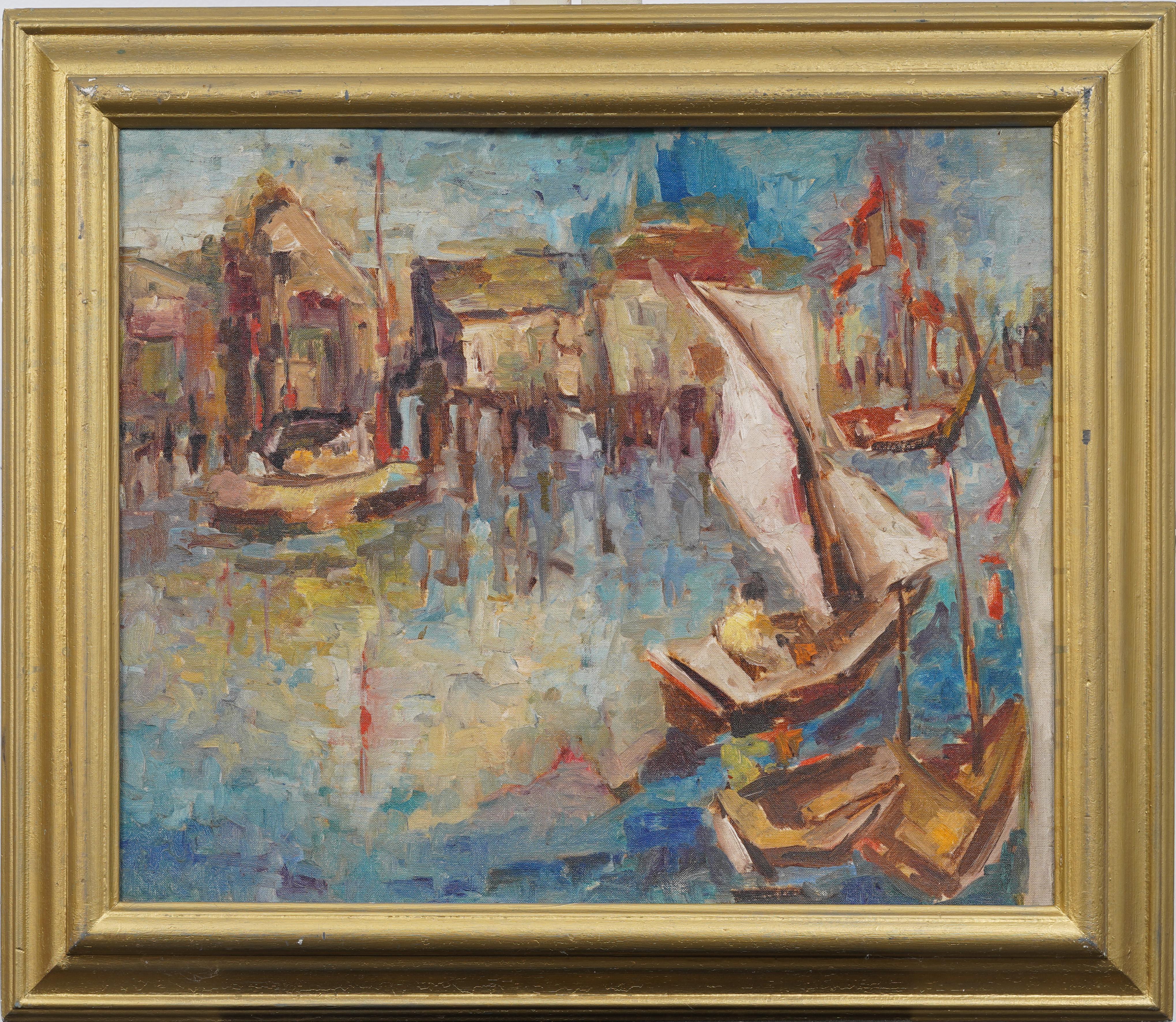
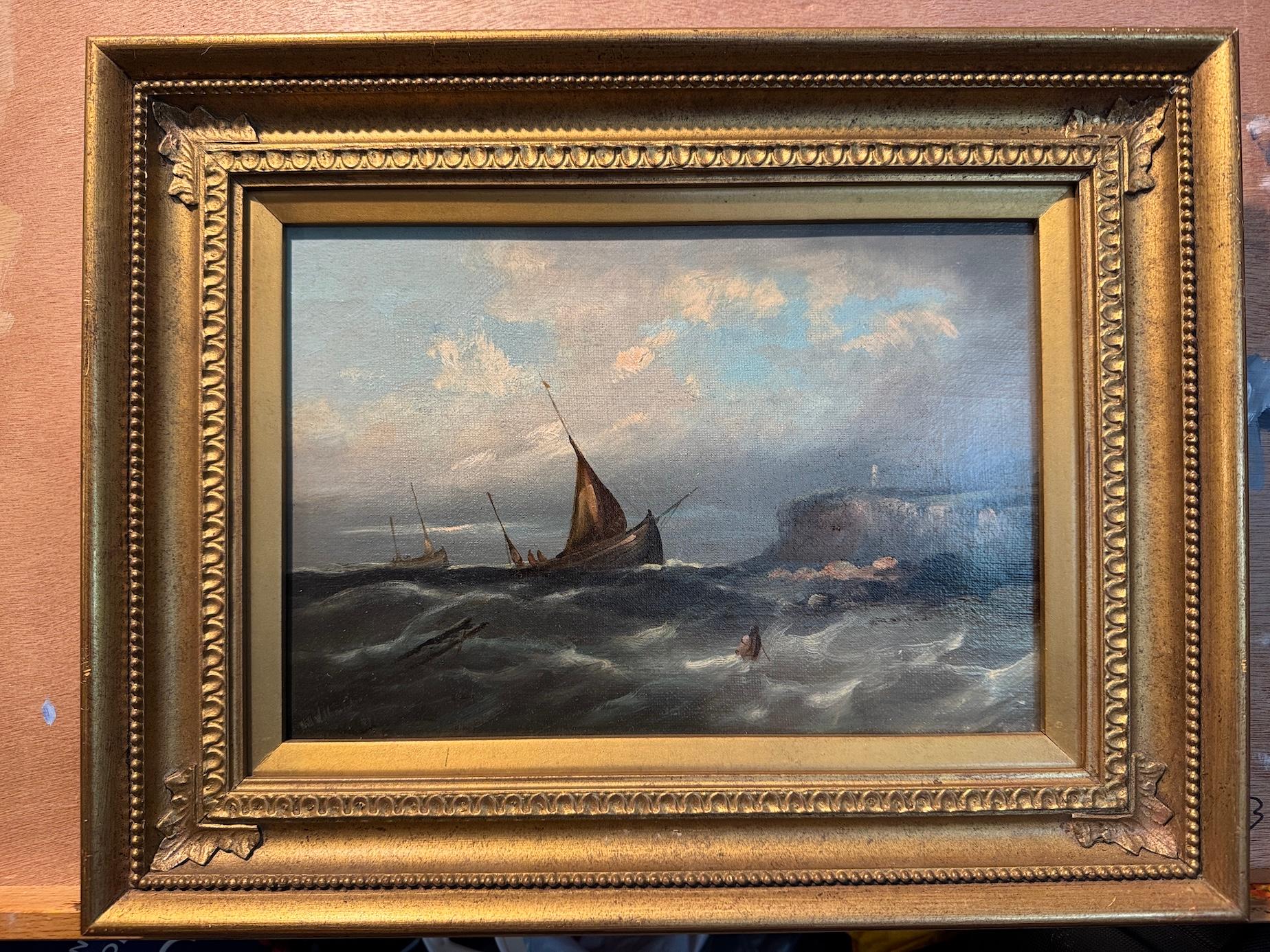
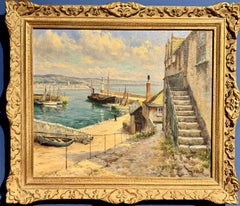
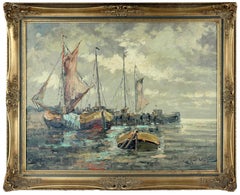
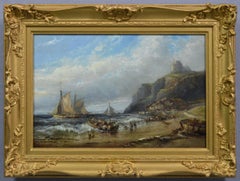
Mid Century Cornish Impressionist Fishing boats off the Cornish Coast

Circa 1960

$4,950
£3,708.74
€4,323.01
CA$6,967.21
A$7,091.90
CHF 4,036.85
MX$85,604.53
NOK 47,071.84
SEK 47,639.40
DKK 32,316.96

About the Item

Born in Whitchurch, Oxfordshire, Law was the son of an architect but his parents separated when he was quite young and he lived for a while, probably in the 1920s, with his mother and sister in Quimper in Brittany. His mother May LAW (Maisie), herself a keen amateur artist, encouraged his interest in art. He was educated at St Petroc's School, Rock in North Cornwall, which was owned by a Miss Vivian who had a house in Lamorna. His family probably holidayed with her in Lamorna in these early years. Later he trained as an electrical engineer at Faraday House, and worked in the Home Counties during WWII. After the war, he moved down to Lamorna with his second wife, Ann, as his sister was now the landlady of The Wink public house in the village. He took up painting full time, supplementing his income with a variety of odd jobs including fishing, copperwork, carving wood and making furniture, whilst his wife used a loom to weave textiles. He was greatly influenced by the leaders of the Lamorna artistic community, but did not take lessons with either Lamorna BIRCH or Stanley GARDINER, preferring to approach the artistic challenges of the Valley on his own terms. The painting has its original English Vintage frame.
  • Creator:
    Denys Law
  • Creation Year:
    Circa 1960
  • Dimensions:
    Height: 31 in (78.74 cm)Width: 36 in (91.44 cm)
  • Medium:
  • Movement & Style:
  • Period:
  • Condition:
    The painting is in perfect original condition.
  • Gallery Location:
    Woodbury, CT
  • Reference Number:
    1stDibs: LU507314724892

More From This Seller

View All
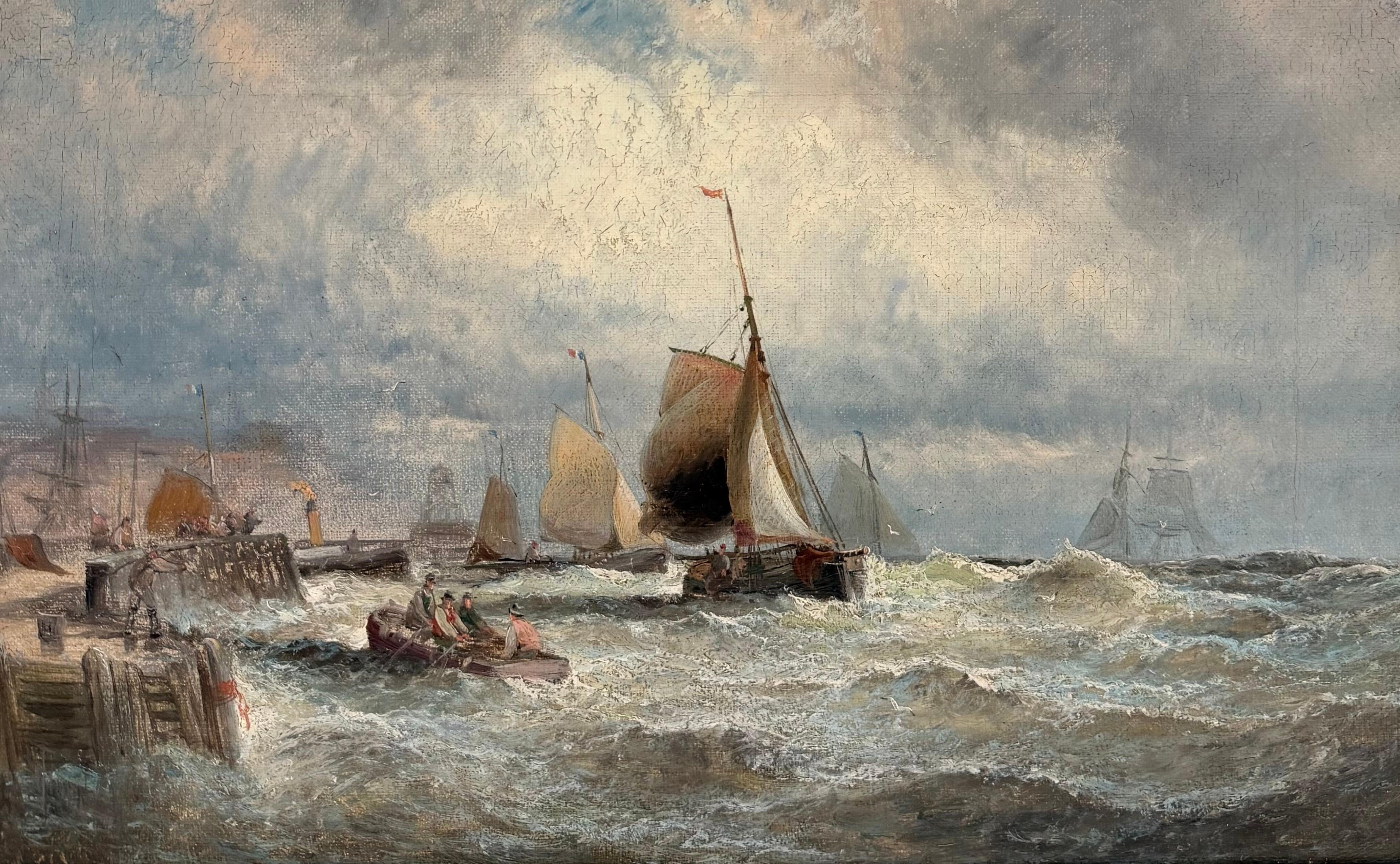
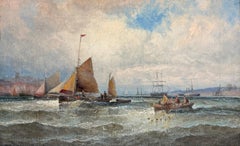
19th century English marine seascape, with fishing boats in the North Sea

19th century English marine seascape, with fishing boats in the North Sea

Located in Woodbury, CT

William Thornley was a painter of coastal scenes whose work is very similar to Hubert and Charles Thornley, who may have been members of the same family. He painted scenes of genre, architecture, and landscapes as well. A number of the landscapes were of Belgium, Holland, Italy, and Norway. However, it is for his seascapes that he is best remembered. Thornley’s works are beautifully detailed and show a masterful understanding of the moods of both weather and sea. They are often small in size and put together with fine detail and great artistic merit. Thornley’s fishing scenes are spirited and similar in style to those of “Jock” Wilson, and are often painted in pairs. Thornley’s works have always been popular when they appear on the art market. He was believed to have first exhibited marines at the Royal Academy in 1859 from an address in Paddington, London and also at the British Institution from 1861 until it closed in 1867. He continued to exhibit at the Royal Academy until 1898. Thornley also exhibited at the Paris Salon and the Salon of French Artists, receiving an honorable mention in 1881 and a third-place medal in 1888. William Thornley also went by the names Georges William and William...

Category

1870s Victorian Landscape Paintings

Materials

Canvas, Oil

Modern British landscape of Mousehole Regatta harbor with fishing boats

Modern British landscape of Mousehole Regatta harbor with fishing boats

Located in Woodbury, CT

Eric Ward (British, 20th Century) Mousehole Regatta, Cornwall Oil on canvas Signed lower right Eric Ward was a gifted British landscape and marine painter whose colourful interpretations of Britain’s coastal villages captured the charm and vitality of seaside life during the twentieth century. Working in a fresh Impressionist manner, Ward became particularly known for his evocative harbour scenes, where brilliant coastal light, shimmering reflections and the movement of sailing craft combined to create compositions of enduring decorative appeal. His paintings celebrate the unique character of Britain’s maritime heritage, especially the picturesque fishing communities of Cornwall. This delightful painting depicts the picturesque harbour of Mousehole, one of Cornwall’s most celebrated fishing villages, during the excitement of the annual regatta. Sheltered by its historic granite harbour walls, the tranquil waters are alive with traditional sailing boats, their colourful sails reflected in the calm sea beneath an expansive summer sky. Small rowing boats drift quietly in the foreground, while visitors stroll along the quayside, enjoying the festivities against a backdrop of whitewashed cottages climbing the hillside beyond. Ward masterfully captures the distinctive atmosphere that has attracted artists to Mousehole for well over a century. His confident brushwork and luminous palette beautifully convey the clarity of the Cornish light, where brilliant blues, soft turquoise waters and warm earth tones combine in perfect harmony. The vibrant red and white sails punctuate the composition with striking accents of colour, while the broken reflections dancing across the harbour create an impression of gentle movement and sparkling sunshine. Throughout the twentieth century, Mousehole became one of Britain’s most important artistic destinations, drawing painters inspired by its intimate harbour, traditional fishing boats and unspoilt coastal scenery. Ward continues this distinguished tradition, producing a work that balances careful observation with an impressionistic freedom, allowing colour and atmosphere to take precedence over meticulous detail. The result is a painting that is both instantly recognisable as one of Cornwall’s most beloved harbours and timeless in its celebration of the English seaside. Beautifully composed and executed with a lively painterly touch, this oil on canvas perfectly encapsulates the relaxed spirit of a Cornish regatta. Rich in colour, light and maritime character, it is an excellent example of Eric Ward’s coastal paintings and would make a charming addition to any collection of British marine art, Cornish paintings...

Category

Early 2000s Modern Landscape Paintings

Materials

Canvas, Oil

You May Also Like

Cornish Fishing Boats At First Light Mid-20th Century Cornwall Original Painting

Cornish Fishing Boats At First Light Mid-20th Century Cornwall Original Painting

By Joan Gillchrest

Located in Sutton Poyntz, Dorset

Joan Gillchrest. English ( b.1918 - d.2008 ). Cornish Fishing Boats At First Light. Oil On Paper Mounted On Board. Signed Monogram Lower Right. Image size 26.2 inches x 22 inches ( 66.5cm x 56cm ). Frame size 35.8 inches x 31.3 inches ( 91cm x 79.5cm ). Available for sale; this original oil painting is by the Cornish artist Joan Gillchrest and dates from around the late 1980s. The oil painting is presented and supplied in a sympathetic new replacement frame (which is shown in these photographs) that suits the artwork’s color palette and behind non-reflective Tru Vue UltraVue® UV70 glass. This painting is in excellent condition and presents superbly. It wants for nothing and is ready to hang and display. The painting is signed with her monogram lower right. Joan Gillchrest is one of Mousehole’s and Cornwall’s most recognised and celebrated artists. Her vibrant art sits firmly alongside other great artists of the St. Ives School from the 1960s. She was born Joan Scott in London in 1918 into a wealthy and illustrious family. She was the third of four children. Her father was a pioneer of radiology – and a skilful caricaturist - and her Australian mother was an accomplished pianist. Sir George Gilbert Scott was her great grandfather, who designed the imposing Midland Grand Hotel at St. Pancras as well as countless parish churches. Grandfather, George Gilbert Scott Jnr, is remembered for three Cambridge colleges, Christ’s, Pembroke and Peterhouse. Her uncle Giles, (Giles Gilbert Scott) to whom Joan was close, is best known for his magnificent Anglican Liverpool Cathedral, Battersea Power Station and the iconic and ubiquitous red telephone box. Coming from such a long line of eminent architects it is not surprising that Joan always loved architecture and the churches and chapels of the Penwith peninsula feature prominently in her work. She said that buildings were “in her blood”. Her early childhood was spent at the family home in Buckinghamshire, but she was a difficult child – the family hired one nanny for her and one for the other three children- and at one point she was sent to Upper Chine School in the Isle of Wright to give her family some peace! She was however the apple of her father’s eye and he encouraged her obvious artistic talent. In 1934, aged only 15 but encouraged by her parents, she went to Paris to study art and learn the language. There she met Gwen John and studied in various studios, sometimes working as a model. In 1936 she enrolled at the Grosvenor School of Art and subsequently studied there under Iain McNab, whom she described as a marvelous teacher. Her early artistic career was very promising; she first exhibited at the Royal Academy when she was just 18 and showed works at the New England Art Club in 1937 and the London Group in 1938. When the Second World War broke out Joan was 21. She took a crash course in nursing and first aid and volunteered as an ambulance driver for Westminster Hospital. She later drove a mobile rescue unit. She was not able to paint much during the war but kept in touch with McNab; when the area around St Paul’s was blitzed, leaving the cathedral relatively unscathed, McNab got Joan and a few others to paint the scene. Her work, created with a thick paint and a palette knife, hung in the art school for many years. Joan’s painting career stalled in the 1940s. In 1942 she married a barrister and Coldstream Guards officer Samuel Gillchrest, and they soon had a son, then a daughter. With a young family, she had little time to paint, and had to hide the work she did produce as her husband thought that work as an artist was beneath them. Sadly, the marriage broke down and in 1953 they divorced. In leaving a difficult marriage at this time, she forfeited money, security and her previous place in society. Despite the huge changes in her life, her overwhelming desire to paint remained constant. She ignored the disapproval of her friends and family and started to explore new ways of expressing herself on canvas. She moved to a studio in Chelsea, an area much favored by the artistic community. To support herself, her children and her painting she also found regular work as an artist’s model. She was tall, strikingly good looking and combined elegance with bohemianism. She also carried an air of mystery from her rich and privileged past, and so she became sought after as a fashion model. In the flat below hers lived an artist who had enjoyed some professional acclaim, Adrian Ryan...

Category

Mid-20th Century Modern Landscape Paintings

Materials

Paper, Oil, Board

Contemporary Impressionist Marine Oil of Sailing boats at  Fowey Cornwall UK

Contemporary Impressionist Marine Oil of Sailing boats at Fowey Cornwall UK

By Frits Johan Goosen

Located in ludlow, GB

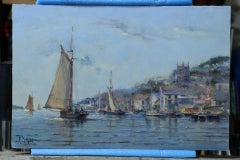
Contemporary Impressionist Marine Oil Painting of Sailing boats on the River Fowey with the town in the background at Fowey Cornwall UK Sailing Boats on the Fowey River Oil on Pane...

Category

21st Century and Contemporary Impressionist Landscape Paintings

Materials

Oil

19th Century seascape oil painting of fishing boats near a coastal village

19th Century seascape oil painting of fishing boats near a coastal village

By George Gregory

Located in Nr Broadway, Worcestershire

George Gregory British, (1849-1938) Fishing Boats by the Coast Oil on canvas, signed & dated 1880 Image size: 11.25 inches x 17.25 inches Size including frame: 17.25 inches x 23...

Category

19th Century Victorian Landscape Paintings

Materials

Canvas, Oil