Want more images or videos?
Request additional images or videos from the seller
1 of 10

Jean Mannheim
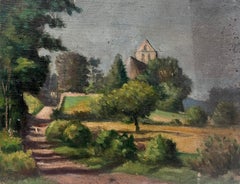
Pathway to the Church, Pasadena c. 1915

c. 1915

$34,000
£25,717.27
€30,028.37
CA$48,421.33
A$49,129.14
CHF 28,065.66
MX$594,831.36
NOK 329,718.05
SEK 329,281.43
DKK 224,474.28

About the Item

Consigned to the gallery, Pasadena, California; H&N Fine Art, from the Katherine A. Norris Legacy Collection; John Moran Auctioneers, Altadena, CA, February 17, 2004, lot 104A. Signed "J. Mannheim" on lower left Description: Jean Mannheim’s Pathway to the Church presents an expansive and serene California landscape, likely set in the Pasadena area where the artist lived and worked. A solitary figure walks along a narrow dirt path through an open field, flanked by towering stands of eucalyptus, toward a small white chapel crowned with a red-tiled roof and slender steeple. In the distance, through a gap in the trees, the fading blue of the evening sky meets the soft purple silhouettes of the San Gabriel Mountains. Prominent yucca plants in the foreground signal the location as the Arroyo Seco, near Mannheim’s home on South Arroyo Boulevard. Bathed in warm, diffused light, the composition blends the atmospheric restraint of tonalism with the vibrant naturalism of early California Impressionism. The absence of harsh shadows suggests the hush of early evening, imbuing the scene with a quiet, contemplative mood—as though the lone figure is drawn toward the church in search of redemption, solace, or spiritual reflection. Historical Significance Painted around 1915, this work reflects Mannheim’s deep engagement with Southern California’s developing communities during the early 20th century. Eucalyptus-lined avenues were a hallmark of the region’s evolving landscape, and churches such as this served as cultural anchors in small towns. Mannheim, an influential art educator and founding faculty member at the Stickney Memorial Art School in Pasadena, played a key role in shaping the city’s burgeoning art colony. His works from this period often celebrate both California’s natural beauty and its human stories. Framing Presented in a finely hand-carved gilt frame, featuring clean, architectural lines that harmonize with the painting’s composition and sense of place. UNFRAMED: 28.25" x 36.5" FRAMED: 37" x 45" x 1.875" Condition Very good condition overall, commensurate with age. Canvas is stable with no apparent tears or significant losses. Colors remain vibrant and the varnish is even. On Verso “Katherine Norris Fine Art” label “American Legacy Fine Arts” label “FACL” label ID # 05-234 White hand-written label with title and Inv # "103" Published Reproduced in the artist’s biography. The painting is featured and docutedmen in "From a Versatile Brush: The Life and Art of Jean Mannheim," written by his great-grandson Richard W. Reitzell, published by Arroyo Publishing, Los Angeles, January 2011, on page 160 Exhibited Scenic Route: A Half Century of California Discovery, 1900-1950, American Legacy Fine Arts, Pasadena, California, August 15 - October 11, 2025 Early California Masters: Paintings from the Katherine A. Norris Legacy Collection, American Legacy Fine Arts, Pasadena, California, November 12 - December 19, 2021
  • Creator:
    Jean Mannheim (1863 - 1945, American)
  • Creation Year:
    c. 1915
  • Dimensions:
    Height: 37 in (93.98 cm)Width: 45 in (114.3 cm)Depth: 1.8 in (4.58 cm)
  • Medium:
  • Movement & Style:
  • Period:
  • Condition:
  • Gallery Location:
    Pasadena, CA
  • Reference Number:
    Seller: JMann-00011stDibs: LU58837388262

More From This Seller

View All
Arroyo Grove, c. 1940s

Arroyo Grove, c. 1940s

By Samuel Hyde Harris

Located in Pasadena, CA

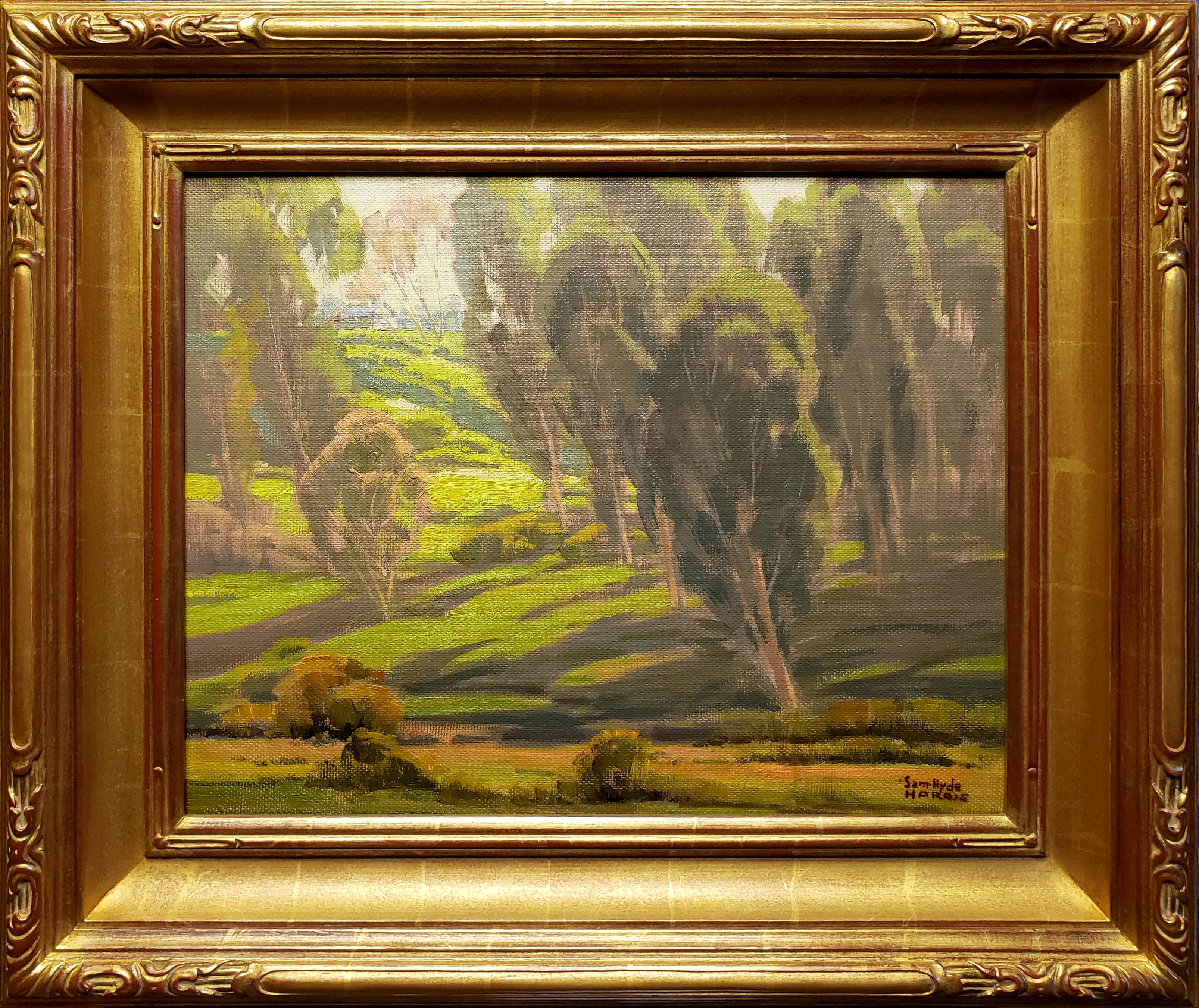
Consigned to American Legacy Fine Arts by H&N Fine Art as part of the Katherine A. Norris Legacy Collection, Newport Beach, California; Bonham’s California, April 11, 2005, lot 205, sold for $7,000; Estate of Sam Harris Signed "Sam Hyde Harris...

Category

1940s Abstract Expressionist Landscape Paintings

Materials

Oil, Panel, Masonite

Mountain Landscape - Sierra Nevada, c. 1927

Mountain Landscape - Sierra Nevada, c. 1927

By Jack Wilkinson Smith

Located in Pasadena, CA

Provenance Consigned to the gallery by private collectors Signed "Jack Wilkinson Smith" lower left Description Jack Wilkinson Smith was a New York-based illustrator before moving o...

Category

1920s Impressionist Landscape Paintings

Materials

Oil, Panel

Natures Alleyway; Ojai Meadow Preserve

Natures Alleyway; Ojai Meadow Preserve

By Steven Curry

Located in Pasadena, CA

Acquired by the gallery directly from the artist FRAMED: 22' x 14" x .75" UNFRAMED: 16" x 10" Signed on lower right Artist Statement " 'Natures Alleyway' was yet another Ojai Val...

Category

2010s Impressionist Landscape Paintings

Materials

Linen, Oil, Panel

Light in August; Trail up to Strawberry Peak, San Gabriel Mountains

Light in August; Trail up to Strawberry Peak, San Gabriel Mountains

By Peter Adams

Located in Pasadena, CA

Acquired by the gallery directly from the artist FRAMED: 49" x 39" x 1.5" UNFRAMED: 40" x 30" Signed "Peter Adams" on lower right Artist Statement "This painting was inspired by ...

Category

2010s Impressionist Landscape Paintings

Materials

Oil, Canvas

Cows in Summer Landscape (California Coastal Ranch, Carmel Valley), c. 1914

Cows in Summer Landscape (California Coastal Ranch, Carmel Valley), c. 1914

By Angel De Service Espoy

Located in Pasadena, CA

Consigned to the gallery; By descent to the Katherine A. Norris Legacy Collection, Huntington Beach, California; Acquired by Katherine A. Norris, Newport Beach, California; From John...

Category

Early 20th Century Impressionist Landscape Paintings

Materials

Canvas, Masonite, Oil, Panel

Golden Foothills; Carmel Valley

Golden Foothills; Carmel Valley

By Ray Roberts

Located in Pasadena, CA

Acquired by the gallery directly from the artist UNFRAMED: 30" x 40" FRAMED: 39" x 49" x 2.5" Signed "Ray Roberts" on lower right Artist Statement "In Golden Foothills, I explore...

Category

2010s Impressionist Landscape Paintings

Materials

Linen, Oil

You May Also Like

1930's French Painting Stair Way Path Leading Up To Church Grey Skies

1930's French Painting Stair Way Path Leading Up To Church Grey Skies

By Edmond Quinton

Located in Cirencester, Gloucestershire

French Countryside Landscape by Edmond Quinton (French 1892-1969) *see notes below oil painting on canvas stuck on board/ panel, unframed size: 7.5 x 9.5 inches condition: overall go...

Category

Early 20th Century Impressionist Landscape Paintings

Materials

Oil

Landscape with a Cart Path

Landscape with a Cart Path

By Theodore Victor Carl Valenkamph

Located in Milford, NH

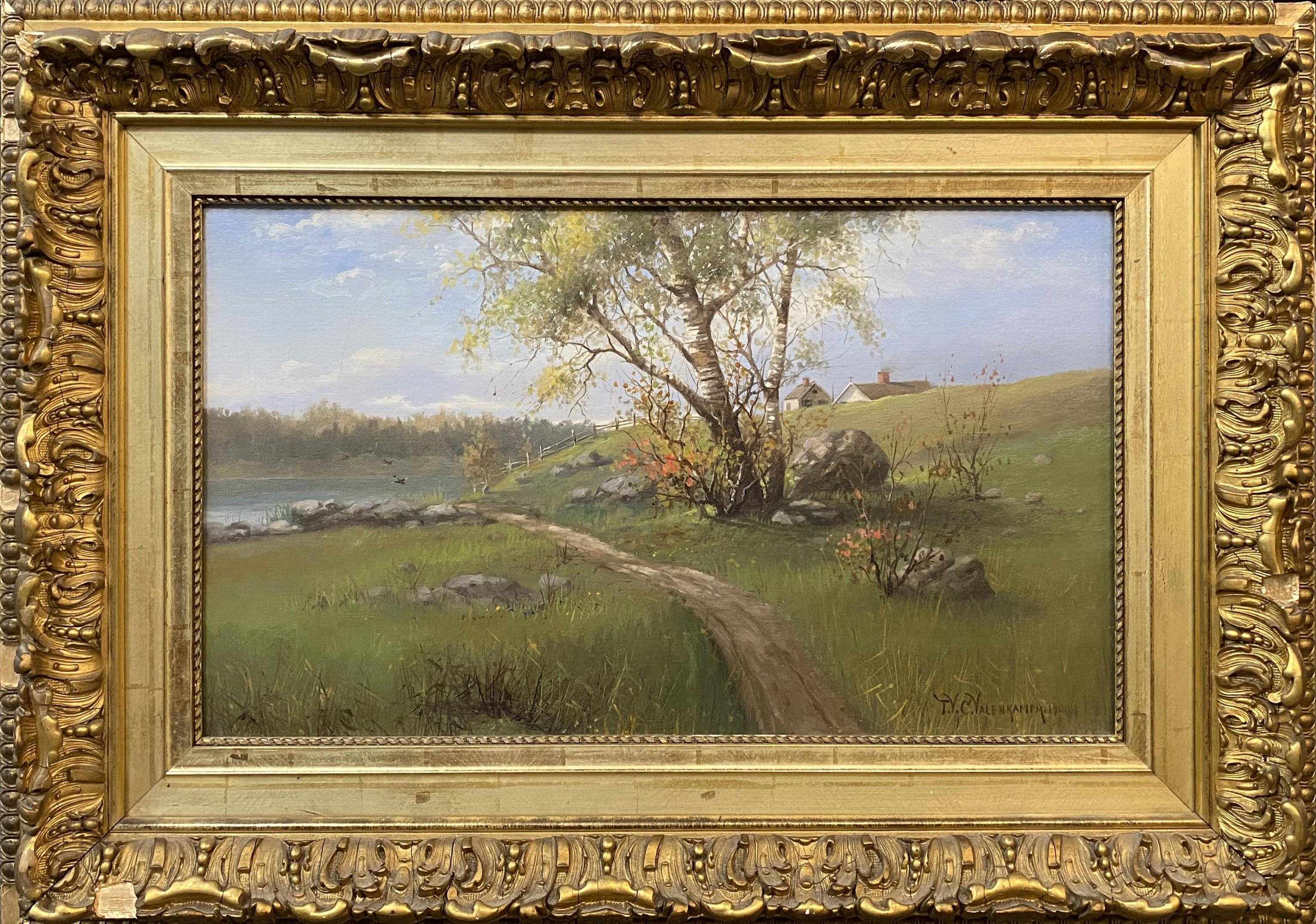
A fine New England landscape with a cart path and birch tree by Swedish-American artist Theodore Victor Carl Valenkamph (1868-1924). Valenkamph was born in Stockholm, Sweden, and emi...

Category

Early 1900s American Impressionist Landscape Paintings

Materials

Canvas, Oil

"PALA MISSION" Northern San Diego County California Reservation.

"PALA MISSION" Northern San Diego County California Reservation.

By Paul Grimm

Located in San Antonio, TX

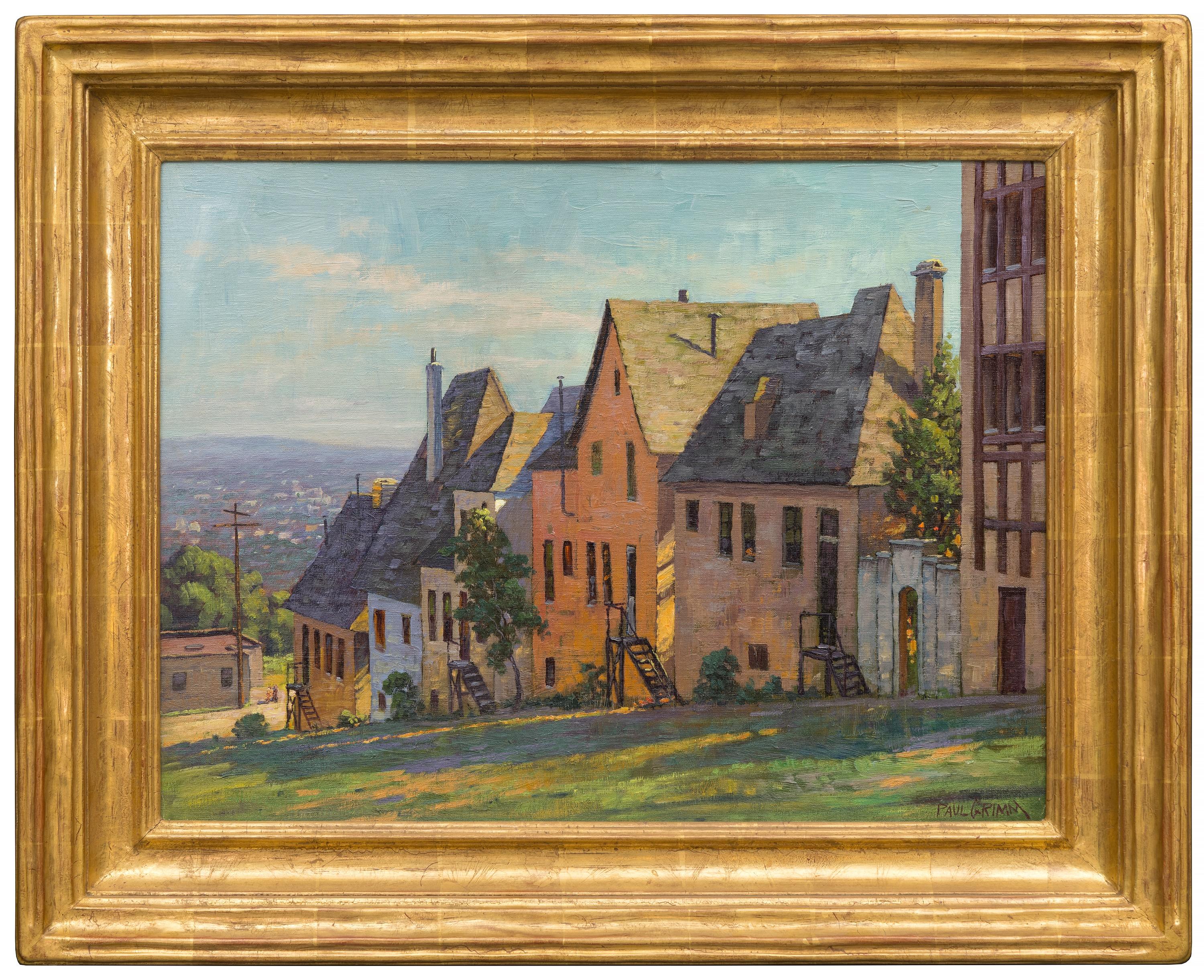
Paul Grimm (1891-1974) California Artist Image Size: 24 x 30 Frame Size: 31 x 37 Medium: Oil on Canvas Dated 1953 "Pala Mission" The San Antonio de Pala Asistencia, or the "Pala Mission", was founded on June 13, 1816, as an asistencia or "sub-mission" to Mission San Luis Rey de Francia, some twenty miles inland upstream from the latter mission on the San Luis Rey River. Pala Mission was part of the Spanish missions, asistencias, and estancias system in Las Californias—Alta California. Today it is located in the Pala Indian Reservation located in northern San Diego County, with the official name of Mission San Antonio de Pala.[2][4] It is the only historic mission facility still serving a Mission Indian tribe. Pala (a derivation of the native term Pale, meaning water) was essentially a small rancho surrounded by large fields and herds. The Pala site had been noted by Father Juan Mariner and Captain Juan Pablo Grijalva on an exploratory trip in 1795, when they went up the San Diego River, and then through Sycamore Canyon to the Santa Maria Valley (or Pamó Valley) and into what they named El Valle de San José, now known as Warner Springs. Once Mission San Luis Rey began to prosper, it attracted the attention of numerous mountain Native Americans in the area, who were called the Luiseño by the Spanish. Spanish era The Franciscan fathers chose this site for the Pala Mission because it was a traditional gathering place and village for the Native American residents. Father Peyrí oversaw the addition of a chapel and housing to the granary complex, which was constructed at the spot in 1810.[4] The chapel's interior wall surfaces featured paintings by native artists, originally measuring 144 by 27 feet. Workers went into the Palomar Mountains and cut down cedar trees to use as roof beams.[5] Pala is unique among all of the Franciscan missions in that it boasts the only completely freestanding campanile, or "bell tower," in all of Alta California. By 1820, some 1,300 baptisms had been performed at the outpost.[6] Folk tales about the mission include mention of a prickly pear cactus, which became a local symbol of Christian victory, that grew up at the foot of the cross.[7] Mexican era After the nation achieved independence from Spain, the Mexican Congress passed An Act for the Secularization of the Missions of California on August 17, 1833 (the act was ratified in 1834).[8] Father Buenaventura Fortuna surrendered Mission San Luis Rey and all its holdings, including Las Flores Estancia and the Pala Asistencia, to government comisianados (commissioners) Pío Pico and Pablo de la Portillà on August 22, 1835; the assessed value of "Rancho de Pala" was $15,363.25.[9] More than a decade later, fearful of the impending conquest of Alta California by the United States as a result of the Mexican–American War...

Category

20th Century Impressionist Landscape Paintings
Materials

Oil