Want more images or videos?
Request additional images or videos from the seller
1 of 5

William Webb
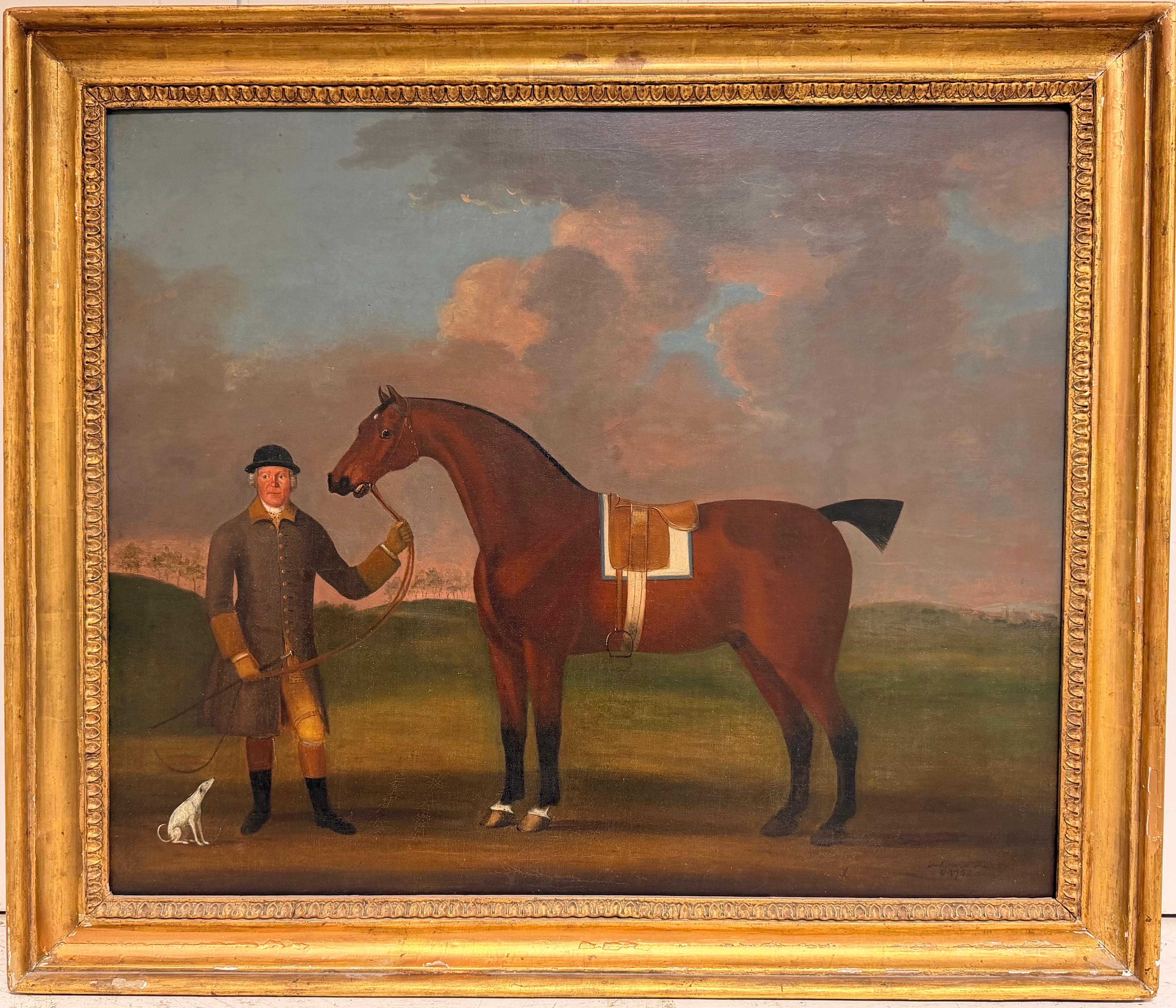
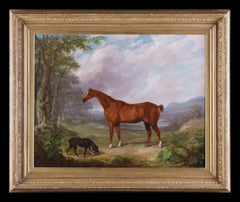
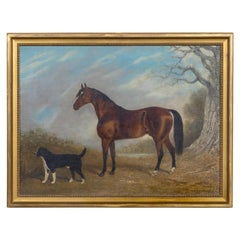
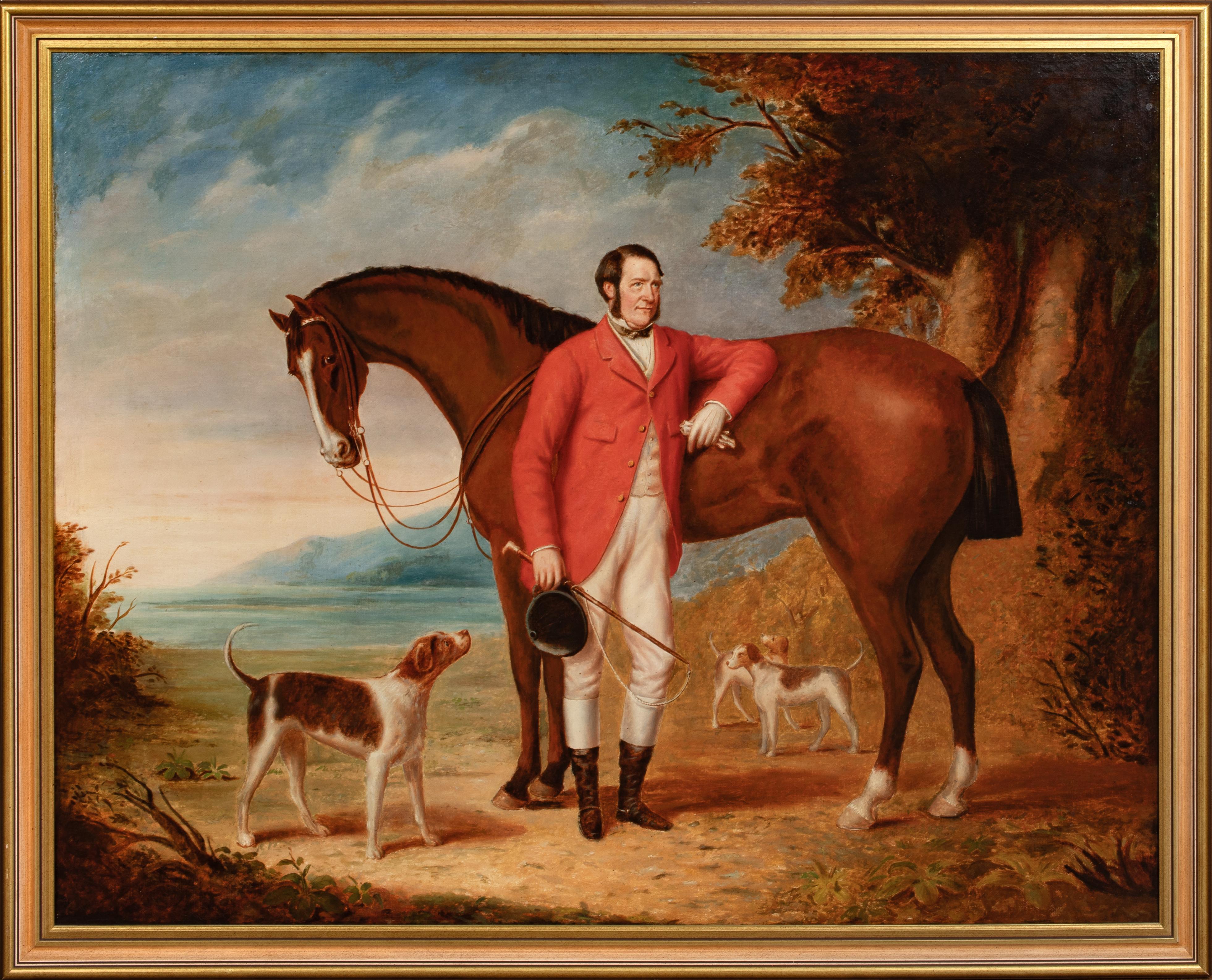
Maryann, A Chestnut hunter and a Spaniel in front of Kirby Mallory Hall

$8,924.18
£6,500
€7,727.59
CA$12,506.39
A$12,663.03
CHF 7,203.96
MX$153,895.47
NOK 85,154.39
SEK 84,707.04
DKK 57,765.64

About the Item

Maryann, A Chestnut hunter and a Spaniel in front of Kirby Mallory Hall, Leicestershire Signed and Dated 1829 Oil on canvas 23 ½ x 29 ½ inches THE ARTIST William Edward Webb (1862-1903) was a British marine and landscape painter renowned for his atmospheric coastal scenes. Born in Cheltenham, Gloucestershire, he later settled in Manchester, where he developed a distinctive style characterised by loose brushwork, warm tones, and a keen sense of light. Influenced by J.M.W. Turner, Webb’s works often depict tranquil harbours and bustling port towns across the British Isles, including the Isle of Man, Cornwall and Norfolk. THE SOUTHWELL COLLECTION Everett Fine Art is excited to present this remarkable collection of paintings assembled over generations by the Southwell family, once resident at Kings Weston House, a fine 18th-century estate on the outskirts of Bristol. The collection was first established during the 18th and early 19th centuries, and many of the works were personally chosen for the enjoyment they brought. When Kings Weston was sold in 1833, much of the collection passed to the Russell branch of the family. The Russells continued to enrich the collection through the 19th century, commissioning works that reflected the interests and pastimes they valued-most notably, portraits of family members, horses and beloved pets. Thanks to the generosity of the Inge family, who acted as custodians during the 20th century, the collection remained largely intact. In more recent years, the paintings returned to family ownership, where they have been carefully restored and preserved by Lord de Clifford (27th Baron de Clifford). Now, a number of these works are offered for sale.
  • Creator:
    William Webb (1780 - 1846, British)
  • Dimensions:
    Height: 23.5 in (59.69 cm)Width: 29.5 in (74.93 cm)
  • Medium:
  • Period:
  • Condition:
  • Gallery Location:
    Taunton, GB
  • Reference Number:
    1stDibs: LU2028217353692

More From This Seller

View All
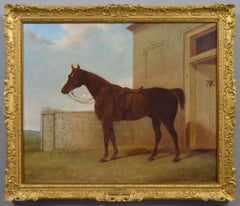
Bander Bee and Trojan, a favourite Hunter and a Fox hound in a Stable Yard

Bander Bee and Trojan, a favourite Hunter and a Fox hound in a Stable Yard

By John Emms

Located in Taunton, GB

Bander Bee and Trojan, a favourite Hunter and a Fox hound in a Stable Yard Signed and inscribed Oil on canvas THE SOUTHWELL COLLECTION Everett Fine Art is excited to present this...

Category

Late 19th Century Animal Paintings

Materials

Oil

A pair of Military Encampments with Horses

A pair of Military Encampments with Horses

Located in Taunton, GB

A Military Encampment with Horses held by a Groom, and A Military Encampment with a Grey Horse and a Hound Oil on canvas in carved wood frames 17 ¼ x 21 ¼ in A Pair (2) THE ARTI...

Category

17th Century Figurative Paintings

Materials

Oil

A group portrait of the Southwell family with a Negro Page and Macaw

A group portrait of the Southwell family with a Negro Page and Macaw

By Charles Philips

Located in Taunton, GB

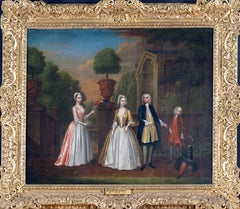
A group portrait of the Southwell family on the terrace with a negro page and Macaw. Oil on canvas Signed and dated 1731 Canvas size 25 x 30 ¼ inches 63.5 x 77 cms Frame exterior 32 x 37 ¼ inches 81 x 94.5 cms This evocative family portrait offers a glimpse into the life of 18th Century English nobility. The Southwells are a noble family whose roots go back to the early 17th Century. In 1776 Edward Southwell III was granted the Barony of de Clifford (a title in abeyance at the time), and the line extends to today, with the 28th Baron de Clifford sitting in the House of Lords. Charles Phillips (1708-1747) was a leading portraitist of his time, having painted many noble and royal portraits. Two of his paintings are part of the Royal Collection Trust. In this portrait, signed and dated 1731, we see Edward Southwell Sr (1671-1730) and his family on the grounds of their Estate, Kings Weston House near Bristol. On the far left is Mrs. Helena Le Grand (Edward’s sister). Next to her is Mrs. Southwell (Edward’s second wife, the first having died in 1709). On the right is Edward Southwell Jr (1705-1755), Edward’s son by his first marriage and next to him a “Negro Page” (in the euphemistic words of an old label on the painting; more on him below.) Phillips has arranged the figures in an arc, anchoring the composition. The arc stretches from Mrs. Le Grand’s red dress on the left, through the colourful parrot, onward to the heads of Mr. and Mrs. Southwell, down again to the younger Southwell and finishing on the right with the enslaved boy. As Edward Sr. died in 1730, this must be a posthumous portrait, making it especially poignant. (Presumably Phillips used another portrait to capture his likeness.) One can imagine the late Edward’s family looking affectionately at the portrait, remembering the time spent with him on the grounds of Kings Weston House. Southwell stands between wife and son, eyes directed toward one, hand pointed toward the other, symbolically balancing the needs of both. Devoted husband and father? Perhaps. Slave-owner as well. English noble families of the 18th Century often had financial and practical connections with the slave trade. The Southwells themselves were granted a tract of land by the Crown in 1766, which Edward Southwell III (1738-1777) – the son of the younger Southwell in the portrait – developed with partners into a plantation worked by slave labour. This portrait shows us that slave ownership was not always a matter for distant colonies. This young boy, likely deprived of his freedom from birth (born to enslaved parents), was made to serve the Southwell family in their home. We see him here sitting half cross-legged, wearing a house servant’s uniform and a faint smile. He gaze is turned upward; at first we think is looking at his Master, then we realise he must be in fact enjoying the sight of the parrot eating from the hand of his Master’s sister. Phillips has placed him on the ground, beneath the rest of the family in pose as in station. Yet here he is in this portrait just the same, as if he were a member of the family. Was the family fond of him? Was he a playmate of the younger Southwell? Or was he simply there in the Garden that day to serve them their refreshments? The answers to these questions must remain unanswered, known only to the sitters frozen in time by Phillips’ paintbrush. Three centuries later we are fortunate to have this portrait as a snapshot of 18th Century England, both its nobility and its baseness. Charles Philips, the son of a portraitist, likely acquired his artistic skills from his father. He specialised primarily in painting small portraits and conversation pieces. George Vertue observed that in painting small figure portraits and conversation scenes, Philips gained significant recognition and patronage among fashionable circles, including members of the Royal Family. In 1732, he produced conversation works for the Duchess of Portland and the Duke of Somerset. During the 1730s, his conversation pieces became increasingly complex, featuring more numerous subjects engaged in a greater variety of activities. Following the precedent set by contemporaries such as Philippe Mercier and William Hogarth, both prominent painters of small-scale conversation pieces, Philips transitioned into the more lucrative field of portrait painting later in the decade. His career peaked in 1737 when he painted full-length portraits of the Prince and Princess of Wales. The Prince of Wales was renowned for his patronage of the arts, particularly towards immigrant artists including Jacopo Amigoni and Philippe Mercier, who were principal influences on Philips. Two of Philips' paintings in the Royal Collection depict fashionable London clubs not recorded elsewhere. The first, from 1732, shows Frederick...

Category

18th Century Portrait Paintings
Materials

Oil

Portrait of Lady Mary Burke, later Wife of Edward Southwell

Portrait of Lady Mary Burke, later Wife of Edward Southwell

Located in Taunton, GB

Portrait of Lady Mary Burke, later Wife of Edward Southwell, 2lst Baron, three-quarter length seated, wearing Red Coat and Fur Robes, a Landscape beyond Signed Oil on canvas 55 x ...

Category

18th Century Portrait Paintings
Materials

Oil

Sophia, Lady de Clifford and her Children

Sophia, Lady de Clifford and her Children

By Daniel Gardner

Located in Taunton, GB

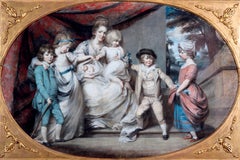
Sophia, Lady de Clifford and her Children Pastel Oval THE ARTIST Daniel Gardner (1750-1805) was an inventive portrait painter known for blending pastel, gouache, and graphite to ...

Category

18th Century Portrait Paintings
Materials

Pastel

Portrait of Edward Southwell, three quarter length

Portrait of Edward Southwell, three quarter length

By Thomas Hudson

Located in Taunton, GB

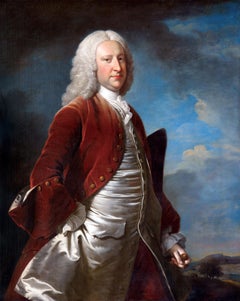
Portrait of Edward Southwell, three quarter length standing in a landscape, wearing a rust coat and a white satin waistcoat holding his cane Inscribed Oil on canvas in a carved woo...

Category

18th Century Portrait Paintings
Materials

Oil

You May Also Like

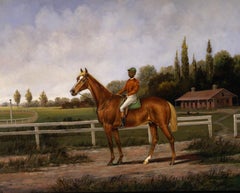
Chestnut Racehorse with a Jockey Up On a Training Strap

Chestnut Racehorse with a Jockey Up On a Training Strap

By Henry H. Cross

Located in New York, NY

It was Henry Cross's portraits of horses belonging to the prominent breeders and trainers of the second half of the nineteenth century that won the artist renown as an animal painter. Born and raised in upstate New York, Cross's proficiency in both drafting and caricature was revealed while he was still a student at the Binghamton Academy, New York. In 1852, when he was only fifteen years old, Cross joined a traveling circus that took him to Minneapolis, Minnesota, and to the first of many Indian encampments that he would draw upon for subject matter throughout his career. Biographers differ as to the year Cross left for Europe, however, he was in Paris from 1852 to 1853 or 1854, where he studied with Rosa Bonheur, a highly esteemed French painter of horses. Upon Cross's return to the United States he was commissioned to paint the studs of wealthy horsemen, including those of Commodore Cornelius Vanderbilt, Robert Bonner, the owner-publisher of The New York Ledger, and "Copper King" Marcus Daly, whose 18,000 acre stock farm was reputed to be the greatest and most valuable horse ranch in the world. Although Cross received the highest pay of any equine artist of his day (up to $35,000. for one order, according to The Horse Review of April 10, 1918, p. 328), he frequently joined traveling circuses and painted the locales where they visited. He also painted portraits of notable contemporaries, such as President Abraham Lincoln, ex-president Ulysses S. Grant, King Edward VII of England, W. F. "Buffalo Bill...

Category

19th Century American Realist Animal Paintings

Materials

Canvas, Oil

19th Century sporting horse portrait oil painting of a chestnut hunter

19th Century sporting horse portrait oil painting of a chestnut hunter

By Abraham Cooper

Located in Nr Broadway, Worcestershire

Abraham Cooper RA British, (1787-1868) A Surrey Hunter Oil on canvas, signed with monogram & dated 1850, further inscribed bottom left Image size: 24 inches x 29 inches Size includi...

Category

19th Century Victorian Animal Paintings

Materials

Canvas, Oil

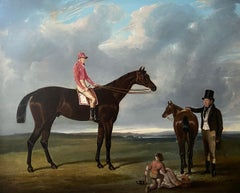
A Racehorse with Owner and Jockey, 19th Century Equine Oil Painting

A Racehorse with Owner and Jockey, 19th Century Equine Oil Painting

By Harry Hall

Located in London, GB

Oil on canvas Image size: 25 1/2 x 19 1/2 inches (40 x 50 cm) 19th century gilt pierced frame This is a wonderful scene featuring a dark bay racehorses mounted by its jockey. The pa...

Category

Mid-19th Century Victorian Animal Paintings

Materials

Canvas, Oil

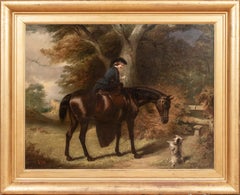
19th Century English Sporting Painting with Horse and Terrier Dog

19th Century English Sporting Painting with Horse and Terrier Dog

Located in Atlanta, GA

A late 19th-century English sporting painting depicting a saddled horse and a small dog set within an open landscape. The composition is structured with the horse in profile as the c...

Category

Antique 19th Century English Paintings

Materials

Canvas, Wood