Want more images or videos?
Request additional images or videos from the seller
1 of 11

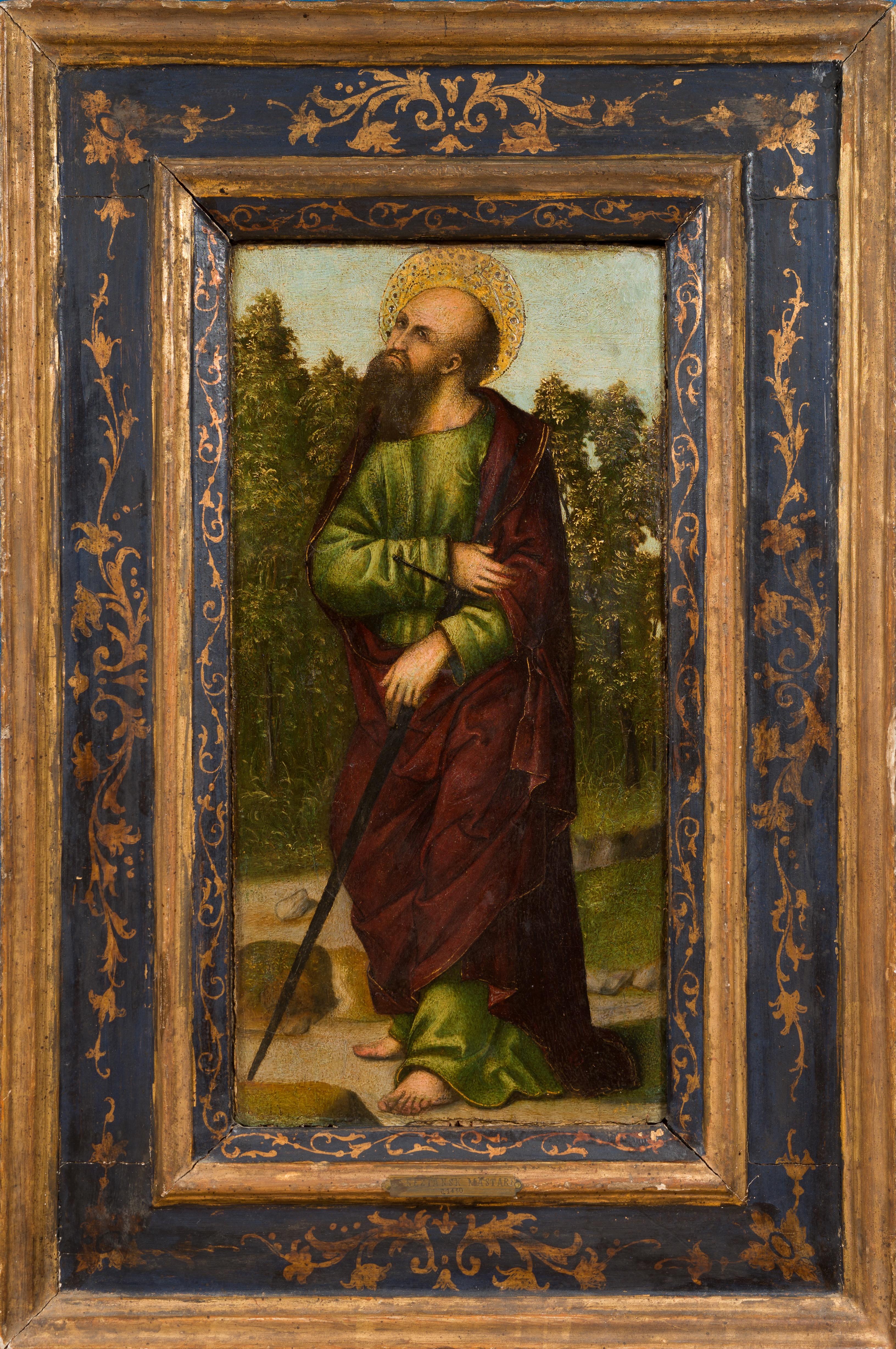
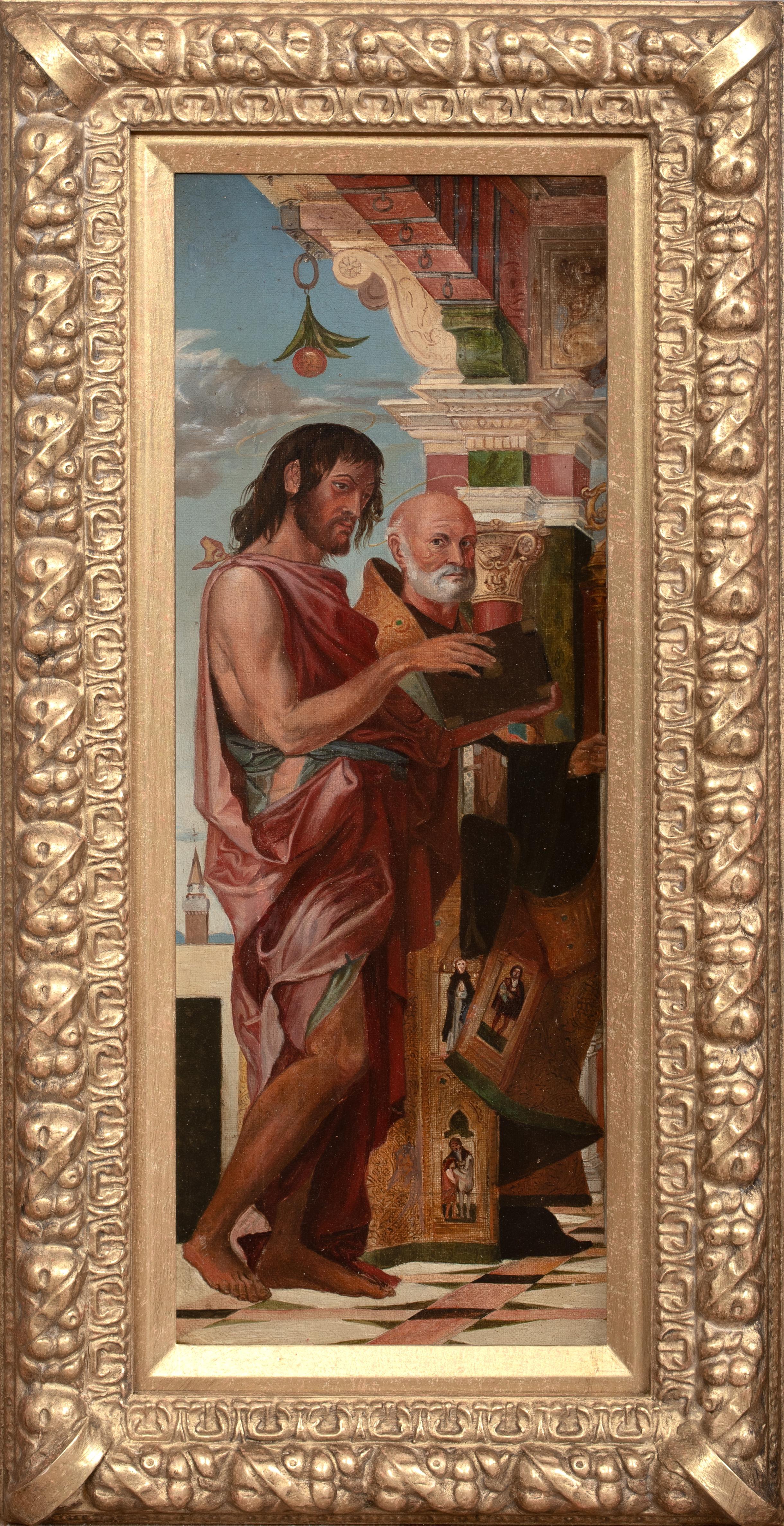
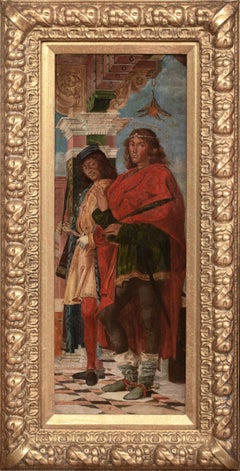
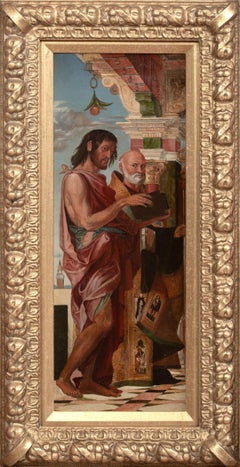
Saint Cosmas And Saint Damian Attributed To Bonifacio Bembo

circa 1454 -1458

$248,500
£187,311.54
€219,084.77
CA$351,727.65
A$358,109.77
CHF 206,238.91
MX$4,314,946.55
NOK 2,393,415.82
SEK 2,414,808.69
DKK 1,637,568.28

About the Item

Attributed to Bonifacio Bembo c.1444-1477 Italy Saint Cosmas and Saint Damian Tempera on panel These exceptionally rare early Renaissance panels of Saint Cosmas and Saint Damian are an extraordinary new discovery. Based on the research of art historians Marco Tanzi and Andrea de Marchi, it is believed that these represent the missing panels from the famed polyptych formerly displayed on the altar of the Chapel of San Nicola da Tolentino in the Church of Sant’Agostino in Cremona, Italy. To find two matching early Renaissance panels outside of a museum or church, particularly in such remarkable condition, is an extraordinary rarity. The central and left-sided panels of the original five-part polyptych are currently in the collection of the Museo Civico Ala Ponzone in Cremona. These panels have luckily remained intact, and respectively portray the Madonna and Child Enthroned with Angels and Donor, Saint Nicholas of Tolentino (the chapel’s namesake) and Saint George. While the present panels have since been reduced, that they belong to the Cremonese altarpiece is confirmed by a number of stylistic elements. All five panels contain the same rich decorative arabesque pattern on their stamped gold background, while the figures’ knurled haloes are identical in both their fineness of line and use of perspective. The proportions of the figures coincide perfectly; Saints Cosmas and Damian would have originally also been depicted as full-length figures, fitting into the vertical, Gothic style of the altarpiece. According to the Christian religion, Saint Cosmas and Saint Damian were 3rd century physicians born in Arabia. Little is known about their lives except that they were reputedly twin brothers and that they were martyred in Syria during the persecution of Emperor Diocletian. It was believed that the saints were skilled in healing, and when their medicines failed, their faith and prayers could always perform miracles. Thus, the saints are often depicted with their medical equipment while wearing the traditional medieval doctor’s garb of crimson robes and distinctive round red hats. The saints are similarly depicted in the present panels, though considering the manner in which they have been cut, their medical tools are not immediately evident. The saints were highly popular as patrons of wealthy families during the Gothic and Renaissance eras, particularly the Medici, and thus they occur frequently in art from the era. The twins, for instance, are found in the famed San Marco Altarpiece by Fra Angelico in the San Marco Museum (Florence), as well as in a set of Medici panels crafted by Filippo Lippi currently in the collection of the National Gallery (London). Along with the remainder of the Cremonese altarpiece, these present panels have been attributed to the Northern Italian Renaissance painter Bonifacio Bembo. Active in Cremona throughout the 15th century, he would have been a natural choice for the construction of the altarpiece, which was to be part of a new chapel dedicated to San Nicola da Tolentina in the church of Sant'Agostino in Cremona. The Cavalcabò chapel, which is also in the Sant'Agostino, is similarly attributed to him. Several other of his works can be found in museums and churches throughout Italy and beyond, including the Pinacoteca di Brera (Milan), Denver Museum of Art, and the Musée des Arts Décoratifs (Paris), among others. Circa 1454-1458 Panel: 14 5/8” high x 11 3/8” wide, (37.15 x 28.89 cm) Frame: 22 3/4” high x 19 1/2” wide x 2 1/2" deep (57.79 x 49.53 x 6.35 cm)
  • Attributed to:
    Bonifacio Bembo (1444 - 1477)
  • Creation Year:
    circa 1454 -1458
  • Dimensions:
    Height: 22.75 in (57.79 cm)Width: 19.5 in (49.53 cm)Depth: 2.5 in (6.35 cm)
  • Medium:
  • Movement & Style:
  • Period:
  • Condition:
  • Gallery Location:
    New Orleans, LA
  • Reference Number:
    Seller: 30-86951stDibs: LU1865797082

More From This Seller

View All
Virgin and Child with the Infant Saint John

Virgin and Child with the Infant Saint John

By Domenico Puligo

Located in New Orleans, LA

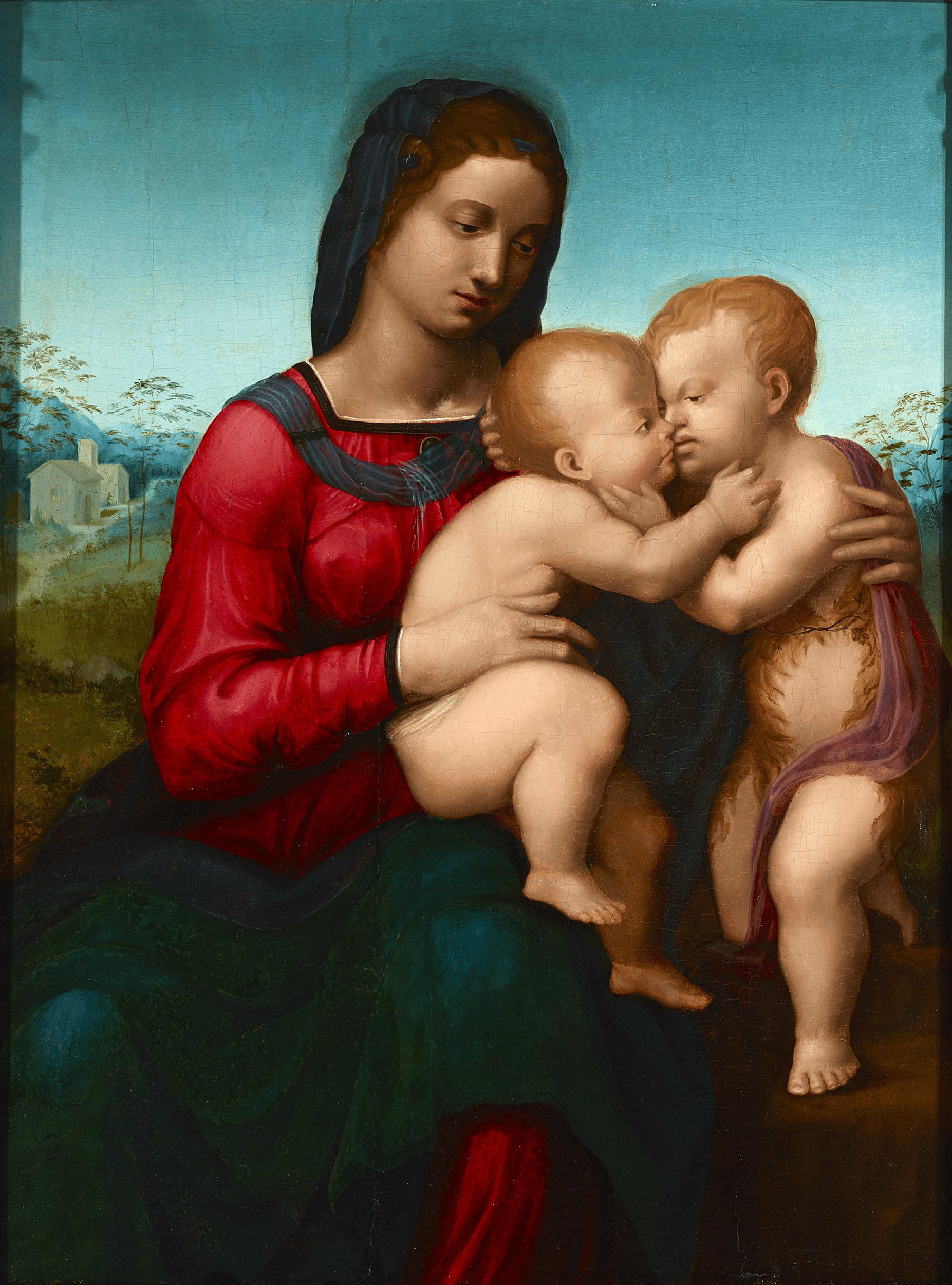
A masterful example of Italian Mannerist painting, this exceptional panel was composed by the renowned Florentine painter Domenico Puligo. Alongside Jacopo Pontormo and Rosso Fiorentino, Puligo is remembered as one of the foremost figures of the Mannerist movement that rose to prominence during the 16th century in Florence. This panel of the Virgin Mary with the Christ child and Saint John the Baptist is a characteristic example of his celebrated devotional images, which grace museums such as the Metropolitan Museum of Art (New York), Museo del Prado (Madrid), Palazzo Borghese (Rome), and Palazzo Pitti (Florence), among many others. Puligo’s skill with color is fully demonstrated in the beautifully preserved work. Considering its age, the vibrancy and the sheer range of color is remarkable. The Virgin Mary’s crimson dress...

Category

16th Century Mannerist Portrait Paintings

Materials

Oil, Panel

Tri-Directional Portrait Commemorating the Russo-Turkish War

Tri-Directional Portrait Commemorating the Russo-Turkish War

Located in New Orleans, LA

Austrian School 18th Century Tri-Directional Portrait Commemorating the Russo-Turkish War Oil on wooden strips This extraordinary tri-directional portrait exemplifies the rare innovation known as a triscenorama, capturing a pivotal diplomatic moment through ingenious artistic technique. Employing triangularly cut wooden strips, this remarkable work simultaneously depicts three imperial figures central to the Russo-Turkish War of 1735-1739: Empress Anna Ivanovna Romanova of Russia when viewed directly, Holy Roman Emperor Charles VI from the left and Ottoman Sultan Mahmud I from the right, commemorating the Treaty of Nissa that concluded this significant European conflict. The portrait utilizes an exceptionally rare optical technique that predates modern movable imaging technology. When observed from different angles, the painted triangular wooden strips create a transformative effect, revealing entirely different imperial portraits as the viewer shifts position. The precision required to execute such a work demonstrates remarkable technical mastery, as the artist had to conceptualize three distinct portraits as well as the meticulous arrangement of the panels. This sophisticated manipulation of perspective creates an interactive viewing experience considered revolutionary for its time. Almost certainly created by an Austrian artist, this diplomatic artwork likely served as a commemorative piece marking the Treaty of Nissa, signed in September 1739. The treaty concluded Russia's ambitious campaign to secure access to the Black Sea while countering Ottoman raids in Ukraine and the Caucasus regions. Given its exceptional quality and historical significance, this portrait was possibly commissioned by Emperor Charles VI himself, potentially serving as a diplomatic gift to either Empress Anna or Sultan Mahmud I during the treaty negotiations. Under Empress Anna's leadership, Russia sought to counter devastating raids from Ottoman allies, particularly the Crimean Tatars...

Category

18th Century Old Masters Portrait Paintings

Materials

Wood, Oil, Wood Panel

The Tax Collectors attributed to Marinus van Reymerswaele

The Tax Collectors attributed to Marinus van Reymerswaele

Located in New Orleans, LA

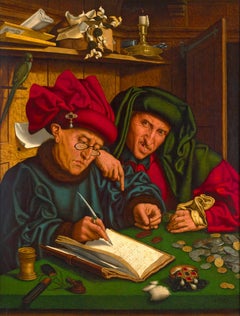
Marinus van Reymerswaele c.1490 – c.1546 Dutch The Tax Collectors 16th century Oil on wood panel Marinus van Reymerswaele stands among the greatest and most beloved artists of 16th-century Antwerp. Entitled The Tax Collectors, this oil on board original exudes the technical skill and life-like vibrancy for which the artist is renowned. In a quiet interior scene, two men sit at a green table covered in coins, jewels, and empty moneybags. While the man in the red turban...

Category

16th Century Figurative Paintings

Materials

Oil, Wood Panel

Illuminated Manuscript Painting by the German School

Illuminated Manuscript Painting by the German School

By German School

Located in New Orleans, LA

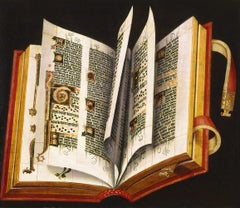
Extraordinary in its beauty and rarity, this early 16th-century German painting of an illuminated manuscript showcases a masterful trompe l’oeil effect. Unequivocally among the finest of only 17 known works of its kind, the oil on panel is both rare and captivating. With illusory pages that appear to leap from the panel, this virtuosic painting of a hand-colored book suspended into space is exceptional. Created more than four centuries ago, the composition evokes a strong sense of realism. Executed by a masterful Northern Renaissance artist of the German school, the illuminated manuscript pictured shows the astonishing splendor of the historical books of the period. Sumptuously decorated with scrolling floral motifs in the margins, the manuscript appears before a deep black background, heightening the trompe l’oeil illusion of depth through its strong contrast and the naturalistic shadows falling across the fluttering pages. It has been said that of the 17 known versions of this composition, ours stands alone in its precision in both perspective and the play of light and shadow. The visible folios feature choral arrangements and other texts, indicating the pictured manuscript likely served a role in the celebration of church services. In fact, other examples of manuscript paintings...

Category

16th Century Renaissance Still-life Paintings

Materials

Oil, Panel

Cardinals Playing Cards by Victor Marais-Milton

Cardinals Playing Cards by Victor Marais-Milton

By Victor Marais-Milton

Located in New Orleans, LA

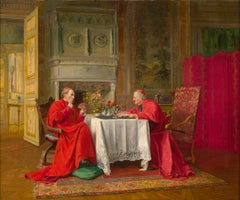
Victor Marais-Milton 1872-1948 French Cardinals Playing Cards Signed "V. Marais-Milton" (lower right) Oil on canvas Two red-robed cardinals engage in a friendly game of cards in ...

Category

Early 19th Century Academic Figurative Paintings

Materials

Canvas, Oil

The Vendor of Antiquities by Ettore Forti

The Vendor of Antiquities by Ettore Forti

By Edoardo Ettore Forti

Located in New Orleans, LA

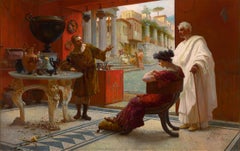
Ettore Forti 1850-1940 Italian The Vendor of Antiquities Signed "E. Forti Roma" (lower right) Oil on canvas This captivating canvas by renowned Italian artist Ettore Forti is a s...

Category

Late 19th Century Figurative Paintings

Materials

Canvas, Oil

You May Also Like

Saint Nazarius & Celsus (350AD) after Bartolomeo Montagna (1450-1523)

Saint Nazarius & Celsus (350AD) after Bartolomeo Montagna (1450-1523)

Located in Liphook, GB

Saint Nazarius & Celsus (350AD), 18th Century Diptych Of The Christian Knights & Martyrs after lost work by Bartolomeo Montagna (1450-1523) Large 18th Century Italian Old M...

Category

18th Century Portrait Paintings

Materials

Canvas, Oil

LATE 16th CENTURY PAIR OF OIL PAINTINGS ON WOODEN PANELS

LATE 16th CENTURY PAIR OF OIL PAINTINGS ON WOODEN PANELS

Located in Firenze, FI

Elegant pair of oil paintings on wooden panels, depicting Jesus and the Madonna in their youthful physiognomy. Originally part of a larger wooden altarpiece, these two works are now ...

Category

Antique 16th Century Italian Renaissance Paintings

Materials

Wood, Paint

Saint Agatha Santacroce Paint 16th Century Oil on canvas Old master Religious

Saint Agatha Santacroce Paint 16th Century Oil on canvas Old master Religious

Located in Riva del Garda, IT

Francesco di Girolamo da Santacroce (Venice, 1516–1584) Saint Agatha Oil on canvas 126 x 68 cm. Framed: 137 x 80 cm. The painting depicts Saint Agatha (a companion piece fe...

Category

16th Century Old Masters Figurative Paintings

Materials

Oil

San Genesio De Magistris Portrait 17th Century Oil on canvas Old master Italy

San Genesio De Magistris Portrait 17th Century Oil on canvas Old master Italy

Located in Riva del Garda, IT

Simone De Magistris (Caldarola, c. 1538 – 1613) or workshop San Genesio Oil on canvas (84 x 62 cm. – Framed: 99 x 76 cm.) In the heart of ancient Rome, amid the splendor and...

Category

17th Century Old Masters Figurative Paintings

Materials

Oil