Want more images or videos?
Request additional images or videos from the seller
1 of 12

Francesco Traballesi
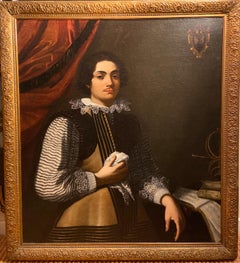
16th Century by Francesco Traballesi Portrait of a young man with a glove

16th Century

$73,000.79
£53,497.39
€74,358VAT Included
CA$100,498
A$102,227.68
CHF 58,373.48
MX$1,236,500.13
NOK 680,665.38
SEK 691,094.49
DKK 466,665.16

About the Item

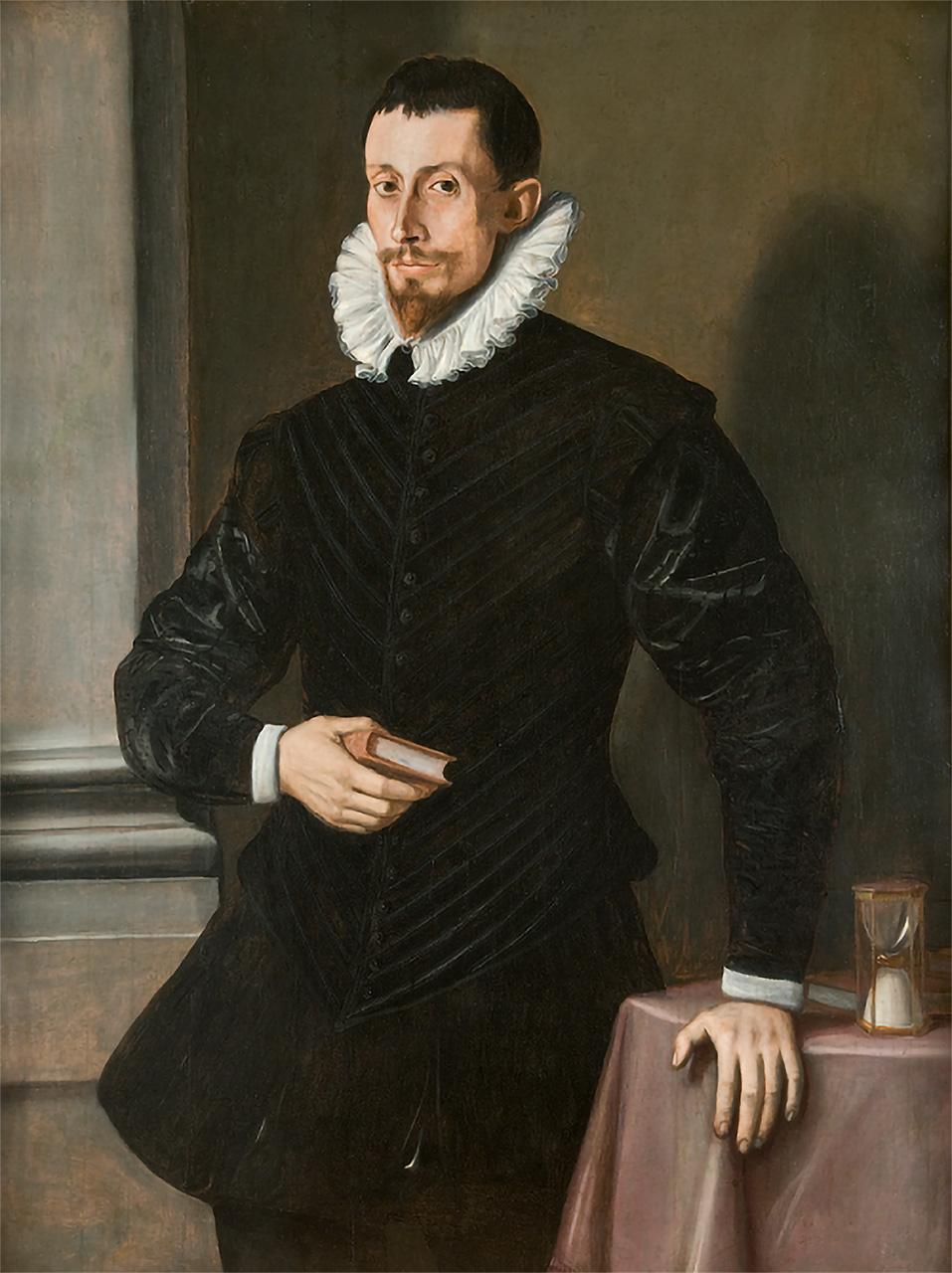
Francesco Traballesi (Florence, Italy, 1541 - Mantua, Italy, 1588) Title: Portrait of a young man with a glove Medium: Oil on panel Dimensions: without frame 69.5 × 86.5 cm Painting without frame Not signed Expertise by Marco Ciampolini, art historian Publications: From Sacro to Profano, the Giorgio Baratti art collection from Milan, exhibition catalogue curated by Daiva Mitrulevičiūtė, Giovanni Matteo Guidetti and Ileana Maniscalco, (16 February – 27 September 2020), Vilnius, National Museum - Palace of the Grand Dukes of Lithuania, pp. 578-583 We do not know the collecting history of this painting, which appeared only in recent times in an exhibition at the Luigi Diciotto antiques gallery in Piacenza (Gregori, 2003, n.3). The rather worn sealing-wax bollo on the back of the panel does not help us with its provenance. It shows a bishop’s coat of arms, with two affronted lions and a tree, arms that are common to many Italian families. The painting shows an almost beardless young man portrayed slightly from the side and struck by a light source that, against the dark tones of the drapery and clothing, stresses the solid geometry of the head and right hand. This serves to concentrate our attention on the expression of the proud and subtly melancholic face, erect above the white lace collar, while the fine leather glove grasped by the fingers is a sign of nobility and authority. The fashion of the attire also proves that the portrait dates to the third quarter of the 16th century. The composition, together with the excellent descriptive quality, indicates the brush of an artist familiar with portraiture, whom Mina Gregori, in the only analytic study of the painting, recognises as Francesco Traballesi, an artist who was recalled by Filippo Baldinucci for his ability as a portraitist. Francesco Traballesi was an Italian painter and architect. He was born in Florence in 1541, flourished in Rome during the papacy of Pope Gregory XIII (1572–1585), and died in 1588 in Mantua, where he was working as an architect for the duke Vincenzo Gonzaga (1562-1612).
  • Creator:
    Francesco Traballesi (1541 - 1588, Italian)
  • Creation Year:
    16th Century
  • Dimensions:
    Height: 27.37 in (69.5 cm)Width: 34.06 in (86.5 cm)
  • More Editions & Sizes:
    without frame 69.5 × 86.5 cmPrice: $72,296
  • Medium:
  • Movement & Style:
  • Period:
  • Condition:
  • Gallery Location:
    Milano, IT
  • Reference Number:
    1stDibs: LU1701217344802

More From This Seller

View All
16th Century by Giovanni Maria Butteri Portrait of Francesco I Oil on Panel

16th Century by Giovanni Maria Butteri Portrait of Francesco I Oil on Panel

Located in Milano, Lombardia

Giovanni Maria Butteri (Florence, Italy, 1540 - 1606) Title: Portrait of Francesco I Medium: Oil on panel Dimensions: without frame cm. 47.7 x 39 - with frame cm. 55.2 x 46.5 Not signed Expertise by Carlo Falciani, art historian Fairs: The International Biennial of Antiques in Florence 2024 (BIAF, Biennale Internazionale dell’Antiquariato di Firenze) Publications: From Sacro to Profano, the Giorgio Baratti art collection from Milan, exhibition catalogue curated by Daiva Mitrulevičiūtė, Giovanni Matteo Guidetti and Ileana Maniscalco, (16 February – 27 September 2020), Vilnius, National Museum - Palace of the Grand Dukes of Lithuania, pp. 566-569. This valuable portrait, by the painter Giovanni Maria Butteri, an exponent of Mannerism and active mainly in Florence, portrays Francesco I de' Medici (1541 - 1587) eldest son of the Grand Duke of Tuscany...

Category

16th Century Old Masters Portrait Paintings

Materials

Oil, Panel

You May Also Like

Santi di Tito (1536–1603), Portrait of Domenico di Lorenzo Passerini

Santi di Tito (1536–1603), Portrait of Domenico di Lorenzo Passerini

By Santi di Tito 1

Located in Milan, IT

Santi di Tito (Florence, December 5, 1536 – July 25, 1603) Portrait of Domenico di Lorenzo Passerini with His Son Lorenzo Oil on panel, 115 x 82.5 cm – with frame, 130 x 100 cm Pa...

Category

Antique 16th Century Italian Other Paintings

Materials

Wood

Portrait Ferdinando II Sustermans Paint 17th Century Oil on canvas Old master

Portrait Ferdinando II Sustermans Paint 17th Century Oil on canvas Old master

Located in Riva del Garda, IT

Giusto (or Justus) Sustermans (Antwerp, 1597 – Florence, 1681) Workshop of Portrait of Ferdinando II de' Medici (1610–1670), Grand Duke of Tuscany Oil on canvas 133 x 97 cm Fram...

Category

17th Century Old Masters Figurative Paintings

Materials

Oil

16th-17th Century Gentleman’s Portrait Oil on Canvas by Francesco Zucco

16th-17th Century Gentleman’s Portrait Oil on Canvas by Francesco Zucco

Located in Milan, IT

Francesco Zucco (circa 1575-1627) Gentleman’s portrait Measures: Oil on canvas, cm 120 x 140 The painting analyzed here belongs to the pictorial production of Francesco Zucc...

Category

Antique Early 17th Century Paintings

Materials

Canvas

16th Century Italian Renaissance Old Master Portrait of a Procuratore

16th Century Italian Renaissance Old Master Portrait of a Procuratore

By Jacopo Bassano

Located in London, GB

Jacopo BASSANO (c. 1510-1592, Italian) Portrait of a Procuratore Oil on canvas 30 ¼ x 26 inches (including frame) Provenance: Lucien Bonaparte’s Collection (as Portrait of Doge Priuli, Tiziano); Rich-mond, Virginia Museum, Portrait of Doge Lorenzo Priuli. The painting is a portrait of a man half-length, on a black background. It is a three-quarter portrait, according to a custom very common in the genre of portraiture in sixteenth century. The man is wearing a decorated...

Category

16th Century Old Masters Portrait Paintings

Materials

Oil

Portrait of William Herbert, 3rd Earl of Pembroke, Early 17th Century Portrait

Portrait of William Herbert, 3rd Earl of Pembroke, Early 17th Century Portrait

Located in London, GB

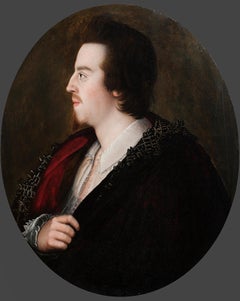
English School, (circa 1600) Portrait of William Herbert, 3rd Earl of Pembroke Oil on panel, oval Image size: 29¼ x 23⅞ inches Painted wooden frame Provenance: 176, Collection of Francis Greville, 1st Earl of Warwick. The Trustees of the Lord Brooks’ Settlement, (removed from Warwick Castle). Sotheby’s, London, 22nd March 1968, lot 81. Painted onto wooden panel, this portrait shows a dark haired gentleman in profile sporting an open white shirt. On top of this garments is a richly detailed black cloak, decorated with gold thread and lined with a sumptuous crimson lining. With the red silk inside it’s all very expensive and would fall under sumptuary laws – so this is a nobleman of high degree. It’s melancholic air conforms to the contemporary popularity of this very human condition, evident in fashionable poetry and music of the period. In comparison to our own modern prejudices, melancholy was associated with creativity in this period. This portrait appeared in the earliest described list of pictures of Warwick castle dating to 1762. Compiled by collector and antiquary Sir William Musgrave ‘taken from the information of Lord & Lady Warwick’ (Add. MSS, 5726 fol. 3) is described; ‘8. Earl of Essex – an original by Zuccharo – seen in profile with black hair. Holding a black robe across his breast with his right hand.’ As tempting as it is to imagine that this is a portrait of Robert Devereux, the 2nd Earl Essex, we might take this with a pinch of salt. Its identification with this romantic and fatal Elizabethan might well have been an attempt to add romance to Warwick Castle’s walls. It doesn’t correspond all that well with Essex’s portraits around 1600 after his return from Cadiz. Notably, this picture was presumably hung not too far away from the castle’s two portraits of Queen Elizabeth I. The first, and undoubtedly the best, being the exquisite coronation portrait that was sold by Lord Brooke in the late 1970s and now hangs in the National Portrait Gallery. The second, described as being ‘a copy from the original at Ld Hydes’, has yet to resurface. The portrait eventually ended up being hung in the State Bedroom of Warwick Castle. Archival documents present one other interesting candidate. The Greville family’s earliest inventory of paintings, made in 1630 at their home Brooke House in Holborn, London, describes five portraits of identified figures. All five belonged to the courtier, politician and poet Sir Fulke Greville (1554-1628), 1st Baron Brooke, and were hung in the ‘Gallerie’ of Brooke House behind yellow curtains. One of them was described as being of ‘Lord of Pembrooke’, which is likely to have been William Herbert (1580-1630), 3rd Earl of Pembroke. William was the eldest son of Greville’s best friend’s sister Mary Sidney, and was brought up in the particularly literary and poetically orientated household which his mother had supported. Notably, the 3rd Earl was one of the figures that Shakespeare’s first folio was dedicated to in 1623. The melancholic air to the portrait corresponds to William’s own pretensions as a learned and poetic figure. The richness of the robe in the painting, sporting golden thread and a spotted black fabric, is indicative of wealth beyond that of a simple poet or actor. The portrait’s dating to around the year 1600 might have coincided with William’s father death and his own rise to the Pembroke Earldom. This period of his life too was imbued with personal sadness, as an illicit affair with a Mary Fitton had resulted in a pregnancy and eventual banishment by Elizabeth I to Wilton after a short spell in Fleet Prison. His illegitimate son died shortly after being born. Despite being a close follower of the Earl of Essex, William had side-stepped supporting Devereux in the fatal uprising against the Queen and eventually regained favour at the court of the next monarch James I. His linen shirt is edged with a delicate border of lace and his black cloak is lined on the inside with sumptuous scarlet and richly decorated on the outside with gold braid and a pattern of embroidered black spots. Despite the richness of his clothes, William Herbert has been presented in a dishevelled state of semi-undress, his shirt unlaced far down his chest with the ties lying limply over his hand, indicating that he is in a state of distracted detachment. It has been suggested that the fashion for melancholy was rooted in an increase in self-consciousness and introspective reflection during the late 16th and early 17th centuries. In contemporary literature melancholy was said to be caused by a plenitude of the melancholy humor, one of the four vital humors, which were thought to regulate the functions of the body. An abundance of the melancholia humor was associated with a heightened creativity and intellectual ability and hence melancholy was linked to the notion of genius, as reflected in the work of the Oxford scholar Robert Burton, who in his work ‘The Anatomy of Melancholy’, described the Malcontent as ‘of all others [the]… most witty, [who] causeth many times divine ravishment, and a kind of enthusiamus… which stirreth them up to be excellent Philosophers, Poets and Prophets.’ (R. Burton, The Anatomy of Melancholy, London, 1621 in R. Strong, ‘Elizabethan Malady: Melancholy in Elizabethan and Jacobean Portraits’, Apollo, LXXIX, 1964). Melancholy was viewed as a highly fashionable affliction under Elizabeth I, and her successor James I, and a dejected demeanour was adopted by wealthy young men, often presenting themselves as scholars or despondent lovers, as reflected in the portraiture and literature from this period. Although the sitter in this portrait is, as yet, unidentified, it seems probable that he was a nobleman with literary or artistic ambitions, following in the same vain as such famous figures as the aristocratic poet and dramatist, Edward de Vere...

Category

Early 17th Century Old Masters Portrait Paintings
Materials

Oil, Wood Panel