Want more images or videos?
Request additional images or videos from the seller
1 of 5

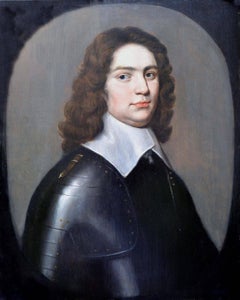
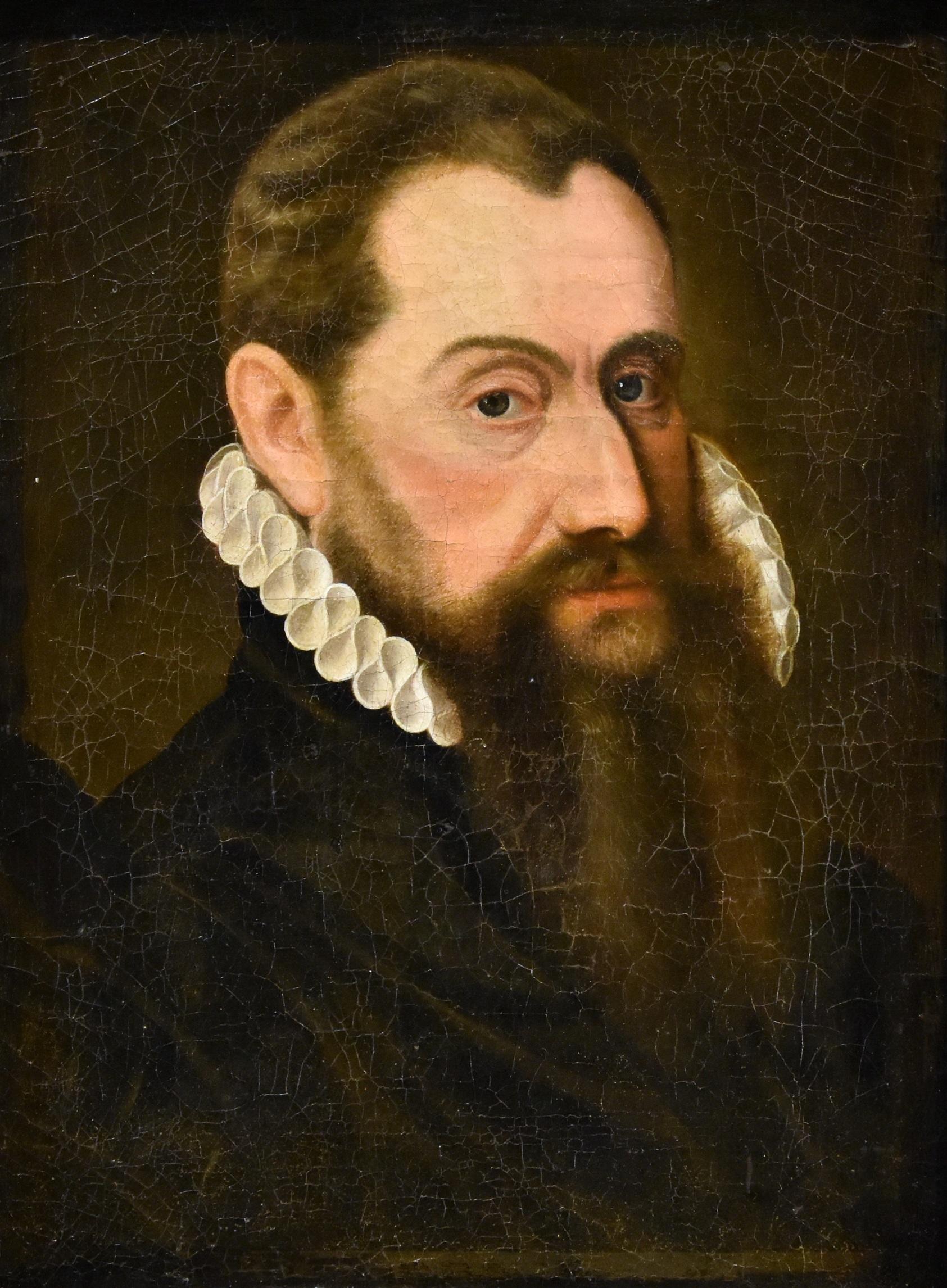
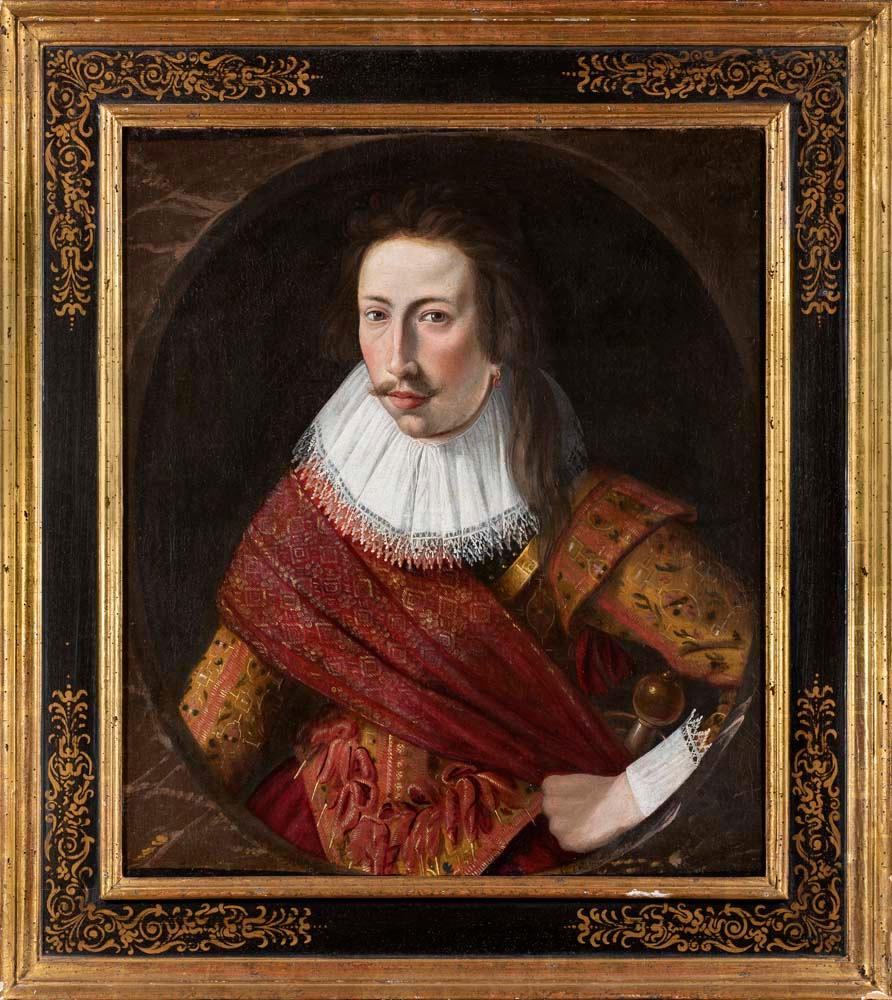
Remigius Van Leemput
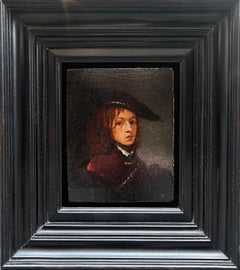
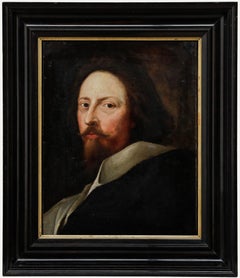
Portrait of Nicholas Poyntz

$49,125.29
£35,715
€42,536.11
CA$68,590.30
A$69,592.95
CHF 39,755.87
MX$842,596.95
NOK 467,055.78
SEK 466,437.30
DKK 317,974.73

About the Item

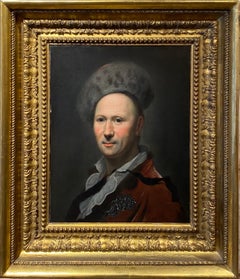
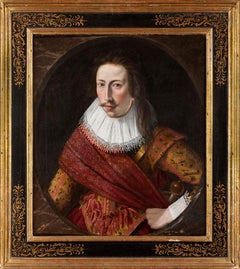
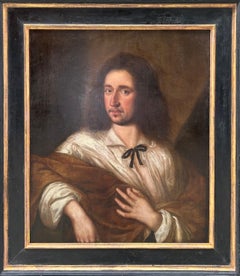
Remigius Van Leemput Portrait of Nicholas Poyntz 1607-1675 Oil on oak panel, unsigned Image size: 13 x 10 1/4 inches (33 x 26 cm) Contemporary style frame Provenance The Dalva Brothers Collection Sir Nicholas Poyntz Sir Nicholas Poyntz (1510-1556) was a prominent English Courtier and landowner during the later part of Henry VIII’s reign. Poyntz was a supporter of the dissolution of the monasteries and the religious change under Henry VIII for which he received his knighthood. His loyalty to the crown was confirmed by Henry VIII and Anne Boleyn’s visit to his lodgings at Acton Court, Gloucestershire. In anticipating this visit, Poyntz had built new rooms for his royal guests, all of which still remain today. Poyntz’s dedication to the throne was also exemplified through his presence at court for important state occasions, such as the christening of Prince Edward, the arrival of Anne of Cleves, and the welcoming of the Admiral of France in 1546. In 1539 and 1545 he served as High Sheriff of Gloucestershire, later representing Gloucestershire in Parliament as a Knight of the Shire in 1547 before marrying Joan, the daughter of soldier and aristocrat Thomas Berkeley, 5th Baron of Berkley. Nicholas Poyntz’s marriage into the Berkeley family involved him in frequent litigation with his wife’s kinsmen over her claim to certain property. He was also sued in the Star Chamber for assault and for poaching and in 1533, as steward to the bishop of Worcester in Gloucestershire, he was accused of holding courts and taking fines without his master’s permission. Poyntz had become a soldier at an early age. In 1534 he fought in Ireland under Sir John St. Loe. In 1536 he served under Sir William Kingston during the northern rebellion: early in 1543 he was assigned to go with Sir Robert Bowes to the Netherlands, but by July he was in command of a patrol guarding the Bristol Channel and its approaches. During the war of the Rough Wooing, part of the Anglo-Scottish wars of the sixteenth century following the English Reformation, Poyntz commanded the warship the Great Gallery and later in May 1544 under command of the Earl of Hertford, burnt down Kinghorn and other towns in Fife while Edinburgh was sacked and burnt by the English. Remigius Van Leemput Remigius Van Leemput, known in England as Remeee, was a Flemish portrait painter, copyist, collector and art dealer. Born in Antwerp, Leemput trained in the local Guild of Saint Luke as a pupil of Frans van Lanckvelt the Elder between 1618 and 1619. Leemput spent a lot of his time in England and was a key collaborator of Sir Anthony Van Dyck during Van Dyck’s final stay in London. Gaining a prominent position in the London art world, Leemput became an art dealer and major collector of paintings and drawings. However, after the execution of Charles I of England in 1649, his art collection was broken up and sold off in order to repay the debtors of the former king.  Leemput was known for his original works as well as for his small-scale copies after van Dyck, Lely and others. In 1667 Leemput was commissioned by Charles II to make a small copy of the wall painting by Hans Holbein the Younger representing Henry VII, Elizabeth of York, Henry VIII and Jane Seymour at the Palace of Whitehall in London for his own collection. Museums The Royal Collection National Portrait Gallery
  • Creator:
    Remigius Van Leemput (1607 - 1675, Belgian)
  • Dimensions:
    Height: 13 in (33.02 cm)Width: 10.25 in (26.04 cm)
  • Medium:
  • Movement & Style:
  • Period:
  • Condition:
  • Gallery Location:
    London, GB
  • Reference Number:
    1stDibs: LU52415815102

More From This Seller

View All
Portrait of William Herbert, 3rd Earl of Pembroke, Early 17th Century Portrait

Portrait of William Herbert, 3rd Earl of Pembroke, Early 17th Century Portrait

Located in London, GB

English School, (circa 1600) Portrait of William Herbert, 3rd Earl of Pembroke Oil on panel, oval Image size: 29¼ x 23⅞ inches Painted wooden frame Provenance: 176, Collection of Francis Greville, 1st Earl of Warwick. The Trustees of the Lord Brooks’ Settlement, (removed from Warwick Castle). Sotheby’s, London, 22nd March 1968, lot 81. Painted onto wooden panel, this portrait shows a dark haired gentleman in profile sporting an open white shirt. On top of this garments is a richly detailed black cloak, decorated with gold thread and lined with a sumptuous crimson lining. With the red silk inside it’s all very expensive and would fall under sumptuary laws – so this is a nobleman of high degree. It’s melancholic air conforms to the contemporary popularity of this very human condition, evident in fashionable poetry and music of the period. In comparison to our own modern prejudices, melancholy was associated with creativity in this period. This portrait appeared in the earliest described list of pictures of Warwick castle dating to 1762. Compiled by collector and antiquary Sir William Musgrave ‘taken from the information of Lord & Lady Warwick’ (Add. MSS, 5726 fol. 3) is described; ‘8. Earl of Essex – an original by Zuccharo – seen in profile with black hair. Holding a black robe across his breast with his right hand.’ As tempting as it is to imagine that this is a portrait of Robert Devereux, the 2nd Earl Essex, we might take this with a pinch of salt. Its identification with this romantic and fatal Elizabethan might well have been an attempt to add romance to Warwick Castle’s walls. It doesn’t correspond all that well with Essex’s portraits around 1600 after his return from Cadiz. Notably, this picture was presumably hung not too far away from the castle’s two portraits of Queen Elizabeth I. The first, and undoubtedly the best, being the exquisite coronation portrait that was sold by Lord Brooke in the late 1970s and now hangs in the National Portrait Gallery. The second, described as being ‘a copy from the original at Ld Hydes’, has yet to resurface. The portrait eventually ended up being hung in the State Bedroom of Warwick Castle. Archival documents present one other interesting candidate. The Greville family’s earliest inventory of paintings, made in 1630 at their home Brooke House in Holborn, London, describes five portraits of identified figures. All five belonged to the courtier, politician and poet Sir Fulke Greville (1554-1628), 1st Baron Brooke, and were hung in the ‘Gallerie’ of Brooke House behind yellow curtains. One of them was described as being of ‘Lord of Pembrooke’, which is likely to have been William Herbert (1580-1630), 3rd Earl of Pembroke. William was the eldest son of Greville’s best friend’s sister Mary Sidney, and was brought up in the particularly literary and poetically orientated household which his mother had supported. Notably, the 3rd Earl was one of the figures that Shakespeare’s first folio was dedicated to in 1623. The melancholic air to the portrait corresponds to William’s own pretensions as a learned and poetic figure. The richness of the robe in the painting, sporting golden thread and a spotted black fabric, is indicative of wealth beyond that of a simple poet or actor. The portrait’s dating to around the year 1600 might have coincided with William’s father death and his own rise to the Pembroke Earldom. This period of his life too was imbued with personal sadness, as an illicit affair with a Mary Fitton had resulted in a pregnancy and eventual banishment by Elizabeth I to Wilton after a short spell in Fleet Prison. His illegitimate son died shortly after being born. Despite being a close follower of the Earl of Essex, William had side-stepped supporting Devereux in the fatal uprising against the Queen and eventually regained favour at the court of the next monarch James I. His linen shirt is edged with a delicate border of lace and his black cloak is lined on the inside with sumptuous scarlet and richly decorated on the outside with gold braid and a pattern of embroidered black spots. Despite the richness of his clothes, William Herbert has been presented in a dishevelled state of semi-undress, his shirt unlaced far down his chest with the ties lying limply over his hand, indicating that he is in a state of distracted detachment. It has been suggested that the fashion for melancholy was rooted in an increase in self-consciousness and introspective reflection during the late 16th and early 17th centuries. In contemporary literature melancholy was said to be caused by a plenitude of the melancholy humor, one of the four vital humors, which were thought to regulate the functions of the body. An abundance of the melancholia humor was associated with a heightened creativity and intellectual ability and hence melancholy was linked to the notion of genius, as reflected in the work of the Oxford scholar Robert Burton, who in his work ‘The Anatomy of Melancholy’, described the Malcontent as ‘of all others [the]… most witty, [who] causeth many times divine ravishment, and a kind of enthusiamus… which stirreth them up to be excellent Philosophers, Poets and Prophets.’ (R. Burton, The Anatomy of Melancholy, London, 1621 in R. Strong, ‘Elizabethan Malady: Melancholy in Elizabethan and Jacobean Portraits’, Apollo, LXXIX, 1964). Melancholy was viewed as a highly fashionable affliction under Elizabeth I, and her successor James I, and a dejected demeanour was adopted by wealthy young men, often presenting themselves as scholars or despondent lovers, as reflected in the portraiture and literature from this period. Although the sitter in this portrait is, as yet, unidentified, it seems probable that he was a nobleman with literary or artistic ambitions, following in the same vain as such famous figures as the aristocratic poet and dramatist, Edward de Vere...

Category

Early 17th Century Old Masters Portrait Paintings

Materials

Oil, Wood Panel

Portrait of Conrad Friedrich Hurlebusch, Early 18th Century Oil Painting

Portrait of Conrad Friedrich Hurlebusch, Early 18th Century Oil Painting

By Dominicus van der Smissen

Located in London, GB

Dominicus van der Smissen Early 18th Century Portrait of Conrad Friedrich Hurlebusch Oil on canvas Image size: 20½ x 16¼ inches Period gilt frame This is a portrait of Conrad Friedrich Hurlebusch, composer, Kapellmeister and organist, whom Van der Smissen most probably portrayed during his stay in Hamburg, Brunswick or Amsterdam. The identification is based on the reproduction of the portrait which was engraved by Pieter Anthony Wakkerdak (1740- 1774). Van der Smissen has reduced the face of the sitters to an egg-shaped oval in three-quarter view, applying diminution to one half of the figure’s torso, which is farther away from the viewer. This partial side view, with the head turned to look at the viewer over the shoulder, creates spatial depth and brings the figure to life by avoiding the stiffness of a frontal depiction. Because the artist chose to highlight the figure from above, a distinct shadow is cast under the tip of the nose, in the shape of a triangle. This is an often recurring and almost ‘signature’-like feature in Van der Smissen’s oeuvre. Hurlebusch's garments are of a very high quality and serve to reflect the sitter’s wealth, status and elegance. During this period, gentlemen often shaved their heads in order to facilitate the wearing of a wig, which wouldbe worn with a suit. Here Hurlebusch has been depicted in a luxurious turban-like cap lined with lynx fur, a highly fashionable and expensive material at the time. Over his shirt, he wears a velvet fur-lined gown adorned with decorative clasps fashioned from silver braid. The elegant informality of his appearance can be seen in his unbuttoned shirt and the unfastened black ribbon hanging from his button hole, which has been artfully arranged into a fluttering drape by the portraitist. The Sitter Hurlebusch was born in Brunswick, Germany. He received the first instructions in his field from his father Heinrich Lorenz Hurlebusch, who was also a musician. As an organ virtuoso, he toured Europe, visiting Vienna, Munich and Italy. From 1723 to 1725 he was Kapellmeister in Stockholm; later he became Kapellmeister in Bayreuth and Brunswick, and lived in Hamburg from 1727 to 1742, where he had contact with fellow composers Johann Mattheson and Georg Philipp Telemann. He made his living composing, performing and teaching. In 1735 and 1736, he is believed to have visited Johann Sebastian Bach in Leipzig, who promoted Hurlebusch’s compositions as the local seller...

Category

Early 18th Century Old Masters Portrait Paintings

Materials

Canvas, Oil

Portrait of an Officer, English School, 17th Century Old Masters

Portrait of an Officer, English School, 17th Century Old Masters

By Cornelius Johnson

Located in London, GB

Circle of Cornelius Johnson Circa 1620’s Portrait of a Officer Oil on canvas Image size: 28 x 24 inches Period style hand made frame Provenance Private European Estate This striking portrait dates to around 1620, as you can see from the images of the sash the detail is very high. The sash is decorated with gold thread and would have cost a small fortune at the time. Sashes were originally developed for a military function (making officers more visible for their men during combat), but soon became a primarily male fashion...

Category

Early 17th Century Old Masters Portrait Paintings

Materials

Oil

Portrait of a Gentleman, 17th Century Dutch Old Masters Oil

Portrait of a Gentleman, 17th Century Dutch Old Masters Oil

Located in London, GB

Circle of Gerard van Honthorst 1592 - 1656 Portrait of a Gentleman Oil on wooden panel Image size: 29 x 23 inches Contemporary gilt frame Gerard van Honthorst was a Dutch Golden Age...

Category

17th Century Old Masters Portrait Paintings

Materials

Oil, Wood Panel

Portrait of a Melancholic Gentleman, 17th century Oil Painting

Portrait of a Melancholic Gentleman, 17th century Oil Painting

Located in London, GB

English School 17th Century Portrait of a Melancholic Gentleman Oil on canvas Image size: 25 x 29 1/4 inches (63.5 x 72.25 cm) Hand made contemporary style frame Provenance South of England Estate This is a striking 17th century half-portrait of a man. He sits with his body turned to the left and his head to the right. His left hand is held in front of him with thumb and finger together. He wears a loose white shirt that is opened low down onto chest while being closed at his neck with a black ribbon. An orange cloak has also been draped across his arms in a rather dramatic manner. This choice of costume is immediately notable and must be compared to other portraits of this time of Elizabethan courtiers wearing slashed silk outfits with ostentatious finery and silver swords. Indeed, if one examines 17th century English...

Category

17th Century Portrait Paintings

Materials

Canvas, Oil

Portrait of a Young Man

Portrait of a Young Man

By (After) Rembrandt van Rijn

Located in London, GB

Pupil of Rembrandt Portrait of a Young Man 17th Century Oil on oak panel Image size: 4 1/4 x 5 inches (11 x 13 cm) Dutch ebonised frame This small portrait is of a young man, staring inquisitively out towards the viewer. The realism of his appearance is striking, with great care taken in the depiction of the man’s features - for example, his full lips and the slight bump in the bridge of his nose. The man wears a rich burgundy doublet and a black cap and is adorned with gold accessories, indicating a degree of wealth - it is likely that this is a miniature portrait for a wealthy patron. The warm flesh tones of this painting and the intricate rendering of the man’s curly brown hair demonstrate the artistry of the painter, who has successfully captured the image of youth within his brushstrokes. Rembrandt’s Pupils Upon completing his artistic education, Rembrandt opened a studio and began to take students - the first of which were Gerrit Dou and Isaac Jouderville. The studio functioned as an art school, in which materials and guidance were provided - contrary to the studios of his peers, Rembrandt did not offer lodging to his pupils. The families of prospective pupils had to pay Rembrandt 100 guilders (enough for a house at the time) for this artistic education, and the profits from any works produced by pupils under Rembrandt would be paid to the master rather than kept by the student-artist - this contributed substantially to  the master’s income.When taking on pupils, Rembrandt looked for those who could already paint, and guided their styles to reflect his. By choosing pupils who were somewhat experienced artists, Rembrandt had an array of painters that could be involved at any stage of assisting with the creation of his works - in this way, Rembrandt’s pupils often functioned as studio assistants as well. In order to perfect Rembrandt’s style, pupils would paint copies of their teacher’s works, sometimes adding their own distinct variations. They would use the same subjects and models as Rembrandt himself, and would accompany him on outdoor trips to paint nature and landscapes. The extensive copying and utilisation of same source materials has rendered Rembrandt’s work and the work of his pupils difficult to differentiate, even in the modern era.At least 50 pupils were taught by Rembrandt, with many continuing on to become his studio assistants. A few graduated into successful artists in their own right - for example, Govaert Flinck...

Category

17th Century Portrait Paintings

Materials

Oak, Oil, Panel

You May Also Like

Mid-17th-Century Flemish School, Portrait Of A Gentleman, Oil Painting

Mid-17th-Century Flemish School, Portrait Of A Gentleman, Oil Painting

Located in Cheltenham, GB

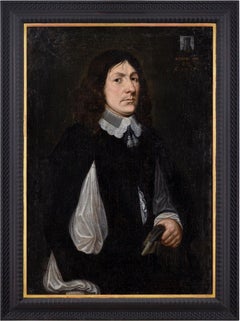
This mid-17th-century Flemish oil painting depicts a gentleman wearing a black doublet together with a collar edged with lace. In his right hand, he clutches a pair of gloves. It's a...

Category

1650s Flemish School Portrait Paintings

Materials

Canvas, Oil

Dutch Golden Age Portrait of a Gentleman, 17th Century Oil on Canvas

Dutch Golden Age Portrait of a Gentleman, 17th Century Oil on Canvas

Located in New York, NY

This painting belongs to the circle of Govert Flinck, one of Rembrandt’s most distinguished pupils and a key figure of the Dutch Golden Age. The work reflects the influence of the Re...

Category

Early 17th Century Dutch School Portrait Paintings

Materials

Oil

17th-Century Flemish School, Portrait Of A Gentleman In A Justaucorps, Oil

17th-Century Flemish School, Portrait Of A Gentleman In A Justaucorps, Oil

Located in Cheltenham, GB

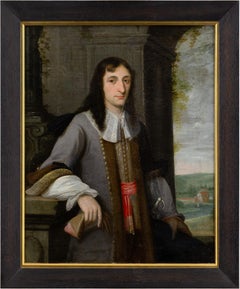
This fine late 17th-century Flemish portrait depicts a distinguished gentleman dressed in the elaborate fashions of the 1670s. He wears a long, collarless coat known as a justaucorps...

Category

1670s Old Masters Portrait Paintings

Materials

Canvas, Oil

Early 17th-Century Dutch School Portrait Of A Gentleman In A Ruff, Oil Painting

Early 17th-Century Dutch School Portrait Of A Gentleman In A Ruff, Oil Painting

Located in Cheltenham, GB

This splendid early 17th-century Dutch School portrait depicts a stout gentleman wearing a tall starched ruff and a sober black doublet. It originated in the Low Countries before ent...

Category

Early 17th Century Baroque Portrait Paintings

Materials

Canvas, Oil