Want more images or videos?
Request additional images or videos from the seller
1 of 9

Unknown
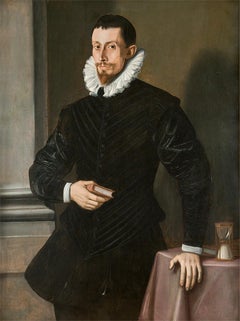
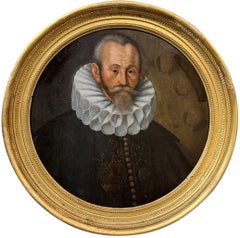
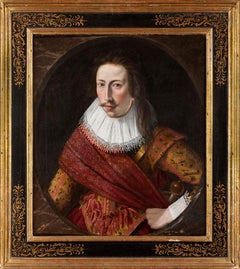
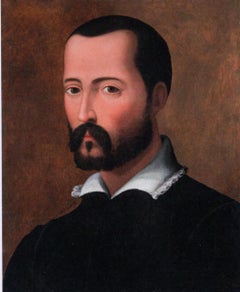
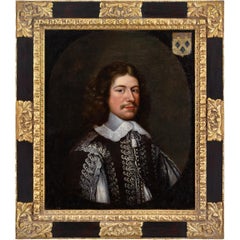
Portrait of George Peele (c.1557-c.1596), Very early Elizabethan panel

Circa 1580

$14,411.14List Price

You May Also Like

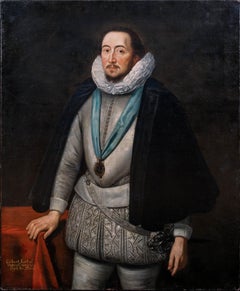
Portrait Of Gilbert Talbot 7th Earl of Shrewsbury (1552-1616), 16th Century

Portrait Of Gilbert Talbot 7th Earl of Shrewsbury (1552-1616), 16th Century

Located in Liphook, GB

Portrait Of Gilbert Talbot 7th Earl of Shrewsbury (1552-1616), 16th Century Circle of George Gower (c.1540–1596) Huge 16th Century Portrait Of Gilbert Talbot 7th Earl of Shrewsbury...

Category

18th Century Portrait Paintings

Materials

Canvas, Oil

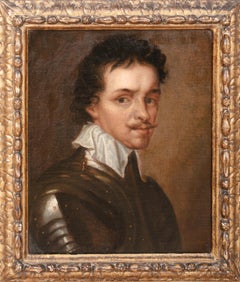
Portrait Thomas Wentworth, 1st Earl of Stafford (1593-1641), 17th Century

Portrait Thomas Wentworth, 1st Earl of Stafford (1593-1641), 17th Century

Located in Liphook, GB

Portrait Thomas Wentworth, 1st Earl of Stafford (1593-1641), 17th Century Circle of Anthonius VAN DYCK (1599-1641) Fine 17th century English School Old Master portrait of Anthonius...

Category

19th Century Portrait Paintings

Materials

Canvas, Oil

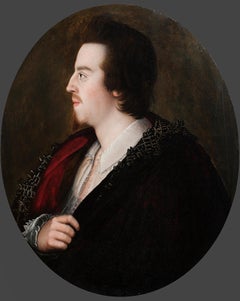
Portrait of William Herbert, 3rd Earl of Pembroke, Early 17th Century Portrait

Portrait of William Herbert, 3rd Earl of Pembroke, Early 17th Century Portrait

Located in London, GB

English School, (circa 1600) Portrait of William Herbert, 3rd Earl of Pembroke Oil on panel, oval Image size: 29¼ x 23⅞ inches Painted wooden frame Provenance: 176, Collection of Francis Greville, 1st Earl of Warwick. The Trustees of the Lord Brooks’ Settlement, (removed from Warwick Castle). Sotheby’s, London, 22nd March 1968, lot 81. Painted onto wooden panel, this portrait shows a dark haired gentleman in profile sporting an open white shirt. On top of this garments is a richly detailed black cloak, decorated with gold thread and lined with a sumptuous crimson lining. With the red silk inside it’s all very expensive and would fall under sumptuary laws – so this is a nobleman of high degree. It’s melancholic air conforms to the contemporary popularity of this very human condition, evident in fashionable poetry and music of the period. In comparison to our own modern prejudices, melancholy was associated with creativity in this period. This portrait appeared in the earliest described list of pictures of Warwick castle dating to 1762. Compiled by collector and antiquary Sir William Musgrave ‘taken from the information of Lord & Lady Warwick’ (Add. MSS, 5726 fol. 3) is described; ‘8. Earl of Essex – an original by Zuccharo – seen in profile with black hair. Holding a black robe across his breast with his right hand.’ As tempting as it is to imagine that this is a portrait of Robert Devereux, the 2nd Earl Essex, we might take this with a pinch of salt. Its identification with this romantic and fatal Elizabethan might well have been an attempt to add romance to Warwick Castle’s walls. It doesn’t correspond all that well with Essex’s portraits around 1600 after his return from Cadiz. Notably, this picture was presumably hung not too far away from the castle’s two portraits of Queen Elizabeth I. The first, and undoubtedly the best, being the exquisite coronation portrait that was sold by Lord Brooke in the late 1970s and now hangs in the National Portrait Gallery. The second, described as being ‘a copy from the original at Ld Hydes’, has yet to resurface. The portrait eventually ended up being hung in the State Bedroom of Warwick Castle. Archival documents present one other interesting candidate. The Greville family’s earliest inventory of paintings, made in 1630 at their home Brooke House in Holborn, London, describes five portraits of identified figures. All five belonged to the courtier, politician and poet Sir Fulke Greville (1554-1628), 1st Baron Brooke, and were hung in the ‘Gallerie’ of Brooke House behind yellow curtains. One of them was described as being of ‘Lord of Pembrooke’, which is likely to have been William Herbert (1580-1630), 3rd Earl of Pembroke. William was the eldest son of Greville’s best friend’s sister Mary Sidney, and was brought up in the particularly literary and poetically orientated household which his mother had supported. Notably, the 3rd Earl was one of the figures that Shakespeare’s first folio was dedicated to in 1623. The melancholic air to the portrait corresponds to William’s own pretensions as a learned and poetic figure. The richness of the robe in the painting, sporting golden thread and a spotted black fabric, is indicative of wealth beyond that of a simple poet or actor. The portrait’s dating to around the year 1600 might have coincided with William’s father death and his own rise to the Pembroke Earldom. This period of his life too was imbued with personal sadness, as an illicit affair with a Mary Fitton had resulted in a pregnancy and eventual banishment by Elizabeth I to Wilton after a short spell in Fleet Prison. His illegitimate son died shortly after being born. Despite being a close follower of the Earl of Essex, William had side-stepped supporting Devereux in the fatal uprising against the Queen and eventually regained favour at the court of the next monarch James I. His linen shirt is edged with a delicate border of lace and his black cloak is lined on the inside with sumptuous scarlet and richly decorated on the outside with gold braid and a pattern of embroidered black spots. Despite the richness of his clothes, William Herbert has been presented in a dishevelled state of semi-undress, his shirt unlaced far down his chest with the ties lying limply over his hand, indicating that he is in a state of distracted detachment. It has been suggested that the fashion for melancholy was rooted in an increase in self-consciousness and introspective reflection during the late 16th and early 17th centuries. In contemporary literature melancholy was said to be caused by a plenitude of the melancholy humor, one of the four vital humors, which were thought to regulate the functions of the body. An abundance of the melancholia humor was associated with a heightened creativity and intellectual ability and hence melancholy was linked to the notion of genius, as reflected in the work of the Oxford scholar Robert Burton, who in his work ‘The Anatomy of Melancholy’, described the Malcontent as ‘of all others [the]… most witty, [who] causeth many times divine ravishment, and a kind of enthusiamus… which stirreth them up to be excellent Philosophers, Poets and Prophets.’ (R. Burton, The Anatomy of Melancholy, London, 1621 in R. Strong, ‘Elizabethan Malady: Melancholy in Elizabethan and Jacobean Portraits’, Apollo, LXXIX, 1964). Melancholy was viewed as a highly fashionable affliction under Elizabeth I, and her successor James I, and a dejected demeanour was adopted by wealthy young men, often presenting themselves as scholars or despondent lovers, as reflected in the portraiture and literature from this period. Although the sitter in this portrait is, as yet, unidentified, it seems probable that he was a nobleman with literary or artistic ambitions, following in the same vain as such famous figures as the aristocratic poet and dramatist, Edward de Vere...

Category

Early 17th Century Old Masters Portrait Paintings

Materials

Oil, Wood Panel

Early 17th Century by Tiberio Titi Portrait of a Gentleman Oil on panel

Early 17th Century by Tiberio Titi Portrait of a Gentleman Oil on panel

Located in Milano, Lombardia

Tiberio Titi (Florence, Italy, 1573 – 1638) Title: Portrait of a Gentleman Medium: Oil on panel Dimensions: Without frame 122 x 91 cm – with frame 162 x 133 x 10 cm Not signed Publ...

Category

Early 17th Century Old Masters Portrait Paintings

Materials

Oil, Wood Panel

17th Century Round English Portrait of Richard Sackville, 5th Earl of Dorset

17th Century Round English Portrait of Richard Sackville, 5th Earl of Dorset

Located in Milford, NH

A finely detailed round portrait of the 5th Earl of Dorset, Richard Sackville (1622–1677), an English peer, politician, and Fellow of the Royal Society. Before inheriting the earldom...

Category

17th Century Portrait Paintings

Materials

Oil, Wood Panel

Portrait Man Pourbus 16/17th Century Paint Oil on canvas Old master Flemish

Portrait Man Pourbus 16/17th Century Paint Oil on canvas Old master Flemish

Located in Riva del Garda, IT

Frans Pourbus (Bruges, 1545 - Antwerp, 1581) circle Portrait of a gentleman in Renaissance dress with a black doublet and ruff Late 16th century Oil on canvas 46 x 32 cm. - 65 x 53...

Category

16th Century Old Masters Paintings

Materials

Oil

Portrait of an Officer, English School, 17th Century Old Masters

Portrait of an Officer, English School, 17th Century Old Masters

By Cornelius Johnson

Located in London, GB

Circle of Cornelius Johnson Circa 1620’s Portrait of a Officer Oil on canvas Image size: 28 x 24 inches Period style hand made frame Provenance Private European Estate This striking portrait dates to around 1620, as you can see from the images of the sash the detail is very high. The sash is decorated with gold thread and would have cost a small fortune at the time. Sashes were originally developed for a military function (making officers more visible for their men during combat), but soon became a primarily male fashion...

Category

Early 17th Century Old Masters Portrait Paintings

Materials

Oil

16th Century by Giovanni Maria Butteri Portrait of Francesco I Oil on Panel

16th Century by Giovanni Maria Butteri Portrait of Francesco I Oil on Panel

Located in Milano, Lombardia

Giovanni Maria Butteri (Florence, Italy, 1540 - 1606) Title: Portrait of Francesco I Medium: Oil on panel Dimensions: without frame cm. 47.7 x 39 - with frame cm. 55.2 x 46.5 Not signed Expertise by Carlo Falciani, art historian Fairs: The International Biennial of Antiques in Florence 2024 (BIAF, Biennale Internazionale dell’Antiquariato di Firenze) Publications: From Sacro to Profano, the Giorgio Baratti art collection from Milan, exhibition catalogue curated by Daiva Mitrulevičiūtė, Giovanni Matteo Guidetti and Ileana Maniscalco, (16 February – 27 September 2020), Vilnius, National Museum - Palace of the Grand Dukes of Lithuania, pp. 566-569. This valuable portrait, by the painter Giovanni Maria Butteri, an exponent of Mannerism and active mainly in Florence, portrays Francesco I de' Medici (1541 - 1587) eldest son of the Grand Duke of Tuscany...

Category

16th Century Old Masters Portrait Paintings

Materials

Oil, Panel

Mid-17th-Century French School, Portrait Of A Member Of The De Belot Family

Mid-17th-Century French School, Portrait Of A Member Of The De Belot Family

Located in Cheltenham, GB

This distinguished mid-17th-century French oil painting depicts a member of the de Belot de Villette et de Chevigney family wearing a richly embroidered black doublet decorated with ...

Category

1650s French School Portrait Paintings

Materials

Canvas, Oil

Portrait Ferdinando II Sustermans Paint 17th Century Oil on canvas Old master

Portrait Ferdinando II Sustermans Paint 17th Century Oil on canvas Old master

Located in Riva del Garda, IT

Giusto (or Justus) Sustermans (Antwerp, 1597 – Florence, 1681) Workshop of Portrait of Ferdinando II de' Medici (1610–1670), Grand Duke of Tuscany Oil on canvas 133 x 97 cm Fram...

Category

17th Century Old Masters Figurative Paintings

Materials

Oil

More From This Seller

View All
Rare Jacobean Portrait on Panel Lady Elizabeth Wheeler née Cole 1623 Historical

Rare Jacobean Portrait on Panel Lady Elizabeth Wheeler née Cole 1623 Historical

By Cornelius Johnson

Located in London, GB

A Rare Jacobean Portrait of Lady Elizabeth Wheeler (née Cole), 1623 Attributed to Cornelius Johnson (1593–1661) This remarkably rare early oil on panel, presented by Titan Fine Art, has emerged as far more than an anonymous “Portrait of a Lady.” Preserved in outstanding condition—its surface retaining exceptional clarity in the lace and textiles—it has only recently been reunited with the identity of its sitter: Elizabeth Cole (1607–1670), later Lady Elizabeth Wheeler, a Westminster gentlewoman whose later life brought her into intimate royal service as laundress for His Majesty’s person. That combination—high quality, uncommon survival, a newly identified sitter, and a life that intersects directly with the last acts of Charles I—places this portrait in a category of genuine rarity. It is not simply a beautiful Jacobean likeness; it is a rediscovered historical document - legible and compelling. The sitter is presented half-length against a dark ground, enclosed within a painted sculpted oval surround that functions like an architectural frame. This device, fashionable in the 1620s, concentrates the viewer’s attention and heightens the sense of social presentation: the sitter appears both physically and symbolically “set apart,” as if viewed through a refined aperture. The portrait’s immediate power, however, lies in the costume—an ensemble of striking modernity for c. 1623 and rendered with a precision that survives with remarkable crispness. She wears a deep green gown—a fitted overgown with open sleeves—over a finely embroidered linen jacket (a stiffened bodice/waistcoat garment). The sleeves form pronounced “wings” at the shoulder, a structurally assertive fashion detail of the early 1620s that enlarges the silhouette and signals sophistication. Beneath the green overlayer, the white linen jacket is richly ornamented in gilt embroidery. The goldwork is arranged as scrolling foliate forms—looping, curling tendrils punctuated by seed-like stippling—organised into balanced compartments across the bodice and sleeves. The motifs read as stylised botanical forms with rounded fruit-like terminals and leaf elements: not literal naturalism, but controlled abundance. The technique is described with extraordinary intelligence, mimicking couched metallic thread through patterned, “stitched” marks, while tiny dots and short dashes create a lively tactile shimmer. This embroidered jacket sits above a newly fashionable high-waisted, sheer apron or overskirt. The translucent fabric falls in soft vertical folds and is articulated with narrow lace-edged bands, giving the skirt a crisp rhythm of alternating sheer and patterned strips. At the neck, a fine ruff frames the face: a disciplined structure of pleated linen finished with delicate lace. Draped diagonally across the torso are long gold chains, painted to suggest weight and metallic gleam; they function both as ornament and as a further signifier of status. The cumulative effect is controlled luxury: she is not overloaded with jewels, but clothed in textiles whose cost and craftsmanship speak unmistakably. The recent sitter’s identification rests on heraldic and genealogical analysis: the arms shown on the painting correspond to those recorded for several families in armorial sources, but when the lines of descent are tested against survival and chronology, the viable bearer by 1623 resolves to Cole, and—crucially—to the London branch. That resolution matters because it anchors the portrait to a very specific social world: London/Westminster civic gentry and Crown administration, the milieu in which portraiture served as both self-fashioning and social instrument. The recent identification of the sitter (the London Cole branch of the family) is not merely genealogical; it has direct implications for authorship. A London-based mercantile or civic-gentry family would have ready access to leading immigrant artists, familiarity with heraldic display conventions, and the means to commission oil on panel, still standard among Netherlandish-trained painters. In that context, the portrait’s age inscription and date become especially revealing. The painting states the sitter to be nineteen years of age. Yet Elizabeth Cole’s birth in 1607 suggests she would be younger if the portrait is dated as early as 1623. The key insight is that the “incorrect” age is best understood not as a mistake but as a deliberate social adjustment, a performative statement rather than a documentary one. The most persuasive explanation is strategic. Portraits of high-status unmarried women were frequently made in connection with marriage negotiations. In the early 1620s, Elizabeth’s future husband, William Wheeler, was resident abroad at Middelburg in Zeeland in the Dutch Republic. If a portrait was intended to support or facilitate a match with an educated, ambitious man—“a man of learning and letters,” —then presenting a seventeen-year-old as nineteen would subtly reposition her as more mature and more nearly a peer in age, Wheeler being around twenty-two. The portrait thus becomes an instrument of alliance, not merely a likeness: an image designed to persuade, reassure, and elevate. This reading aligns perfectly with the period’s wider conditions. The early 1620s in England were charged with anxiety and expectation: James I’s later reign was marked by court faction, diplomatic tension, and the pressures of European conflict. The so-called “art market” was inseparable from these dynamics. Portraiture flourished because it served multiple functions: it fixed lineage, advertised alliance, signalled readiness for marriage, and projected the stability of elite households in an uncertain world. For Westminster families whose power came through office, portraiture was also a declaration of belonging—proof that administrative elites possessed the cultural polish traditionally associated with older aristocratic rank. Elizabeth’s later life vindicates the portrait’s impression of steadiness. Although no record survives of her marriage ceremony to William Wheeler, wills suggest she had married him by the mid-1630s, and there are strong grounds—consistent with the portrait’s implications—for a union already in place by the early 1630s, possibly earlier. Wheeler himself rose rapidly. By 1639 he held a manor at Westbury Leigh in Wiltshire and sought letters of denization due to overseas birth, enabling him to stand as Member of Parliament for Westbury. He leased the principal manor of Westbury the following year, coinciding with his election. In government service he became Remembrancer of the Exchequer and held office across regime change, a testament to administrative skill and political pragmatism. It is Elizabeth, however, who makes this portrait exceptional. She became laundress for His Majesty’s person, responsible for the washing and oversight of the King’s personal linen—an office that, despite its domestic description, required unusual trust, discretion, and access. Her role becomes visible in 1643 when she was granted a warrant signed by the Speaker of the House of Commons to follow the King to Oxford with her servant after the outbreak of the Civil War. She continued to serve during the King’s captivity after 1646, and at Carisbrooke Castle in 1647 she and her maid were implicated in smuggling secret correspondence to and from Charles I, in service of escape plans. After the King’s failed attempt to escape in March 1648, she was removed—yet the King’s trust persisted: he was permitted to send her remaining jewels in an ivory casket...

Category

17th Century Old Masters Portrait Paintings

Materials

Oil, Panel

Portrait of Lady, Mary Hammond, Oil on Panel c.1618-22, Manor House Provenance

Portrait of Lady, Mary Hammond, Oil on Panel c.1618-22, Manor House Provenance

By Cornelius Johnson

Located in London, GB

Portrait of Mary Hammond in Sumptuous Attire, Jewels and Lace c.1618-22 Circle of Cornelius Johnson (1593-1661) This portrait of a lady, presented by Titan Fine Art, is an exquisite example of early seventeenth-century portraiture, remarkable both for the lavishness of its subject’s attire and for the distinguished provenance that has accompanied it across four centuries that adds a rich layer of historical significance. It was once part of the notable collection of Sir William Temple, 1st Baronet (1628–1699) at Moor Park, a stately mansion in Hertfordshire. Temple was a diplomat, essayist, philosopher, and the patron of Jonathan Swift. He was a key participate at an important period in English history, helping not only to negotiate the Triple Alliance, but also the marriage between William of Orange and Princess Mary. His collection at Moor Park was well known in its day, reflecting both his cultivated taste in art and literature and his international connections. Its fabulous attire, rendered with almost microscopic attention, is not merely decorative but emblematic of a world in which visual display was a language of power. Its provenance, stretching from the English country house and Enlightenment scholarship to modernist circles, forms a microcosm of cultural exchange across four centuries. Thus, the portrait of Mary Hammond stands as both a masterpiece of early seventeenth-century craftsmanship and a witness to the grand narrative of collecting and connoisseurship—a testament to the enduring fascination of beauty, status, and history intertwined. By tradition the portrait depicts Mary Hammond (born c.1602), who was Sir William Temple’s mother, and the daughter of the royal physician who served James I, Dr John Hammond (c.1555–1617) and whose family owned Chertsey Abbey in Surrey. The woman appears between 18 and 25 years old, and Mary would be about 18–20 when the portrait was painted circa 1620, therefore this matches the apparent age of the sitter and the fashion perfectly. Mary stood at the intersection of learned/courtly and gentry worlds. On 22 June 1627 she married her first cousin (a common practice for consolidating family wealth and influence during that era.) Sir John Temple (1600-1677) at St Michael, Cornhill in the City of London. The couple resided nearby, at Blackfriars. Her marriage to Sir Temple placed her at the heart of the social and political circles that shaped British history. The couple had at least five children, and they became highly significant historical figures: The eldest son, Sir William Temple, 1st Baronet, became a distinguished diplomat, statesman, and essayist, famous for his role in the Triple Alliance and as a patron and mentor to the writer Jonathan Swift – our portrait was in his collection. Their daughter, Martha Temple, later Lady Giffard, was a notable figure in her own right. She became her brother William's first biographer and a respected letter-writer, providing a rare female perspective on the events and high society of the time. Another son, also named Sir John Temple, became Attorney General for Ireland and was involved in the turbulent politics surrounding the English Civil War and the Act of Settlement in Ireland. Mary died in November 1638 after giving birth to twins and was buried at Penshurst, Kent. The family's connection to Penshurst Place is a major point of interest as this historic manor was the seat of the Sidney family, a major aristocratic and literary dynasty. The portrait was in the collection of the Mary’s son, Sir William Temple. From there it descended to his daughter, and then to her nephew, the Reverend Nicholas Bacon of Spixworth Park, Norfolk (his mother was Dorothy Temple who died in 1758). Indeed, by this time, many Temple relics were in the collection at Spixworth including the engagement ring of the illustrious Dorothy Osborne, Lady Temple, wife of Sir William Temple. The portrait thus linked two prominent English families—the Temples and the Bacons—for generations. It is listed in a Spixworth Park inventory of 27 October 1910 by the local collector and art historian, Prince Duleep Singh. He described it with characteristic precision as: “No. 69. Lady Half Length, body and face turned towards the sinister, hazel eyes upwards to the dexter, red hair dressed low and over the ears, a jewelled coronet behind, pearl ear-rings tied with black strings. Dress: black, bodice cut low and square, with lace all round the opening and over shoulders, sleeves with double slashes showing red lining and lace under, falling thin pleated lace collar, black strings tied behind it, a jewel suspended on a black string round the neck, and a double row of agate and silver beads all round to the shoulders. M. In brown veined stone frame. Age 30. Date c.1620. It is called ‘Dutch portrait from Moor Park, mentioned by Nicholas Bacon of Coddenham and Shrubland as a very valuable painting.’ A few years later, when Robert Bacon Longe’s executors sold the contents of Spixworth Park (19–22 May 1912), the portrait appeared as lot 262, described as: “A very valuable half-length portrait on panel, ‘Dutch Lady, with deep lace collar and pearl and amethyst necklace, pendant, and ear-rings, and auburn hair, with coronet’ Early Dutch School 1620.” Following this sale the painting entered the collection of David and Constance Garnett, prominent literary figures of the early twentieth century, before being gifted to Andre Vladimervitch Tchernavin by 1949, and subsequently passed by him to the present owners in 1994. The two great houses associated with the painting, Moor Park and Spixworth Park, further underscore its pedigree. Moor Park, in Hertfordshire, was among the grandest country estates of seventeenth-century England—its gardens famously redesigned by Sir William Temple himself and later influencing landscape design across Europe. Sir William's Temple's secretary was Jonathan Swift, who lived at Moor Park between 1689 and 1699. Swift began to write "A Tale of the Tub" and "The Battle of the Books" at Moor Park. Spixworth Park, near Norwich, was an Elizabethan country house in Spixworth, Norfolk, located just north of the city of Norwich. It was home to successive generations of the Bacon family, one of Norfolk’s most distinguished dynasties (later, the Bacon Longe family), who were considerable land owners (owning Reymerston Hall, Norfolk, Hingham Hall, Norfolk, Dunston Hall, Norfolk, Abbot's Hall, Stowmarket, and Yelverton Hall, Norfolk). Spixworth Hall and the surrounding parkland remained in the Longe family for 257 years until 1952, when it was demolished. Rendered with meticulous precision and sumptuous detail, the painting depicts an elegantly dressed woman—her poise, costume, and jewels all communicating a message of wealth, refinement, and social rank. Every brushstroke conveys an artist deeply attuned to the textures of luxury and the nuances of feminine dignity. The sitter’s attire is nothing short of magnificent. Her bodice and sleeves are fashioned from the finest black silk or satin, the fabric absorbing and reflecting light in equal measure, suggesting both depth and lustre. Around her shoulders lies an opulent lace ruff—a deep, radiating lace collar worked in such intricate detail that it testifies to both the artist’s technical skill and the sitter’s extravagant taste. Lace of this quality, especially Venetian or Flemish bobbin lace, was one of the costliest materials available in early seventeenth-century Europe, its weight worth more than gold, and was a marker of prestige that rivalled jewels in value. The painter has taken great care to delineate every loop and scallop of the lace, achieving an almost tactile realism. Pale skin was also a desired beauty standard, sometimes accentuated with contrasting black ribbons or strings. Her jewels amplify this display of affluence. Matching earrings and a delicate coronet or jewelled hair ornament with a feather adorn her hair, which is styled in the modest yet fashionable manner of the time. These details are far from decorative excess—they serve as visual emblems of social standing, refinement, and lineage. Portraits of this kind were statements of both identity and aspiration, intended to project a family’s prosperity and moral virtue to posterity. The portrait was most likely painted in London around 1618-1622. The low-cut, décolletage-revealing neckline was fashionable in the courts of England and France during the late Elizabethan and Jacobean eras (c. 1590s-1610s), this style did not prevail in the public fashion of the Low Countries at this time. This style of lace ruff — delicate needle lace with geometric openwork — was fashionable from c.1615 to 1622, and the jewelled caul (hair net) and lace edging over a stiffened coif are consistent with high-status English women’s portraiture between 1610–1620. The puffed sleeve slash and the use of pink satin beneath black velvet belong squarely to the late Jacobean...

Category

17th Century Old Masters Portrait Paintings
Materials

Oil, Panel

Portrait Painting Grand Duke Pavel Petrovich, Later Emperor Paul I, 18th century

Portrait Painting Grand Duke Pavel Petrovich, Later Emperor Paul I, 18th century

Located in London, GB

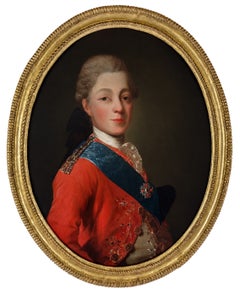
Portrait of Grand Duke Pavel Petrovich (1754–1801), later Emperor Paul I of Russia After Alexander Roslin (1718–1793) Oil on canvas, oval, late 18th century This is an exceptionally handsome and historically resonant eighteenth-century portrait, uniting the immediacy of an intimate likeness with the authority of one of the defining dynastic images of Imperial Russia. Grand Duke Pavel Petrovich, the future Emperor Paul I, turns towards the spectator with a composed, almost conversational expression, his youthful face emerging softly from the restrained brown background. The rich scarlet of his coat, the deep blue of the sash and the flashes of gold, lace and jewelled decoration give the picture remarkable visual distinction, while the oval format concentrates attention upon the sitter’s face and magnificent ceremonial attire. Painted during the eighteenth century, the present work is a contemporary reduced version of Alexander Roslin’s monumental state portrait of 1777, now in the State Hermitage Museum, St Petersburg. Roslin’s full-length original measures approximately 265 by 168 centimetres; here, its essential elements have been reformulated as a more intimate portrait suitable for display within an aristocratic residence, diplomatic household or private cabinet. Pavel is dressed in the height of European court fashion of the later 1770s. His scarlet habit à la française comprises a close-fitting coat and elaborately embroidered waistcoat, enriched with scrolling metallic ornament, floral motifs and a sequence of large decorative buttons. The shoulder is finished with a densely worked epaulette-like band, while a white linen stock and delicate lace jabot frame the face. His powdered hair is dressed in the fashionable bag-wig, drawn back and tied with a broad black silk ribbon. Although the costume is unmistakably Russian in its dynastic significance, its cut and ornament belong to the international language of court dress then prevailing from Versailles and Vienna to Stockholm and St Petersburg. In Roslin’s original full-length composition, the costume was completed by matching scarlet breeches, silk stockings, buckled shoes, a sword and a plumed tricorne, all identifying Pavel as both a prince of the blood and a cultivated participant in the ceremonial life of Europe’s great courts. Across his breast passes the broad blue watered-silk sash of the Imperial Order of St Andrew the First-Called, the senior Russian order of chivalry established by Peter the Great. The sash, conventionally worn from the right shoulder towards the left hip, proclaimed the sitter’s position at the summit of the imperial hierarchy. Superimposed upon it is the red-enamelled cross of the Order of St Anna, surrounded in the portrait by scintillating, jewel-like highlights. The cross had a particular dynastic resonance: the order had been founded by Pavel’s paternal grandfather, Duke Karl Friedrich of Holstein-Gottorp, in memory of his wife Anna Petrovna, daughter of Peter the Great. Pavel’s display of the two orders therefore asserted not only rank and honour, but his descent from the founder of Imperial Russia and his inheritance through the Romanov and Holstein-Gottorp lines. Contemporary portraits similarly identify Pavel through the blue sash and star of St Andrew and the red cross of St Anna. Born in St Petersburg in 1754, Pavel Petrovich was the only son of Grand Duke Peter Fyodorovich, later Emperor Peter III, and Grand Duchess Catherine Alexeyevna, the future Catherine the Great. Through his father he was a great-grandson of Peter the Great and inherited the Romanov and Holstein-Gottorp bloodlines; through his mother, born Princess Sophie of Anhalt-Zerbst, he was connected to the extensive network of German princely houses that shaped eighteenth-century European dynastic politics. His childhood was dominated by the uncertainties of imperial succession. Soon after his birth, the Empress Elizabeth removed him to her own household and assumed control of his upbringing. Educated under the statesman Nikita Panin, Pavel studied history, geography and mathematics and became fluent in Russian, French and German. He was eight when his father ascended the throne in 1762, only to be deposed by Catherine within months and to die shortly afterwards in confinement. Although Pavel remained the acknowledged heir, Catherine ruled for another thirty-four years and excluded him from meaningful political authority. He was therefore publicly honoured as the future sovereign while being denied the practical experience of government. In 1773 he married Princess Wilhelmina Louisa of Hesse-Darmstadt, who converted to Orthodoxy as Grand Duchess Natalia Alexeievna. She died in April 1776 after a prolonged labour, together with her stillborn child, leaving Pavel widowed and the succession unsecured. A second marriage was arranged within months. His new bride was Duchess Sophie Dorothea of Württemberg, daughter of Friedrich Eugen, later Duke of Württemberg, and Friederike Dorothea of Brandenburg-Schwedt. Raised at Montbéliard in a cultivated German princely household, she converted to Orthodoxy as Maria Feodorovna and married Pavel in October 1776. The union strengthened Russia’s links with Württemberg and Brandenburg-Prussia, but also became an enduring domestic and cultural partnership. Maria was intelligent and artistically gifted, practising drawing, embroidery, ivory carving and hardstone work, while collecting books and decorative art and later supporting charitable and educational institutions. The couple had ten children, nine of whom survived childhood. Their eldest son, Alexander, succeeded Pavel as Emperor Alexander I and ruled during the Napoleonic era; their younger son Nicholas later became Emperor Nicholas I. Constantine Pavlovich became a prominent military figure and briefly stood at the centre of the succession crisis of 1825. Their daughters married into leading European dynasties: Alexandra into the Austrian imperial family, Elena into Mecklenburg-Schwerin, Maria into Saxe-Weimar-Eisenach, Catherine into Württemberg and Anna into the Dutch royal house. Through their children, Pavel and Maria extended Romanov influence across much of Europe. The birth of Alexander in 1777 secured the succession and prompted Catherine to give the couple the estate that became Pavlovsk, south of St Petersburg. Its Neoclassical palace, begun by Charles Cameron in the early 1780s, became closely associated with Maria’s artistic interests, family life and refined sociability. Gatchina, by contrast, reflected Pavel’s more martial character. There he developed his own court and pursued his interests in military organisation, ceremony and administrative discipline. In 1781–82 Pavel and Maria travelled through Europe as the Count and Countess of the North, visiting royal courts, artists, manufactories and antiquities collections. They acquired paintings, furniture, bronzes, sculpture, textiles and porcelain, helping to make Pavlovsk one of Russia’s most sophisticated expressions of international Neoclassical taste. Yet Catherine continued to restrict their independence, taking charge of the upbringing of Alexander and Constantine just as Empress Elizabeth had once removed Pavel from his own parents. This repetition deepened the estrangement between mother and son. Pavel finally succeeded Catherine in 1796, aged forty-two. His reign lasted little more than four years, but his Act of Succession of 1797 established male-line primogeniture and ended much of the uncertainty surrounding the Russian imperial succession. His attempts to regulate the court, army and administration, and to reverse elements of Catherine’s policies, alienated powerful members of the nobility and officer corps. In March 1801 he was assassinated during a palace coup at the Mikhailovsky Castle and was succeeded by Alexander. This knowledge lends the portrait particular poignancy: Pavel appears not as the embattled emperor of his final years, but as the elegant young heir at a moment when marriage, dynasty and the anticipated birth of a son seemed to promise stability and renewal. Roslin’s portrait should be understood within this urgent dynastic context. The Swedish painter had travelled to St Petersburg in 1775 at the personal invitation of Catherine II and was commissioned to paint monumental state portraits of the Empress, Pavel and Maria Feodorovna. The pendant portraits of the young couple presented the heir and his new wife as the polished, fertile and internationally connected future of the Romanov dynasty. Roslin recorded in 1777 that the ruling family had ordered multiple copies. At least six versions of Pavel’s portrait and twelve of Maria’s are known, and such replicas were distributed as courtly and diplomatic gifts. A pair was presented to James Harris, later First Earl of Malmesbury, then the British ambassador to Russia. The existence of numerous eighteenth-century replicas was therefore not accidental or merely commercial: repetition was integral to the commission’s political purpose. Each version extended the official image of succession from the imperial palace into allied courts, embassies and aristocratic collections. The present portrait belongs to that wider culture of dynastic dissemination. Rather than reproducing Roslin’s entire monumental setting, with its architectural balustrade, extensive Neva prospect, sword, hat and full ceremonial costume, the painter has selected the head and upper body and adapted them to an oval. This transformation changes the character of the image. The grandeur of the original remains legible in the orders, costume and confident turn of the figure, but the reduced composition produces a greater sense of proximity to Pavel himself. The face becomes dominant, and the future emperor appears less as a remote emblem of state than as a recognisable young man. The type also circulated through prints: an oval engraved version published in 1781 and now represented in the British Museum demonstrates how rapidly Roslin’s conception entered the broader visual culture of late-eighteenth-century Europe. The artistic economy in which the portrait was created differed substantially from the modern open market. In Catherine’s Russia, the most prestigious portrait production was sustained by imperial commissions, aristocratic patronage and diplomatic gift-giving. Roslin’s success was extraordinary: during approximately two years in Russia he received around seventy-five commissions, many of which had to be completed after his return west. The appetite for his work reflected both the wealth of the Russian court and its determination to present itself through the most polished international style available. Alongside imported masters such as Roslin, Russia was developing its own institutional artistic culture. The Academy of the Three Noble Arts had been founded in St Petersburg in 1757 and was elevated by Catherine in 1764 to the Imperial Academy of Arts. It recruited European teachers, trained Russian...

Category

18th Century Old Masters Portrait Paintings
Materials

Oil, Canvas

Portrait Prince George of Denmark, Duke of Cumberland c.1690–1695 Oil painting

Portrait Prince George of Denmark, Duke of Cumberland c.1690–1695 Oil painting

By Sir Godfrey Kneller

Located in London, GB

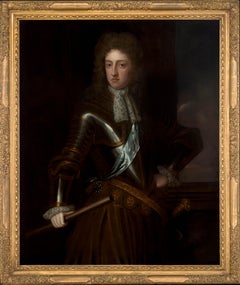
Portrait of Prince George of Denmark, Duke of Cumberland (1653–1708) c.1690–1695 Studio of Sir Godfrey Kneller (1646–1723) Few portraits embody the visual authority and dynastic sy...

Category

17th Century Old Masters Portrait Paintings
Materials

Canvas, Oil