After Jan van Huysum
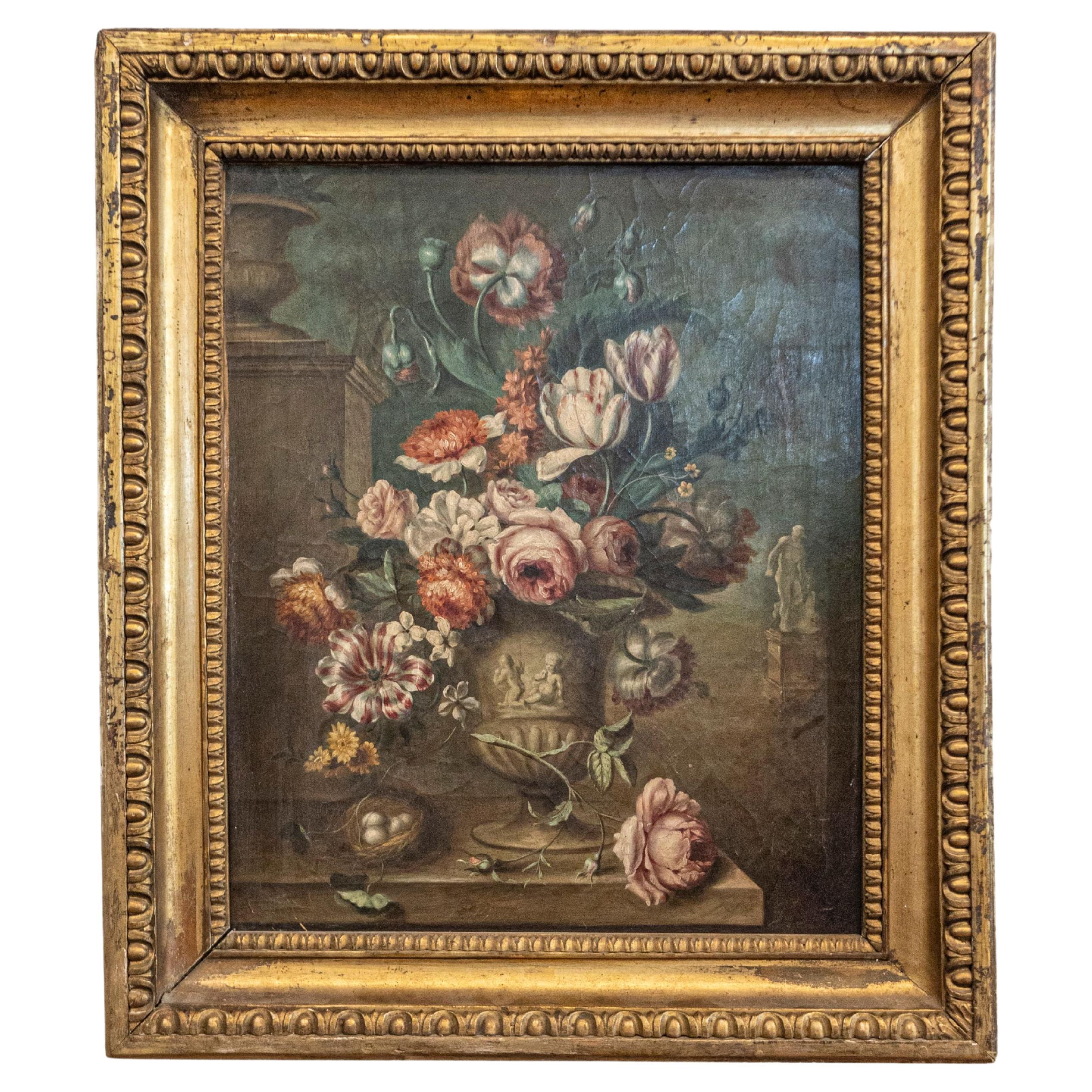
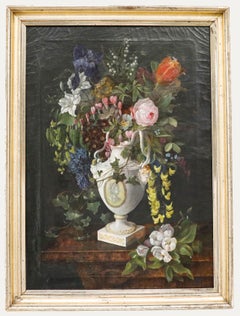
Flowers in a Terracotta Vase
Oil on panel, 19th century
Dimensions panel without frame: 68.5cm (H) x 54cm (W)
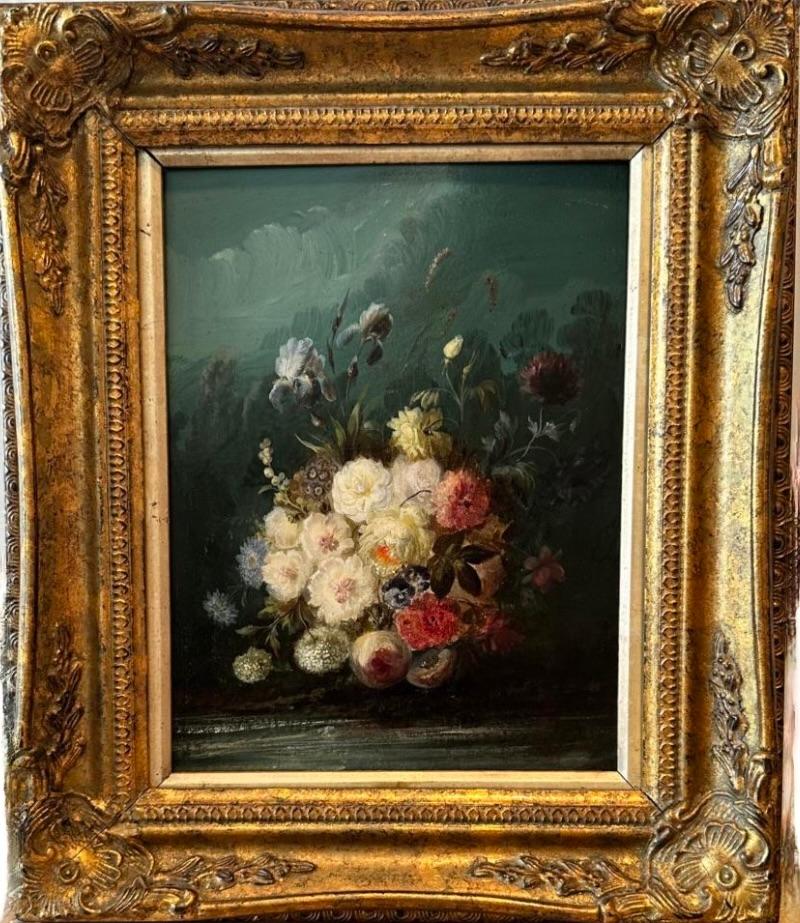
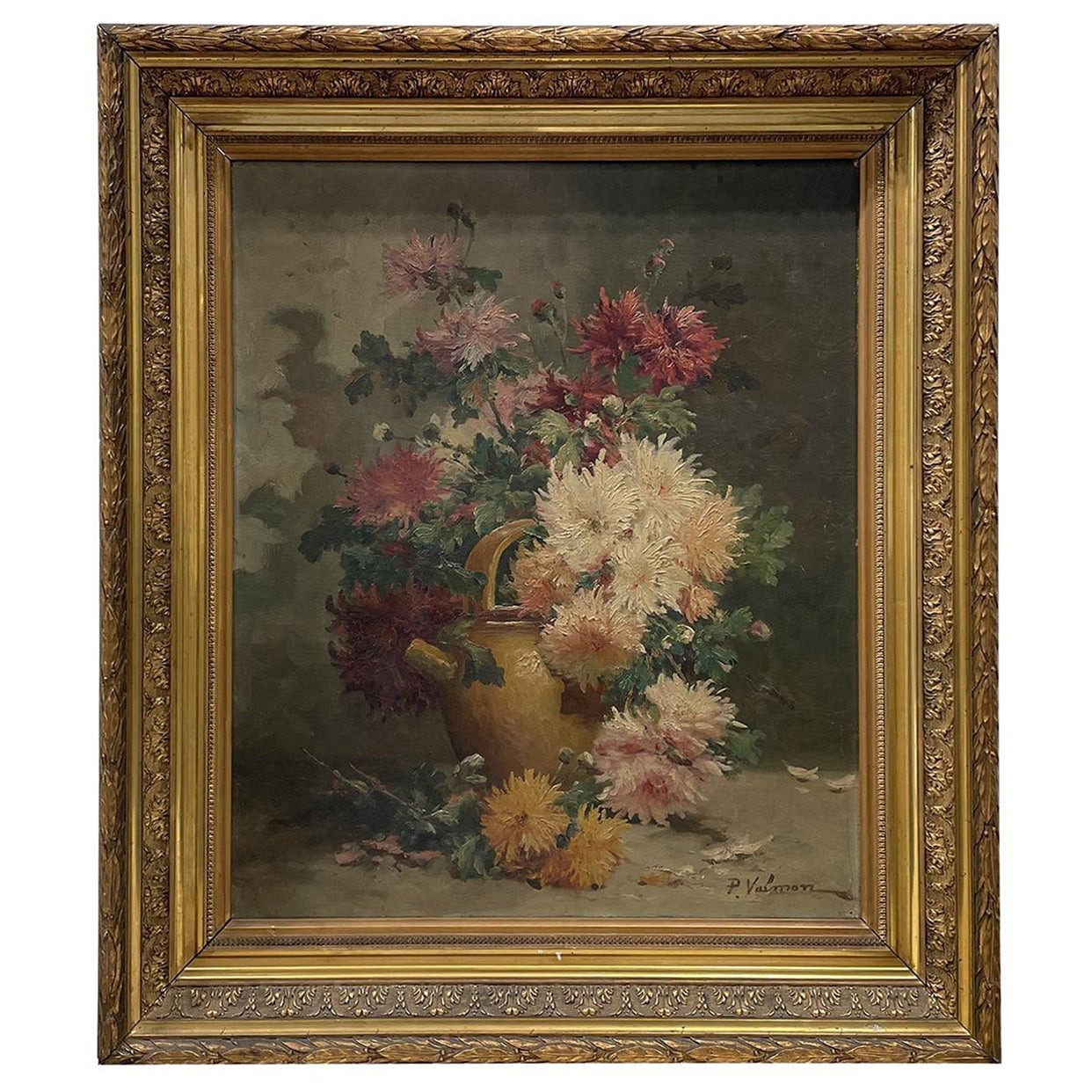
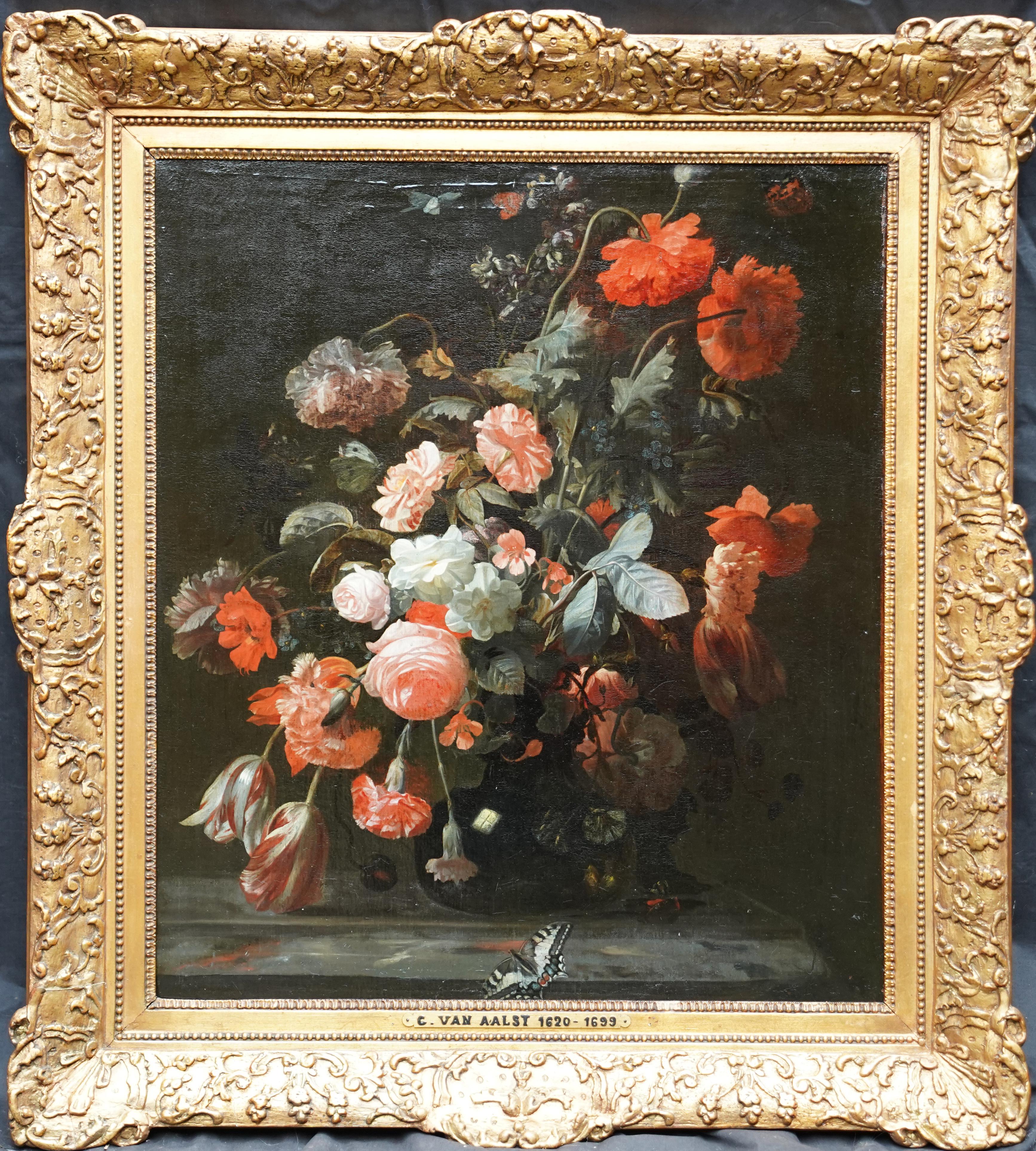
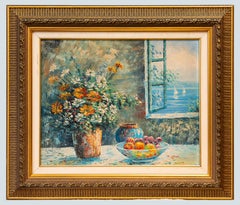
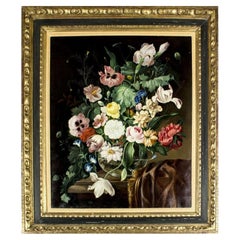
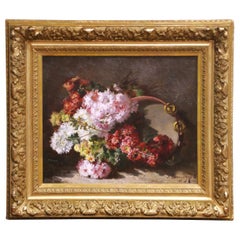
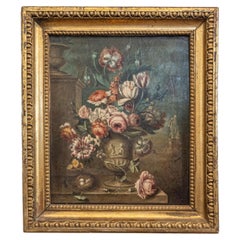
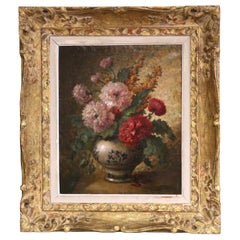
This 19th-century still life, painted after Jan van Huysum, pays homage to one of the Dutch master’s most enduring themes — the lush, meticulously detailed floral bouquet.
At the centre of the composition stands a terracotta vase, its warm reddish-brown surface enlivened with soft highlights and subtle reflections. From it springs a profusion of flowers — roses, tulips, morning glories, and carnations — arranged in a natural yet elegant cascade. The blooms vary in stage from tight bud to full blossom, symbolizing the transience of beauty and life.
The artist, following van Huysum’s example, achieves a delicate balance of colour and form: crimson and pink flowers are set against pale whites and yellows, while deep green leaves and curling stems provide rhythmic contrast. Small insects — a butterfly, perhaps a beetle — may be seen resting on a petal or leaf, adding a touch of lifelike authenticity typical of van Huysum’s style.
Behind the bouquet, a softly lit background of muted grey-green tones allows the flowers to stand out in radiant relief. The overall effect is one of luminous serenity and exquisite harmony — a celebration of nature’s abundance filtered through classical elegance.
Executed on panel, the painting displays fine, controlled brushwork and transparent glazes that recall van Huysum’s 18th-century originals, while the slightly looser handling and warmer tonality mark it as a 19th-century homage rather than a strict copy.
This still life embodies the enduring appeal of van Huysum’s art: technical precision united with beauty, delicacy, and a sense of timeless grace.
Jan van Huysum (1682–1749) ---
Jan van Huysum was one of the most celebrated Dutch flower painters of the 18th century, famed for his exquisite still lifes that epitomized the refinement of the Dutch Golden Age tradition. Born in Amsterdam into a family of painters, he was trained by his father, Justus van Huysum, but soon surpassed him in skill and renown.
Van Huysum became known as the “phoenix of flower painters”, admired for his unmatched delicacy, luminous colour, and technical perfection. His compositions often feature elaborate bouquets of garden and exotic blooms — roses, tulips, peonies, morning glories, and poppies — arranged in ornate vases against landscapes or niches. Every petal, leaf, and droplet of dew is rendered with extraordinary detail and realism, yet harmonized in a carefully balanced and graceful arrangement.
Distinctive of his style are the soft, transparent glazes, luminous light, and subtle interplay of colour — warm ochres and pinks set against cool greens and blues. Unlike earlier still life painters who preferred darker backgrounds, van Huysum often used lighter, open settings, allowing his bouquets to glow in an atmosphere of pure clarity. His works combine scientific observation with poetic beauty, representing nature as idealized yet vibrantly alive.
Van Huysum’s reputation spread across Europe, and his paintings were eagerly collected by princes and aristocrats, including members of the British royal family. His influence endured well into the 19th century, when many artists emulated his refined compositions and brilliant palette.
Unsigned