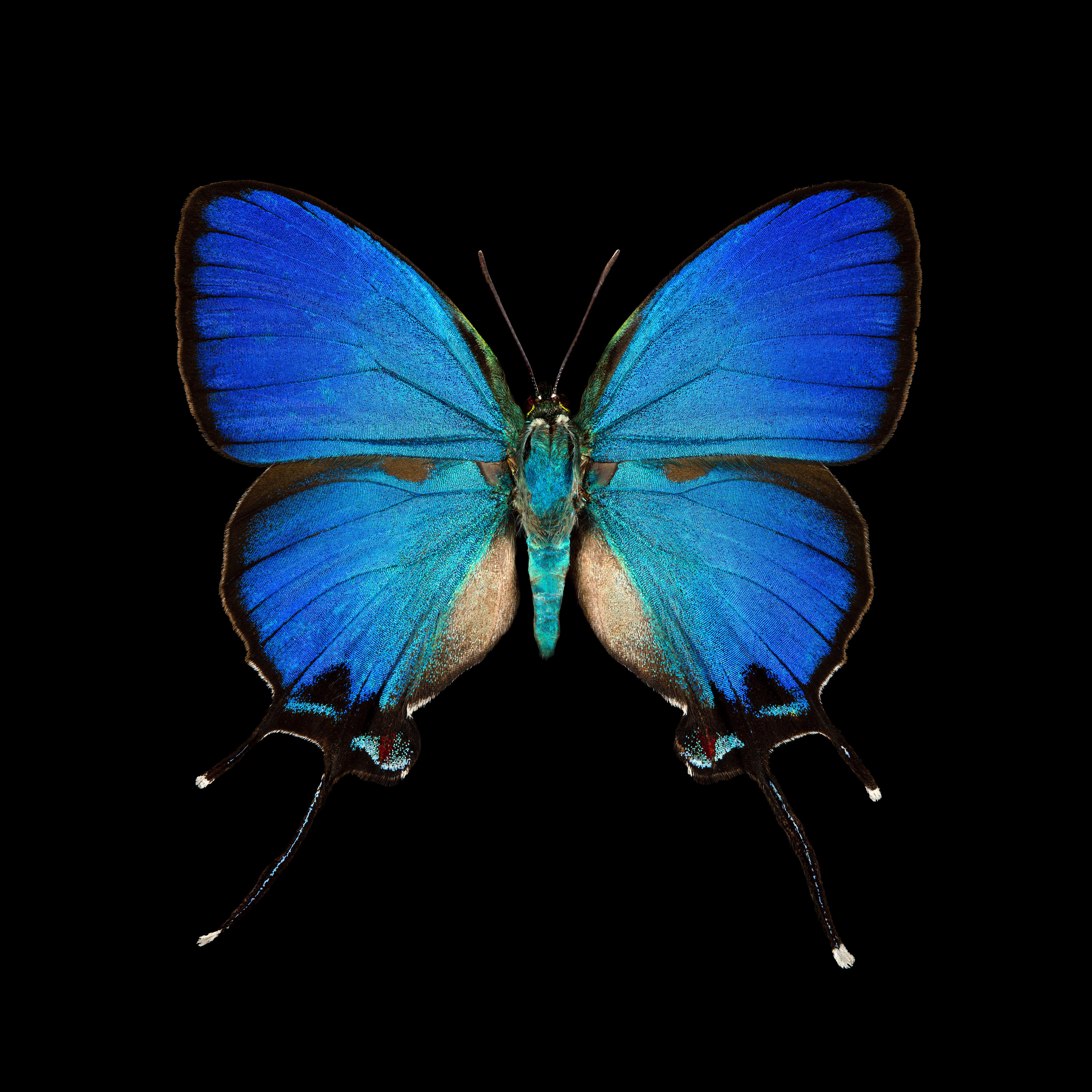
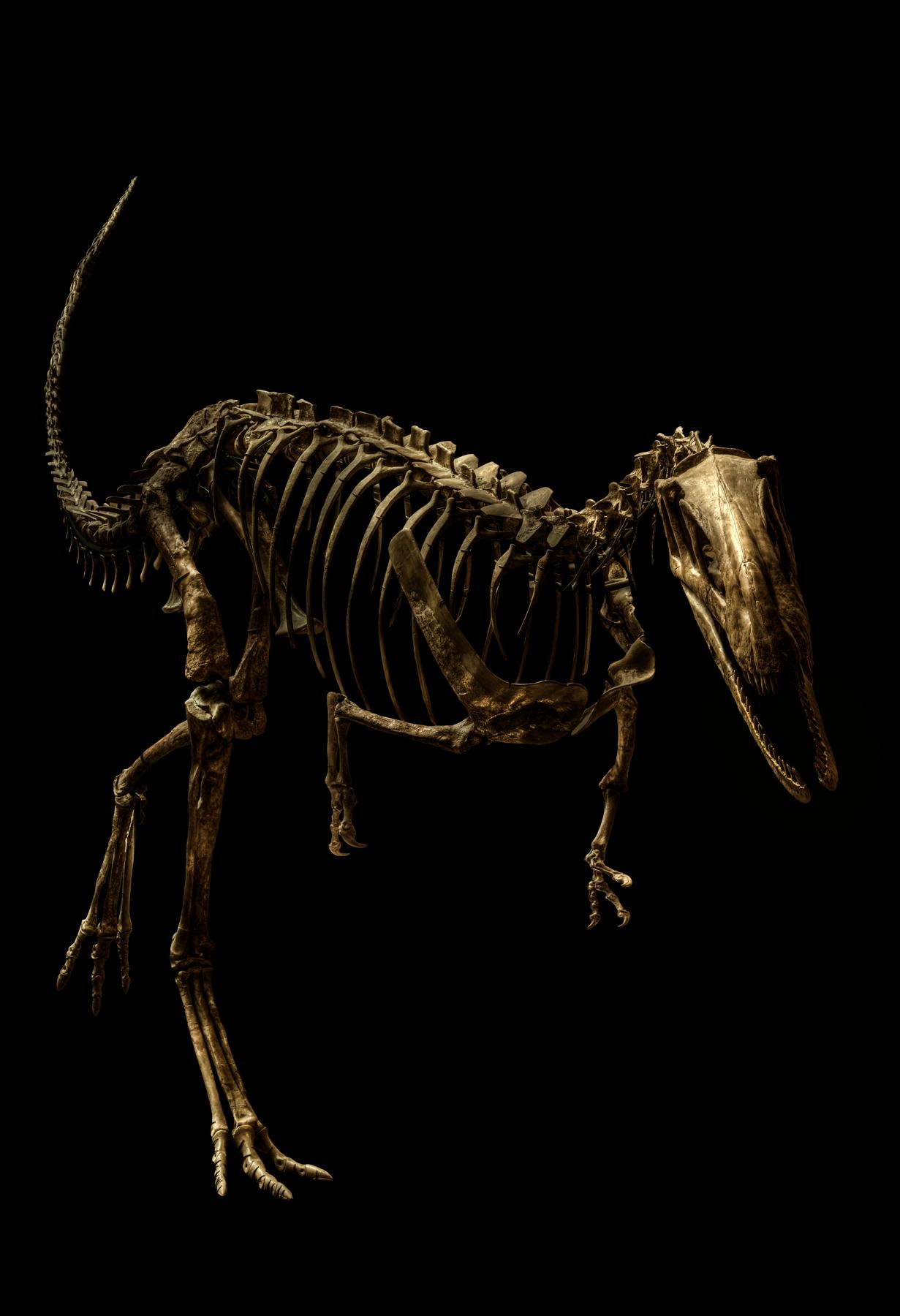
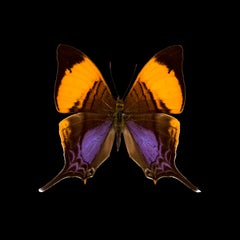
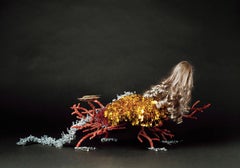
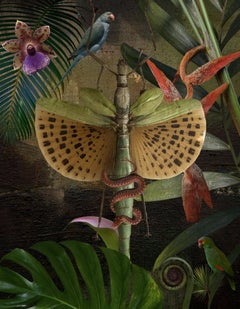
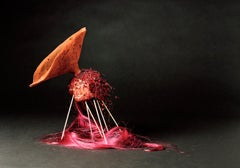
Unenlagia Comahuensis
Paris, 2019
213 x 155 cm
Edition size: 12
Light jet, exposure on high glossy paper and aluminum dibond
Framed with tulipwood, distance framing, black velvet passepartout, and a UV 99 museum glass.
The Unenlagia Comahuensis of the Muséum National d'Histoire Naturelle in Paris is the most bird-like dinosaur found so far - it even had arms that were designed so they could flap like a bird's wings. However, this dinosaur was much too large to fly, but it clearly shows how some dinosaurs were evolving to look and act like modern birds. Some scientists think that Unenlagia is a young Megaraptor, as the fossils were found in the same area. It is from the same general family that also includes many of the dinosaurs that exhibited bird-like traits, including those falling into the popular raptor category. Unenlagia had a shoulder structure that allowed its short arms to move forwards, backwards, inwards (for grasping prey), and up and down (for a flapping motion). This flapping motion was not used for flying as its wing-like arms were too short to support the heavy dinosaur. Perhaps these proto wings were used for balancing, turning, and a bit of lift during high-speed running. Although there is no fossil evidence of feathers from Unenlagia, it may well have had them, further adding lift to each upstroke of the proto wings. It could grasp prey with its clawed, short, wing-like forearms. This new fossil helps show how dinosaur forearms evolved into the wings of modern-day birds. Unenlagia shoulder and arm design provide evidence relating to the origins of flight. Paleontologists have debated about the origins of flight. Did animals first leap from trees and glide, or flap and rise from the ground? Unenlagia's bone structure supports the latter theory, in which animals start from the ground up. On the other hand, Unenlagia might have evolved, like the ostrich, from an earlier flying dinosaur; after all, birds had existed for over 60 million years already when Unenlagia lived.
Christian Voigt's Biography:
Born in Munich, Germany, Christian Voigt lives and works in Hamburg and The South of France. His current studio is situated in Hamburg.
Christian Voigt works with large-format cameras, both digital and analogue. He experiments with new camera techniques and makes the best use of the digital medium. In the museum edition, his large-format pictures can measure as much as eight meters in width. But his strictly limited editions also come in sizes which customers and collectors can hang on walls of more modest sizes.
Christian Voigt has developed a language capable of telling new stories. He continually works to refine a pictorial idiom, the stories he wants to tell, the feelings he convey. This is visible in his pictures; Landscape and architecture are his principal areas of interest, but he also does portraits and nudes. The travels associated with his projects and places call for concentration, for the ability to get to grips with people, with their history and their religion.
‘My pictures are created with the camera, not on the computer,’ he says, with a reference to the complicated technology and processing that goes into his creations. ‘But without the computer technology of today, the pictures couldn’t be crafted into their final form.’