1 of 9

Alexander Calder
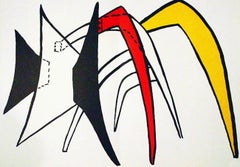
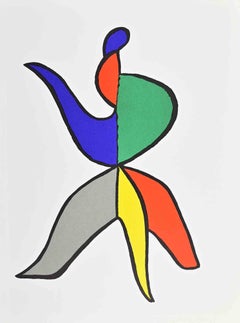
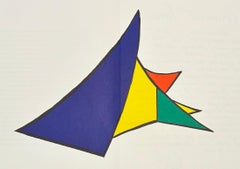
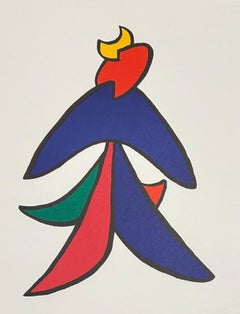
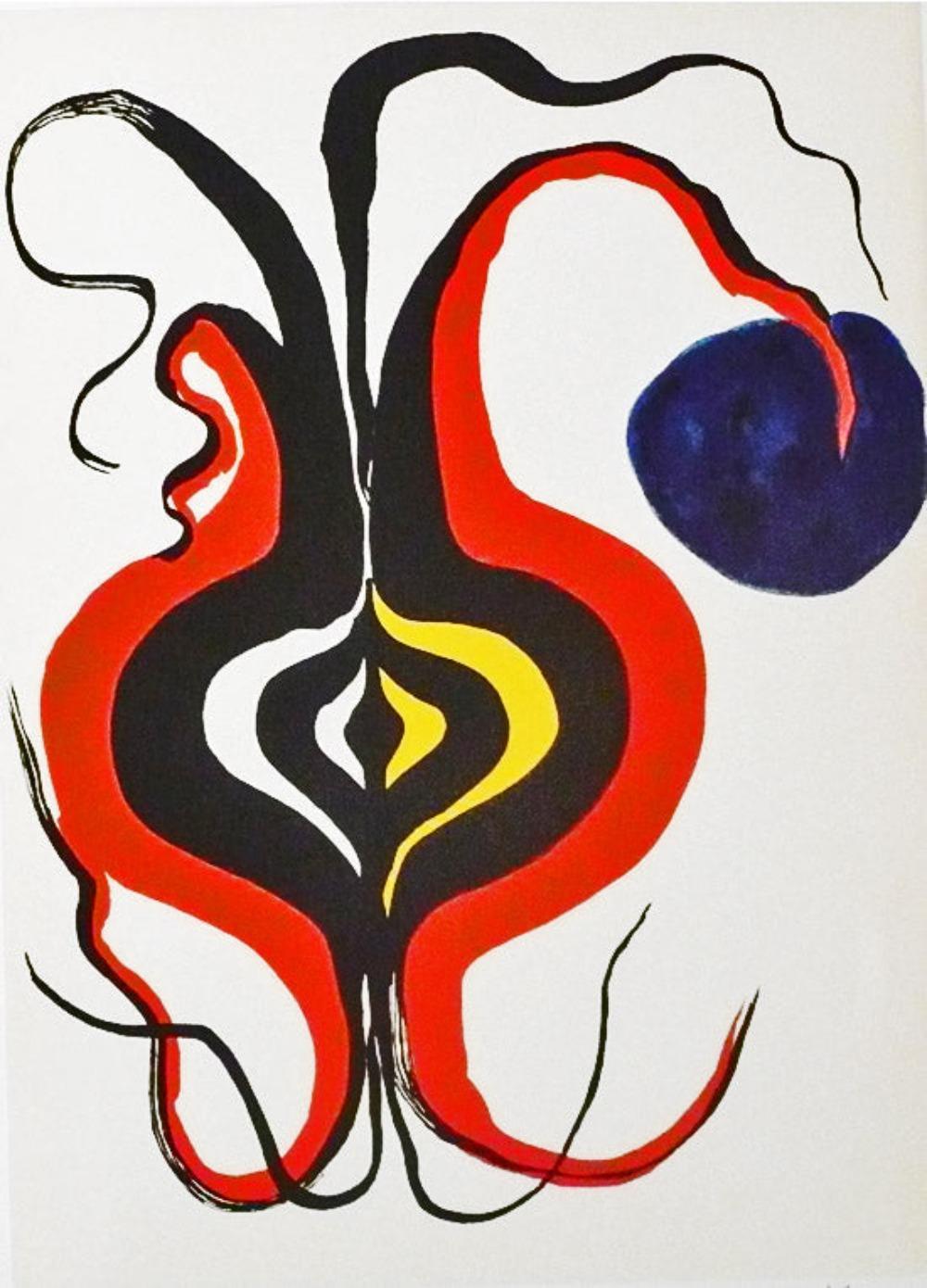
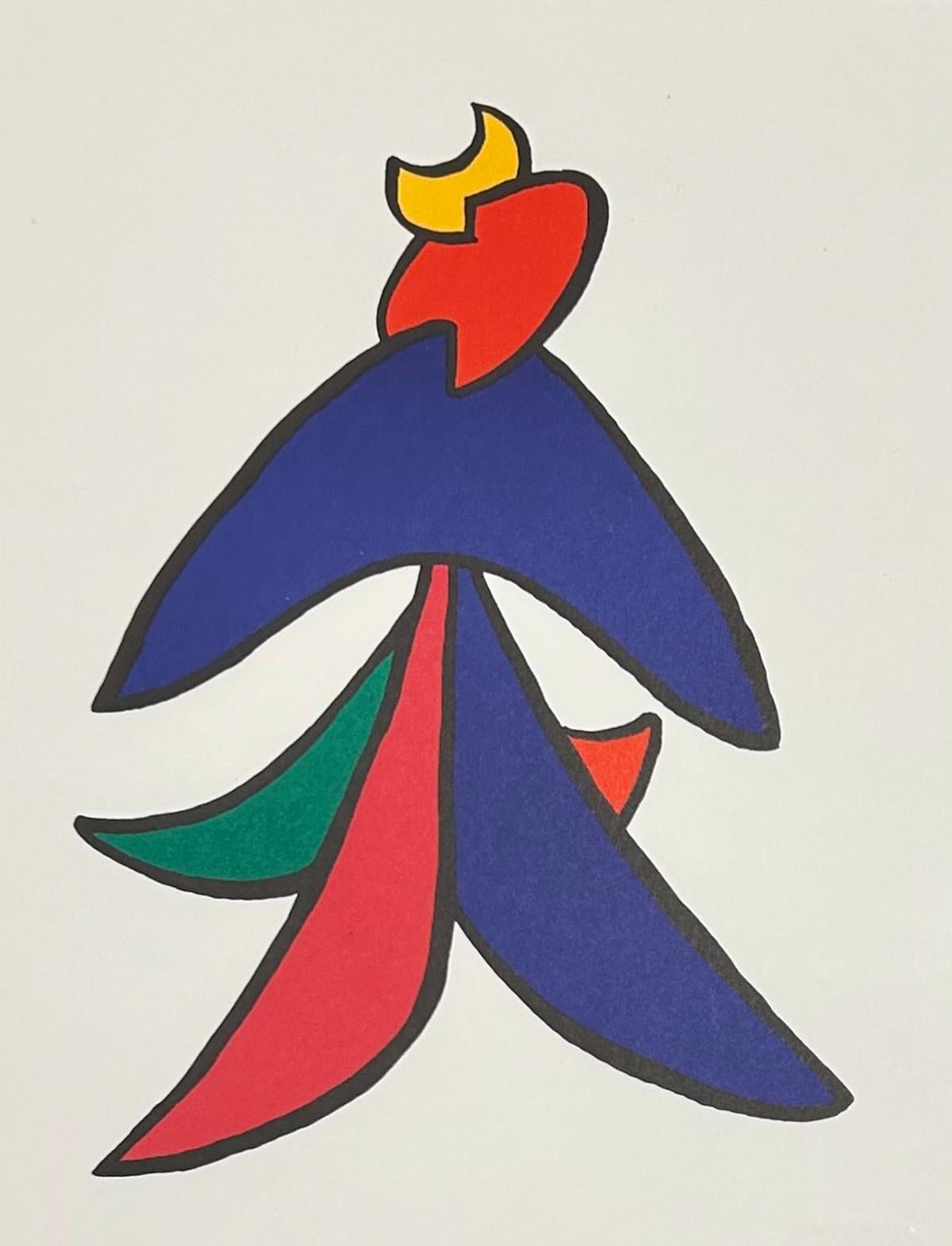
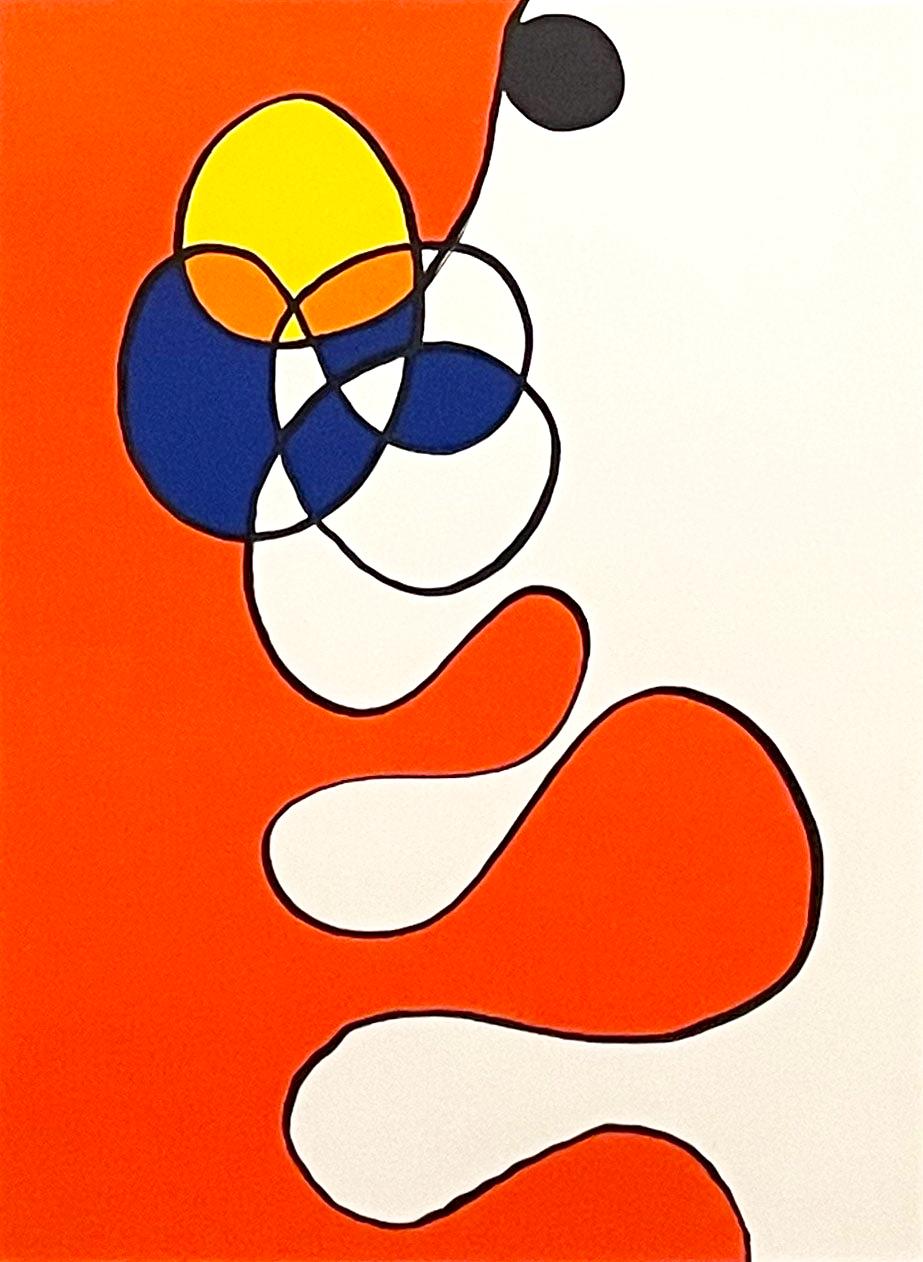
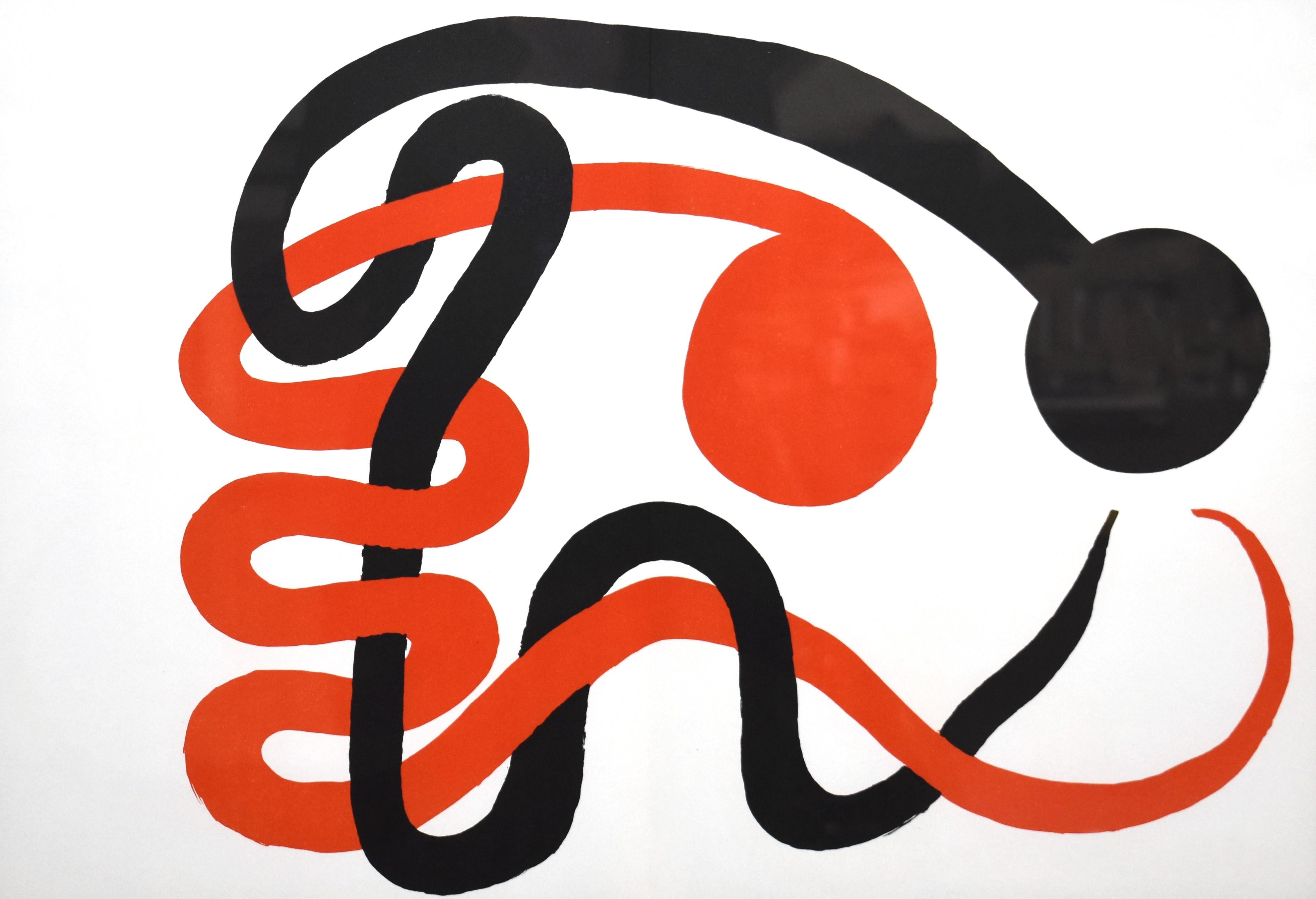
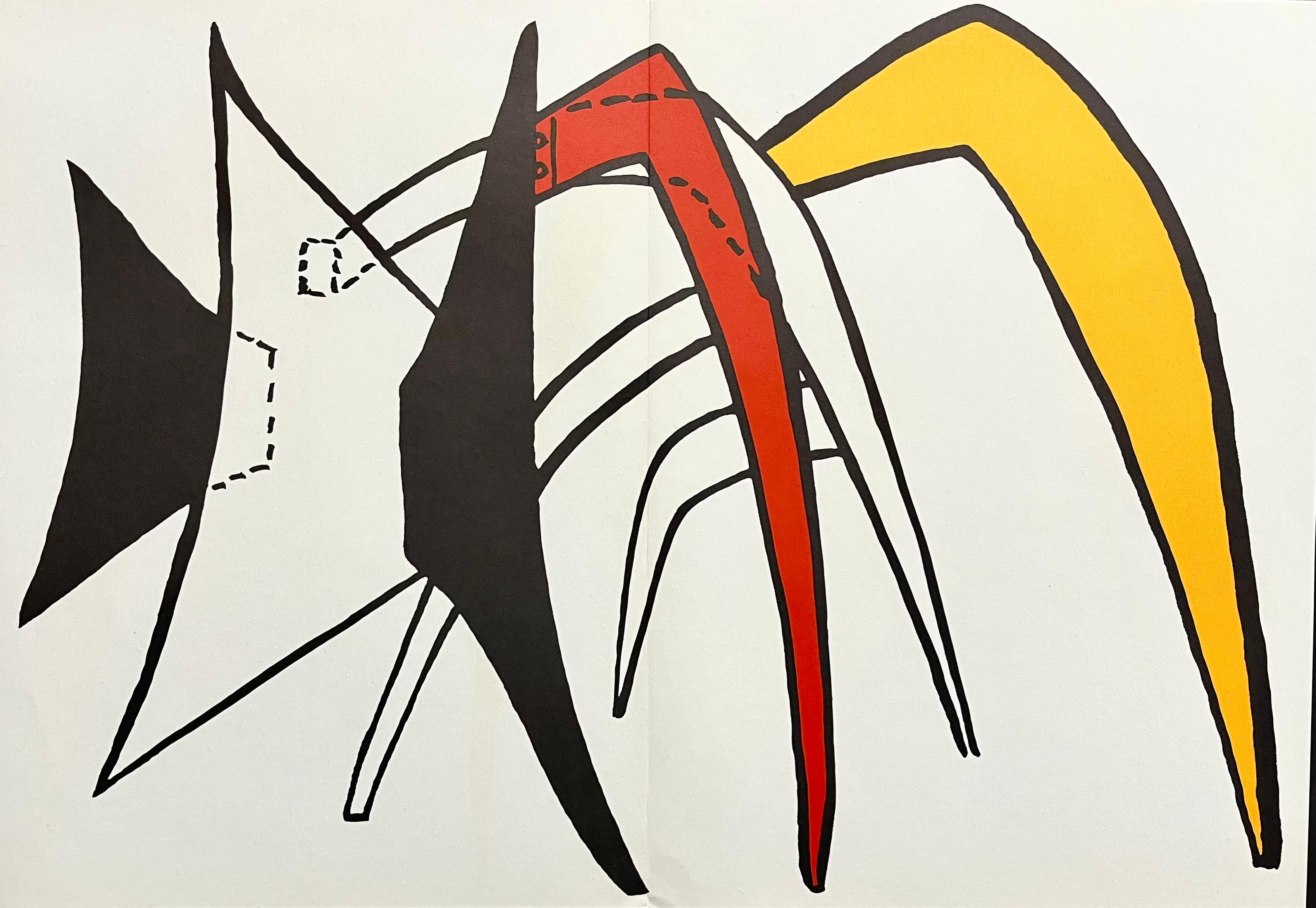
Alexander Calder, Clog and Phrygian Cap, from Derriere le Miroir, 1963

1963

$796
$99520% Off
£601.64
£752.3120% Off
€703.73
€880.8020% Off
CA$1,130.25
CA$1,415.6420% Off
A$1,149.86
A$1,439.9620% Off
CHF 660.73
CHF 826.3920% Off
MX$13,827.15
MX$17,310.0420% Off
NOK 7,713.86
NOK 9,639.8220% Off
SEK 7,760.04
SEK 9,730.5720% Off
DKK 5,260.75
DKK 6,584.7520% Off

Follow Alexander Calder Prints and Multiples to receive alerts when new items arrive

About the Item

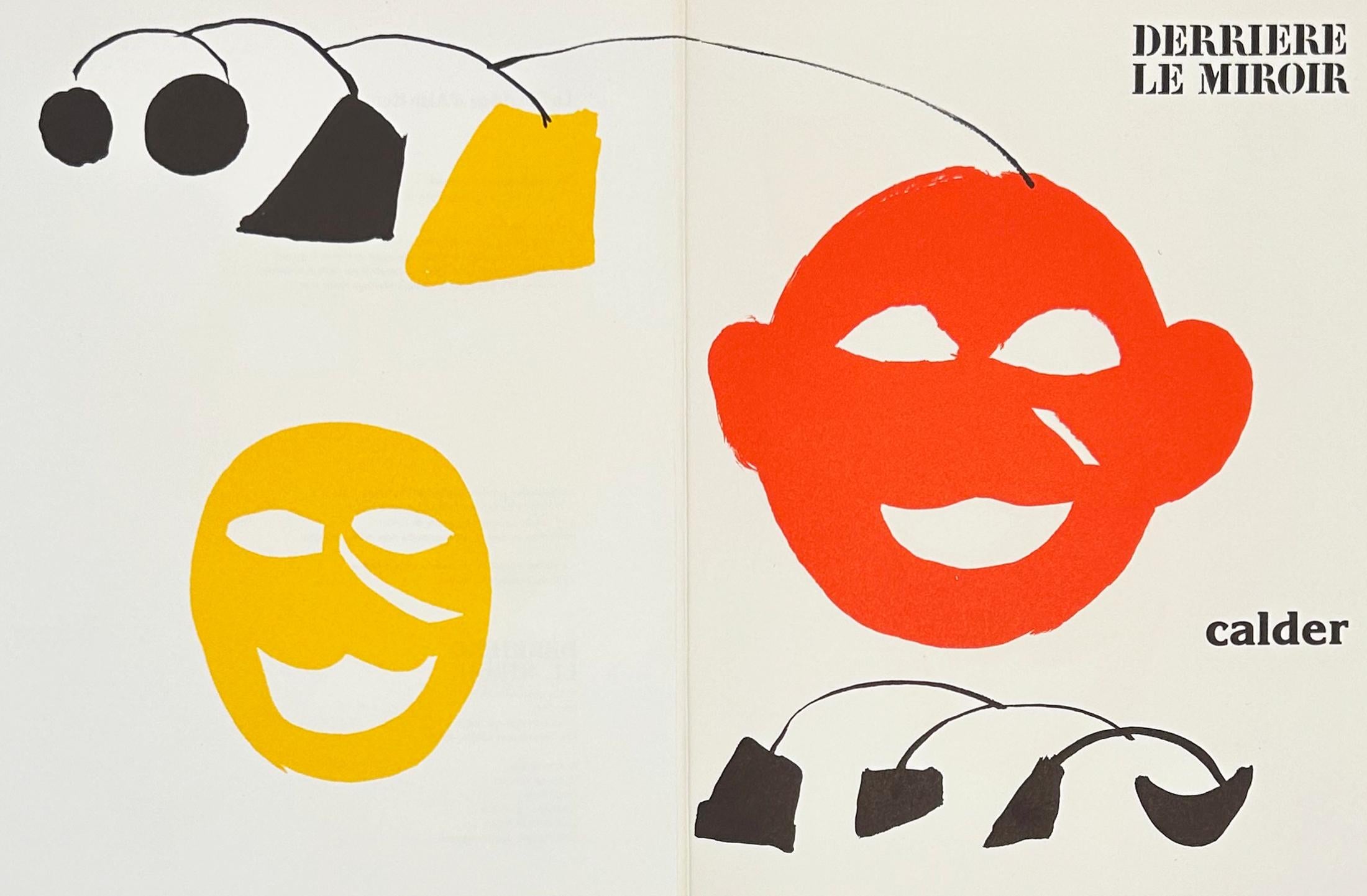
This exquisite lithograph by Alexander Calder (1898–1976), titled Sabot et le bonnet phrygien (Clog and Phrygian Cap), originates from the historic 1963 folio Derriere le Miroir, No. 141. Published by Maeght Editeur, Paris, under the direction of Aime Maeght, and printed by Mourlot Freres, Paris, this composition exemplifies Calder’s masterful balance of spontaneity, rhythm, and geometry. In Sabot et le bonnet phrygien (Clog and Phrygian Cap), Calder translates movement and emotion into a lyrical abstraction, capturing the interplay of color and form through his distinctive palette of red, blue, yellow, and black. Executed on velin paper, this lithograph measures 15 x 22 inches (38.1 x 55.9 cm), with centerfold, as issued. As issued, it is unsigned and unnumbered, consistent with the authorized publication format. The edition preserves Calder’s dynamic sense of balance, structure, and motion, affirming his genius for translating rhythm and energy into visual form. Artwork Details: Artist: Alexander Calder (1898–1976) Title: Sabot et le bonnet phrygien (Clog and Phrygian Cap), from Derriere le Miroir, No. 141, 1963 Medium: Lithograph on velin paper Dimensions: 15 x 22 inches (38.1 x 55.9 cm), with centerfold, as issued Inscription: Unsigned and unnumbered, as issued Date: 1963 Publisher: Maeght Editeur, Paris Printer: Mourlot Freres, Paris Condition: Well preserved, consistent with age and medium Provenance: From the 1963 folio Derriere le Miroir, No. 141, published by Maeght Editeur, Paris Notes: Excerpted from the folio (translated from French), The illustrations on the cover and pages 2, 7, 12–13, 18, 20–21, and 23 of this issue of Derriere le Miroir are original lithographs by Calder, drawn in the workshops of Mourlot Freres, Paris. The four-color separations were produced by Bussiere AG; composition by Typelec. A luxury edition on velin d’Arches was printed in an edition of CL examples, numbered and signed by the artist. About the Publication: Derriere le Miroir (translated as “Behind the Mirror”) was an iconic French art periodical published from 1946 to 1982 by Maeght Editeur, one of the most influential art publishers of the 20th century. Founded by Aime Maeght in Paris, the publication was conceived as a visual and literary collaboration between leading modern artists, poets, and critics. Each issue functioned as both an exhibition catalogue and a work of art in itself—featuring original lithographs printed directly from the artists’ stones or plates, alongside essays, poems, and critical commentary. Over the course of 36 years, Derriere le Miroir produced more than 250 issues and showcased an extraordinary roster of artists including Henri Matisse, Marc Chagall, Joan Miro, Georges Braque, Alexander Calder, Fernand Leger, Pierre Bonnard, Alberto Giacometti, and Eduardo Chillida. Printed in the ateliers of Mourlot and Arte, the periodical set new standards for quality in color lithography, combining fine art printing with elegant typography and poetic text. Beyond its visual brilliance, Derriere le Miroir also became a cultural chronicle of postwar European modernism. Each issue coincided with exhibitions held at Galerie Maeght, providing a collectible and widely accessible record of groundbreaking shows. Its integration of image, text, and philosophy created a dialogue between art and literature that elevated the modern art book to new aesthetic heights. Today, Derriere le Miroir remains one of the most sought-after and historically significant art publications, prized by collectors and scholars alike for its craftsmanship, influence, and its role in defining the visual language of 20th-century modernism. The Maeght Foundation in Saint-Paul-de-Vence continues to honor this legacy through exhibitions and archival preservation of the series, affirming Derriere le Miroir’s enduring place in the history of modern art and fine art publishing. About the Artist: Alexander Calder (1898–1976) was an American sculptor whose inventive use of motion, balance, and abstract form revolutionized 20th-century sculpture. Born into a family of artists, Calder studied engineering before embracing art, applying a mechanical sensibility to create kinetic “mobiles” and stable “stabiles” that defy static tradition. In Paris during the 1920s and ’30s, he connected with avant-garde figures such as Marcel Duchamp and Man Ray, contributing to the evolving dialogue of modern art. Calder’s work resonates within the arc of 20th- and 21st-century creativity: from his contemporaries Henri Matisse, Marc Chagall, Salvador Dali, Joan Miro, Georges Braque, and Wassily Kandinsky—each expanding visual language—to later icons such as Banksy, Damien Hirst, Jeff Koons, Jackson Pollock, Andy Warhol, and Jasper Johns, who pushed image, concept, and market reach. Calder’s sculptures, drawings, and designs remain central in collections worldwide, from MoMA and the Guggenheim in New York to the Tate, Centre Pompidou, and beyond. In May 2014 at Christie’s New York, Calder’s Poisson volant (Flying Fish) (1957) sold for approximately $25.93 million USD, establishing the highest known auction price attained for his work. Alexander Calder lithograph, Calder Sabot et le bonnet phrygien (Clog and Phrygian Cap), Calder Derriere le Miroir, Calder Maeght Editeur Paris, Calder Mourlot Freres, Calder 1963 edition, Calder modernist print, Calder kinetic abstraction, Calder collectible lithograph, Calder American sculptor, Calder Maeght Paris publication.
  • Creator:
    Alexander Calder (1898 - 1976, American)
  • Creation Year:
    1963
  • Dimensions:
    Height: 15 in (38.1 cm)Width: 22 in (55.88 cm)
  • Medium:
  • Movement & Style:
  • Period:
  • Condition:
  • Gallery Location:
    Southampton, NY
  • Reference Number:
    1stDibs: LU1465216708382

You May Also Like

Alexander Calder lithograph (derrière le miroir)

Alexander Calder lithograph (derrière le miroir)

By Alexander Calder

Located in NEW YORK, NY

Alexander Calder Lithograph c. 1964 from Derrière le miroir: Lithograph in colors; 15 x 11 inches. Very good overall vintage condition; well-preserved. Unsigned from an edition of unknown. From: Derrière le miroir. Printed in France. Derrière le miroir: In October 1945 the French art dealer Aimé Maeght opens his art gallery at 13 Rue de Téhéran in Paris. His beginning coincides with the end of Second World War and the return of a number of exiled artists back to France. The publication was created in October 1946 (n°1) and published without interruption until 1982 (n°253). Its original articles and illustrations (mainly original color lithographs by the gallery artists) who were famous at the time. The lithographic publication covered only the artists exhibited by Maeght gallery either through personal or group exhibitions. Among them were, Pierre Alechinsky, Francis Bacon, Alexander Calder, Marc Chagall, Eduardo Chillida, Alberto Giacometti, Vassily Kandinsky, Ellsworth Kelly, Fernand Léger, Henri Matisse, Joan Miró, Saul Steinberg and Antoni Tapies. _ Alexander Calder was an American artist best known for his invention of the kinetic sculptures known as mobiles. Calder also produced a variety of two-dimensional artworks including lithographs, paintings, and tapestries as seen in his Butterfly (1970). “My whole theory about art is the disparity that exists between form, masses, and movement,” the artist once said. Born on August 22, 1898 in Lawnton, PA, Calder turned to art in the 1920s, studying drawing and painting under George Luks and Boardman Robinson at the Art Students League in New York. Calder moved to Paris to continue his studies in 1926, where he was introduced to the European avant-garde through performances of his Cirque Calder (1926–1931). “I was very fond of the spatial relations,” he said of his interest in the circus. “The whole thing of the—the vast space—I’ve always loved it.” With these performances, along with his wire sculptures, Calder attracted the attention of such notable figures as Marcel Duchamp, Jean Arp, and Fernand Léger. Notably, it was his friend Duchamp that coined the term mobile—a pun in French meaning both “motion” and “motive”—during a visit to Calder’s Paris studio in 1931. His earliest mobiles moved by motors, but Calder soon abandoned these mechanics and designed pieces that moved by air currents or human interaction. Over the course of seven decades, along with his mobiles, he also produced paintings, monumental outdoor sculptures, works on paper, domestic objects, and jewelry. The artist lived in both Roxbury, CT, and Saché, France, before his death on November 11, 1976 in New York, NY. Today, his works are held in the collections of The Museum of Modern Art in New York, the National Gallery of Art in Washington, D.C., the Whitney Museum of American Art, New York, the Art Institute of Chicago, and the Tate Gallery in London. Related Categories Calder prints. Mid Century Modern. 1970s. Miro. Chagall. Calder lithograph. Figurative art. Alexander Calder Derrière...

Category

1960s Contemporary Figurative Prints

Materials

Lithograph

Alexander Calder Lithograph, Abstract, 1975, Derriere le Miroir #221

Alexander Calder Lithograph, Abstract, 1975, Derriere le Miroir #221

By Alexander Calder

Located in Washington, DC

Artist: Alexander Calder Title: Derriere le Miroir #221 Portfolio: Derriere le Miroir #221 Medium: Lithograph in colors Date: 1975 Edition: Unnumbered Sheet Size: 15" x 22" Image Siz...

Category

1970s Abstract Abstract Prints

Materials

Lithograph

Abstract Composition - Lithograph by Alexander Calder - 1963

Abstract Composition - Lithograph by Alexander Calder - 1963

By Alexander Calder

Located in Roma, IT

Lithograph on paper realized for Derrière le Miroir no.141, and realized in 1963. Not signed. Very good condition. Derrière le Miroir (“Behind the Mirror”) was the legendary art m...

Category

1960s Abstract Abstract Prints

Materials

Lithograph