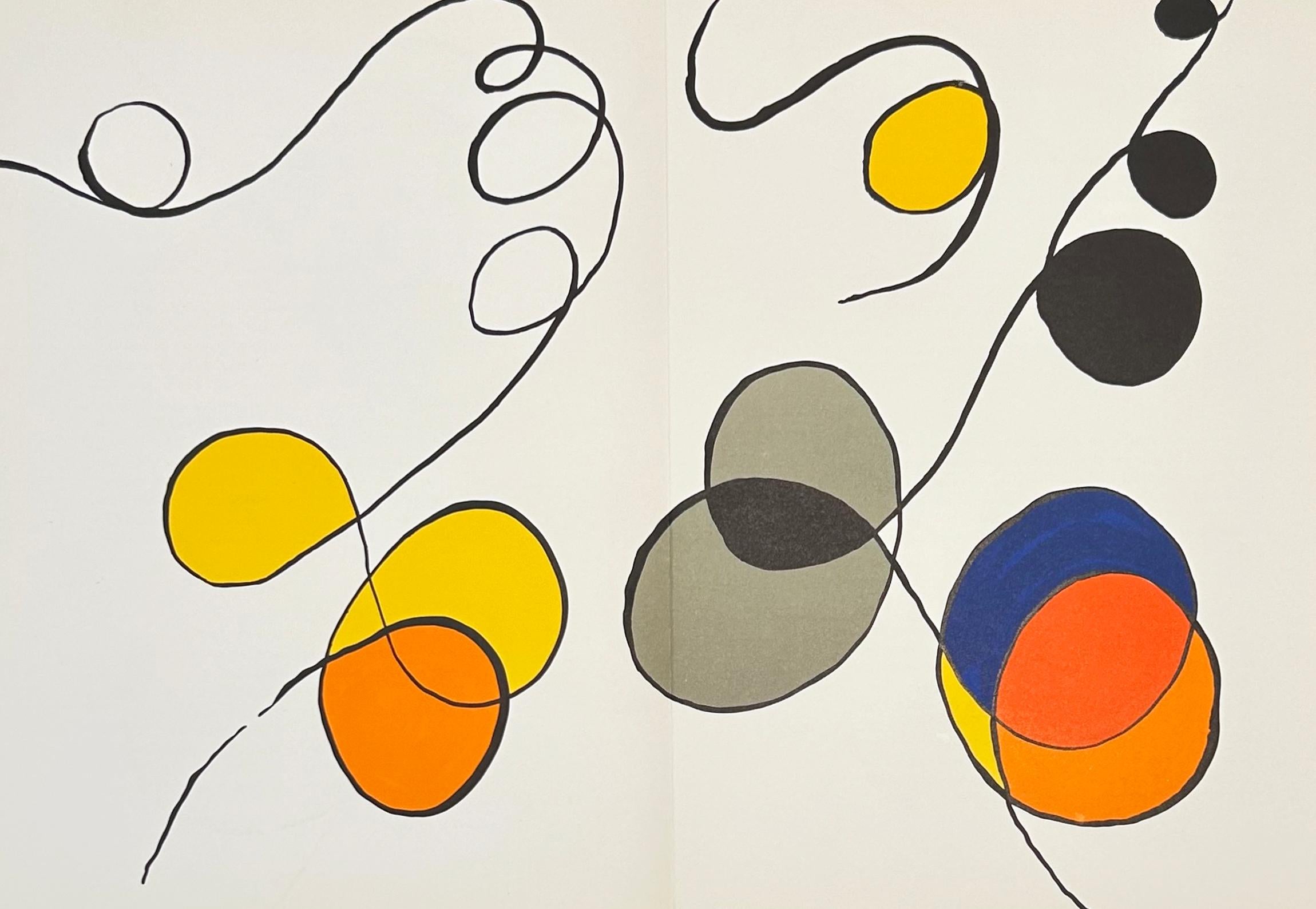
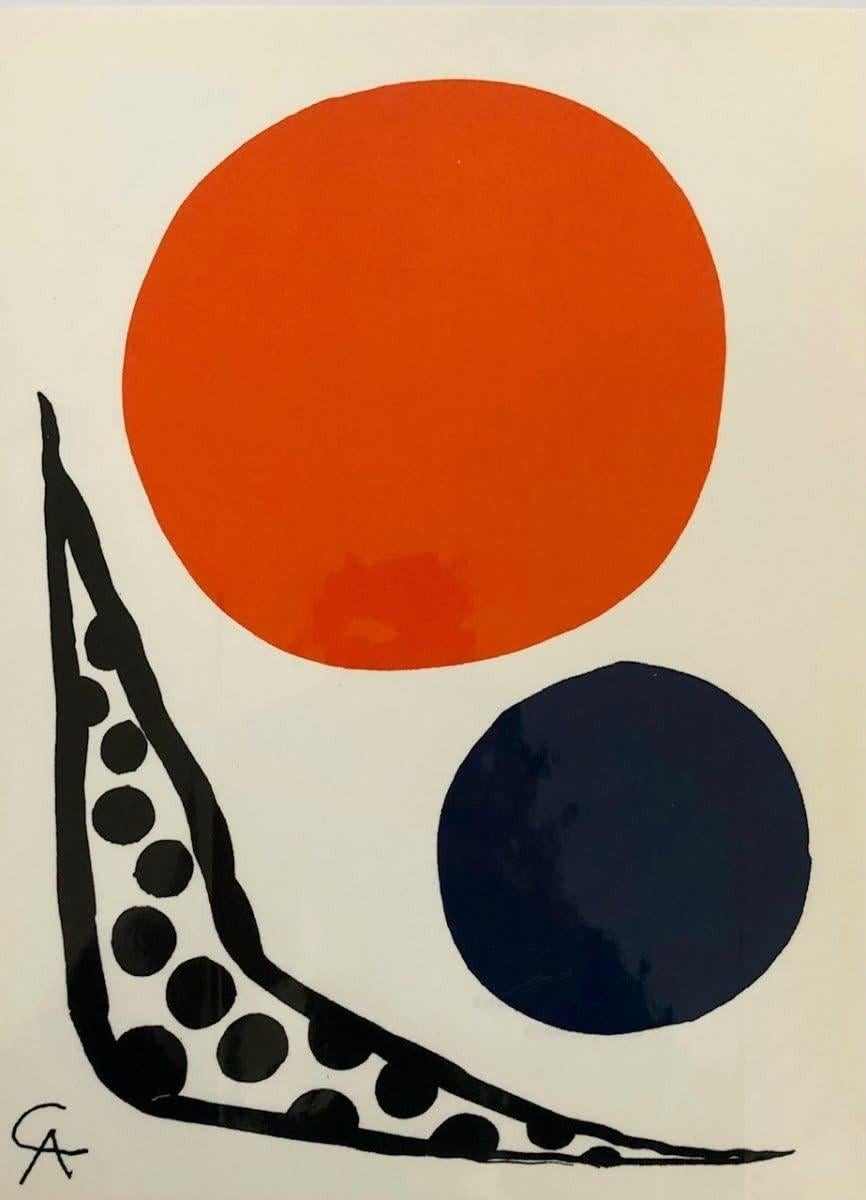
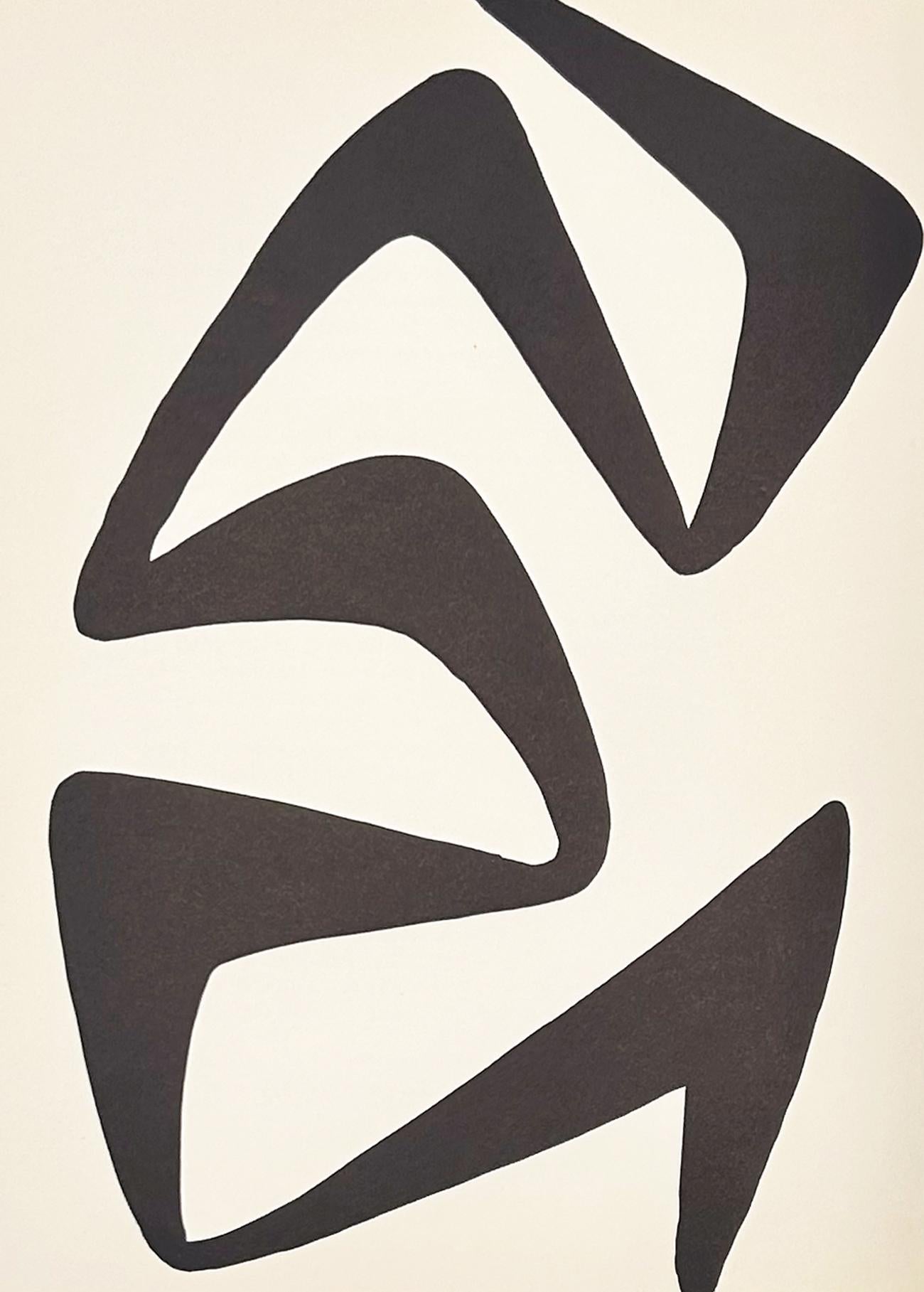
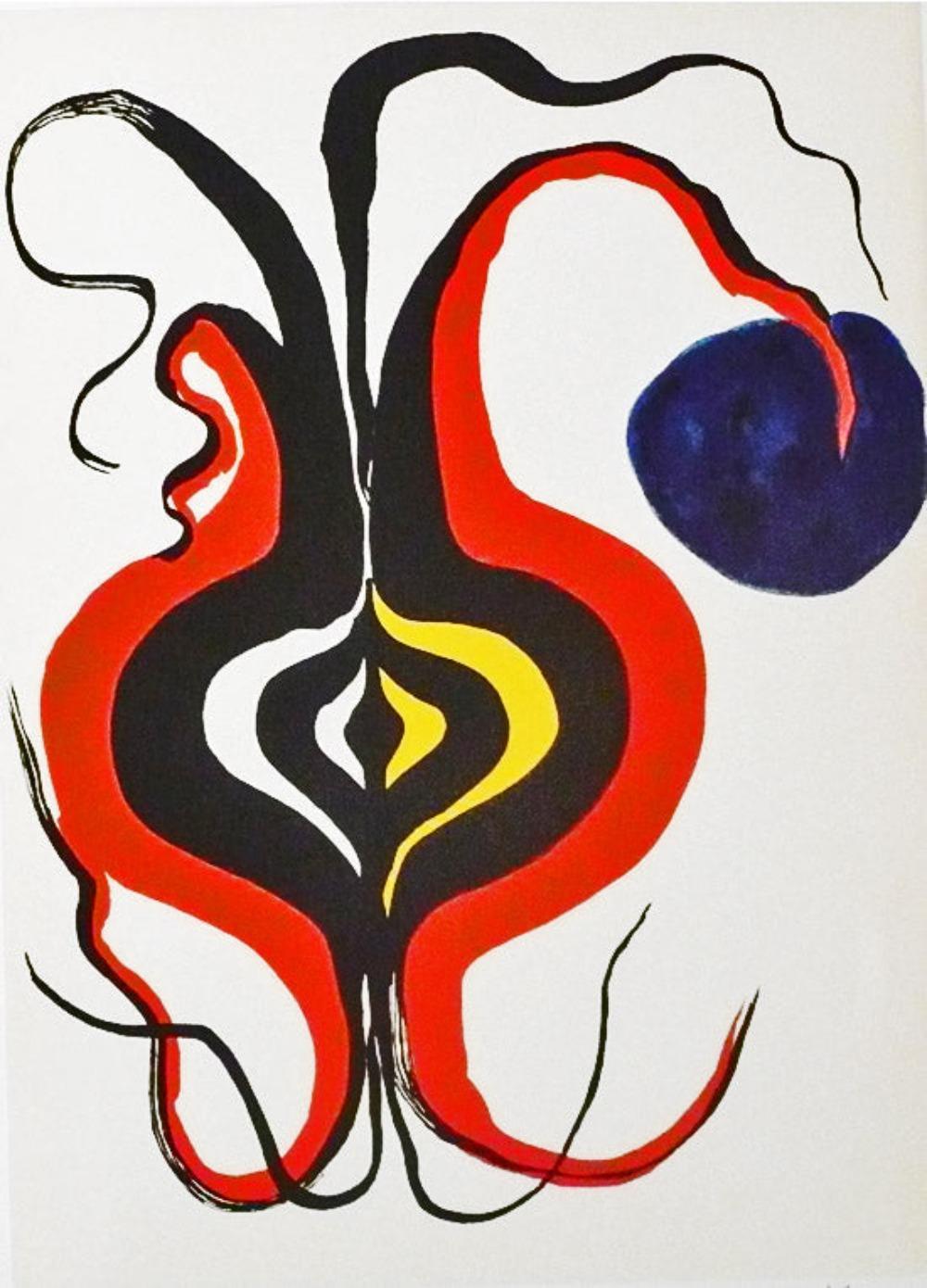
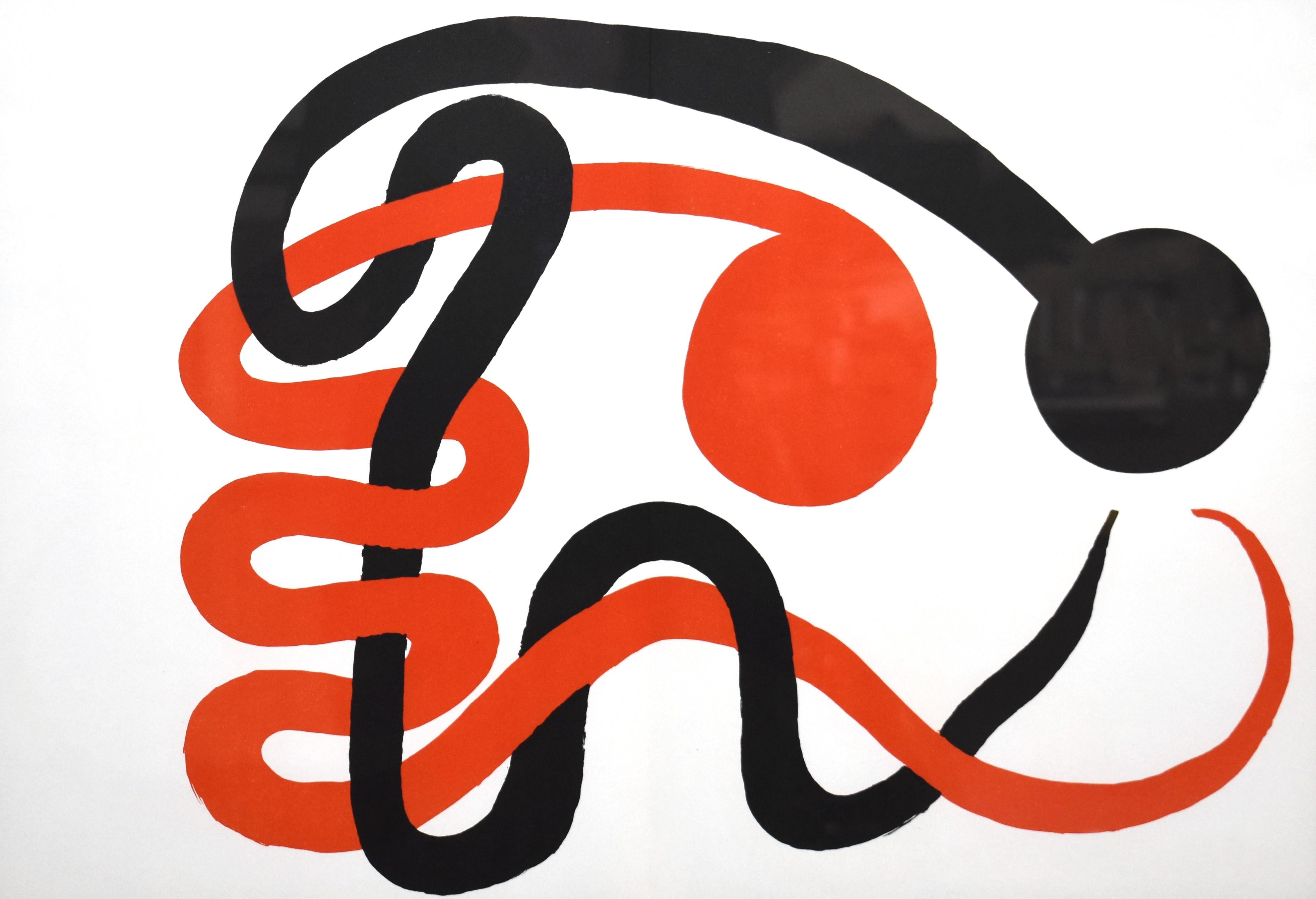
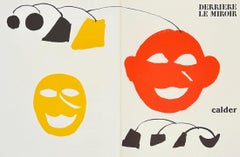
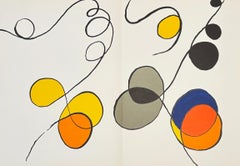
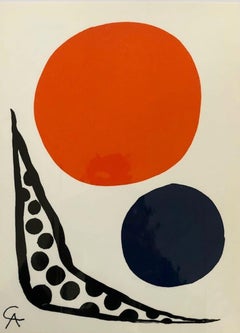
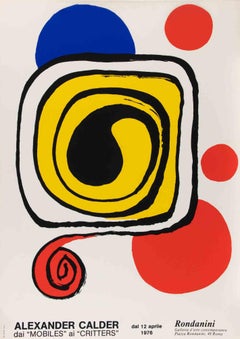
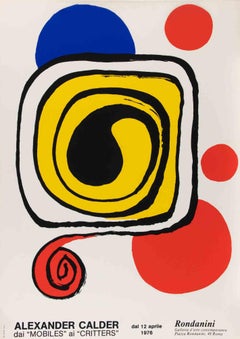
This exquisite lithograph by Alexander Calder (1898–1976), titled Sans titre (Untitled), originates from the 1972 album Calder autobiographie. Published by Maeght Editeur, Paris, and printed by Arte, Adrien Maeght, Paris, 1972, the work reflects Calder’s bold, rhythmic graphic language—an extension of the dynamism, balance, and playful abstraction that defined his sculptural practice.
Executed as a lithograph on velin paper, this work measures 11.024 x 22.28 inches, with stitch perforations and centerfold as issued. Unsigned and unnumbered as issued. Printed by Arte, Adrien Maeght, Paris.
Artwork Details:
Artist: Alexander Calder (1898–1976)
Title: Sans titre (Untitled), from the album Calder autobiographie, 1972
Medium: Lithograph on velin paper
Dimensions: 11.024 x 22.28 inches (28 x 56.6 cm), with stitch perforations and centerfold as issued
Inscription: Unsigned and unnumbered as issued
Date: 1972
Publisher: Maeght Editeur, Paris
Printer: Arte, Adrien Maeght, Paris
Condition: Well preserved, consistent with age and medium
Provenance: From the 1972 album Calder autobiographie, published by Maeght Editeur, Paris; printed by Arte, Adrien Maeght, Paris, 1972
About the Publication:
Calder autobiographie, published in 1972 by Maeght Editeur, Paris, stands as one of the most distinctive and artistically ambitious albums in the Maeght catalogue, conceived as an intimate visual biography that blends Calder’s own words, archival material, and original lithographs to create a vivid portrait of the artist’s life and creative evolution; printed by the renowned Arte, Adrien Maeght atelier, the album reflects the longstanding collaboration between the Calder and Maeght families and exemplifies the publisher’s mission to unite literature, scholarship, and original prints into cohesive albums that capture an artist’s universe, making it both a significant historical document and a highly collectible fine art publication.
About the Artist:
Alexander Calder (1898–1976) was an American sculptor, painter, and printmaker whose pioneering innovations in kinetic art revolutionized modern sculpture and transformed visual language. Born in Lawnton, Pennsylvania, into a family of artists, he trained as a mechanical engineer before moving into art—a combination that shaped his lifelong engagement with balance, structure, and motion. After relocating to Paris in 1926, he entered the avant-garde circle and formed friendships with Pablo Picasso, Alberto Giacometti, Joan Miro, Wassily Kandinsky, Salvador Dali, Marcel Duchamp, and Man Ray, whose influences helped shape his vision. Calder’s Cirque Calder introduced performance, humor, and engineering into sculpture, and he later invented the mobile—named by Duchamp—as well as its stationary counterpart, the stabile. His delicately balanced moving works and monumental public sculptures redefined the possibilities of abstraction and spatial experience, influencing artists such as Jean Tinguely, George Rickey, Donald Judd, Ellsworth Kelly, Richard Serra, and Olafur Eliasson. His gouaches, prints, and jewelry extended his vocabulary of rhythm and color across media. Represented in every major modern museum—including MoMA, the Guggenheim, the Tate, and the Centre Pompidou—he stands alongside Picasso, Giacometti, Dali, Miro, Kandinsky, Duchamp, and Man Ray as one of the defining voices of modern art. Calder’s highest auction record was achieved by Poisson Volant (Flying Fish) (1957), which sold for 25.9 million USD at Christie’s, New York, on May 15, 2014, affirming his enduring influence and collectibility.
Alexander Calder Sans titre 1972, Calder autobiographie, Calder lithograph, Arte Adrien Maeght, Maeght Editeur, Calder velin paper, Calder collectible print.