Want more images or videos?
Request additional images or videos from the seller
1 of 10

Fabian Marcaccio
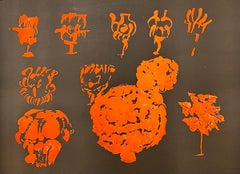
Argentine Italian Ink jet print mounted on polystyrene Fabian Marcaccio Muse X

1989-1999

$2,800
£2,107.45
€2,465.58
CA$3,959.98
A$4,022.13
CHF 2,317.84
MX$48,561.27
NOK 26,923.89
SEK 27,148.52
DKK 18,431.05

About the Item

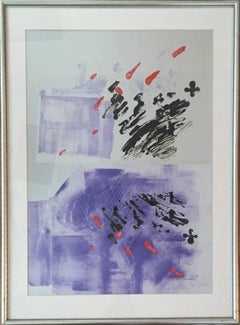
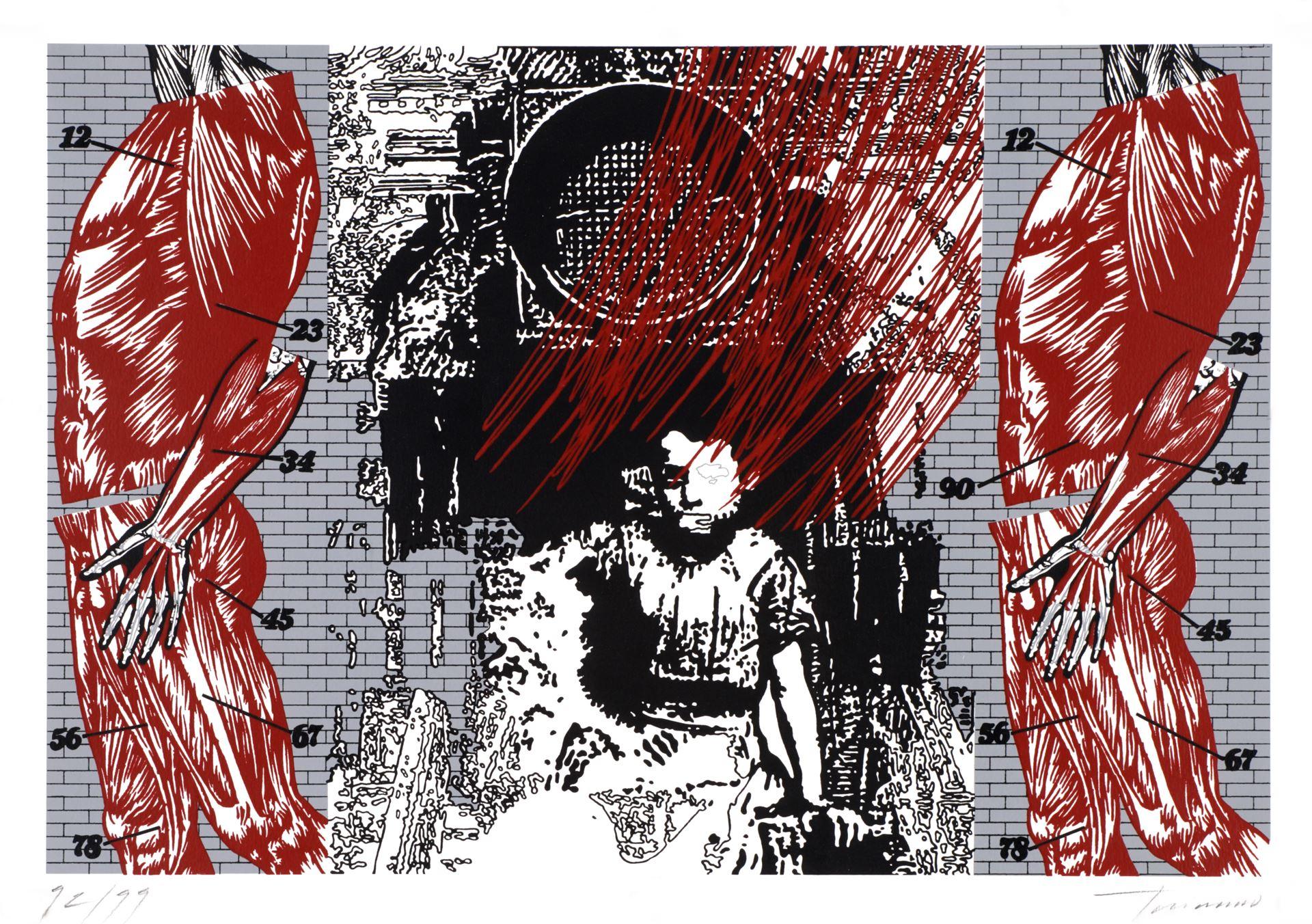
Fabian Marcaccio 560 Conjectures for a New Paint Management 1989-99 Ink jet print mounted on polystyrene with laminate Dimensions composition 30 1/4 x 23 3/16" (76.9 x 58.9 cm) sheet 30 1/4 x 23 3/16" (76 x 58.9 cm) Publisher Muse X Editions, Los Angeles Ink jet print mounted on polystyrene with laminate Fabian Marcaccio (Born 1963 Rosario, Argentina) is an Argentine-Italian born artist living and working in the United States whose trans-genre works including "Paintants" and '"Draftants" have been exhibited worldwide. Marcaccio was born to a native Argentine mother and Italian father in Rosario de Santa Fe where he later attended the University of Philosophy. In 1985, at age 22, he moved to New York City, where he continues to live and work. He has exhibited widely throughout theUnited States, Europe and South America. In 2004, Kunstmuseum Liechtenstein organized a retrospective of his work, the same year that a solo exhibition was mounted at the Miami Art Museum. He regularly exhibits with galleries in New York, Los Angeles, Berlin, Paris, Cologne and Barcelona. He has participated in numerous group exhibitions, including; the 44th Biennial Exhibition of Contemporary American Painting, Corcoran Gallery of Art, Washington, DC in 1995, Summer Projects at PS1 Contemporary Art Center, New York in 2002, and Documenta 11, Kassel, Germany in 2002. His multidisciplinary collaborations include projects with the architect Greg Lynn that resulted in an exhibition at the Wexner Center for the Arts, Columbus, Ohio in 2001 and projects with composer Claudio Baroni creating animated operas and a 2005 scored, paintball performance at Weston Hall in Toronto, Canada. Marcaccio’s work investigates whether the traditional medium of painting can survive in the digital age. He has used printmaking transfer techniques to make paintings and became well known in the 1990s for his manipulations of the conventions of painting. More recently, he has relied upon digital and industrial techniques to infuse his painting process with spatial and temporal concerns. The results are environmental paintings, animations, and “Paintants” that combine digitally manipulated imagery, sculptural form, and three dimensionally painted surfaces. On September 10, 2011 Marcaccio received the "Bernhard Heiliger Award for Sculpture 2011" from the Mayor of Berlin, Klaus Wowereit. Bernhard Heiliger Award for Sculpture. Radical Shift: Political and Social Upheaval in Argentinean Art since the 1960s “Fabian Marcaccio” Interview by Shirley Kaneda BOMB 41/Fall 1992 2011 Pinta London, Featured Artist, Galerie Thomas Schulte, London, England “Corpse: Variant Paintants” Galerie Schmidt MacZollek, Cologne, Germany Bernhard Heiliger Award for Sculpture Exhibition, George Kolbe Museum, Berlin, Germany 2010 “Megan: Variant Paintants” Galeria Joan Prats, Barcelona, Spain SAPS, Sala Arte Publico Sigueiros, Mexico 2009 “Analytical Rage-Paintants” Galerie Thomas Schulte, Germany 2008 “Draftants,” Galerie Schmidt Maczollek, Koln, Germany 2007 BravinLee programs, New York City, NY, USA Ruth Benzacar, Galeria de Arte, Buenos Aires, Argentina Fabian Marcaccio, Galeria Joan Prats, Barcelona, Spain 2006 “Especial,” Galerie Maczollek, Cologne, Germany “Private Contractor and New Paintants,” Kevin Bruk Gallery, Miami, FL, USA SELECTED COLLECTIONS Whitney Museum of American Art, New York, NY MOMA, Museum of Modern Art New York, NY Margulies Collection, New York, NY Collezione Maramotti, Reggio Emilia, Italy Proje4L/Elgiz Museum of Contemporary Art, Istanbul, Turkey MIT List Visual Arts Center, Cambridge, MA MAM – Miami Art Museum, Miami, FL Philadelphia Museum of Art, Philadelphia, PA Museum für Moderne Kunst (MMK), Frankfurt/Main, Germany Museo de Arte Moderno, Buenos Aires, Argentina Fondacion La Caixa, Barcelona, Spain His three-dimensional paintings are included in the permanent collections of The Museum of Modern Art and the Whitney Museum of Art, both in New York, and in the Philadelphia Museum of Art. His work has been featured in exhibitions at the MoMA P.S.1 in Queens, the Daros Foundation in Rio de Janeiro, and the Havana Biennial, among others. Marcaccio lives and works in New York, NY. Muse X Editions. An (now defunct) LA based innovative publisher of limited-edition prints, Muse X has launched its first group of prints and is just beginning to make itself known to artists, curators, dealers and collectors. Among works just off the press are otherworldly landscapes by Barbara Kasten and Oliver Wasow, a sizzling sunset by Peter Alexander, abstract compositions by Pauline Stella Sanchez and Jennifer Steinkamp, text and photo combinations by Bill Barminski and Nancy Dwyer, and conceptual photographs by Kevin Hanley. Doug Aitken, Polly Apfelbaum, David Levinthal, Richard Long, Christian Marclay, Alyson Shotz, Uta Barth all have published with them.
  • Creator:
  • Creation Year:
    1989-1999
  • Dimensions:
    Height: 30.25 in (76.84 cm)Width: 23.188 in (58.9 cm)
  • Medium:
  • Period:
  • Condition:
  • Gallery Location:
    Surfside, FL
  • Reference Number:
    1stDibs: LU38217040542

More From This Seller

View All
Pietro Consagra Italian Mod Abstract Expressionist Forma Art Informel Lithograph

Pietro Consagra Italian Mod Abstract Expressionist Forma Art Informel Lithograph

By Pietro Consagra

Located in Surfside, FL

Pietro Consagra (Italian, 1920-2005). Hand signed in pencil and numbered limited edition color lithograph on Magnani paper. Embossed stamp with limited edition numbers in pencil to lower left, and having artist pencil signature to lower right. (from a limited edition of 80 with 15 artist's proofs) Published by Stamperia 2RC, Rome Italy and Marlborough Gallery, Rome, Italy. Abstract Modernist work in colors, produced in the style of the Forma art movement of Postwar Italy, of which the artist was a prominent member. Pietro Consagra (1920 – 2005) was an Italian Post war artist working in painting, printmaking and sculpture. In 1947 he was among the founding members of the Forma 1 group of artists, proponents of structured abstraction. (similar to the Art Informel and Art Brut in France and the Brutalist artists) Consagra was born on 6 October 1920 in Mazara del Vallo, in the province of Trapani in south-western Sicily, to Luigi Consagra and Maria Lentini. From 1931 he enrolled in a trade school for sailors, studying first to become a mechanic, and later to become a captain. In 1938 he moved to Palermo, where he enrolled in the liceo artistico; despite an attack of tuberculosis, he graduated in 1941, and in the same year signed up at the Accademia di Belle Arti, where he studied sculpture under Archimede Campini. After the Invasion of Sicily and the Allied occupation of Palermo in 1943, Consagra found work as a caricaturist for the American Red Cross club of the city; he also joined the Italian Communist Party. Early in 1944, armed with a letter of introduction from an American officer, he travelled to Rome. There he came into contact with the Sicilian artist Concetto Maugeri, and through him with Renato Guttuso, who was also Sicilian and who introduced him to the intellectual life of the city and to other postwar artists such as Leoncillo Leonardi, Mario Mafai and Giulio Turcato. Consagra signed up at the Accademia di Belle Arti di Roma in September 1944 and studied sculpture there under Michele Guerrisi, but left before completing his diploma. In 1947, with Carla Accardi, Ugo Attardi, Piero Dorazio, Mino Guerrini, Achille Perilli, Antonio Sanfilippo and Giulio Turcato, Consagra started the artist's group Forma 1, which advocated both Marxism and structured abstraction. Steadily Consagra's work began to find an audience. Working primarily in metal, and later in marble and wood, his thin, roughly carved reliefs, began to be collected by Peggy Guggenheim and other important patrons of the arts. He showed at the Venice Biennale eleven times between 1950 and 1993, and in 1960 won the sculpture prize at the exhibition. During the 1960s he was associated with the Continuità group, an offshoot of Forma I, and in 1967 taught at the School of Arts in Minneapolis. Large commissions allowed him to begin working on a more monumental scale, and works of his were installed in the courtyard of the Foreign Ministry in Rome and in the European Parliament, Strasbourg. His work is found in the collections of The Tate Gallery, London, in Museo Cantonale d'Arte of Lugano and the Museum of Modern Art, Paris, and the National Gallery of Art in Washington, D.C.. Consagra returned to Sicily where he sculpted a number of significant works during the 1980s. With Senator Ludovico Corrao, he helped created an open-air museum in the new town of Gibellina, after the older town had been destroyed in the earthquake of 1968. Consagra designed the gates to the town's entrance, the building named "Meeting" and the gates to the cemetery, where he was later buried. In 1952 Consagra published La necessità della scultura ("the need for sculpture"), a response to the essay La scultura lingua morta ("sculpture, a dead language"), published in 1945 by Arturo Martini. Other works include L'agguato c'è ("the snare exists", 1960), and La città frontale ("the frontal city", 1969). His autobiography, Vita Mia, was published by Feltrinelli in 1980. In 1989 a substantial retrospective exhibition of work by Consagra was shown at the Galleria Nazionale d'Arte Moderna in Rome; in 1993 a permanent exhibition of his work was installed there. In 1991 his work was shown in the Hermitage Museum in St. Petersburg. In 2002 the Galerie der Stadt Stuttgart opened a permanent exhibition of his work. He was one of ten artists invited by Giovanni Carandente, along with David Smith, Alexander Calder, Arnaldo Pomodoro, Lynn Chadwick, and Beverly Pepper, to fabricate works in Italsider factories in Italy for an outdoor exhibition, "Sculture nella città", held in Spoleto during the summer of 1962. He was included in the The 1962 International Prize for Sculpture the jury included Argan, Romero Brest and James Johnson Sweeney the former director of the Solomon R. Guggenheim Museum in New York. The participants included Louise Nevelson and John Chamberlain for the United States; Lygia Clark for Brazil; Pietro Consagra, Lucio Fontana, Nino Franchina, and Gió Pomodoro for Italy; Pablo Serrano for Spain; and Eduardo Paolozzi, William Turnbull, and Kenneth Armitage for England. Gyula Kosice, Noemí Gerstein...

Category

1960s Abstract Expressionist Abstract Prints

Materials

Lithograph

"Untitled"

"Untitled"

By Dan Reisinger

Located in Surfside, FL

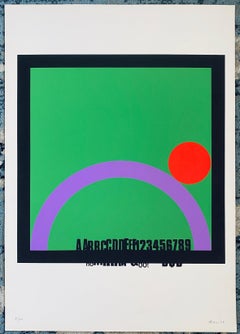
Reisinger was born in Kanjiža, Serbia, into a family of painters and decorators active in Austria-Hungary and the Balkans. Most family members died in the Holocaust, including his father. As a teenager, he became active in the Partisan Pioneer Brigade and, with his mother and stepfather, immigrated to Israel in 1949. Reisinger initially lived in a transit camp and then worked as a house painter in order to earn money from almost any source. In 1950 at age 16, he was accepted as a student—its youngest up to the time—at the Bezalel Academy of Art and Design in Jerusalem, there to 1954. During mandatory service in the Israeli Air Force from 1954, he was the art director of its books and other publications. While there, he attended a class on postage-stamp design taught by Abram Games, who became his mentor and friend. Subsequently, he traveled, studied, and worked in Europe: from 1957 in Brussels and then onto London where, 1964–66, studied stage and three-dimensional design at the Central School of Art and Design, designed posters for Britain's Royal Mail, and worked for other clients while making intermittent visits to Israel. Then in 1966, he returned permanently to Israel and established a studio in Tel Aviv and today in Giv'atayim. His work has been included in numerous international group and one-person exhibitions. A large number of social-, political-, and cultural-theme posters and other graphic design, such as calendars, packaging, and more than 150 logos are superior to much of his fine art. He designed a new logo for El Al airlines (1972), and the 50-meter-long aluminum-cast relief (1978) of a biblical quotation in Hebrew on the exterior of the Yad Vashem, Israel's official museum/memorial to Holocaust victims, in Jerusalem. He has also designed logos for the Tel Aviv Museum of Arts, Tefen Museum of Arts, and Habima Theater (הבימה - התיאטרון הלאומי) and the symbol and posters of the 9th-15th Maccabiah Games (מַכַּבִּיָּה). His widely published self-produced “Again?” poster (1993) features a Nazi swastika (which Reisinger incorrectly made to face left) breaks apart to 5 pointed red Star of soviet union in reference to the possible dreaded repeat of the Holocaust. The influences on his work—itself more widely focused than solely on social and political issues—have come from colorists, Minimalists, Constructivists, and humorists. He claims one of his more significant contributions has been to stretch the visual and communicative possibilities of Hebrew letters through his symbols and logos. Reisinger is one of Israel's most-accomplished graphic designers; the others include Franz Kraus...

Category

20th Century Contemporary Abstract Prints

Materials

Screen

Italian Artist Modern Silkscreen Eugenio Carmi

Italian Artist Modern Silkscreen Eugenio Carmi

By Eugenio Carmi

Located in Surfside, FL

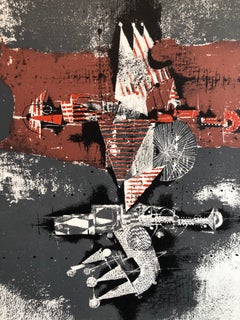
Eugenio Carmi is an Italian painter born in 1920 in Genoa. He studied in Turin in Felice Casorati’s studio. His experience as a graphic designer in the ‘50s, is decisive for his pict...

Category

1980s Modern Abstract Prints

Materials

Screen

Large Johnny Friedlaender Poster Print No Text

Large Johnny Friedlaender Poster Print No Text

By Johnny Friedlaender

Located in Surfside, FL

Johnny Friedlaender (26 December 1912 – 18 June 1992) was a leading 20th-century artist, whose works have been exhibited in Germany, France, Netherlands, Italy, Japan and the United States. He has been influential upon other notable artists, who were students in his Paris gallery. His preferred medium of aquatint etching is a technically difficult artistic process, of which Friedlaender has been a pioneer. Gotthard Johnny Friedlaender was born in Pless (Pszczyna), Prussian Silesia, as the son of a pharmacist. He was graduated from the Breslau (Wrocław) high school in 1922 and then attended the Academy of Arts (Akademie der Bildenden Kunste) in Breslau, where he studied under Otto Mueller. He graduated from the Academy as a master student in 1928. In 1930 he moved to Dresden where he held exhibitions at the J. Sandel Gallery and at the Dresden Art Museum. He was in Berlin for part of 1933, and then journeyed to Paris. After two years in a Nazi concentration camp, he emigrated to Czechoslovakia, where he settled in Ostrava, where he held the first one-man show of his etchings. In 1936 Friedlaender journeyed to Czechoslovakia, Switzerland, Austria, France and Belgium. At the Hague he held a successful exhibition of etchings and watercolours. He fled to Paris in 1937 as a political refugee of the Nazi regime with his young wife, who was an actress. In that year he held an exhibition of his etchings which included the works: L ‘Equipe and Matieres et Formes. From 1939 to 1943 he was interned in a series of concentration camps, but survived against poor odds. After freedom in 1944 Friedlaender began a series of twelve etchings entitled Images du Malheur with Sagile as his publisher. In the same year he received a commission to illustrate four books by Freres Tharaud of the French Academy. In 1945 he performed work for several newspapers including Cavalcade and Carrefour. In the year 1947 he produced the work Reves Cosmiques and in that same year he became a member of the Salon de Mai, which position he held until 1969. In the year 1948 he began a friendship with the painter Nicolas de Staël and held his first exhibition in Copenhagen at Galerie Birch. The following year he showed for the first time in Galerie La Hune in Paris. After living in Paris for 13 years, Friedlaender became a French citizen in 1950. Friedlaender expanded his geographic scope in 1951 and exhibited in Tokyo in a modern art show. In the same year he was a participant in the XI Trienale in Milan, Italy. By 1953 he had produced works for a one-man show at the Museum of Neuchâtel and exhibited at the Galerie Moers in Amsterdam, the II Camino Gallery in Rome, in São Paulo, Brazil and in Paris. He was a participant of the French Italian Art Conference in Turin, Italy that same year. Friedlaender accepted an international art award in 1957, becoming the recipient of the Biennial Kakamura Prize in Tokyo. In 1959 he received a teaching post awarded by UNESCO at the Museum of Modern Art in Rio de Janeiro. By 1968 Friedlaender was travelling to Puerto Rico, New York City and Washington, D.C. to hold exhibitions. That year he also purchased a home in the Burgundy region of France. 1971 was another year of diverse international travel including shows in Bern, Milan, Paris, Krefeld and again New York. In the latter city he exhibited paintings at the Far Gallery, a venue becoming well known for its patronage of important twentieth-century artists. From his atelier in Paris Friedlaender instructed younger artists who themselves went on to become noteworthy, among them Arthur Luiz Piza, Brigitte Coudrain...

Category

Mid-20th Century Modern Abstract Prints

Materials

Offset, Screen

"Untitled"

"Untitled"

By Tom Baldwin

Located in Surfside, FL

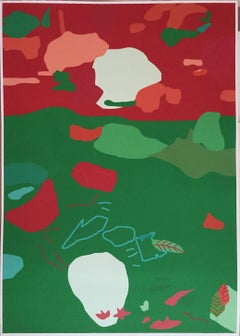
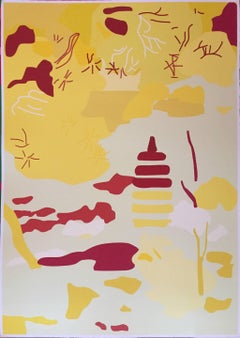
Recently graduated from Pasadena’s legendary Art Center College of Design, Tom Baldwin created the series of inkjet prints Japanese Gardens in 1996 on his computer, using then-nascen...

Category

20th Century Abstract Prints

Materials

Screen

"Untitled"

"Untitled"

By Tom Baldwin

Located in Surfside, FL

Recently graduated from Pasadena’s legendary Art Center College of Design, Tom Baldwin created the series of inkjet prints Japanese Gardens in 1996 on his computer, using then-nascen...

Category

20th Century Abstract Prints

Materials

Screen

You May Also Like

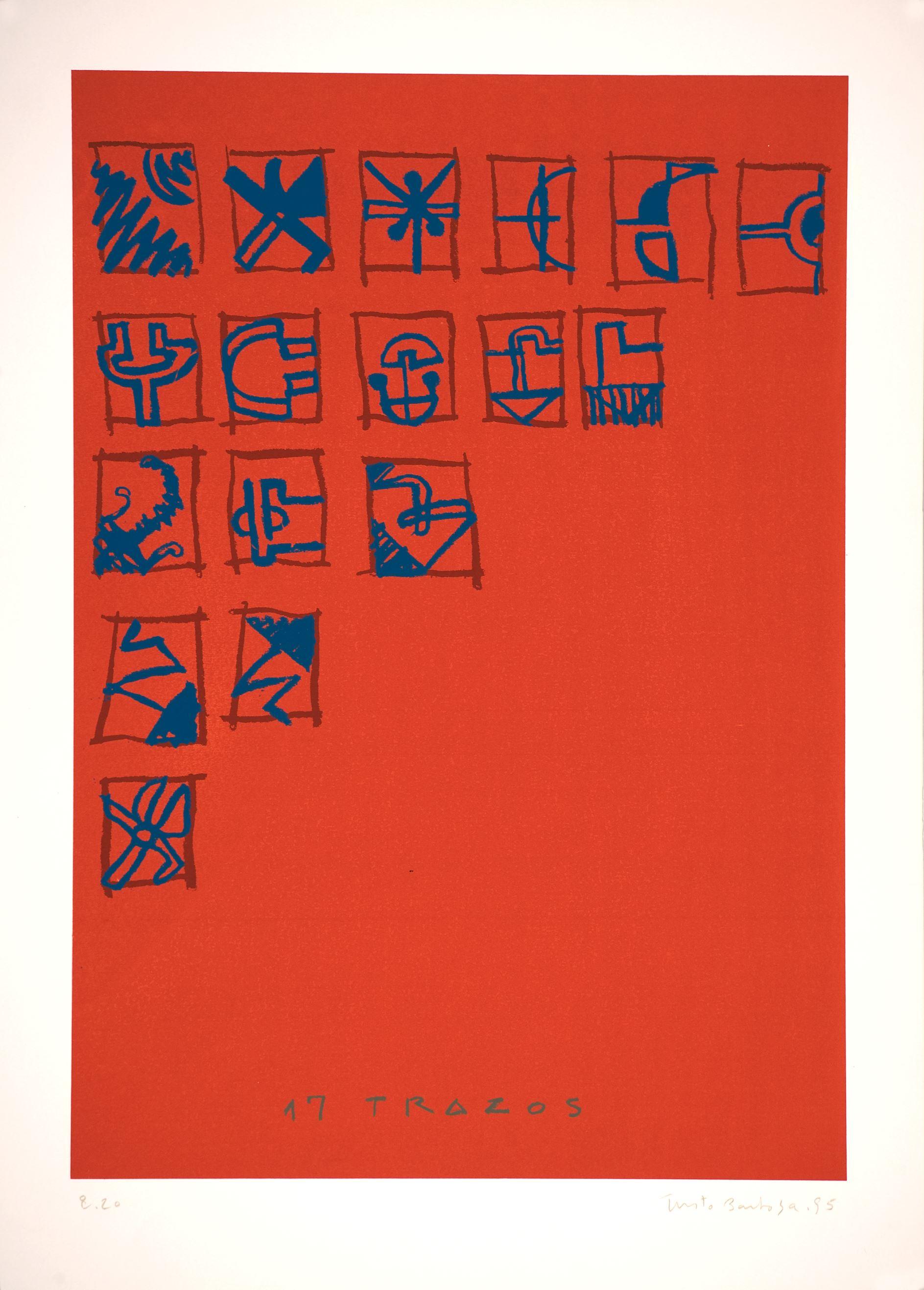
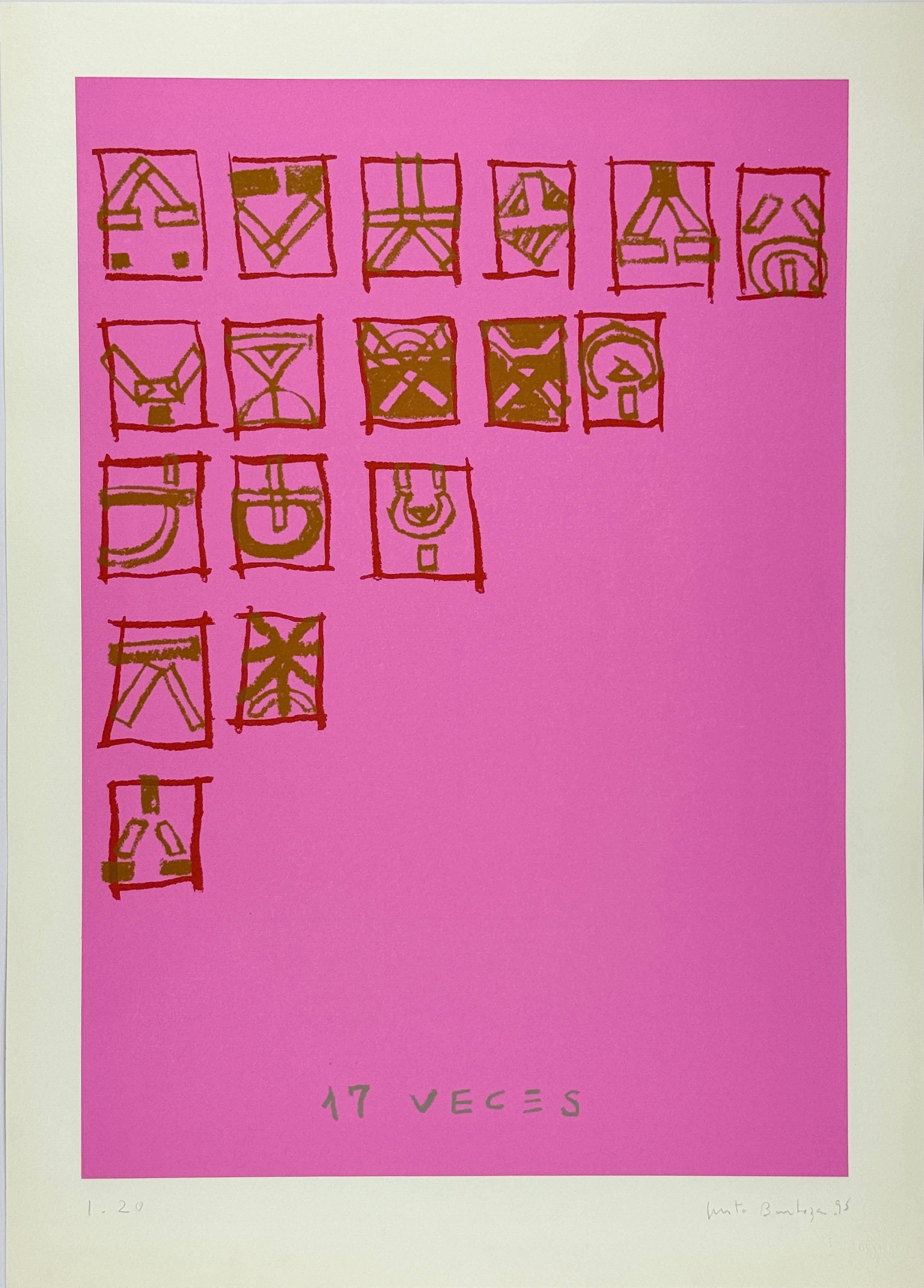
Argentinean signed limited edition original art print silkscreen 27x19 in. n9

Argentinean signed limited edition original art print silkscreen 27x19 in. n9

By Justo Barboza

Located in Miami, FL

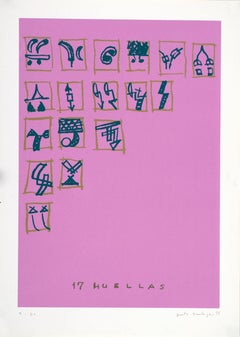
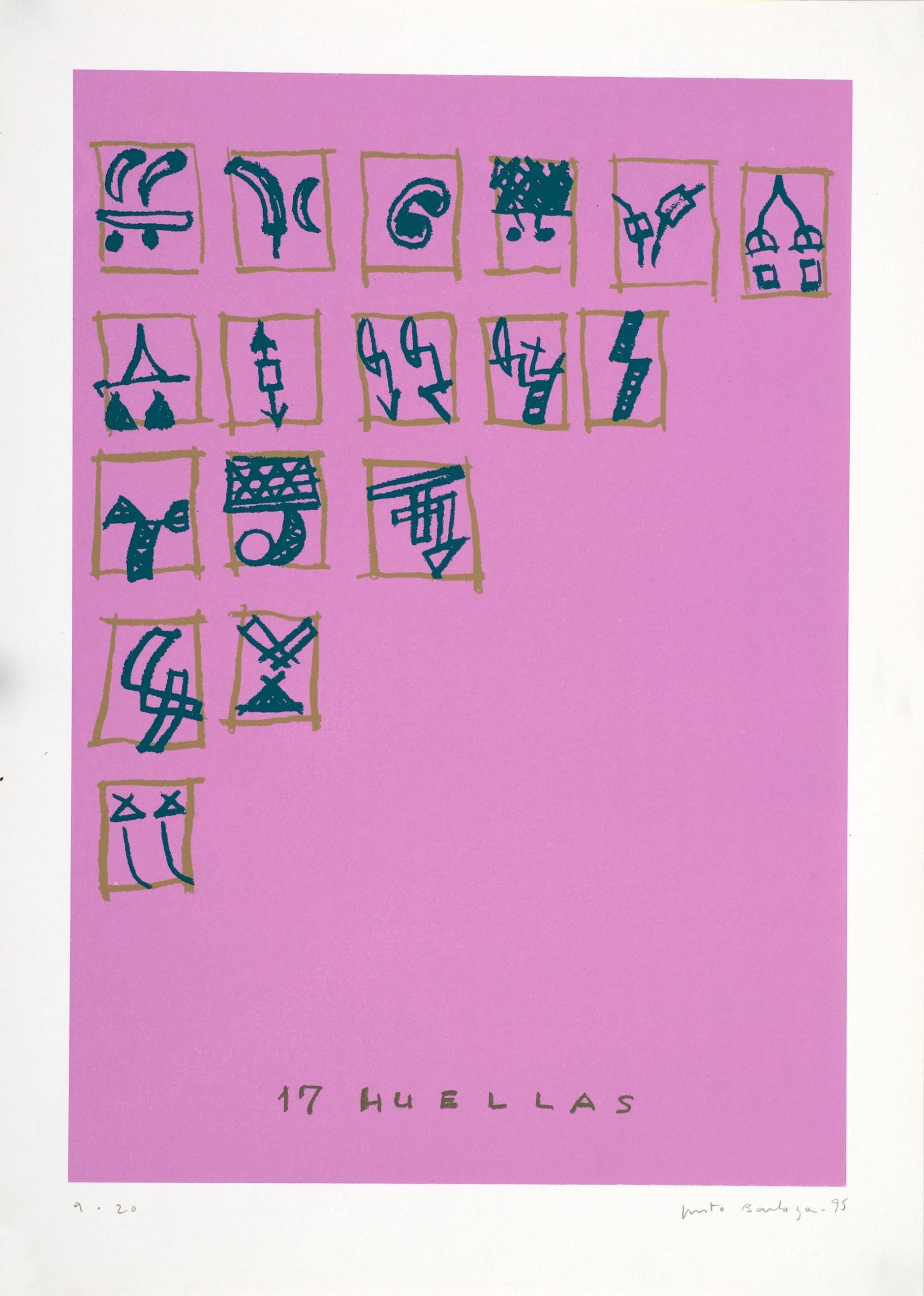
Justo Barboza (Argentina, 1938) '17 huellas', 1995 silkscreen on paper Guarro Geler 27.6 x 19.7 in. (70 x 50 cm.) Edition of 20 Unframed ID: BAR1437-009-025 Hand-signed by author

Category

20th Century Contemporary Prints and Multiples

Materials

Paper, Engraving, Screen

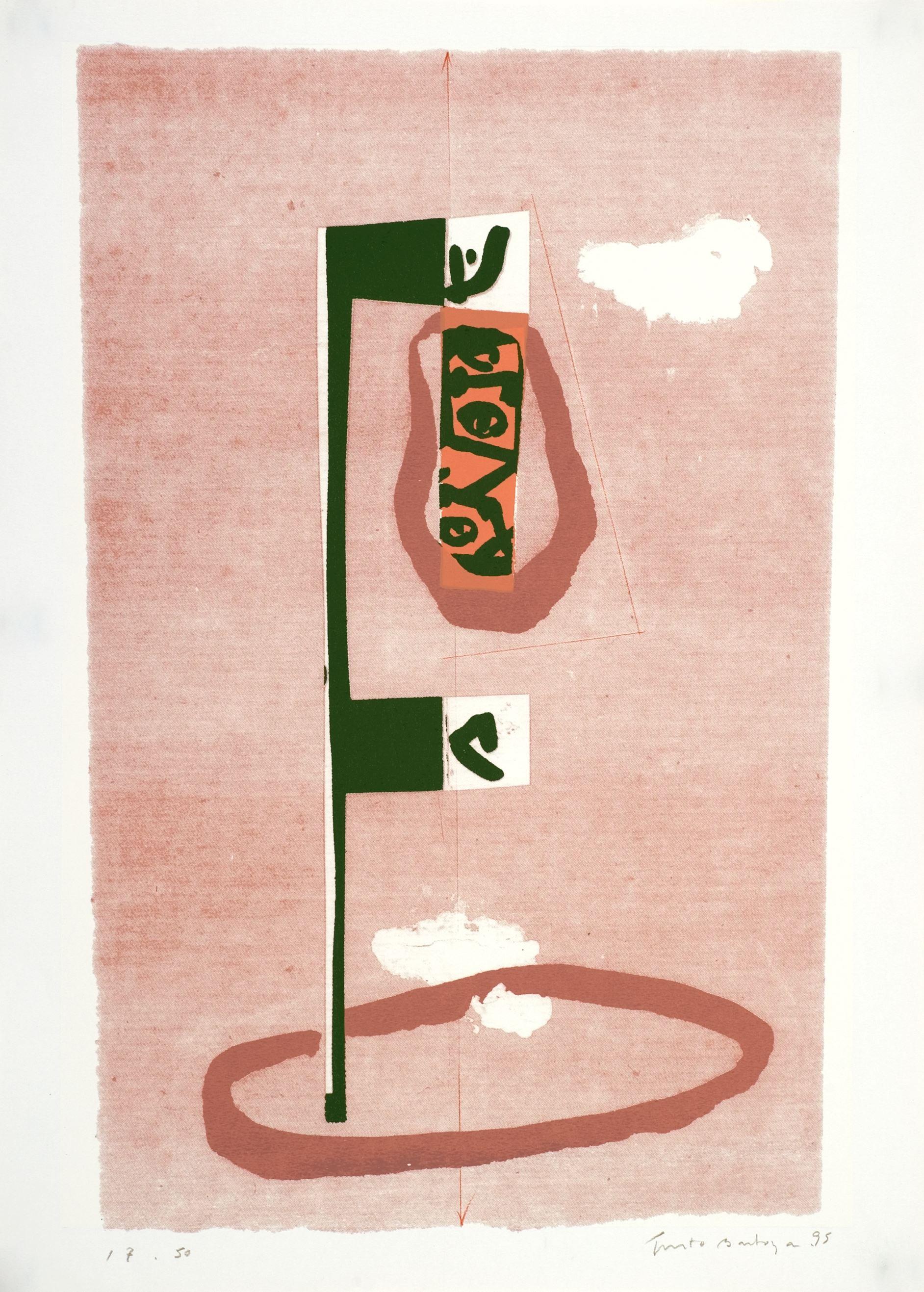
Argentinean signed limited edition original art print silkscreen 27x19 in. n14

Argentinean signed limited edition original art print silkscreen 27x19 in. n14

By Justo Barboza

Located in Miami, FL

Justo Barboza (Argentina, 1938) 'Sin título II', 1998 silkscreen on paper Guarro Geler 27.6 x 19.7 in. (70 x 50 cm.) Edition of 30 Unframed ID: BAR1437-014-030 Hand-signed by author

Category

20th Century Abstract Prints and Multiples

Materials

Paper, Engraving, Screen

XXV 46 090 (Abstract Print)

XXV 46 090 (Abstract Print)

By Pierre Muckensturm

Located in London, GB

Unframed. Edition of 15 copies, numbered from 1 to 15/15. Dated, numbered, and signed by the artist in pencil. The copy offered for sale is No. 3/15. This work will be shipped rolle...

Category

2010s Abstract Abstract Prints

Materials

Paper, Screen, Ink