Want more images or videos?
Request additional images or videos from the seller
1 of 2

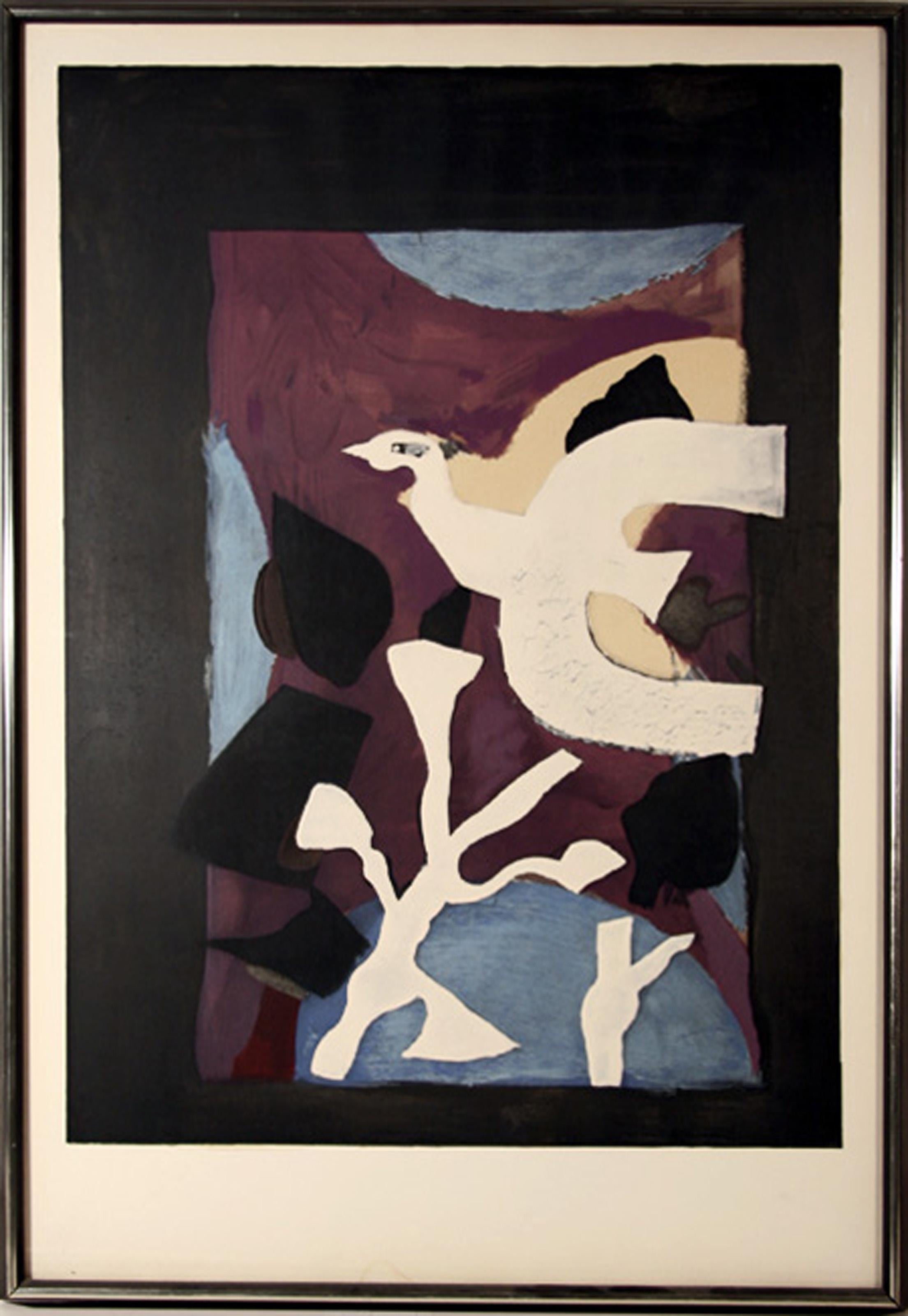
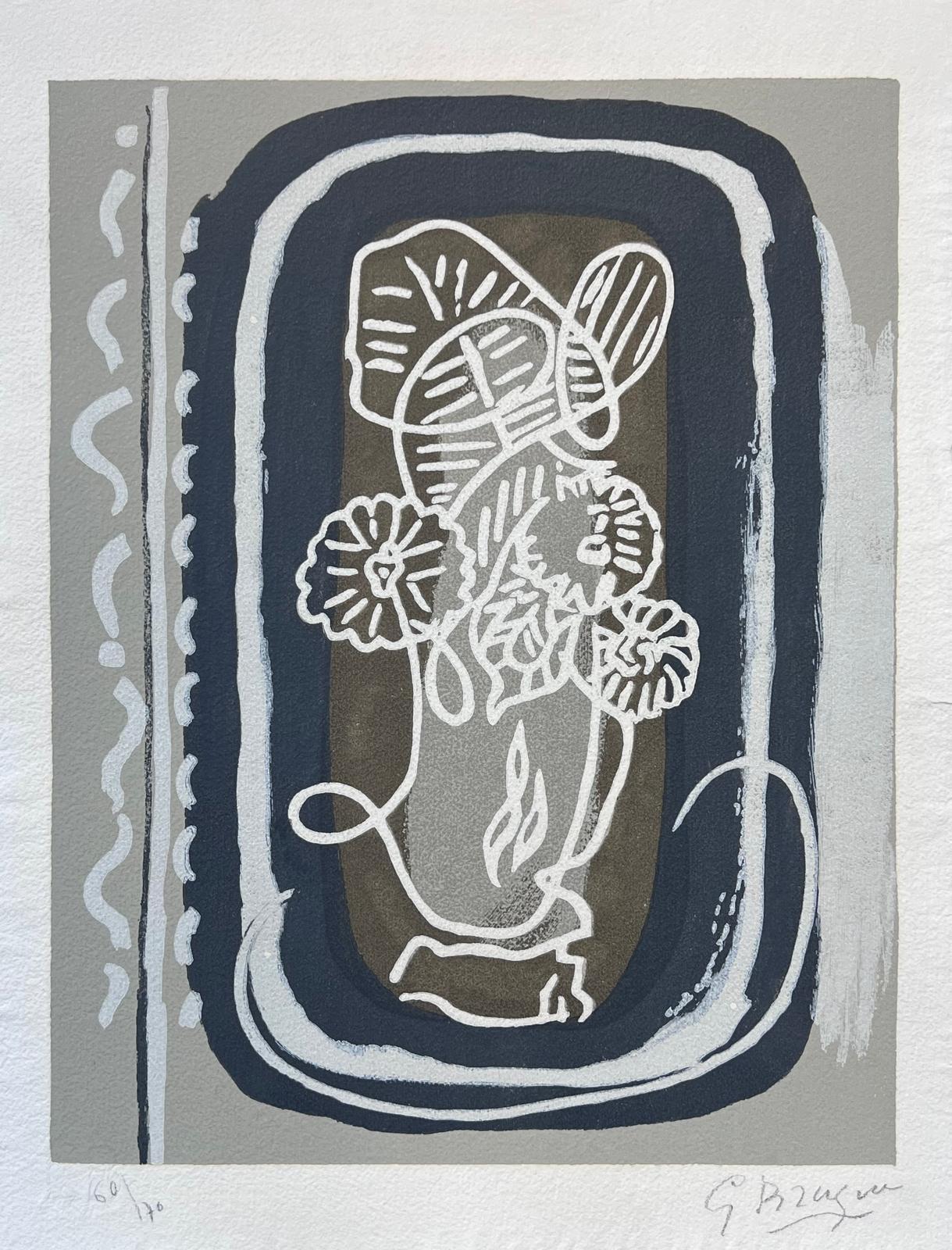
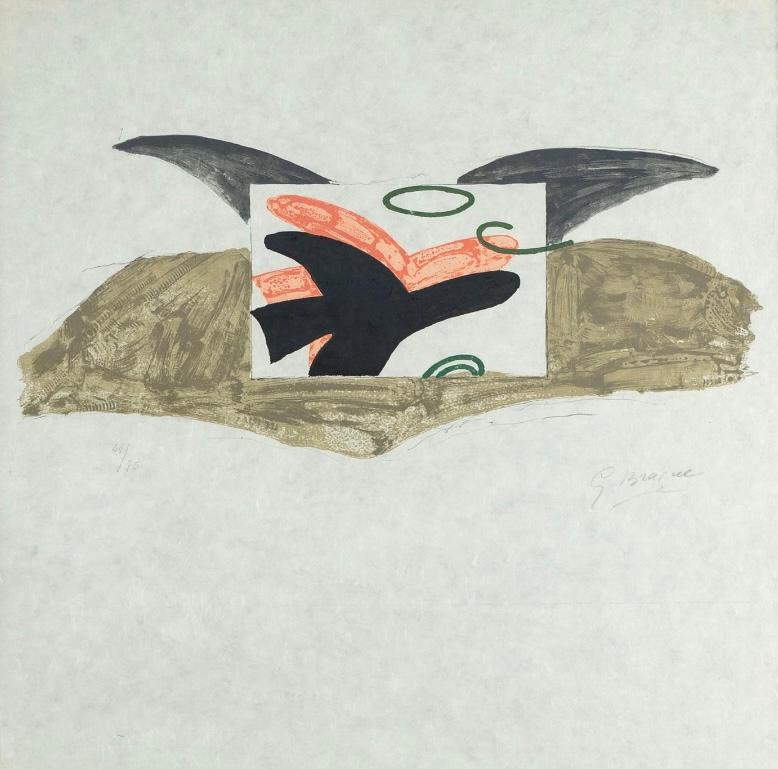
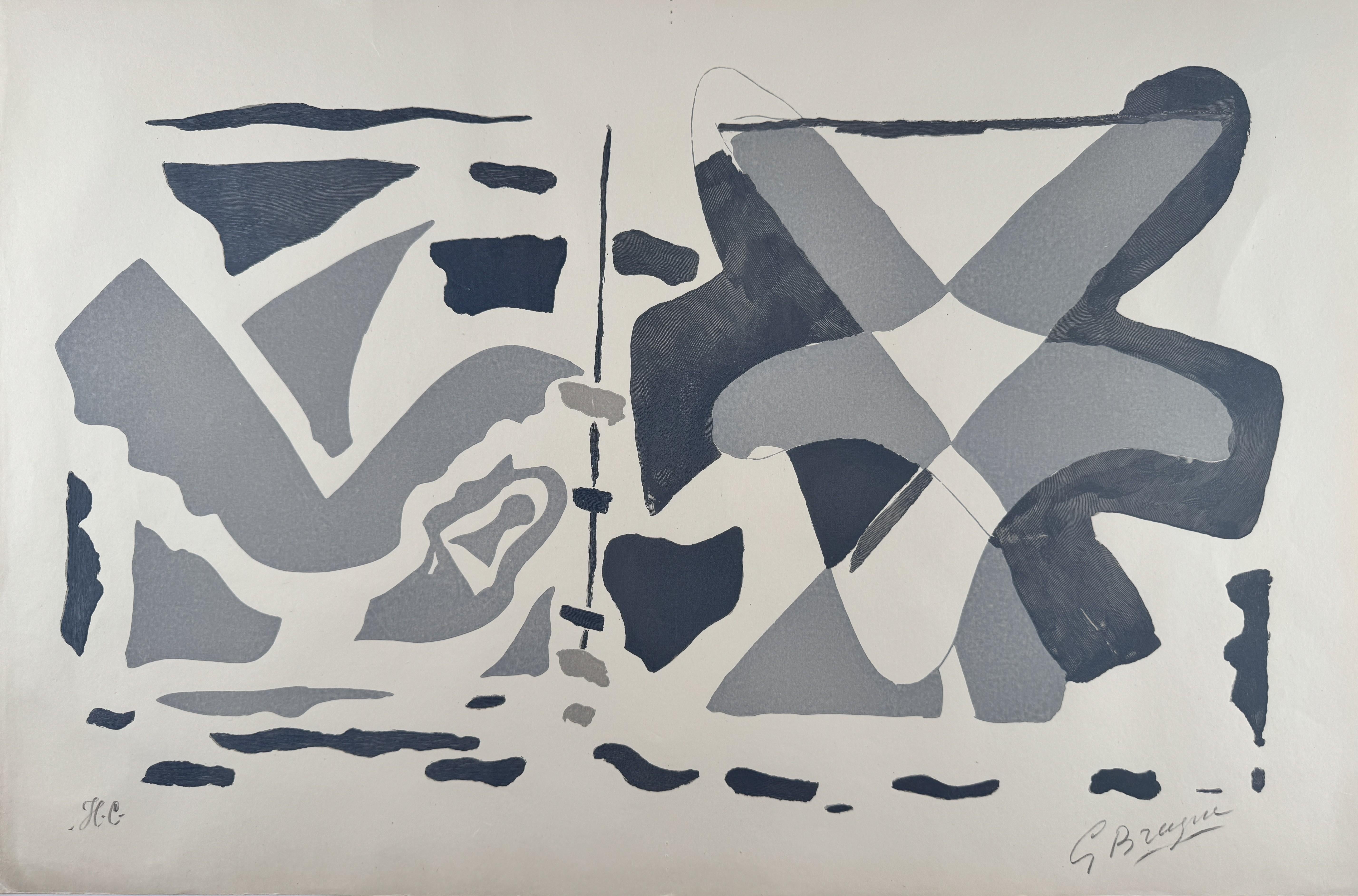
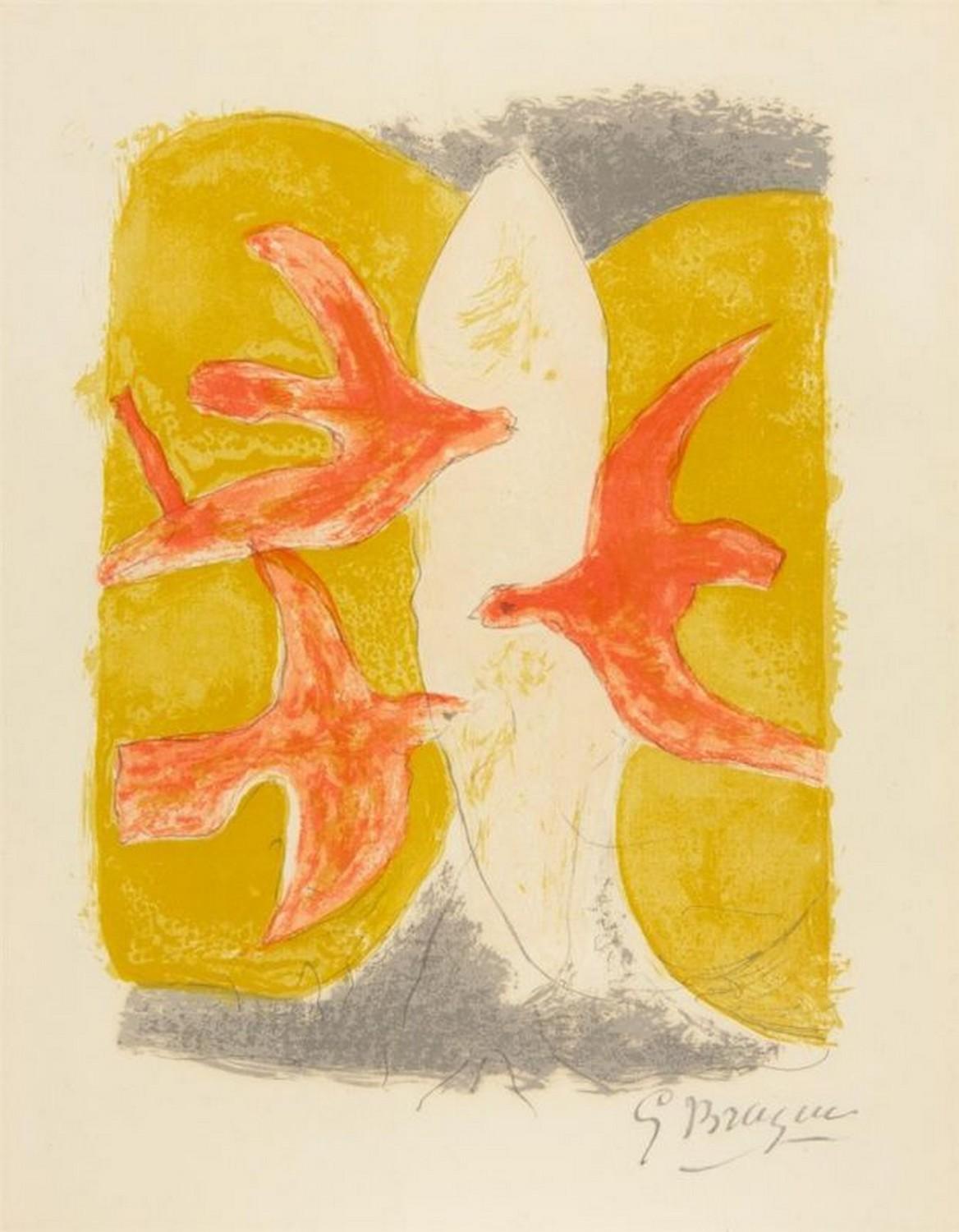
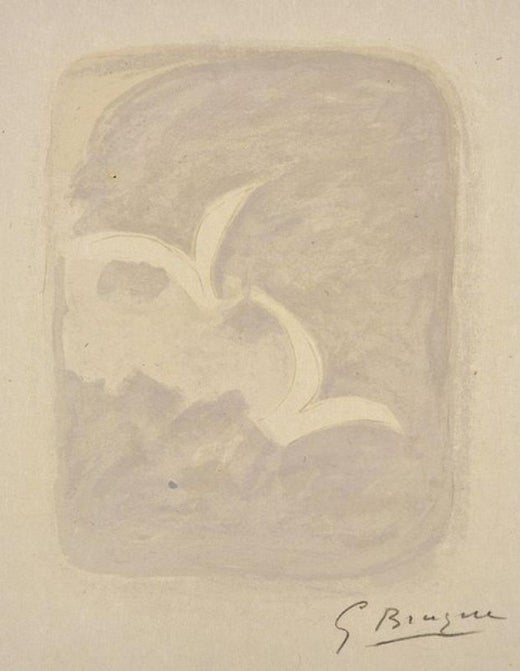
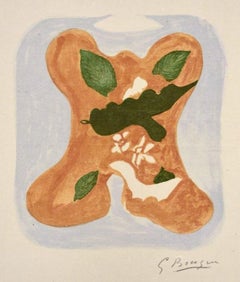
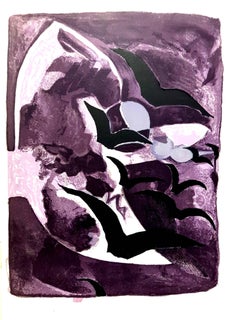
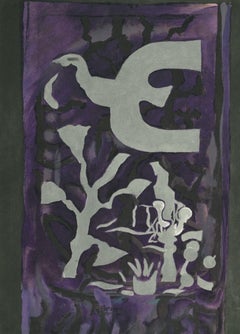
George Braque
Descent into hell - plate 4

1961

$4,476.18
£3,325.47
€3,800VAT Included
CA$6,272.94
A$6,351.51
CHF 3,613.36
MX$77,190.75
NOK 42,711.67
SEK 42,487.28
DKK 28,974.04

About the Item

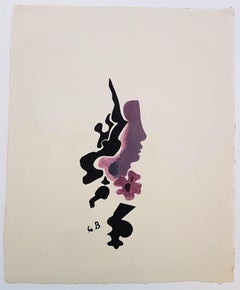
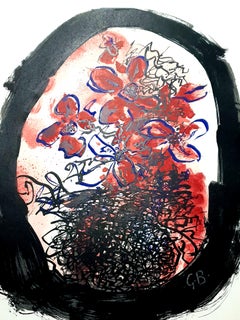
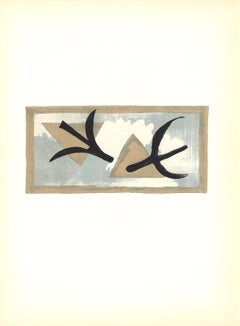
Lithograph, 1961 Handsigned by the artist in pencil Catalog : Vallier 171 Mourlot 78 32.00 cm. x 25.00 cm. 12.6 in. x 9.84 in. (paper) 28.00 cm. x 21.00 cm. 11.02 in. x 8.27 in. (image) LCD4535
  • Creator:
    George Braque (1882 - 1963, French)
  • Creation Year:
    1961
  • Dimensions:
    Height: 12.6 in (32 cm)Width: 9.85 in (25 cm)
  • Medium:
  • Movement & Style:
  • Period:
  • Condition:
  • Gallery Location:
    Paris, FR
  • Reference Number:
    Seller: LCD45351stDibs: LU106629677772

More From This Seller

View All
Descent into hell - plate 3

Descent into hell - plate 3

By Georges Braque

Located in Paris, FR

Lithograph, 1961 Handsigned by the artist in pencil Publisher : Nouveau Cercle parisien du Livre (Paris) Printer : Mourlot (Paris) Catalog : Vallier 171 The work we propose is one of the four lithographs taken from the illustrated book "Descente aux Enfers" written by Marcel Jouhandeau and published by the Nouveau Cercle Parisien du Livre in 1961. The novelist retraces the itinerary of his return to his native town, Guéret, through encounters with the people he knew as a child. Anxiety intrudes as he ventures into this place, the first theater of his inspiration. Between nostalgia, melancholy and hope, the novel echoes the personal torments of the author, torn between his homosexuality and his Catholic education. If God seems to haunt him, introspection and morality obsess him: "If man does not understand hell, it is because he has not understood his own heart...". The image of a flight of birds as created by Braque might seem dissonant with Jouhandeau's text. However, for Braque the bird is not an imitation of the animal but a form that conveys a meaning, it is a sign, as he reminds us: "We must not imitate what we want to create. It is then that this bright orange bird flight...

Category

1960s Abstract Abstract Prints

Materials

Lithograph

Descente aux enfers planche 1

Descente aux enfers planche 1

By George Braque

Located in Paris, FR

Lithograph, 1961 Catalog : Vallier171 Mourlot77 32.00 cm. x 25.00 cm. 12.6 in. x 9.84 in. (paper) 23.00 cm. x 19.00 cm. 9.06 in. x 7.48 in. (image) Handsigned by the artist in penc...

Category

1960s Abstract Abstract Prints

Materials

Lithograph

Descente aux enfers planche 2

Descente aux enfers planche 2

By George Braque

Located in Paris, FR

Lithograph, 1961 Catalog : Vallier 171 Mourlot 78 32.00 cm. x 25.00 cm. 12.6 in. x 9.84 in. (paper) 27.00 cm. x 20.00 cm. 10.63 in. x 7.87 in. (image) Handsigned by the artist in p...

Category

1960s Abstract Abstract Prints

Materials

Lithograph

L'oiseau de passage

L'oiseau de passage

By Georges Braque

Located in Paris, FR

Etching and aquatint, 1961 Handsigned by the artist in pencil and numbered 30/75 Publisher : Maeght (Paris) Printer : Maeght (Paris) Catalog : [Vallier 166, p.235] 75.00 cm. x 56.50 ...

Category

1960s Abstract Abstract Prints

Materials

Etching, Aquatint

Si je mourais là-bas

Si je mourais là-bas

By Georges Braque

Located in Paris, FR

Wood engraving, 1962 Handsigned by the artist in pencil and numbered 60/70 Publisher : Louis Broder (Paris) Printer : Fréquet et Braudier (Paris) Catalog : [Vallier 181, p.250] 47.50...

Category

1960s Abstract Abstract Prints

Materials

Wood, Engraving

Frontispiece

Frontispiece

By Georges Braque

Located in Paris, FR

Lithograph, 1962 Edition : 125 ex. Publisher : André Sauret (Monte-Carlo) Printer : Mourlot (Paris) Catalog : [Vallier 188, p. 284] 33.00 cm. x 52.00 cm. 12.99 in. x 20.47 in. (pape...

Category

1960s Abstract Abstract Prints

Materials

Lithograph

You May Also Like

"Profil" from the Espace Portfolio

"Profil" from the Espace Portfolio

By George Braque

Located in Kansas City, MO

Georges Braque (after) Title: "Profil" from the Espace Portfolio Year: 1957 Year of Original: 1952 Medium: Pochoir (pigment print) on Richard de Bas, signed in the plate Edition: 26...

Category

1950s Impressionist Prints and Multiples

Materials

Pigment

Georges Braque - Original Lithograph

Georges Braque - Original Lithograph

By Georges Braque

Located in Collonge Bellerive, Geneve, CH

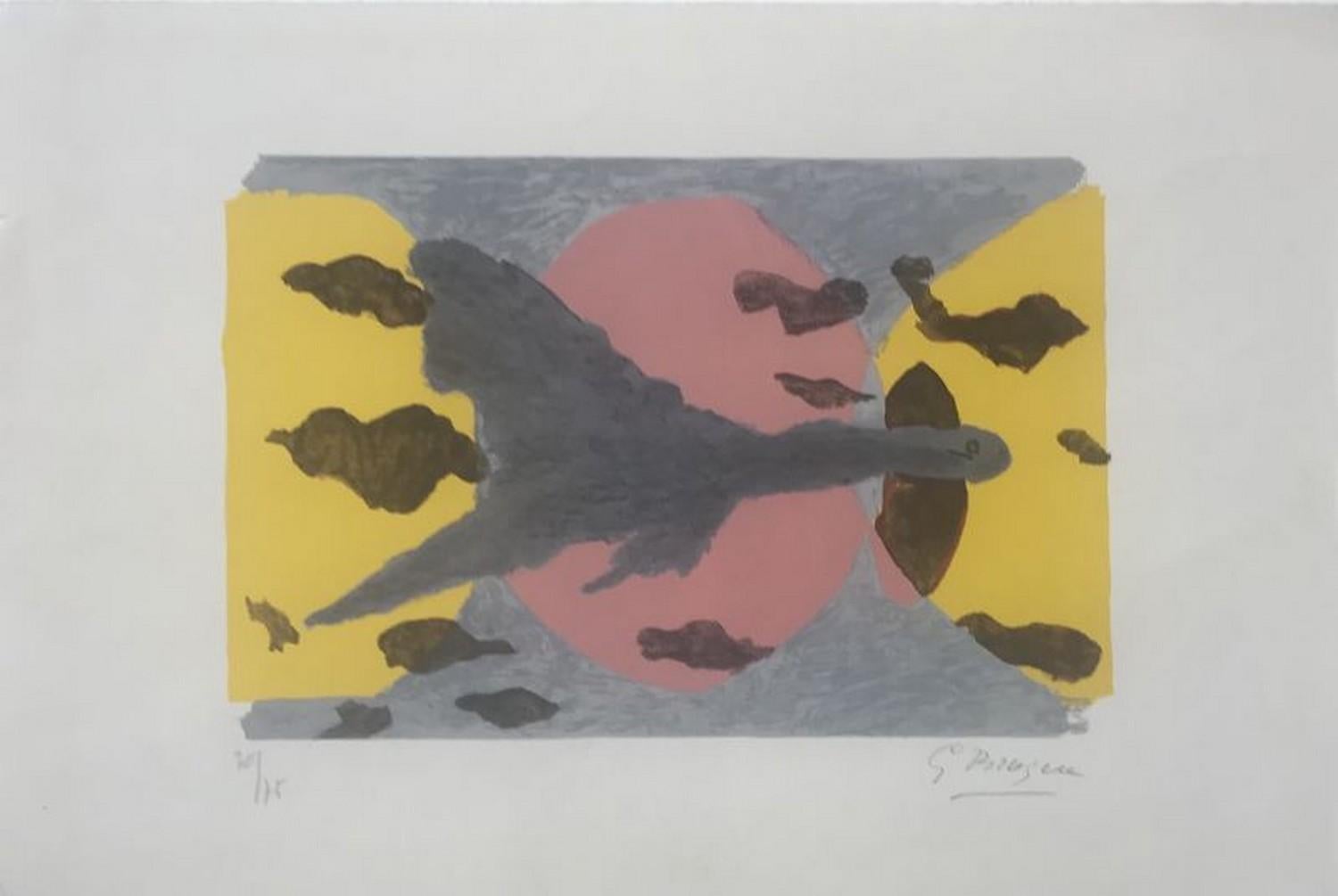
Georges Braque - Original Lithograph 1963 Dimensions: 32 x 24 cm Andre Sauret, Monte Carlo The father of Cubism Three Cubist that distinguishes art historian periods were initiated and developed by Georges Braque: The Cubist Cézanne (1907-1909), Executive (1909-1912) and synthetic (1912-1922). Post-Impressionist and fawn, Braque no longer adheres to the contingency of a decorative way or the other. Cézanne’s paintings exhibited at the Grand Palais during the retrospective of 1907 are a revelation: Cézanne sought and invented a pictorial language. In his footsteps, Braque went to the South with the reasons of the Master. He returned with Estaque landscapes and surprising Ciotat it keeps Cezanne geometric model and retains the “passages” continuity from one surface to another to create the sensation of “turning around” of the object represented. But he wants to go after the consequences of the vision of Cezanne. In his paintings Houses in L’Estaque (1908) it simplifies the volumes of houses, neglects detail by removing doors and windows: the plastic rhythm that builds the table. Large Nude , a masterpiece of the period, can be considered the first work of Cézanne cubism . Systematizing and deepening Braque discoveries open the door analytical cubism. In 1909, his painting became more cerebral than sensual. The pattern is recreated in the two-dimensionality of the canvas, leaving aside any illusionistic perspective. In Still Life with Violin, objects are analyzed facets according to their characteristic elements, each facet referring to a particular view of the object. There are so many facets of points selected view: Table reflects the knowledge of the object and the ubiquity of the eye. Moreover, Braque is looking for the essence of the objects in the world rather than their contingency, which explains the absence of light source and use of muted colors (gray, ocher), contingent aspects of the object . But formal logic has stepped facets, erased any anecdote to the object and ultimately led to his painting a hermetic more marked on the edge of abstraction (see the series of Castle Roche-Guyon ). Braque, anxious to keep the concrete and refusing at all costs that the logic of Cubism takes the paintings to abstract, reintroduced signs of reality in his paintings in 1912 marks the beginning of Synthetic Cubism. Historians speak of “signs of real” rather than reality because what interests Braque, this is not to put reality into a table, but to create a painting which, by its language, refers to the real. To do this, he invented two major techniques XX th century inclusions and contributions. The inclusions consist of painting objects that have no real depth, materials (wallpaper in Nature morte aux playing cards faux wood is a pictorial inclusion) or letters (calligraphic inclusion in Portuguese ), made first brush and a few months later stencil. Contributions are defined in contrast with the collage on canvas of foreign materials: glued or sand paper, sawdust, etc.. Regarding the collages, Braque used for the first time in September 1912 a piece of adhesive paper imitating faux wood Compote and Glass , then the packet envelope of tobacco Bock in 1912-1913, or an advertisement in Damier , 1913). Inputs and inclusions refer to an external object in the table, without “emulate” this object. Away from their appearances, objects are represented in closest essence of the objects in the real world sense. This is also the time of Synthetic Cubism that Braque invented paper sculpture. There are, unfortunately, and no one is living proof of a photograph makes it possible to realize: Paper and paperboard. Métamorphoses period(1961-1963). In 1961, Georges Braque worked on a Greek head for the Louvre, which obsesses him, and he wishes to free his mind. He tried several times to bring out the paint and the result was unsatisfactory. He thinks the ultimate metamorphosis its Greek head projected in three dimensions. He calls in his studio of Baron Heger Loewenfeld, master lapidary, and he communicates his enthusiasm during the “fateful encounter.” Nine months later, in honor of the eighty years of Georges Braque, Heger Loewenfeld offers the Master of the ring Circe: the famous Greek head finally exorcised, carved in an onyx. Braque Loewenfeld then asked to identify other issues that haunt him. From dated and signed by Georges Braque, Heger gouaches Loewenfeld shapes works in the fields of jewelery, lapidary art...

Category

1960s Modern Figurative Prints
Materials

Lithograph

En Vol Lithograph by Georges Braque, Cubist Style, 1959, Unframed

En Vol Lithograph by Georges Braque, Cubist Style, 1959, Unframed

By Georges Braque

Located in Brooklyn, NY

This is a first edition lithograph reproduction of Georges Braque's En Vol (In Flight), published in 1959 as part of Derrière le Miroir (DLM) No. 115. The lithograph is featured on p...

Category

1950s Cubist Prints and Multiples

Materials

Lithograph

Composition from Derriere Le Miroir - Lithograph after George Braque - 1964

Composition from Derriere Le Miroir - Lithograph after George Braque - 1964

By George Braque

Located in Roma, IT

Composition from Derriere Le Miroir is a splendid lithograph realized after George Braque in 1964 The artwork is from Derriere Le Miroir. La Fondation Marguerite et Aimè Maeght, n.148. Printed by Ateliers de Maeght, Paris, 1964 Special issue of the magazine, published on the occasion of the inauguration of the Marguerite et Aimé Maeght Foundation...

Category

1960s Fauvist Abstract Prints

Materials

Lithograph