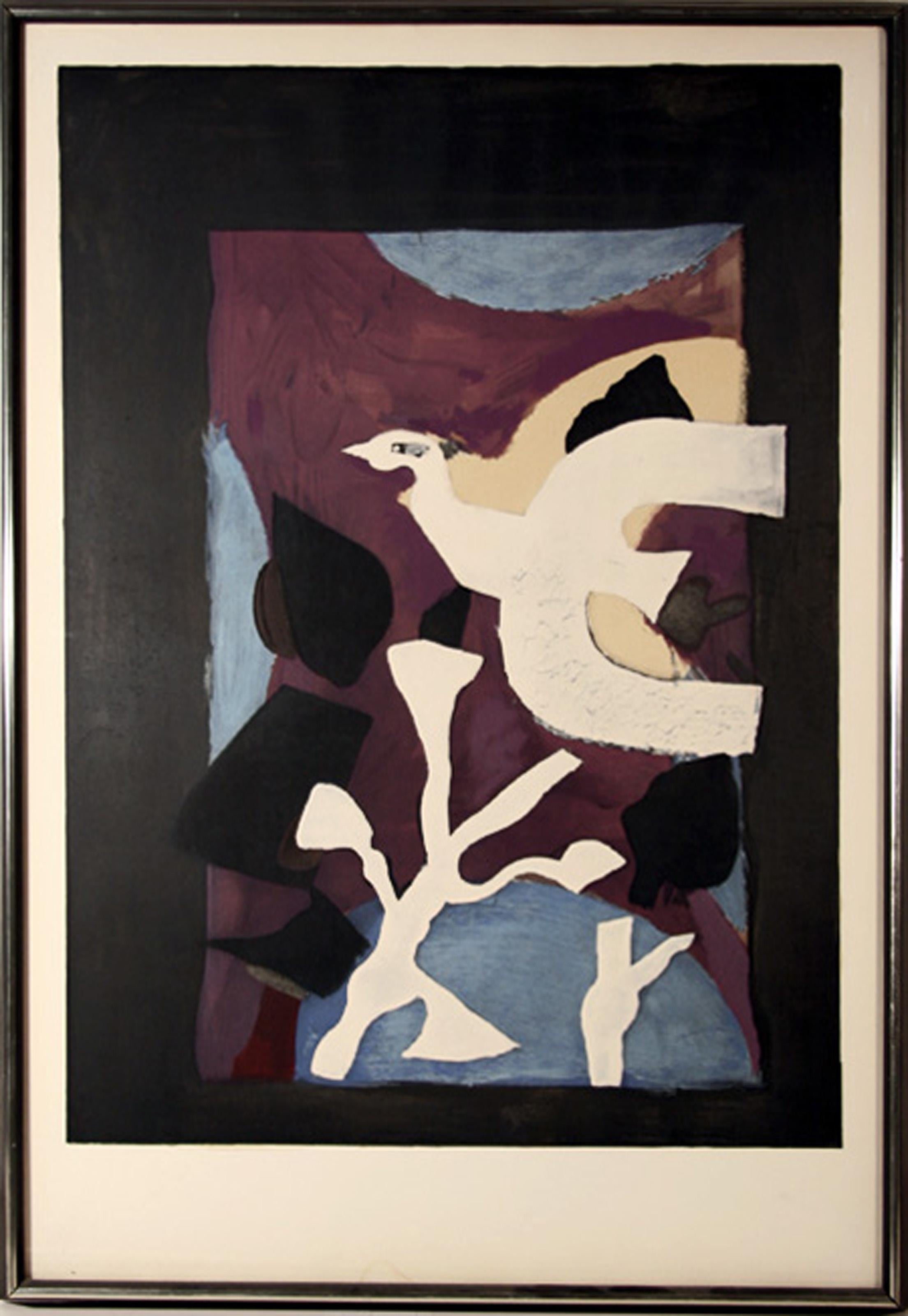
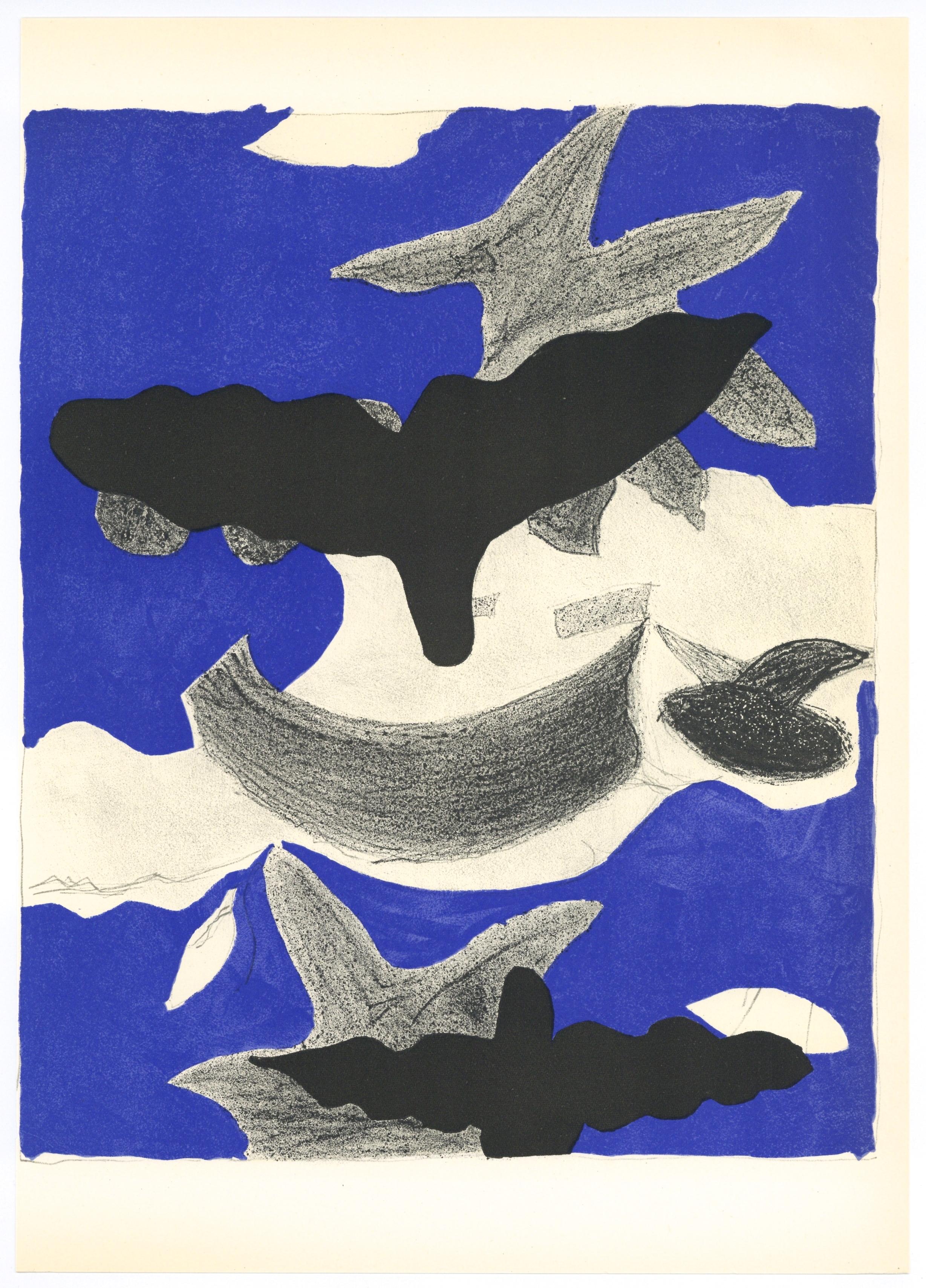
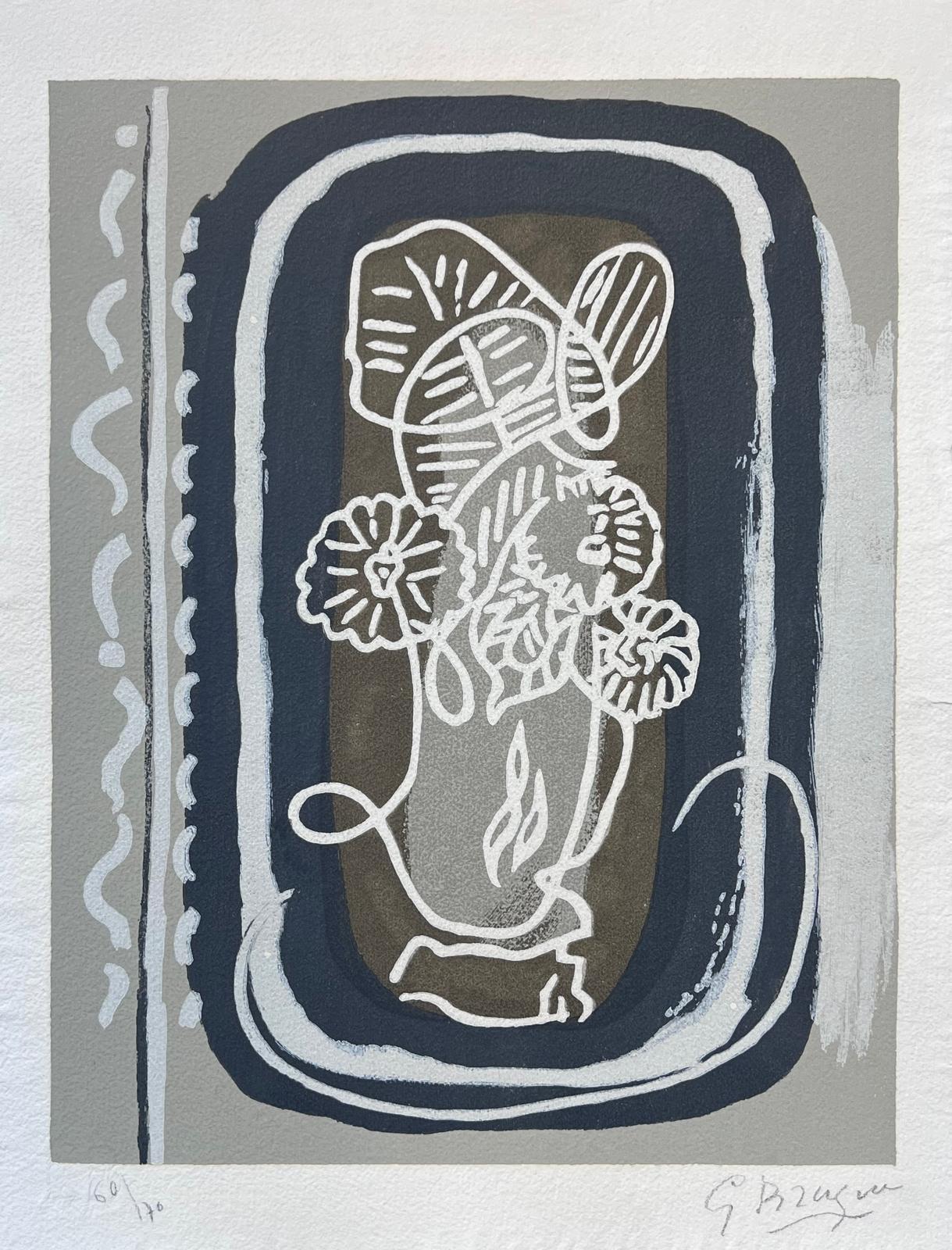
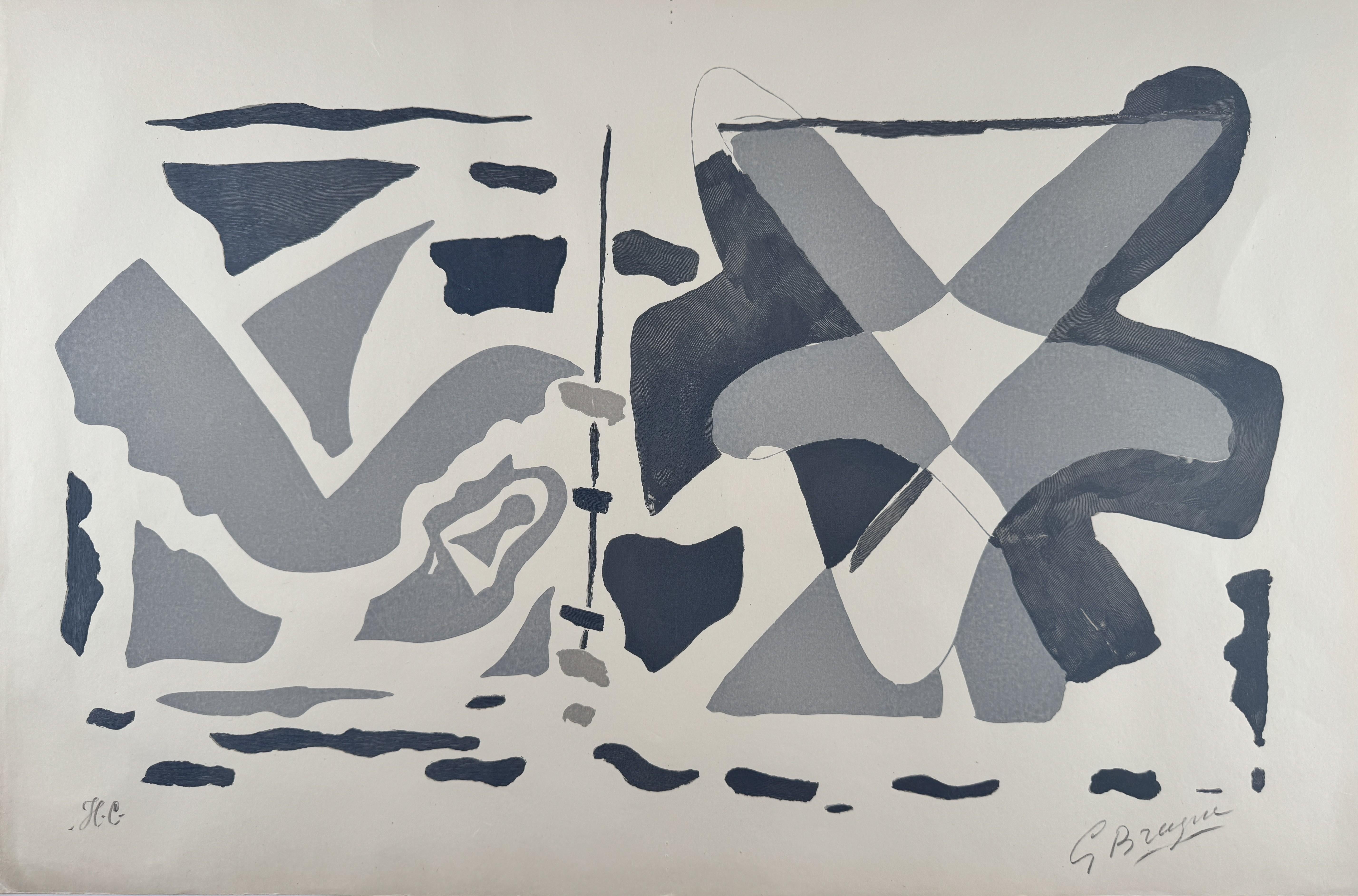
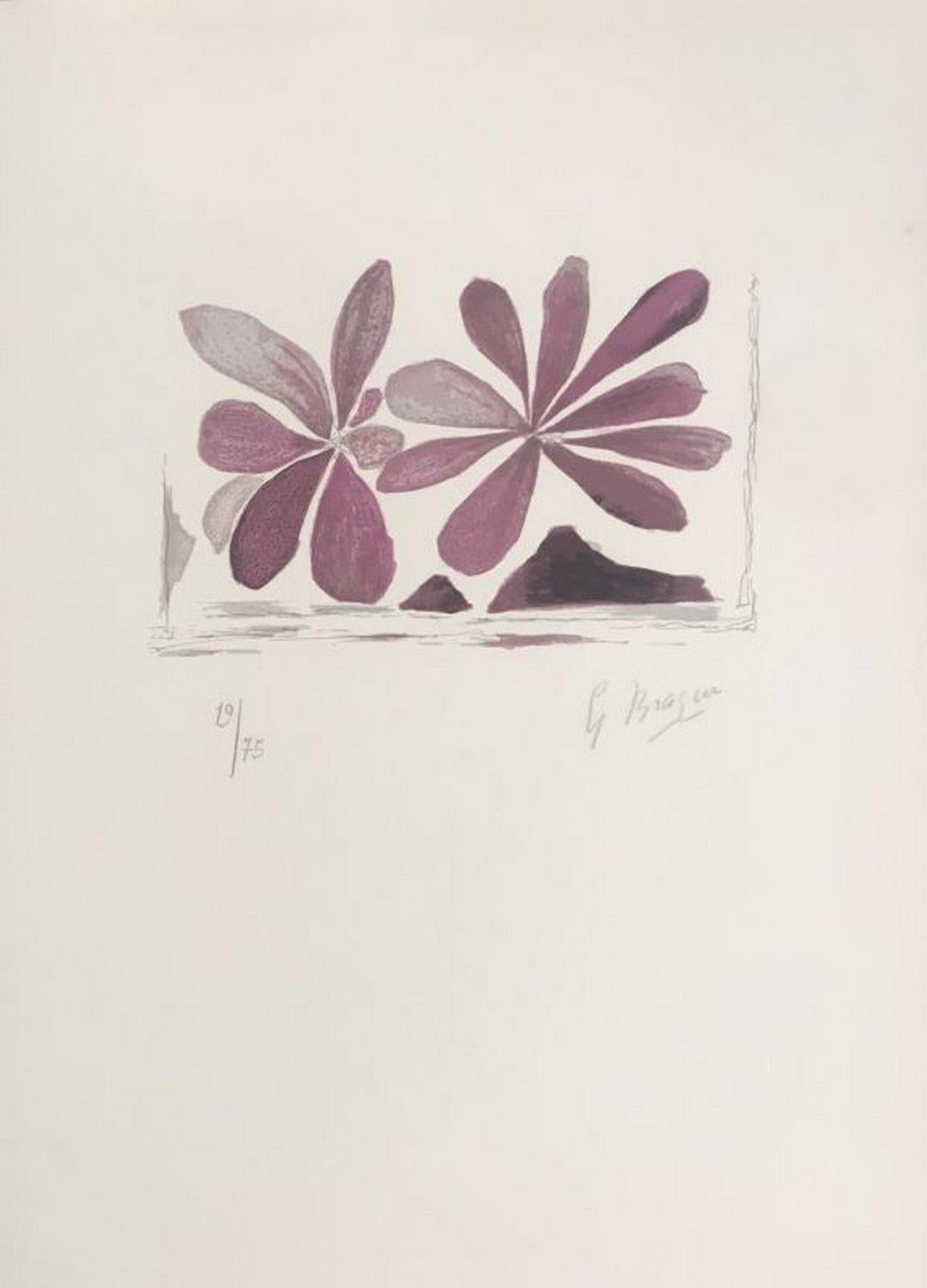
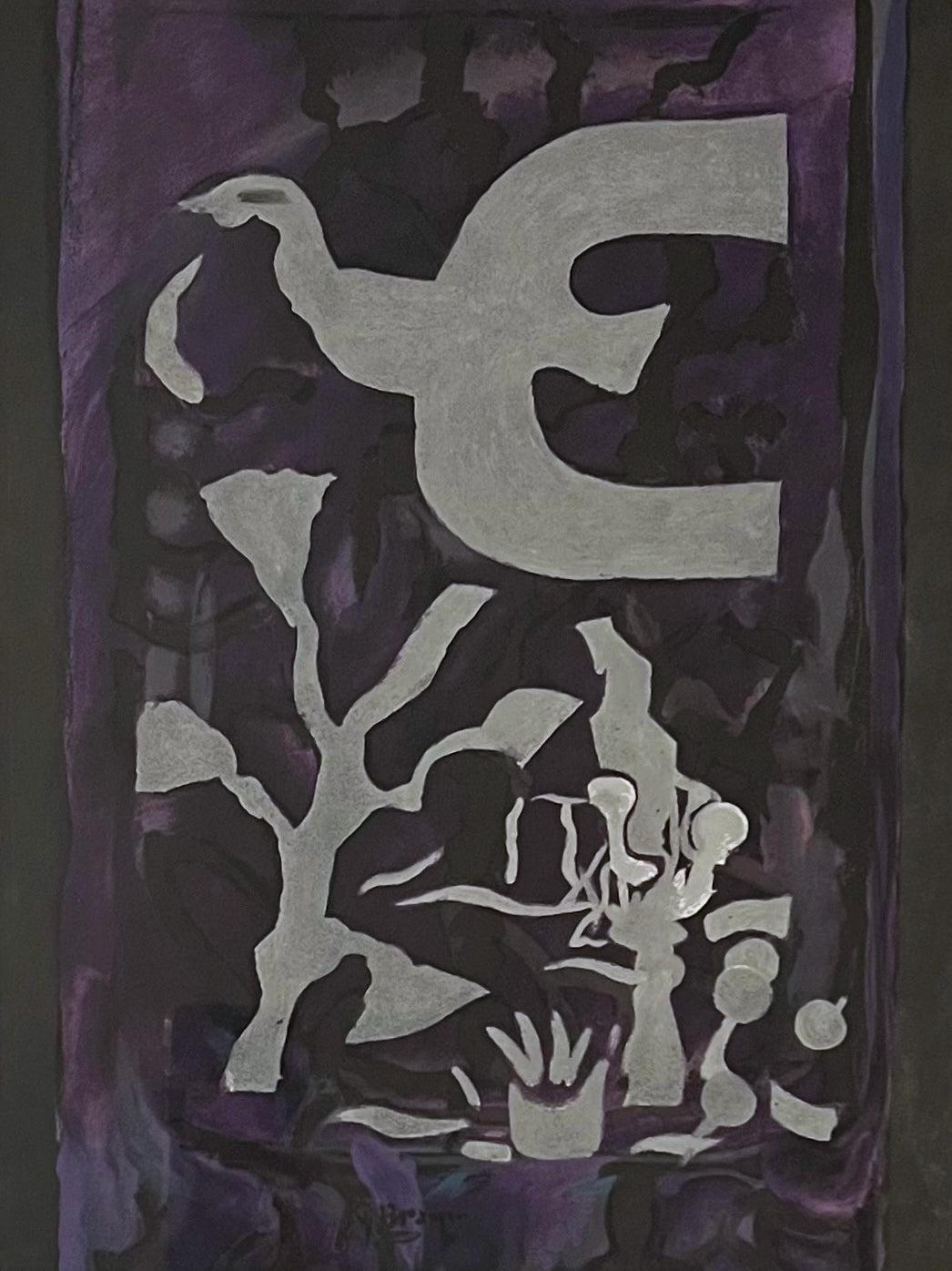
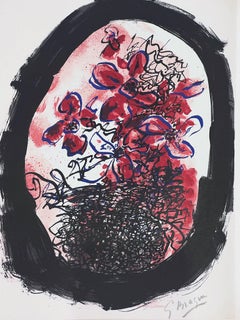
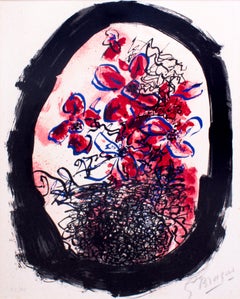
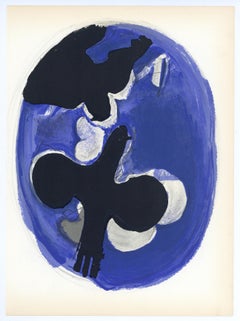
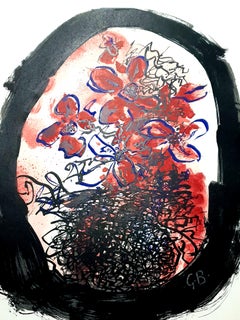
This exquisite lithograph after Georges Braque (1882-1963), titled Sans titre (Untitled), from Carnets Intimes de G. Braque, Verve: Revue Artistique et Litteraire, Vol. VIII, No. 31-32, originates from the September 20, 1955 issue published by Editions de la revue Verve, Paris, under the direction of Teriade, Editeur, Paris, and printed by Mourlot Freres, Paris, 1955. This evocative composition reflects the intimate and introspective nature of Braques visual language, drawn from his private working notebooks.
Executed as a lithograph on velin du Marais paper, this work measures 14 x 10.5 inches (35.56 x 26.67 cm). Unsigned and unnumbered as issued. The edition exemplifies the superb craftsmanship of the Mourlot Freres atelier, renowned for its collaborations with the greatest modern masters of the 20th century.
Artwork Details:
Artist: After Georges Braque (1882-1963)
Title: Sans titre (Untitled)
Medium: Lithograph on velin du Marais paper
Dimensions: 14 x 10.5 inches (35.56 x 26.67 cm)
Inscription: Unsigned and unnumbered as issued
Date: 1955
Publisher: Editions de la revue Verve, Paris, under the direction of Teriade, Editeur, Paris
Printer: Mourlot Freres, Paris
Condition: Well preserved, consistent with age and medium
Provenance: From Carnets Intimes de G. Braque, Verve: Revue Artistique et Litteraire, Vol. VIII, No. 31-32, published by Editions de la revue Verve, Paris, 1955
Notes:
Excerpted from the folio (translated from French), This work contains a group of drawings from the working notebooks of Georges Braque. These notebooks, in which the artist has recorded daily, since his youth, all his visual emotions and his artistic ideas, constitute a true journal, like a writers journal, composed of drawings, gouaches, and watercolors. Braque has always refused to share his notebooks, from which he rarely parts, and which form the essence of his drawn work. He has now authorized us to render certain pages, which he himself chose together with us. This double issue of Verve, whose cover was specially created by Braque, was completed printing on September 20, 1955, by the master printers Draeger Freres for the heliogravure in black and in color, and by Mourlot Freres for the color lithography.
About the Publication:
Carnets Intimes de G. Braque, published as Verve Vol. VIII, No. 31-32 on September 20, 1955, stands as one of the most intimate and intellectually revealing issues of Verve, the celebrated artistic and literary review founded and directed by Teriade. Dedicated to the private notebooks of Georges Braque, the publication offers an unprecedented glimpse into the artists inner creative world, presenting a curated selection of drawings drawn directly from his personal carnets. These notebooks, rarely seen by the public during Braques lifetime, document decades of observation, experimentation, and reflection, capturing the continuous evolution of his artistic thought. The issue was produced with exceptional care, printed in Paris by Draeger Freres for heliogravure in black and color, and by Mourlot Freres for lithography, reflecting the highest standards of mid twentieth century French printmaking. As with other landmark issues of Verve, this publication exemplifies the synthesis of literary and visual culture, uniting masterful printing techniques with profound artistic content. Today, Verve Vol. VIII, No. 31-32 is recognized as a significant document within the history of modern art publishing, preserving the private visual language of one of Cubisms founders and offering collectors and scholars a rare and valuable insight into Braques creative process.
About the Artist:
Georges Braque (1882-1963) was a French painter, sculptor, and printmaker whose pioneering vision transformed the course of twentieth century art. A central figure in modernism and the co-founder of Cubism alongside Pablo Picasso, Braque redefined visual perception by breaking objects into geometric forms and reassembling them from multiple perspectives, creating a new visual language that bridged the gap between abstraction and reality. His early work was influenced by the vibrant colors and expressive energy of the Fauvist painters Henri Matisse and Andre Derain, before evolving toward the more analytical and structured compositions inspired by Paul Cezannes theories of form and perspective. Braques collaboration with Picasso between 1908 and 1914 marked one of the most fertile and revolutionary periods in art history, resulting in works that challenged traditional notions of space, depth, and illusion. Throughout his career, Braque maintained a deep interest in harmony, rhythm, and balance, infusing his still lifes, landscapes, and later reliefs with poetic subtlety and intellectual rigor. He moved among a brilliant circle of contemporaries including Pablo Picasso, Henri Matisse, Marc Chagall, Juan Gris, Fernand Leger, and Amedeo Modigliani—artists united in their pursuit of new modes of artistic expression. Braques influence extended well beyond his own era, shaping the creative approaches of later modernists such as Alexander Calder, Alberto Giacometti, Salvador Dali, Joan Miro, Wassily Kandinsky, Marcel Duchamp, and Man Ray, all of whom drew inspiration from his structural innovations and aesthetic integrity. His works are held in major museum collections worldwide, including the Museum of Modern Art, the Centre Pompidou, the Tate, and the Guggenheim, where they continue to embody the essence of modern artistic thought and visual poetry. The highest price ever paid for a Georges Braque artwork is approximately 15 million USD, achieved in 2013 at Christies New York for Paysage a la Ciotat (1907).
Georges Braque Verve, Braque Mourlot Freres, Braque Teriade, Braque 1955 lithograph, Braque velin du Marais, Braque Carnets Intimes, Braque Revue Artistique et Litteraire, Braque collectible print, Braque modernist lithograph.