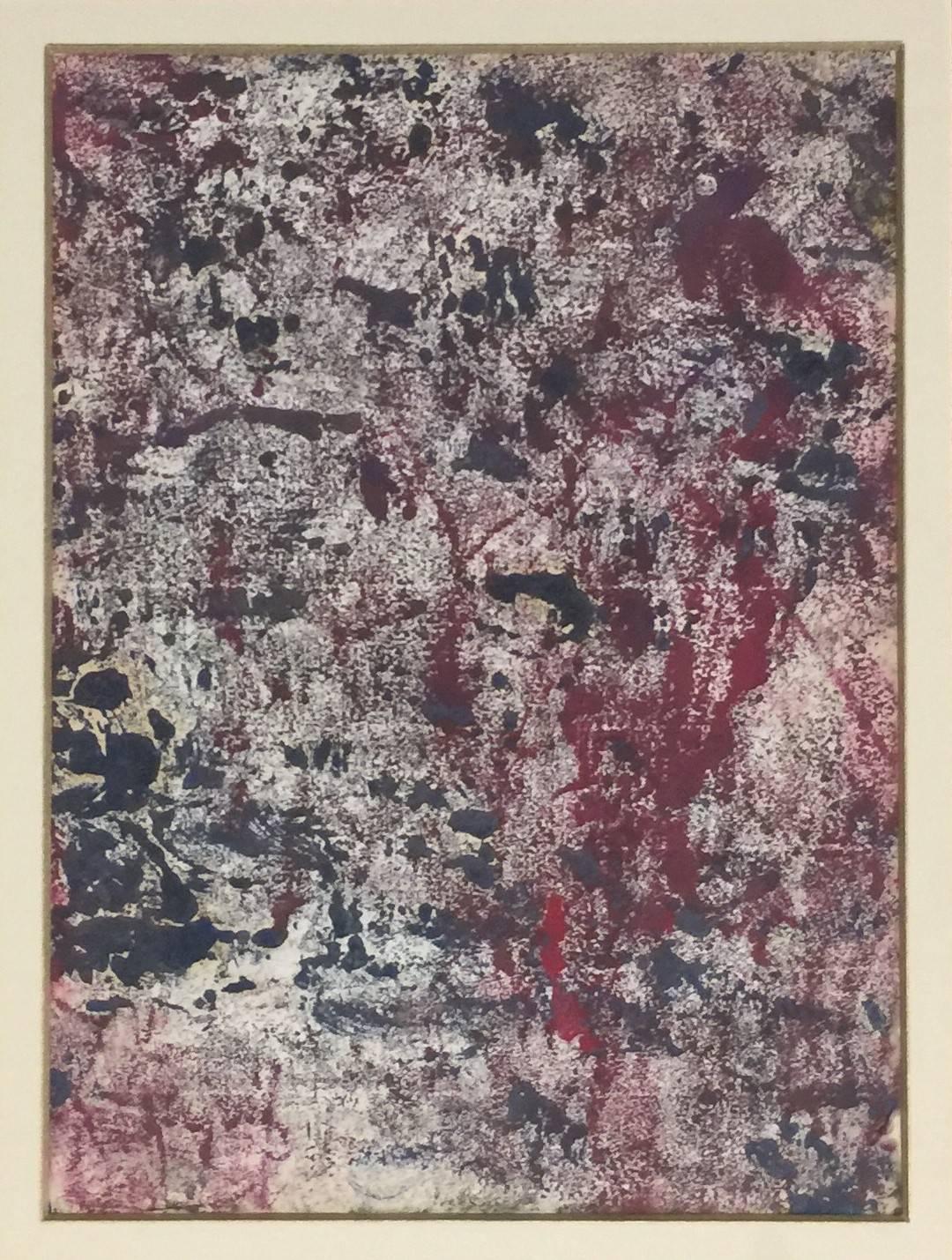
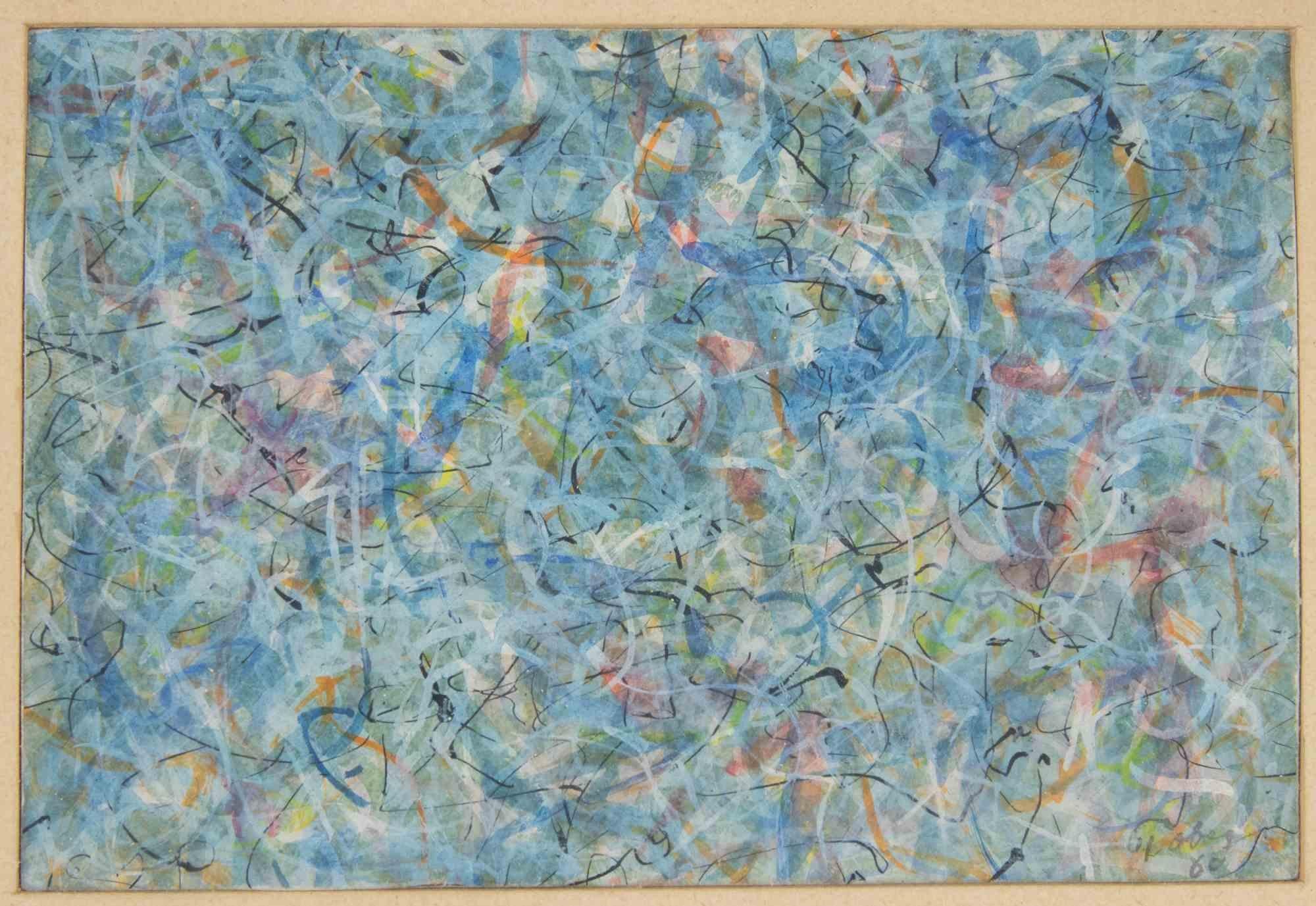
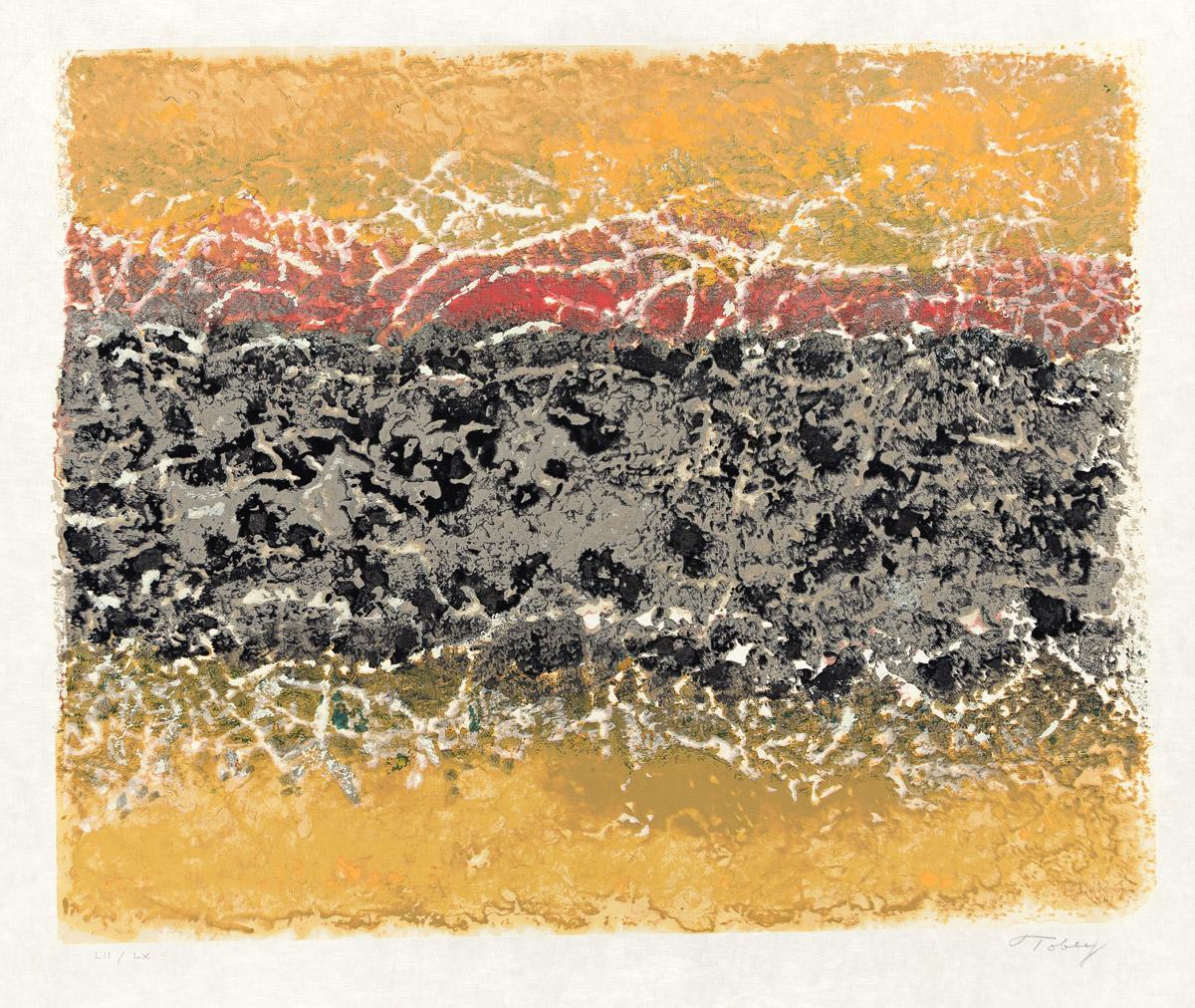
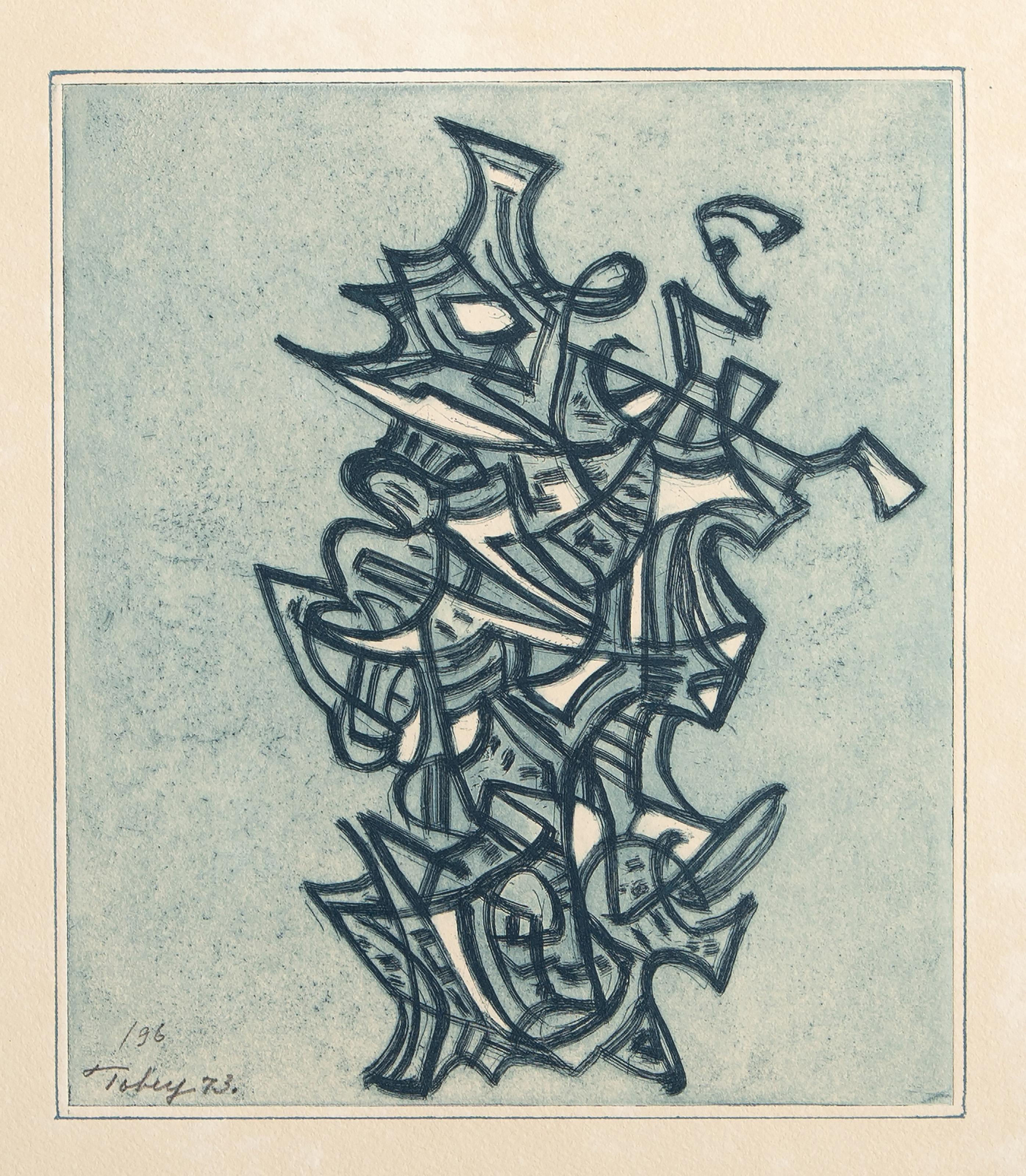
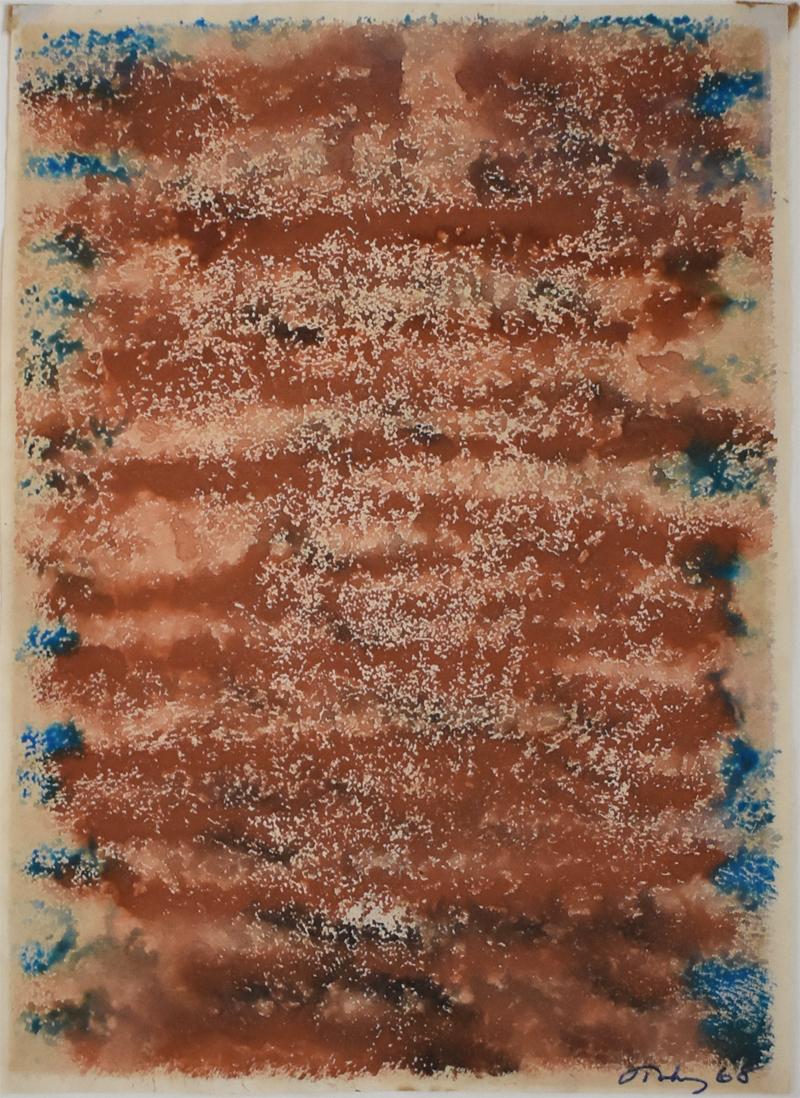
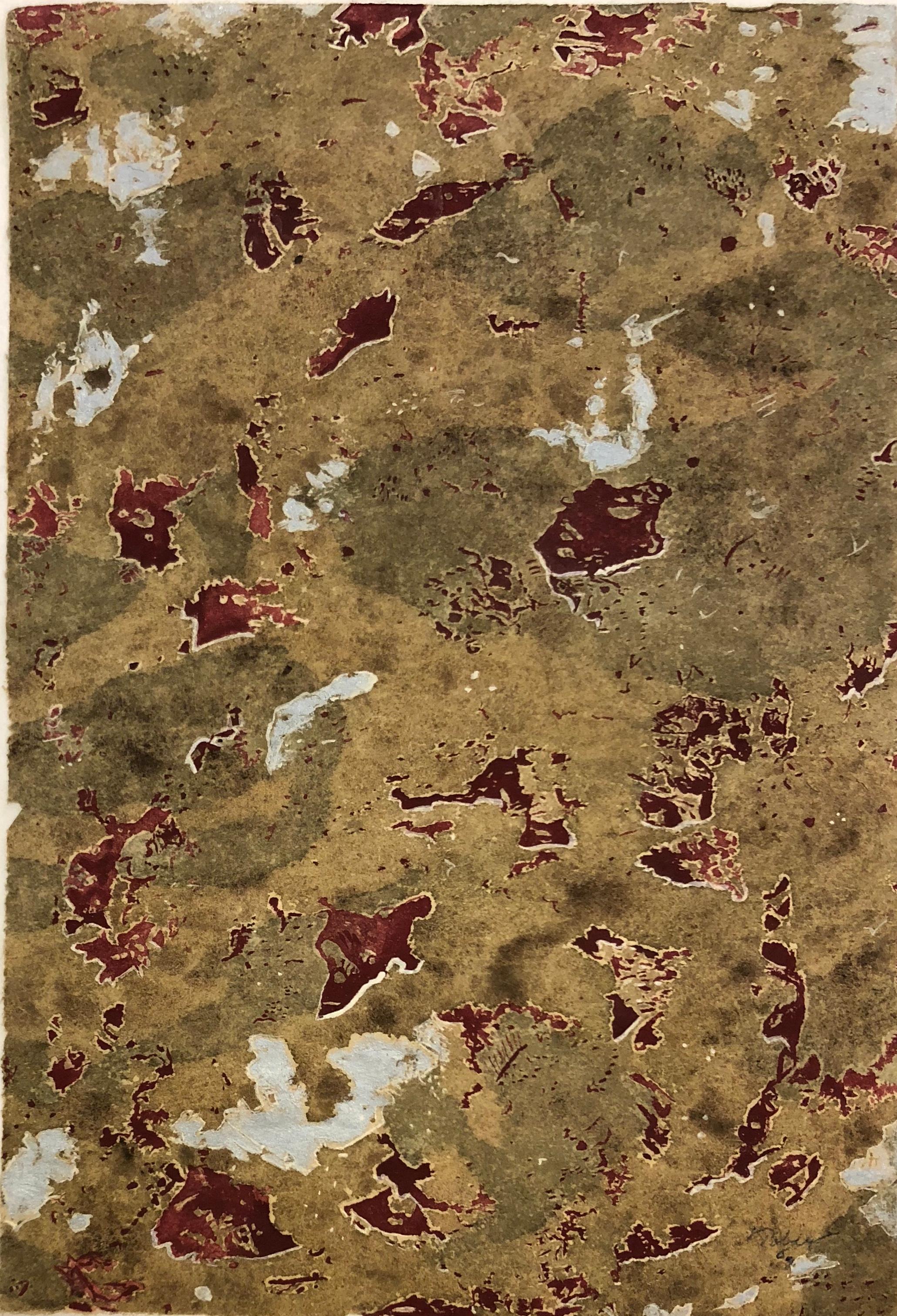
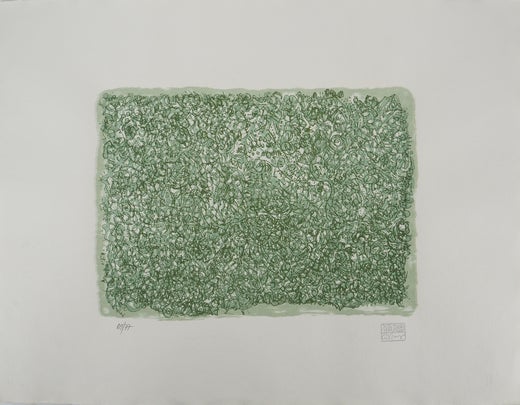
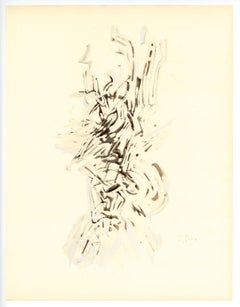
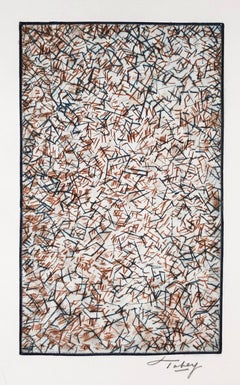
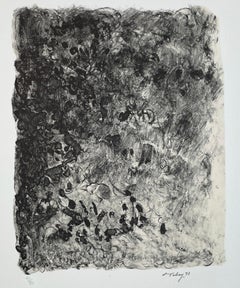
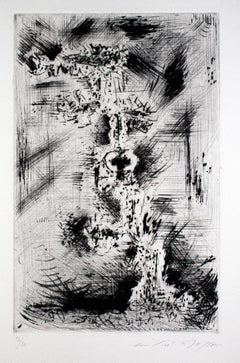
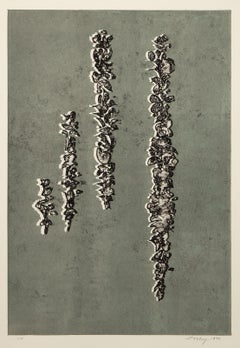
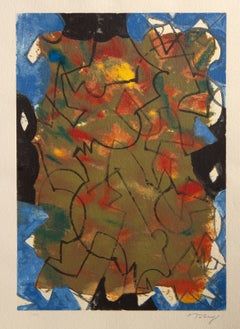
This exquisite lithograph and pochoir by Mark Tobey (1890–1976), titled Totem, from the album XXe siecle, Nouvelle serie, XXIe Annee, No. 12, Mai-Juin 1959, originates from the 1959 edition published by Societe Internationale d'Art XXe siecle, Paris, under the direction of Gualtieri di San Lazzaro, editeur, Paris, and rendered and printed by Daniel Jacomet et Cie, Paris. Totem exemplifies Tobey’s signature “white writing” style—an intricate web of luminous calligraphic lines that evoke both cosmic energy and meditative stillness, reflecting his synthesis of Eastern philosophy and Western abstraction.
Executed as a lithograph and pochoir on velin paper, this work measures 12.5 × 9.75 inches (31.75 × 24.77 cm). Signed in the plate and unnumbered as issued. The edition exemplifies the superb craftsmanship of Daniel Jacomet et Cie, Paris.
Artwork Details:
Artist: Mark Tobey (1890–1976)
Title: Totem, from the album XXe siecle, Nouvelle serie, XXIe Annee, No. 12, Mai-Juin 1959
Medium: Lithograph and pochoir on velin paper
Dimensions: 12.5 × 9.75 inches (31.75 × 24.77 cm)
Inscription: Signed in the plate and unnumbered as issued
Date: 1959
Publisher: Societe Internationale d'Art XXe siecle, Paris, under the direction of Gualtieri di San Lazzaro, editeur, Paris
Printer: Daniel Jacomet et Cie, Paris
Condition: Well preserved, consistent with age and medium
Provenance: From the album XXe siecle, Nouvelle serie, XXIe Annee, No. 12, Mai-Juin 1959, published by Societe Internationale d'Art XXe siecle, Paris
About the Publication:
Gualtieri di San Lazzaro’s XXe Siecle (Twentieth Century) was one of the most influential art journals of the modern era, founded in Paris in 1938 as a platform for the greatest painters, sculptors, and writers of the 20th century. San Lazzaro—a visionary editor, critic, and champion of modernism—believed that art and literature should coexist as expressions of a shared human imagination. Under his direction, XXe Siecle became a cultural bridge between Europe and the wider world, publishing special issues devoted to leading figures such as Picasso, Matisse, Chagall, Braque, Calder, Miro, Kandinsky, and Leger. Each edition combined essays by renowned critics and poets with original lithographs printed by the foremost ateliers of Paris, including Mourlot, Arte, and Bellini, creating a uniquely rich dialogue between text and image. Through XXe Siecle, San Lazzaro preserved the creative spirit of the avant-garde during and after World War II, championing freedom of expression and the evolution of abstraction, Surrealism, and modern thought. Over nearly four decades, the journal shaped international taste and defined the intellectual landscape of postwar art publishing. Today, XXe Siecle remains celebrated for its extraordinary synthesis of art, literature, and design—an enduring testament to Gualtieri di San Lazzaro’s belief that the visual arts are the soul of the modern age.
About the Artist:
Mark Tobey (1890–1976) was an American painter, mystic, and pioneer of global modernism whose visionary fusion of Eastern calligraphy, Western abstraction, and spiritual philosophy made him one of the most original and influential artists of the 20th century. Best known for his groundbreaking “white writing” technique—an intricate network of luminous, interwoven brushstrokes that form rhythmic, meditative fields of light—Tobey transformed painting into a spiritual act, merging rhythm, movement, and contemplation into a visual expression of infinity. Born in Centerville, Wisconsin, and largely self-taught, Tobey’s artistic and spiritual journey led him across Europe, the Middle East, and Asia, where his encounters with Chinese and Japanese calligraphy, Zen Buddhism, and the Bahai Faith profoundly shaped his belief in the interconnectedness of all existence. His paintings—dense, intricate, and alive with energy—embody this universal vision, uniting science, spirit, and sensation into an all-encompassing field of awareness. Throughout his life, Tobey remained in dialogue with some of the greatest modern artists of his generation, including Pablo Picasso, Alexander Calder, Alberto Giacometti, Salvador Dali, Joan Miro, Wassily Kandinsky, Marcel Duchamp, and Man Ray, each of whom, like Tobey, expanded the possibilities of form, line, and perception. From Picasso, he drew the courage to reinvent structure; from Kandinsky, the conviction that color and movement could express spiritual truth; from Duchamp and Man Ray, the understanding that art could exist as pure thought; and from Miro and Calder, the lyrical balance of motion and stillness. His mature works, such as Edge of August (1953), Bars and Flails (1957), and City Radiance (1959), reveal his mastery of compositional rhythm—dense constellations of calligraphic strokes that evoke both the pulse of modern cities and the meditative harmony of Zen gardens. Long before Jackson Pollock and Cy Twombly, Tobey pioneered the concept of all-over abstraction, influencing generations of artists including Rothko, Frankenthaler, Kusama, and Brice Marden. In 1958, he won the Grand Prize for Painting at the Venice Biennale, confirming his international stature as a spiritual counterpoint to the intensity of Abstract Expressionism. His art, simultaneously cosmopolitan and introspective, stood as a bridge between East and West, the material and the mystical, intellect and intuition. Exhibited globally and represented in the collections of the Museum of Modern Art (New York), Tate Modern (London), Centre Pompidou (Paris), and the Guggenheim Museum (New York), Tobey’s work remains a timeless meditation on unity, rhythm, and transcendence. Standing alongside Pablo Picasso, Alexander Calder, Alberto Giacometti, Salvador Dali, Joan Miro, Wassily Kandinsky, Marcel Duchamp, and Man Ray, Mark Tobey endures as one of the most spiritually profound and globally influential artists of the modern era. His highest auction record was achieved by Bars and Flails (1957), which sold for $2.6 million USD at Christie’s, New York, on November 13, 2014, reaffirming Tobey’s lasting legacy as a visionary who transformed modern painting into a universal language of light and thought.
Mark Tobey Totem, Tobey XXe siecle, Tobey Daniel Jacomet, Tobey 1959 lithograph, Tobey velin paper, Tobey abstraction, Tobey collectible print.