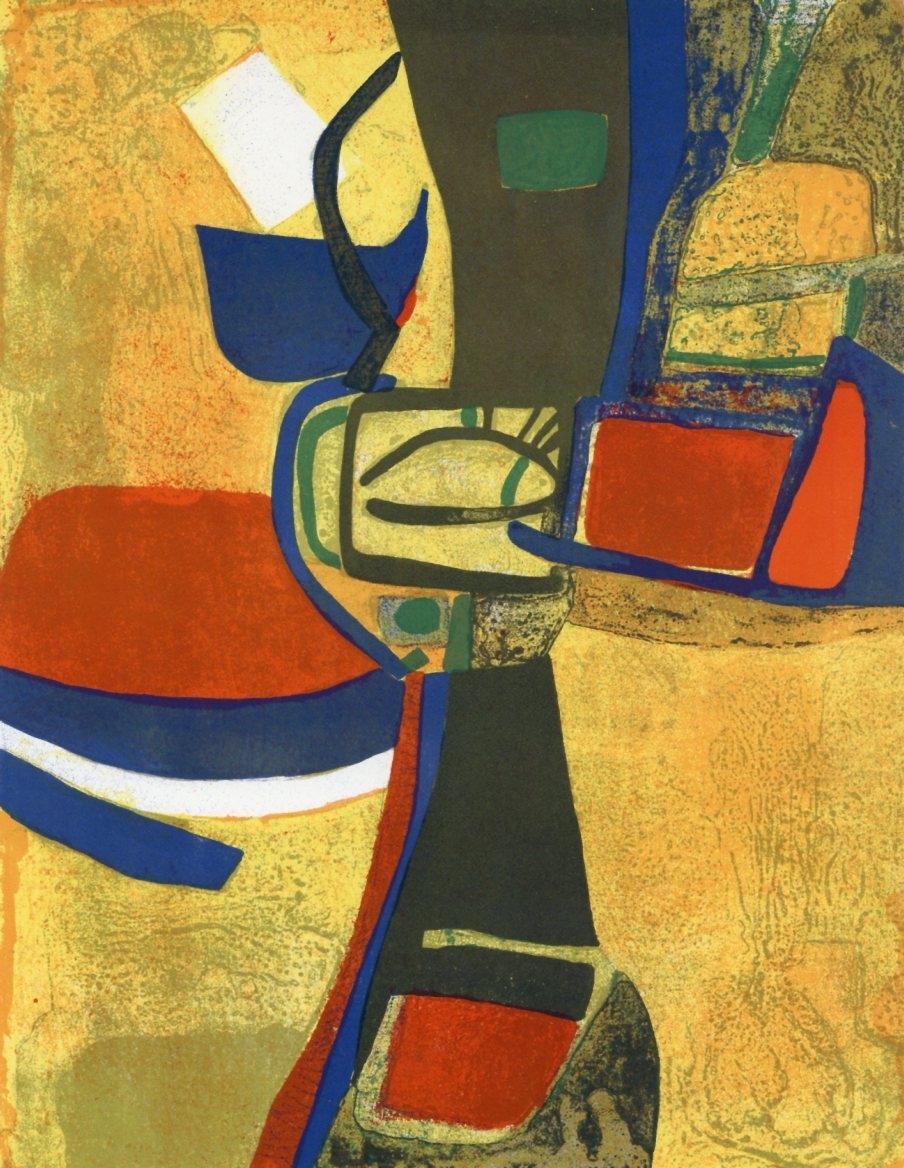
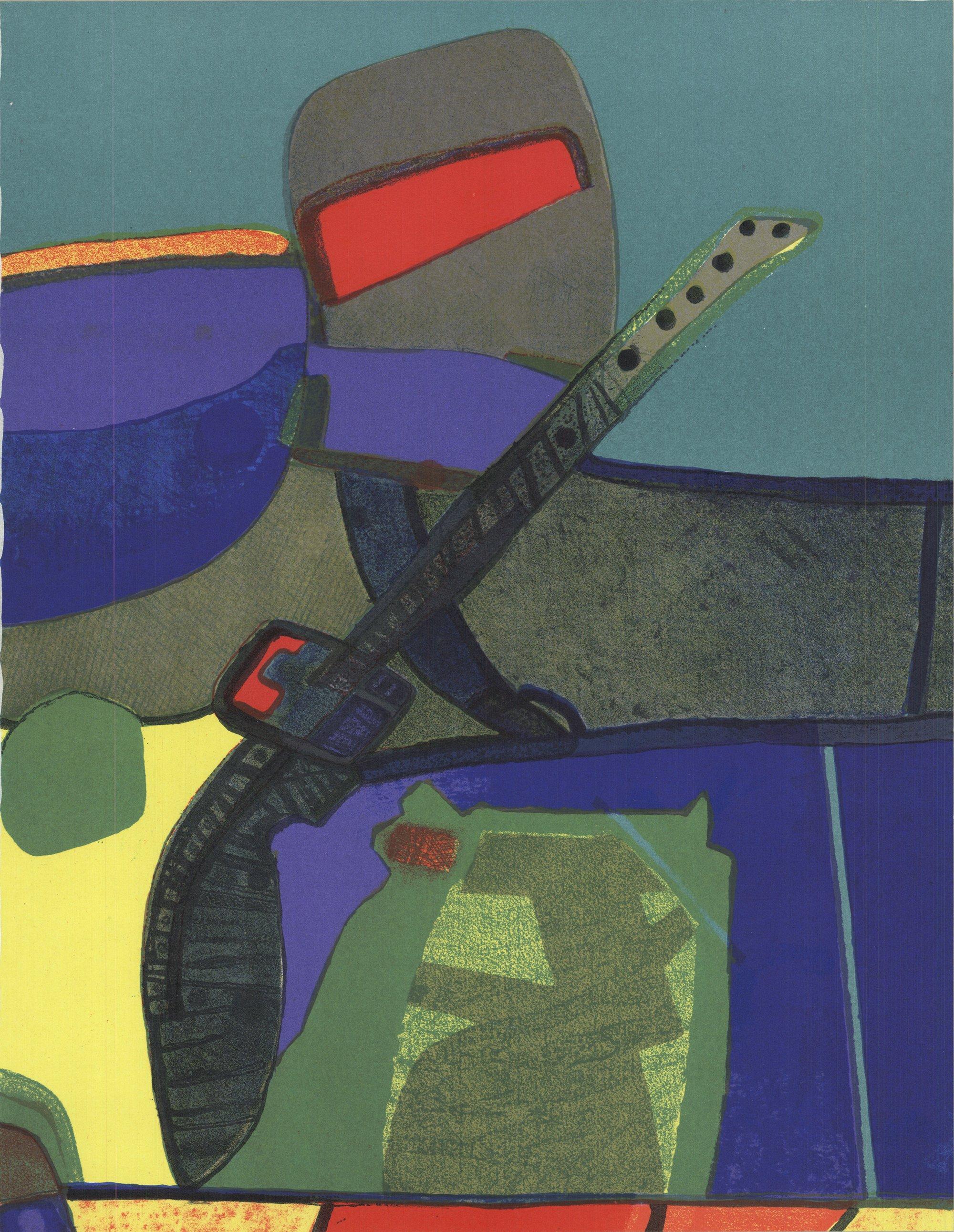
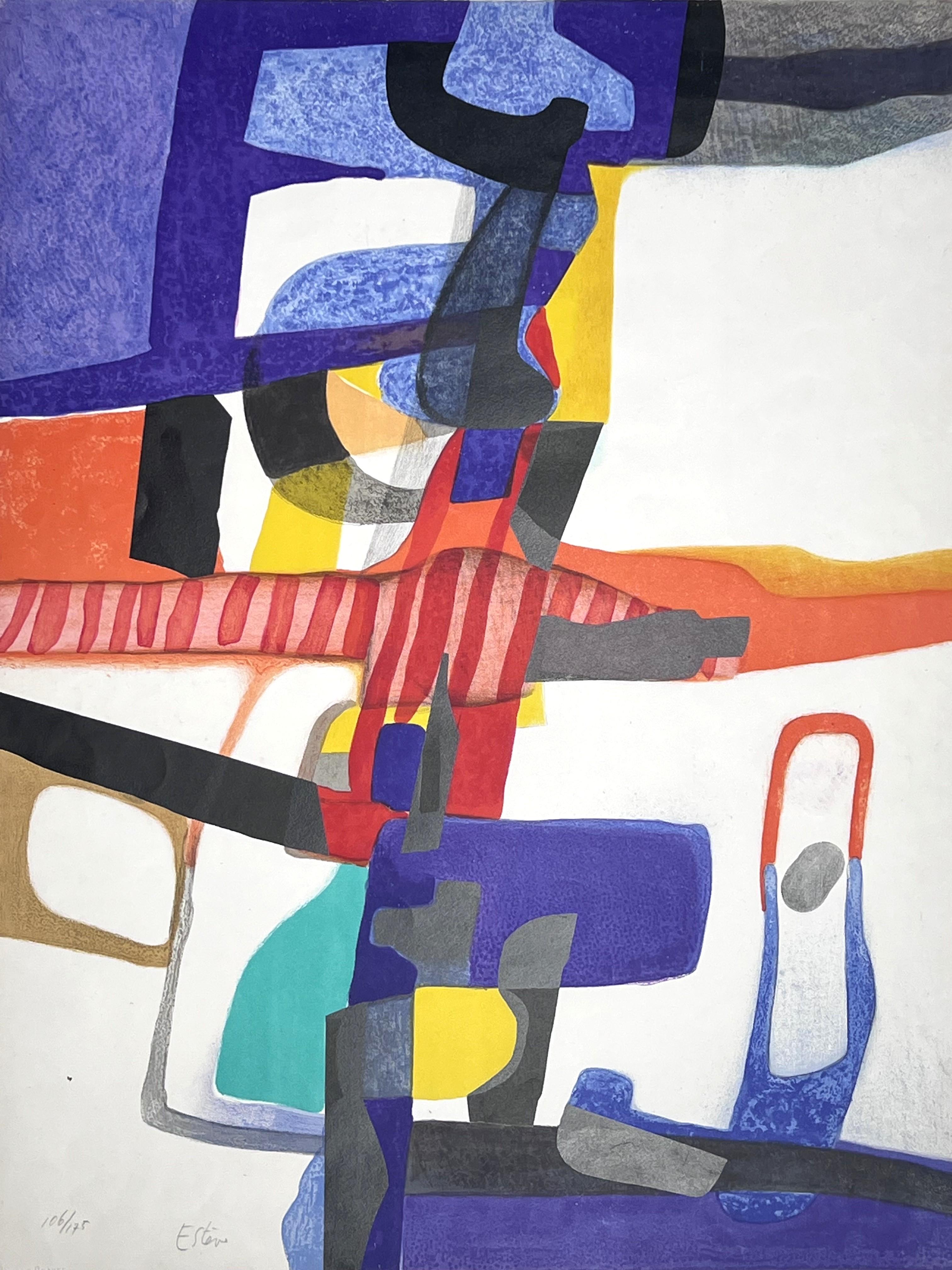
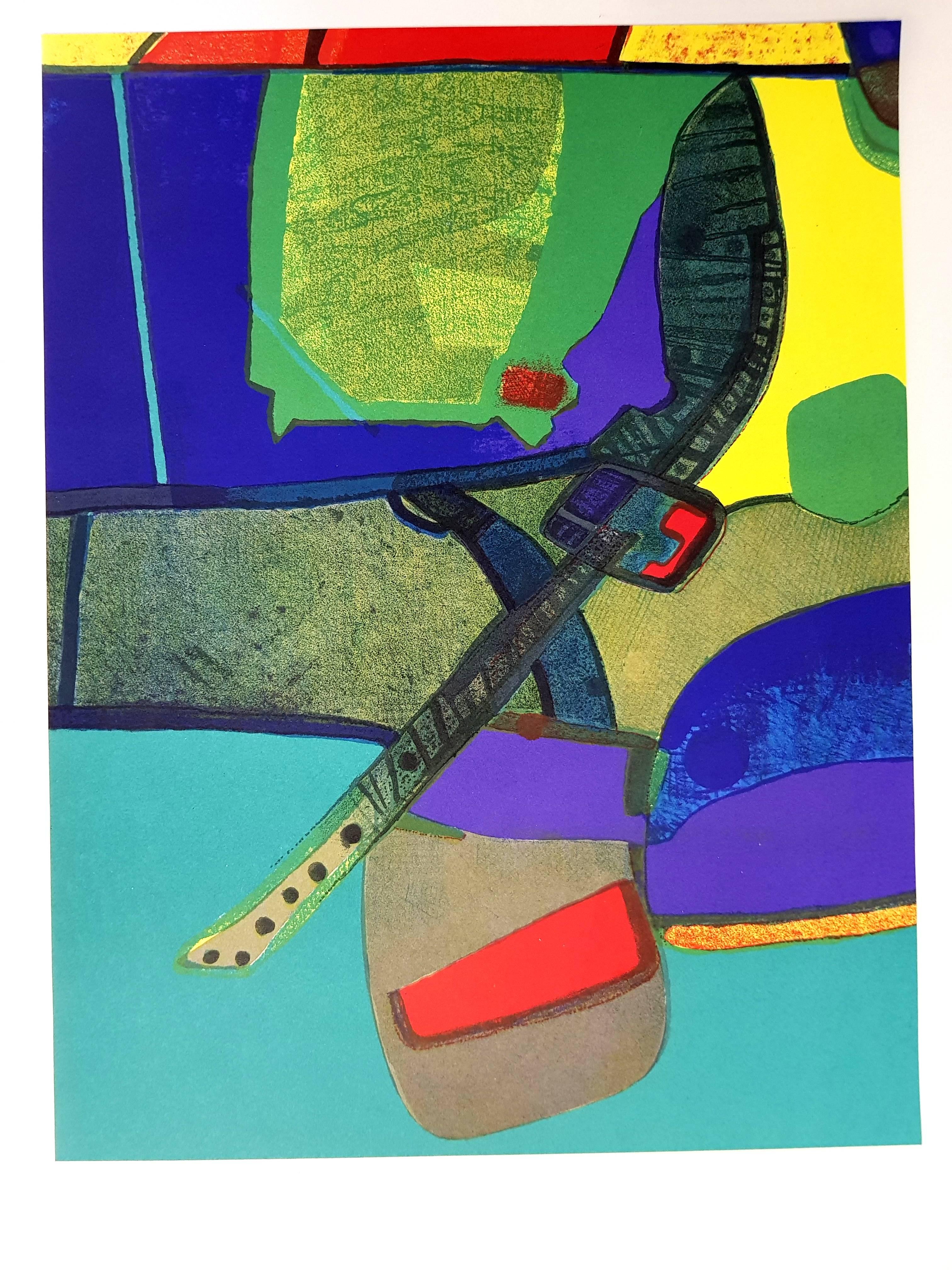
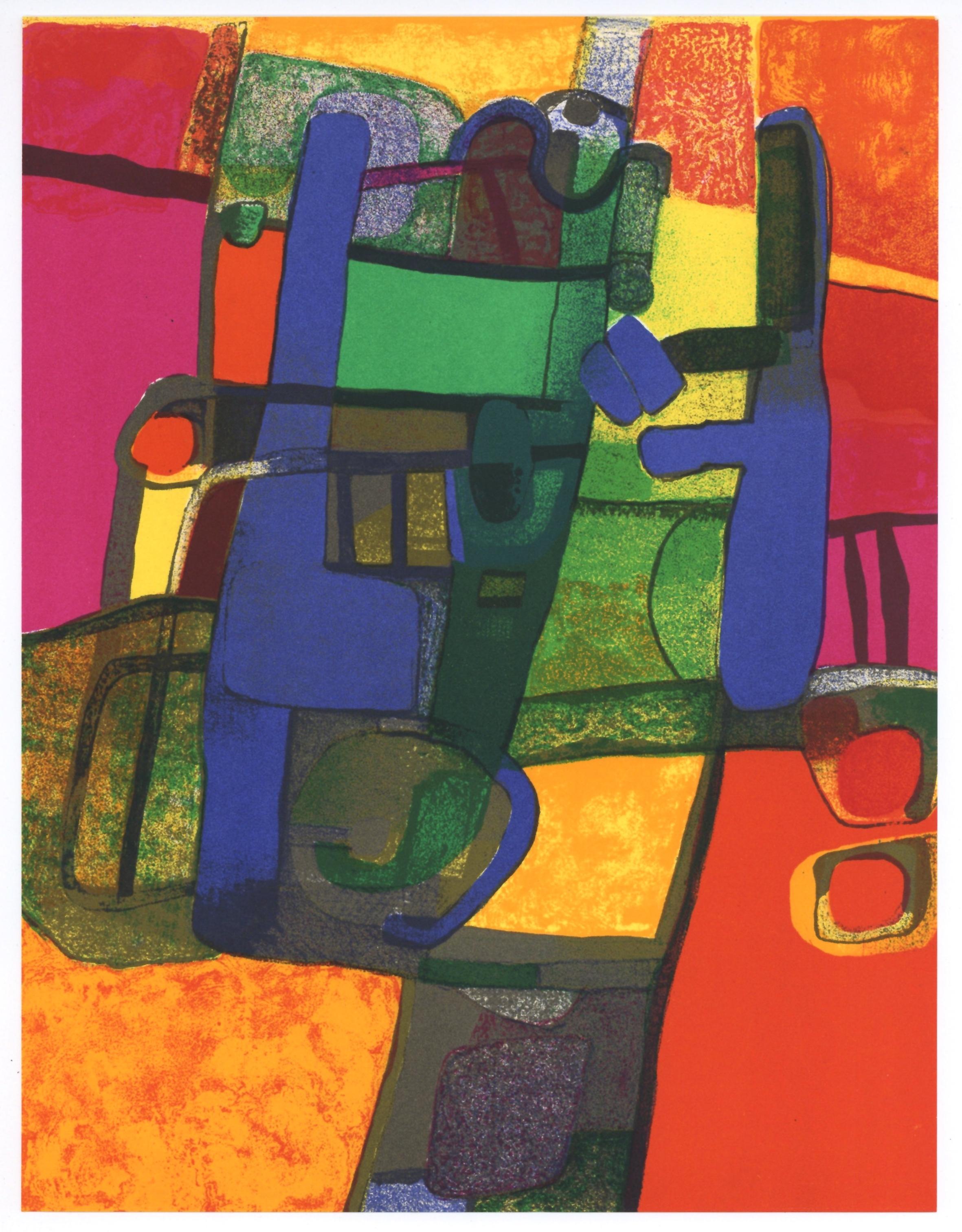
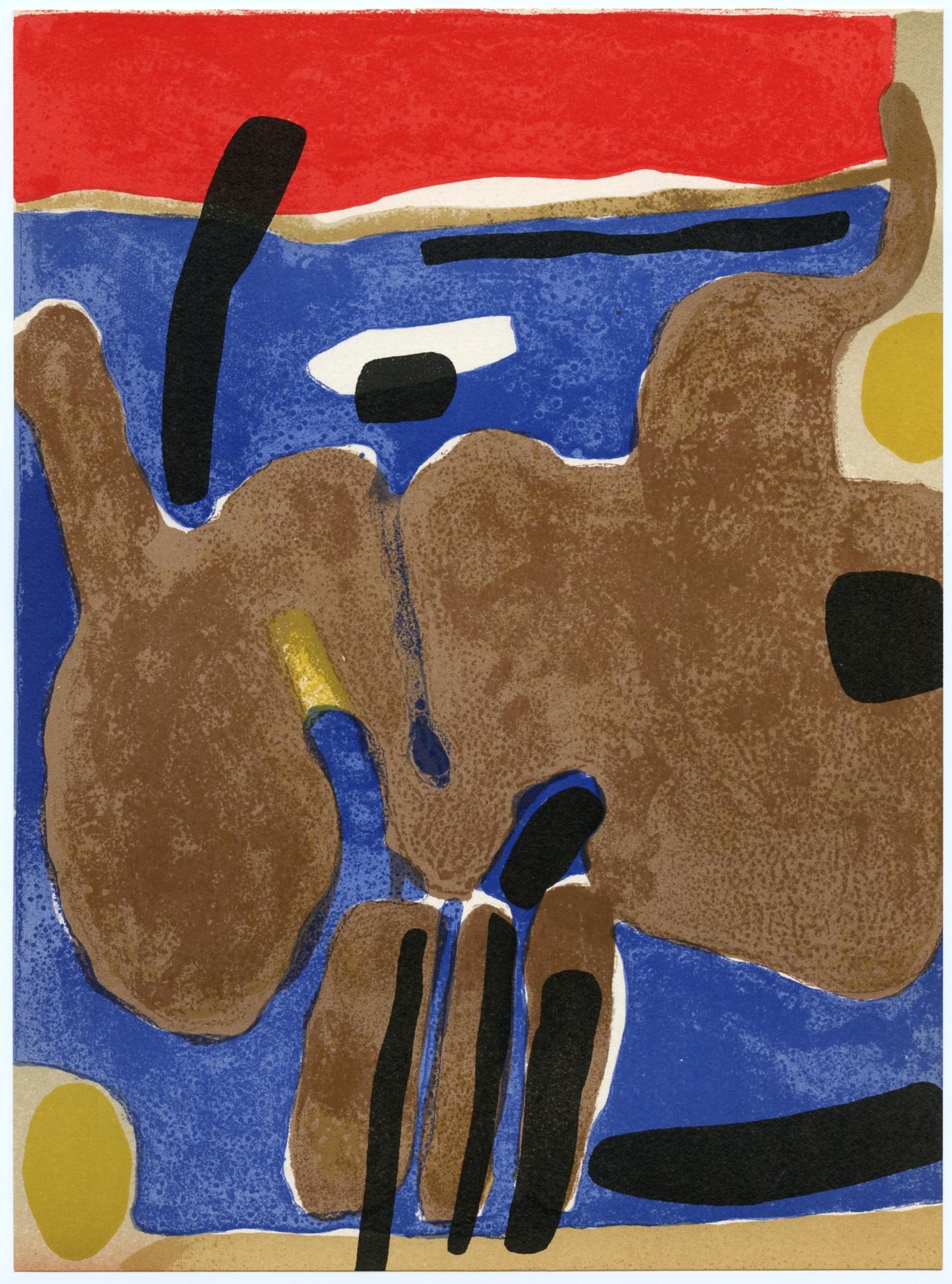
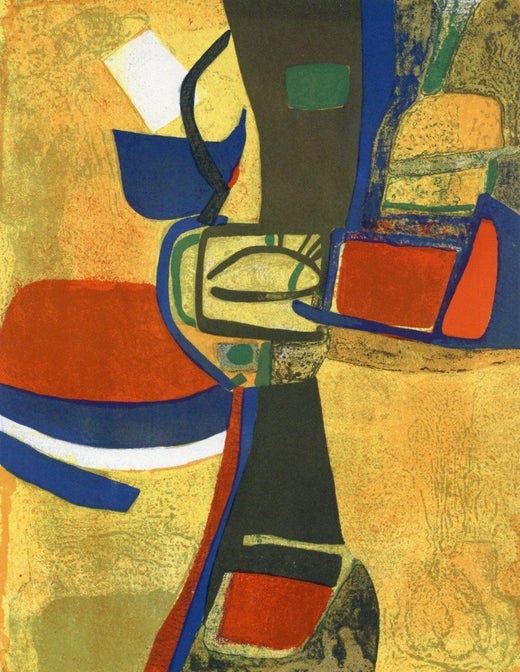
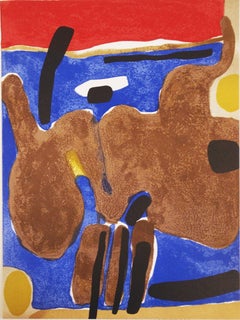
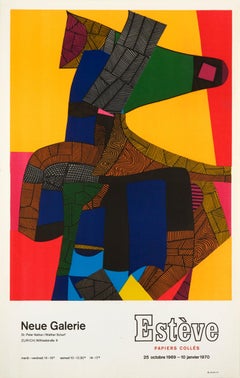
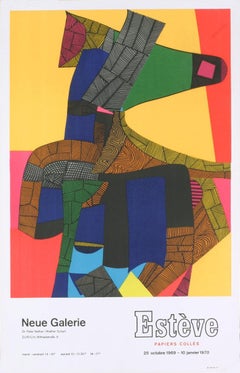
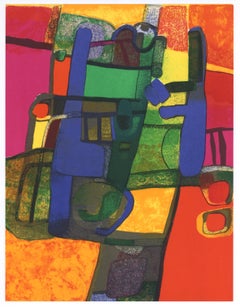
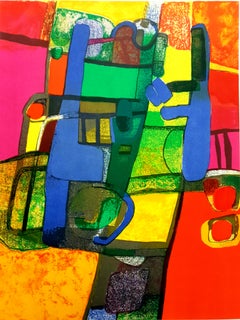
This exquisite lithograph by Maurice Esteve (1904–2001), titled Bossaille, from the album XXe siecle, Numero special hors abonnement, Hommage a Esteve, originates from the 1975 edition published by Societe Internationale d'Art XXe siecle, Paris, and printed by Mourlot Freres, Paris, 1975. Bossaille exemplifies Esteve’s masterful interplay of color, structure, and emotion—an elegant synthesis of geometric order and lyrical abstraction that radiates with warmth and harmony.
Executed as a lithograph on velin paper, this work measures 12.5 x 9.75 inches. Unsigned and unnumbered, as issued. The edition exemplifies the superb craftsmanship of Mourlot Freres, Paris.
Artwork Details:
Artist: Maurice Esteve (1904–2001)
Title: Bossaille, from the album XXe siecle, Numero special hors abonnement, Hommage a Esteve
Medium: Lithograph on velin paper
Dimensions: 12.5 x 9.75 inches (31.75 x 24.77 cm)
Inscription: Unsigned and unnumbered, as issued
Date: 1975
Publisher: Societe Internationale d'Art XXe siecle, Paris
Printer: Mourlot Freres, Paris
Catalogue Raisonne Reference: Prudhomme-Esteve, Monique, et al. Maurice Esteve: L’oeuvre Grave, Catalogue Raisonne. Cordelia, 1986, illustration 74
Condition: Well preserved, consistent with age and medium
Provenance: From the album XXe siecle, Numero special hors abonnement, Hommage a Esteve, published by Societe Internationale d'Art XXe siecle, Paris, and printed by Mourlot Freres, Paris, 1975
About the Publication:
Gualtieri di San Lazzaro's XXe Siecle (Twentieth Century) was one of the most influential art journals of the modern era, founded in Paris in 1938 as a platform for the greatest painters, sculptors, and writers of the 20th century. San Lazzaro, a visionary editor, critic, and champion of modernism, believed that art and literature should coexist as expressions of a shared human imagination. Under his direction, XXe Siecle became a cultural bridge between Europe and the wider world, publishing special issues devoted to leading figures such as Picasso, Matisse, Chagall, Braque, Calder, Miro, Kandinsky, and Leger. Each edition combined essays by renowned critics and poets with original lithographs printed by the foremost ateliers of Paris, London, and New York, including Mourlot, Curwen, and Universal Graphics, creating a uniquely rich dialogue between text and image. Through XXe Siecle, San Lazzaro preserved the creative spirit of the avant-garde during and after World War II, championing freedom of expression and the evolution of abstraction, surrealism, and modern thought. Over nearly four decades, the journal shaped international taste and defined the intellectual landscape of postwar art publishing. Today, XXe Siecle remains celebrated for its extraordinary synthesis of art, literature, and design, an enduring testament to Gualtieri di San Lazzaro's belief that the visual arts are the soul of the modern age.
About the Artist:
Maurice Esteve (1904–2001) was a French painter, draftsman, and lithographer whose lifelong devotion to color, form, and harmony established him as one of the great masters of postwar abstraction and a central figure of 20th-century French modernism. Born in Culan, France, Esteve was largely self-taught, moving to Paris in the 1920s where he immersed himself in the avant-garde circles of Pablo Picasso, Alexander Calder, Alberto Giacometti, Salvador Dali, Joan Miro, Wassily Kandinsky, Marcel Duchamp, and Man Ray—artists whose innovations in abstraction, surrealism, and modern form profoundly shaped his artistic vision. Drawing from the Cubist structure of Picasso and Braque, the lyrical freedom of Miro and Kandinsky, and the humanist warmth of Bonnard and Matisse, Esteve forged a uniquely personal visual language that merged geometric precision with emotional resonance. His mature works—composed of radiant interlocking forms and glowing chromatic harmonies—embody a sense of balance and rhythm that feels both musical and architectural, transforming color into an expressive force of light, energy, and emotion. A leading figure of the Ecole de Paris, alongside Jean Bazaine, Alfred Manessier, and Serge Poliakoff, Esteve helped define the lyrical abstraction movement that bridged the gap between European modernism and American color field painting. His art, celebrated for its refined craftsmanship and spiritual intensity, rejects rigid formalism in favor of a meditative balance between intellect and intuition, order and improvisation. Over his six-decade career, Esteve’s paintings and lithographs were exhibited worldwide, including at the Venice Biennale, the Musee National d’Art Moderne, and the Fondation Maeght, and his work is represented in major collections such as the Centre Pompidou in Paris, the Tate Modern in London, and the Museum of Modern Art in New York. His influence extends to later generations of lyrical abstractionists, color field painters, and contemporary designers who continue to draw inspiration from his synthesis of color and emotion. Collectors prize his work for its timeless elegance, chromatic vitality, and spiritual depth—qualities that link him to the great innovators of his century, including Picasso, Miro, Dali, Kandinsky, Calder, Duchamp, Giacometti, and Man Ray. His highest auction record was achieved by Composition 1955, which sold for $1.6 million at Sotheby’s, Paris, on June 6, 2018, confirming Maurice Esteve’s enduring legacy as one of the most poetic, harmonious, and collectible abstract painters of the modern era.
Maurice Esteve Bossaille, Esteve XXe siecle, Esteve Hommage a Esteve, Esteve 1975 lithograph, Esteve velin paper, Esteve Mourlot Freres, Esteve collectible print.