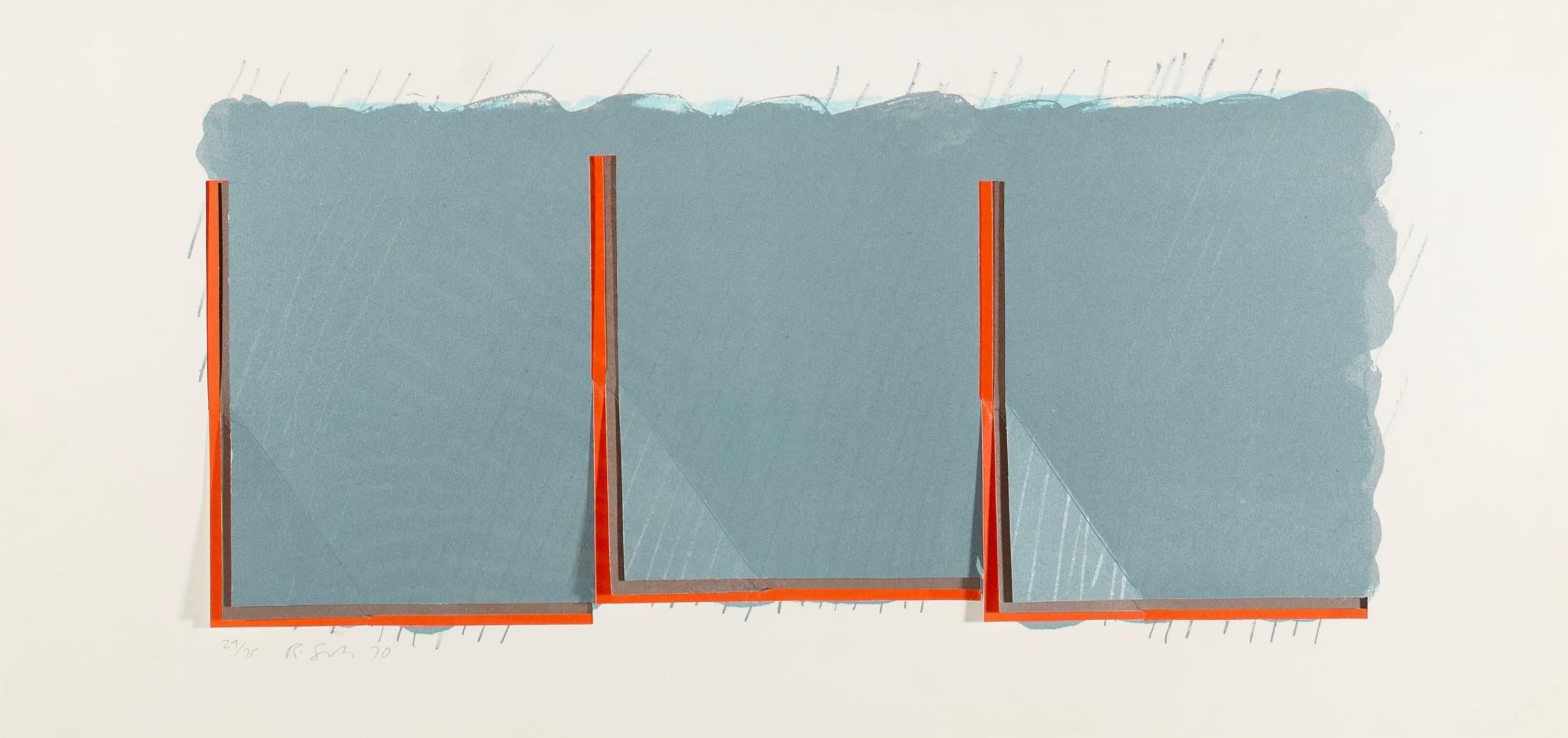
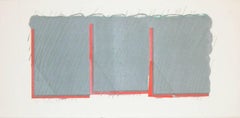
Horizon II (Grey and Orange)
By Richard Smith
Located in London, GB
Edition of 75, Set of 6 33 x 71 cms (13 x 28 ins)
Category
1970s Abstract Abstract Prints
Materials
Lithograph
1970
Horizon II (Grey and Orange)
By Richard Smith
Located in London, GB
Edition of 75, Set of 6 33 x 71 cms (13 x 28 ins)
Lithograph
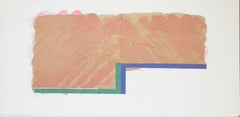
Horizon (Beige, blue, green)
By Richard Smith
Located in London, GB
Edition of 75, Set of 6 33 x 71 cms (13 x 28 ins)
Lithograph
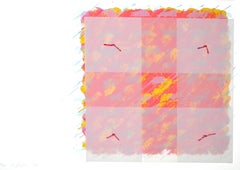
Florentine I (red/orange)
By Richard Smith
Located in London, GB
Edition of 75 51 x 71 cms (20 x 28 ins)
Lithograph
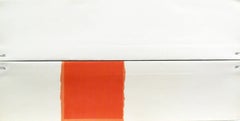
Pieces of Eight (pink square)
By Richard Smith b.1955
Located in London, GB
Edition of 35 48 x 100 cms (19 x 39.5 ins)
Lithograph
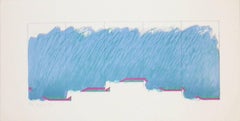
Horizon VI (blue, purple, green)
By Richard Smith
Located in London, GB
Edition of 75, Set of 6 33 x 71 cms (13 x 28 ins)
Lithograph
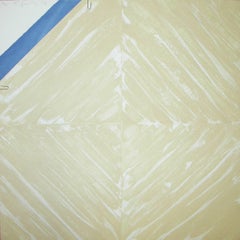
Paperclip Suite II (yellow / blue)
By Richard Smith
Located in London, GB
Etching, Edition of 25 45 x 45 cms (17.5 x 17.5 ins)
Etching
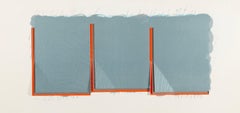
Horizon II (Grey and Orange) - 20th Century Minimalist Abstract Lithograph Print
By Richard Smith
Located in Kingsclere, GB
Richard Smith 1931-2016 Horizon II (Grey and Orange), 1970 lithograph 33 x 71 cm 13 x 28 in signed and numbered from the edition of 75 in pencil Charles Richard "Dick" Smith was an ...
Lithograph
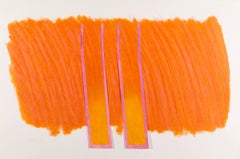
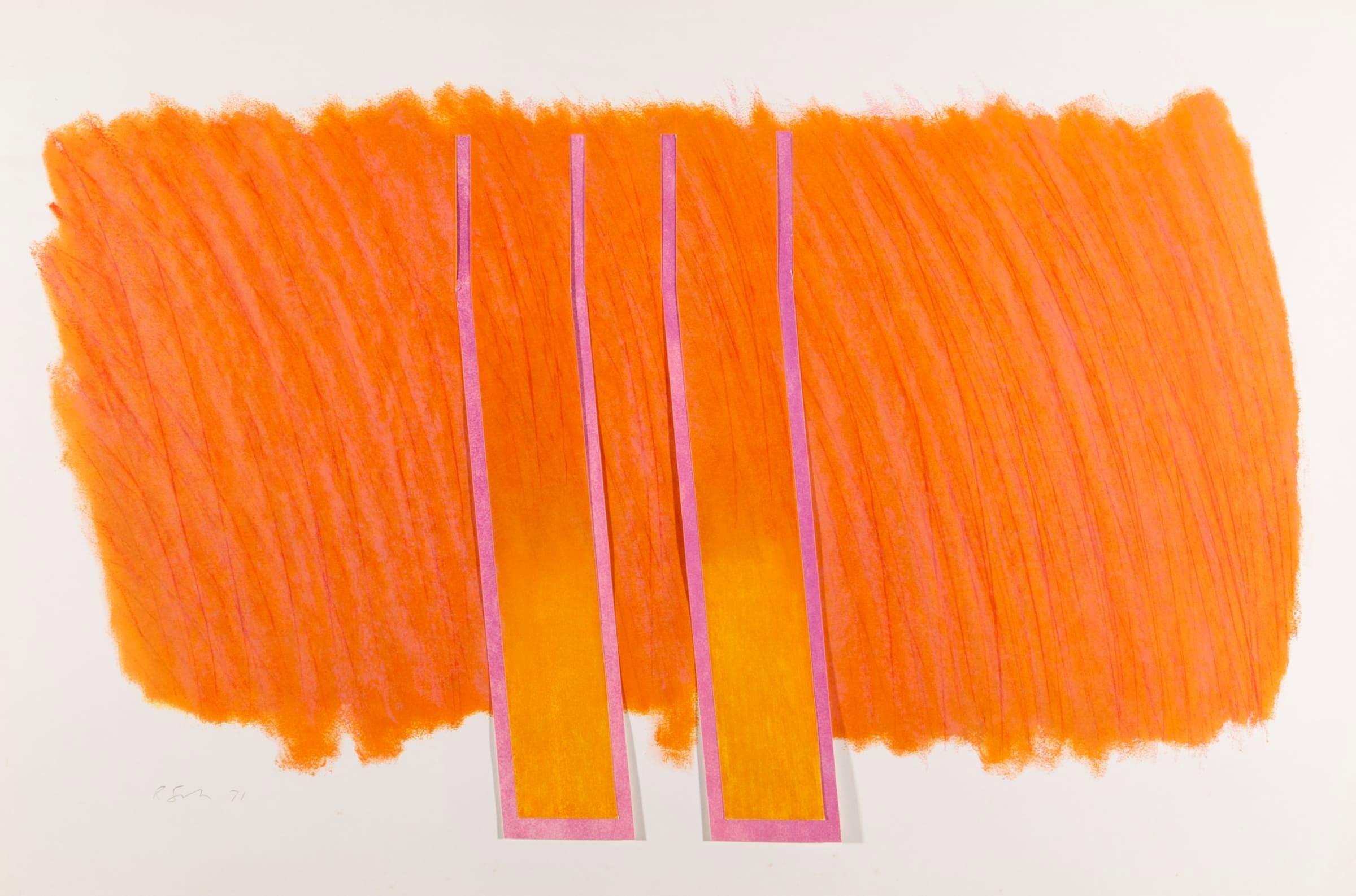
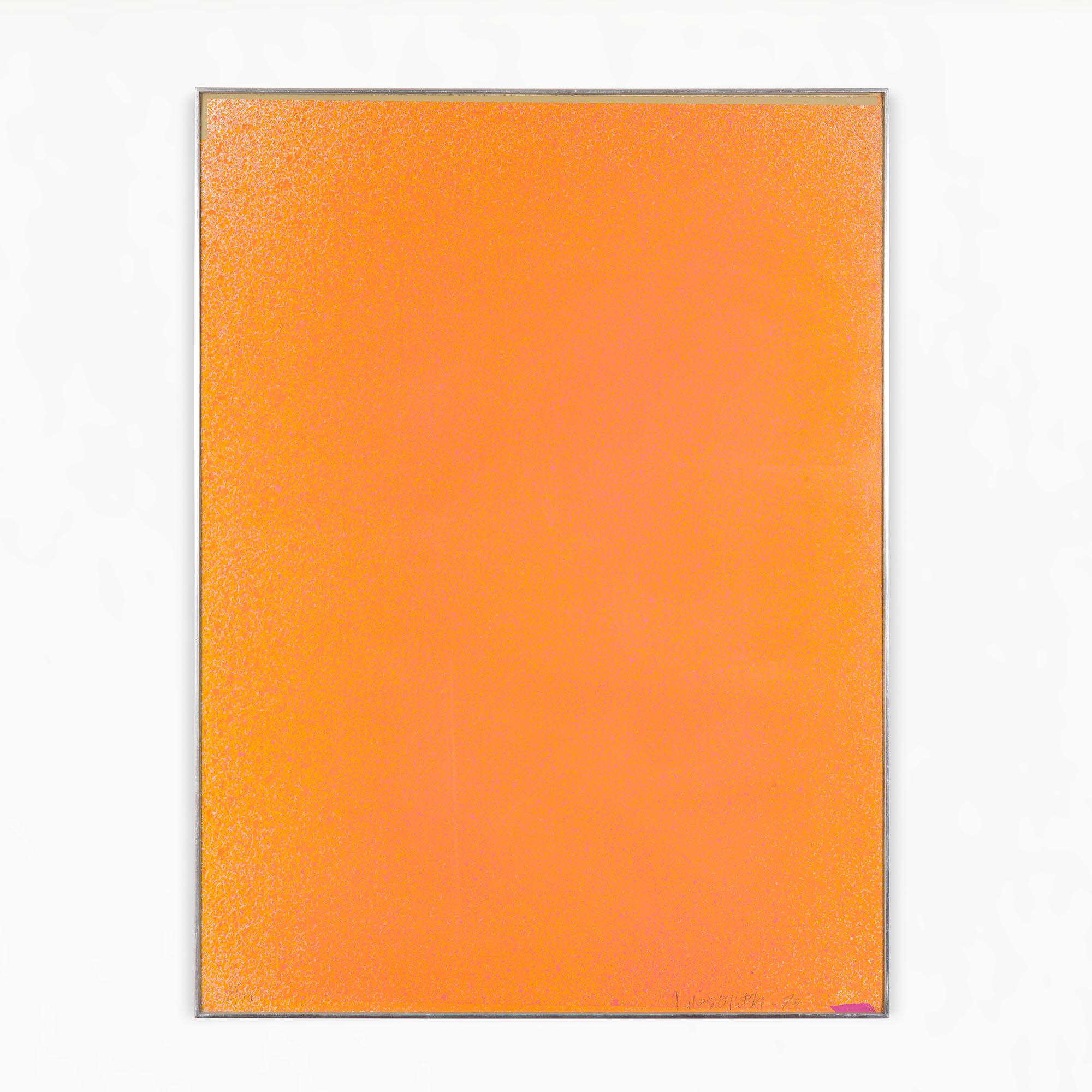
Bright Orange Abstract 1970s Print with Pink, Bold Richard Smith Lithograph
By Richard Smith
Located in Kingsclere, GB
Sun Curtain by Richard Smith, 1971 Additional information: Medium: lithograph on two sheets 64 x 92 cm 25 1/4 x 36 1/4 in signed and dated in the plate Charles Richard "Dick" Smith was an English printmaker and painter. Smith was born in Letchworth, Hertfordshire, to Doris (née Chandler), a nurse and daughter of a chemical company director. He studied at Hitchin Grammar School and Luton School of Art. After military service with the Royal Air Force in Hong Kong, he attended St Albans School of Art followed by post-graduate studies at the Royal College of Art, London, from 1954-57. Smith shared a flat-cum-studio with Peter Blake in his second year at the RCA, and then again for two years after he left the college in 1957. When Terence Conran's Soup Kitchen opened on Fleet Street in the late 1950s, it featured a letter-collage mural by Smith and Blake. Michael Chow would later commission Smith to design installations for his restaurant in Los Angeles, and Chow and Conran have remained two of his biggest supporters. In 1959 he moved to New York to teach on a Harkness Fellowship, staying for two years, where he produced paintings combining the formal qualities of many of the American abstract painters which made references to American commercial culture. The artist's first solo exhibition was at the Green Gallery. As his work matured it tended to be more minimal, often painted using one colour with a second only as an accent. In trying to find ways of transposing ideas, Smith began to question the two-dimensional properties of art itself and to find ways by which a painting could express the shape of reality as he saw it. He began to take the canvas off the stretcher, letting it hang loose, or tied with knots, to suggest sails or kites - objects which could change with new directions rather than being held rigid against a wall, and taking painting close to the realm of sculpture. These principles he carried into his graphic work by introducing cut, folded and stapled elements into his prints; some works were multi-leaved screenprinting, and others printed onto three-dimensional fabricated metal. Smith returned to England in 1963 - specifically East Tytherton, Wiltshire where Howard Hodgkin was a neighbour - and gained critical acclaim for extending the boundaries of painting into three dimensions, creating sculptural shaped canvases with monumental presence, which literally protruded into the space of the gallery. Evocative titles such as Panatella and Revlon, and cosmetic, synthetic colours alluded to the consumer landscapes of urban America which had proved so influential. He showed at the Kasmin Gallery, a venture between Kas and the Marquess of Dufferin and Ava in New Bond Street, throughout the 60s, more-widely known as David Hockney's first gallery. After being awarded the Grand Prize at the 9th São Paulo Biennial in 1967 and important exhibitions at Kasmin in 1963, Tate in 1964, and Richard Feigen Gallery in 1966, Smith was invited to exhibit at the XXXV Venice Biennale as the official British artist in 1970. Smith was chosen by a committee of art experts, who were Director of Tate Norman Reid, art historian Alan Bowness, art collector David Thompson, the British Council’s Lilian Somerville and art historian Norbert Lynton. Smith taught with Richard Hamilton at Gateshead in 1965, where he met Mark Lancaster and Stephen Buckley, and again in 2000, becoming close to the artist and his wife, Terry. By the late 1960s Smith's ambition to produce paintings which shared a common sensibility with other media, such as film and photography, began to wane and he focused on the formal qualities of painting. The freestanding installation Gazebo exhibited at the Architectural League of New York in 1966, and a tent project at the Aspen Design...
Lithograph
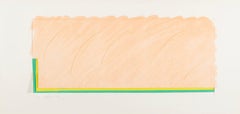
Horizon V (Peach, Yellow & Green) - Minimalist 20th Century Abstract Print
By Richard Smith
Located in Kingsclere, GB
Richard Smith 1931-2016 Horizon V (Peach, Yellow & Green), 1970 lithograph 33 x 71 cm 13 x 28 in signed and numbered from the edition of 75 in pencil Charles Richard "Dick" Smith wa...
Lithograph
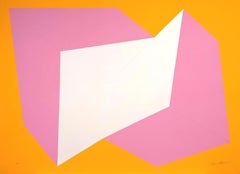
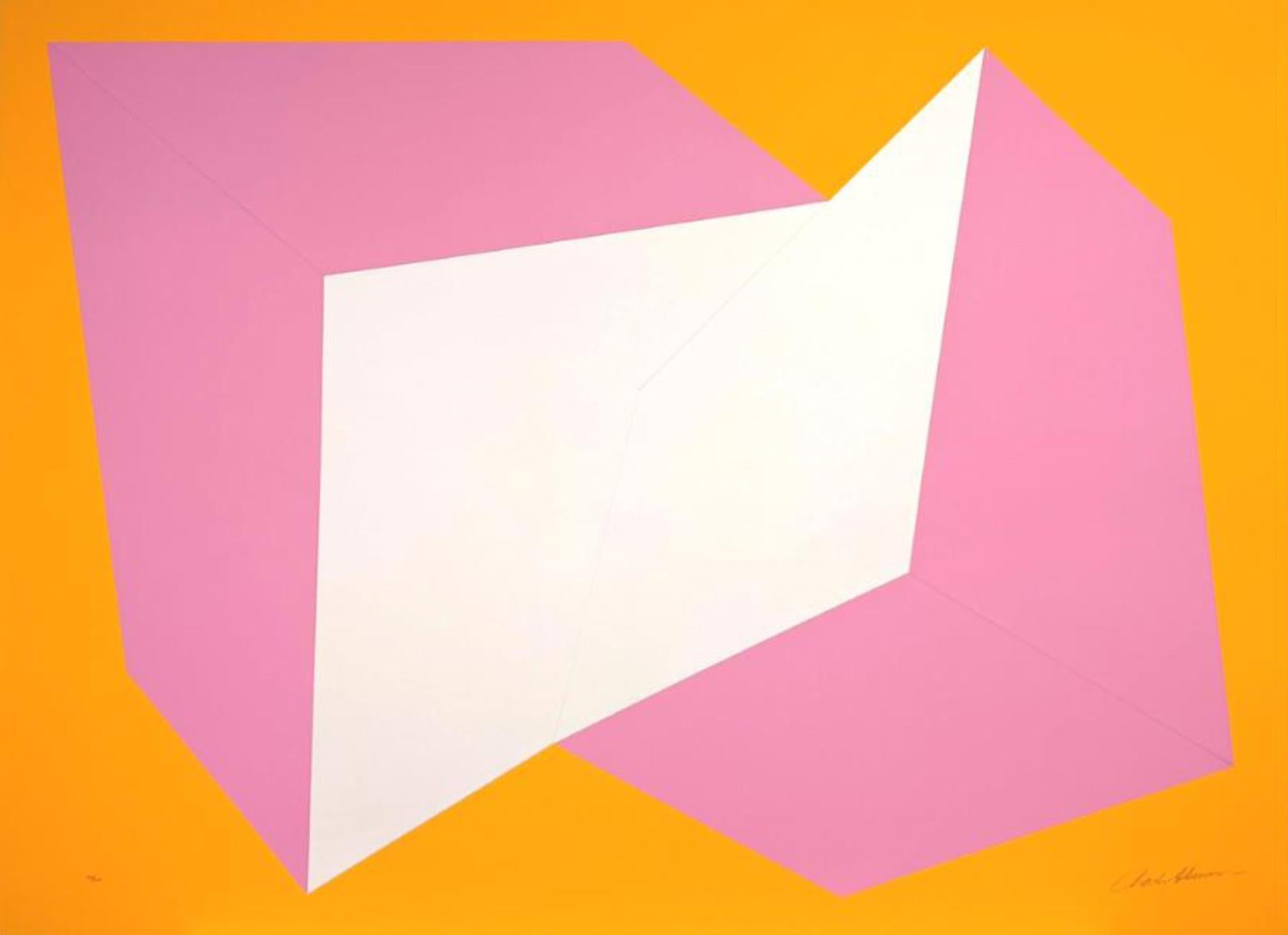
Pink on Orange, Geometric Abstract Screenprint by Charles Hinman
By Charles Hinman
Located in Long Island City, NY
"This work was created with two separate entities that play against each other, in real and illusionary space, thus combining two separate realms that come together and play with one...
Screen
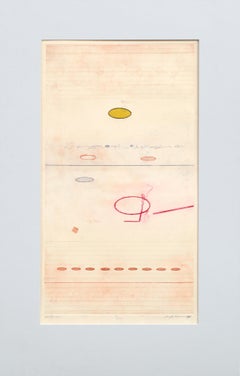
"Orange Row", Abstract Geometric Minimalist Composition w Ovals, Limited Edition
By Geoffrey Bowman
Located in Soquel, CA
"Orange Row", Abstract Geometric Minimalist Composition w Ovals, Limited Edition Delicate and perfect ovals in orange, yellow, red, and blue are purposefully arranged on lined paper...
Paper, Ink, Lithograph, Etching
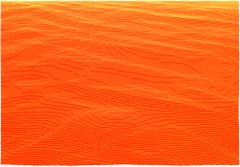
Eklat I, Abstract Orange Gradient Landscape Print, 35x50 in
By Ann Aspinwall
Located in New York, NY
Eklat I is a striking abstract composition that evokes the vast, meditative expanse of a sunlit landscape, rendered through a refined interplay of color, rhythm, and texture. Measuri...
Screen