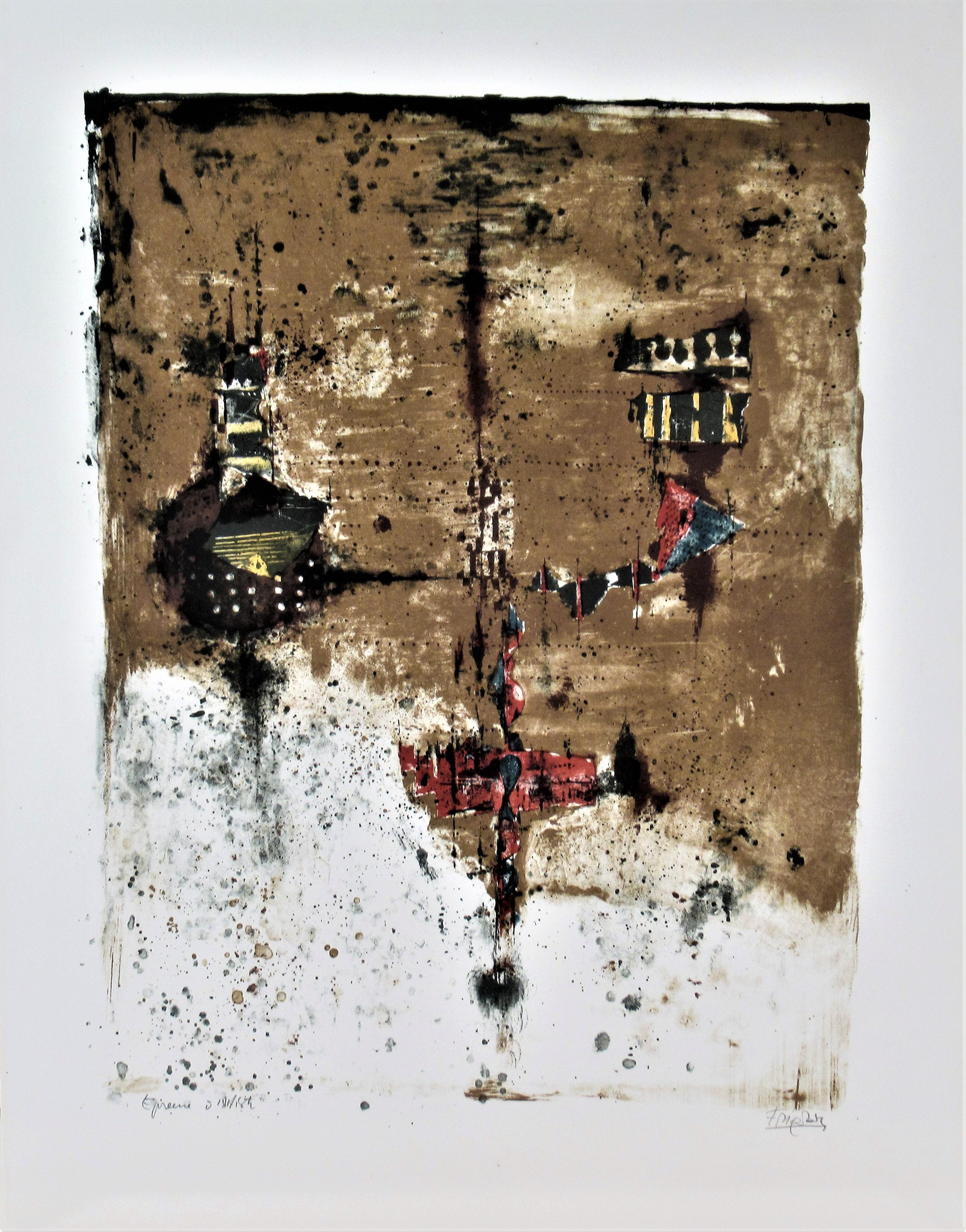
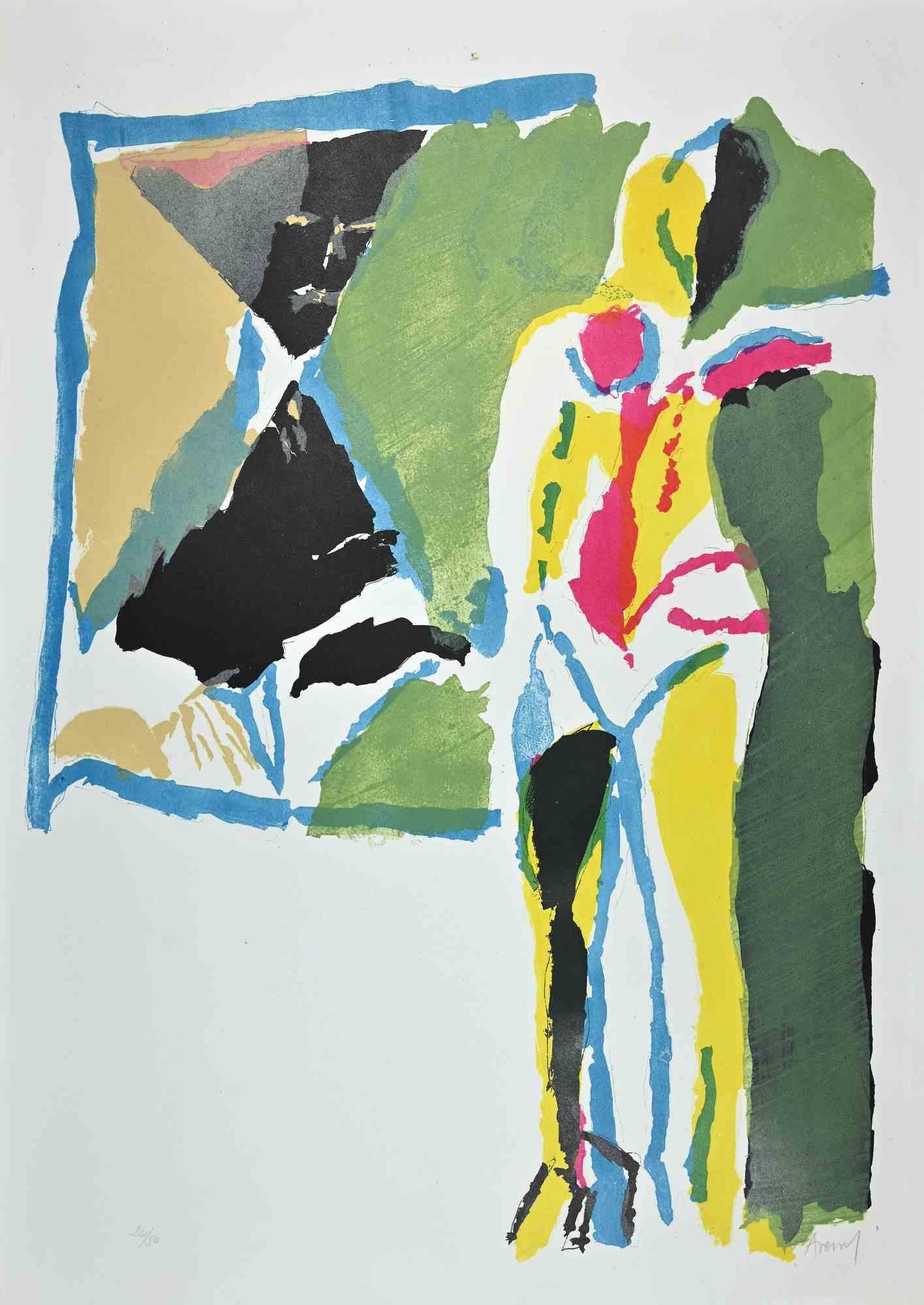
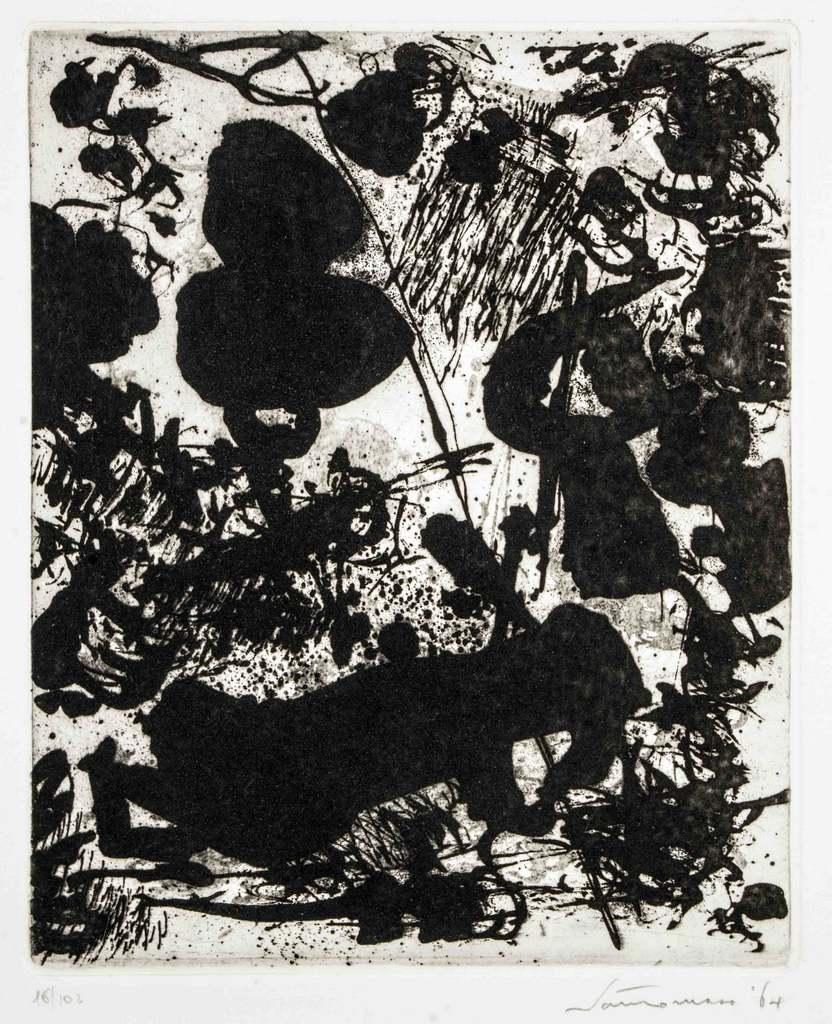
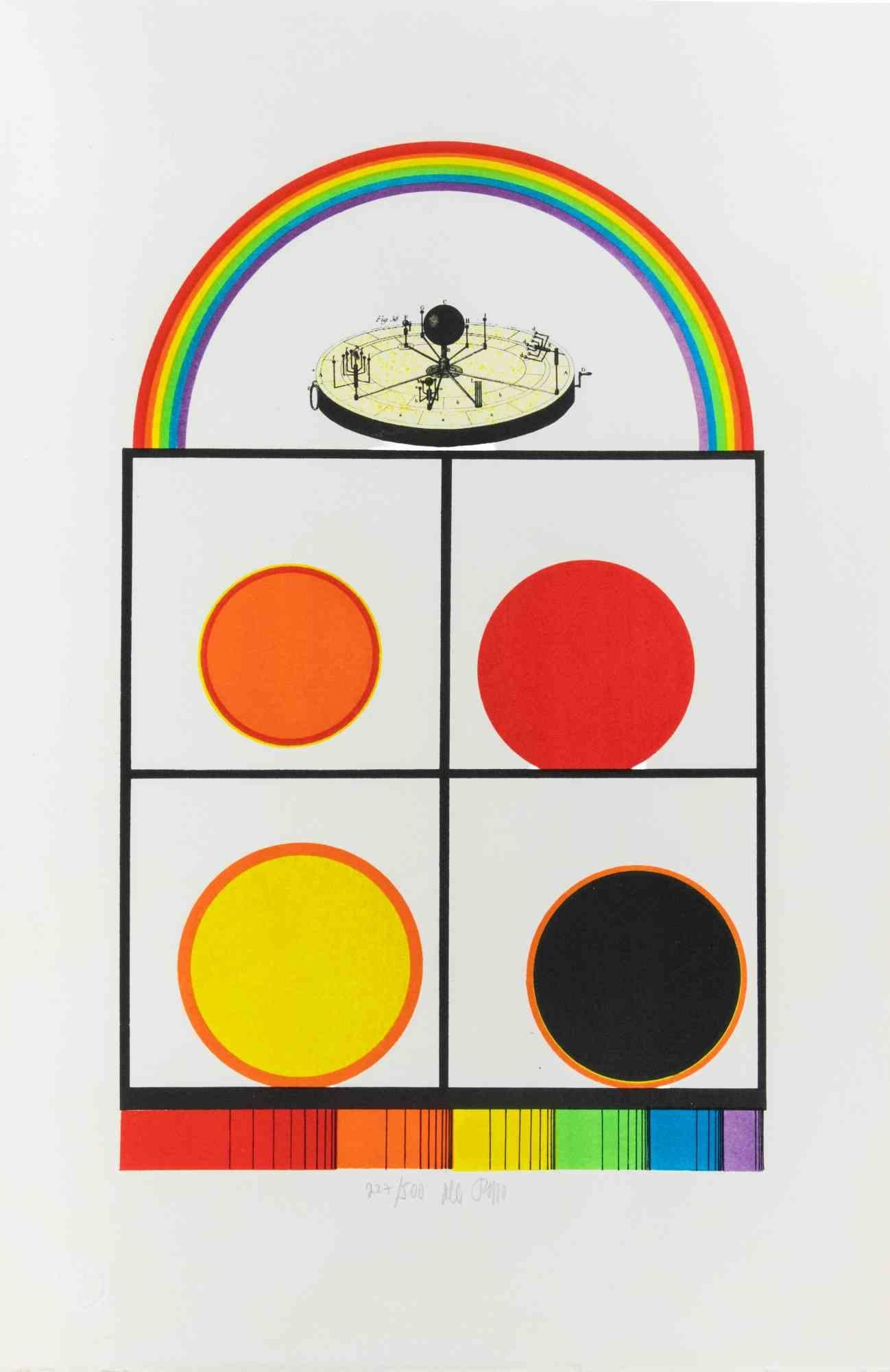
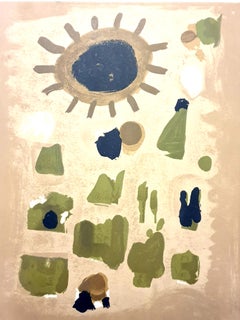
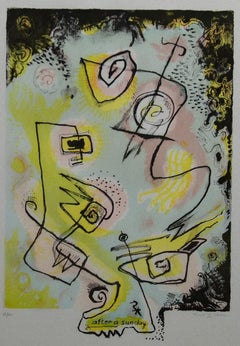
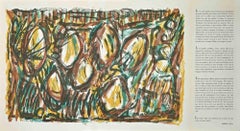
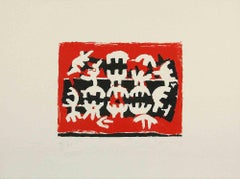
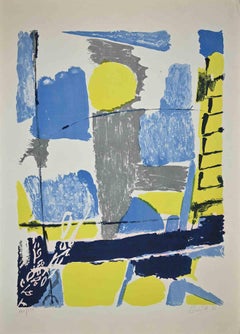
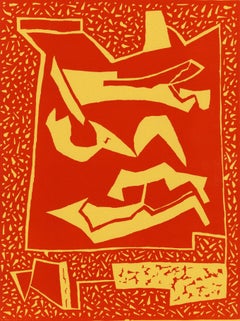
This exquisite lithograph by Roger Bissiere (1886–1964), titled Soleil (Sun), from the album XXe Siecle, Nouvelle serie, XXVIe Annee N°24, Decembre 1964, originates from the 1964 edition published by Societe Internationale d'Art XXe siecle, Paris, under the direction of Gualtieri di San Lazzaro, editeur, Paris, and printed by Mourlot Freres, Paris, 1964. Soleil exemplifies Bissiere’s lyrical abstraction and spiritual sensibility, where geometry, rhythm, and radiant color unite in a poetic meditation on light and harmony.
Executed as a lithograph on velin paper, this work measures 12.5 x 9.75 inches. Unsigned and unnumbered as issued. The edition exemplifies the superb craftsmanship of Mourlot Freres, Paris.
Artwork Details:
Artist: Roger Bissiere (1886–1964)
Title: Soleil (Sun), from the album XXe Siecle, Nouvelle serie, XXVIe Annee N°24, Decembre 1964
Medium: Lithograph on velin paper
Dimensions: 12.5 x 9.75 inches (31.75 x 24.77 cm)
Inscription: Unsigned and unnumbered as issued
Date: 1964
Publisher: Societe Internationale d'Art XXe siecle, Paris, under the direction of Gualtieri di San Lazzaro, editeur, Paris
Printer: Mourlot Freres, Paris
Condition: Well preserved, consistent with age and medium
Provenance: From the album XXe Siecle, Nouvelle serie, XXVIe Annee N°24, Decembre 1964, published by Societe Internationale d'Art XXe siecle, Paris, under the direction of Gualtieri di San Lazzaro, editeur, Paris; printed by Mourlot Freres, Paris, 1964
About the Publication:
Gualtieri di San Lazzaro's XXe Siecle (Twentieth Century) was one of the most influential art journals of the modern era, founded in Paris in 1938 as a platform for the greatest painters, sculptors, and writers of the 20th century. San Lazzaro, a visionary editor, critic, and champion of modernism, believed that art and literature should coexist as expressions of a shared human imagination. Under his direction, XXe Siecle became a cultural bridge between Europe and the wider world, publishing special issues devoted to leading figures such as Picasso, Matisse, Chagall, Braque, Calder, Miro, Kandinsky, and Leger. Each edition combined essays by renowned critics and poets with original lithographs and woodcuts printed by the foremost ateliers of Paris, Milan, and New York, including Mourlot, Curwen, and Amilcare Pizzi, creating a uniquely rich dialogue between text and image. Through XXe Siecle, San Lazzaro preserved the creative spirit of the avant-garde during and after World War II, championing freedom of expression and the evolution of abstraction, surrealism, and modern thought. Over nearly four decades, the journal shaped international taste and defined the intellectual landscape of postwar art publishing. Today, XXe Siecle remains celebrated for its extraordinary synthesis of art, literature, and design, an enduring testament to Gualtieri di San Lazzaro's belief that the visual arts are the soul of the modern age.
About the Artist:
Roger Bissiere (1886–1964) was a French painter, critic, and teacher whose luminous abstractions and spiritual approach to color made him one of the most quietly profound figures of 20th-century modern art. Born in Villereal, France, he studied at the Ecole des Beaux-Arts in Bordeaux and Paris before emerging as both an artist and intellectual voice within the avant-garde. Deeply influenced by Pablo Picasso, Alexander Calder, Alberto Giacometti, Salvador Dali, Joan Miro, Wassily Kandinsky, Marcel Duchamp, and Man Ray, Bissiere synthesized the structural discipline of Cubism with the lyricism of abstraction, creating compositions that fused geometry, rhythm, and emotion. Like Picasso, he deconstructed form; like Miro and Kandinsky, he sought the spiritual essence of color and line; and like Duchamp, he questioned the philosophical role of the artist in modern life. His early works of the 1910s and 1920s reflected a Cubist foundation softened by a poetic sensibility, while his later art evolved toward a profoundly human and meditative abstraction rooted in light, harmony, and introspection. During World War II, he withdrew to the French countryside, where isolation deepened his connection to nature and transformed his vision. His postwar paintings, often described as “spiritual Cubism,” blended structure with transcendence, embodying a lyrical dialogue between intellect and intuition. In the 1940s and 1950s, as a leading figure of the Nouvelle Ecole de Paris, Bissiere created vibrant, mosaic-like compositions that shimmered with chromatic balance and serenity, their rhythmic brushwork evoking music and prayer. Having suffered temporary blindness in the early 1950s, his subsequent works became radiant meditations on renewal, light, and the fragility of perception. As a teacher at the Academie Ranson, he profoundly influenced artists such as Alfred Manessier, Jean Le Moal, and Roger Chastel, and his emphasis on authenticity, restraint, and emotion shaped the lyrical abstraction that followed. His influence extended to later artists including Pierre Soulages, Hans Hartung, and Nicolas de Stael, as well as contemporary painters inspired by his synthesis of discipline and intuition. Bissiere’s works are represented in the Centre Pompidou (Paris), the Tate Modern (London), the Museum of Modern Art (New York), and the Musee d’Art Moderne de Paris, where they are celebrated for their harmony, depth, and quiet spirituality. Standing alongside Pablo Picasso, Alexander Calder, Alberto Giacometti, Salvador Dali, Joan Miro, Wassily Kandinsky, Marcel Duchamp, and Man Ray, Roger Bissiere remains a cornerstone of French abstraction—a painter who transformed modernism into a language of faith, balance, and beauty. His highest auction record was achieved by La Cabane (1959), which sold for $1.44 million USD at Sotheby’s, Paris, on December 2, 2014, affirming his enduring reputation as one of the most lyrical, contemplative, and collectible masters of 20th-century art.
Roger Bissiere Soleil, Bissiere Sun 1964 XXe Siecle, Bissiere Mourlot lithograph, Bissiere velin paper, Bissiere collectible print.