Want more images or videos?
Request additional images or videos from the seller
1 of 6

Walter Dexel
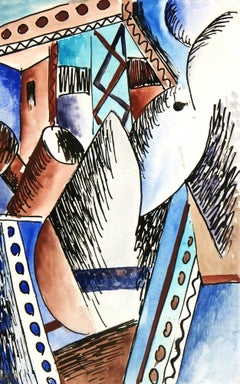
Mosque / - The Expression of Architecture -

1916

$3,412.50
£2,531.06
€2,900VAT Included
CA$4,788.24
A$4,865.26
CHF 2,756.29
MX$59,198.29
NOK 32,320.10
SEK 32,496.18
DKK 22,127.55

About the Item

Walter Dexel (1890 Munich – 1973 Braunschweig), Mosque, 1916. Watercolor woodcut on handmade paper, 15.5 cm x 10 cm (image), 29 cm x 22.3 cm (sheet size), signed “WDexel 16” in pencil at the lower right of the image and dated 1916, identified as copy no. “4/30” at the lower right, titled “Mosque” at the lower left, and marked “hand-watercolored.” Walter Vitt catalogue raisonné no. 3A. - Paper slightly darkened and partially stained outside the image; image in fresh-colored condition - The Expression of Architecture - From dynamic black planes, a scene emerges explosively, from which the mosque rises. The stone-colored, cohesive architectural structure is the actual focal point of the protrusions. The blue aura of light, with its outward-directed rays, permeates the entire image with its shades of blue. The yellow-red colors next to the mosque and the stylized palm trees evoke the rising sun and feed their energy into the dynamic action, while the nature-inspired green tones complement and balance the color crescendo. Using the innovative technique of applying watercolor to the woodcut, Walter Dexel intensifies the scene, which—with its radiant mosque set against a storm of color and form—is also an icon of Expressionist architectural visions. Thanks to the watercolor application, each copy of the woodcut is simultaneously a painting and, as such, a unique piece. About the Artist Walter Dexel studied art history at Ludwig Maximilian University in Munich from 1910 to 1914 under Heinrich Wölfflin and Fritz Burger. At the same time, he attended a drawing school and began to pursue artistic activities. He undertook study trips to Italy and Paris. In 1916, he earned his doctorate at the University of Jena, and in addition to his own artistic work, he subsequently served as exhibition director of the Jena Art Association until 1928, where he promoted modern art and organized important exhibitions. Among other things, he acquired works by Alexander Archipenko, Alberto Giacometti, Erich Heckel, Paul Klee, Oskar Kokoschka, and Emil Nolde, and organized Dada evenings and exhibitions featuring Expressionists, Bauhaus artists, Realists, and Constructivists. Starting in 1926, Dexel worked as a freelance graphic artist and designer in Frankfurt am Main, creating advertisements and typography, including for the “New Frankfurt” project under Ernst May. From 1928 to 1935, he taught commercial art and cultural history at the School of Applied Arts in Magdeburg. Later, he served as a professor of theoretical art and form in Berlin and, beginning in 1942, built up a significant collection of everyday objects in Braunschweig. After World War II, he continued his teaching and research activities and, starting in 1961, devoted himself once again more intensively to painting. GERMAN VERSION Walter Dexel (1890 München - 1973 Braunschweig), Moschee, 1916. Aquarellierter Holzschnitt auf Büttenpapier, 15,5 cm x 10 cm (Darstellung), 29 cm x 22,3 cm (Blattmaß), rechts unten der Darstellung in Blei mit „WDexel 16“ signiert und auf 1916 datiert, rechts unten als Exemplar Nr. „4/30“ ausgewiesen, links unten als „Moschee“ betitelt und „handaquar.[elliert]“ bezeichnet. Werkverzeichnis Walter Vitt Nr. 3A. - Papier leicht nachgedunkelt und außerhalb der Darstellung partiell fleckig, Darstellung in farbfrischem Zustand - Die Expression der Architektur - Aus schwarzen dynamischen Flächen entsteht explosionsartig eine Szenerie, aus der die Moschee emergiert. Dabei ist das steinfarbene, in sich gefügte architektonische Gebilde das eigentliche Wirkzentrum der Protuberanzen. Die blaue Lichtaura mit ihren nach außen gerichteten Strahlen durchdringt das gesamte Bild mit ihren Blautönen. Die gelbroten Farben neben der Moschee und den stilisierten Palmen gemahnen an die aufgehende Sonne und speisen ihre Energie in das dynamische Geschehen ein, während die auf die Natur bezogenen Grüntöne das Farbcrescendo ergänzen und austarieren. Mit der innovativen Technik, den Holzschnitt farblich zu aquarellieren intensiviert Walter Dexel die Szenerie, die mit der aufstrahlenden Moschee innerhalb des Farb- und Formengewitters zugleich eine Ikone der expressionistischen Architekturvisionen ist. Durch die Aquarellierung ist jedes Exemplar des Holzschnitts zugleich ein Gemälde und als solches ein Unikat. zum Künstler Walter Dexel studierte von 1910 bis 1914 Kunstgeschichte an der Ludwig-Maximilians-Universität München bei Heinrich Wölfflin und Fritz Burger. Parallel dazu besuchte er eine Zeichenschule und begann sich künstlerisch zu betätigen. Er unternahm Studienreisen nach Italien und Paris. 1916 promovierte er an der Universität Jena und neben seiner eigenen künstlerischen Tätigkeit arbeitete anschließend bis 1928 als Ausstellungsleiter des Jenaer Kunstvereins, wo er moderne Kunst förderte und wichtige Ausstellungen organisierte. Er erwarb unter anderem Werke von Alexander Archipenko, Alberto Giacometti, Erich Heckel, Paul Klee, Oskar Kokoschka und Emil Nolde und organisierte Dada-Abende und Ausstellungen von Expressionisten, Bauhaus-Künstlern, Realisten und Konstruktivisten. Ab 1926 war Dexel freiberuflich als Grafiker und Designer in Frankfurt am Main tätig und gestaltete Reklame und Typografie, unter anderem für das Projekt Neues Frankfurt unter Ernst May. Von 1928 bis 1935 lehrte er Gebrauchsgrafik und Kulturgeschichte an der Kunstgewerbeschule Magdeburg. Später war er Professor für theoretischen Kunst- und Formunterricht in Berlin und baute ab 1942 in Braunschweig eine bedeutende Sammlung von Gebrauchsgegenständen auf. Nach dem Zweiten Weltkrieg setzte er seine Lehr- und Forschungstätigkeit fort und widmete sich ab 1961 wieder verstärkt der Malerei.
  • Creator:
    Walter Dexel (1890 - 1973, German)
  • Creation Year:
    1916
  • Dimensions:
    Height: 11.42 in (29 cm)Width: 8.78 in (22.3 cm)Depth: 0.4 in (1 cm)
  • Medium:
  • Movement & Style:
  • Period:
  • Condition:
  • Gallery Location:
    Berlin, DE
  • Reference Number:
    1stDibs: LU2438217794202

More From This Seller

View All
Tectonic Tension / - Archetypes of Painting -

Tectonic Tension / - Archetypes of Painting -

Located in Berlin, DE

Jürgen Möbius (*1939 Großenhain), Tectonic Tension. Oil on hardboard, 47.5 x 60 cm, 49 x 61.5 cm (frame), signed lower right "Möbius" and dated "[19]81". - Upper left corner with a small chip, light scratches and a little rubbed in places. Provisional gallery frame with traces of use. - Archetypes of Painting - About the artwork The form structure in front of the eye is overlapped by the frame. Thus, the frame does not open up a space in which something is presented, but rather shows the seemingly arbitrary section of a comprehensive context that cannot be framed as such. We see forms that stand in a structure of tension with each other, whereby the individual black and brown forms, which continue almost endlessly beyond the frame, already show a tension in themselves, since they are not only forms, but also surfaces - form surfaces, while the light blue surface ground is at the same time forms that appear as surface forms. The formed surfaces and surface forms are nested within each other and form a structure that encompasses all elements. The angular arrangement of the black and brown shaped surfaces gives the structure a tectonic character. The tension is thus heightened to the point of paradox, since the black shape at the front is overlapped by the brown shape at the bottom in the center of the picture, which would be impossible in real space. It is precisely through this "paradox" that Möbius demonstrates that the paradoxical is reality within painting. It is, so to speak, the most original possibility of painting, which distinguishes it from the other arts. In combination with the tectonic formations, Jürgen Möbius creates an archaic primordial painting, which, however, should not be confused with the autonomous color and form cosmos of Suprematism à la Kasimir Malevich. Instead of homogeneous, perfectly colored forms, here the colors are deliberately applied unevenly, and the light blue is mixed with the brown in a manner determined by the brushstroke. At the edges of the surface forms, the uneven application of paint allows the wood of the unprimed hardboard to show through. In this way, Möbius illustrates that we are dealing with a painting that has been created by an act of painting - an act, however, that takes hold of the original principles of painting and thus realizes painting as such. About the artist From 1959 to 1965 Jürgen Möbius studied painting at the University Institute for Art and Work Education in Mainz. He also studied philosophy and art history at the University of Mainz. Afterwards he worked as a freelance artist in Mainz. At first, Möbius created material reliefs and installations, then, around 1974, he turned increasingly to conceptual art and added cinematic means. During this phase he wrote the manifesto-like essay "Principles of Supranatural Landscape" (1979). From 1981 on, Möbius concentrated on painting and searched for artistic ways to "treat intellectual and sensual perception equally in the fusion of representational and abstract pictorial elements" (Wolfgang Zemter). He found inspiration on his study trips to Thailand and Sri Lanka. "The pure painting of Jürgen Möbius flows through us as a timeless expression of memory and energy, ploughing our perception and bringing us the happiness of seeing authentic, immovable form. - Philippe Büttner Selection of solo exhibitions 1969 Galerie Würzner, Düsseldorf / Galerie Gurlitt, Mainz 1972 Städtische Galerie, Mainz 1973 Galerie Schloss Ringenberg Rathaus, Kleve 1974 Röderhausmuseum, Wuppertal 1976 Galerie Glasing, Osnabrück / Städtische Galerie, Herne 1977, 1997, 2004 Märkisches Museum, Witten 1979 Studio M, Bamberg / Staatstheater, Darmstadt 1980 Galerie Stolànovà, Wiesbaden / Mittelrheinmuseum, Koblenz 1982 Galerie Dornhöfer, Mainz 1984 Galerie Neumühle, Schlangenbad 1985 Landesmuseum, Mainz / Kunstverein, Ludwigshafen / Nassauischer Kunstverein, Wiesbaden 1986 Museum, Bochum / Galerie der Stadt Iserlohn 1987, 1990 Galerie Klaus Kiefer, Essen 1987, 2000 Galerie Ulrike Buschlinger, Wiesbaden 1988 Kunsthalle Darmstadt 1988, 1992, 1996, 1999 Galerie Leonhard, Basel 1992, 2002 Galerie Zulauf, Freisheim 1994 Galerie Remy, Vallendar 1995 Sendezentrum des Zweiten Deutschen Fernsehens, Mainz 2001 Collegium oecumenicum, Bamberg / MVB Forum für Kultur und Wirtschaft, Mainz 2006 Adam Gallery, London Selection of group exhibitions 1969 ‘International Graphic Arts’, Galerie Dalléas Bordeaux, Paris 1975 ‘Deutscher Künstler-Bund’, Dortmund 1979 ‘Man and man’s Images’, Märkisches Museum Witten 1980 ‘Love-Dokuments of our Time’, Art Hall Darmstadt and Art Association Hannover 1982 ‘Work - Progress – Position’, Nassau Art Association Wiesbaden 1983 ‘Principle Hope – Utopic Aspects in Art and Culture of the 20th Century’, Museum Bochum 1986 ‘Selfportraits’, Gallery Klaus Kiefer Essen 1987 ‘The Dying and Death’, Gallery Klaus Kiefer Essen 1989 ‘Where are You, Revolution – Freedom, Liberty, Egality, Fraternity to-day’, Museum Bochum 1990 ‘Flight – a Problem within the Memory of Man’, Kunsthalle Darmstadt ‘Art and War 1939 – 89’, House of Cultures Berlin 1991 ‘Material and Form’, Pillnitz Castle Dresden and Pfalz Gallery Kaiserslautern 1995 20 Years Exhibitions, Chrämerhuus Langenthal, Schweiz 1998 ‘Works on Paper’, Klaus Kiefer Gallery Essen 2000 ‘Acquisitions 1900 – 2000’, Mittelrhein-Museum Koblenz 2001 ‘Strange Pictures’, Klaus Kiefer Gallery Essen 2002 ‘10 Years Buschlinger Gallery’, Buschlinger Gallery Wiesbaden 2004 ‘Eternal Space – Pictures and Sculptures’, Dome of Bamberg 2005 Art Fair Chicago, Adam Gallery, London Selected Bibliography Mittelrheinisches Landesmuseum (Hrsg.): Jürgen Möbius - Neue Bilder, Mainz 1985. Kunstverein Darmstadt (Hrsg.): Jürgen Möbius. Bilder 1985 - 1988. Kunsthalle Darmstadt, 26. Juni - 14. August 1988. Red. Dorit Marhenke, Lyrik Marcus Schiltenwolf, Düsseldorf 1988. Gabriele Prusko (Hrsg.): Jürgen Möbius. Mit Texten von Philippe Büttner und Ralph Mieritz, Basel 1992. Wolfgang Zemter (Hrsg.): Jürgen Möbius - Aktuelle Arbeiten. Märkisches Museum der Stadt Witten, Bönen 1999. Wolfgang Zemter (Hrsg.): Jürgen Möbius. Flieger in meinem Zimmer und Beruhigte Zone, Bönen 2004. Dama Gallery...

Category

1980s Abstract Abstract Paintings

Materials

Oil

Untitled / - Association -

Untitled / - Association -

Located in Berlin, DE

Detlef Baltrock (*1954 Stuttgart), Untitled, 1985. Watercolor, 29.5 cm x 21 cm (visible dimensions), 41 cm x 32 cm (frame), signed “Baltrock” lower center and signed “[19]85”, label ...

Category

1980s Abstract Expressionist Abstract Drawings and Watercolors

Materials

Paper

My treasure, my sanctuary / - A Tortured Treasure -

My treasure, my sanctuary / - A Tortured Treasure -

Located in Berlin, DE

Johannes Heisig (*1953 Leipzig), "My treasure, my sanctuary" - To the Christmas Oratorio by Johann Sebastian Bach. Lithograph on strong yellowish laid paper with watermark, 53 x 39.5...

Category

1980s Abstract Expressionist Figurative Prints

Materials

Lithograph

Adoration of the Magi / - The Rider of the Sun -

Adoration of the Magi / - The Rider of the Sun -

Located in Berlin, DE

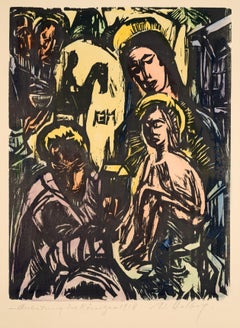
Walter Helbig (1878 Falkenstein - 1968 Ascona), Adoration of the Magi, 1918. Hand-colored linocut, 30 cm x 22.5 cm (depiction), 50 cm x 35 cm (sheet size), signed “W.[alter] Helbig” in pencil lower right, inscribed “Adoration of the Magi” lower left and dated “1918”. Below this a handwritten dedication “with heartfelt Christmas greetings”. - Paper somewhat darkened and with slight creases, thumbtack holes in the corners - The Rider of the Sun - The 'apocalypse' of World War I brought about a return to sacred art. Walter Helbig belonged to the circle of the 'Brücke' and the 'Blauer Reiter'. With his reinterpretation of religious themes in an expressionist formal language, Helbig shaped an avant-garde neo-sacred art. This is symbolically expressed in the silhouette of the rider against the sun-like yellow background. It refers to the awakening initiated by the Blue Riding, which is now linked back to the sacred. The rider and horse "look" at Mary and the Christ Child, who occupy the entire field. Opposite them are the three kings, the eldest of whom kneels before Christ and offers him a gold-filled casket. The expressionist lines give rise to a tower that rises into the "sun", so that the gift has become a Gothic church, expressing the hope that the fallen world will be resurrected in the name of Christ. This dimension of meaning is emphasized by the magical effect of the color scheme. About the artist In 1895, Walter Helbig began studying at the Dresden Academy of Art, where he became friends with the future Brücke artist Otto Müller, with whom he lived in Dresden from 1903 to 1905. While studying in Italy from 1897 to 1899, he met Arnold Böcklin and Adolf von Hildebrand. After completing his studies, he first worked for Otto Gussmann, painting churches. From 1905 to 1909 he worked as a freelance painter in Hamburg. In 1909, through the mediation of Otto Müller, Helbig made the acquaintance of artists from the 'Brücke'. In 1910 he exhibited at the founding exhibition of the Berlin 'Neue Sezession'. In the same year, he moved to Switzerland, where, together with Hans Arp and Oscar Lüthy, he founded the 'Moderne Bund' in Weggis, to which Cuno Amiet and Giovanni Giacometti also belonged. At the second exhibition of the 'Moderne Bund' in Zurich in 1911, Henri Matisse and Robert Delaunay were represented alongside artists from the 'Blauer Reiter'. In 1913, Helbig traveled to Paris with Arp and Lüthy. After the dissolution of the 'Moderne Bund', Helbig was represented at the first Dada exhibition in Zurich in 1914. In 1919, he joined the Berlin 'Novembergruppe'. After the devastation of World War I, Helbig turned increasingly to religious themes in his work. In 1924, like many other artists of his time, he moved to Ascona for financial reasons, where he became a naturalized citizen in 1938. There he founded the artists' association "The Great Bear", to which Marianne von Werefkin...

Category

1910s Expressionist Figurative Prints

Materials

Paper

Landscape verso Forest interior / - Landscape as a space of imagination -

Landscape verso Forest interior / - Landscape as a space of imagination -

Located in Berlin, DE

Herbert Seidel (1906 Berlin - 1974 Rüdersdorf), Landscape verso Forest interior, around 1950. India ink on grained, bleached paper, 40.5 x 58 cm, signed “Herbert Seidel” in pencil on...

Category

1950s Abstract Landscape Drawings and Watercolors

Materials

Paper

Evening - The depth of the visible -

Evening - The depth of the visible -

Located in Berlin, DE

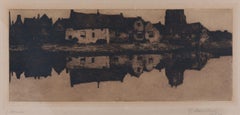
Max Clarenbach (1880 Neuss - Cologne 1952), Evening. Etching, 18 x 41 cm (platemark), 33.5 x 57 cm (frame), inscribed "Abend" in pencil at lower left, signed and dated "M. Clarenbach. 28.III.[19]09". Framed and mounted under glass. - Somewhat browned and slightly foxed. About the artwork The horizontally elongated etching depicts the panoramic view of a small town as seen from the other side of the river. There are gabled houses on the left and a mighty church spire on the right. The bourgeois houses and the large religious building indicate the urban character. These buildings are rendered in dark tones to emphasise the lighter row of houses in the centre of the picture, closer to the water. The chiaroscuro contrast creates two parallel planes that open up a space for the imagination of what the city could be. The imagination is stimulated by the almost entirely dark, barely recognisable buildings, while the arm of the river leading into the city further stimulates the imagination. However, as the silhouette of the city as a whole is reflected in the water, the parallel planes are perceived as a band of houses that stretches across the entire horizontality of the etching and seems to continue beyond the borders of the picture. The reflection has almost the same intensity as the houses themselves, so that the band of buildings merges with their reflection to form the dominant formal unit of the picture. Only the parallel horizontal hatching creates the convincing impression of seeing water, demonstrating Max Clarenbach's mastery of the etching needle. The water is completely motionless, the reflection unclouded by the slightest movement of the waves, creating a symmetry within the formal unity of the cityscape and its reflection that goes beyond the motif of a mere cityscape. A pictorial order is established that integrates everything in the picture and has a metaphysical character as a structure of order that transcends the individual things. This pictorial order is not only relevant in the pictorial world, but the picture itself reveals the order of the reality it depicts. Revealing the metaphysical order of reality in the structures of its visibility is what drives Clarenbach as an artist and motivates him to return to the same circle of motifs. The symmetry described is at the same time inherent an asymmetry that is a reflection on art: While the real cityscape is cut off at the top of the picture, two chimneys and above all the church tower are not visible, the reflection illustrates reality in its entirety. The reflection occupies a much larger space in the picture than reality itself. Since antiquity, art has been understood primarily as a reflection of reality, but here Clarenbach makes it clear that art is not a mere appearance, which can at best be a reflection of reality, but that art has the potential to reveal reality itself. The revealed structure of order is by no means purely formalistic; it appears at the same time as the mood of the landscape. The picture is filled with an almost sacred silence. Nothing in the picture evokes a sound, and there is complete stillness. There are no people in Clarenbach's landscape paintings to bring action into the picture. Not even we ourselves are assigned a viewing position in the picture, so that we do not become thematic subjects of action. Clarenbach also refrains from depicting technical achievements. The absence of man and technology creates an atmosphere of timelessness. Even if the specific date proves that Clarenbach is depicting something that happened before his eyes, without the date we would not be able to say which decade, or even which century, we are in. The motionless stillness, then, does not result in time being frozen in the picture, but rather in a timeless eternity that is nevertheless, as the title "Abend" (evening), added by Clarenbach himself, makes clear, a phenomenon of transition. The landscape of the stalls is about to be completely plunged into darkness, the buildings behind it only faintly discernible. The slightly darkened state of the sheet is in keeping with this transitional quality, which also lends the scene a sepia quality that underlines its timelessness. And yet the depiction is tied to a very specific time. Clarenbach dates the picture to the evening of 28 March 1909, which does not refer to the making of the etching, but to the capture of the landscape's essence in the landscape itself. If the real landscape is thus in a state of transition, and therefore something ephemeral, art reveals its true nature in that reality, subject to the flow of phenomena, is transferred to an eternal moment, subject to a supra-temporal structure of order - revealed by art. Despite this supratemporality, the picture also shows the harbingers of night as the coming darkening of the world, which gives the picture a deeply melancholy quality, enhanced by the browning of the leaf. It is the philosophical content and the lyrical-melancholic effect of the graphic that give it its enchanting power. Once we are immersed in the image, it literally takes a jerk to disengage from it. This etching, so characteristic of Max Clarenbach's art, is - not least because of its dimensions - a major work in his graphic oeuvre. About the artist Born into poverty and orphaned at an early age, the artistically gifted young Max Clarenbach was discovered by Andreas Achenbach and admitted to the Düsseldorf Art Academy at the age of 13. "Completely penniless, I worked for an uncle in a cardboard factory in the evenings to pay for my studies.” - Max Clarenbach At the academy he studied under Arthur Kampf, among others, and in 1897 was accepted into Eugen Dücker...

Category

Early 1900s Realist Landscape Prints

Materials

Etching

You May Also Like

CITYSCAPE

CITYSCAPE

Located in Portland, ME

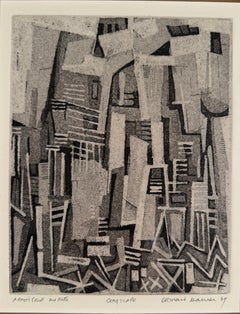
Maurer, Leonard (AmCerican, 1912-1976). CITYSCAPE, Etching and aquatint, 1967. Signed, titled, dated, and inscribed "Artist's Proof," all in pencil. 8 1/2 x 6 3/4 inches (plate), fra...

Category

1960s Landscape Prints

Materials

Etching, Aquatint

Modernist Abstract Composition with Architectural Forms in Warm Earth Tones

Modernist Abstract Composition with Architectural Forms in Warm Earth Tones

Located in Genève, GE

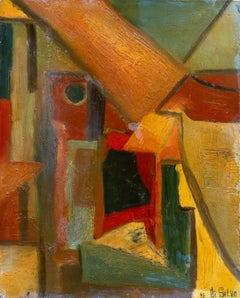
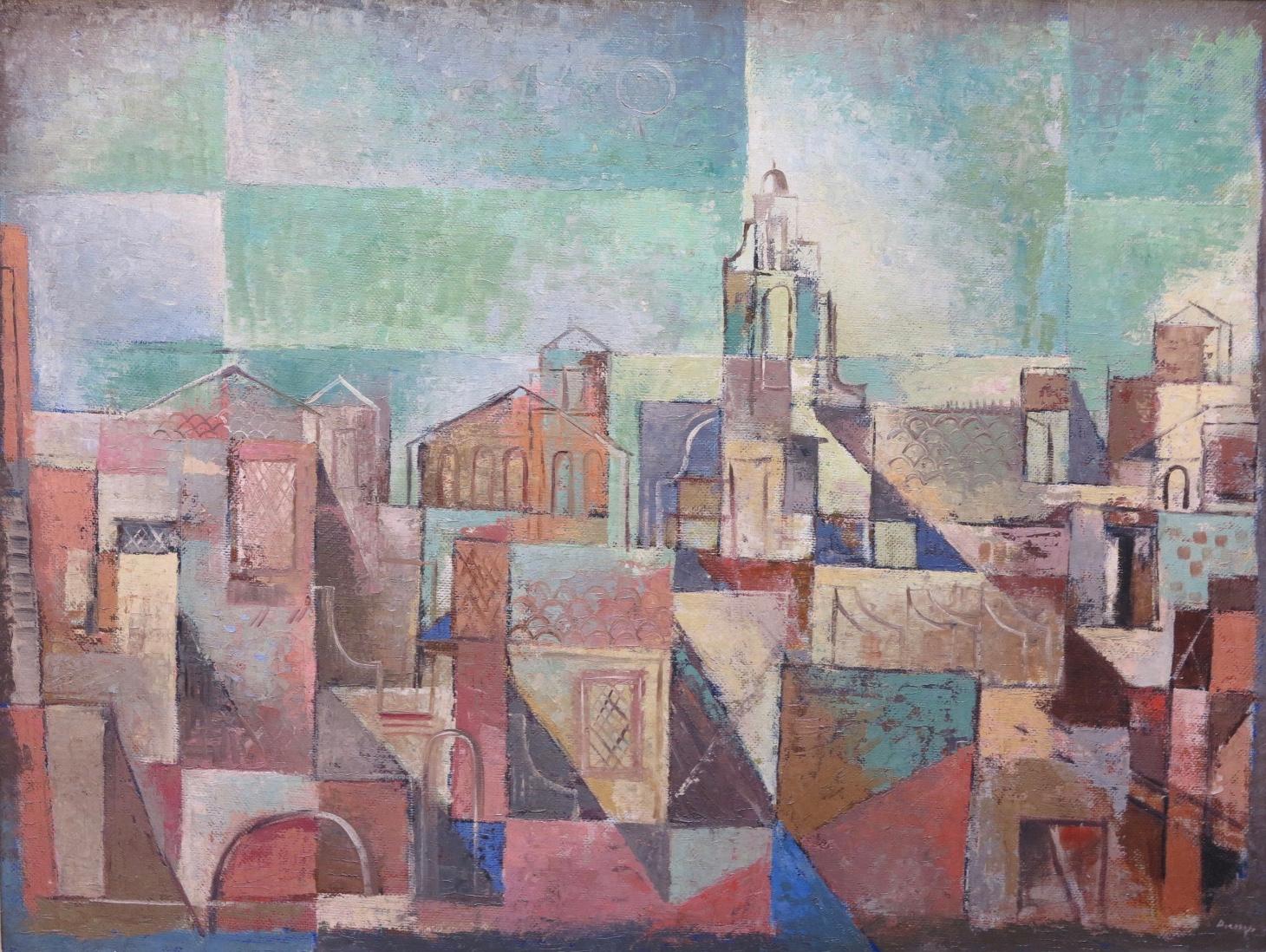
Signed "Di Salvo" and dated "65" in the lower right corner. A striking modernist abstract composition structured around architectural forms and bold geometric interplay. This mid-20...

Category

1960s Modern Abstract Paintings

Materials

Canvas, Oil

Vintage Architectonic Abstracted Cityscape

Vintage Architectonic Abstracted Cityscape

Located in Soquel, CA

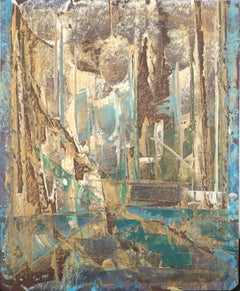
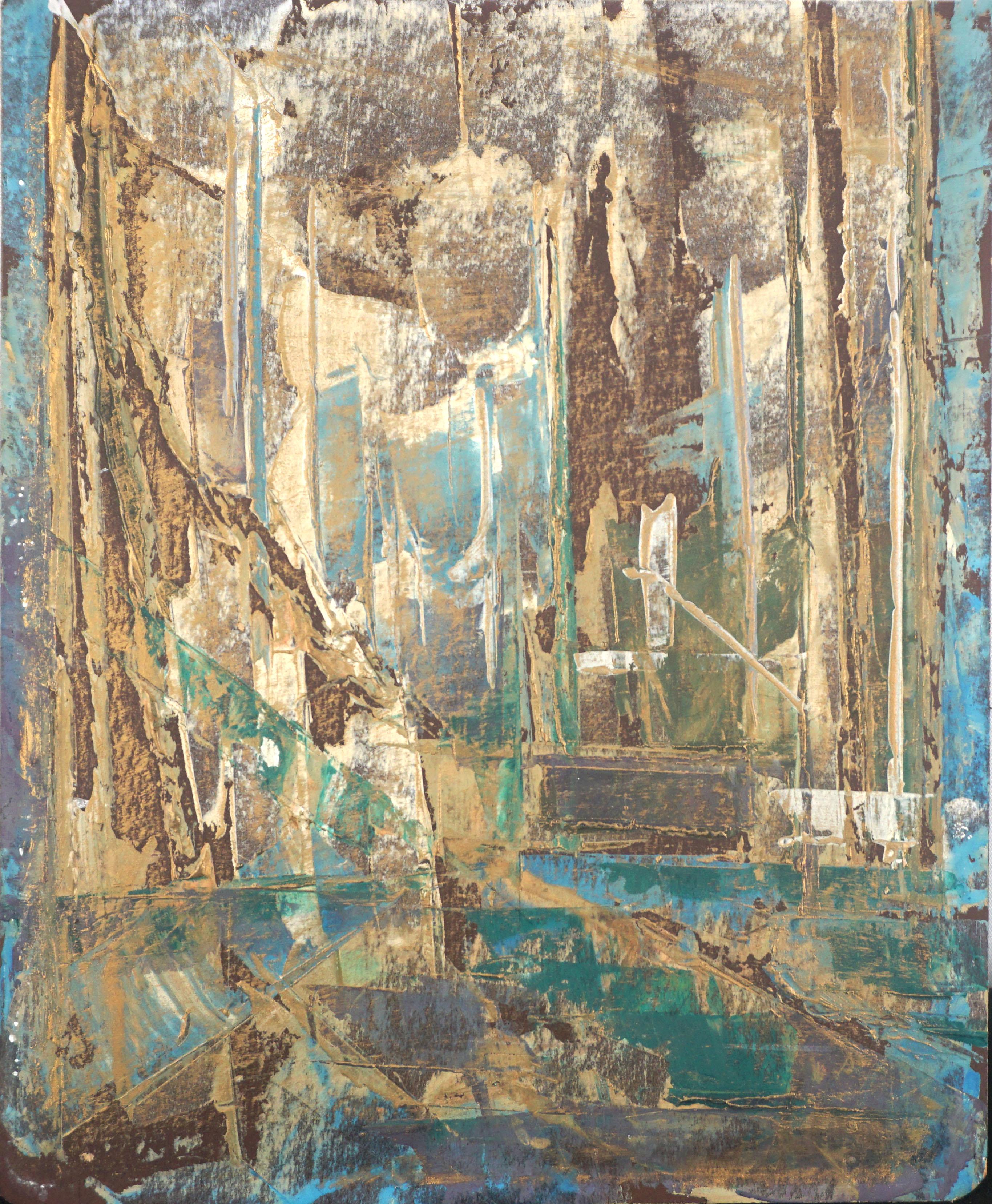
1970s Architectonic Abstracted Cityscape A unique architectonic abstract composition built from scraped and layered paint in ochre, umber, teal, and turquoise with gold metallic acc...

Category

1970s Abstract Abstract Paintings

Materials

Acrylic, Board

Abstract

Abstract

Located in Houston, TX

Ink abstract drawing in tones of blues, black and brown, 1980s. Original artwork on paper displayed on a white mat with a gold border. Mat fits a standard-size frame. Archival...

Category

1980s Abstract Drawings and Watercolors

Materials

Ink

Architecture

Architecture

Located in Genève, GE

Collage, mixed technique Work on paper Black wooden frame with glass pane 75.3 x 93.2 x 3.7 cm

Category

1980s Abstract Geometric Abstract Paintings

Materials

Adhesive, Gouache, Tissue Paper

Skyline (New York)

Skyline (New York)

Located in New York, NY

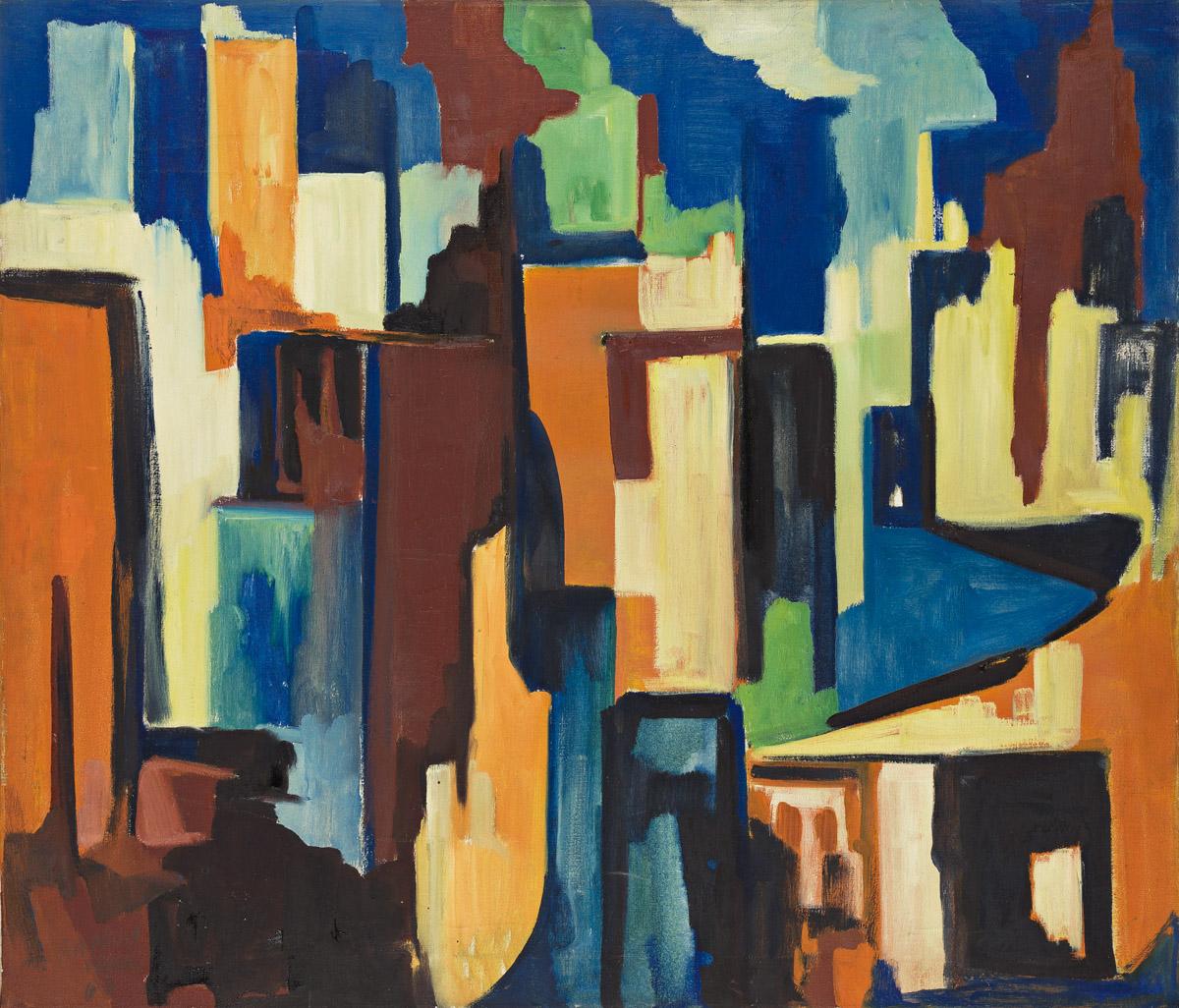
Oil on canvas. Signed, titled on stretcher on recto. Bartolomucci was an Italian painter who became one of the founders of Astralism. He moved to New York in 1960 where he remain...

Category

1960s Abstract Expressionist Landscape Paintings

Materials

Canvas, Oil