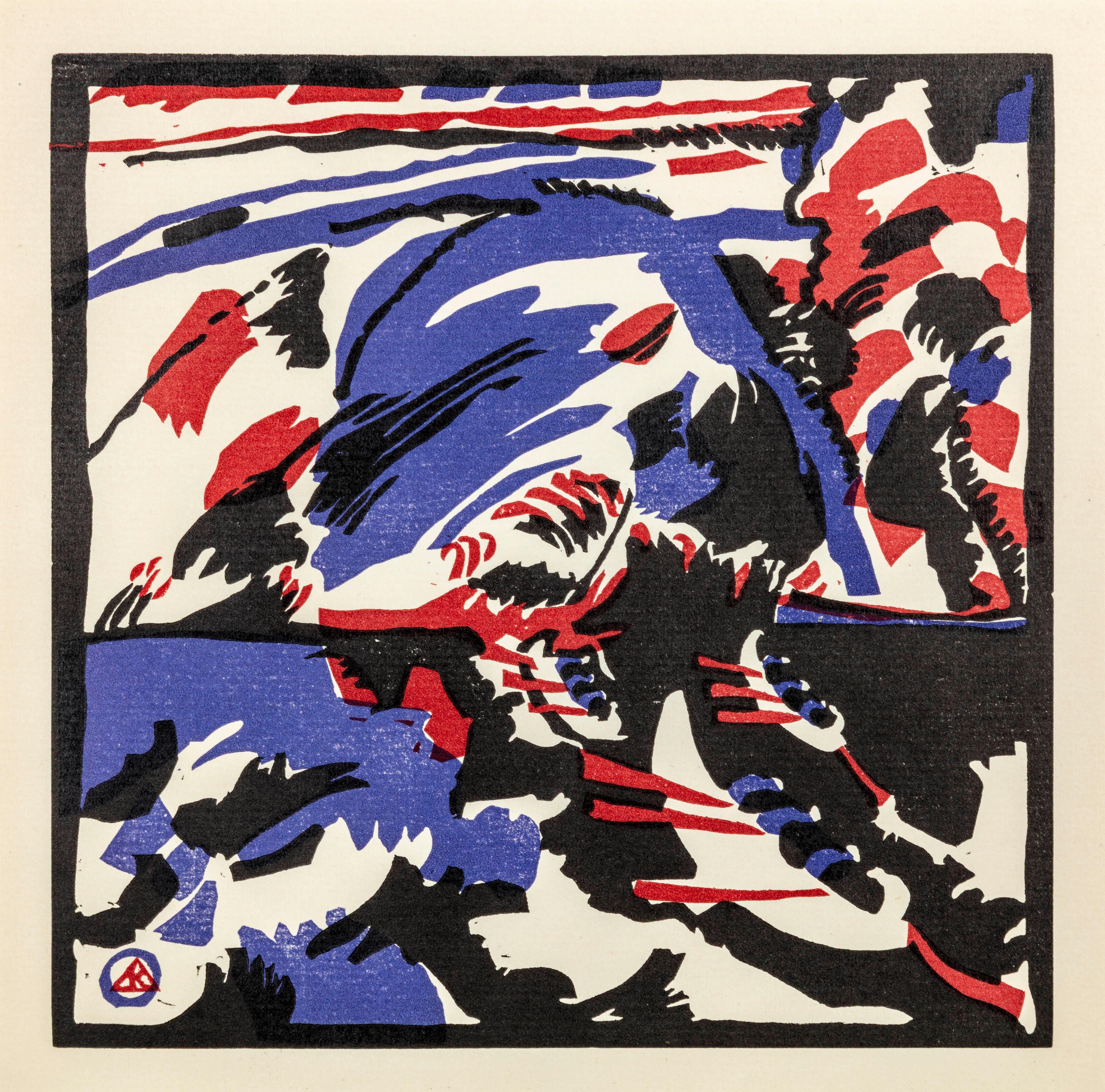
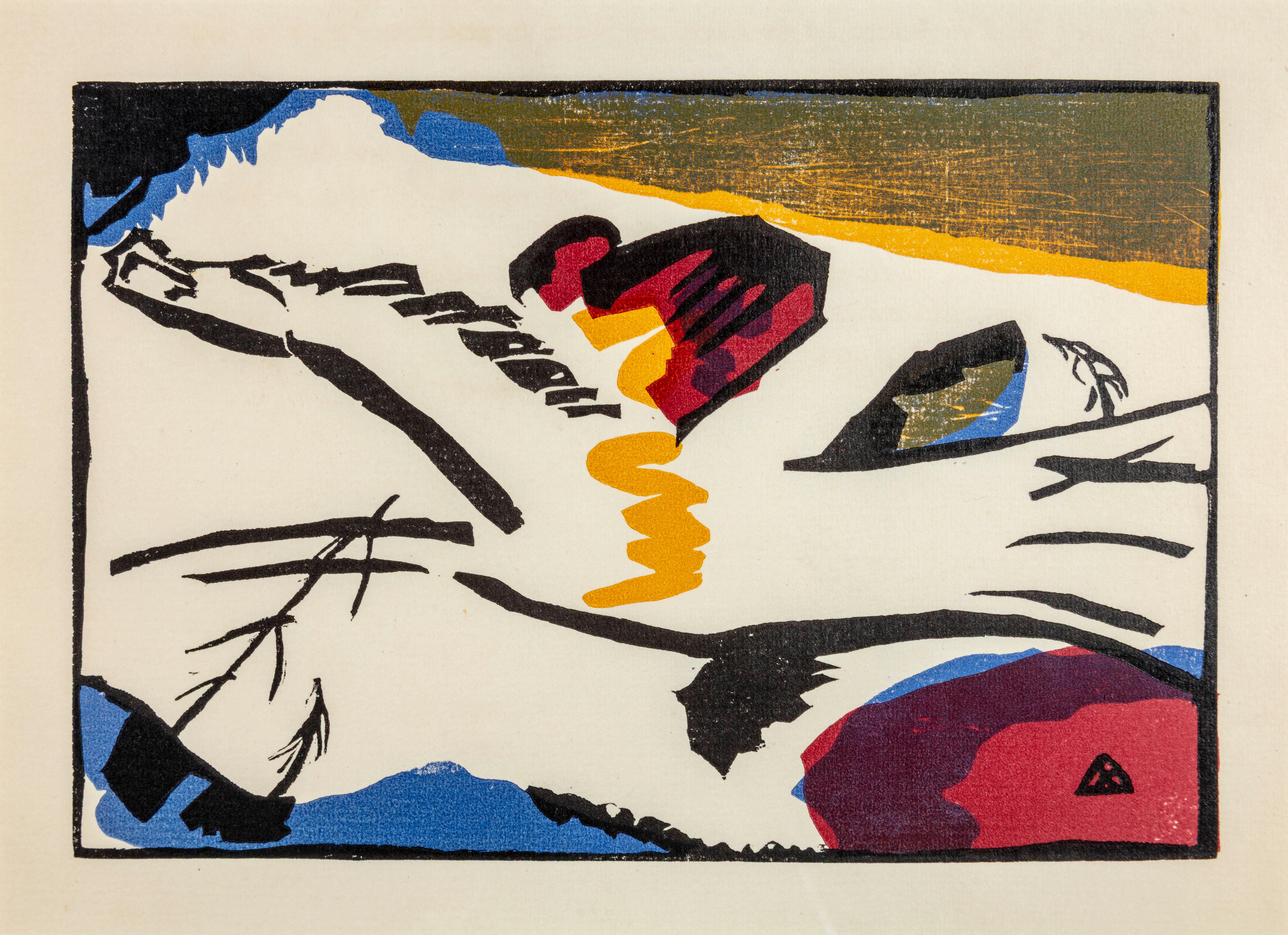
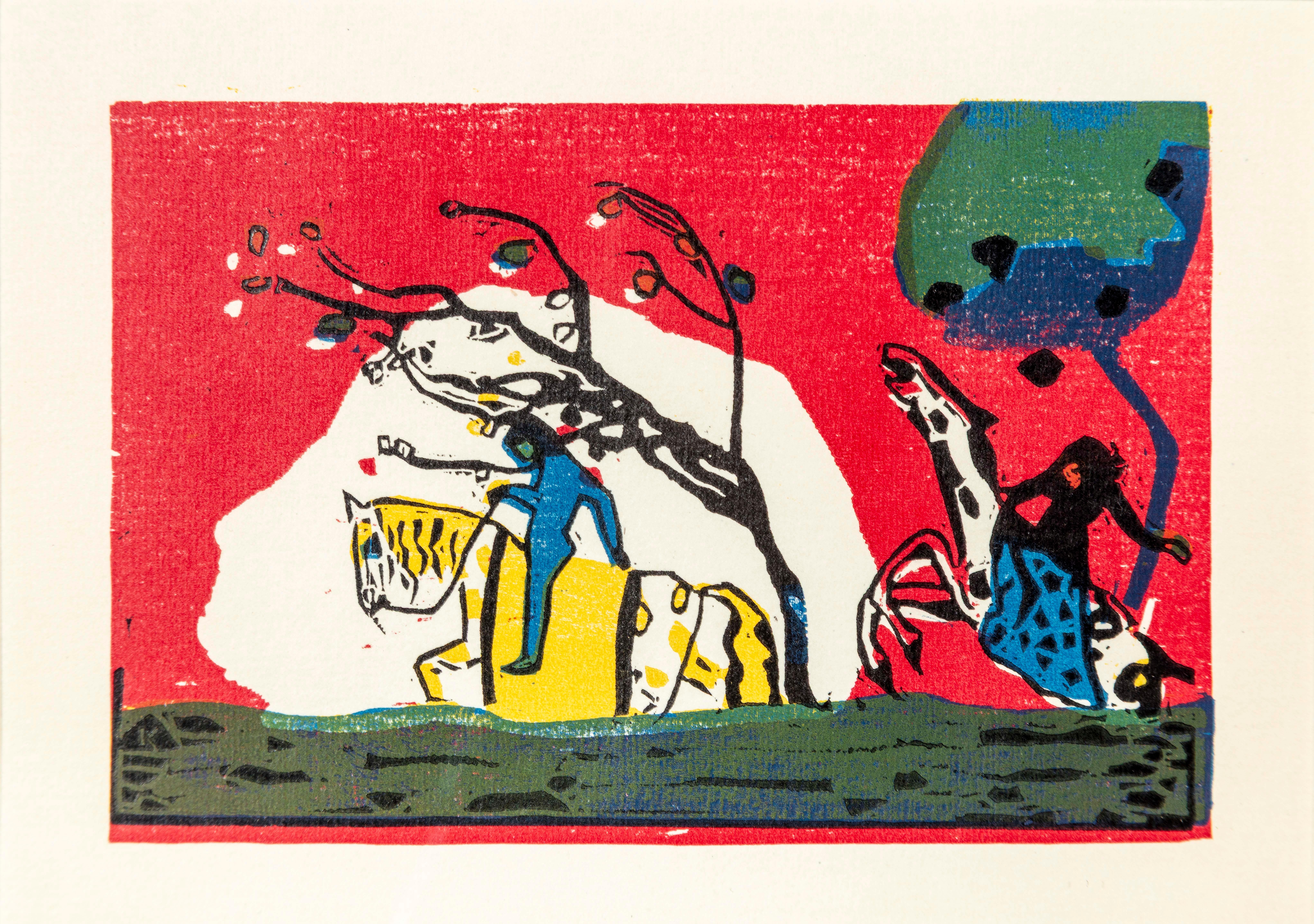
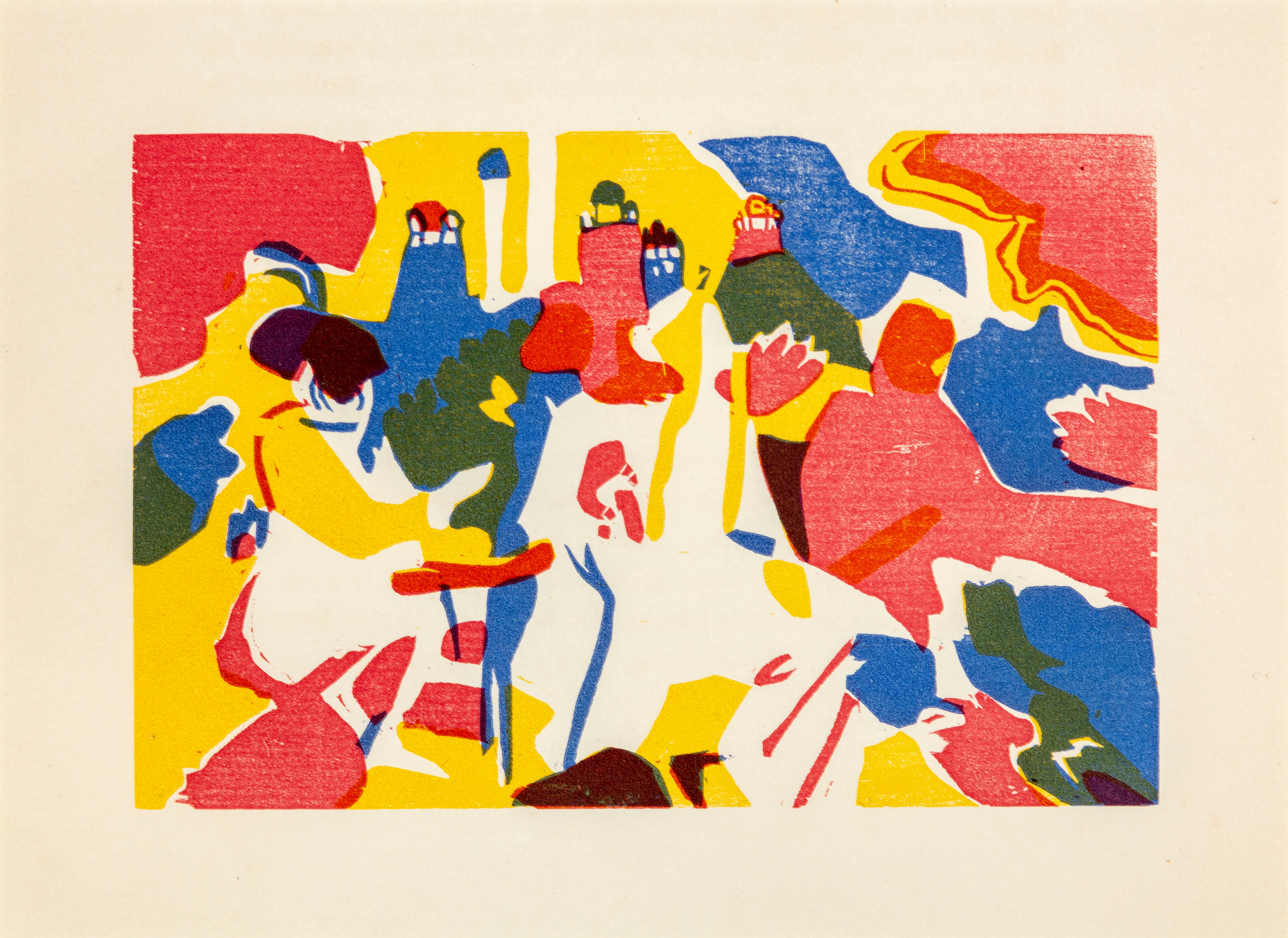
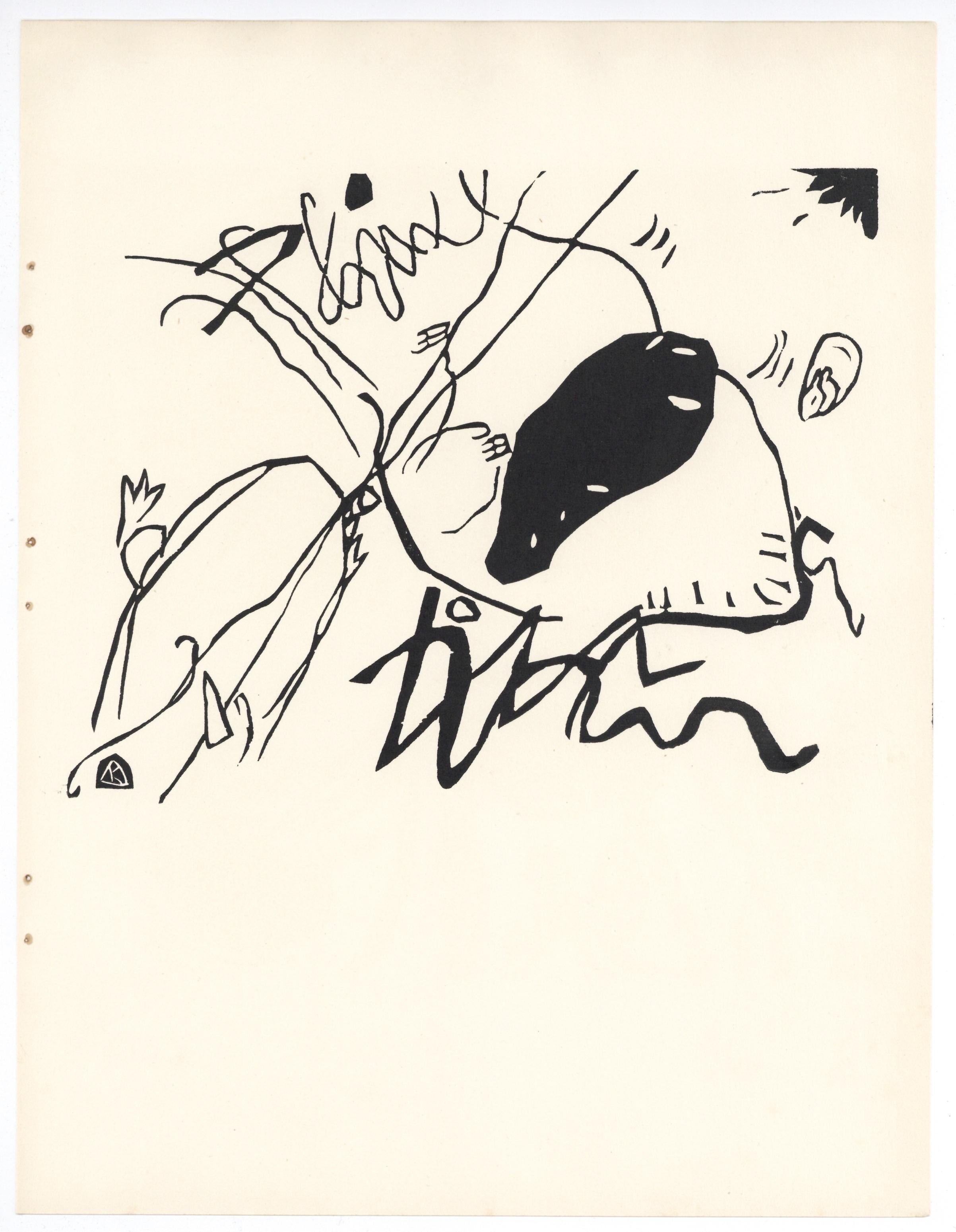
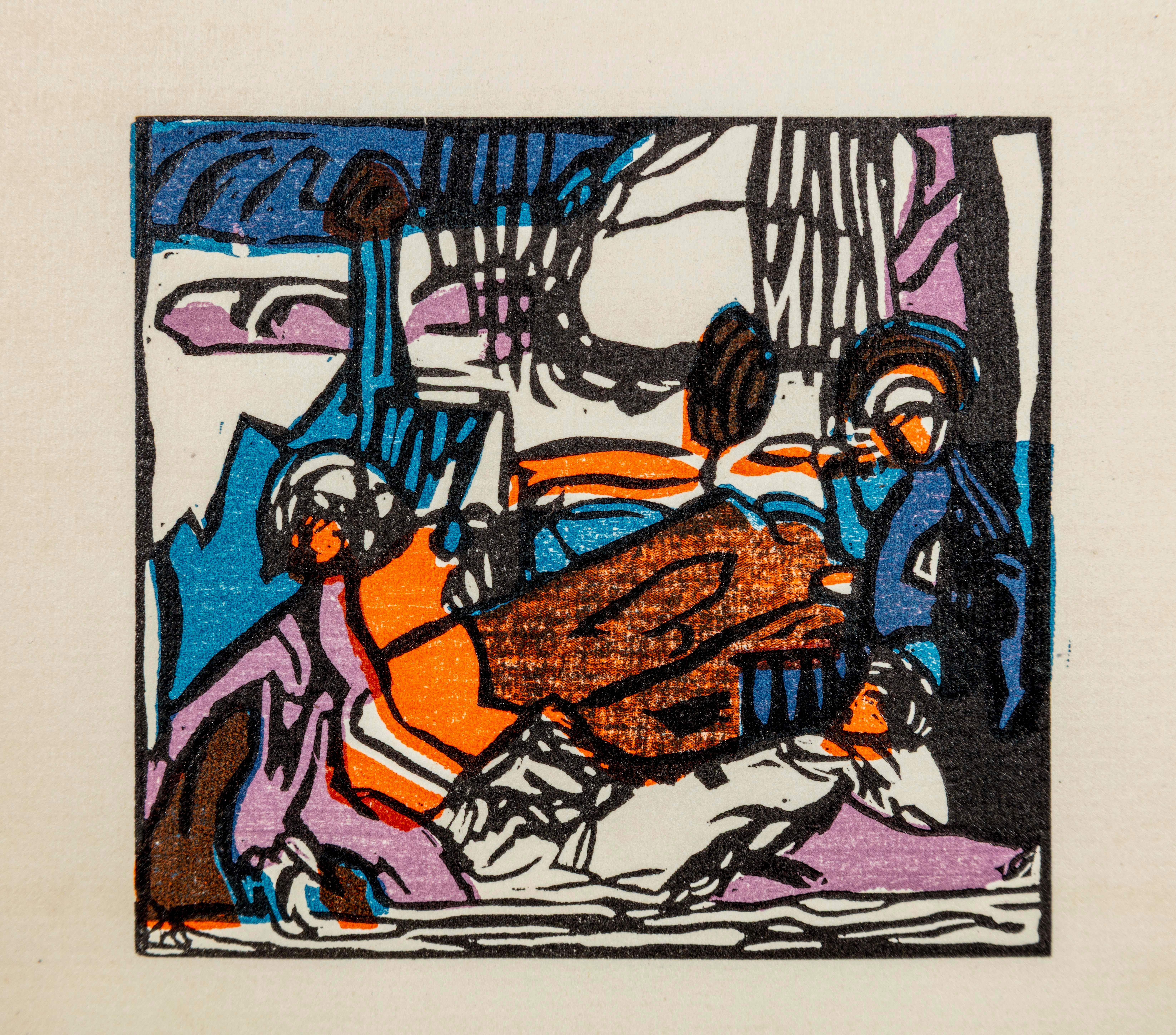
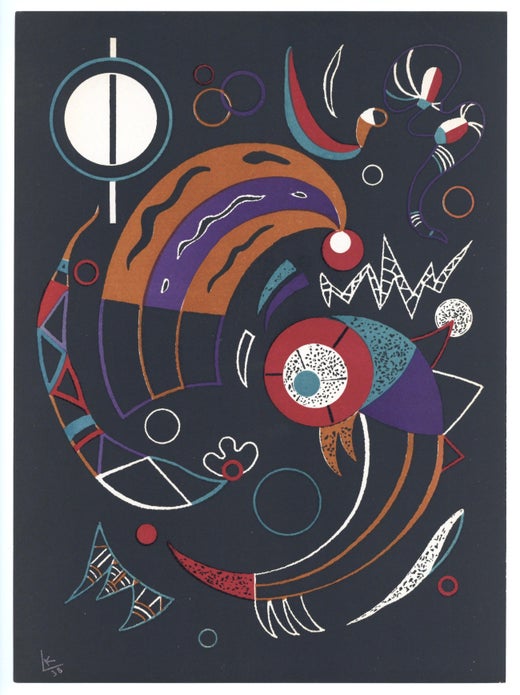
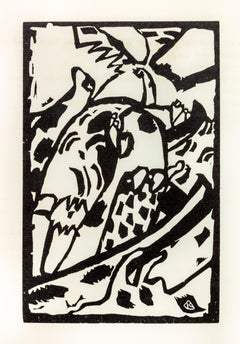
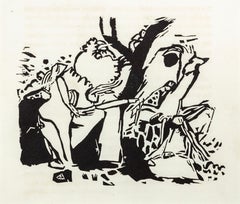
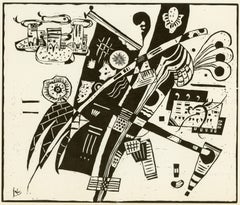
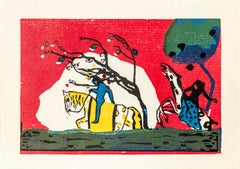
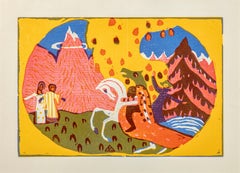
This exquisite woodcut by Wassily Kandinsky (1866–1944), titled Reiterweg (Rider’s Path), from the album XXe siecle, Chroniques du jour, 13 rue Valette (5e), Directeur G. di San Lazzaro, Sommaire du no. 3, 1er Julliet, 1938, originates from the 1938 edition published by Gualtieri di San Lazzaro, editeur, Paris, in collaboration with Societe Internationale d'Art XXe siecle, Paris, and printed by Mourlot Freres, Paris. Reiterweg exemplifies Kandinsky’s lifelong fascination with the motif of the horse and rider—a symbol of spiritual journey, transformation, and the union of motion and intuition within his evolving language of abstraction.
Executed as a woodcut on velin paper, this work measures 12.5 × 9.75 inches (31.75 × 24.77 cm). Signed in the block and unnumbered, as issued. The edition exemplifies the superb craftsmanship of Mourlot Freres, Paris.
Artwork Details:
Artist: Wassily Kandinsky (1866–1944)
Title: Reiterweg (Rider’s Path), from the album XXe siecle, Chroniques du jour, 13 rue Valette (5e), Directeur G. di San Lazzaro, Sommaire du no. 3, 1er Julliet, 1938
Medium: Woodcut on velin paper
Dimensions: 12.5 × 9.75 inches (31.75 × 24.77 cm)
Inscription: Signed in the block and unnumbered, as issued
Date: 1938
Publisher: Gualtieri di San Lazzaro, editeur, Paris, in collaboration with Societe Internationale d'Art XXe siecle, Paris
Printer: Mourlot Freres, Paris
Catalogue raisonne references: Kandinsky, Wassily, and Hans Konrad Rothel. *Kandinsky: Das Graphische Werk.* Verlag M. Dumont Schauberg, 1970, illustration 111
Condition: Well preserved, consistent with age and medium
Provenance: From the album XXe siecle, Chroniques du jour, 13 rue Valette (5e), Directeur G. di San Lazzaro, Sommaire du no. 3, 1er Julliet, 1938, published by Gualtieri di San Lazzaro, editeur, Paris
About the Publication:
Gualtieri di San Lazzaro’s XXe Siecle (Twentieth Century) was one of the most influential art journals of the modern era, founded in Paris in 1938 as a platform for the greatest painters, sculptors, and writers of the 20th century. San Lazzaro—a visionary editor, critic, and champion of modernism—believed that art and literature should coexist as expressions of a shared human imagination. Under his direction, XXe Siecle became a cultural bridge between Europe and the wider world, publishing special issues devoted to leading figures such as Picasso, Matisse, Chagall, Braque, Calder, Miro, Kandinsky, and Leger. Each edition combined essays by renowned critics and poets with original lithographs printed by the foremost ateliers of Paris, including Mourlot, Arte, and Bellini, creating a uniquely rich dialogue between text and image. Through XXe Siecle, San Lazzaro preserved the creative spirit of the avant-garde during and after World War II, championing freedom of expression and the evolution of abstraction, Surrealism, and modern thought. Over nearly four decades, the journal shaped international taste and defined the intellectual landscape of postwar art publishing. Today, XXe Siecle remains celebrated for its extraordinary synthesis of art, literature, and design—an enduring testament to Gualtieri di San Lazzaro’s belief that the visual arts are the soul of the modern age.
About the Artist:
Wassily Kandinsky (1866–1944) was a visionary Russian-born, later French, painter, printmaker, and pioneering theorist whose quest to translate music and spirituality into pure visual form helped birth abstract art and irrevocably transform the modern aesthetic. Emerging from a background of law and economics, he embraced painting in his late thirties and soon became a central figure in avant-garde circles—including co-founding the Munich-based Der Blaue Reiter and later teaching at the prestigious Bauhaus school—fusing his deep interests in Russian icon painting, folk ornament, theosophy, color theory, and the experimental energy of early 20th-century artistic innovation. Influenced by predecessors such as Cezanne, Matisse, and the non-European masks and forms he encountered, Kandinsky worked alongside and in dialogue with contemporaries including Alexander Calder, Alberto Giacometti, Salvador Dali, Joan Miro, Marcel Duchamp, and Man Ray—artists united by a fearless rejection of conventional representation and a shared impulse toward radical visual invention. His compositions of floating geometric forms, vibrant chromatic symphonies, and lyrical abstractions not only charted new territory for the avant-garde in his own time but also inspired innumerable later artists—from the Abstract Expressionists like Jackson Pollock and Mark Rothko, to the Color Field painters, post-war neo-expressionists, and contemporary abstractionists who continue to echo his bold experimentations with color, line, and composition. Kandinsky’s works remain cornerstone acquisitions for major museums worldwide and prime offerings in the global collector market. His auction record stands with *Murnau with Church II* (1910), which sold for £37,196,800 (≈$44.9 million) at Sotheby’s, London, on March 1, 2023.
Wassily Kandinsky Reiterweg, Kandinsky XXe siecle, Kandinsky Mourlot, Kandinsky 1938 woodcut, Kandinsky velin paper, Kandinsky abstraction, Kandinsky collectible print.