Want more images or videos?
Request additional images or videos from the seller
1 of 20

John James Audubon
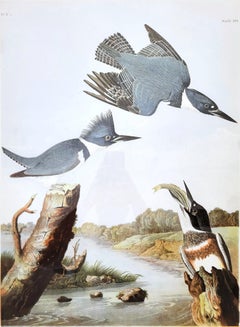
Eared Grebe /// John James Audubon Ornithology Havell Edition Bird Animal Art

1838

$6,000
£4,521.61
€5,282.92
CA$8,514.45
A$8,539.14
CHF 4,953.88
MX$104,251.75
NOK 57,379.90
SEK 58,724.46
DKK 39,494.81

About the Item

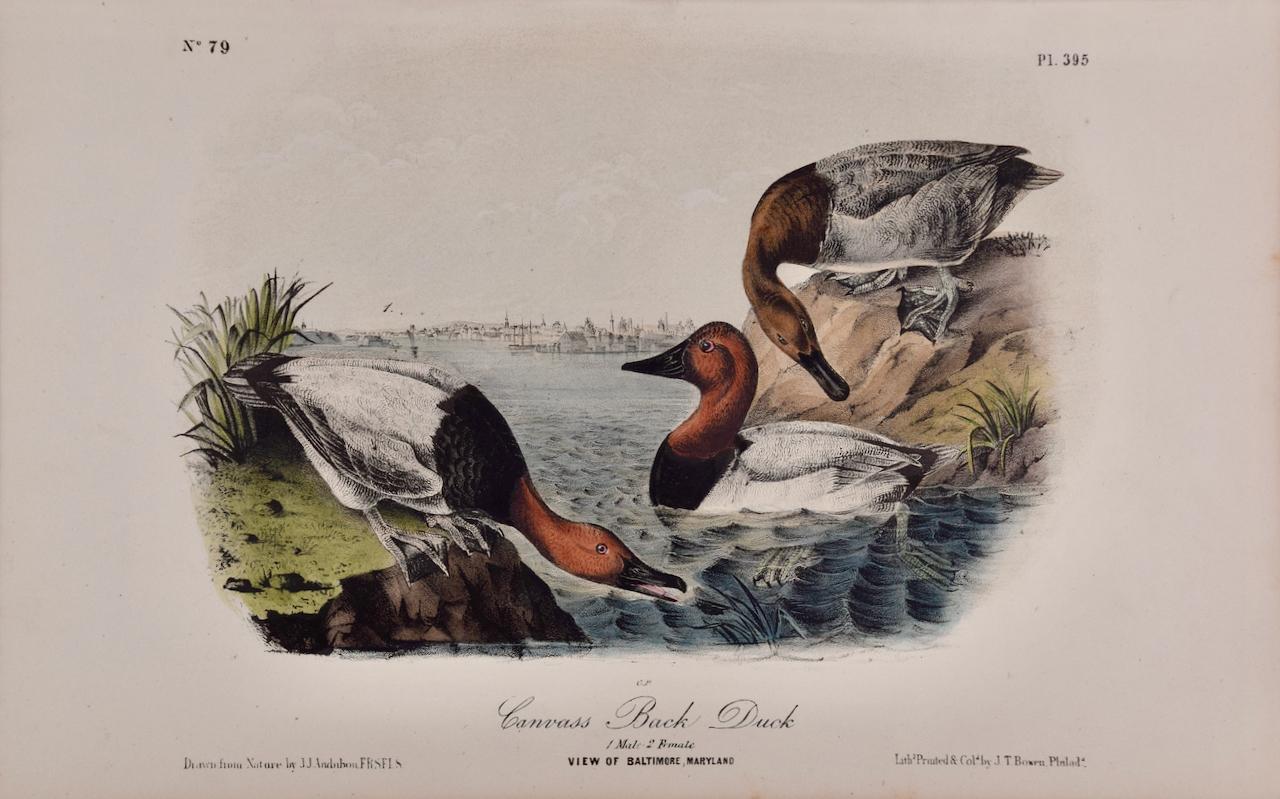
Artist: John James Audubon (American, 1785-1851) Title: "Eared Grebe" (Plate CCCCIV - 404; part No. 81) Portfolio: The Birds of America (Havell Edition) Year: 1838 Medium: Original Hand-Colored Engraving with Aquatint on double-elephant folio, J. Whatman paper Limited edition: approx. 180 Printer: Robert Havell Jr., London, England Publisher: John James Audubon, London, England Framing: Recently framed in a wood moulding with rag matting from Holland and gold filet. All archival Framed size: 33.25" x 40.25" Sheet size: 23.75" x 34.63" Platemark size: 12.38" x 19.69" Image size: 9.88" x 17.63" Reference: "Fine Bird Books" page 57; McGill/Wood page 209; Nissen No. IVB 49; Ayer/Zimmer page 18-21; Copenhagen/Anker No. 17, 18; Ellis/Mengel No. 96; McGill/Wood page 207, 209 Condition: Paper restoration to left and right extreme margins from previously being folded. One small repaired tear at platemark lower right. The occasional light surface mark and some light discoloration at bottom edge lower center and lower right. It is otherwise a strong impression in very good condition with strong colors and clean paper Very rare Notes: Provenance: private collection - Lancaster, PA. Engraved, printed, and hand-colored by English artist Robert Havell Jr. (1793-1878). Comes from Audubon's monumental four volume portfolio "The Birds of America", (Havell Edition) (1827-1838), which consists of 435 hand-colored, life-size engravings, with each sheet originally measuring about 39" x 26". "J. Whatman 1838" watermark upper left. Various reference numbers pencil inscribed upper left and lower left on verso. Based on a composition apparently painted in London in 1838, when the publication was near completion. Specimens of this bird were lent to Audubon by Lord Derby (Lord Stanley as he then was). Lord Derby was the patron of another bird painter, Edward Lear. The black-necked grebe or eared grebe is a member of the grebe family of water birds. It was described in 1831 by Christian Ludwig Brehm. There are currently three accepted subspecies, including the nominate subspecies. "The Birds of America" (Havell Edition) - In Edinburgh, the Scottish engraver W. H. Lizars began to produce the very first plates for Birds of America. However, after the completion of only ten plates, Lizars' colorists went on strike, and Audubon was forced to continue his pursuit of an engraver. Audubon's dream finally found fruition with Robert Havell, a renowned London engraver. The portfolio of 'Birds of America', consisting of 435 hand-colored engravings, took twelve years, from 1826 to 1838, to complete. Havell also retouched Lizars' original efforts, adding aquatint to the engraving, and on those ten plates the Havell name appears alongside that of the Scottish engraver's. There were 176 recorded subscribers to the 'Birds of America' series and it is known that a handful of extra Audubon books were produced as well. Of the approximate 180 complete sets produced, more than 100 have never been broken and remain in permanent public museum and institution collections. Thus, only about 80 examples possibly exist on the open market in private hands today. Biography: John James Audubon (April 26, 1785, Les Cayes, Saint-Domingue (later Haiti) – January 27, 1851 (aged 65) Manhattan, New York, U.S.), born Jean-Jacques Audubon, was an American ornithologist, naturalist, and painter. He was notable for his expansive studies to document all types of American birds and for his detailed illustrations that depicted the birds in their natural habitats. His major work, a color-plate book entitled The Birds of America (1827–1839), is considered one of the finest ornithological works ever completed. Audubon identified 25 new species. Robert Havell Jr. (25 November 1793 – 11 November 1878) was the principal engraver of Audubon's Birds of America, perhaps the most significant natural history publication of all time. His aquatint engraving of all but the first ten plates of John James Audubon's Birds of America is now recognized as a significant artistic achievement in its own right and an essential component of the success of Birds of America. He and Audubon became close friends and associates during their lengthy collaboration. In 1839 Havell went to America at the invitation of Audubon, first residing in Brooklyn. He settled in Ossining on the Hudson River and later moved to Tarrytown, New York, living there from 1857 through his remaining years. Although Havell continued to work in aquatint and engraving (primarily city panoramas), he devoted most of his attention to painting the countryside of the Hudson River valley. He traveled frequently in a homemade horse-drawn trailer, sketching and taking notes and translating his sketches into larger oils. Robert Havell Jr. is considered a member of the Hudson River School of American painters. He died in 1878 and is buried in Sleepy Hollow Cemetery in Tarrytown.

More From This Seller

View All
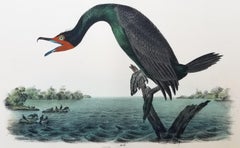
Florida Cormorant /// John James Audubon Ornithology Bird Art Natural History

Florida Cormorant /// John James Audubon Ornithology Bird Art Natural History

By John James Audubon

Located in Saint Augustine, FL

Artist: John James Audubon (American, 1785-1851) Title: "Florida Cormorant" (Plate 417, No. 84) Portfolio: The Birds of America (First Royal Octavo Edition) Year: 1840-1844 Medium: Original Hand-Colored Lithograph on wove paper Limited edition: approx. 1,200 Printer: John T. Bowen, Philadelphia, PA Publisher: John James Audubon and J.B. Chevalier, New York, NY and Philadelphia, PA Sheet size: 6.5" x 10.44" Image size: 3.75" x 6.25" Reference: Ayer/Zimmer page 22; Bennett page 5; McGill/Wood page 208; Nissen No. IVB 51; Reese No. 34; Sabin No. 2364; Tyler App. I Condition: Some minor discoloration upper center in margin. In excellent condition with strong colors Notes: Provenance: private collection - Cleveland, OH. Lithography and hand-coloring by American artist John T. Bowen (1801-c.1856). Comes from Audubon's famous seven volume portfolio "The Birds of America", (First Royal Octavo Edition) (1840-1844), which consists of 500 hand-colored lithographs. Based on a composition painted in the Florida Keys on April 26, 1832, Audubon's forty-seventh birthday. The double-crested cormorant (Nannopterum auritum) is a member of the cormorant family of water birds. It is found near rivers and lakes and in coastal areas and is widely distributed across North America, from the Aleutian Islands in Alaska down to Florida and Mexico. Measuring 70–90 cm (28–35 in) in length, it is entirely black except for a bare patch of orange-yellow facial skin and some extra plumage that it exhibits in the breeding season when it grows a double crest in which black feathers are mingled with white. Five subspecies are recognized. It mainly eats fish and hunts by swimming and diving. Its feathers, like all cormorants, are not waterproof, and it must dry them out after spending time in the water. Once threatened by the use of DDT, the numbers of this bird have increased markedly in recent years. To make 'The Birds of America' more affordable and widely available, in 1839 John James Audubon began the first octavo edition, a smaller version of the folio which was printed and hand-colored by J. T. Bowen in Philadelphia. Employing a new invention, the camera lucida, the images were reduced in size, rendered in intermediate drawings by John James Audubon and his son John Woodhouse, and then drawn onto lithographic stones. These miniatures exhibit a remarkable amount of attention to quality and detail, as well as a meticulous fidelity to the larger works. Some compositional changes were made in order to accommodate the smaller format. Like the Havell edition, John James Audubon’s first...

Category

1840s Victorian Animal Prints

Materials

Watercolor, Lithograph

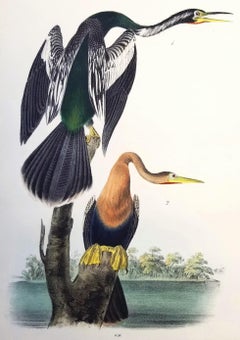
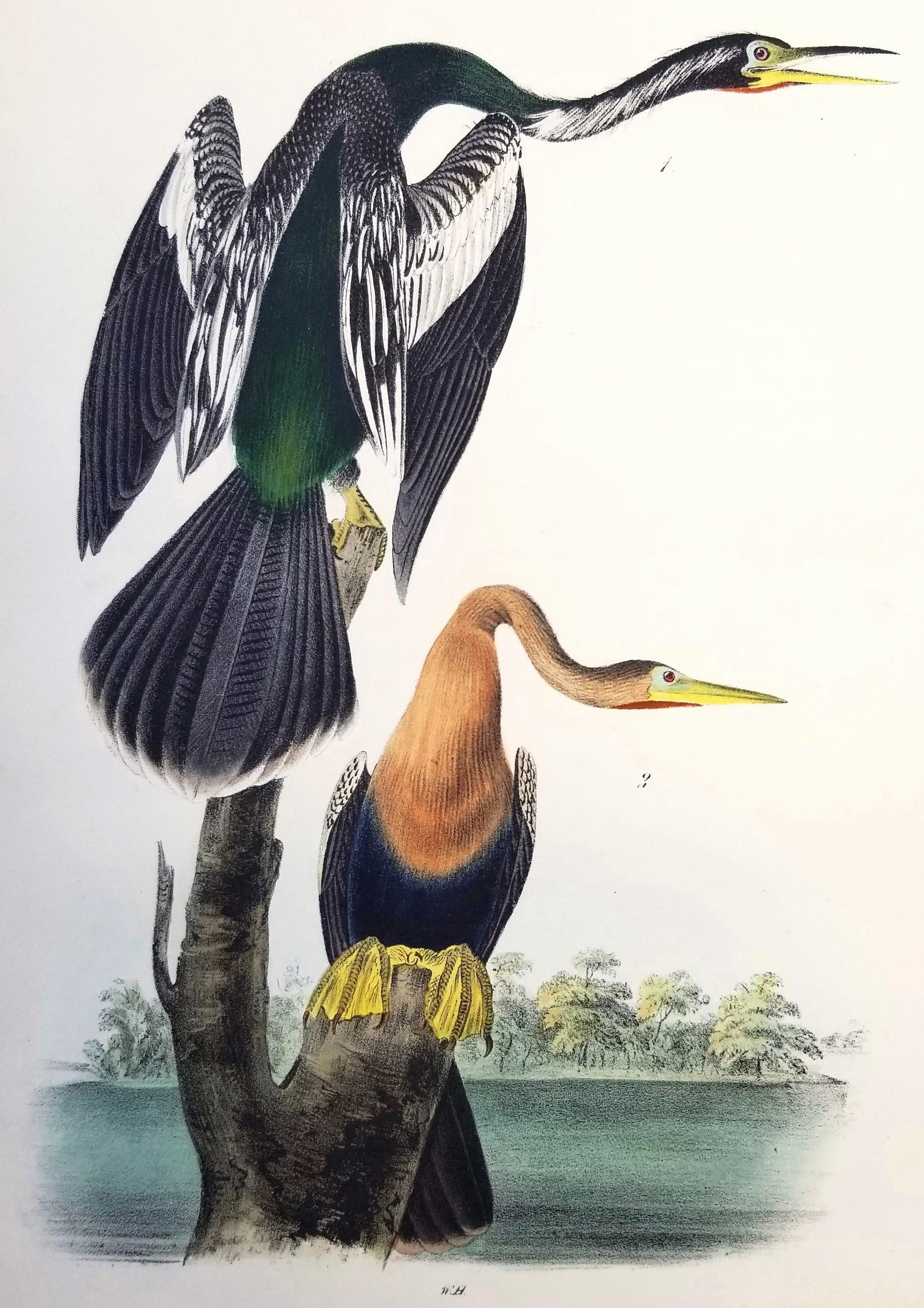
American Anhinga - Snake Bird /// John James Audubon Ornithology Natural History

American Anhinga - Snake Bird /// John James Audubon Ornithology Natural History

By John James Audubon

Located in Saint Augustine, FL

Artist: John James Audubon (American, 1785-1851) Title: "American Anhinga - Snake Bird" (Plate 420, No. 84) Portfolio: The Birds of America (First Royal Octavo Edition) Year: 1840-1844 Medium: Original Hand-Colored Lithograph on wove paper Limited edition: approx. 1,200 Printer: John T. Bowen, Philadelphia, PA Publisher: John James Audubon and J.B. Chevalier, New York, NY and Philadelphia, PA Sheet size: 10" x 6.69" Image size: 6.63" x 4.63" Reference: Ayer/Zimmer page 22; Bennett page 5; McGill/Wood page 208; Nissen No. IVB 51; Reese No. 34; Sabin No. 2364; Tyler App. I Condition: Minor toning to sheet and some faint discoloration in margins. Old glue staining along right binding edge as normal. It is otherwise in very good condition with strong colors Notes: Provenance: private collection - Cleveland, OH. Lithography and hand-coloring by American artist John T. Bowen (1801-c.1856). Comes from Audubon's famous seven volume portfolio "The Birds of America", (First Royal Octavo Edition) (1840-1844), which consists of 500 hand-colored lithographs. The preceding 1836 Havell edition of this work has a different title: "Black-bellied Darter", (Plate: CCCXVI - 396, No. 64). Based on a drawing inscribed "New Orleans 1822 - redrawn ... 1836". This conspicuous bird had various names including "water turkey" and "Bec à Lancette". The Anhinga, sometimes called snakebird, darter, American darter, or water turkey, is a water bird of the warmer parts of the Americas. The word anhinga comes from a'ñinga in the Brazilian Tupi language and means "devil bird" or "snake bird". To make 'The Birds of America' more affordable and widely available, in 1839 John James Audubon began the first octavo edition, a smaller version of the folio which was printed and hand-colored by J. T. Bowen in Philadelphia. Employing a new invention, the camera lucida, the images were reduced in size, rendered in intermediate drawings by John James Audubon and his son John Woodhouse, and then drawn onto lithographic stones. These miniatures exhibit a remarkable amount of attention to quality and detail, as well as a meticulous fidelity to the larger works. Some compositional changes were made in order to accommodate the smaller format. Like the Havell edition, John James Audubon’s first...

Category

1840s Victorian Animal Prints

Materials

Watercolor, Lithograph

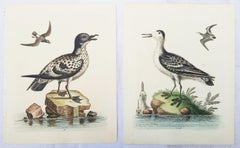
Set of Two Hand-Colored Ornithological Engravings by George Edwards /// Bird Art

Set of Two Hand-Colored Ornithological Engravings by George Edwards /// Bird Art

By George Edwards

Located in Saint Augustine, FL

Artist: George Edwards (English, 1694-1773) Title: "Set of Two Hand-Colored Ornithological Engravings by George Edwards" (Plates 90, 308) Portfolio: A Natural History of Uncommon Birds, and of Some Other Rare and Undescribed Animals / Gleanings Of Natural History Year: 1743-1764 Medium: Set of Two Original Hand-Colored Engravings on watermarked laid and wove papers Limited edition: Unknown Printer: C. Rickaby, London, UK Publisher: William Gardiner and Messrs. Robinson, London, UK Sheet size (each): approx. 11.25" x 9" Image size (each): approx. 8.63" x 7.38" Reference: Mullens and Swann page 194-195; Anker No. 124-126; Fine Bird Books page 93; Lisney page 128-144; Nissen IVB No. 286-288; Zimmer page 192-198 Condition: "90" has faint offsetting to sheet. "308" has one foxmark center right. They are both otherwise in excellent condition with strong colors Notes: Comes from Edwards seven volume portfolio "A Natural History of Uncommon Birds, and of Some Other Rare and Undescribed Animals" / "Gleanings Of Natural History" (1743-1764), which consists of 362 hand-colored engravings. "90" is on laid paper with a "fleur-de-lis" watermark at center left edge. "308" is on wove paper with no watermark. The last image of the cover title sheets is for reference/provenance; it is not included. Biography: George Edwards FRS (3 April 1694 – 23 July 1773) was an English naturalist and ornithologist, known as the "father of British ornithology". Edwards was born at West Ham...

Category

1740s Old Masters Animal Prints

Materials

Watercolor, Laid Paper, Engraving, Intaglio

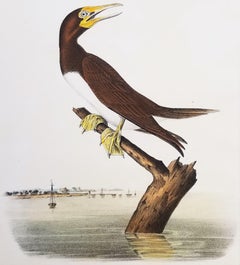
Booby Gannet /// Ornithology Bird Art John James Audubon Florida Keys Seascape

Booby Gannet /// Ornithology Bird Art John James Audubon Florida Keys Seascape

By John James Audubon

Located in Saint Augustine, FL

Artist: John James Audubon (American, 1785-1851) Title: "Booby Gannet" (Plate 426, No. 86) Portfolio: The Birds of America (First Royal Octavo Edition) Year: 1840-1844 Medium: Original Hand-Colored Lithograph on wove paper Limited edition: approx. 1,200 Printer: John T. Bowen, Philadelphia, PA Publisher: John James Audubon and J.B. Chevalier, New York, NY and Philadelphia, PA Sheet size: 10.38" x 6.75" Image size: 5.94" x 5.5" Reference: Ayer/Zimmer page 22; Bennett page 5; McGill/Wood page 208; Nissen No. IVB 51; Reese No. 34; Sabin No. 2364; Tyler App. I Condition: Two small tears at top edge. In otherwise excellent condition with strong colors Notes: Provenance: private collection - Seattle, WA. Lithography and hand-coloring by American artist John T. Bowen (1801-c.1856). Comes from Audubon's famous seven volume portfolio "The Birds of America", (First Royal Octavo Edition) (1840-1844), which consists of 500 hand-colored lithographs. Based on a composition painted May 14, 1832. Audubon wrote: "I am unable to find a good reason for those who have chosen to call these birds 'boobies'. Authors, it is true, generally represent them as extremely stupid; but to me the word is utterly inapplicable to any bird with which I am acquainted". The view of the Florida Keys is based on a drawing by George Lehman. The bird family Sulidae comprises the gannets and boobies. Collectively called sulids, they are medium-large coastal seabirds that plunge-dive for fish and similar prey. The 10 species in this family are often considered congeneric in older sources, placing all in the genus Sula. To make 'The Birds of America' more affordable and widely available, in 1839 John James Audubon began the first octavo edition, a smaller version of the folio which was printed and hand-colored by J. T. Bowen in Philadelphia. Employing a new invention, the camera lucida, the images were reduced in size, rendered in intermediate drawings by John James Audubon and his son John Woodhouse, and then drawn onto lithographic stones. These miniatures exhibit a remarkable amount of attention to quality and detail, as well as a meticulous fidelity to the larger works. Some compositional changes were made in order to accommodate the smaller format. Like the Havell edition, John James Audubon’s first...

Category

1840s Victorian Animal Prints

Materials

Watercolor, Lithograph

You May Also Like

Original Antique Print of a Dusky Grebe, circa 1880, 'Unframed'

Original Antique Print of a Dusky Grebe, circa 1880, 'Unframed'

Located in St Annes, Lancashire

Great image of a Dusky Grebe Unframed. It gives you the option of perhaps making a set up using your own choice of frames. Lithograph after Alexander Francis Lydon. Original color...

Category

Antique 1880s English Folk Art Prints

Materials

Paper

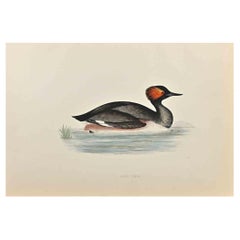
Eared Grebe - Woodcut Print by Alexander Francis Lydon  - 1870

Eared Grebe - Woodcut Print by Alexander Francis Lydon - 1870

By Alexander Francis Lydon

Located in Roma, IT

Eared Grebe is a modern artwork realized in 1870 by the British artist Alexander Francis Lydon (1836-1917). Woodcut print on ivory-colored paper. Hand-colored, published by London,...

Category

1870s Modern Figurative Prints

Materials

Woodcut

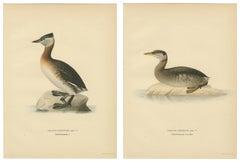
Antique Great Crested Grebe Bird Lithographs Set of 2, Podiceps - 1929

Antique Great Crested Grebe Bird Lithographs Set of 2, Podiceps - 1929

Located in Langweer, NL

Antique Great Crested Grebe Bird Lithographs Set of 2, Podiceps - 1929 Description: This elegant pair of Scandinavian ornithological lithographs depicts the Great Crested Grebe, one...

Category

Vintage 1920s Swedish Prints

Materials

Paper