Want more images or videos?
Request additional images or videos from the seller
1 of 5

Ferdinando Campana
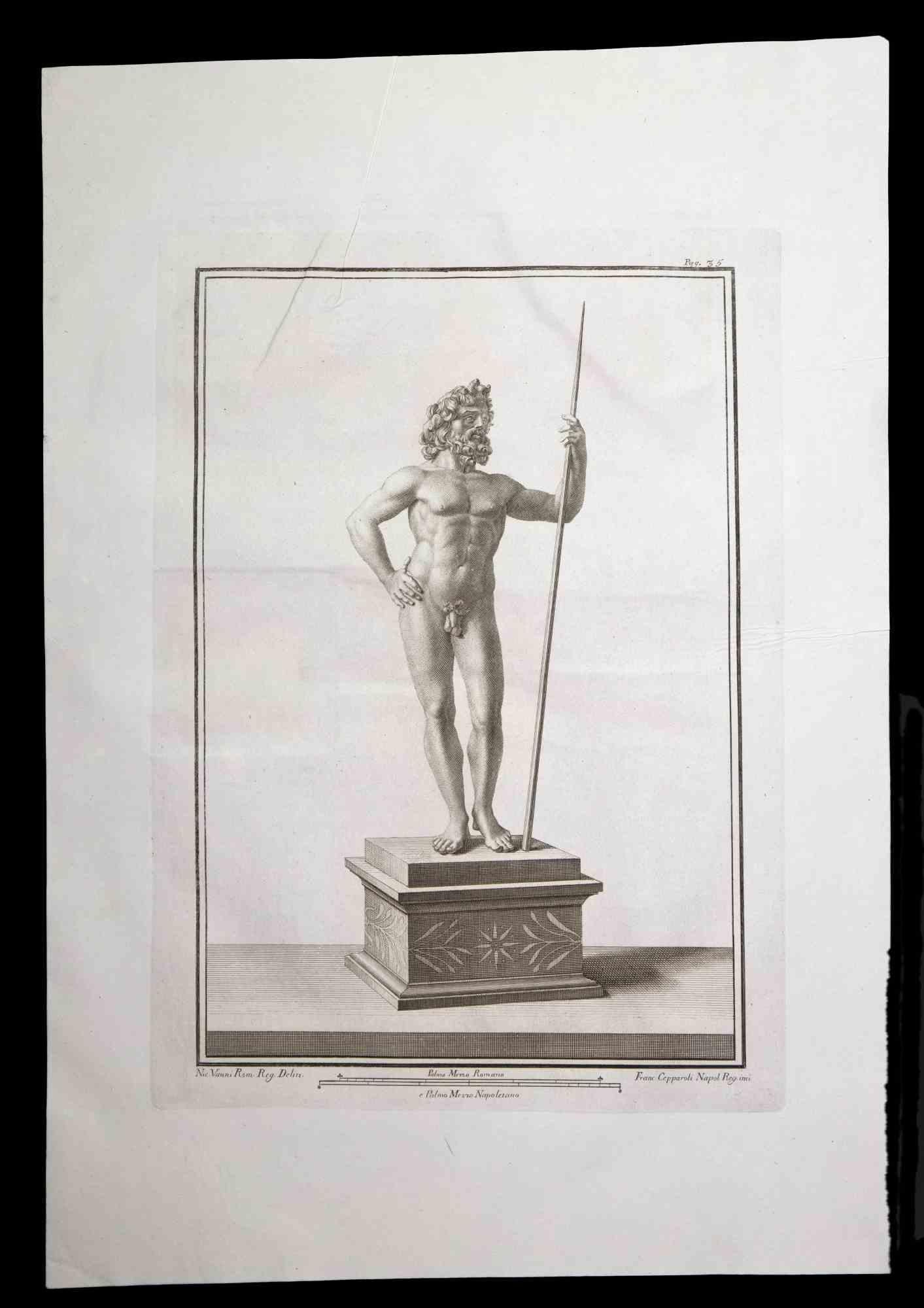
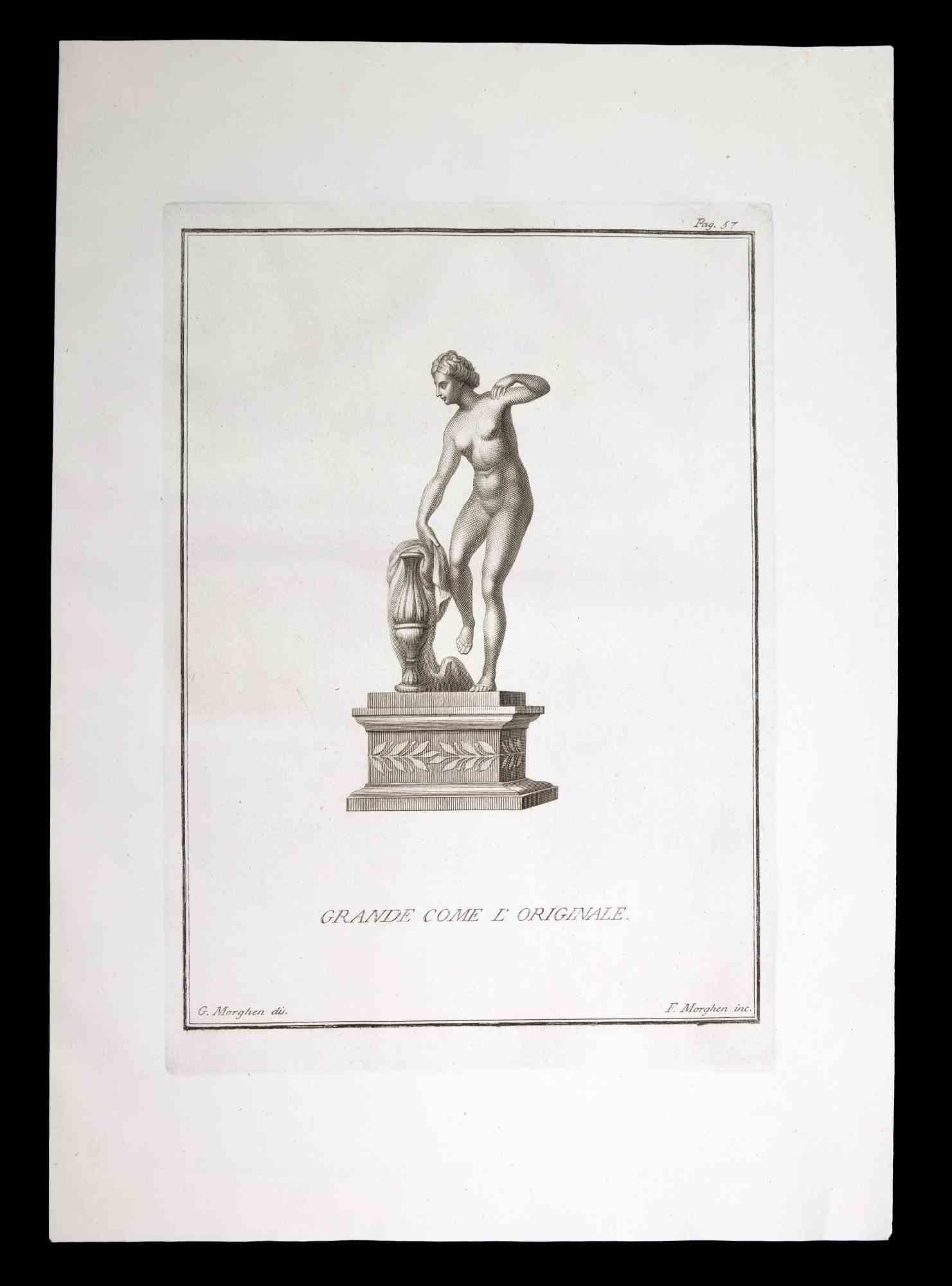
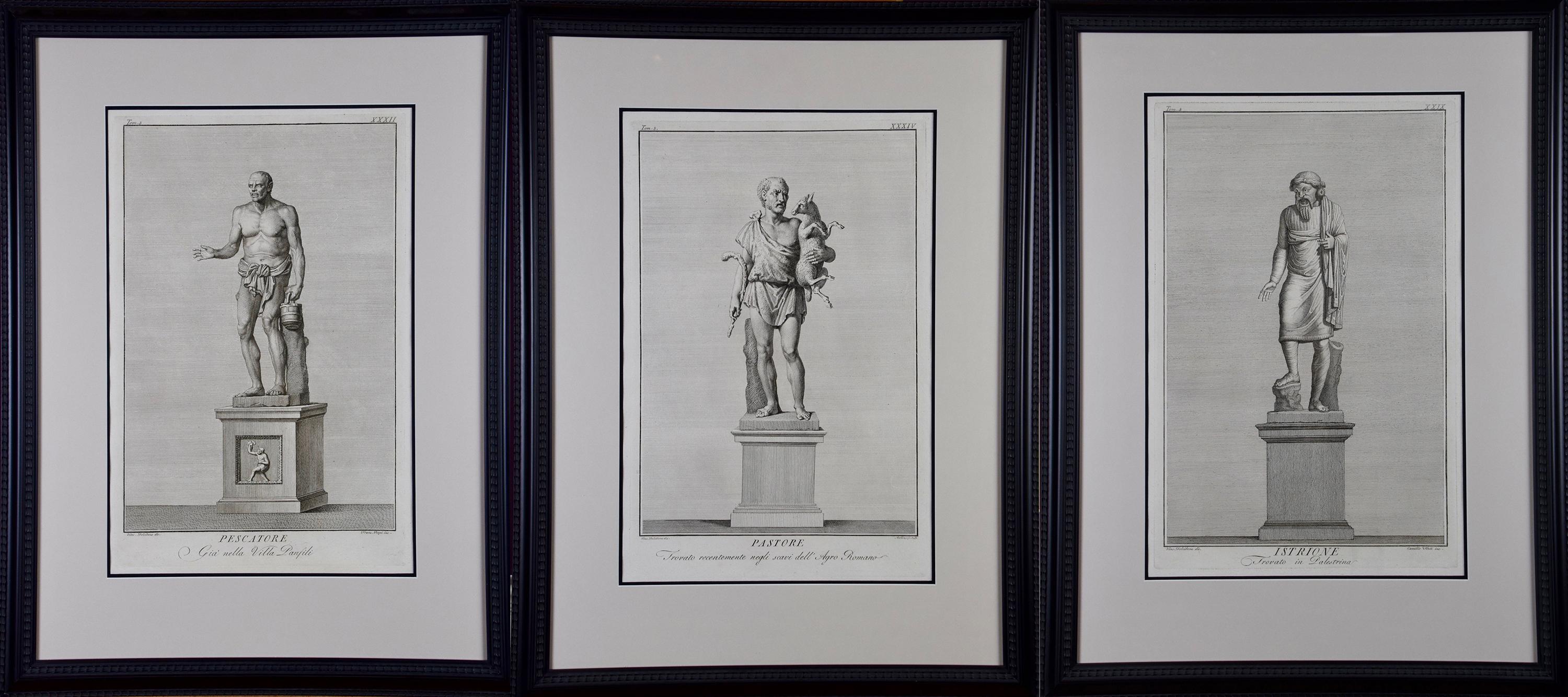
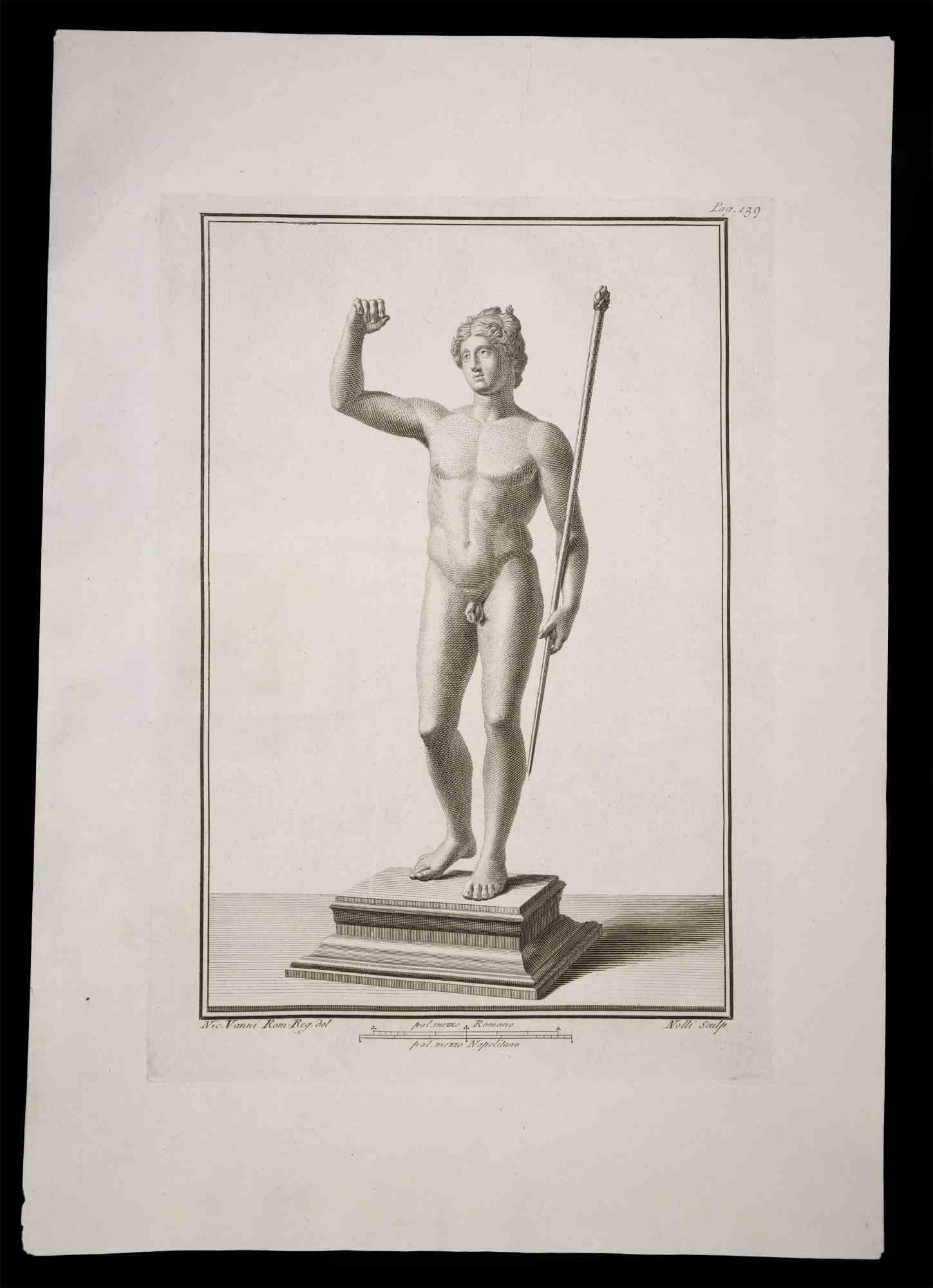
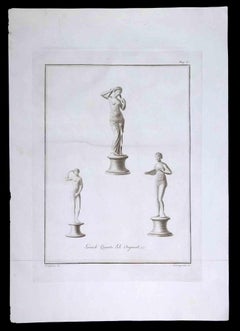
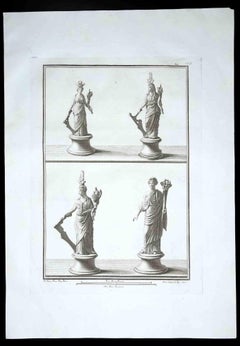
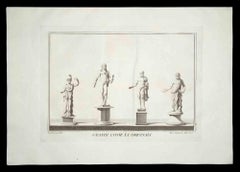
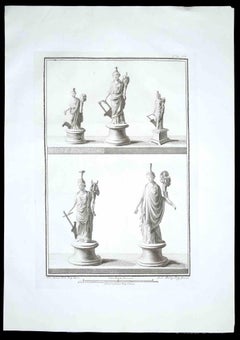
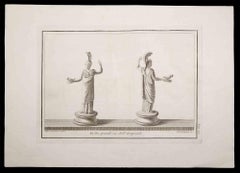
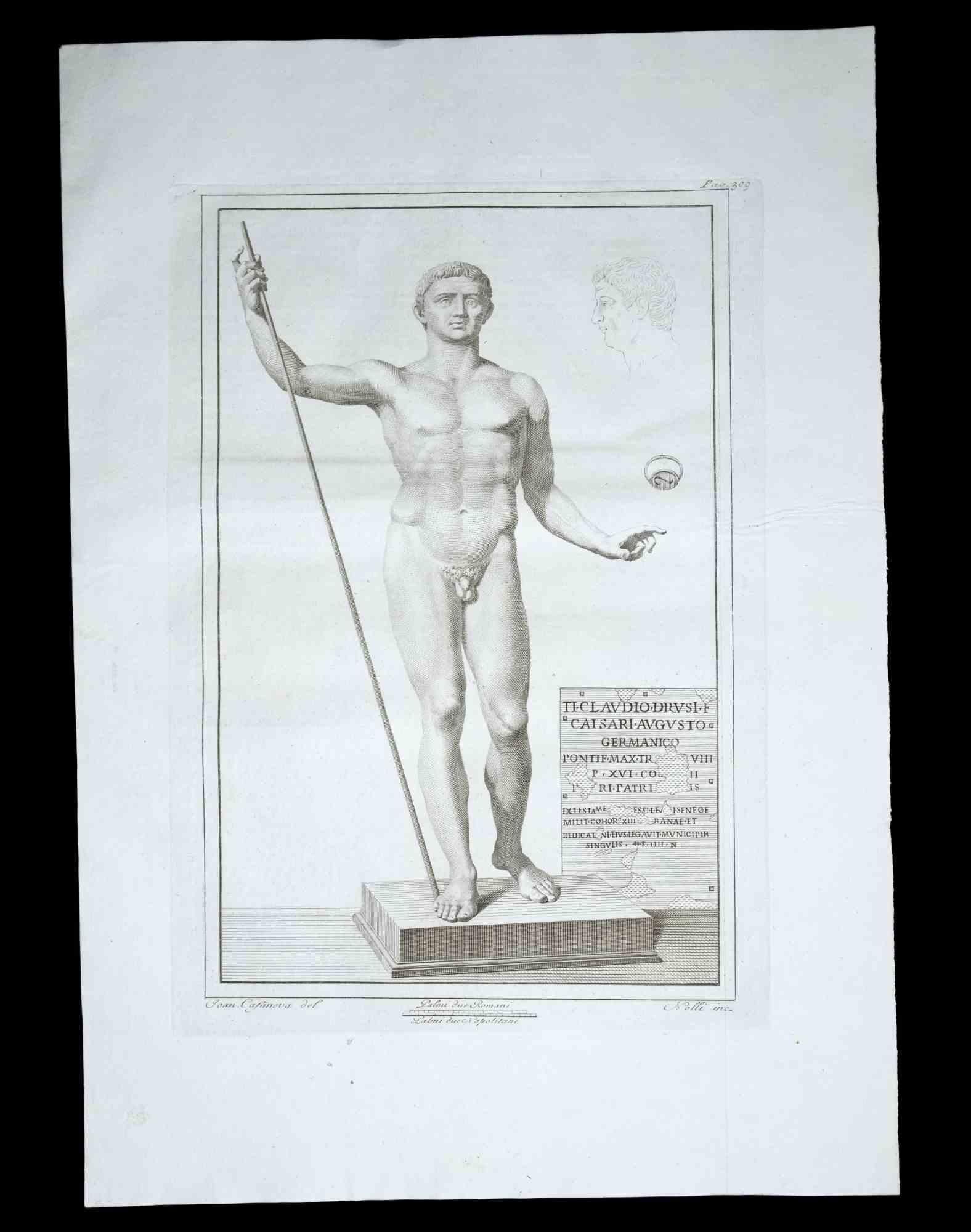
Ancient Roman Statues - Etching by Ferdinando Campana - 1700s

Late 18th Century

$564.14
$752.1925% Off
£418.18
£557.5725% Off
€480VAT Included
€64025% Off
CA$786.90
CA$1,049.2025% Off
A$800.42
A$1,067.2225% Off
CHF 459.36
CHF 612.4825% Off
MX$9,621.97
MX$12,829.2925% Off
NOK 5,358.40
NOK 7,144.5325% Off
SEK 5,408.84
SEK 7,211.7925% Off
DKK 3,660.21
DKK 4,880.2725% Off

About the Item

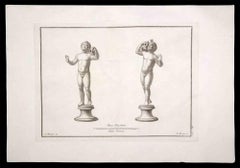
Original etching on paper realized by Ferdinando Campana in the 18th century. Signed on the plate, on the lower right. Good conditions. The etching belongs to the print suite “Antiquities of Herculaneum Exposed” (original title: “Le Antichità di Ercolano Esposte”), an eight-volume volume of engravings of the finds from the excavation of the ruins of Herculaneum in the Kingdom of Naples (now Campania, Italy). It was published between 1757 and 1792 by the Regia Stamperia, and copies were delivered to selected recipients across Europe. Despite the title, the Antiquity of Herculaneum shows objects from all the excavations undertaken by the Bourbons in the Gulf of Naples. These include Pompeii, Stabia and two sites of Herculaneum: Resina and Portici. The Bourbon King Carlo appointed fifteen scholars creating a new “Herculaneum Academy” to study the artifacts and publish the results of the archaeological excavations of the sites. The engravings are of high quality and the accompanying text shows a large scholarship. They were realized by 25 prominent artists involved by the King to prepare drawings and engravings on the finds, among which we can find Giovanni Elia Morghen, Carlo Nolli, Luigi Vanvitelli and Giovanni Battista Casanova. The “Antiquities” was designed more to amaze readers with the quality of the objects in the collection of the King of Naples than to be used in research., following and increasing the interest of 18th century society for the classical culture and Art in particular. Through the exaltation of the classical concept of proportions and harmony, the book was of inspiration to the neoclassical movement in Europe, giving artists and decorators access to a huge shop of Hellenistic motifs. Ref.: National Gallery (Washington), Mark J. Millard Architectural, IV (2000), no. 1; L. Garcia y Garcia, Nova bibliotheca pompeiana (2 v., 1998); Royal Institute of British Architects, British Architectural Library ... Early printed books, 1 (1994), no. 112. U. Pannuti, 'Incisori e disegnatori della Stamperia Reale di Napoli nel secolo XVIII: la pubblicazione delle Antichità di Ercolano', in Xenia antiqua, 9 (2000), p. 151-178; V. Trombetta, 'L'edizione de Le Antichità di Ercolano esposte' in Rendiconti dell'Accademia di Archeologia, lettere e belle arti di Napoli , 59 (1984), p.151-172.
  • Creator:
  • Creation Year:
    Late 18th Century
  • Dimensions:
    Height: 19.3 in (49 cm)Width: 13.39 in (34 cm)Depth: 0.04 in (1 mm)
  • Medium:
  • Movement & Style:
  • Period:
  • Framing:
    Framing Options Available
  • Condition:
    Insurance may be requested by customers as additional service, contact us for more information.
  • Gallery Location:
    Roma, IT
  • Reference Number:
    Seller: T-1240481stDibs: LU65038808932

More From This Seller

View All

You May Also Like

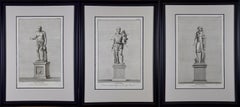
Pair of Roman Classical Sculpture Engravings, Montfaucon Antiquity, c.1721

Pair of Roman Classical Sculpture Engravings, Montfaucon Antiquity, c.1721

Located in Langweer, NL

Pair of Roman Classical Sculpture Engravings, Montfaucon Antiquity, c.1721 This elegant pair of early 18th-century engravings comes from Bernard de Montfaucon’s landmark publication...

Category

Antique 1720s British Prints

Materials

Paper

Roman Sculptures & Portrait Heads, Composite Antiquities Plate, Montfaucon 1721

Roman Sculptures & Portrait Heads, Composite Antiquities Plate, Montfaucon 1721

Located in Langweer, NL

Roman Sculptures and Portrait Heads, Composite Antiquities Plate, Montfaucon 1721 Description: This finely engraved composite plate originates from the first English edition of Bern...

Category

Antique 1720s British Prints

Materials

Paper

Antique Roman Goddess Statues and Reliefs, Montfaucon Classical Engraving 1721

Antique Roman Goddess Statues and Reliefs, Montfaucon Classical Engraving 1721

Located in Langweer, NL

Antique Roman Goddess Statues and Reliefs, Montfaucon Classical Engraving 1721 This striking early 18th-century copper engraving presents a rich survey of Roman sculptural antiquity...

Category

Antique 1720s British Prints

Materials

Paper

Classical Mythological Figures Engraving, Montfaucon Antiquité Expliquée 1721

Classical Mythological Figures Engraving, Montfaucon Antiquité Expliquée 1721

Located in Langweer, NL

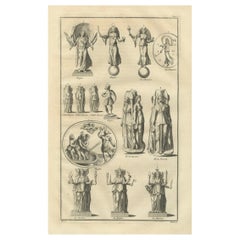
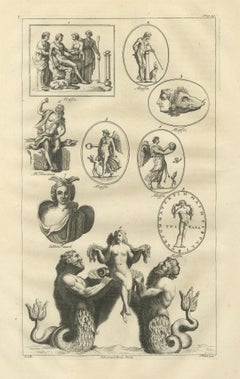
Classical Mythological Figures Engraving, Montfaucon Antiquité Expliquée 1721 This original early eighteenth-century copper engraving originates from Bernard de Montfaucon’s monumental antiquarian publication L’Antiquité expliquée et représentée en figures, published in Paris in 1721. Widely regarded as one of the most important scholarly works of the Enlightenment, Montfaucon’s encyclopedic study systematically documented the art, mythology, and material culture of the ancient world, laying essential foundations for modern archaeology and art history. The plate presents a carefully arranged compilation of mythological and sculptural studies derived from ancient sources. Multiple vignettes depict classical figures, relief fragments, and symbolic motifs recorded from antique sculptures, gems, and coins. The composition functions almost as a visual catalogue, comparing different representations of mythological subjects collected from prominent European antiquarian collections, including references to works associated with scholars such as Maffei and other early collectors of classical antiquities. At the bottom of the composition, two triton-like sea beings with human torsos and serpent tails raise a nude female figure above the waves, evoking marine mythology connected to nereids, sea deities, or allegorical representations of Venus emerging from the sea. Surrounding studies include winged figures, sculptural heads, medallions, and mythological scenes rendered with remarkable clarity. Montfaucon’s analytical approach—placing multiple related images together for comparison—reflects the Enlightenment ambition to classify and interpret antiquity through visual evidence. The engraving demonstrates the refined precision of early eighteenth-century Parisian copperplate engraving, characterized by delicate linework, balanced spacing, and restrained tonal shading. Beyond its scholarly significance, the plate possesses strong decorative appeal, combining classical imagery with an elegant graphic structure that suits both traditional and contemporary interiors. This original antique engraving is offered unframed, allowing flexibility to select a frame appropriate to the intended interior or collection setting. Condition: Good antique condition with age-related toning and light paper discoloration consistent with early eighteenth-century prints...

Category

Antique 1720s British Prints
Materials

Paper

Classical Marble Statues, Apollo and Nude Figures – Montfaucon Antiquity, 1721

Classical Marble Statues, Apollo and Nude Figures – Montfaucon Antiquity, 1721

Located in Langweer, NL

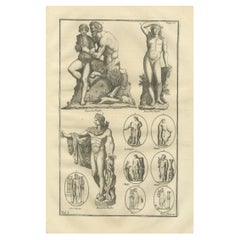
Classical Marble Statues, Apollo and Nude Figures – Montfaucon Antiquity, 1721 Description: This engraved plate originates from Bernard de Montfaucon’s influential Antiquity Explain...

Category

Antique 1720s British Prints
Materials

Paper