Want more images or videos?
Request additional images or videos from the seller
1 of 11

Gekko Ogata
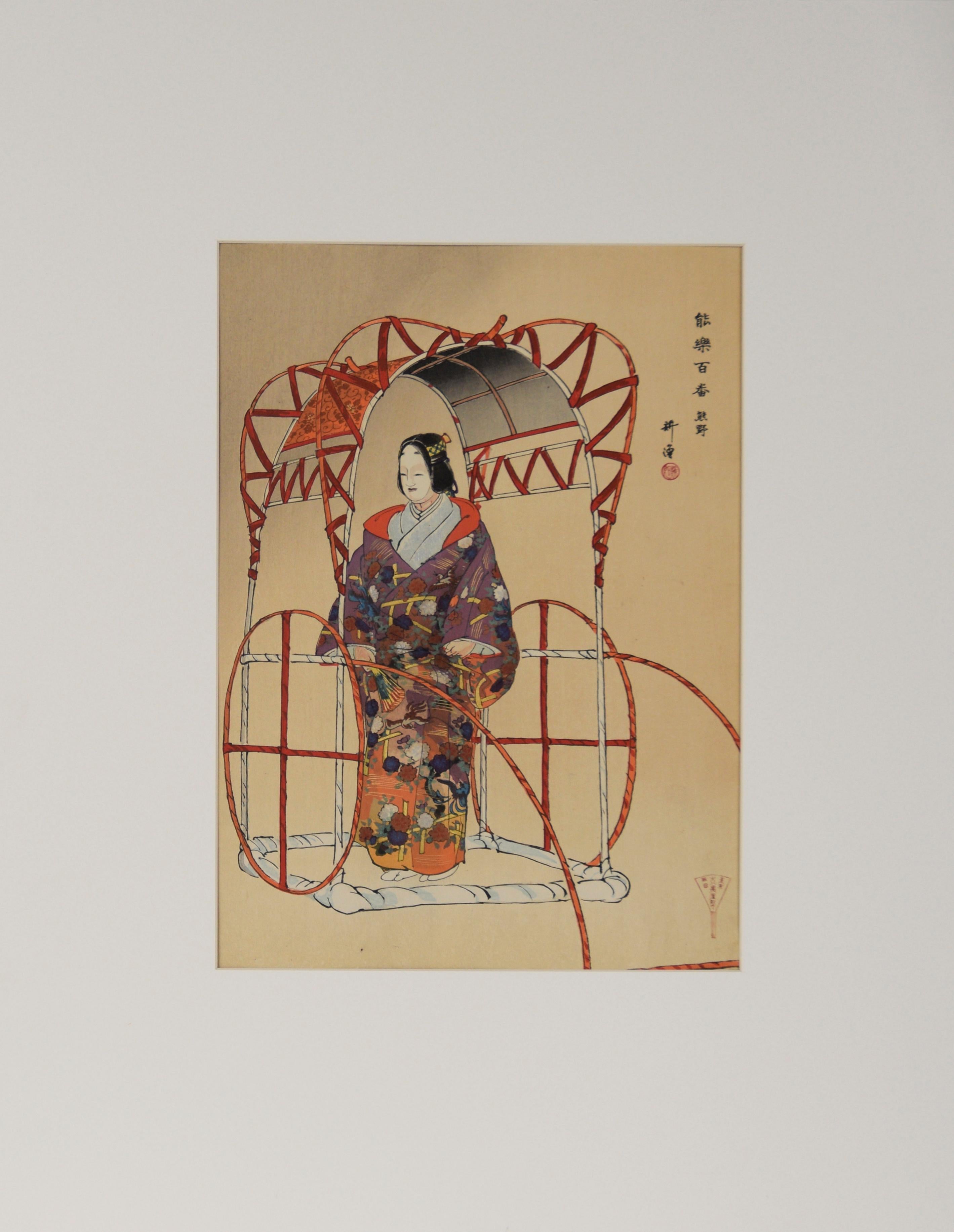
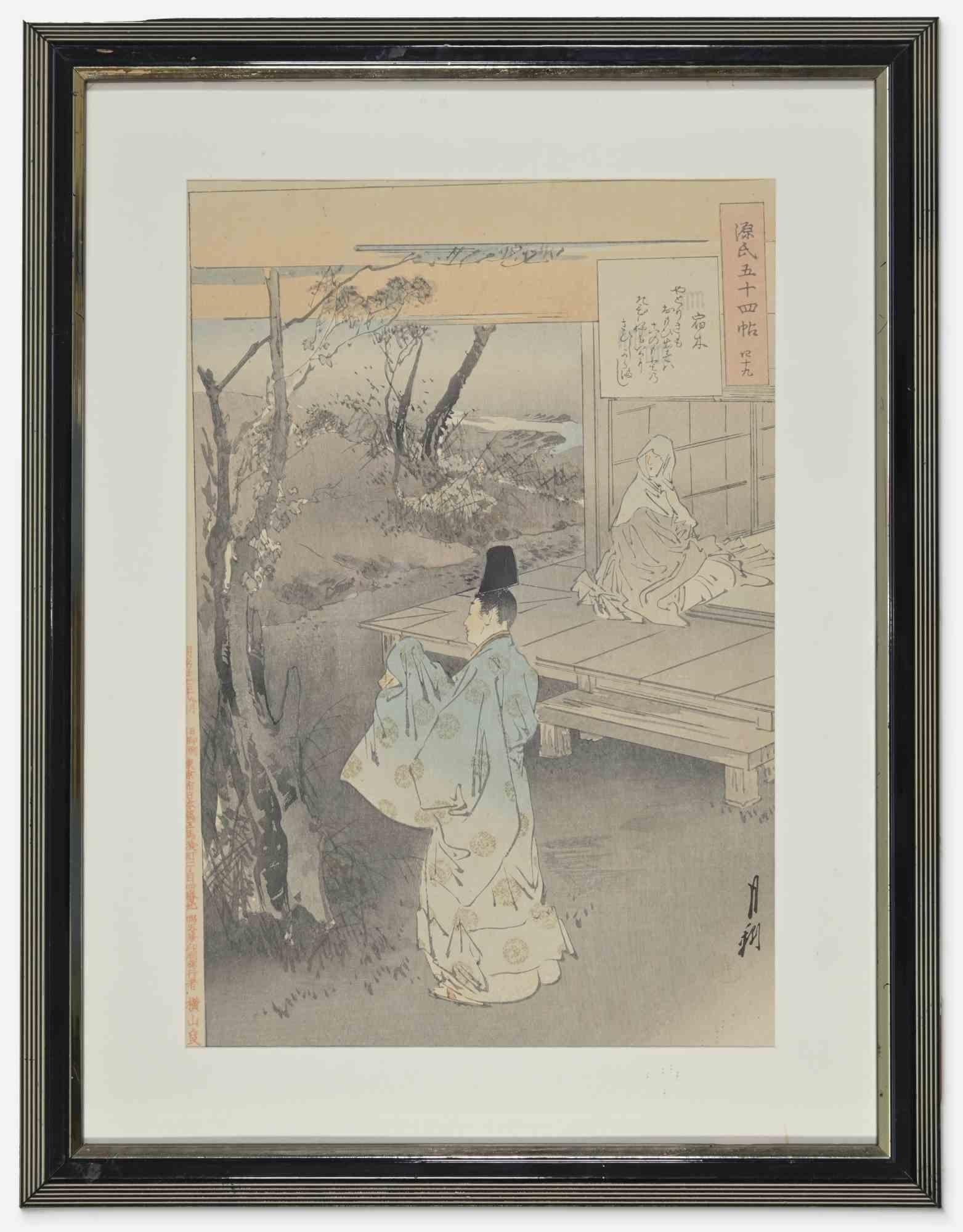
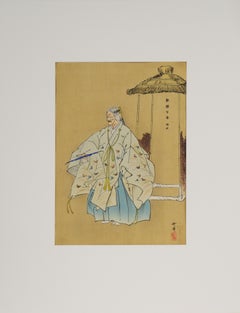
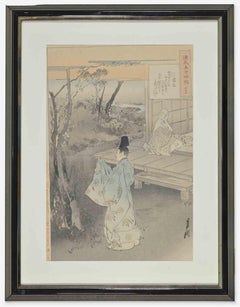
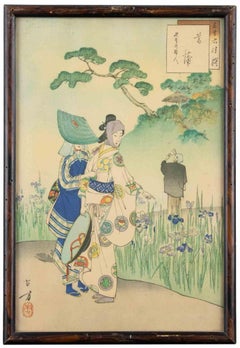
Wood Cut on Rice Paper "The Cicada Shell (Utsusemi)" by Gekko Ogata

1892

$650
£491.29
€574.65
CA$922.95
A$938.96
CHF 539.54
MX$11,291.02
NOK 6,299.01
SEK 6,336.72
DKK 4,295.84

About the Item

Wood Cut on Rice Paper "The Cicada Shell (Utsusemi)" by Gekko Ogata Woodcut is a striking 1892 woodblock print by Meiji-era master Ogata Gekko (Japanese, 1859–1920). It references The Tale of Genji, illustrating the moment a woman named Utsusemi flees Prince Genji’s romantic advances, leaving her silk robe behind just as a cicada sheds its empty shell.Ogata Gekko (1859–1920) was a leading Meiji-era Japanese ukiyo-e artist whose work reflects the transition from traditional Edo-period printmaking to modern visual culture. He is known for his highly individual style, combining classical Japanese painting principles with expressive line work and a strong narrative sensibility. Ogata Gekko, born Nakagami Masanosuke in 1859 in Edo (later Tokyo), grew up in difficult circumstances after becoming orphaned at an early age. He was adopted by the Ogata family and later adopted the name Gekko. Unlike many ukiyo-e artists of earlier generations, he did not undergo a formal apprenticeship within a printmaking studio, which contributed to his highly independent artistic development. Image, 13"H x 9"W Frame, 19.5"% x 15"W x .25"D Publisher: Yokoyama Ryohachi Seals: Artist seal, Enkatsu to (Carver) Signature: Gekko He initially worked in applied arts, including lacquer design and illustration for newspapers, magazines, and books. These early activities shaped his drawing style, which often emphasizes fluid line work and painterly effects rather than strict block-based color separation typical of traditional ukiyo-e production. Gekko died in Tokyo on October 1, 1920, leaving behind a diverse body of printed and painted works that span both commercial and artistic production contexts.
  • Creator:
    Gekko Ogata (1859 - 1920, Japanese)
  • Creation Year:
    1892
  • Dimensions:
    Height: 19.5 in (49.53 cm)Width: 15 in (38.1 cm)Depth: 0.25 in (6.35 mm)
  • Medium:
  • Movement & Style:
  • Period:
  • Condition:
    Color is good and paper was trimmed to size, Some age toning and spot bottom center of paper, on old backboard and vintage over-mat mounting as-is.
  • Gallery Location:
    Soquel, CA
  • Reference Number:
    Seller: RJA101701stDibs: LU54218243442

More From This Seller

View All
Japanese Artisans - Silk Dying -Japanese Woodblock Print

Japanese Artisans - Silk Dying -Japanese Woodblock Print

By Tosa Mitsuyoshi

Located in Soquel, CA

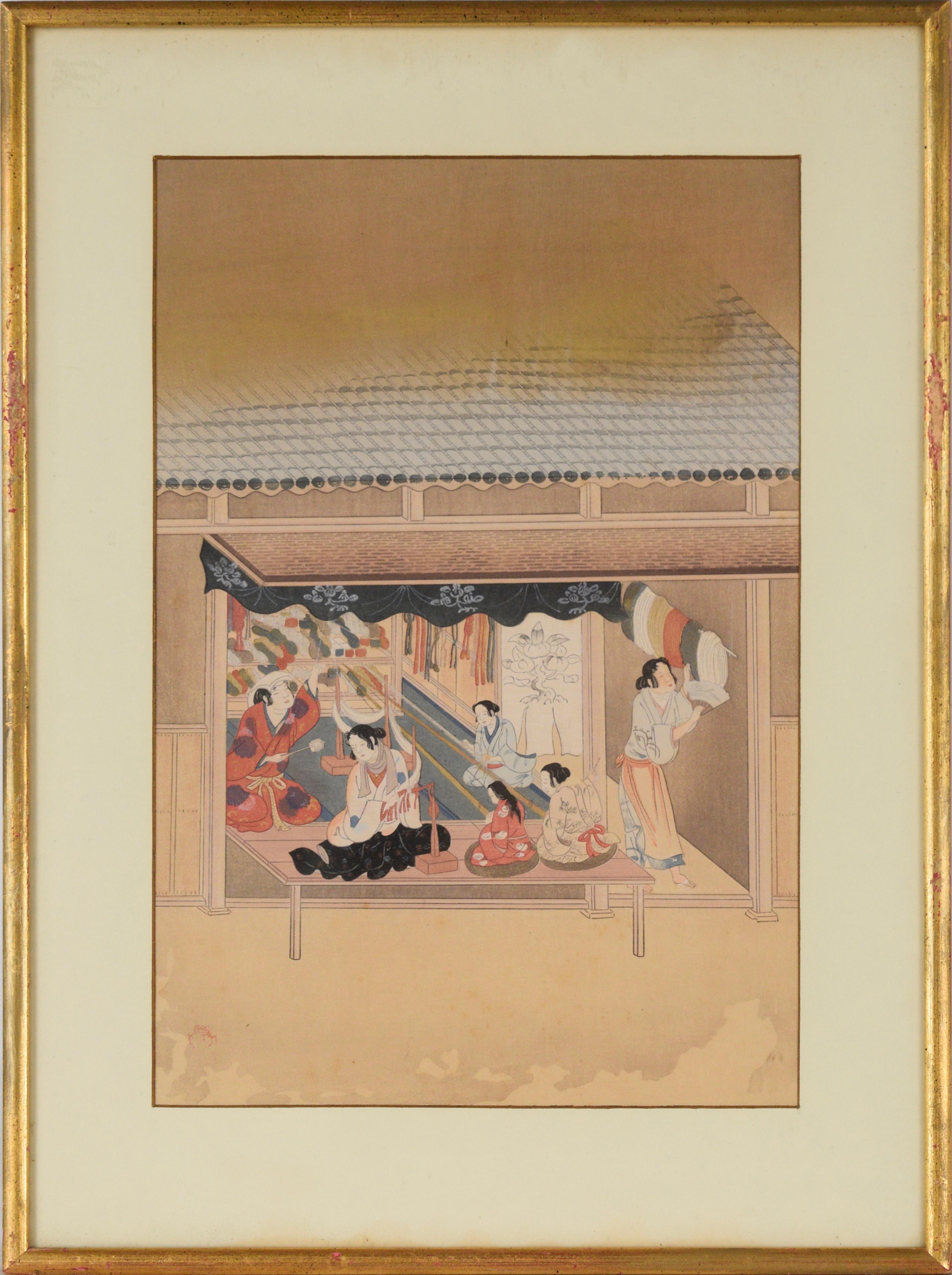
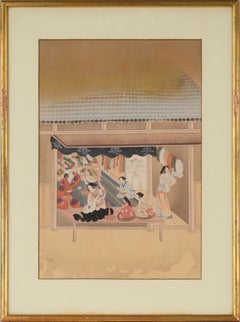
Japanese Artisans - Japanese Woodblock Print J Japanese woodblock depicting six women, all wearing vibrant kimonos, working on crafts by Tosa Mitsuoki (Japanese, 1617-1691). Japanese,c. 1600. Handcraft depiction (dye works).Section from a painted screen with presentations of handcraft.Kita-in, Saitama. Stamped lower left. Presented in a white mat and giltwood frame. Frame: 19"H x 14"W Mat: 18.25"H x 13.25"W Image: 14.5"H x 9.5"W Tosa Mitsuoki was a Japanese painter, reinvigorating the Yamato style of classical Japanese painting. Yamato-e originated from interest in reproducing early Tang dynasty paintings, and was later reinvented and further refined to fit Japanese cultural perceptions in the late Heian period. Yamato, sometimes referred to as wa or kazu had become synonymous with the Tosa-ha by the Muromachi period as a way for Japanese artist to distinguish their works from those of mainland Chinese paintings, kara-e. Yamato-e incorporated various visual and literary techniques for establishing narrative. Works were not always accompanied with text and may rely on heavily on period specific visual motifs, icons, and symbols to relay a story or theme. Tosa style by the time of Mitsuoki focused heavily on depicting themes of plants and nature, famous places, meisho, the four seasons, shik, bird-and-flower, kacho. Many of these popular symbols and icons from mimicking Chinese practices, treating the original Chinese masterwork as a sort of prototype to improve upon. Popular formats for Mitsuoki's pictures were wall scrolls kakemono, or handscrolls that would be read from right to left with the accompanied story, sliding doors fusuma and folding screen panels byobu that featured up to six panels. Mitsuoki's style incorporated the depth and calligraphy techniques of ink wash brushwork similar to Song dynasty and Yuan dynasty Chinese court paintings...

Category

1920s Edo Landscape Paintings

Materials

Paper, Ink, Woodcut

"Enshoku Sanju-roku Kasen" (Thirty-six Enchanting Flowers) Woodblock on paper

"Enshoku Sanju-roku Kasen" (Thirty-six Enchanting Flowers) Woodblock on paper

By Toyohara Kunichika

Located in Soquel, CA

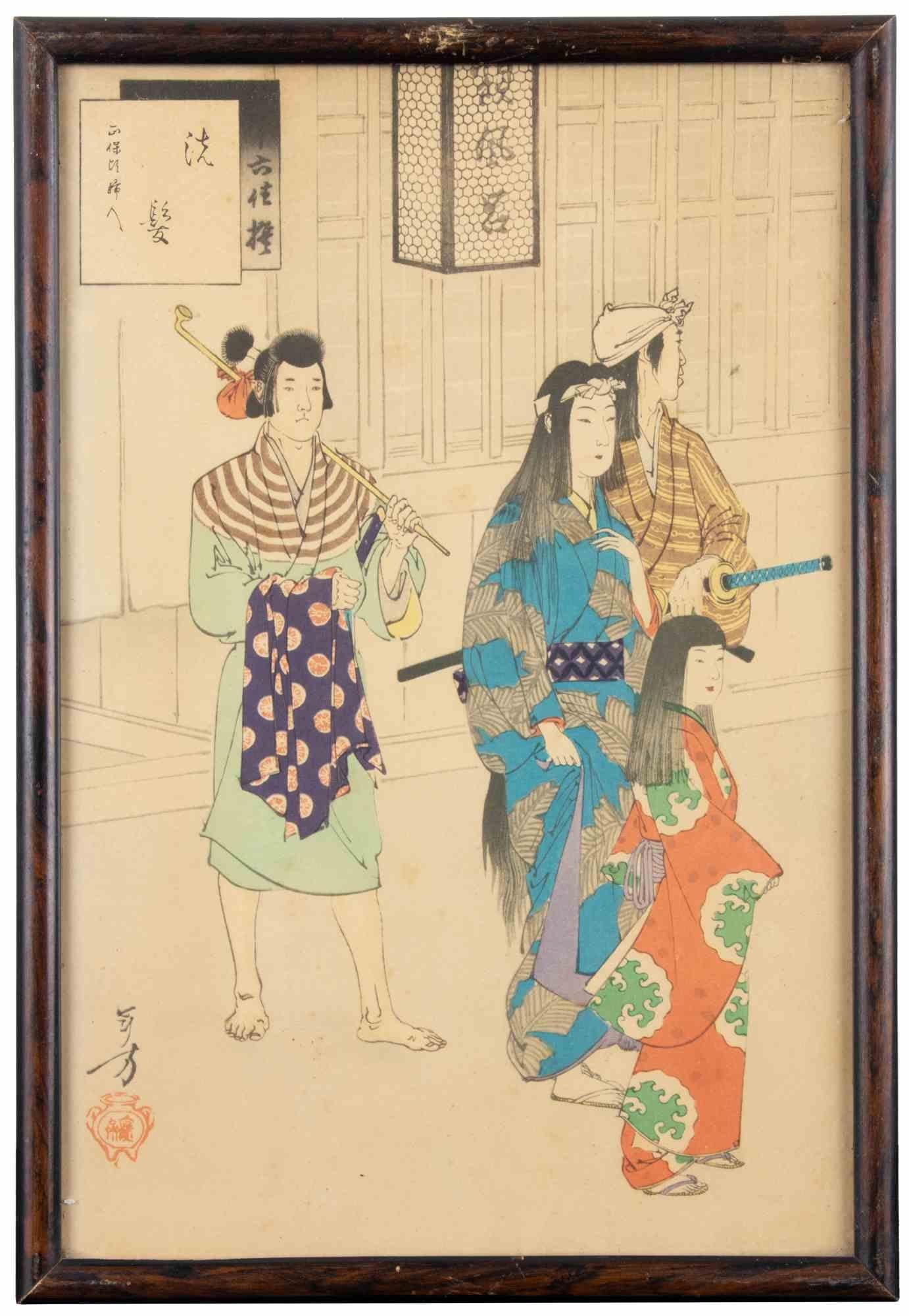
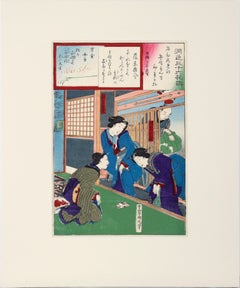
"Enshoku Sanju-roku Kasen" (Thirty-six Enchanting Flowers) Woodblock on paper Elegant woodblock print by Toyohara Kunuchika (Japanese, 1835-1900). Three women are in talking with each other inside, while a man waits outside holding a bag of some kind. The colors in this piece are rich and saturated, primarily blues, greens, and purple. Mat size: 16"H x 20"W Paper size: 14.75"H x 9.88"W Born in 1835, Toyohara Kunichika grew up in the Kyobashi district of Edo in the midst of merchants and artisans. In 1848, at age 13, he was accepted as an apprentice into the studio of Utagawa Kunisada I...

Category

1880s Edo Figurative Prints

Materials

Ink, Rice Paper, Woodcut

Courtesans at Yoshiwara Edomachi - Figurative Japanese Woodblock Print on Paper

Courtesans at Yoshiwara Edomachi - Figurative Japanese Woodblock Print on Paper

By Utagawa Yoshiiku

Located in Soquel, CA

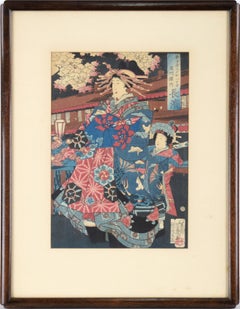
Courtesan at Yoshiwara Edomachi - Figurative Japanese Woodblock Print on Paper Full color woodcut print of two women in elaborate gowns by Utagawa Yoshiiku (Ochiai Yoshiiku) (Japanese, 1833-1904). Two women are dressed in colorful robes with crossed arms. They are underneath a plum blossom tree in bloom, at night. In the background there is a building with many rooms. Valuable polychrome woodblock print of vertical large oban (大判) format made by Utagawa Yoshiiku (歌川芳幾), the famous artist also known as Ochiai Yoshiiku (落合芳幾), and depicting the courtesan Shizuka (しづか), of the house of pleasure Matsumotoro (松本楼), together with her young kamuro (禿) assistant. The couple is escorted by a kanabohiki (金棒引き) watchman holding a lantern and a metal rod with rings to make noise and alert the crowd. The work, produced in August 1869 by the publisher Tsunajima Kamekichi (綱島亀吉), is taken from the “Twelve Months of Yoshiwara” (よし原十二ヶ月のうち), an elegant series of prints dedicated to the famous red light district of Edo (江戸), and is paired with the “month of leaves” Hazuki (葉月), that is August. Ochiai Yoshiiku (Japanese, 1833-1904) was an ukiyo-e artist from the end of the Edo Period to the Meiji Period. He has created works which are essential to the history of ukiyo-e, such as“Twenty-eight Famous Murders with Verse”, a series of chimidoro-e (bloody paintings) which Yoshiiku and Tsukioka Yoshitoshi collaborated together, and “Shimbun (newspaper) Nishiki-e” that illustrated Meiji news articles with ukiyo-e. Born the son of teahouse proprietor Asakusa Tamichi in 1833, Yoshiiku became a student of ukiyo-e artist Utagawa Kuniyoshi toward the end of the 1840s. His earliest known work dates to 1852 when he provided the backgrounds to some actor prints by his master. Yoshiiku's earliest works were portraits of actors (yakusha-e), beauties (bijin-ga), and warriors (musha-e). He later followed Kuniyoshi into making satirical and humorous pieces, and became the leading name in the field after Kuniyosh's death in 1861. He illustrated the Tokyo Nichi Nichi...

Category

1860s Impressionist Figurative Prints

Materials

Paper, Ink, Woodcut

You May Also Like

Sanjûroku Kasen ... - Woodcut by Mizuno Toshikata - 1893

Sanjûroku Kasen ... - Woodcut by Mizuno Toshikata - 1893

By Mizuno Toshikata

Located in Roma, IT

Nishiki-e (woodcut print), in vertical oban format (31x20.5) realized by Mizuno Toshikata in 1893 (Meiji 26). Belongs to the Series "Sanjûroku Kasen" (Thirty-Six Beauties in Compari...

Category

1890s Modern Figurative Prints

Materials

Woodcut

Sanjûroku Kasen ... - Woodcut by Mizuno Toshikata - 1893

Sanjûroku Kasen ... - Woodcut by Mizuno Toshikata - 1893

By Mizuno Toshikata

Located in Roma, IT

Nishiki-e (woodcut print), in vertical oban format (31x20.5) realized by Mizuno Toshikata in 1893 (Meiji 26). Belongs to the Series "Sanjûroku Kasen" (Thirty-Six Beauties in Compari...

Category

1890s Modern Figurative Prints

Materials

Woodcut

Sanjûroku Kasen... - Woodcut by Mizuno Toshikata - 1893

Sanjûroku Kasen... - Woodcut by Mizuno Toshikata - 1893

By Mizuno Toshikata

Located in Roma, IT

Nishiki-e (woodcut print), in vertical oban format (31x20.5) realized by Mizuno Toshikata in 1893 (Meiji 26). Belongs to the Series "Sanjûroku Kasen" (Thirty-Six Beauties in Compari...

Category

1890s Modern Figurative Prints

Materials

Woodcut

Sanjûroku Kasen ... - Woodcut by Mizuno Toshikata - 1893

Sanjûroku Kasen ... - Woodcut by Mizuno Toshikata - 1893

By Mizuno Toshikata

Located in Roma, IT

Nishiki-e (woodcut print), in vertical oban format (31x20.5) realized by Mizuno Toshikata in 1893 (Meiji 26). Belongs to the Series "Sanjûroku Kasen" (Thirty-Six Beauties in Compari...

Category

1890s Modern Figurative Prints

Materials

Woodcut