Want more images or videos?
Request additional images or videos from the seller
1 of 5

Giacomo Casanova
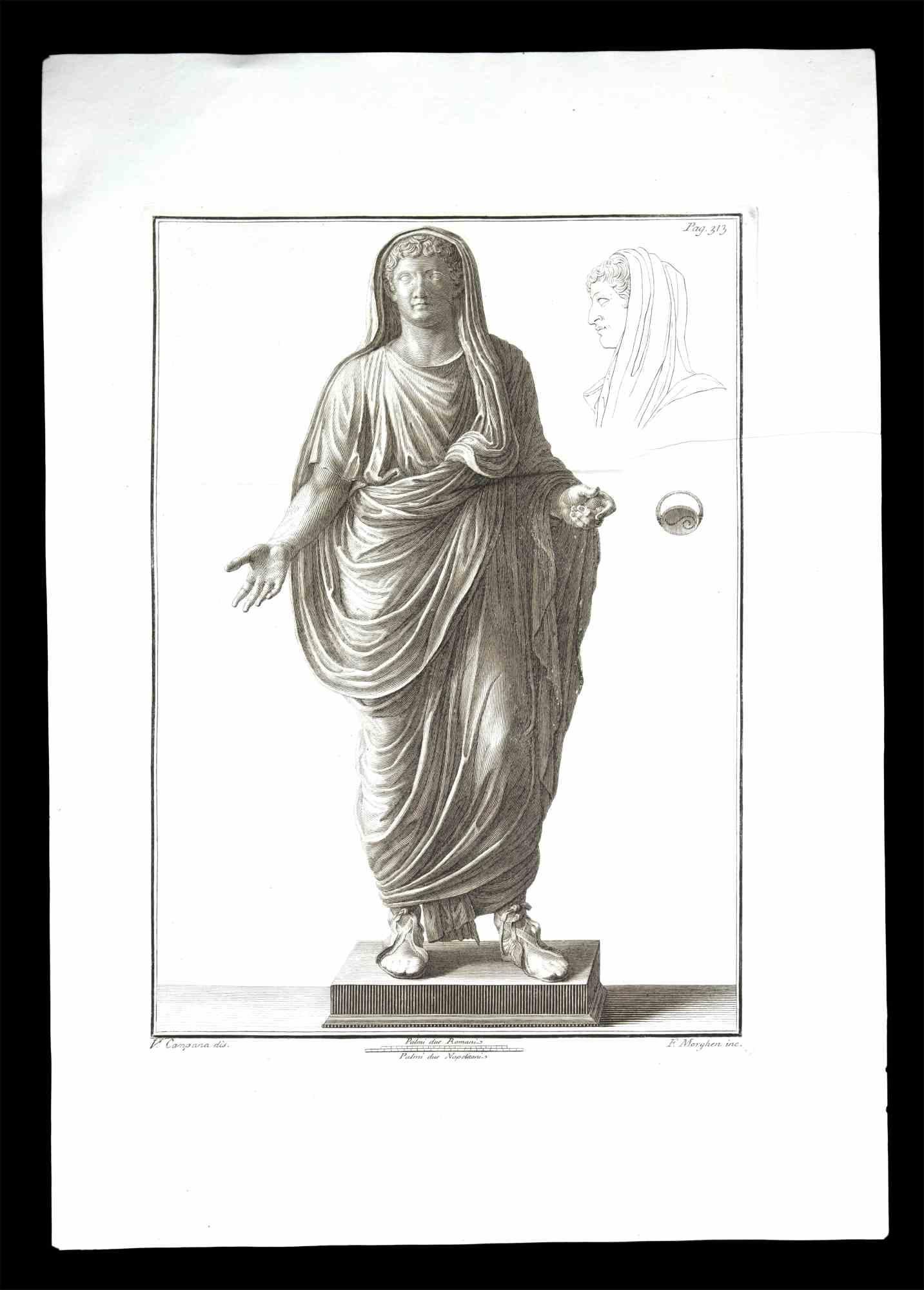
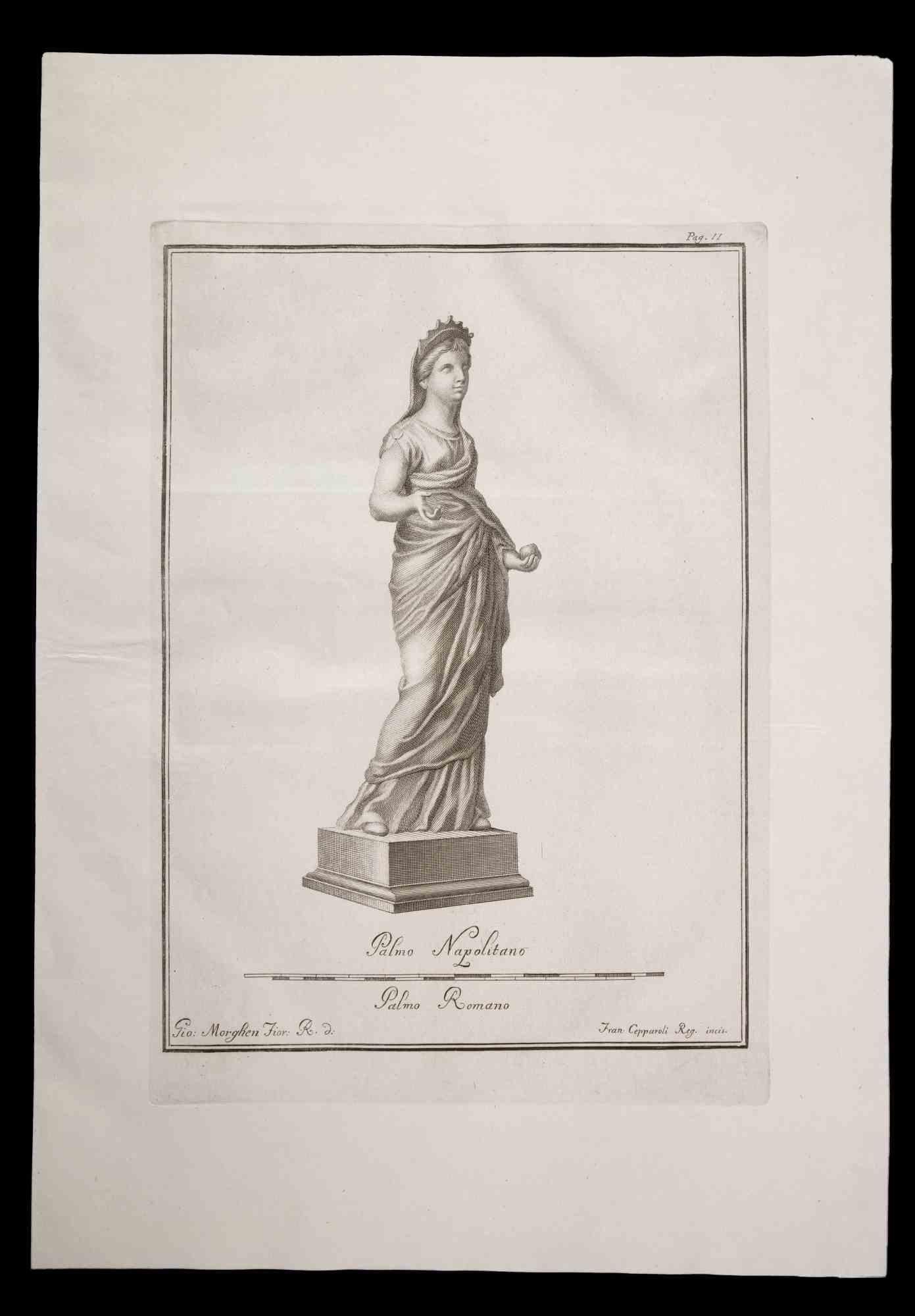
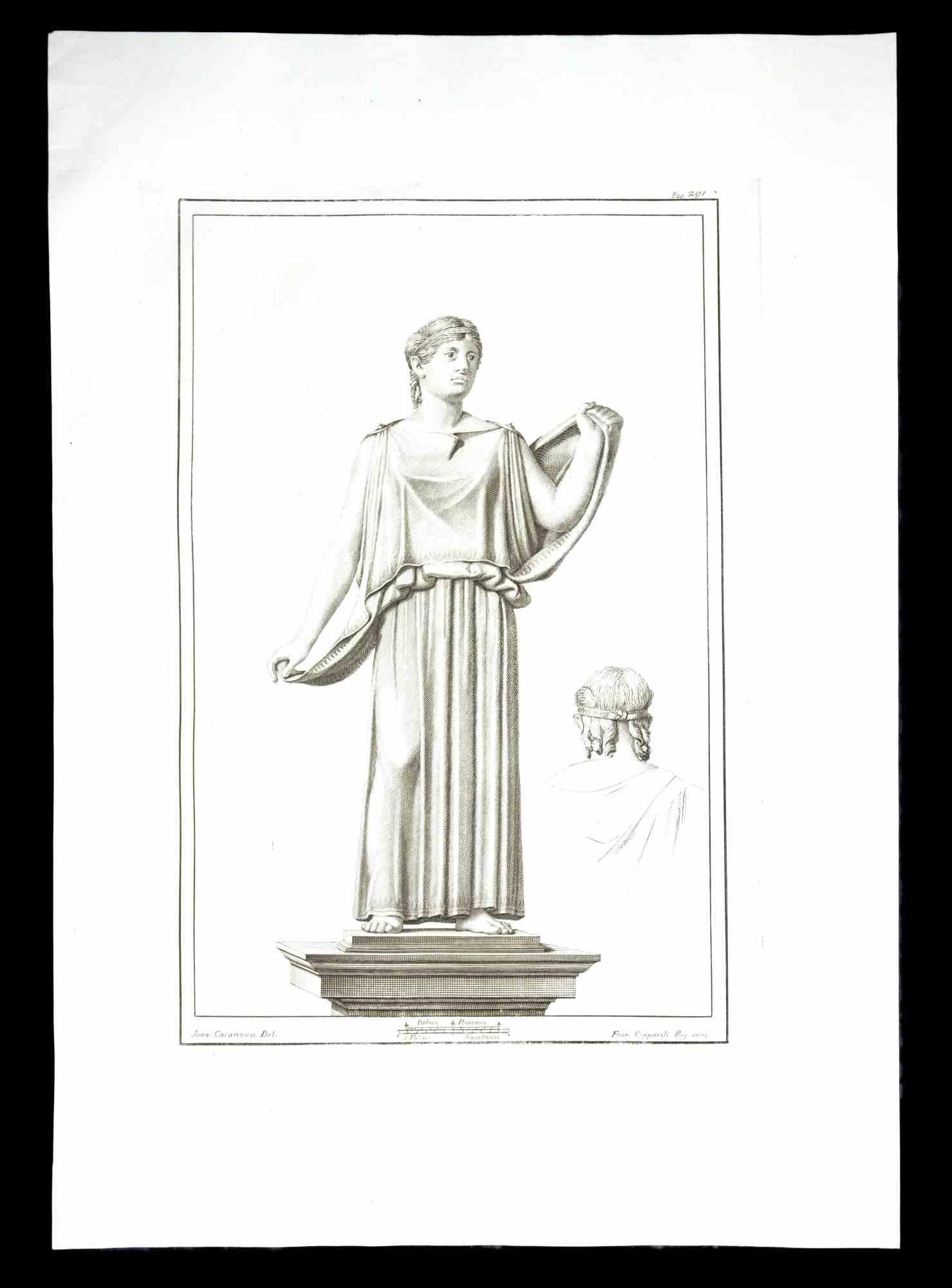
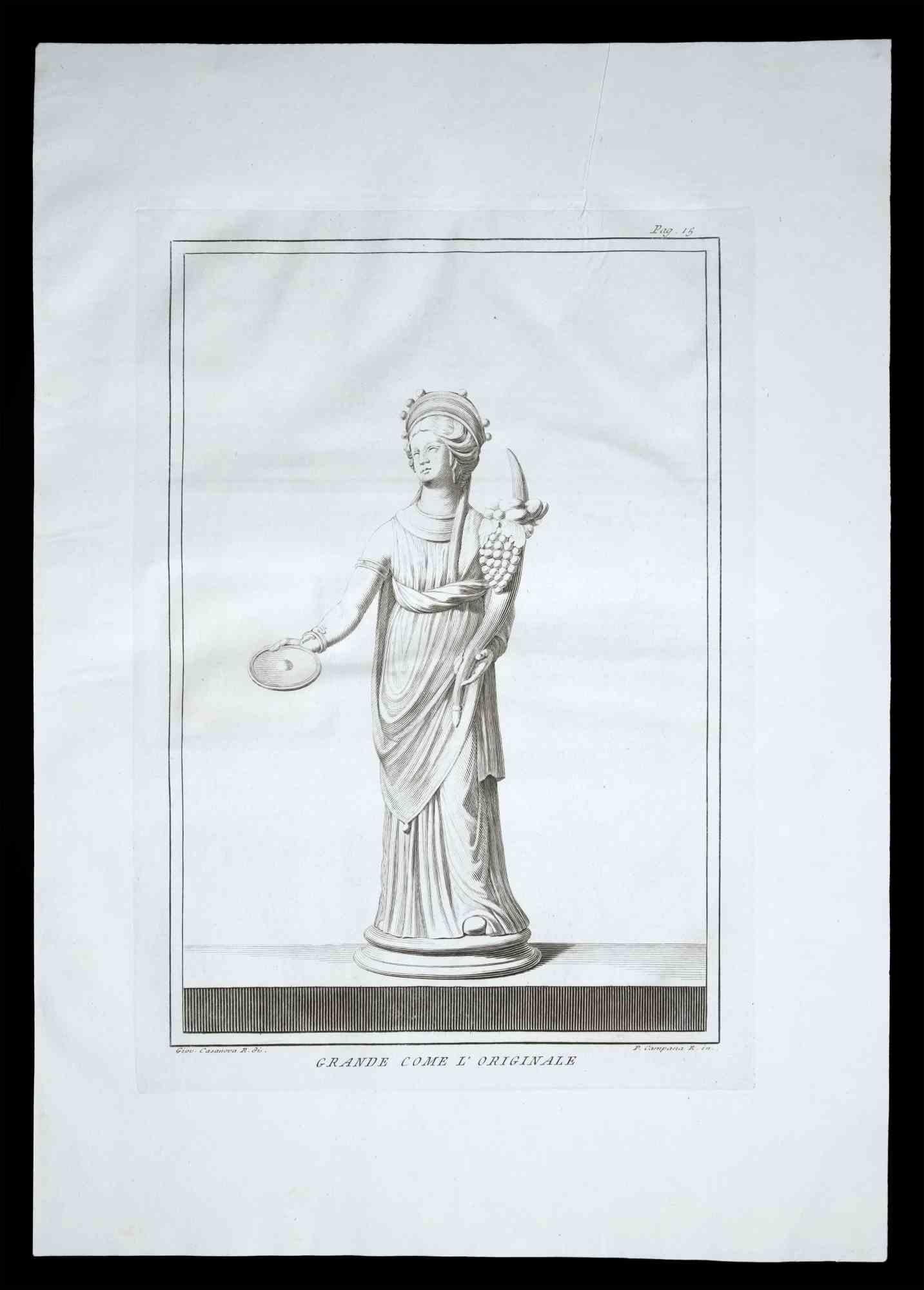
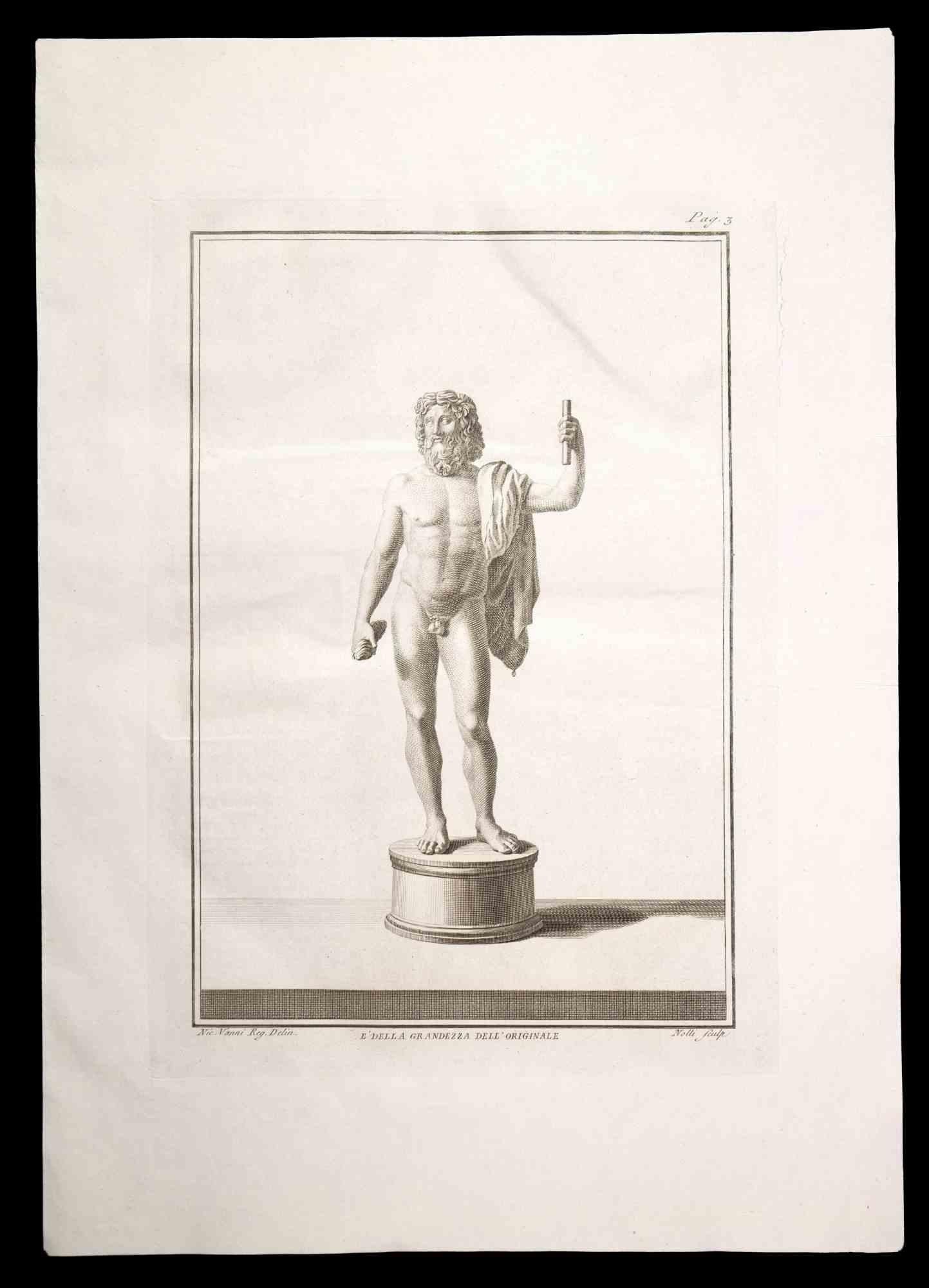
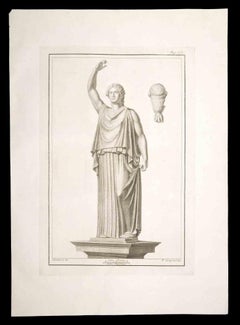
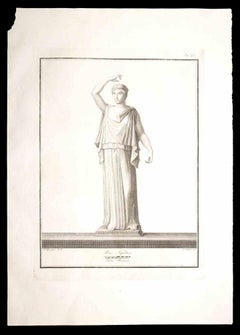
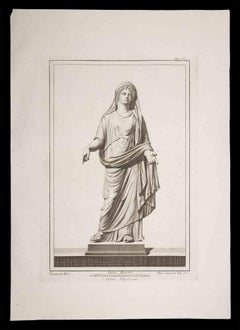
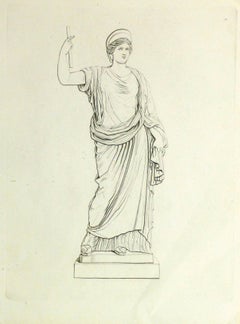
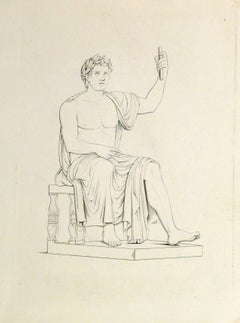
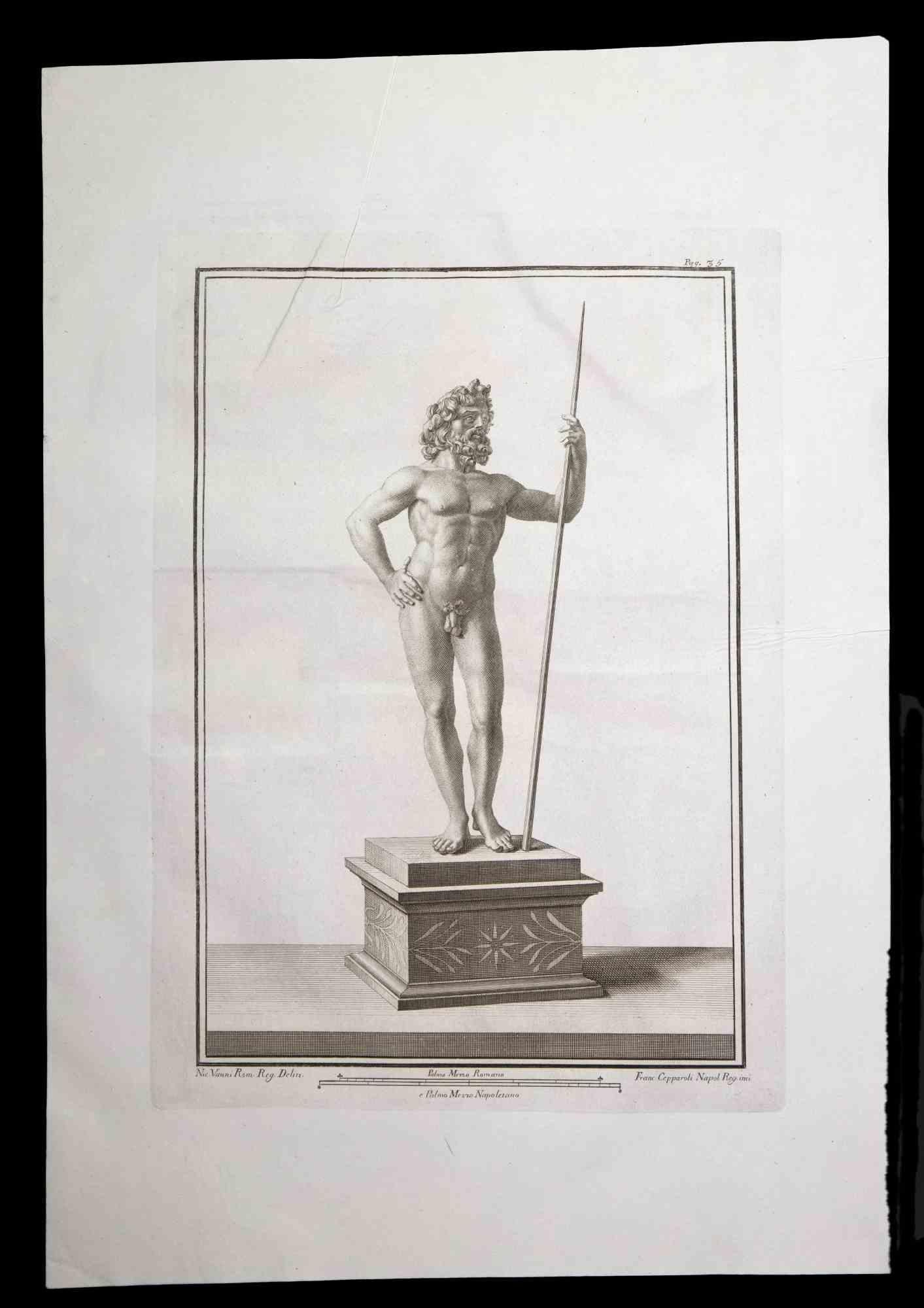
Ancient Roman Statue - Etching by Giacomo Casanova - 18th Century

18th Century

$756.17
£557.98
€640VAT Included
CA$1,048.46
A$1,064.92
CHF 613.68
MX$12,857.31
NOK 7,128.50
SEK 7,187.97
DKK 4,879.89

About the Item

Ancient Roman Statue, from the series "Antiquities of Herculaneum", is an original etching on paper realized by Giacomo Casanova in the 18th century. Signed on the plate, on the lower left. Good conditions with slight foxing. The etching belongs to the print suite “Antiquities of Herculaneum Exposed” (original title: “Le Antichità di Ercolano Esposte”), an eight-volume volume of engravings of the finds from the excavation of the ruins of Herculaneum in the Kingdom of Naples (now Campania, Italy). It was published between 1757 and 1792 by the Regia Stamperia, and copies were delivered to selected recipients across Europe. Despite the title, the Antiquity of Herculaneum shows objects from all the excavations undertaken by the Bourbons in the Gulf of Naples. These include Pompeii, Stabia and two sites of Herculaneum: Resina and Portici. The Bourbon King Carlo appointed fifteen scholars creating a new “Herculaneum Academy” to study the artifacts and publish the results of the archaeological excavations of the sites. The engravings are of high quality and the accompanying text shows a large scholarship. They were realized by 25 prominent artists involved by the King to prepare drawings and engravings on the finds, among which we can find Giovanni Elia Morghen, Carlo Nolli, Luigi Vanvitelli and Giovanni Battista Casanova. The “Antiquities” was designed more to amaze readers with the quality of the objects in the collection of the King of Naples than to be used in research., following and increasing the interest of 18th century society for the classical culture and Art in particular. Through the exaltation of the classical concept of proportions and harmony, the book was of inspiration to the neoclassical movement in Europe, giving artists and decorators access to a huge shop of Hellenistic motifs. Ref.: National Gallery (Washington), Mark J. Millard Architectural, IV (2000), no. 1; L. Garcia y Garcia, Nova bibliotheca pompeiana (2 v., 1998); Royal Institute of British Architects, British Architectural Library ... Early printed books, 1 (1994), no. 112. U. Pannuti, 'Incisori e disegnatori della Stamperia Reale di Napoli nel secolo XVIII: la pubblicazione delle Antichità di Ercolano', in Xenia antiqua, 9 (2000), p. 151-178; V. Trombetta, 'L'edizione de Le Antichità di Ercolano esposte' in Rendiconti dell'Accademia di Archeologia, lettere e belle arti di Napoli , 59 (1984), p.151-172.
  • Creator:
  • Creation Year:
    18th Century
  • Dimensions:
    Height: 19.3 in (49 cm)Width: 13.39 in (34 cm)Depth: 0.04 in (1 mm)
  • Medium:
  • Movement & Style:
  • Period:
  • Framing:
    Framing Options Available
  • Condition:
    Insurance may be requested by customers as additional service, contact us for more information.
  • Gallery Location:
    Roma, IT
  • Reference Number:
    Seller: T-1240071stDibs: LU65038804402

More From This Seller

View All

You May Also Like

Original Antique Engraving of a Statue of a Sabine Woman in Rome, Italy

Original Antique Engraving of a Statue of a Sabine Woman in Rome, Italy

Located in Langweer, NL

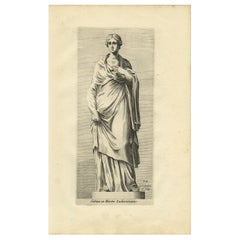
Antique print, titled: 'Sabina in Hortis Ludovisianis.' - Statue of a Sabine woman in Rome. The Sabines were an Italic tribe which lived in the central Apennines of ancient Italy. From the 1660 Dutch edition of 'Icones et Segmenta Nobil. Signorum et Statuarum quae Romae extant' by Francois Perrier. This first Dutch edition was published by Nicolaas Visscher, printed in 1660 (Amsterdam). Although Perrier was French, he fell in love with Rome when he traveled there first in 1628 and then returning in 1635 and remaining for 10 years. While there, he completed this series of 100 views of Roman statuary in the various palaces and gardens, including the Medici and Vatican gardens and the Palazzo Farnese. Artists and Engravers: Made by 'Cornelis van Dalen...

Category

Antique 1660s Prints

Materials

Paper

Original Antique Print of The Greek Goddess, Hebe. Dated 1833

Original Antique Print of The Greek Goddess, Hebe. Dated 1833

Located in St Annes, Lancashire

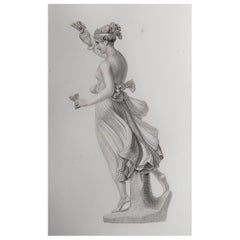
Wonderful image of Hebe Fine steel engraving. Published by Fisher. Dated 1833 Unframed.

Category

Antique 1830s English Neoclassical Prints

Materials

Paper

Original Antique Engraving of the Statue of Niobe in Rome, Italy, 1660

Original Antique Engraving of the Statue of Niobe in Rome, Italy, 1660

Located in Langweer, NL

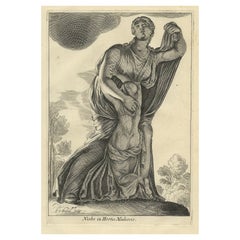
Antique print, titled: 'Niobe in Hortis Mediceis.' - Statue of Niobe in Rome. In Greek mythology, Niobe was a daughter of Tantalus and Dione. From the 1660 Dutch edition of 'Icones ...

Category

Antique 1660s Decorative Art

Materials

Paper

Antique Caryatid Sculpture of the Louvre Interior – Baltard Paris 1803

Antique Caryatid Sculpture of the Louvre Interior – Baltard Paris 1803

Located in Langweer, NL

Antique Caryatid Sculpture of the Louvre Interior – Baltard Paris 1803 Description: This impressive early 19th-century architectural engraving originates from the rare French publication Paris et ses Monuments, mesurés, dessinés et gravés, created by the architect and engraver Louis-Pierre Baltard and published in Paris in 1803. Baltard’s monumental work was dedicated to Napoleon Bonaparte and aimed to systematically document the architectural treasures of Paris through precise measurements and carefully executed engravings. The publication is regarded as one of the most important early visual surveys of Parisian monuments during the Napoleonic era. The present plate depicts a monumental caryatid sculpture placed within an elaborate Renaissance architectural interior associated with the Louvre Palace. Caryatids—sculpted female figures used as architectural supports—derive from ancient Greek architecture and were widely revived during the Renaissance. French Renaissance architects and sculptors embraced these classical motifs to evoke the authority and elegance of antiquity, particularly in royal architectural projects such as the Louvre. The figure stands gracefully upon a decorated pedestal, her body wrapped in flowing classical drapery that clings to the form beneath. The folds of the garment are rendered with exceptional delicacy, demonstrating the sculptural style associated with the French Renaissance and the influence of the School of Fontainebleau. The figure’s calm expression and symmetrical stance reinforce the classical ideals of harmony and balance that characterized Renaissance architectural decoration. Behind the statue Baltard carefully renders fragments of richly ornamented architectural elements, including carved friezes, decorative panels, and sections of an elaborate coffered ceiling. These architectural fragments display dense Renaissance ornamentation: fruit garlands, geometric borders, classical motifs, and sculptural reliefs. One decorative panel features a small sculptural figure framed within a classical border, while surrounding carvings display vegetal ornament and antique-inspired patterns typical of the decorative programs commissioned by the French monarchy during the 16th century. The composition reflects Baltard’s method of presenting architectural studies through carefully arranged fragments that highlight the richness of Renaissance ornamentation. Rather than documenting a single viewpoint, the engraver often grouped significant sculptural and architectural details together to illustrate their artistic and structural relationships. This approach allowed artists, architects, and scholars of the early 19th century to study the details of French Renaissance architecture with remarkable clarity. Executed with masterful copperplate engraving, the plate displays extraordinary technical precision. Baltard used fine burin work to reproduce the textures of carved stone, the subtle depth of architectural moldings, and the soft fall of drapery across the sculpture. The dense hatchings and controlled shading create a convincing sense of depth and mass, producing a striking trompe-l'œil effect that makes the architectural fragments appear almost sculptural on the page. Architectural engravings of this quality were intended as both documentation and inspiration. During the early 19th century they served as important visual references for architects and artists studying the achievements of Renaissance design. Today they remain highly sought after by collectors of architectural prints, historians of French art, and interior designers seeking authentic classical imagery. This is an original print from the year of publication, not a later reproduction. The print is offered unframed, allowing the buyer freedom to select framing appropriate to their interior or collection. Any framed examples shown in photographs are for visual inspiration only. Condition: Good antique condition with general age-related toning and occasional light foxing. Wide margins preserved. Strong impression with visible plate mark. Minor handling wear consistent with age. Framing tips: This engraving displays beautifully with a generous ivory or warm off-white mat and a dark walnut, ebonized, or gilded frame. The vertical composition and sculptural subject make it particularly suitable for classical interiors, libraries, or architectural gallery walls. Technique: copperplate engraving Maker: Louis-Pierre Baltard, Paris, 1803 Keyword block: antique architectural print, caryatid sculpture engraving, baltard paris monuments, louvre renaissance architecture, french neoclassical engraving, paris monument print 1803, classical caryatid sculpture, french renaissance ornament print, architectural study engraving, louvre palace decoration print, institut de france architecture, antique paris architecture print...

Category

Antique Early 19th Century French Prints
Materials

Paper