John Steuart Curry
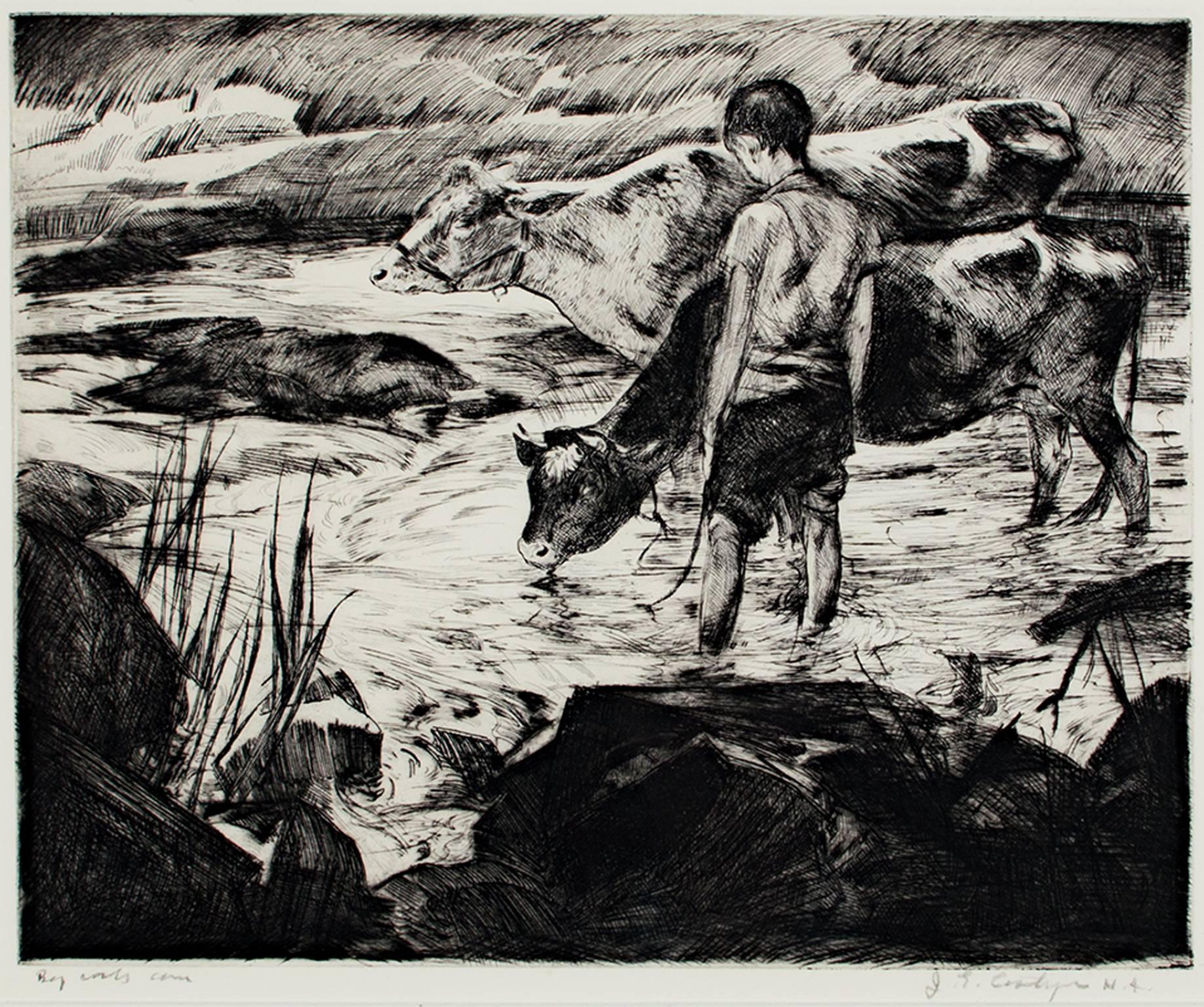
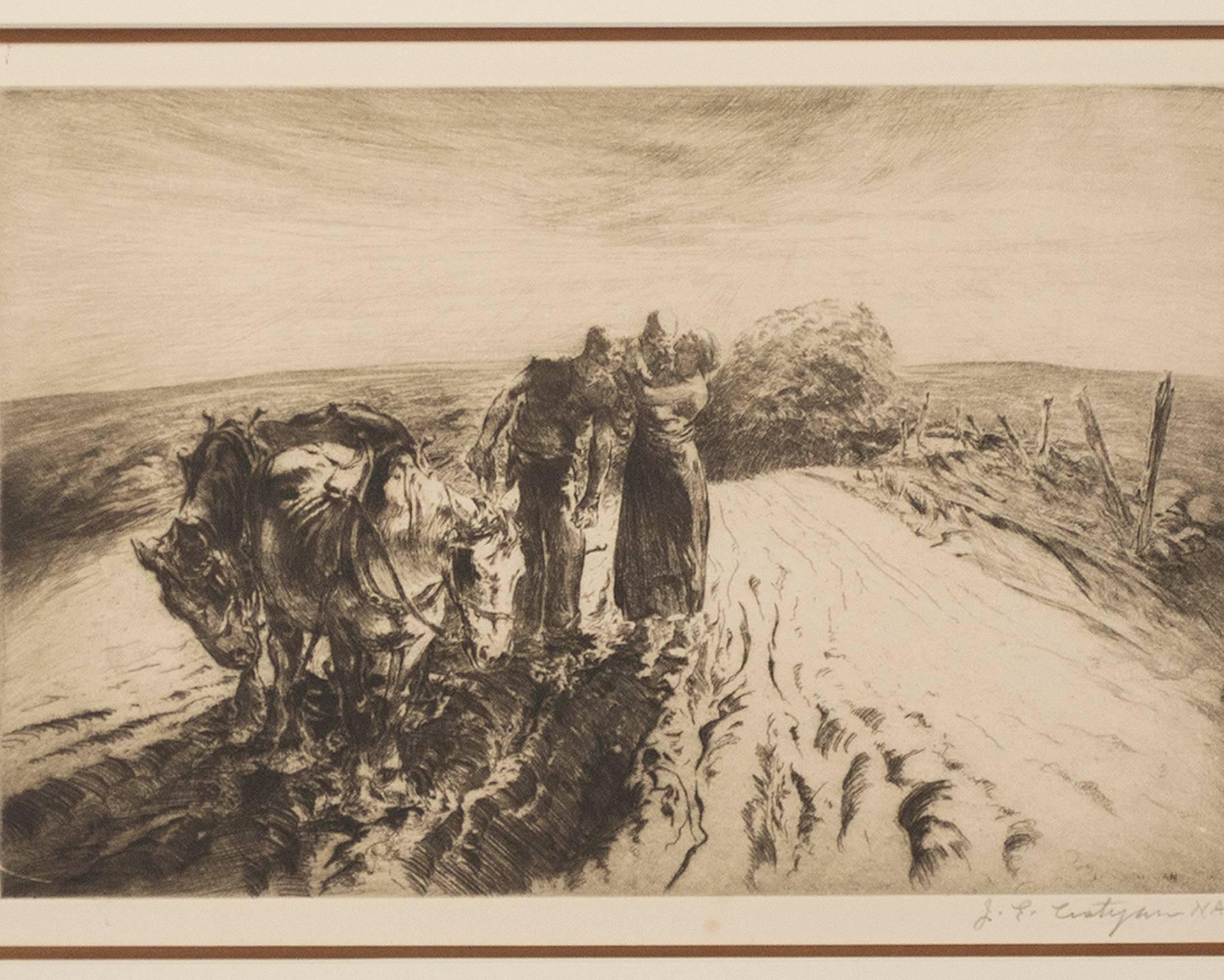
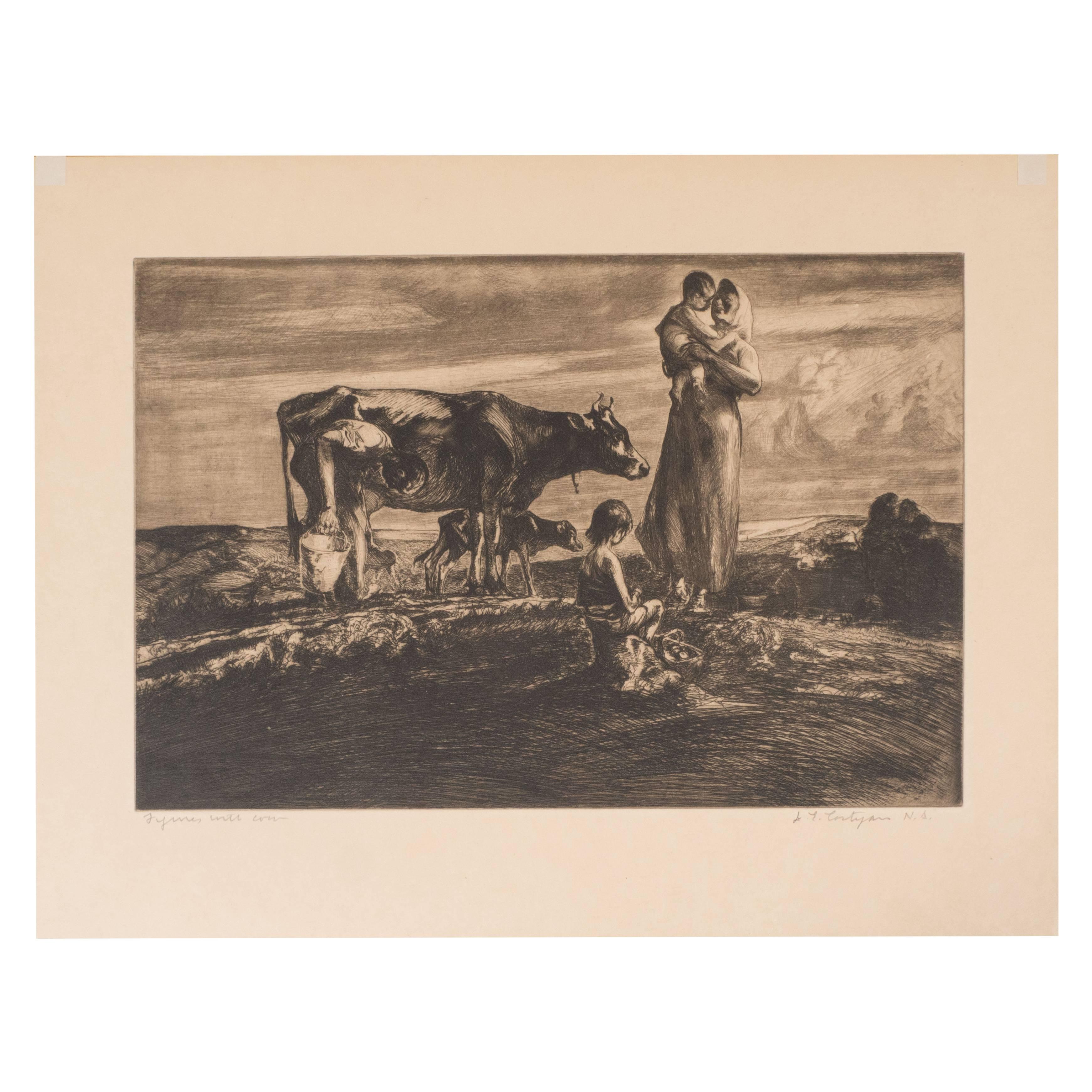
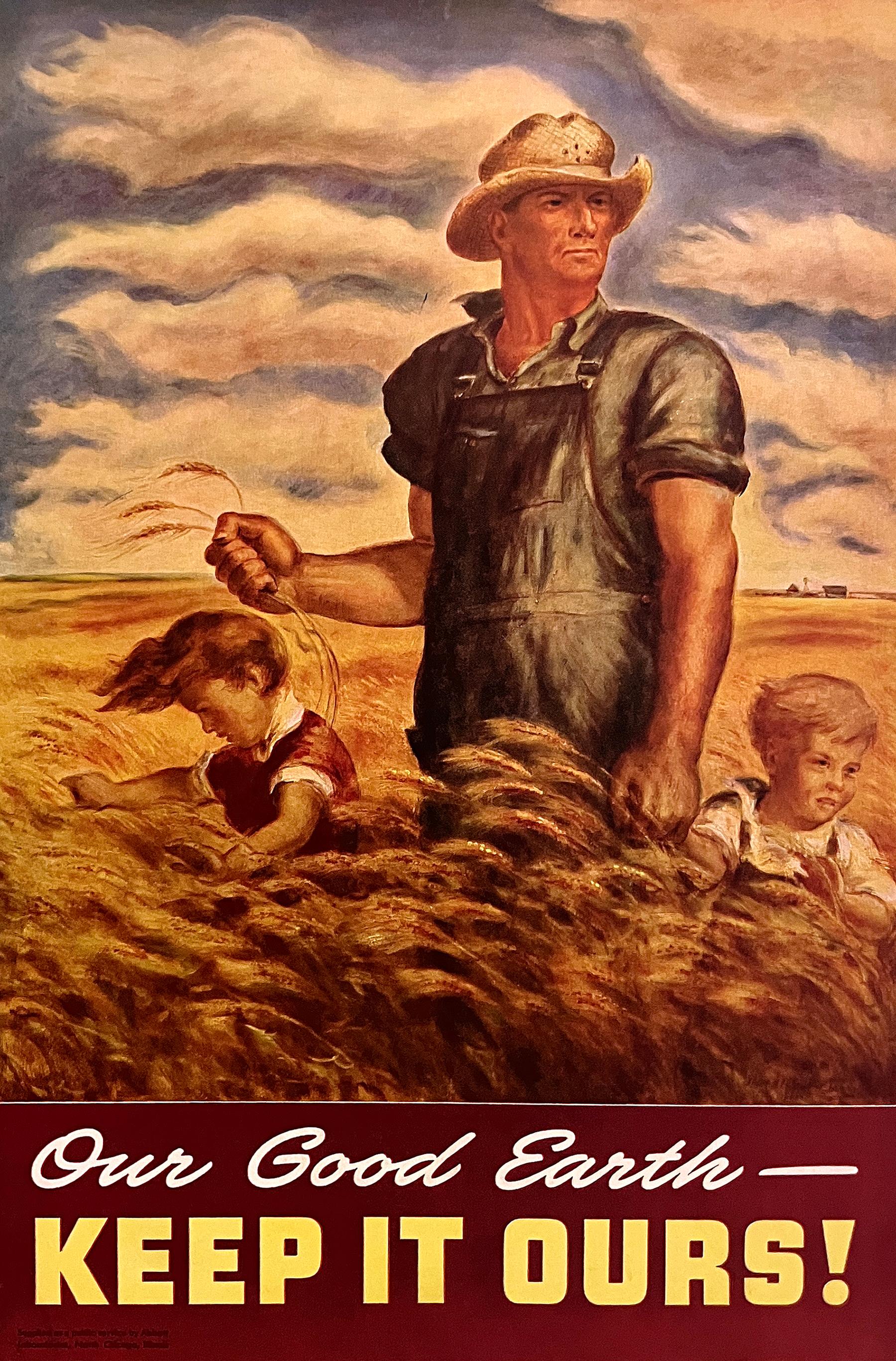
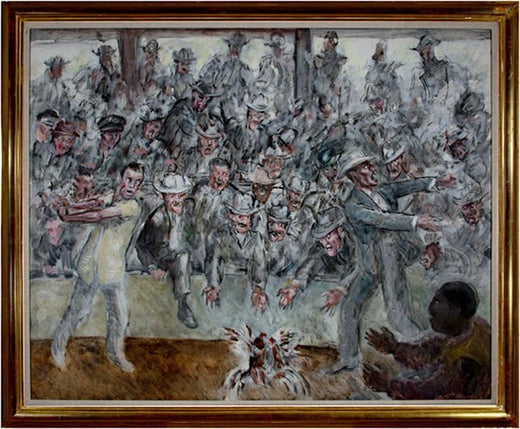
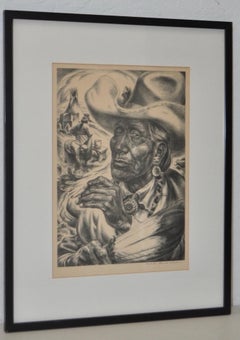
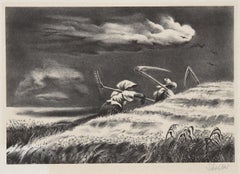
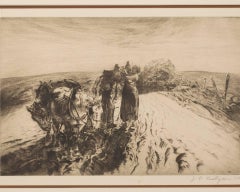
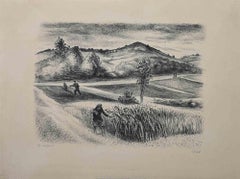
Born in Dunavant, Kansas on November 14, 1897, John Steuart Curry became the youngest member of the famed "Benton-Wood-Curry trio" of Regional Painters of the early 20th-century American Scene movement. He gained a national reputation for his rural Kansas scenes. The artist focused on people who were down-to-earth, plain spoken, and self-reliant, and who made a living through hard physical labor. Curry executed murals dealing with land settlement and racial justice, and his works reflecting these themes are in the Capitol Building in Kansas, the University of Wisconsin, the United States Department of the Interior, and the United States Department of Justice. The artist quit high school and attended the Kansas City Art Institute and School of Design. He transferred to the Art Institute of Chicago. Curry married Clara Derrick in 1923. He studied in Paris in 1927. He was not impressed by the modernist American painters, many of whom were adopting the 'isms' of French contemporary artists. Curry was determined to paint American subjects without European models and to celebrate patriotism, regional pride, and the common man. He settled in Westport, Connecticut. In 1928, he painted Baptism in Kansas. The painting was heralded nationally as work of a new American genre. It was exhibited at the Corcoran Gallery of Art biennial where it met critical acclaim. In 1931, Gertrude Vanderbilt Whitney bought it for her museum. Tornado over Kansas was unveiled in 1929 before the stock market crash and provided the city with the romance of man versus nature theme. In 1933, it received second prize at the Carnegie International Exhibit. In 1930, he had his first one-man exhibition at the Whitney Studio Club. His work of the 1930s contains themes of work, family, and land-- demonstrating the peace, struggle, and perseverance that Curry believed was the essence of American life. In 1934 he married Kathleen Shepard. The United States government selected him to paint murals for the Department of Justice and the Department of Interior. He was appointed Artist-in-Residence in the College of Agriculture at the University of Wisconsin in 1936. He was a member of the Art Students' League and won prizes including: Purchase prize, North West Print Maker, fifth annual Exhibition, 1933; second prize, Thirty-first International Exhibition, Carnegie Institute, 1933; gold medal, PAFA, 1941; prize, Artists for Victory Exhibition, the Metropolitan Museum of Art, 1941. Exhibitions include: “A Celebration of Rural America,” 2007, Danville Museum of Fine Arts and History; “Collective Images: the sketchbooks of John Steuart Curry, 2002, Worcester Art Museum; “Illusions of Eden: Visions of the American Heartland,” 2000, Columbus Museum of Art; “The American Century: Art and Culture 1900-2000,” Whitney Museum of American Art; and “John Steuart Curry: Inventing the Middle West,” 1998, M.H. de Young Memorial Museum. He died in Madison, Wisconsin in 1946.